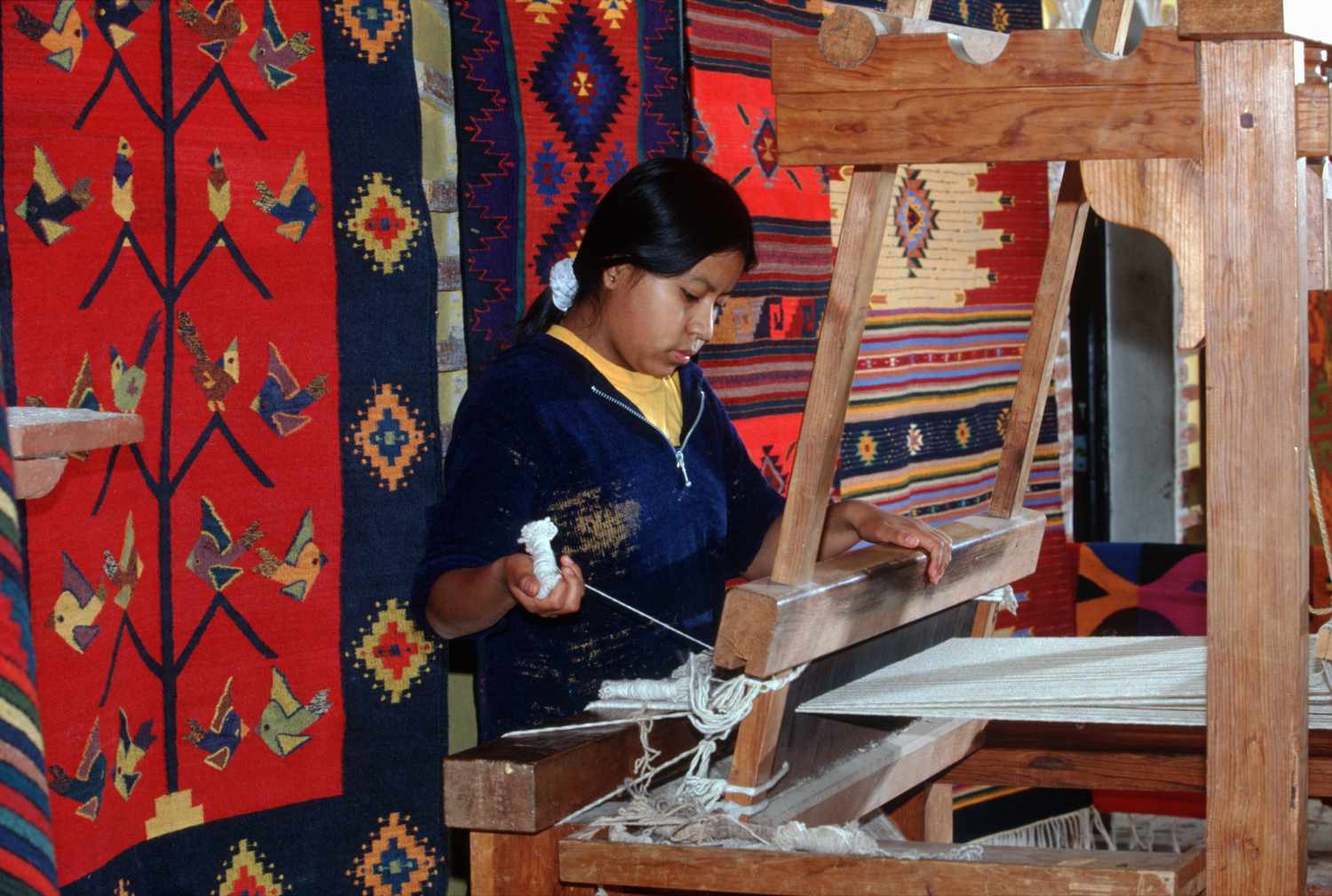
A pattern is not a free resource because a fashion house can photograph it beautifully.
Across Oaxaca, Indigenous weavers and embroiderers create textiles that hold technical knowledge, local history, family memory, land-based dye practices, visual codes and collective authorship. A blouse, huipil, rebozo, woven rug or embroidered garment may look like a single object to an outside observer. Within its originating community, it can hold a far larger world.
That distinction is where the fashion industry repeatedly fails.
For years, global brands have faced criticism from Mexican officials and Indigenous communities for using designs associated with communities in Oaxaca and elsewhere without meaningful consent, credit or benefit-sharing. In 2021, Mexico’s Ministry of Culture challenged Zara, Anthropologie and Patowl over the alleged use of designs connected to Indigenous communities in Oaxaca, asking the companies to explain how collective cultural property had been used and what benefits would return to the affected communities.
The fashion industry often reaches for gentler language: inspiration, homage, collaboration, folklore, artisan detail. The communities whose designs are reproduced may call the act by another name: robo. Theft.
The issue is not that fashion should never engage with Indigenous textile traditions. Cultural exchange has always existed. The issue is whether a company treats a living tradition as an aesthetic resource available for extraction, or as a system of knowledge whose makers have authority over its use.
Oaxacan weaving is not a pattern library for luxury fashion. It is a living system of design, knowledge, labour and collective memory.
This is not only an ethical question. It is a question about who fashion believes counts as a designer.
Oaxacan weaving is a living textile system of Indigenous knowledge, labour and design, not a luxury-fashion reference to be extracted.
A Textile System, Not a Decorative Reference
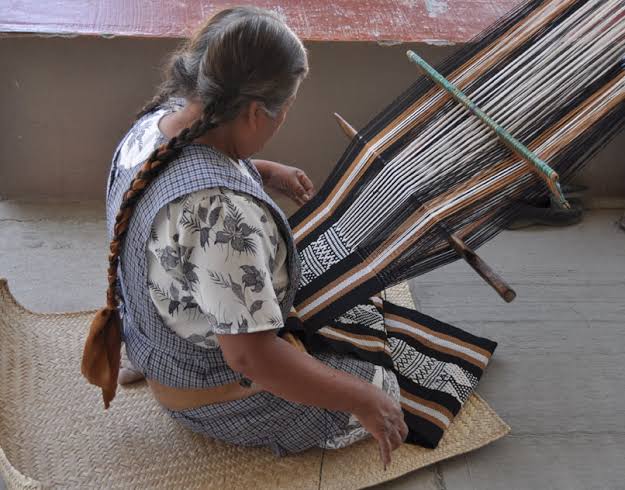
Fashion media often uses the word “craft” as if it explains something. It praises work as artisanal, colourful, authentic or handmade, then moves on before explaining the knowledge beneath the surface. That language diminishes Oaxacan textile traditions.
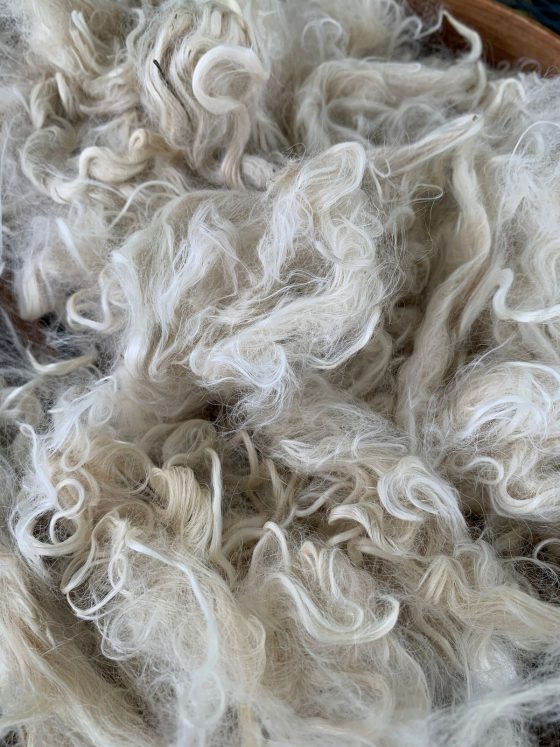
Oaxacan weaving and embroidery involve knowledge of fibre, spinning, dyeing, loom technology, pattern construction, garment-making, commercial exchange, teaching, storytelling, and intergenerational cultural transmission. Different Indigenous communities across Oaxaca, including Zapotec, Mixtec, Mixe, Mazatec, Chinantec, Triqui and others, sustain distinct clothing and textile practices. They should not be collapsed into one generic “Oaxacan” aesthetic.
Specificity matters because a motif does not belong to an abstract region. It belongs to people, places and histories.
The backstrap loom, used throughout Mesoamerica in various forms, demands bodily and technical skills that take years to develop. The weaver anchors one end of the loom to a fixed point and secures the other around her body, using movement, posture and tension to control the warp. The body becomes part of the loom. This is not a primitive precursor to industrial design. It is design.
A weaver must understand thread tension, fibre behaviour, colour relationships, pattern repetition, width, density and finishing. She must also understand the garment’s purpose: whether it will be worn daily, presented in a ceremony, sold to visitors, passed down through a family, or made for a specific regional style.
If this work were translated into digital pattern software, a fashion company would call it innovation. When Indigenous women produce it by hand in southern Mexico, the industry too often calls it heritage, as if heritage means the work belongs to the past. As Omiren Styles has argued in its analysis of how African oral tradition shapes fashion and heritage textiles, communities throughout the Global South have transmitted sophisticated design intelligence across generations through practice, teaching and use rather than through patent offices or fashion-week appearances. The Oaxacan system is part of that larger record.
The Knowledge Inside Colour and Fibre
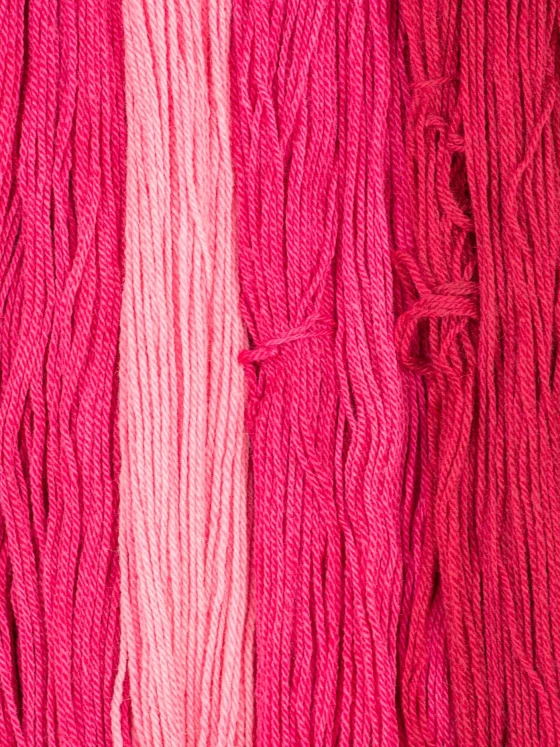
Oaxacan textile traditions also depend on deep knowledge of colour. Cochineal, an insect that lives on nopal cactus, has long produced intense red, crimson and carmine dyes in Mexico. The colour does not emerge automatically. It depends on cultivation, harvesting, drying, preparation, mordants, water quality, fibre type and technical experience. Small changes in the process can dramatically alter the final shade.
Natural-dye practices may also draw on indigo, pomegranate, pericón, walnut, marigold and other locally available materials, depending on the community and the desired colour. This is ecological knowledge as much as aesthetic knowledge.
A luxury brand can reproduce a palette digitally. It cannot reproduce the relationship between a community, its materials, its landscape and its accumulated expertise merely by printing a similar colour onto factory-made fabric. That difference matters.
The fashion industry regularly celebrates slow fashion when it can turn slowness into a premium selling point. Yet it has historically paid too little attention to the people whose communities sustained slow, technically exacting and environmentally responsive textile systems long before the phrase became a marketing category. The problem is not simply that fashion copies a garment’s appearance. It extracts the prestige of a system without sustaining the system itself.
Oaxacan Embroidery Has a History of Appropriation
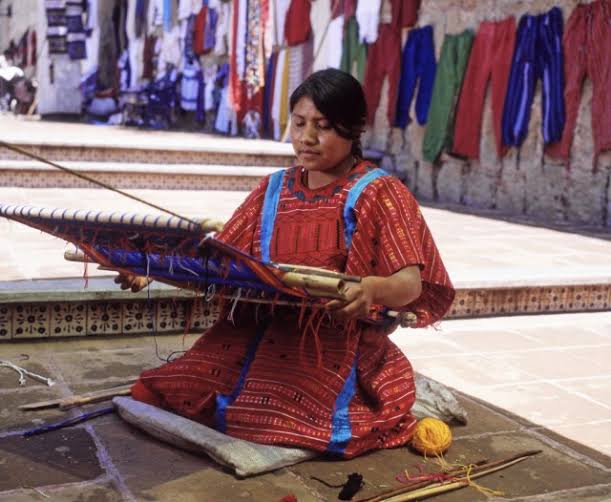
The appropriation debate is not theoretical. Mexican authorities have repeatedly raised objections over the use of Indigenous designs by national and international brands.
In 2021, the Mexican Ministry of Culture said Zara had used a pattern associated with the Mixteca community of San Juan Colorado, Oaxaca, while Anthropologie had used elements associated with the Mixe community of Santa María Tlahuitoltepec. The ministry also criticised Patowl over what it described as a faithful copy of traditional Zapotec garments. As Mexico News Daily documented, other brands, including Isabel Marant, Carolina Herrera, Mango and Zimmermann, have also faced accusations connected to the use of Mexican Indigenous design elements. The individual cases differ in fact, response and outcome. The wider pattern remains clear: brands repeatedly discover that they have drawn from Indigenous cultural expression only once a collection has already reached the market.
That sequence tells its own story. The research often happens after publication. The community consultation comes after the campaign. The brand’s statement arrives after the criticism. Then comes a familiar vocabulary of regret, admiration and good intentions.
But fashion cannot treat consent as a public-relations repair strategy. If a brand sees an Indigenous pattern, garment shape, embroidery placement or colour system as commercially valuable enough to reproduce, it should regard the source as commercially valuable enough to consult, credit and compensate before production begins.
The Economics of Erasure
Appropriation is often discussed as a problem of cultural respect. It is that. But it is also a material economic problem.
When a global company reproduces an Oaxacan design through mass production, it benefits from an aesthetic it did not develop. It gains a product story, a distinctive visual identity and a cultural association that can help differentiate a collection in an overcrowded market. The community whose knowledge shaped that design may receive nothing.
The factory-produced version can also compete with original work. A customer who wants the look of Oaxacan embroidery may choose a lower-priced imitation without knowing the difference between copied decoration and a garment made within the cultural tradition that created it. The original maker then faces an impossible comparison: handmade labour, local materials, technical skill and cultural knowledge against industrial scale, lower wages and global distribution.
This is why the phrase “inspired by” needs to be interrogated. It often hides the economic relationship.
The same structural problem appears across The Global South Made Fashion. It Just Never Got Credit. Global fashion absorbs style codes, textile knowledge and production expertise from Africa, the Caribbean and Latin America while concentrating recognition, capital and market power elsewhere. It also appears in Who Really Owns Ankara? Ankara’s history shows how a textile can become culturally African through the meaning created by communities, even when industrial ownership and profit remain elsewhere. Oaxacan weaving presents a different case, but the question is related: what happens when the people who make a visual language meaningful do not control the institutions that convert it into value?
The same pattern appears across Caribbean creative systems. As Omiren Styles has documented in Dancehall Dressed the World First, aesthetic value moves through the global fashion system while economic power and institutional credit often remain elsewhere. Fashion calls it a trend. The originating community carries the cost.
Mexico’s Law Changes the Terms
Mexico has taken significant steps towards recognising the collective cultural rights of Indigenous and Afro-Mexican peoples and communities.
The Federal Law for the Protection of the Cultural Heritage of Indigenous and Afro-Mexican Peoples and Communities was published on 17 January 2022 and entered into force the following day. It aims to recognise and protect collective cultural heritage and intellectual property, including traditional cultural expressions that are vulnerable to unauthorised use, appropriation, or plagiarism. It establishes that all cultural heritage is reserved by the corresponding people or community, who decide which expressions are inaccessible to third parties and which may be made available with free, prior and informed consent. All authorisations must be onerous and temporary, and involve the fair and equitable distribution of benefits.
The law matters because it challenges a central assumption embedded in conventional intellectual property systems: that authorship must belong to an identifiable individual and that ownership depends on registration, paperwork, and commercial novelty. Legal analysis of the 2022 law confirms that it establishes protections for Indigenous and Afro-Mexican cultural heritage and requires free, prior and informed consent for certain uses by third parties, with penalties of two to ten years in prison for undue use or appropriation without consent.
As Cambridge scholarship on cultural appropriation and the global fashion industry has documented, intellectual-property systems often struggle to protect collective, intergenerational knowledge. Traditional designs may not fit rules designed around individual authorship and short commercial timelines. Mexico’s framework directly addresses this gap. The legislation does not eliminate the problem. Global supply chains remain difficult to trace. Law can create a framework. It cannot, on its own, change the power imbalance between a global company and a rural artisan community.
That work requires enforcement, consumer pressure, serious journalism, transparent sourcing and an industry willing to accept that “creative freedom” does not include the unrestricted commercial use of someone else’s collective heritage.
The Makers Are Designers
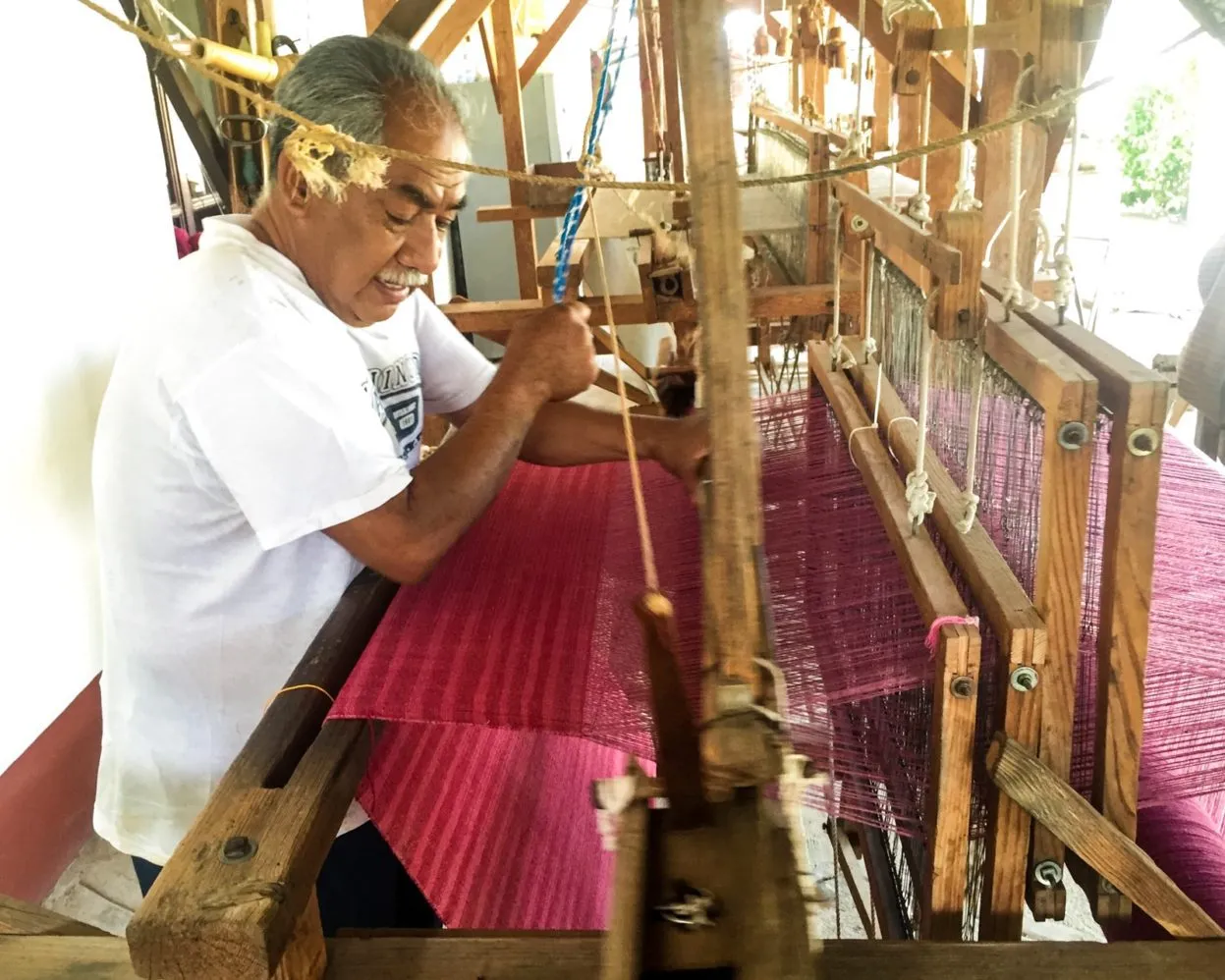
The most damaging part of the fashion industry’s language is its hierarchy. A European creative director is called a designer. An Indigenous woman who develops complex visual systems, works with colour theory, controls construction, holds technical knowledge and produces a garment with cultural and commercial value is called an artisan.
The word “artisan” is not inherently disrespectful. Craftsmanship deserves respect. But fashion often uses the term to create distance. It allows the industry to admire skill while withholding authorship, creative direction and power.
Porfirio Gutiérrez, a Zapotec textile artist and natural-dye specialist from Teotitlán del Valle, represents a growing group of Indigenous practitioners who insist on a fuller understanding of their work. His practice connects Zapotec weaving, plant-based dye knowledge, contemporary art, research and public education. It demonstrates that traditional knowledge does not sit outside modern design. It actively shapes it.
The same principle applies to cooperatives and community-led textile enterprises across Oaxaca. These structures do more than preserve tradition. They create shared standards, pool resources, build direct customer relationships, negotiate prices and seek ways to retain value within communities. That is not nostalgia. It is economic design.
The parallel with Colombian Indigenous textile traditions is direct. As Omiren Styles has documented in its analysis of Colombian traditional fashion, the Guna Mola, a hand-sewn textile produced using reverse appliqué, takes approximately sixty hours per panel to complete. The designs carry cultural and spiritual meaning specific to the Guna worldview. Like Oaxacan weaving, it exists as a design system with makers, rights and a living community behind it. The fashion industry’s failure to treat these traditions as authored works rather than as aesthetic source material is evident throughout Latin America.
As Omiren Styles has argued in its analysis of clothing as cultural identity, when heritage textiles move across borders, the questions of credit, authorship and economic participation follow. Who benefits when culture becomes an aesthetic commodity? The answer begins with recognition. Traditional dress is not raw material for extraction. It is a heritage with living custodians.
The Omiren Argument
Recognition cannot end with an exhibition caption or a designer’s acknowledgement in a press release. A fair relationship with Oaxacan textile traditions requires structural change.
Attribution: brands must name the specific community, technique, visual tradition and makers involved. “Inspired by Mexico” is not a credit. Consent: a company must seek free, prior and informed consent before using identifiable Indigenous cultural expressions. Compensation: communities, makers and collaborators must receive fair payment, royalties, licensing fees or equitable commercial terms. Collaboration: Indigenous designers and cultural authorities must hold decision-making power from the outset, rather than serving as consultants only after the collection already exists. Direct sourcing: when brands use original textiles or embroidery, they should source directly at prices that reflect the time, technical difficulty and cultural significance of the work. Transparency: companies should disclose where an item was made, who contributed to its design, and how benefits are returned to the originating community.
None of this is technically difficult. It is difficult only if a company benefits from avoiding accountability. As Omiren Styles has argued in its analysis of the artisan economy, recognising artisan origins ensures communities receive credit and economic benefit when their craft techniques influence global fashion. When artisans remain invisible while their techniques circulate globally, cultural authorship is diluted. A brand that cannot afford to pay the real cost of an Oaxacan textile tradition should not use that tradition as a product story.
Oaxacan weaving is not a static heritage object waiting to be admired by visitors or mined by brands. It is a living field of design and knowledge, shaped by contemporary makers responding to changing markets, migration, climate pressures, tourism, digital commerce and the challenge of protecting cultural rights. Its future will not be secured by nostalgia. Nor will it be secured by fashion companies producing better “inspired” copies. It will be secured when the makers retain the authority to decide how their work circulates, who uses it, what it costs and what story accompanies it. As Omiren Styles has documented in its analysis of cultural resistance and global style, communities throughout the Global South understood the significance of their visual languages long before external institutions came to name or value them. The textile is not simply beautiful. It is structured knowledge. The pattern is not merely decorative. It belongs to a history of making, teaching, remembering and surviving. The weaver is an author.
ALSO READ
- The Global South Made Fashion. It Just Never Got Credit.
- Who Really Owns Ankara?
- Dancehall Dressed the World First
- The Artisan Economy: Why Buying Handmade Is One of the Most Political Acts in Fashion
- Colombian Traditional Fashion: What the Mola, the Pollera and Cartagena’s Dress Culture Actually Are
- How Cultural Resistance Shaped the World’s Most Powerful Style Movements
Frequently Asked Questions
What makes Oaxacan weaving a system rather than a craft?
A system is an integrated body of knowledge, practices, materials, tools, people, and social relationships that produce meaning over time. Oaxacan weaving is a system because it involves fibre cultivation, spinning, dyeing using local plants and insects, backstrap loom technology, pattern construction with community-specific visual codes, garment design, teaching, commercial exchange and intergenerational transmission. The different Indigenous communities of Oaxaca, including Zapotec, Mixtec, Mixe, Mazatec, Chinantec and Triqui peoples, each sustain distinct versions of this system. A craft is a component of a system. Reducing Oaxacan textile traditions to “craft” flattens a design and knowledge infrastructure that took generations to build.
Which fashion brands have been accused of appropriating Oaxacan designs?
In 2021, Mexico’s Ministry of Culture publicly challenged Zara over a pattern associated with the Mixteca community of San Juan Colorado, Oaxaca; Anthropologie over elements associated with the Mixe community of Santa María Tlahuitoltepec; and Patowl over a garment described as a faithful copy of traditional Zapotec dress. Reuters confirmed the Ministry’s formal challenge to each company. Other brands, including Isabel Marant, Carolina Herrera, Mango and Zimmermann, have also faced criticism over the use of Mexican Indigenous design elements. The pattern across these cases is consistent: brands discover the connection to Indigenous communities after a collection has already been produced and marketed.
What is Mexico’s Federal Law for the Protection of Cultural Heritage and how does it affect fashion?
The Federal Law for the Protection of the Cultural Heritage of Indigenous and Afro-Mexican Peoples and Communities was published on 17 January 2022 and entered into force the following day. It establishes collective ownership rights over Indigenous and Afro-Mexican cultural heritage, requiring free, prior and informed consent before a third party may use, commercialise or reproduce cultural heritage elements. Penalties for undue appropriation or exploitation without consent range from 2 to 10 years in prison, plus significant fines. Legal analysis confirms that the law directly addresses fashion-industry cases, including the trademark registration of protected cultural elements, which the Mexican Institute of Intellectual Property may now deny if community consent is not documented.
How does cochineal dye connect to cultural ownership in Oaxacan textiles?
Cochineal is a scale insect that lives on nopal cactus and produces intense red, crimson and carmine dyes. In Oaxaca, the cultivation, harvesting, preparation, and application involve accumulated knowledge of insect farming, drying techniques, mordants, water quality, fibre types, and temperature. The colour produced is not a formula that can be replicated by adjusting a digital slider. It depends on the relationship among a community, its land, its practices, and its technical expertise. When a fashion brand reproduces a palette associated with cochineal-dyed textiles using synthetic dyes and factory production, it borrows the visual prestige of that system without sustaining the ecological knowledge, labour or community practices that created it.
What should fashion brands do before using Oaxacan or other Indigenous Mexican designs?
Before production begins, a brand should identify the specific community or communities whose design tradition is being referenced; seek free, prior and informed consent from community representatives through a formal, documented process; negotiate compensation, royalties or licensing fees at rates reflecting the cultural and technical significance of the work; commit to crediting the community by name in all marketing, labelling and press materials; and consider direct sourcing from community producers rather than reproducing designs through industrial manufacture. Mexico’s 2022 Federal Law now legally requires these steps for any third-party use of cultural heritage elements, with criminal penalties for non-compliance.
How does the Oaxacan weaving appropriation debate connect to broader Global South fashion authorship?
Oaxacan weaving is one of the clearest examples of the pattern Omiren Styles documents across Africa, the Caribbean and Latin America: creative languages travel globally, while recognition and economic power concentrate in the institutions that distribute rather than the communities that create. As Omiren Styles has argued in its examination of Global South fashion authorship, the fashion industry has consistently absorbed style codes, textile knowledge, and aesthetic authority from the Global South while failing to maintain a reliable record of their origins. Oaxacan weaving is not a regional example of a global problem. It is a primary source for understanding how fashion converts collective knowledge into individual brand value, and then calls the process “inspiration”.
EXPLORE MORE
Read the full “The Lens” and “Fashion > Power” sections at Omiren Styles for ongoing analysis of Indigenous textile rights, fashion authorship, and the political economy of Global South creativity. Discover travel and heritage intelligence across Latin America and Africa at Rex Clarke Adventures.