This article contains affiliate links. We may earn a small commission if you purchase through our links at no extra cost to you.
One of the most debated and misinterpreted issues in skincare worldwide is hyperpigmentation on dark skin. It is a universal condition that the industry considers and uses the same frameworks, ingredients, and timelines regardless of skin tone. Hyperpigmentation does not act in the same way on melanin-rich skin, however. It is more reactive, persistent and deeper.
Hyperpigmentation is not merely a skin problem. It is a response. Even minor irritations, acne, cuts, aggressive treatments, etc., on darker skin tones can cause excess melanin production, resulting in post-irritation hyperpigmentation that persists even after the triggering factor has healed. This is not a dark spot problem, as many may refer to it, but rather a sensitivity issue that is largely ignored by the industry.
The global skincare paradigm tackles hyperpigmentation with a corrective approach, focusing on brightening, peeling, and fading. However, this method presupposes that the skin can withstand disturbance. In melanin-rich skin, it is usually more of a disruption than a solution. Excessive treatment may only deepen pigmentation, creating a vicious circle as the effort to correct the problem strengthens it.
No additional list of products or quick fixes is presented in this article. It discusses the structural misconception at the heart of the industry’s approach; until hyperpigmentation on dark skin is perceived anew, it will still be addressed incorrectly.
The global skincare industry tends to misinterpret hyperpigmentation on dark skin. Find out the true causes, treatment errors, and the reason why most solutions are a failure with melanin-rich skin.
Hyperpigmentation on Dark Skin Is a Reaction, Not a Flaw

The skincare sector across the world tends to address hyperpigmentation as an independent problem — something that should be remedied alone. But hyperpigmentation is seldom independent of dark skin. It is a reaction to stress on the skin, either due to inflammation, irritation or external damage.
The body’s melanin-rich skin is self-defence: when activated, it secretes large amounts of pigment to defend itself. That is why conditions such as acne, razor bumps or even minor abrasions tend to leave dark marks. The skin is not broken; it is just doing what it was made to do. The issue is being termed a problem, yet in most instances, it is a natural biological reaction that is not well understood.
This process starts when treatments do not take this mechanism into account. Most products focus on the pigment, but not the trigger, using high-powered actives that make skin more sensitised. With melanin-rich skin, this is not a neutral solution; it creates additional stress, therefore, resulting in an increased pigmentation. It turns into a self-reinforcing cycle.
The most effective strategy for preventing dark spots from forming is targeting inflammation early. A consistent use of niacinamide serum can help calm the skin and interrupt that cycle before marks set in. This is gentle for daily use and well reviewed specifically for deeper skin tones — This one is gentle enough for daily use.
It is at this point that African skincare brands have a different starting point. They focus on skin stability rather than on isolating hyperpigmentation. Arami Essentials brands are based on nourishing oils and butters that calm inflammation at the core. In contrast, Skin Gourmet focuses on raw, minimally processed ingredients that do not disrupt the skin barrier and keep it intact. These are not sold as hyperpigmentation therapies, but they treat the underlying disorders that lead to hyperpigmentation.
Even in a more structured formula, like Epara Skincare, the brands operate in a targeted yet moderated manner, using melanin-rich skin instead of pushing it to correct at high speed. It is not focused on eliminating pigment, but the factors that contribute to its persistence.
The difference here is crucial. When hyperpigmentation in dark skin is misinterpreted as a surface defect, it cannot be treated adequately. It is a system of reactions. And any method that does not diminish that response will still yield unequal results, no matter how high the ingredients may be.
The Industry’s Obsession with “Brightening” Is Part of the Problem
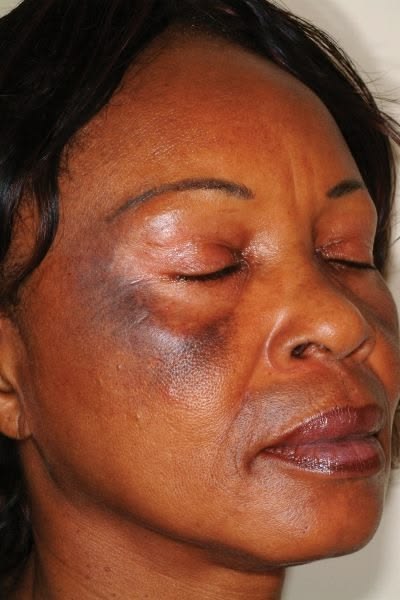
The use of language surrounding hyperpigmentation, namely the focus on brightening, is one of the most widespread problems in the skincare industry worldwide. Although this language is painted as innocent, it usually indicates a more severe misinterpretation of what dark skin really requires.
In most formulas, brightening is achieved through exfoliation, chemical peels, and colour correctors. Such techniques may work under controlled conditions, but when consumed excessively or applied incorrectly, they interfere with the skin barrier. In the case of melanin-rich skin, the disruption is not neutral; it increases the likelihood of additional pigmentation.
A well-formulated Vitamin C serum can help improve the appearance of dark marks on deeper skin tones, but stability matters more than most people realise. Poorly formulated Vitamin C oxidises quickly, loses effectiveness, and can sometimes leave skin looking more irritated or uneven over time. This is one of the formulas repeatedly recommended because it stays stable, layers well, and works without feeling overly aggressive on melanin-rich skin — This is one of the formulas repeatedly recommended.
The industry’s reliance on these approaches demonstrates an inclination towards quicker outcomes rather than sustainability. The dark skin does not react to forceful timages. It needs constancy, security, and slow remedy. However, most products are designed to enable quick change, leading to overuse and abuse.
That is why hyperpigmentation in several people with dark skin gets worse even when they stick to the recommended routines. It is not a user error; it is the product’s design that fails to take into account how melanin-rich skin responds to stress.
ALSO READ:
- Why African Skincare Has Always Been Ahead of the West & Why the World Is Only Now Catching Up
- Black Soap, Stripped: The Science Behind West Africa’s Most Ancient Cleansing Ritual
- The Shea Butter Economy: How West Africa’s Most Powerful Skincare Ingredient Became a Global Industry
The Missing Approach: Protection Over Correction
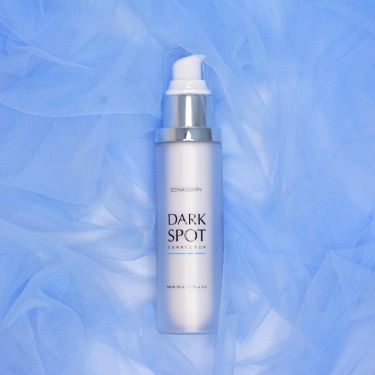
What the global skincare industry never gets right is that hyperpigmentation on dark skin is not a condition that can be corrected, but rather one that can be managed with protection. It refers to a focus on skin barrier wellness, reducing inflammation, and using options that do not interfere with the skin. In the case of melanin-rich skin, there is no option for stability, and it is the cornerstone of any effective treatment.
Shelter is not inert. It needs a conscious system: mild cleaning, regular hydration, and, most importantly, sun protection. Contrary to popular belief, UV also affects dark skin, and in the absence of protection, hyperpigmentation progresses with time. The notion that melanin is sufficient protection has enabled this step to be overlooked, with observable ramifications in many instances.
Wearing SPF daily is a must when you are treating dark spots. If not, other products you use may not be effective. It can be challenging to find one that does not leave a white cast on dark skin, but this option has addressed that.
This is the place where African skincare brands are starting to act in a different manner, not by adherence to the global scripts, but through the behaviour of melanin-rich skin itself. Brands such as Arami Essentials focus on oils that support the skin barrier and minimise disturbance. In contrast, Skin Gourmet creates its formulas based on raw, traceable ingredients that work with the skin rather than against it. These are not presented as solutions for hyperpigmentation but are more effective at addressing the underlying cause than most specific treatments.
Equally, Epara Skincare exists in a completely different philosophy, in that it places African botanicals in high-performance formulas that target melanin-rich skin in particular. It is not about speed but accuracy. Not the aggressive correction but the controlled, long-term balance.
If you’re introducing chemical exfoliation into your routine for the first time, starting with a milder formula usually gives the skin more room to adjust without overwhelming it.
The Omiren Argument
The world skincare industry does not fail at curing hyperpigmentation on dark skin, since the condition is challenging; it fails because it cannot alter its structure. It uses correction-based systems on skin that is most responsive to protection, and then uses the variation in outcomes as a constraint on the skin rather than a weakness of the system.
The African skincare brands are not emerging successfully because they are new or niche; they are emerging successfully because they are aligned. They develop on the realisation that melanin-rich skin is not resistant but reactive, and that any system that does not account for this will yield inconsistent outcomes. This cannot be called innovation. It is accuracy.
The Omiren argument is straightforward: hyperpigmentation in brown skin is not poorly managed because products are unavailable but rather because the global skincare rationale and melanin biology are misaligned. As long as the industry remains in the disruption stage and starts to move toward the protection stage, it will keep on addressing the symptoms and strengthening the cause more.
For more sharp, perspective-driven insights on beauty, skin, and the systems shaping how they’re understood, visit Omiren Styles, where the conversation goes beyond surface-level solutions to challenge the industry itself.
Frequently Asked Questions (FAQs):
- Why is hyperpigmentation more common on dark skin?
Hyperpigmentation is more common on dark skin because melanin-rich skin produces pigment more aggressively in response to irritation, inflammation, or injury. This makes even minor skin issues more likely to leave visible dark spots. - What causes hyperpigmentation on dark skin?
Common causes include acne, razor bumps, cuts, burns, harsh skincare products, and sun exposure. These triggers lead to post-inflammatory hyperpigmentation, where the skin produces excess melanin during healing. - Why do many hyperpigmentation treatments fail on dark skin?
Many treatments focus on aggressive correction, like strong exfoliants or peels, without addressing skin sensitivity. This can irritate melanin-rich skin and worsen pigmentation instead of improving it. - What is the best way to treat hyperpigmentation on dark skin?
The most effective approach focuses on prevention and protection: reducing inflammation, maintaining a strong skin barrier, using gentle treatments, and consistently applying sunscreen. - Can hyperpigmentation on dark skin be completely removed?
It can fade significantly over time with the right approach, but complete removal depends on depth, cause, and consistency of care. Managing triggers is just as important as treating existing spots.
Your Hyperpigmentation Routine — Where to Start
You do not need ten products. You need the right four used consistently. These are the ones worth starting with for melanin rich skin.
| Product | What It Does | Key Ingredient | Best For | Where to Buy |
|---|---|---|---|---|
| Niacinamide Serum 10% for Dark Skin | Calms inflammation and fades dark spots | Niacinamide | Daily prevention and treatment | View on Amazon → |
| Stable Vitamin C Serum Melanin Skin | Brightens and protects | Ascorbic acid | Morning routine dark spot fading | View on Amazon → |
| Gentle AHA Exfoliant Sensitive Skin | Speeds up cell turnover | Glycolic or lactic acid | Weekly use to reveal brighter skin | View on Amazon → |
| SPF 50 No White Cast Melanin Skin | Prevents spots darkening further | Mineral or hybrid sunscreen | Daily final step — non negotiable | View on Amazon → |
This article contains affiliate links. We may earn a small commission if you purchase through our links at no extra cost to you.