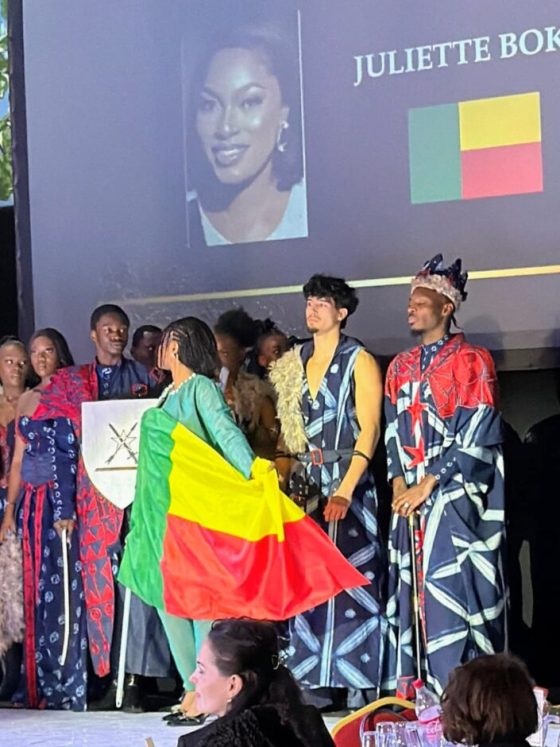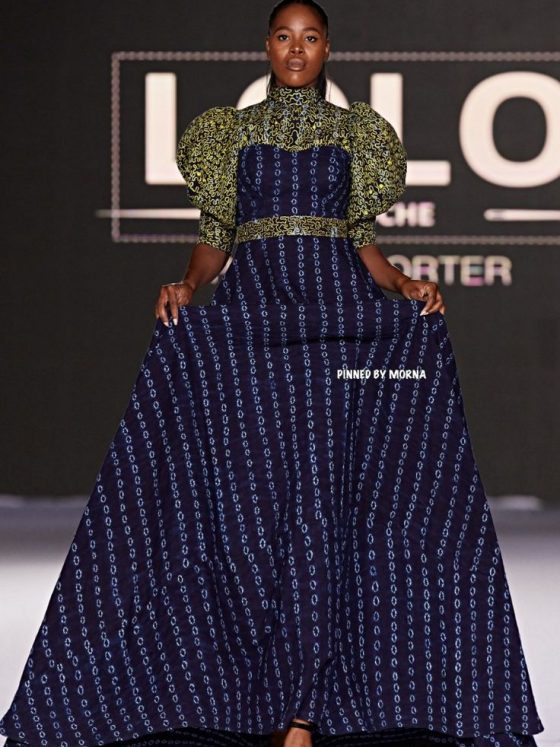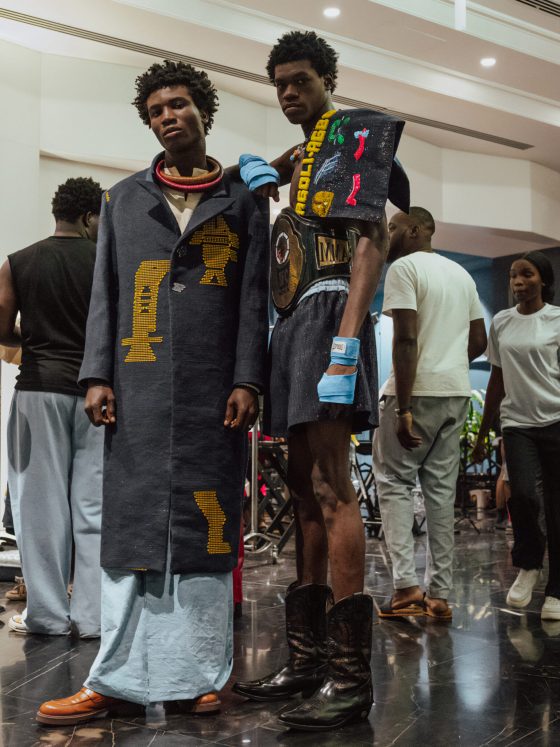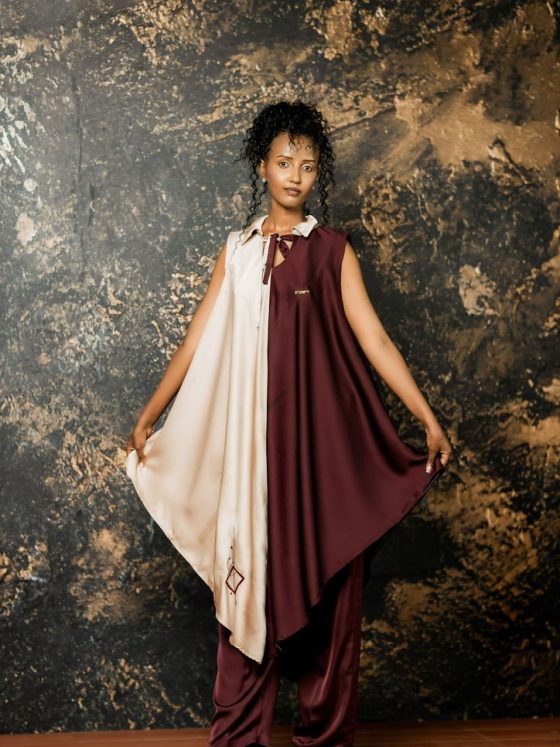


Rosyne Club will hold back a kanvô piece rather than change its material. The brand explains that because kanvô is handwoven in strips and depends on weaver availability, some pieces have been delayed. At the same time, it waited for the cloth instead of substituting another fabric. That small decision says a great deal about the label. The Beninese woven textile is part of the product’s identity, not background information reserved for a brand story, and it sits within a wider wardrobe of oversized, balloon and boxy shapes organised around volume.
Founded in 2021 by Jamal Chleuh and Gildas, Rosyne Club describes itself as a Franco-Beninese brand linked to Cotonou, Montpellier and Paris. Its published FAQ describes a production model that combines a Cotonou workshop with selected specialist partners, while its commercial presence extends through Montpellier, Paris, Cotonou and Abidjan. The revealing question is how those functions connect: what the cloth contributes, where garments develop and how they reach customers.
That question matters beyond one label. UNESCO’s 2023 report on the fashion sector in Africa put the market value of clothing and footwear in sub-Saharan Africa at US$31 billion in 2020. Within that $31 billion African fashion market, Franco-Beninese fashion brands such as Rosyne Club show how value can be split between a manufacturing base in Benin and customers in Europe and West Africa.
Rosyne Club connects Beninese kanvô, oversized clothing and a Cotonou workshop with retail activity in Montpellier, Paris, Cotonou and Abidjan.
A Name Inherited From Making
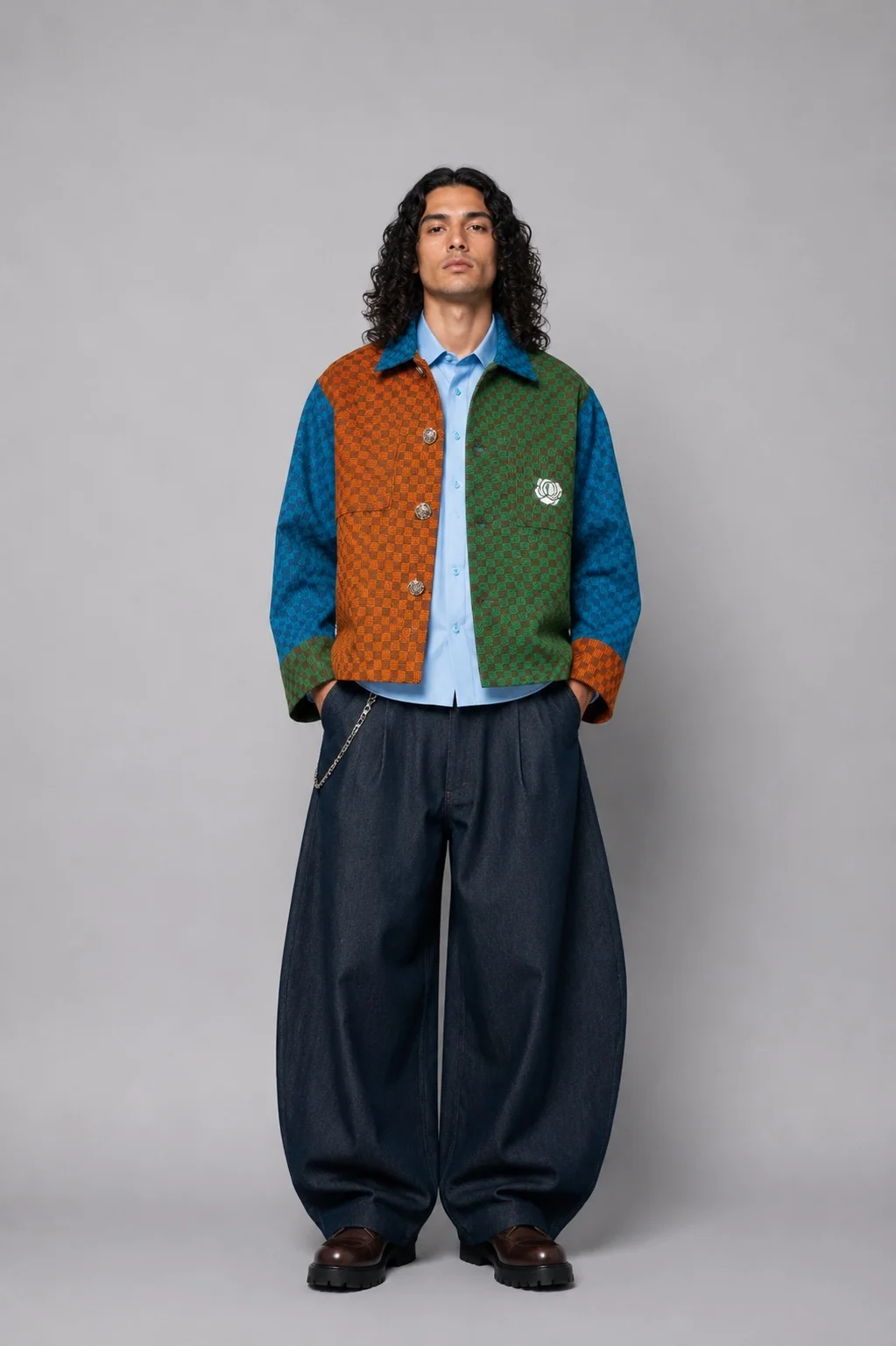
The name Rosyne honours Chleuh’s mother, a Beninese seamstress from Abomey. In Géraldine Pigault’s September 2026 profile of the brand for LOKKO, he recalls growing up around fabric and watching her meticulous work. The profile reports that some of her pieces took close to six months to make.
That account places careful construction at the centre of his early experience of clothing. The inheritance is not simply a set of patterns to reproduce. It is an attention to material, colour and the time required to turn them into a garment.
The connection to Benin was not continuous. LOKKO reports that after leaving for France as a child, Chleuh lived with an aunt in Évry and did not return to Benin between 1999 and 2014. When he did go back, the trip reconnected him with the country his mother’s craft came from. The workshop that later opened in Cotonou grew out of that renewed relationship rather than a sourcing decision taken from a distance.
Chleuh’s biography supplies the most extensively documented creative route into the business, but Rosyne Club credits its founding to both him and Gildas. Their shared authorship belongs in the account even where the available interviews concentrate on Chleuh’s experiences.
Styling Before the Label
Chleuh’s professional formation moved through styling, retail and music. According to LOKKO, he was sent to France at the age of five for schooling and later earned vocational qualifications. Working in a Créteil shop importing American clothing, he began assembling looks and later styled French rap and hip-hop artists, including Booba, Matt Pokora and Saïan Supa Crew. His approach combined pieces from different categories rather than treating a designer label or streetwear brand as a complete wardrobe.
After time in the United States from 2004, he settled in Montpellier around 2006 and worked in event promotion at local clubs. In 2014, he opened a small space called Jam’s Brothers near Saint-Roch station to hold collected garments and his own creations. Passers-by saw the window, entered and asked to buy things. In his account, a loosely organised storage and creative space became an informal point of sale.
The pandemic interrupted his events work and forced the premises to close. He began arranging clothes on the floor, photographing combinations and posting them online; LOKKO reports that Virgil Abloh shared one of those images on Instagram. Those compositions developed an audience before Rosyne Club’s 2021 launch. The sequence matters: the label followed years of selecting, combining and observing how clothes worked together.
Volume Gives the Wardrobe Structure
Rosyne Club describes oversized, balloon and boxy cuts as recurring elements of its design language, emphasising volume and structure. Balloon trousers carry generous volume through the legs; boxy shirts use a broader, shorter shape. LOKKO names the balloon trousers among the brand’s best-sellers and describes its designs as unisex and loose-fitting. These descriptions establish an intended relationship between garment and body rather than merely a preference for larger sizing.
LOKKO identifies another strand of the design vocabulary in the 2025 “Route de la soie” collection: an American-football-style jersey fitted with a kimono collar, which it describes as a signature piece. The combination brings references together within the garment’s form, rather than relying only on a graphic placed across it. The same profile notes Beninese, Egyptian, Asian and American influences, and a current collection that refers to the five elements of vodun.
That example does not establish the jersey as a kanvô piece. It demonstrates the wider design environment in which the textile appears: sportswear, generous proportions and references drawn from several clothing traditions.
Within the broader field of Beninese streetwear and menswear, Rosyne Club’s particular proposition is therefore not material alone. Kanvô enters an already articulated wardrobe. Omiren Styles has examined, in its analysis of Afrocentric streetwear as cultural argument, how designers in Dakar, Kampala and Monrovia use oversized shapes to carry local references. Rosyne Club applies a similar logic between Benin and France.
Kanvô Is Part of the Product
Rosyne Club’s account of the textile’s role, published in October 2026, describes kanvô as entirely handwoven and recognisable by its woven strips, with irregularities that are part of its character. Artisans in the Abomey region weave it on looms, using their feet to operate the pedals that control the warp while their hands guide the weft. The cloth is then used to make certain pieces in the brand’s Cotonou workshop.
The brand says kanvô can appear in jackets, vests and trousers, either as the main material or combined with complementary fabrics. That gives the textile a defined place in kanvô clothing across several product types rather than a single showcase experiment.
For this business, the immediate issue is how woven strips enter a repeatable product offer without losing their production conditions. One answer is to be willing to wait for cloth rather than substitute it. It is a specific consequence of working with handwoven material: the textile affects not only appearance but also timing.
Cotonou Participates in Development
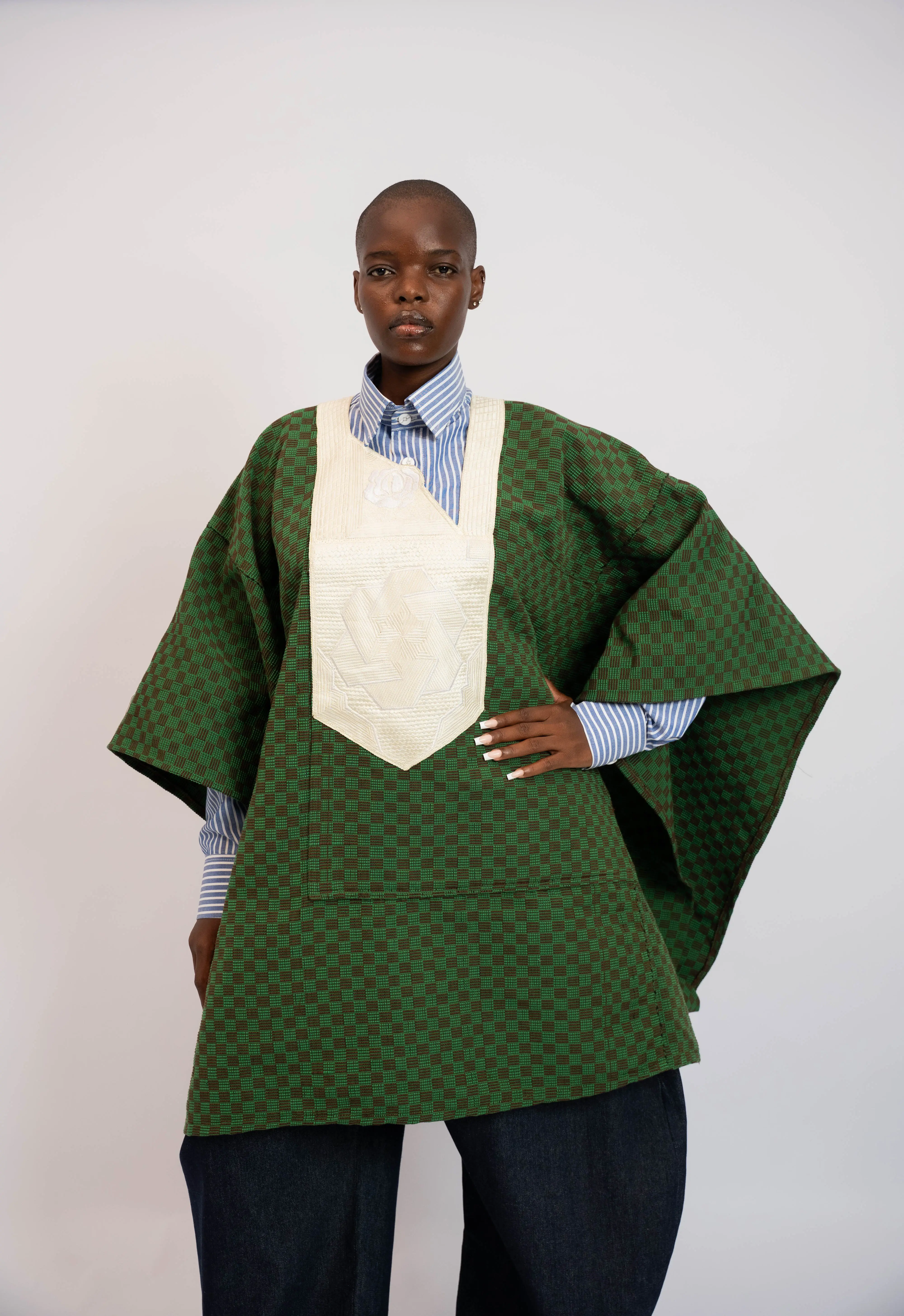
Rosyne Club dates its Cotonou workshop to 2022 and lists prototyping, pattern-making, manufacturing, adjustments and quality control among its functions. It says the workshop employs more than 30 people, including tailors, pattern-makers, cutters and finishing staff.
This places Cotonou within the development process, not solely at the point of assembly. Rosyne Club Cotonou is where cuts are tested and revised as well as produced. The different skills of its staff make “production” a sequence of responsibilities rather than one undifferentiated activity.
The business also states clearly that it does not make every product in Benin. Its manufacturing disclosures describe a hybrid model in which much of the work is done in Cotonou while some pieces or techniques go to selected partners. LOKKO separately reports that about 60% of garments are made in Benin’s Abomey region with around 40 workers, a figure that does not exactly match the brand’s own description and should be read as the profile’s account rather than an audited breakdown.
That distinction helps readers understand the house through its actual organisation. Beninese textile sourcing, workshop development and external specialist work can coexist; they should be identified separately when discussing a garment’s origin. Omiren Styles has made a similar point about another Cotonou label in its profile of FARE, whose artisan partnerships are also central to how its clothes are made.
Different Cities, Different Retail Functions
Montpellier’s role began with Chleuh’s earlier commercial activity and continues through the brand’s store and offices in Lattes, which LOKKO describes as its largest point of sale. The brand’s FAQ treats Montpellier as the place of its initial commercial development.
Paris provides a different arrangement. The brand lists a store on the first floor of the 235th Barber Shop at 15 rue Étienne Marcel, opened in late 2024. The Paris presence places Rosyne Club in a city where African diaspora labels have long built audiences, as Omiren Styles has shown in its profile of Maison Château Rouge. In Abidjan, Rosyne Club identifies a presence within the No Caption boutique rather than an equivalent standalone store.
Cotonou combines production with customer access. LOKKO dates the opening of the brand’s shop at Ganhi market to June 2026, while the brand also lists a presence in the Sofitel boutique. Benin is consequently a retail market within the business, not only a source of cloth and manufacturing.
The brand has also appeared on official platforms. The Government of Benin’s report on Benin’s day at New York Fashion Week on 13 September 2025, organised through the arts agency ADAC, records a Rosyne Club show presented by diaspora designers including Jamal Chleuh. LOKKO adds that artists including Kalash, Tayc and Jason Derulo have worn the brand in music videos.
These arrangements describe access and visibility, not sales performance. Their importance is structural: different places connect the clothes with customers in different ways.
What the Model Asks of Customers
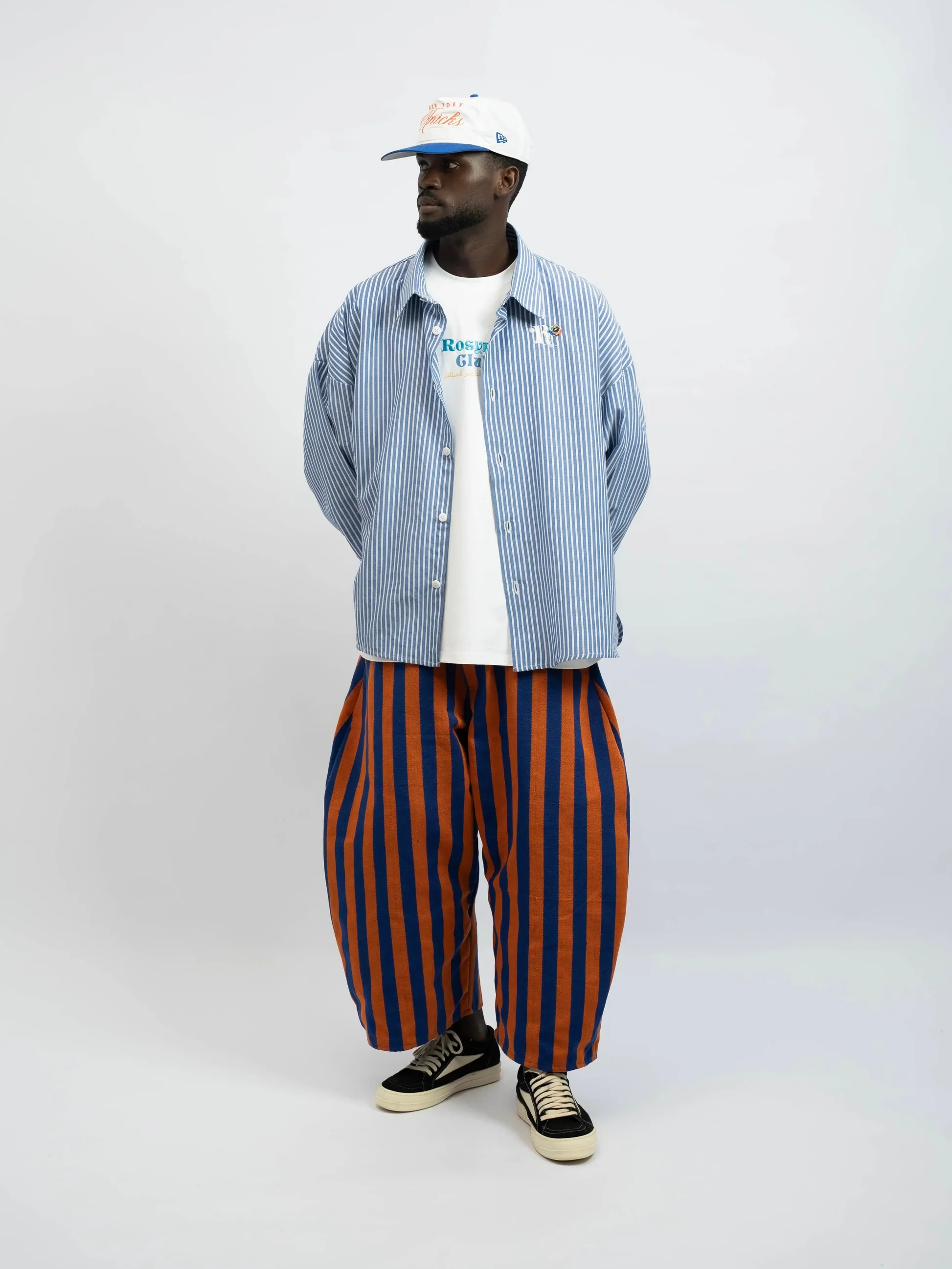
A distributed business places specific demands on the people who buy from it. A customer in Lattes, Paris or Ganhi market may hold the same balloon trousers, yet the garment reached each shop through a different chain of decisions. The brand’s own disclosures make it possible to ask which pieces came from the Cotonou workshop, which involved outside partners and which use kanvô from Abomey. Those questions are answerable only because the business has published its structure.
That transparency also sets a standard the label must keep meeting. Where its FAQ, its stores page and press coverage give slightly different accounts of headcount or first points of sale, the gaps are small but worth closing. A brand that asks customers to value handwoven cloth and named workshops gains most when its own records match the making it describes.
The Omiren Argument
Rosyne Club is most interesting where its streetwear vocabulary encounters the conditions of making. Volume gives the wardrobe a consistent direction; kanvô introduces a particular textile relationship; the Cotonou workshop supports development and production.
The cross-border structure matters because those functions are distributed. An adequate account keeps weavers, garment makers, founders and retail partners visible. It follows what each contributes instead of reducing the finished clothing to a single national-origin slogan.
ALSO READ
- Amah Ayivi and Marché Noir: The Togolese Designer Who Built a Paris Fashion Empire on Textile Waste.
- What It Actually Means to Dress “Back Home” When You’ve Never Lived There.
- Daveed Baptiste: Diaspora, Denim, and the Haitian Body in Motion.
- Canex Presents Africa: What the Afreximbank–Portugal Fashion Week Model Reveals About Entering Europe.
Frequently Asked Questions
Who founded Rosyne Club?
Rosyne Club was founded in 2021 by Jamal Chleuh and Gildas, and describes itself as a Franco-Beninese brand linked to Cotonou, Montpellier and Paris. The name honours Chleuh’s mother, a Beninese seamstress from Abomey whose careful work with fabric influenced him. Chleuh previously worked as a stylist for French rap artists and ran a small clothing space in Montpellier.
How does the Rosyne Club use Kanvô?
The brand uses kanvô, a Beninese cloth handwoven in strips by artisans in the Abomey region, in selected jackets, vests and trousers. Some pieces use it as the main material, and others combine it with complementary fabrics. Because weaving depends on artisans’ availability, the brand says it delays pieces while waiting for cloth rather than substituting it.
What happens at the Rosyne Club workshop in Cotonou?
The brand says its Cotonou workshop, running since 2022, handles prototyping, pattern-making, manufacturing, adjustments and quality control, and employs more than 30 people, including tailors, pattern-makers, cutters and finishing staff. It also has a shop at Ganhi Market in Cotonou, opened in June 2026, and a presence in the Sofitel boutique.
Are all Rosyne Club products made in Benin?
No. Rosyne Club uses a hybrid production model: much of the work is done in its Cotonou workshop, while selected partners handle some pieces or techniques. A September 2026 press profile put the share made in Benin at about 60%. Customers should check individual product information for each garment’s origin.