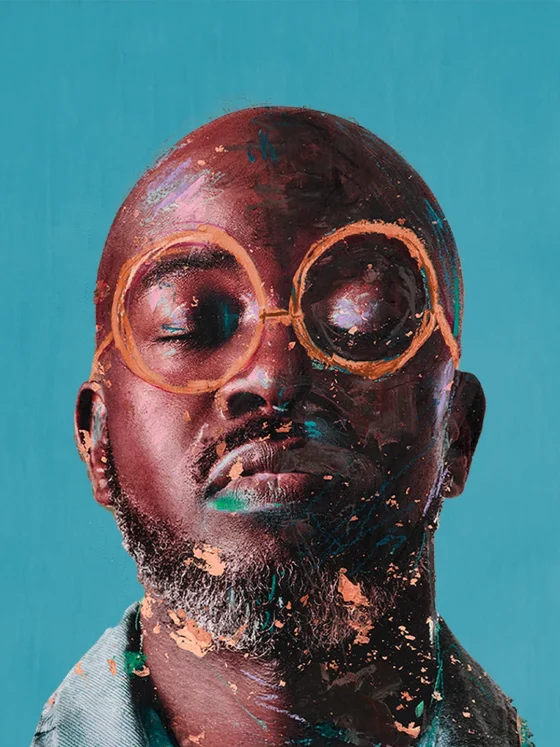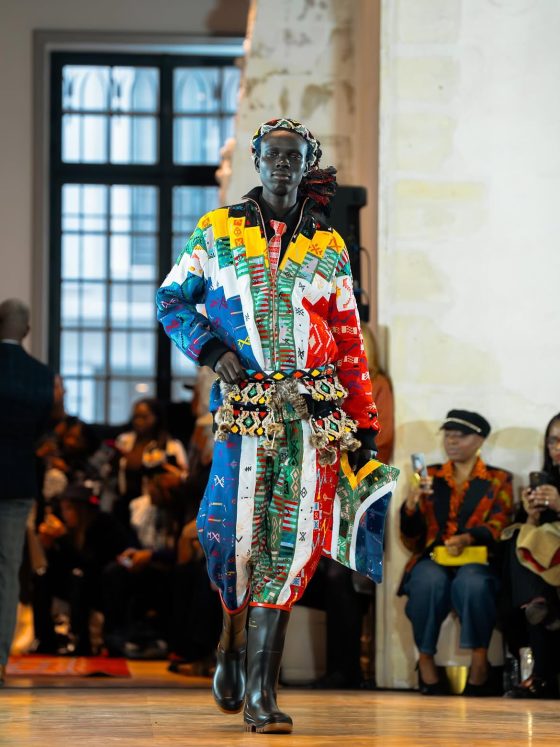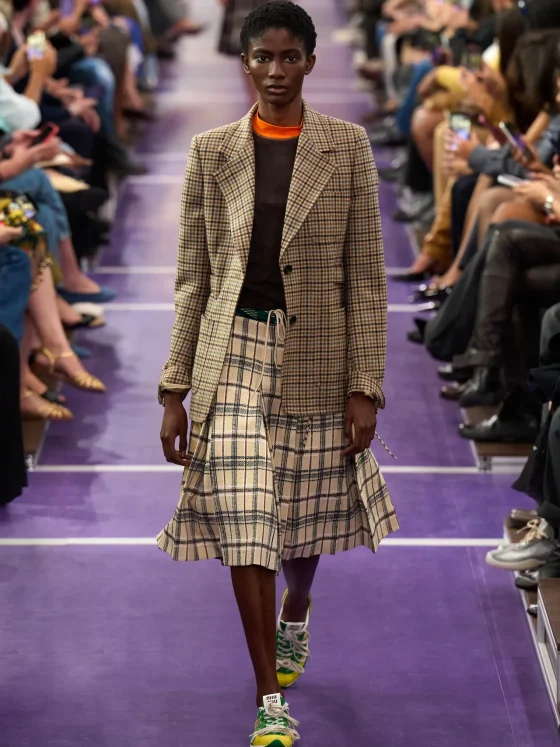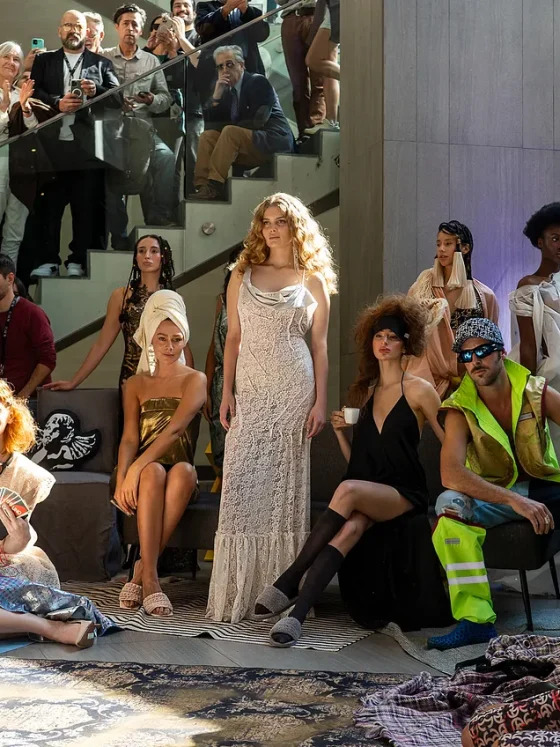
In October 2021, Afreximbank and Portugal’s National Association of Young Entrepreneurs, known as ANJE, signed a three-year partnership and brought twenty African designers to Porto. Eight showed on the runway. Twelve occupied the BrandUp showroom. The stated objective was direct: to connect with the European market through Portugal, to develop brand incubation capacity, and to give African fashion the kind of structured access to international buyers, press, and retail manufacturers that individual designers cannot afford and most institutions have never tried to provide. Nobody had done this before at this scale, with this institutional architecture, and with a development bank rather than a luxury conglomerate behind it. Four years, five Portugal Fashion Week editions, more than one hundred designers from thirty-four African and Caribbean countries, a dedicated CANEX pavilion at Tranoï Paris running for seven consecutive seasons, an inaugural Tranoï Tokyo, a Galeries Lafayette pop-up, a residency at Angelina Jolie’s Atelier Jolie in New York, a runway show featuring on the official Paris Fashion Week calendar, and $540 million in deals committed at CANEX WKND 2024 in Algiers across the creative industries programme. The Canex Presents Africa model is not a visibility exercise. It is a strategic architecture for European market entry, and the decisions embedded in its design reveal more about what entering Europe actually requires than most fashion business guides manage to articulate. This article examines what those decisions are, what they have produced, and where the model’s honest limitations still sit.
From Portugal Fashion Week’s runway to Tranoï Paris to Galeries Lafayette: what four years of Canex Presents Africa reveal about the strategic architecture of entering Europe as an African designer brand.
The Architecture: Three Stages, One Strategic Logic
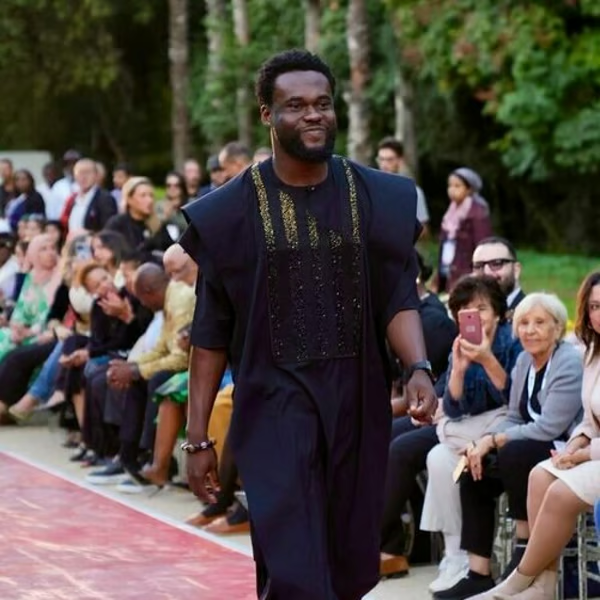
The Canex Presents Africa programme is structured across three sequential components that together map the journey from visibility to commercial transaction. Understanding the architecture is the precondition for understanding what it reveals about European market entry.
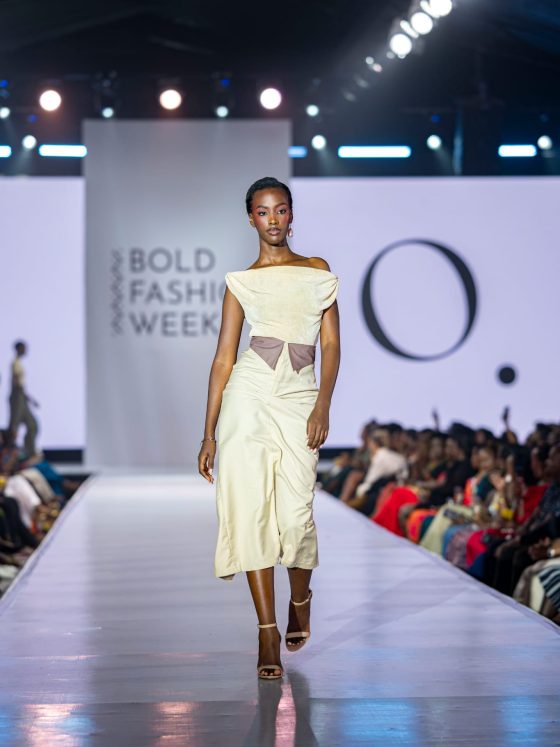
The first stage is Portugal Fashion Week. The choice of Portugal as the entry point was not incidental. Portugal has a longstanding textile manufacturing sector, significant cultural and historical connections to multiple African nations, an established fashion week infrastructure with thirty years of history through ANJE, and proximity to the European retail and press circuit without the cost and competitive density of Paris, Milan, or London. The programme offered designers access to two runway tracks: the main catwalk for established designers with at least five collections and five years of industry experience, and the Bloom platform for designers under thirty-five with at least two collections and fewer than four years in the industry. A third component, the BrandUp showroom, gave brands direct contact with retailers and buyers without a runway presentation. The three-month incubation component, providing structured mentoring for the European market, was built into the programme from its inception. This combination, runway visibility, showroom commercial access, and sustained mentoring, is not how emerging designers typically access European markets. It is how the European fashion infrastructure typically closes its doors to them.
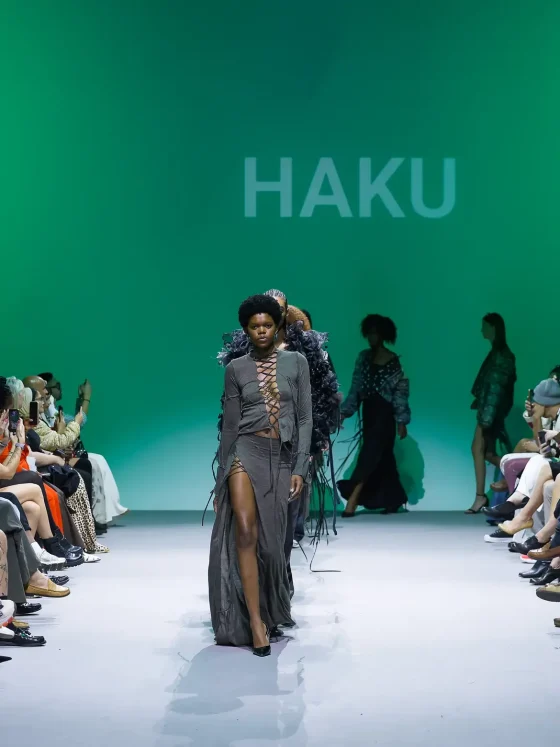
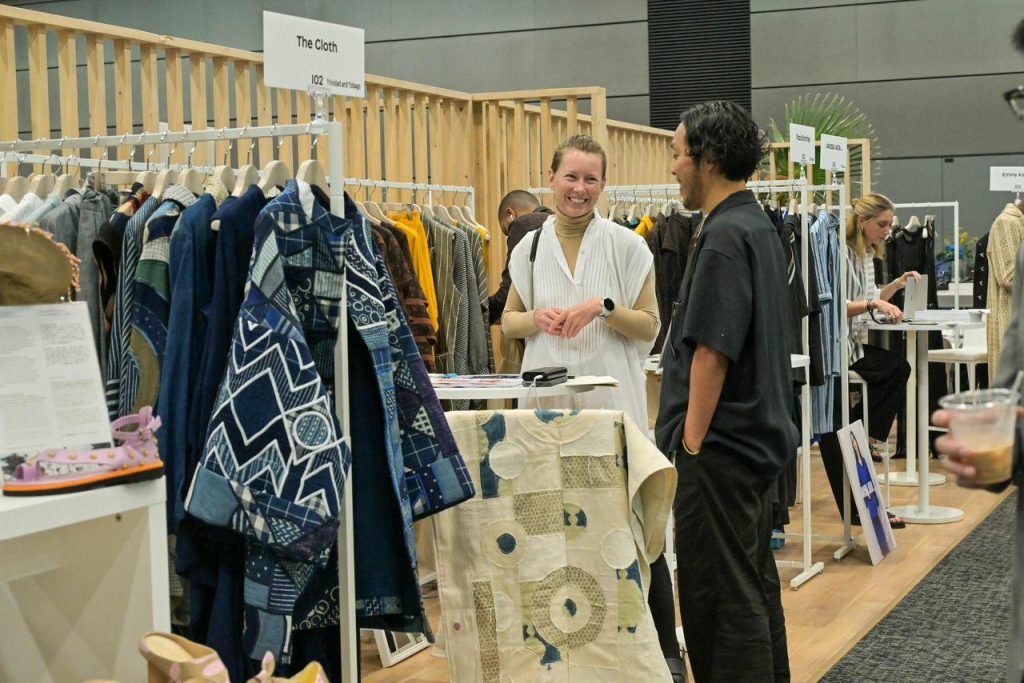
The second stage was Tranoï, the B2B trade show that runs at the Palais Brongniart during Paris Fashion Week. The CANEX partnership with Tranoï has now run for seven consecutive seasons, and as of March 2026, nineteen African brands occupied the dedicated CANEX pavilion at the Palais Brongniart. The Tranoï partnership provides a CANEX-branded scenographic exhibition space, a dedicated sales team, direct contact with international buyers and media, and the opportunity to write orders with global retail buyers in a trade show environment designed specifically for that purpose. Since 2022, CANEX’s presence at Tranoï has led to successful brand launches in the UAE, Japan, France, Germany, and the United States, with increased orders from retail buyers and editorial features in Vogue and WWD. In September 2024, CANEX launched an inaugural edition of Tranoï Tokyo at Japan Fashion Week, bringing fifteen African designers to the Yoyogi National Stadium. The Tokyo extension was not a replication of Paris. It was a market test in a distinct premium-fashion geography with an established appetite for craft-driven design.
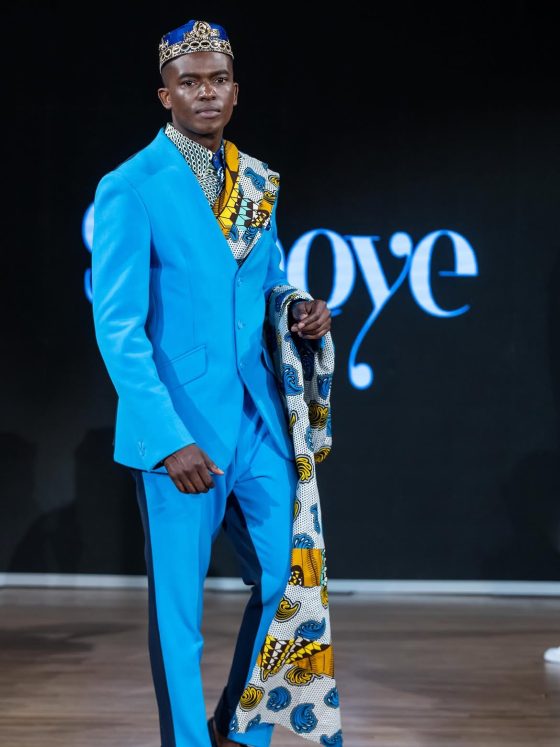
The third stage is what CANEX has been building since 2024: institutional retail integration. In July 2025, Canex teamed with Tranoï and Galeries Lafayette to stage the Africa Now pop-up in Paris, featuring Boyedoe (Ghana), Wuman (Nigeria), Late For Work (Morocco), and We Are NBO (Kenya). The selection, made by Galeries Lafayette’s general buying and merchandising director for womenswear, prioritised brands from the CANEX stable with a sustainable design orientation. For CANEX’s programme head Khanyi Mashimbye, this represented the model’s most significant retail milestone to date. Her next stated aspiration was to replicate it with Bergdorf Goodman and Bloomingdale’s in the United States. The commercial logic is clear: a Galeries Lafayette placement generates proof of commercial viability that is readable by international retail buyers in a language they already trust. It converts a runway narrative into a stockist record.
What Afreximbank Covers, and What That Reveals About the Barrier
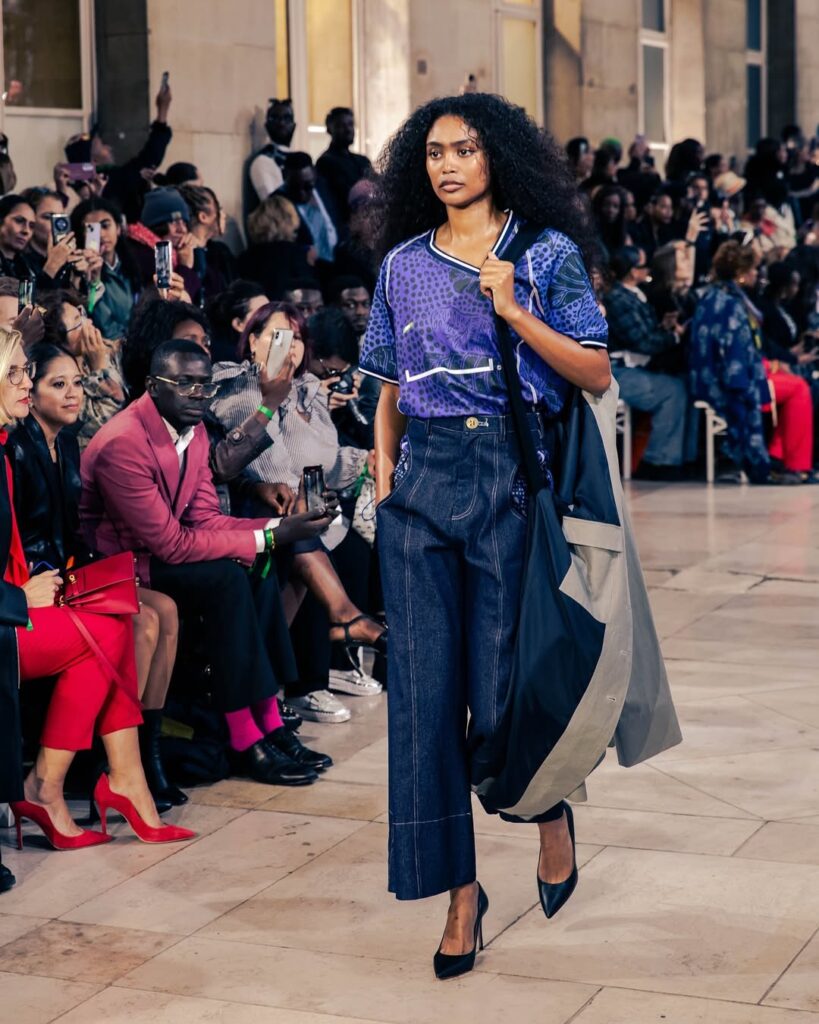
The costs that Afreximbank underwrites on a case-by-case basis for Canex Presents Africa participation are sample shipping, showroom space fees, PR costs, scenography, sales support, and, in certain cases, flights and accommodation. For the Tranoï partnership, selected designers receive, at minimum, either a round-trip economy-class flight to Paris or accommodation during the event, plus a dedicated sales team and exclusive buyer and media contacts within the CANEX pavilion. These are not incidental expenses. They are the specific financial barriers that prevent African designers from entering European trade show environments at all.
Paris Fashion Week trade show fees for showroom space at Tranoï are denominated in euros. Scenography, PR representation, sample shipping from Lagos, Accra, or Nairobi to Paris, and sales team costs together constitute a sum that is prohibitive for the majority of independent African designer brands operating on naira-, cedi-, or shilling-denominated revenue streams against a hard-currency cost base. Mashimbye identified this with precision in her statement to WWD: it is very difficult for African creatives to participate in Paris Fashion Week or New York Fashion Week because the costs are prohibitive, given the euro- and dollar-based currencies they have to compete in. Lack of information is another identified hurdle. The model addresses both by absorbing the cost and providing navigational infrastructure simultaneously.
This financial architecture explains why development bank intervention is the mechanism that enables the model. No luxury conglomerate, no fashion media company, and no private equity firm has built a programme of equivalent scope and geographic breadth for access to the African fashion market, because the financial structure of African designer brands does not generate the returns that private capital requires on the timeline it demands. Afreximbank, as a pan-African multilateral institution with total assets and contingencies reaching $48.5 billion at the end of 2025 and net income of $1.2 billion in 2025, has the institutional mandate and the financial scale to absorb costs that private investors cannot justify. The original CANEX creative industries facility launched at $500 million in 2020, doubled to $1 billion in 2022 when that facility was nearly fully utilised, and doubled again to $2 billion for the 2024-2027 period, announced at CANEX WKND 2024 in Algiers. The trajectory is not expansion for its own sake. It is a documented demand signal from the sector.
Who Is in the Room and What the Buyers Are Actually Saying
By the time of the Business of Fashion’s November 2025 investigation into Afreximbank’s fashion division, 100 designers from 34 African and Caribbean countries had participated in Canex Presents Africa across both the Portugal Fashion Week and Tranoï tracks. The March 2026 Tranoï Paris selection included Adele Dejak and Studio Namnyak from Kenya; Boyedoe and Jiamini from Ghana (via diaspora); Wuman and Oshobor from Nigeria; Kente Gentlemen from Côte d’Ivoire; Diana Seboke, Connade, and Gugubygugu from South Africa; and Xita from Botswana, among others. The geographic breadth of the cohort is part of the strategic argument: the CANEX pavilion at Tranoï does not represent Nigerian fashion or Ghanaian fashion. It is presenting a continental proposition.
What buyers are actually saying at Tranoï is documented through WWD’s coverage. Tranoï’s general manager, Boris Provost, observed that approximately half of the exhibitors at the October 2025 edition were newcomers and that, while some labels were placing large orders, buyers overall were conservative, concerned about global conditions and buying rationally. The key phrase that Boyedoe’s designer, David Kusi Boye-Doe, identified from direct experience is the most commercially significant data point the programme has produced: to get repeat buyers is the most important. Buyers cited craftsmanship and authentic brand stories as the highest priorities on their wishlists. Both are structural advantages for African designer brands. The constraint is not what buyers want. It is whether buyers trust a brand sufficiently to commit to a second order after the first season, which is the moment when a trade show presence converts into a retail relationship.
The Galeries Lafayette selection reinforced this finding from a different angle. The buying team specifically prioritised brands with a sustainable orientation from the CANEX stable. Late For Work from Morocco, Boyedoe’s commitment to purpose-driven upcycled denim, We Are NBO’s craft jewellery from Kenya, and Wuman’s design narrative from Nigeria were chosen not simply because they are African brands but because they met the specific commercial and sustainability criteria that Galeries Lafayette’s buying team was applying. This is the commercial argument for what CANEX’s multiple seasons at Tranoï have built: each season of consistent presence produces the buyer recognition and institutional familiarity that converts to purchase consideration. Africa Fashion Tour’s February 2026 report on CANEX at Tranoï described the transformation plainly: from a curiosity in early seasons to a mainstay of Paris Fashion Week, with buyers and media treating the CANEX pavilion as a permanent fixture of the trade show landscape.
Also Read:
- Bridging the Investment Gap: How African Fashion Can Attract Capital and Scale
- The State of African Fashion 2026: A Data Portrait Across Investment, Manufacturing, Retail, and Export
- What the Numbers Say About Lagos, Accra, and Nairobi as Fashion Business Cities
- African Fashion Retail’s Structural Failure: Why $70 Billion in Annual Market Activity Has No Flagship Commercial Platform
Where the Honest Limits Still Sit
The Business of Fashion’s November 2025 reporting acknowledged the critique that exists within the industry. Some observers question the strategy, noting that fewer buyers at the big four fashion weeks are seeking to stock emerging African designers amid tighter retail budgets and increasingly crowded trade show environments. The Tranoï general manager’s own assessment, that buyers are conservative and buying rationally, is a structural condition that affects all emerging brands at trade shows, not only African ones. It is the condition the CANEX model is working within, not one it has resolved.
The programme’s financial structure also raises a question that the model has not yet answered: what happens when Afreximbank’s underwriting is no longer the mechanism sustaining the market access? Canex Presents Africa covers costs that the participating brands themselves cannot cover. The stated objective is to build brands to the point of commercial self-sufficiency. The time horizon for reaching that point and the conversion rate of programme participation to sustainable European retail presence have not been published in the programme’s public reporting. Mashimbye’s aspiration to replicate the Galeries Lafayette model at Bergdorf Goodman and Bloomingdale’s is a legitimate strategic ambition. It is also a statement that the current model’s objective is to establish proof of concept rather than to have already resolved the structural access problem. The programme is building the infrastructure for African fashion’s European market presence. That infrastructure is not yet self-sustaining.
The call for applications that preceded the 2025 Tranoï cohort drew over 800 entries for 35 places. That ratio, more than twenty-three applicants per available slot, is itself a data point. It confirms that the demand from African designers for the kind of structured, subsidised European market access that CANEX provides is dramatically greater than the programme’s current capacity. The Pan-African Fashion Alliance, which Afreximbank is establishing in partnership with the International Trade Centre to provide collective access to high-value markets, financing, manufacturing capacity, and raw material procurement, is the structural response to that demand. Whether it can scale to match it is the commercial question that will define the model’s second decade.
The Omiren Argument
The Canex Presents Africa model has produced something that did not exist in African fashion before 2021: a documented, replicable, institutionally backed architecture for how an African designer brand enters the European market. It is not a template that any individual brand can follow without the institutional support that Afreximbank provides. But it is a map of what the journey requires that the industry has never had before. Portugal Fashion Week is the gateway to incubation. Tranoï as the B2B trade conversion mechanism. Galeries Lafayette and equivalent retail institutions are the commercial proof layer. A dedicated sales team, scenographic presence, and three months of mentoring as the minimum viable support package for a brand entering this environment without the cultural capital, currency advantage, or institutional relationships that European designers inherit by proximity. The map does not exist in any business guide, any fashion school curriculum, or any fashion media publication. It has been produced by an African institution that decided the infrastructure did not exist and built it.
This is the commercial argument Omiren Styles makes by covering Canex Presents Africa as industry intelligence rather than as a programme announcement. The 800 applications for 35 Tranoï places are not simply a statistic about demand. They are a record of how many African designer brands have reached the point of European market readiness without any institutional mechanism to act on it. The model Afreximbank has built is one answer to that gap. It is a $2 billion answer, operating at the intersection of development finance and fashion trade facilitation, and it is producing verifiable retail outcomes: brands stocked in Galeries Lafayette, orders placed by buyers across the UAE, Japan, France, Germany, and the United States; and editorial features in the publications that shape international retail taste. The next phase, whether the model scales, whether private capital joins, and whether the designers who have completed the programme sustain repeat buyer relationships across multiple seasons, will determine whether it is a model or a milestone. Right now, it is the only model.
Frequently Asked Questions
What is Canex Presents Africa, and who runs it?
Canex Presents Africa is a market access and capacity-building programme for African and Caribbean fashion designers, run by Afreximbank’s Creative Africa Nexus initiative, in partnership with Portugal’s ANJE (National Association of Young Entrepreneurs) for the Portugal Fashion Week track and with Tranoï for the Paris Fashion Week track. It launched in October 2021 in Porto, Portugal. By the time of Business of Fashion’s November 2025 reporting, 100 designers from 34 African and Caribbean countries had participated across both tracks. The programme provides runway and showroom access, three months of structured European market mentoring, a dedicated buyer and press contact, and, on a case-by-case basis, covers costs such as sample shipping, showroom fees, PR, scenography, sales support, flights, and accommodation. Afreximbank doubled the broader CANEX creative industries fund to $2 billion for 2024-2027, as announced in October 2024.
What has the Canex–Tranoï partnership at Paris Fashion Week produced commercially?
The CANEX partnership with Tranoï Paris has run for seven consecutive seasons as of 2026. Since 2022, it has produced successful brand launches in the UAE, Japan, France, Germany, and the United States, increased orders from retail buyers, and editorial features in Vogue and WWD. In September 2024, CANEX launched Tranoï Tokyo at Japan Fashion Week, placing 15 African designers at the Yoyogi National Stadium. In September 2024, Afreximbank staged the Africa Now pop-up at Galeries Lafayette in partnership with Tranoï, featuring Boyedoe (Ghana), Wuman (Nigeria), Late For Work (Morocco), and We Are NBO (Kenya), selected by Galeries Lafayette’s womenswear buying director on sustainability criteria. In September 2024, three African designers, Sukeina, Lagos Space Programme, and Thebe Magugu, appeared on the official Paris Fashion Week runway for the first time via a CANEX-curated show at the Palais Brongniart.
Why does Afreximbank, a development bank, run a fashion programme?
Afreximbank is a pan-African multilateral financial institution mandated to finance and promote intra- and extra-African trade. Its creative industries mandate reflects the recognition that the creative economy, including fashion, is a key driver of African development and employment. The bank launched its creative industries facility at $500 million in 2020, doubled it to $1 billion in 2022 when demand exceeded that facility, and doubled it again to $2 billion for 2024-2027. At the end of 2025, the bank’s total assets and contingencies reached $48.5 billion with net income of $1.2 billion. Fashion is one of seven CANEX categories, alongside film, art, music, literature, sports, and gastronomy. Within fashion, the bank’s rationale is that African designers face structural financial barriers to European market entry, specifically hard-currency costs that naira-, cedi-, or shilling-denominated revenue streams cannot cover, and that without institutional intervention, those barriers will not be resolved by private capital alone.
What are the programme’s honest limitations?
The programme’s primary structural limitation is that the market access it provides is underwritten by Afreximbank, and the brands participating cannot yet sustain that access independently. The conversion rate from trade show presence to sustainable European retail relationships across multiple buyer seasons has not been published. The call for applications for the 2025 Tranoï cohort drew over 800 entries for 35 places, a demand-to-capacity ratio that confirms the programme cannot serve the scale of readiness that exists. Industry observers have also noted that buyer appetite at the major fashion weeks for emerging African designer brands is subject to the same retail conservatism affecting all emerging labels, with buyers citing tighter budgets and the need for repeat season consistency before committing to ongoing stock relationships. The model has built the infrastructure for European market entry. Whether that infrastructure becomes self-sustaining without ongoing development finance support is the open commercial question the programme’s second decade will need to answer.