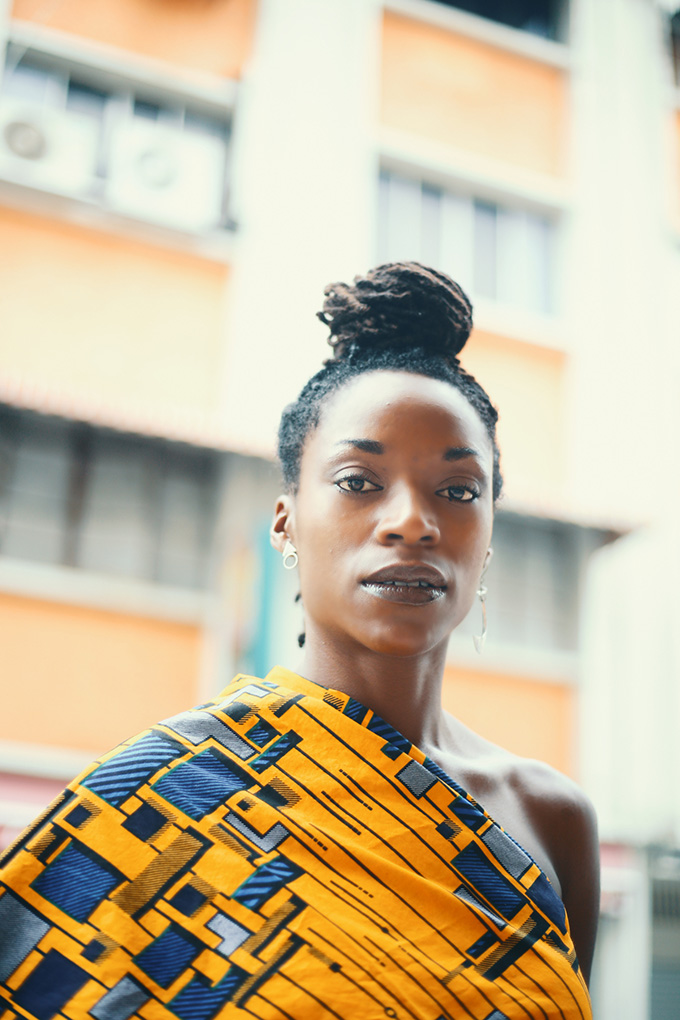
In CNA’s 2025 film about Ifeoma “Ify” Ubby, a conversation with dressmaker Ann from Nelson’s turns an idea into a series of practical choices. They discuss a cheongsam, a Mandarin collar, a Chinese button and the width of the fabric. A turquoise fastening is considered. Ann offers advice about the design and the customers who might wear it. The exchange offers a clearer account of OliveAnkara than the familiar language of cultural fusion. Ubby brings her ideas and references; Ann contributes knowledge of the garment and its possible wearers. Their conversation makes the design more specific.
That process is worth following. Ubby’s Singapore-based label draws on her Nigerian family background, Italian upbringing and life in Asia, but listing those influences tells us only where to begin. The clothes develop through what she does with them: selecting fabrics, creating prints and working with makers to give a design its form. “I try to tell my story in the clothes I design,” she told Vogue Singapore in 2021. Looking closely at how she works makes that statement more tangible.
Explore how Ifeoma Ubby designs OliveAnkara through fabric selection, original prints and work with Singapore dressmakers on cheongsams and more.
Clothing Before the Business
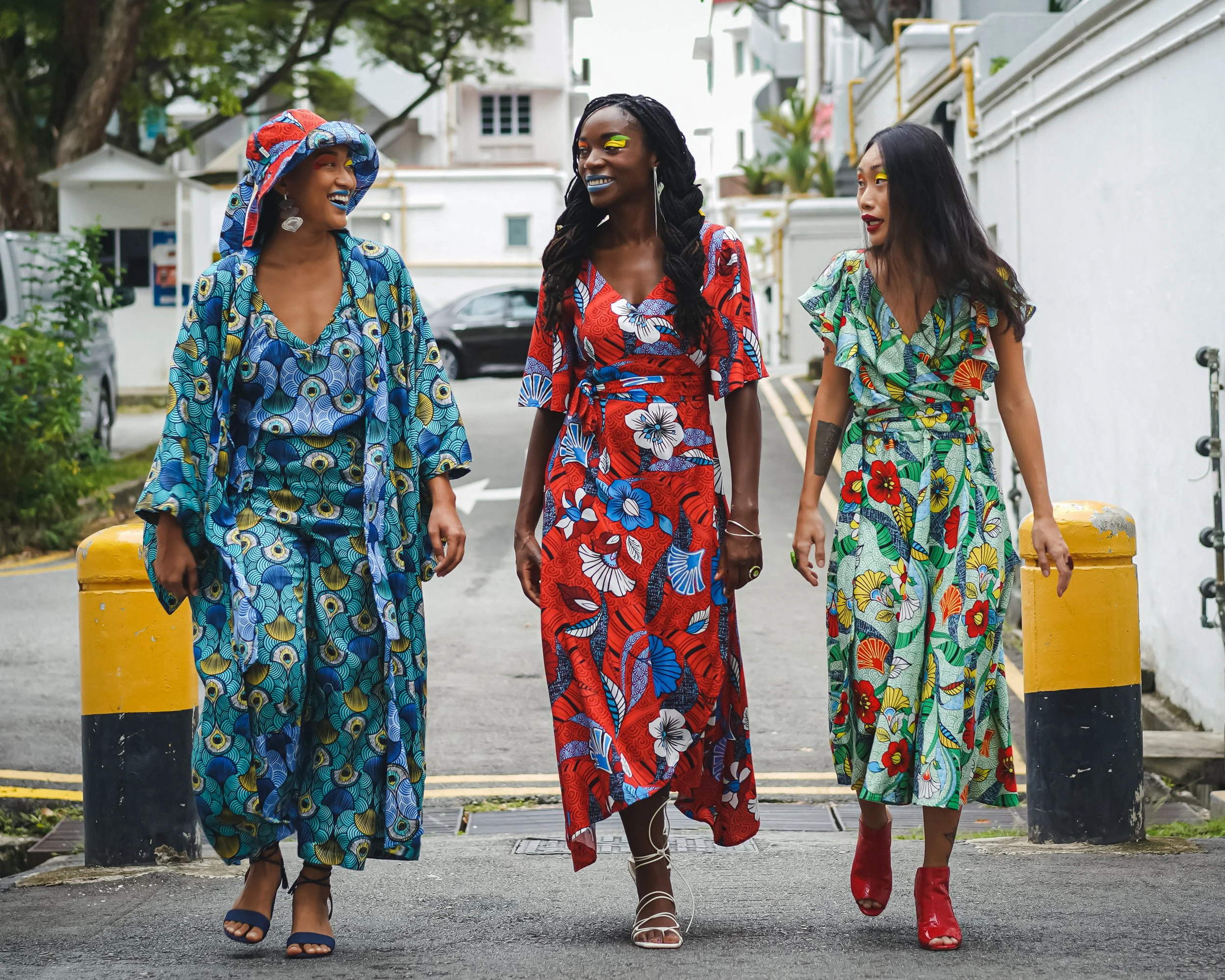
Ubby was born and raised in Italy to Nigerian parents. Family gatherings and celebrations kept Nigerian clothing and culture present in her Italian upbringing. In interviews, she recalls the fabrics people wore and the sewing her mother and grandmother did. She also describes an early experience of making a dress herself. Fashion was therefore part of her life before it became her profession. The clothes were connected to people, occasions and the practical work of making, not only to images of a place elsewhere.
Her scientific career took her to Singapore. After completing a PhD in human molecular genetics, she moved there in 2013 for postdoctoral research at the National Cancer Centre. The move from cancer research into fashion makes a memorable career story, but the family background complicates the neat before-and-after. Sewing and dress were already familiar interests. Building OliveAnkara gave them a different scale and purpose. The immediate starting point was something she wanted to wear.
Finding the Fabric, Making the Clothes
Preparing for her wedding in 2016, Ubby struggled to find the African fabrics she wanted in Singapore. Her mother and grandmother helped send Ankara, and she designed her gown. She continued making clothes for herself, attracting questions from friends who wanted pieces of their own. In her interview with Vogue Singapore, she explains the beginning without turning it into a grand mission:
“I didn’t start with the idea of bringing Africa to Singapore, but rather through making my own clothes with the fabrics I love and couldn’t find here.”
That account keeps the relationship between need and design clear. She wanted particular fabrics, made clothes from them and discovered that other people were interested. In the same interview, Ubby described family members helping choose fabrics from markets in Nigeria and arranging their shipment. Her work began with a textile that already had a pattern and character. She then had to decide what kind of garment it could become. Choosing existing cloth does not mean the design is already resolved. The fabric supplies a starting point, not a finished outfit. A dress, shirt, or pair of trousers puts the same print in a different place within a wardrobe.
That distinction would remain important as OliveAnkara developed another part of its practice: designing the printed surface itself.
OA ORIGINALS: Starting Before the Finished Fabric
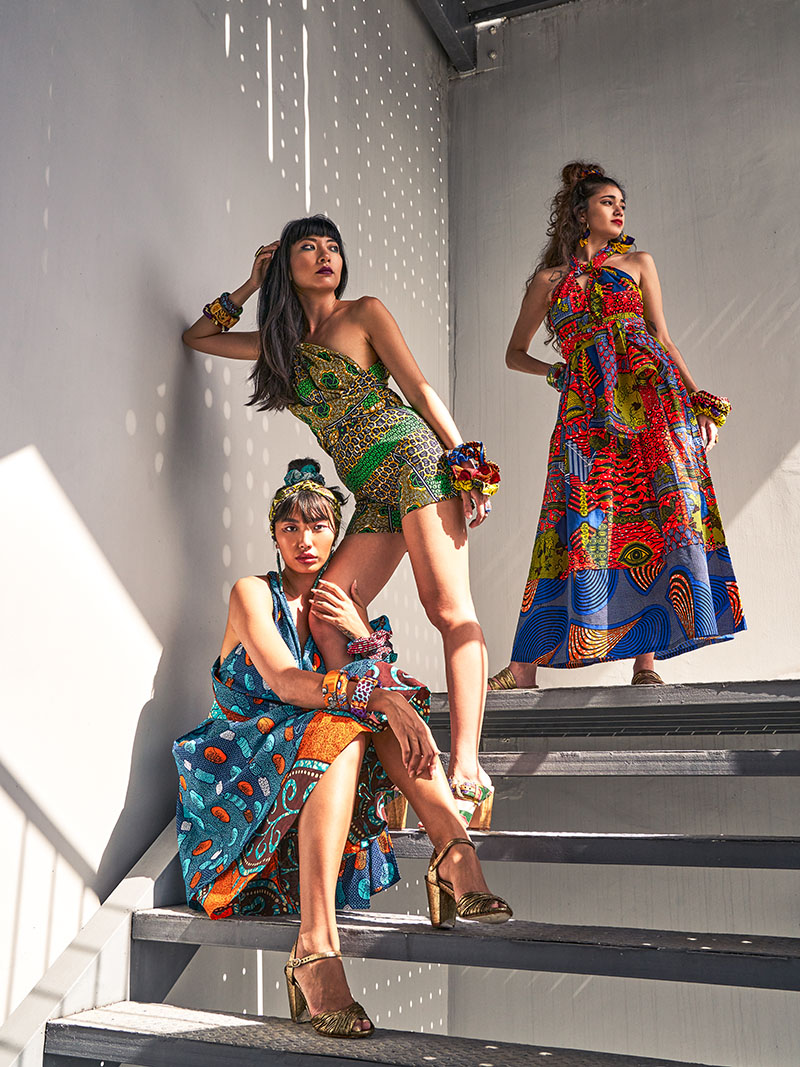
In Ubby’s account of developing OA ORIGINALS, published by City Nomads in 2021, she introduced Ajo Aye ’21 as the first collection for which the brand designed and created all its fabrics. It extended her involvement further back in the process. Instead of beginning only with an existing print, she could develop the surface that would become part of the garment. Ubby explained the collection through references to Yemojá and the Japanese water element Sui. These were the inspirations she brought together, giving the collection a proposition beyond selecting available fabrics.
The change matters because it adds another area of design responsibility. With an existing textile, the designer chooses how to use a pattern that is already present. An original-print collection also involves deciding what that pattern should be. Neither approach automatically produces a better garment. They offer different ways of working, and OliveAnkara’s history includes both. A 2023 Singapore Global Network profile also discusses Ajo Aye and identifies TENCEL™ Lyocell among the collection’s materials. That detail broadens the picture of the label: although Ankara is central to its name and early story, its documented work is not confined to one fabric category.
A Garment Shaped Through Conversation
The CNA exchange with Ann shows what happens when an idea meets the practical work of construction. A Mandarin collar and Chinese button help define the proposed cheongsam. The fabric’s width introduces another consideration, while the possible fastening colour brings attention back to how the parts will look together. Ann’s advice includes the design’s relationship to customers and how conservative it might feel. These are connected choices, not a list of decorative additions. The garment has to take shape from the available material, and someone has to judge how its details will work as clothing.
Ann is not presented simply as a pair of hands carrying out an already complete instruction. Her suggestions contribute to the discussion. Ubby’s direction becomes more precise through another maker’s knowledge. An earlier interview gives that conversation a broader context. In 2021, Ubby described working with six local sewists in their sixties and meeting them to discuss designs and fit adjustments. Keeping the work nearby made those exchanges possible. This is where Omiren’s examination of fashion craftsmanship connects with the profile. The finished garment is easier to understand when making is part of its design story. Crediting the designer and recognising the maker are not competing acts.
One Print, Several Ways to Dress
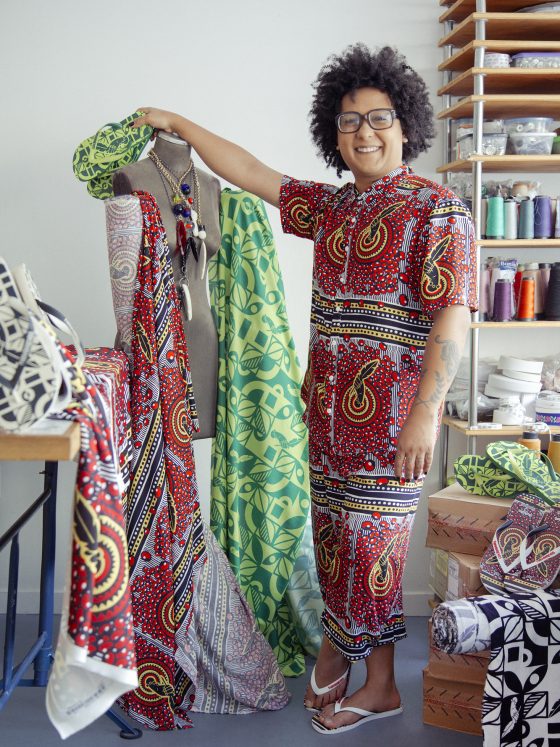
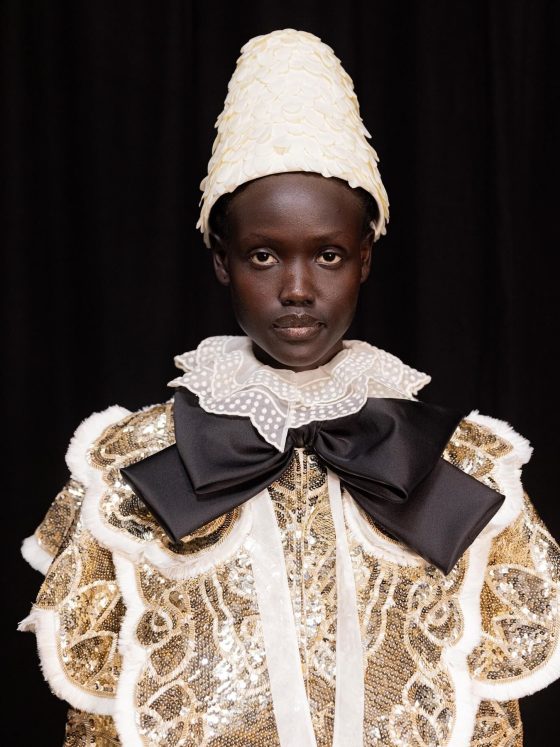
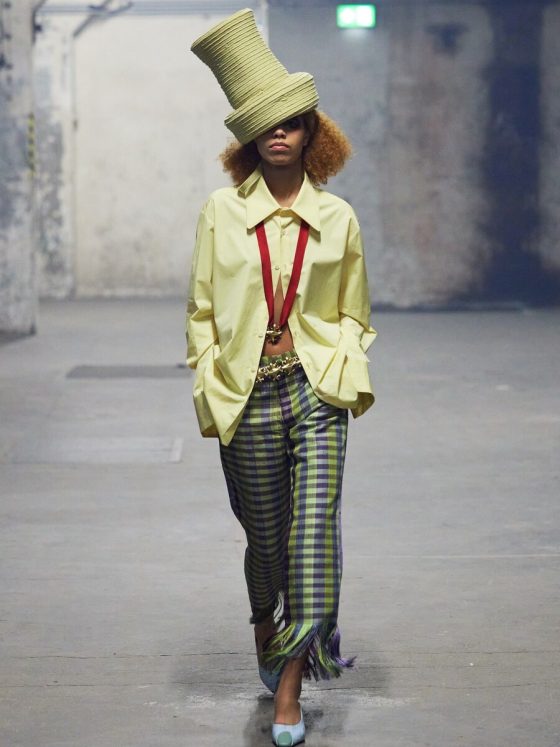
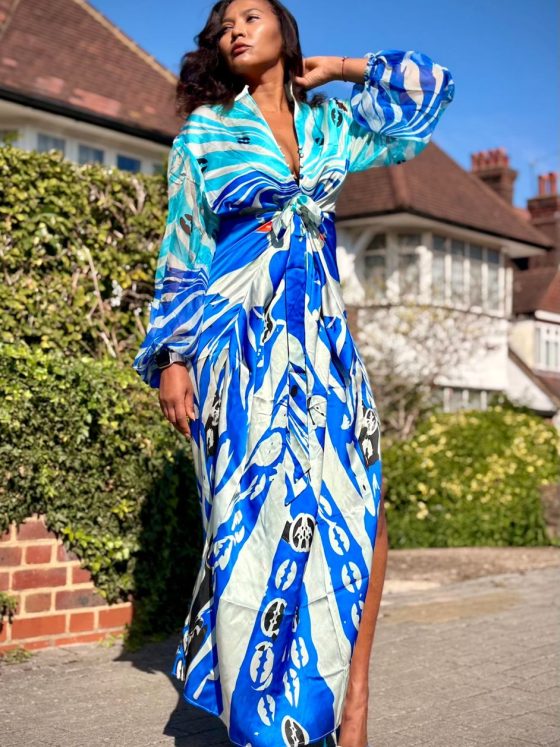
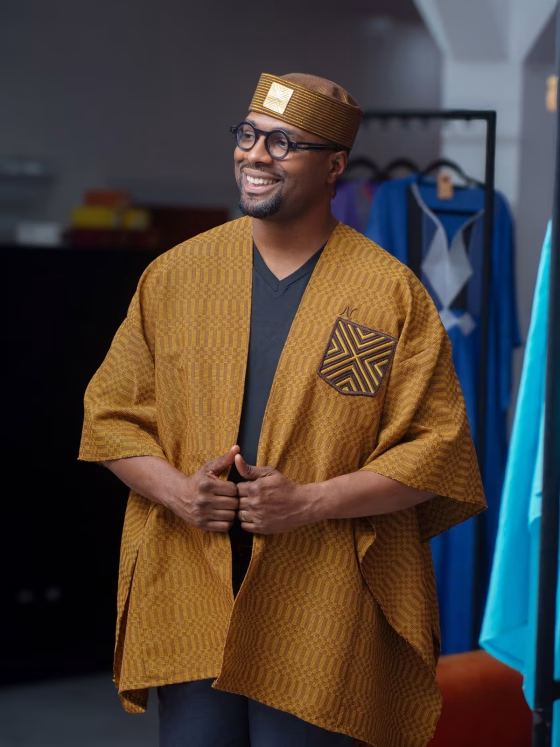
The cheongsam is a recurring reference in OliveAnkara’s work. Ubby has described retaining some traditional Chinese elements while introducing different details through her designs. She also identifies the Afromono as a garment inspired by the Japanese kimono. The brand’s catalogue shows how these references sit alongside other clothing rather than defining the entire range. In the Ewa Naibu range, the same print appears across cheongsam dresses, a cheongsam top, wide-leg trousers and a unisex shirt, among other pieces. The Onyame Sɛn range similarly includes a cheongsam, a wrap skirt and other dresses.
Offering the print across different forms gives customers more than one way in. Someone who does not want a dress may choose a shirt or trousers. Someone interested in the cheongsam encounters it within a wider collection rather than as the label’s only proposition. This connects with Ubby’s stated interest in making ankara wearable beyond special occasions. In The Guardian Nigeria, she discussed bringing it into everyday dressing. The range gives that intention a practical expression. The textile does not have to belong to one event, one complete outfit or one silhouette.
What Happens to the Remaining Fabric?
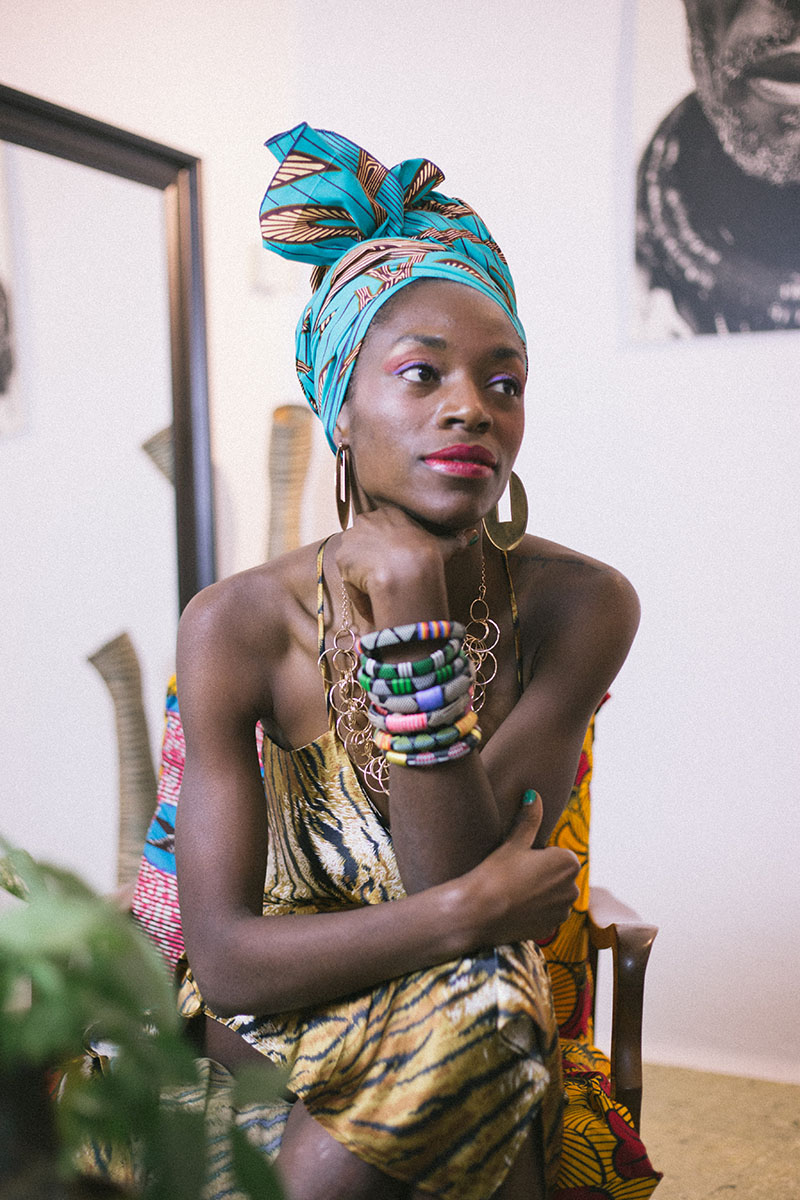
The first garment is not necessarily the end of the material’s use. Ubby has described making accessories from fabric left after cutting. In the 2023 Singapore Global Network profile, she explains a sequence in which remaining material from adult clothing could be used for children’s pieces and then smaller accessories. Here, the amount and shape of the remaining cloth become starting conditions for another object. The question changes from what can be made from a full length to what can be made from what is left. In her Vogue Singapore interview, Ubby placed quality and design ahead of quantity and trends. The offcut practice gives readers a specific way to understand that stated approach: attention continues after the main garment has been cut.
It is a modest detail, but a useful one. It tells us more about how the business approaches material than a broad label such as “conscious fashion” could do on its own.
Singapore as a Place of Work
Singapore enters this story through people and activity, not simply through the location attached to the brand. Ubby’s published accounts describe local makers, customers and business relationships. Singapore Global Network records her involvement with The Bridge Fashion Incubator and the women’s entrepreneurship network CRIB, as well as connections made through retail events. Those relationships occupy different parts of the practice. A business network is not the same as a dressmaking conversation, and a retail encounter is not the same as developing a print. Together, however, they place OliveAnkara within a working environment.
The city is where Ubby sought fabrics, responded to requests for clothes and developed relationships around making and selling them. Her Nigerian family connections and Italian upbringing remain part of the account, but Singapore is not merely the destination for an idea formed elsewhere. The CNA scene makes that especially clear. A garment is being discussed with someone whose advice can change it.
The Omiren Argument
OliveAnkara shows why heritage is better examined through practice than treated as a label. Ubby’s Nigerian family references remain important, but they do not prescribe a single silhouette or way of dressing. She works through selected fabrics, original prints and garment forms encountered across her life. Her authorship lies in those choices. It is visible in the movement from sourcing cloth to developing a printed surface, and from an initial garment idea to decisions about its collar, fastening and fit. The Singapore relationships are part of that process, not an addition to it. Ann’s contribution in the CNA film shows how a designer’s proposition can become more precise through another maker’s knowledge.
Omiren’s position is that both deserve attention. We should be able to recognise Ubby’s direction without reducing her collaborators to anonymous execution, and recognise her heritage without expecting the clothes to repeat it unchanged. That gives us a more useful account of OliveAnkara than cultural fusion alone. The phrase names an encounter. Following the work shows how a designer gives it form.
Also Read:
- The Ankara Abroad: How West African Print Became a Global Style Language
- The African Fashion Brands in the Diaspora That Are Actually Shipping Back to the Continent
- From Lagos to London: How the Diaspora Is Styling Adire for the Modern City
- How to Shop African Fashion: The Complete Guide for the Culturally Literate Consumer
Frequently Asked Questions
Who is Ifeoma Ubby?
Ifeoma “Ify” Ubby is the founder and designer of OliveAnkara, a Singapore-based label. Born and raised in Italy to Nigerian parents, she completed a PhD in human molecular genetics. She moved to Singapore in 2013 for postdoctoral research at the National Cancer Centre before developing her fashion business.
What is OliveAnkara?
OliveAnkara is a Singapore-based clothing label. Its documented work includes garments made with selected African fabrics and collections featuring original prints under OA ORIGINALS, beginning with Ajo Aye ’21, the first collection for which the brand designed and created all its fabrics.
What kinds of clothes does OliveAnkara design?
Its range includes cheongsams, kimono-inspired Afromonos, dresses, shirts, trousers and accessories. Different collections use different prints and materials, and the Ewa Naibu print appears across cheongsam dresses, a cheongsam top, wide-leg trousers and a unisex shirt, among other pieces. The cheongsam is therefore one proposition within a wider catalogue.
Where can readers find OliveAnkara in Singapore?
The brand lists Singapore retail destinations on its official contact page. Check the current listings for locations and visiting information, because retail details can change. The label is based in Singapore, where Ubby works with local makers and has taken part in retail events.