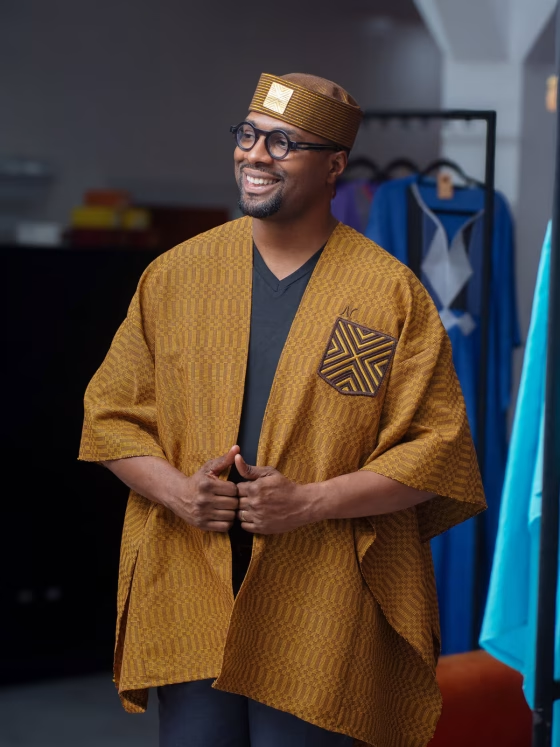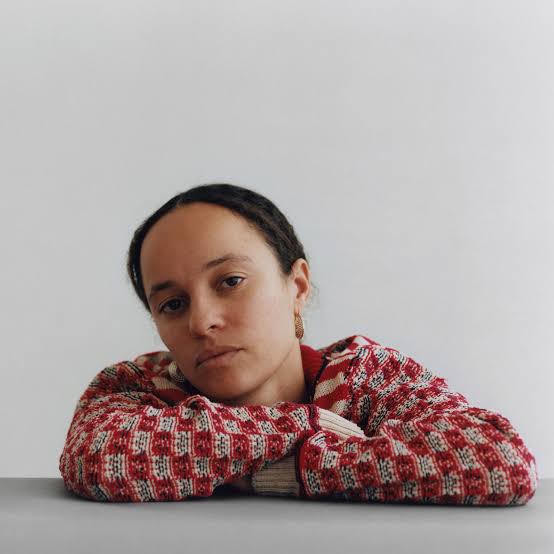
Fashion people start most fashion brands. FARE was started by a UX designer who could not find the clothes he wanted to wear. Peter Toni-Basengula was studying user experience design at Sème City, Benin’s government-built innovation hub in Cotonou, when he began building FARE in 2020 as an experimental project alongside his studies. He brought the same methodology he applied to digital product design to fashion: research first, then prototype, then iterate. He did not enter the industry through a design school or a fashion house apprenticeship. He entered it through a problem he wanted to solve.
Five years later, FARE has presented an exclusive capsule collection at the closing night of Benin Fashion Month, dressed one of Nigeria’s most influential rappers, and is building a route toward London, Amsterdam, and Paris. The brand is built on natural indigo dye, artisanal weavers from King Agonglo’s royal lineage in Abomey, a women’s cooperative in Natitingou, and a founding philosophy that production without overstock is not a constraint but a commitment. NDAANE, which has followed FARE since its earliest collections, describes the brand’s trajectory as a pivot from deadstock to a focus on craftsmanship: a designer who started by working with leftover fabric and ended up working with the weavers whose ancestors dressed the Dahomey kings.
The Omiren Argument: FARE is not a sustainable fashion brand based in Benin. It is a design-thinking practice applied to the question of what Beninese fashion could look like if it started from its own material culture rather than borrowing from it. The answer is a brand that is simultaneously rooted in 18th-century weaving traditions and completely contemporary in its method.
Peter Toni-Basengula started FARE during UX studies at Sème City. Five years later, it is dressing ODUMODUBLVCK and showing in Cotonou’s best venues.
From UX Design to Fashion: The Formation of a Practice
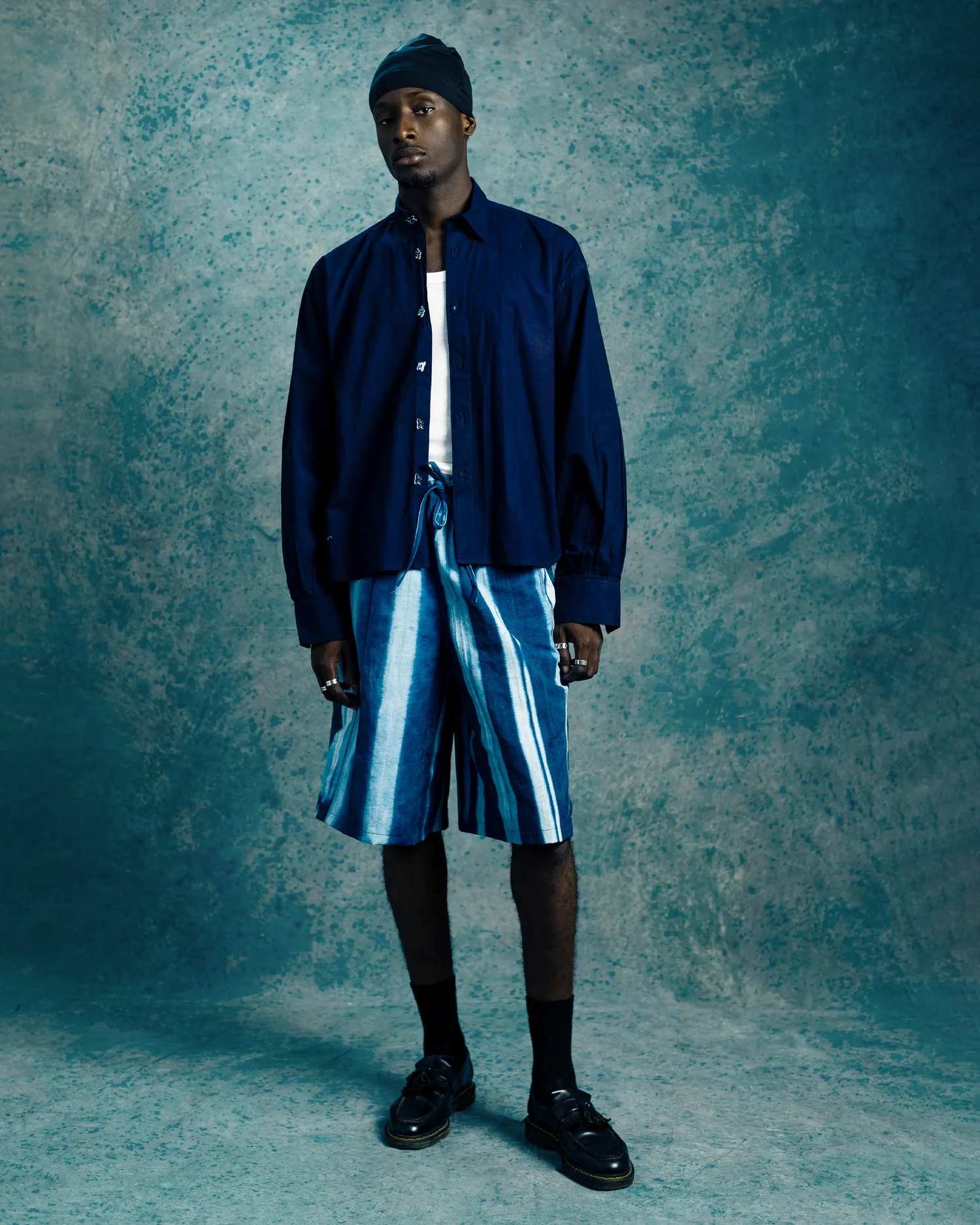
Sème City was not designed as a fashion incubator. It was designed as an innovation and entrepreneurship campus, one of President Patrice Talon’s 45 flagship development projects, intended to develop Benin’s creative economy across multiple sectors, including technology, design, and the arts. Peter Toni-Basengula arrived there to study user experience design. Fashion, for him, was a parallel interest that became a serious project when he could not find what he wanted to wear in Cotonou’s market. He described his whole approach with FARE as coming directly from design thinking: a research phase first, then collections approached as themes responding to a specific problem. The UX design product development methodology is applied to garment construction.
Between 2020 and 2023, FARE was in research and development mode. Toni-Basengula spent three years learning independently: about fabric sourcing, about Beninese textile traditions, about how to build production relationships with artisans. He initially worked with deadstock fabric, learning garment construction from available materials before he had the resources or the relationships to commission original production. The pivot from deadstock to craftsmanship promotion was not a rebranding decision. It was the outcome of three years of education.
Born in the Democratic Republic of Congo but raised with Beninese culture, Toni-Basengula describes FARE as an expression of the creative ecosystem he inhabits in Cotonou. The brand has always been collaborative in structure: he manages production, suppliers, and distribution with his brother, and the team of three people works with an independent PR agency for communications. The small scale is a function of the brand’s production philosophy, not a limitation he is trying to grow beyond. Limited quantities with no overstock is the policy. Buying a FARE piece, as he describes it to clients, is a commitment to a philosophy, not a transaction for a product.
The Artisan Supply Chain: Cotonou, Natitingou, and the Weavers of Abomey
The production network that FARE has built is specific in a way that most sustainable fashion brands are not. It is not a network of certified factories or approved suppliers. It is a set of human relationships with specific artisan communities, each of which brings a distinct body of material knowledge to the brand’s work. In Cotonou, FARE collaborates with artisans for natural indigo dyeing and batik. In Natitingou, a market town in the Atakora Mountains in northern Benin, FARE works with a women’s cooperative producing woven organic cotton. In Abomey, the former capital of the Dahomey Kingdom, FARE works with artisans from the lineage of King Agonglo’s weavers, the same weaving families that produced kanvô for the royal court in the 18th century.
This is not an aesthetic reference to history. It is a production relationship. The weavers in Abomey possess specific technical knowledge of kanvô construction, passed down through generations within the same families, that cannot be replicated by sourcing the same material from another supplier. When FARE uses fabric from those weavers, it is using cloth produced through a knowledge lineage that stretches back more than two centuries. The exclusivity that Toni-Basengula describes to clients is real. These pieces cannot be manufactured in quantity because the knowledge and time required to produce them do not scale with industrial production.
FARE is also in the early stages of working with turmeric as a natural dye alongside indigo. The artisans are still researching the process, and Toni-Basengula describes it as not yet totally mastered. This is how a research-first practice operates: new material processes are introduced through experimentation and refined before entering production. The brand’s collections are the outputs of an ongoing material research programme, not a seasonal design exercise.
The Tailoring Ring: Six Silhouettes at La Nuit de la Mode
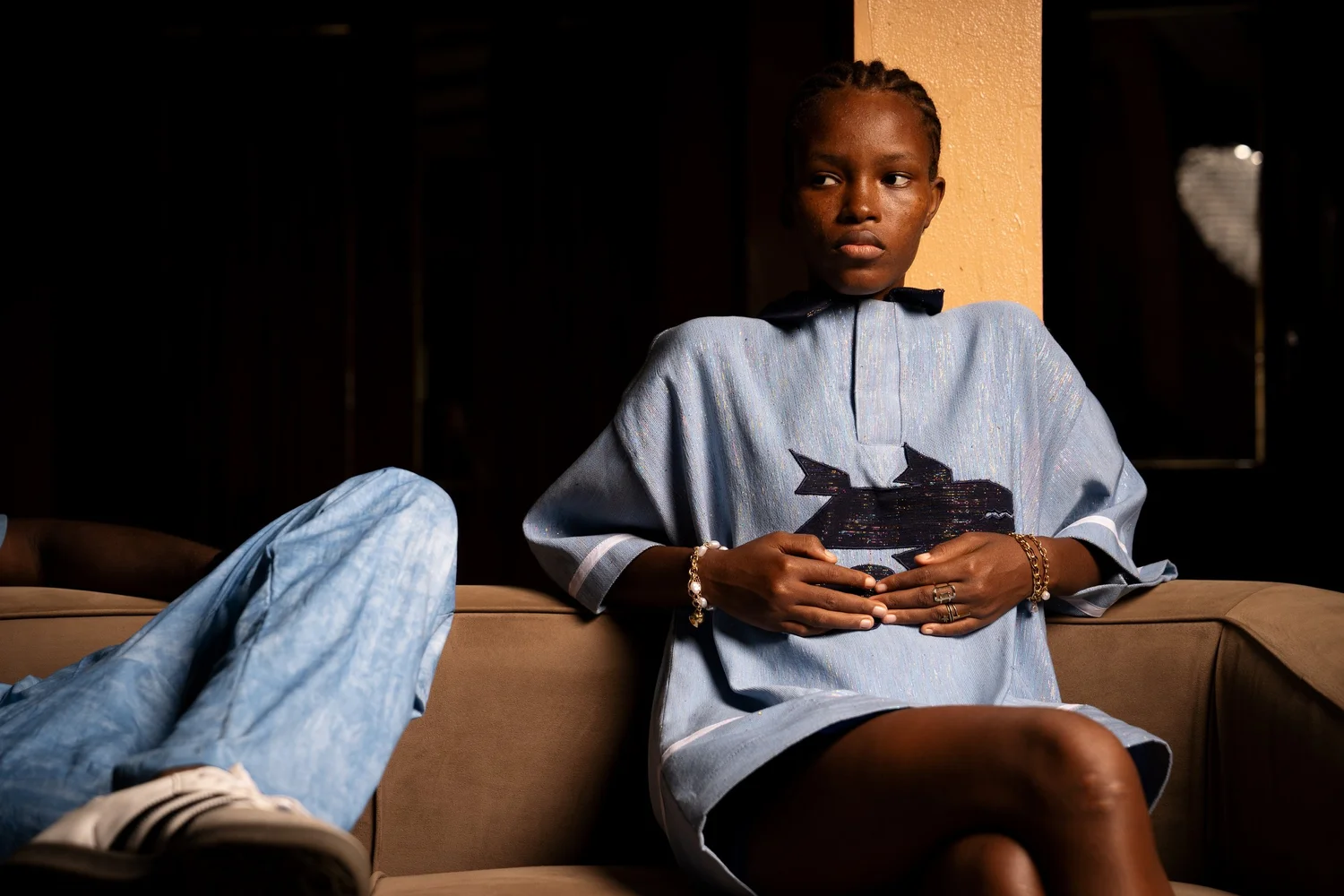
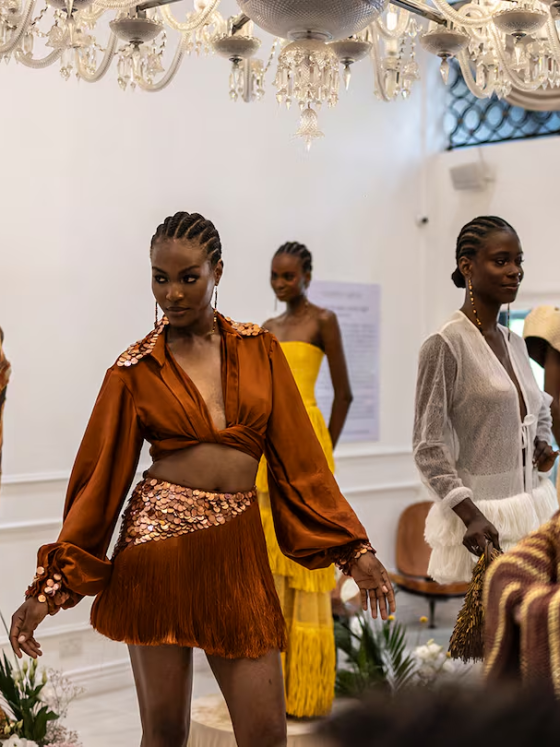
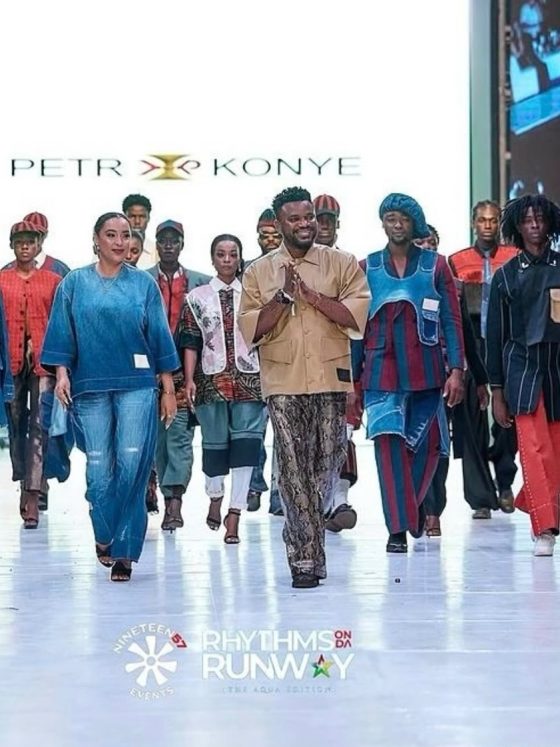
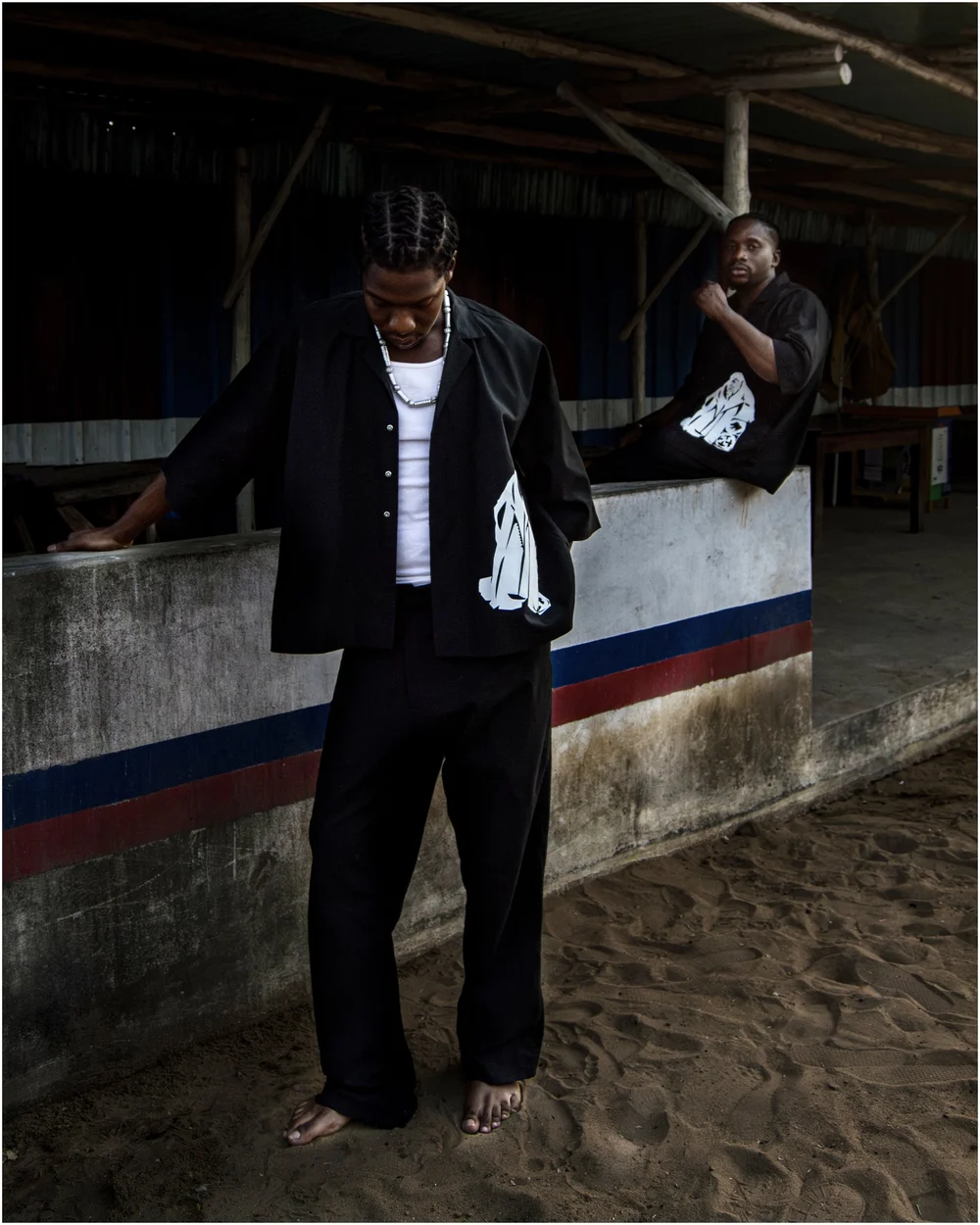
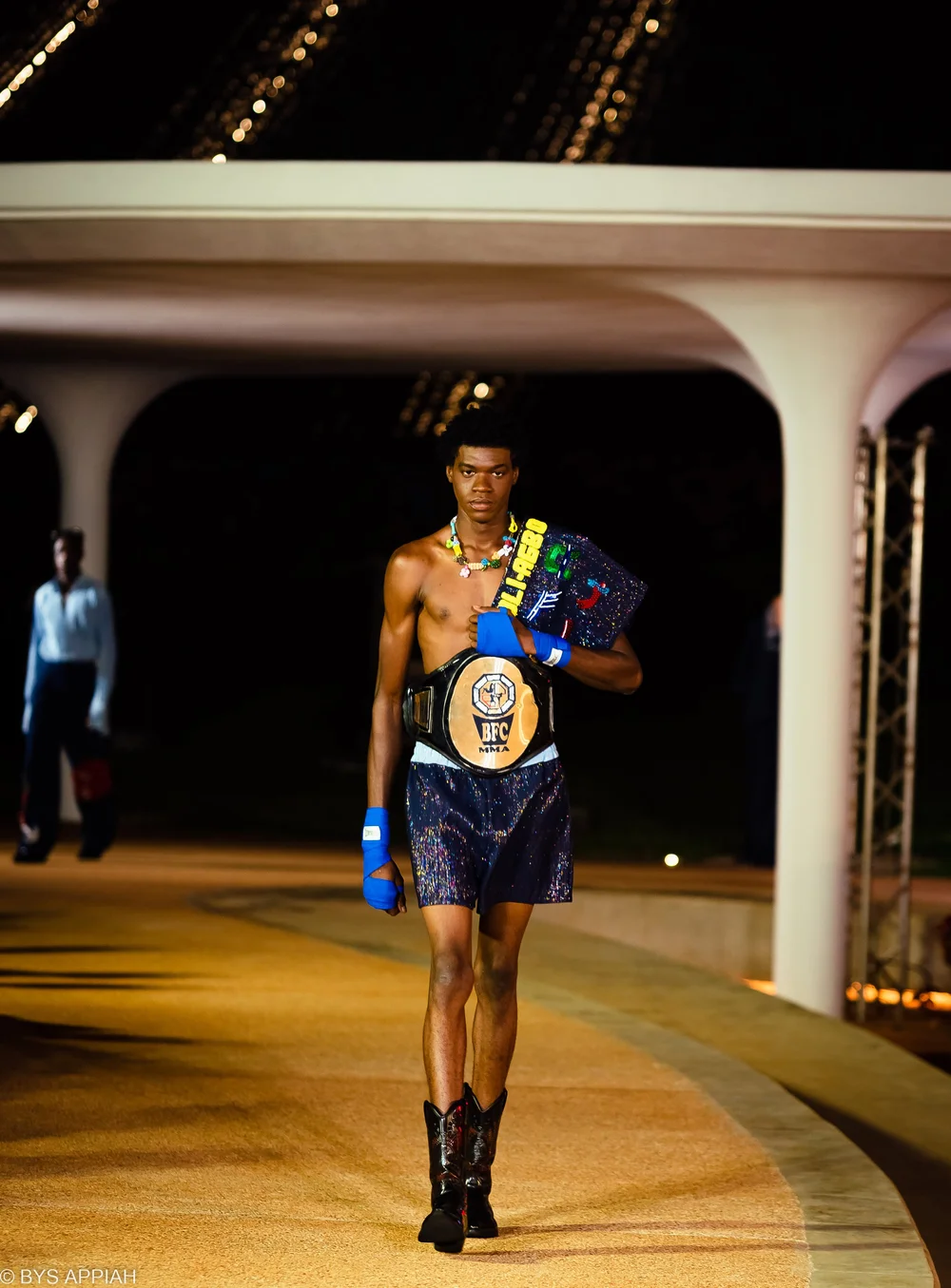
The Tailoring Ring capsule collection, presented at the closing night of Benin Fashion Month’s seventh edition on 26 July 2025, is the clearest public statement of what FARE is trying to do. Grix Magazine described it as a series of six silhouettes that question heritage and its place in the present, aiming to express a deeply rooted, free, contemporary, and political identity. The collection draws from tailoring techniques, sportswear lines, and artisanal savoir-faire to create a hybrid wardrobe: grounded in past gestures, resolutely turned toward today.
Each detail in the Tailoring Ring functions as a visual statement. Botanical indigo is not an aesthetic choice of colour. It is a reference to the indigo dyeing tradition that once sustained the textile economy of northern Benin and now survives through the hands of a small number of artisans in Cotonou. The symbolic beads reference the ceremonial adornment traditions of the Yoruba communities of southern Benin. The reassembled pagnes connect the collection to the everyday fabric of Beninese dress culture. The fabrics woven by the Abomey artisans bring the royal weaving tradition directly into the contemporary garment.
Jerry Sinclair Aguénoukoun, the newly elected president of ACMB and artistic director of La Nuit de la Mode 2025, described FARE publicly as “a brand with spirit.” That assessment, made during a post-show debriefing, is the kind of peer recognition that carries more weight in the context of Beninese fashion than international press coverage does. Sinclair runs the sector’s designers’ association. His endorsement is an industry judgment, not a promotional one.
ODUMODUBLVCK and the Cross-Border Collaboration
The ODUMODUBLVCK collaboration is the moment that signalled FARE’s reach beyond Benin’s fashion ecosystem. Toni-Basengula describes how it happened in the NDAANE interview: he sent a message to a contact in Nigeria, who quickly connected with the artist’s team. ODUMODUBLVCK, born Tochukwu Gbubemi Ojogwu, is regarded as one of the most influential figures in modern Nigerian hip-hop, known for his stage performances, genre-blending, and his consistent integration of Igbo cultural references, including the Okpu Agu warrior hat. The collaboration between FARE and ODUMODUBLVCK was not a brand placement or a paid partnership. It was, as Toni-Basengula framed it, an example of what becomes possible when creative networks across West Africa are connected.
His conclusion from the collaboration is structural rather than celebratory. He notes that the opportunity came through a personal connection and that, without it, the two parties would never have found each other, even though ODUMODUBLVCK was in the same city. This is his diagnosis of what is missing from Benin’s creative ecosystem: not talent, not product quality, but the network infrastructure that makes talent findable and collaborations possible without relying on personal accident. The ODUMODUBLVCK moment is both a commercial milestone and an argument for building stronger creative networks across West Africa.
ALSO READ
- Kanvô: Benin’s Royal Handwoven Fabric, Fully Explained
- Benin Fashion Month: The Government-Backed Festival Quietly Reshaping West African Fashion
- Cotton as Identity: How Benin’s White Gold Shaped Its Fashion Culture
The FLY Incubator: What a Programme Can and Cannot Do
FARE’s participation in the FLY (Fashion Led by Youth) incubator, a 12-month programme run by Sème City in partnership with France’s Institut Français de la Mode and funded by the World Bank, accelerated the brand’s development in a specific way. Toni-Basengula describes it precisely: before FLY, creativity was taking over everything. The programme gave him tools to structure and develop the project from a business perspective. Three years of independent learning were compressed into one year of expert-guided development. The fact that he already had a history with the brand when he entered FLY meant he could submit specific problems to the programme’s experts and receive solution paths rather than generic advice.
The FLY programme received over 700 applications for approximately twelve places in its first cohort. The demand signal is significant: hundreds of young Beninese and West African designers want structured support for their fashion practices. Still, they cannot access it through existing channels—as evidenced by the first cohort of 19 brands presented at a Demo Day on 17 June 2025 at Sème City. The second cohort of 13 brands in 2026 adds a Paris immersion seminar at IFM headquarters and focuses on scaling brands with existing commercial traction for sub-regional and international development.
What FLY cannot do, as Toni-Basengula identifies, is solve the structural problems that exist outside the programme: the lack of network infrastructure connecting Beninese designers to the wider West African creative ecosystem, the absence of shared production resources, and the difficulty of finding skilled fashion workers in a market where garment production is not yet a formalised industry. These are the problems that arise after the incubator ends, and they are the ones FARE is now trying to work through as a launched brand, structuring itself for the next phase.
The Road to Paris: What Comes Next
Toni-Basengula has stated his intention to activate communities in London, Amsterdam, and Paris as the next phase of FARE’s expansion. A test in London was, in his words, a success. The route is not through traditional wholesale or retail distribution. It is through community building: finding the diaspora networks in each city that are already connected to Beninese and West African culture, and building direct relationships with them. This is the same methodology he applied to the ODUMODUBLVCK collaboration, scaled for geographic expansion.
The Cotonou-to-Paris arc that the source document identifies as FARE’s story is accurate but incomplete without the context of what the arc represents. FARE is not trying to become a Paris brand. It is trying to build a brand that operates from Cotonou with direct access to international markets, without requiring Paris as a validating intermediary. The distinction matters. It is the difference between a Beninese brand that earns European recognition and one that builds its international presence on its own terms. Toni-Basengula’s stated ambition for FARE is the latter. Whether the infrastructure of Beninese fashion — the improved creative networks, the shared production resources, the formal training programmes — develops quickly enough to support that ambition is the open question. FARE has demonstrated what is possible. The ecosystem is now building what FARE needs to sustain it.
“FARE is not a sustainable fashion brand that happens to be based in Benin. It is a design-thinking practice applied to the question of what Beninese fashion could look like if it were grounded in its own material culture. The answer is a brand that is simultaneously rooted in 18th-century weaving traditions and completely contemporary in its method.”
Frequently Asked Questions
What is FARE?
FARE is a Beninese sustainable fashion brand founded in 2020 by Peter Toni-Basengula at the Sème City innovation hub in Cotonou. The brand’s name stands for Fashion Renewal. It produces limited-quantity collections using natural indigo dyeing, batik, organic cotton woven by a women’s cooperative in Natitingou, and fabrics woven by artisans from the royal weaving lineage of the Dahomey Kingdom in Abomey. Everything is produced locally with no overstock.
Who is Peter Toni-Basengula?
Peter Toni-Basengula is the founder of FARE. Born in the Democratic Republic of Congo but raised with Beninese culture, he was studying UX design at Sème City in Cotonou when he started FARE in 2020. He applies the design thinking methodology to fashion: research phase first, then collections are approached as themes that respond to specific problems. He manages production, suppliers, and distribution with his brother. He participated in the FLY incubator, a 12-month programme run by Sème City in partnership with the Institut Français de la Mode and funded by the World Bank.
What is the Tailoring Ring collection?
Tailoring Ring is FARE’s exclusive capsule collection presented at the closing night of Benin Fashion Month’s seventh edition on 26 July 2025 at the Sofitel Cotonou. It consists of six silhouettes that draw from tailoring techniques, sportswear lines, and artisanal savoir-faire to create a hybrid wardrobe. Each detail serves as a visual statement: botanical indigo dye, symbolic beads, reassembled pagnes, and fabrics woven in Abomey by artisans from the royal lineages of the Dahomey Kingdom.
What is the FLY incubator, and how did it help FARE?
FLY (Fashion Led by Youth) is a 12-month incubation programme run by Sème City in partnership with France’s Institut Français de la Mode and funded by the World Bank. It received over 700 applications for approximately 12 places in its first cohort. For FARE, FLY accelerated three years of independent learning into one year by providing structured business development support from a fashion industry expert—the first cohort of 19 brands presented at a Demo Day on 17 June 2025. The second cohort of 13 brands in 2026 adds a Paris immersion seminar at IFM.
How did FARE come to dress ODUMODUBLVCK?
Peter Toni-Basengula sent a message to a contact in Nigeria who quickly connected him with ODUMODUBLVCK’s team. ODUMODUBLVCK is regarded as one of the most influential figures in modern Nigerian hip-hop. For Toni-Basengula, the collaboration demonstrated both what is possible when West African creative networks are connected and what is missing: the structural network infrastructure that would make such connections easier to find without relying on personal chance.
Where can I buy FARE?
FARE sells directly through its Instagram account (@fareofficiel), which has approximately 40,000 followers. The brand produces limited quantities with no overstock, so pieces are not continuously available through a standing retail channel. Toni-Basengula has stated plans to activate communities in London, Amsterdam, and Paris as the next phase of FARE’s expansion, with a London test already described as a success.
Explore more from our Industry section, where Beninese fashion brands are covered with the depth their practice deserves.