Before the global wellness industry discovered “scent rituals,” before luxury fragrance houses began charging $500 for oud candles, and before the word “bakhoor” appeared in Western lifestyle magazines, Mauritanian women were practising one of the most sophisticated scent-based beauty systems on earth.
They still are. It simply was not being written about in English.
Mauritania sits at the crossroads of Amazigh, Arab, and West African cultures: a Saharan republic where the Atlantic meets the desert, and where beauty is not a product category but a layered philosophy carried in smoke, oil, henna, and knowledge passed from mother to daughter across generations. The bakhoor tradition, shared across the Arab and Saharan world and practised in Mauritania with a specificity shaped by its triple cultural position, sits at the centre of this philosophy. It is not decorative. It is structural. Understanding it means understanding how Mauritanian women relate to beauty itself.
Mauritanian women have layered bakhoor smoke, attar oil, henna, and kohl into a complete beauty philosophy. This is what the global wellness industry has not found.
What Bakhoor Actually Is, and Why the Western Reading Gets It Wrong
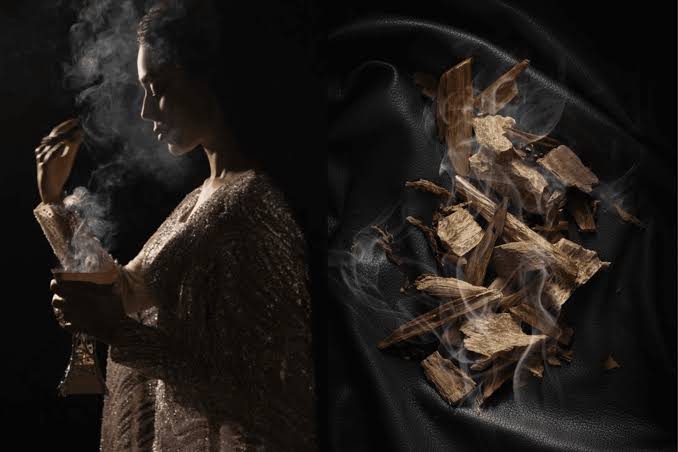
The word bakhoor derives from the Arabic بخور, meaning perfumed smoke. In its most basic technical definition, it is wood chips, typically agarwood (oud), infused with fragrant oils and natural resins, burned on charcoal in a ceramic or metal incense burner called a mabkhara, releasing a deep, sustained smoke that adheres to fabric, hair, and skin far longer than any spray-based perfume. The practice is documented across Arab and Gulf cultures and across the Saharan world, including in Mauritania, where it is embedded in daily practice and ceremonial life.
Western coverage of bakhoor tends toward the exoticising frame: ancient, mysterious, opulent. Those words describe how the West perceives the practice. They do not describe how Mauritanian women live. For a woman in Nouakchott preparing for a wedding, standing over the mabkhara while smoke rises through her melfa (the traditional Mauritanian robe), there is nothing mysterious about it. It is as automatic as applying moisturiser. It is ordinary, inherited, and precise.
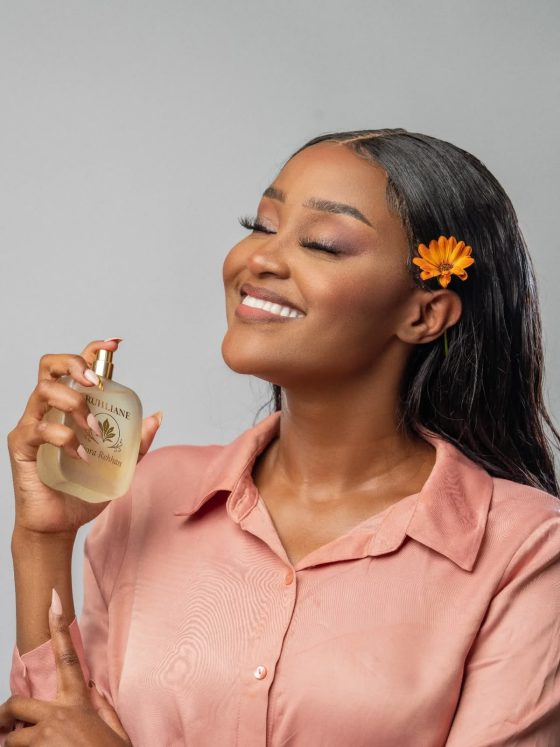
The precision is the part that matters. Within the Arab and Saharan fragrance tradition that Mauritanian women practise, scent is deliberately layered in sequence. Attar, a concentrated perfume oil applied directly to pulse points and skin, goes on first. It adheres closely to the body, warming against the skin. Bakhoor smoke comes second, rising through clothing and hair, embedding in fabric fibres and creating a second aromatic layer that projects differently from the oil beneath. The result is a multi-dimensional scent profile that no single bottled perfume can replicate. One layer for intimacy, one layer for presence. As Première Peau documented in April 2026, bakhoor represents the most technically sophisticated personal fragrance approach in the Arab and Saharan world, and it is one of the global wellness industry’s only approaches that are beginning to be discovered.
Scope note: This guide focuses on fragrance, adornment, and ceremonial practice. Other documented Mauritanian beauty traditions, including those that carry significant health and rights implications, are outside its scope.
The Mabkhara: Object, Ritual, and Social Choreography
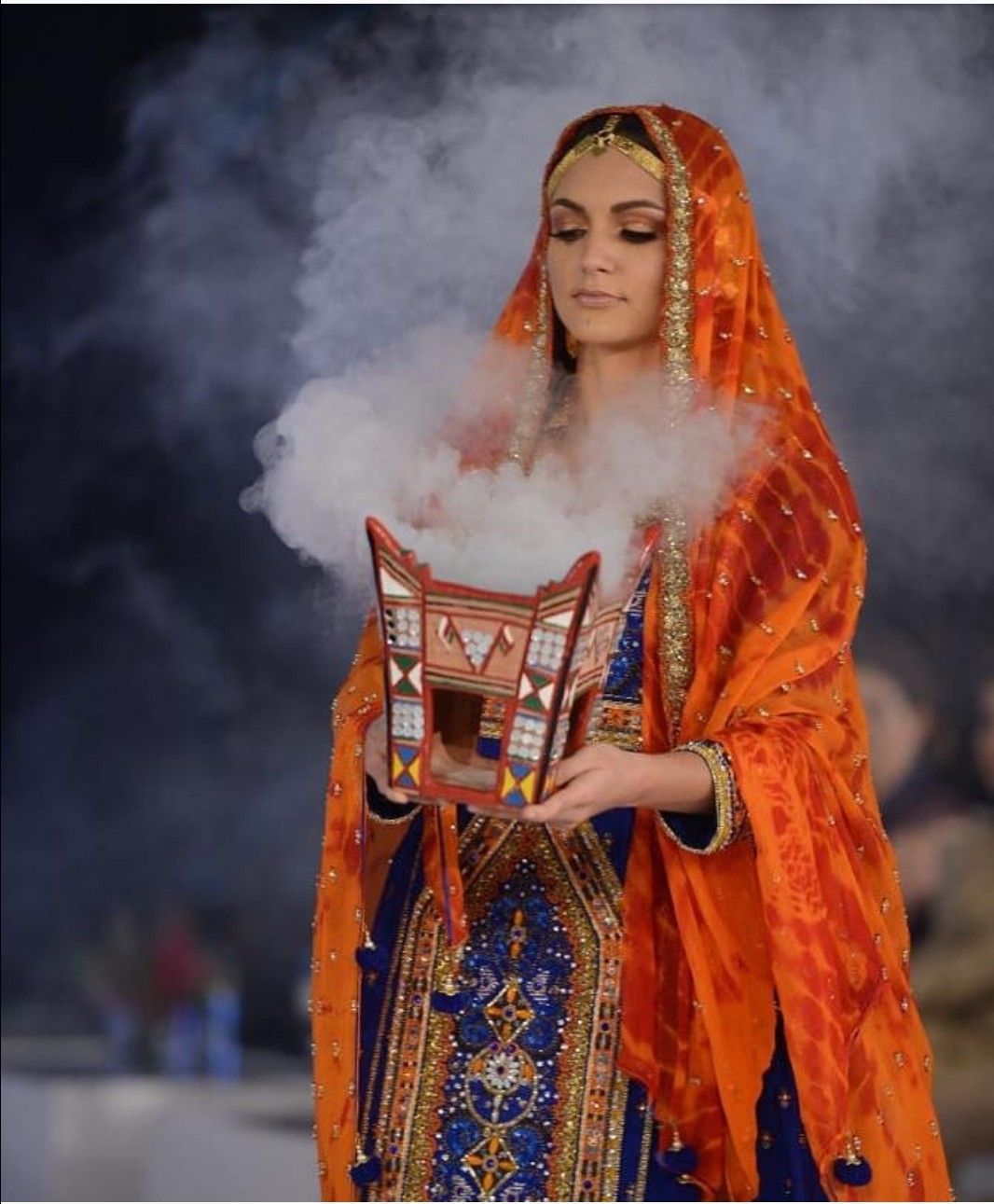
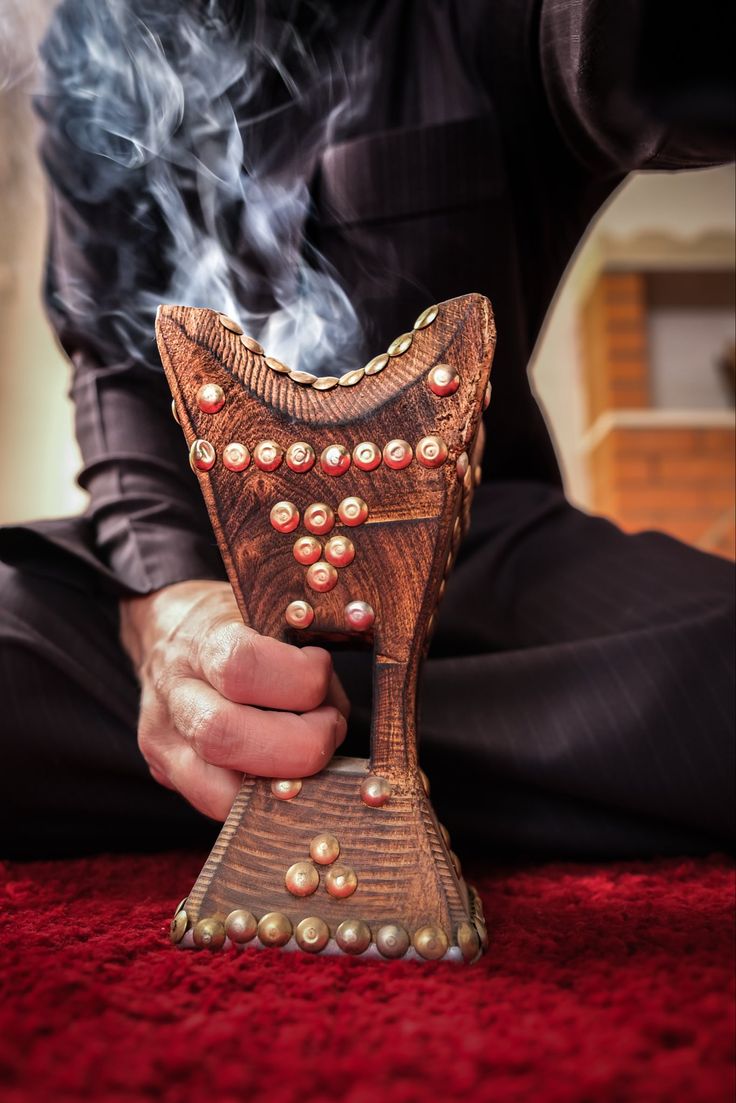
The mabkhara is the tool at the centre of the bakhoor ritual, but calling it a tool undersells what it does. In homes across the Arab and Saharan world, including Mauritanian households, the mabkhara is a social instrument. Passing the burning incense burner among guests so that their clothing and hair absorb the scent is one of the oldest hospitality gestures in the Arab and Saharan cultural tradition that Mauritania shares. When a visitor arrives, the host passes the mabkhara. The gesture communicates welcome, respect, and the visitor’s inclusion in the intimate, fragrant world of the household. Refusing it would be a social signal in the wrong direction. Accepting it says: I belong here. You have let me in.
Made from ceramic, copper, or brass, mabkhara designs vary by region and family, with many passed down as heirlooms. The craft of the object reflects the seriousness of the practice. These are not decorative items that sit on a shelf. They are used daily, multiple times. Bakhoor burns in the morning to begin the day, in the evening to close it, and at every gathering of significance in between.
The ritual of fumigation, standing over the mabkhara and allowing smoke to rise through one’s clothing from hem to collar, is particularly important at weddings. A Mauritanian bride does not simply dress for her wedding day. She scents it. The melfa, the Lakhel (the traditional black bridal robe, richly embroidered and sewn from the time of a girl’s birth, as documented in D&D Clothing’s Mauritanian wedding research), the veil, and the hair: all are passed through bakhoor smoke during preparations before the ceremony. The scent that emerges is specific to the blend of ingredients used, often a family blend known to the women of the household, consistent with documented bakhoor blending traditions across the broader Arab and Saharan world.
Perfume Oils and the Layering Philosophy
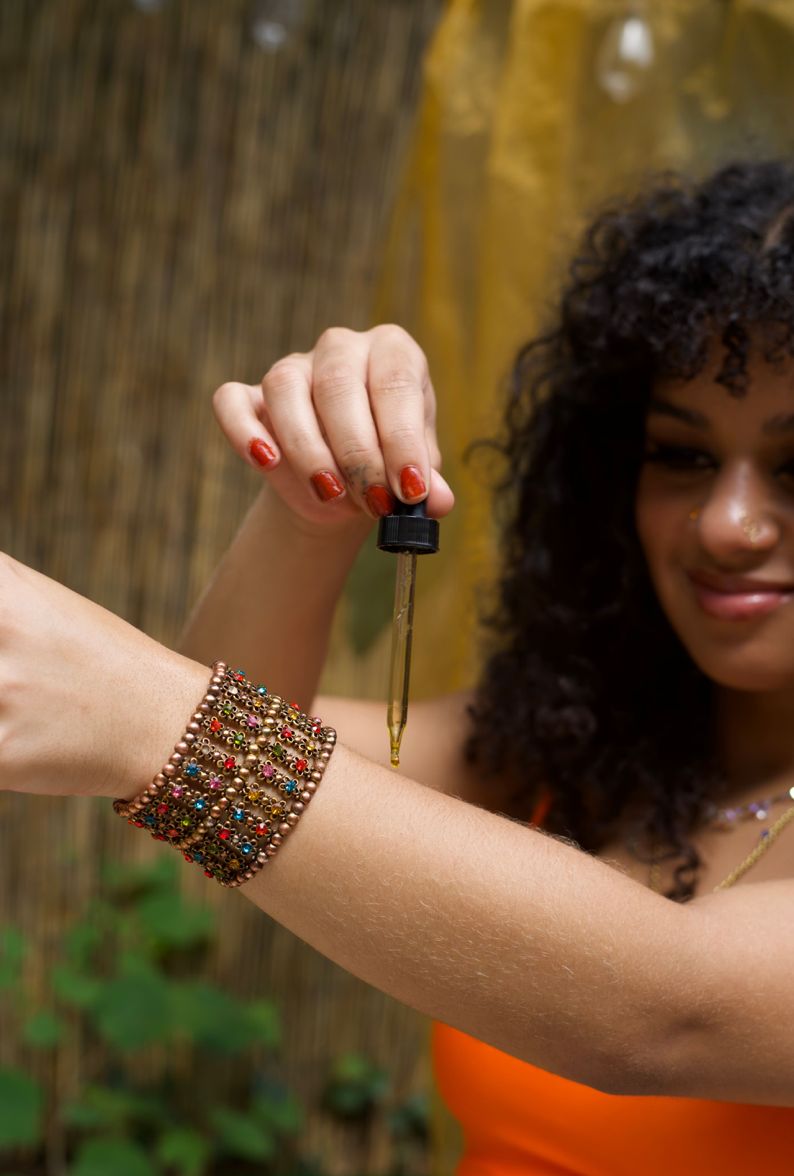
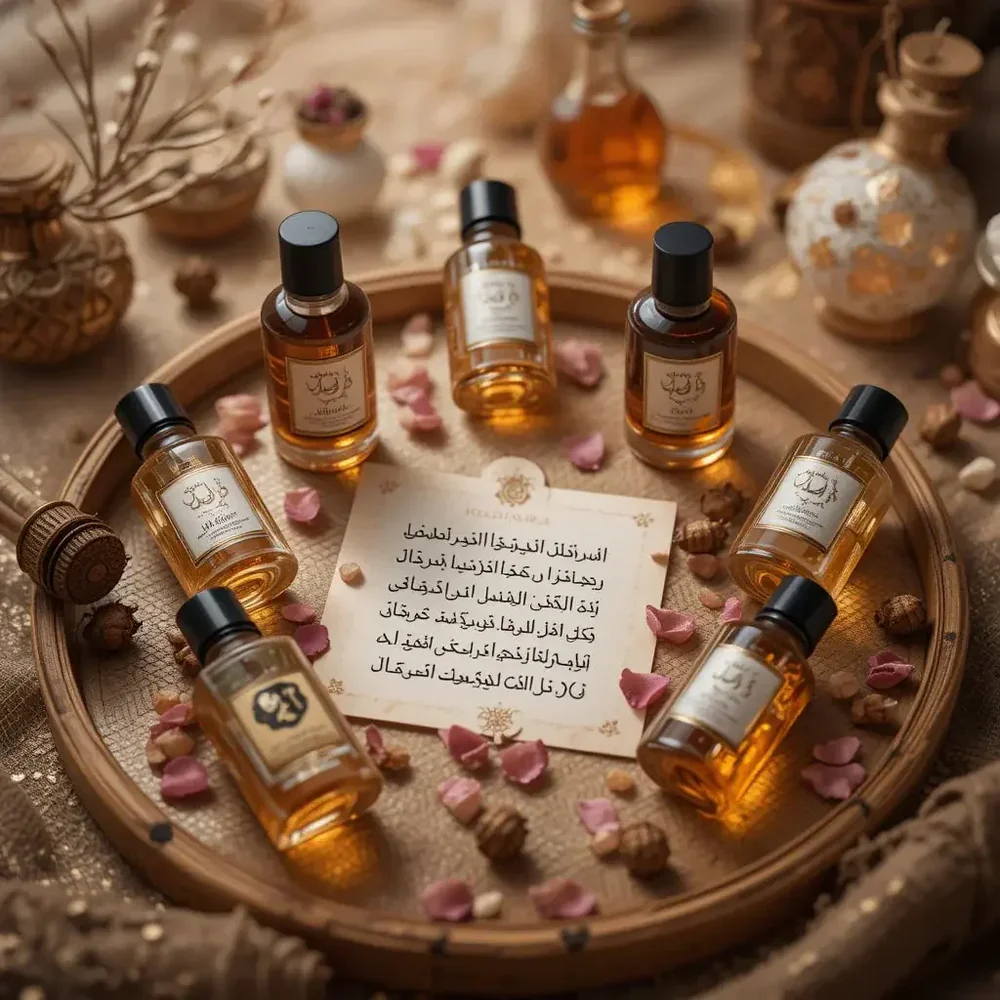
Attar, pure concentrated perfume oil without alcohol, is the companion practice to bakhoor, and together they form a fragrance philosophy that the global perfume industry is only beginning to approximate. Unlike alcohol-based sprays, which project strongly at first and dissipate within hours, attar oils fix to the skin’s natural warmth and develop differently on every body. The same oil smells different to different people. This is not a limitation; it is the philosophy. Personal scent in this tradition is not about broadcasting a single manufactured identity. It is about a conversation between the oil and the individual’s skin that produces something unrepeatable.
The oud-based attars, drawn from agarwood resin, one of the rarest and most expensive fragrance materials in the world, are the most prized. A single kilogram of high-grade agarwood oil can cost more than gold, according to reports in the global fragrance trade. But the tradition does not simply chase rarity. It builds complexity through layering: rose water, jasmine oils, musk, amber, and myrrh resin are all part of the vocabulary. Myrrh in particular occupies a distinguished place in Saharan beauty traditions. Among Tuareg communities in the broader Saharan cultural region, myrrh resin, known as adaras, is documented for its soothing, aromatic, and historically aphrodisiac properties, a practice described by Amonbè in its documentation of Tuareg beauty rituals. Mauritania’s position at the crossroads of the Arab, Amazigh, and West African worlds places it within this shared Saharan fragrance vocabulary.
The system’s intelligence lies in the combination. No single product is expected to do everything. Skin, oil, smoke, and fabric each carry part of the fragrance. The complete scent only emerges when all four elements are present.
Henna, Kohl, and the Broader Beauty Architecture
Bakhoor and attar do not sit in isolation. They are part of a broader Mauritanian beauty architecture that includes henna, kohl, and, particularly at weddings and celebrations, the deliberate construction of total sensory presence. A Mauritanian bride’s hands and feet are covered with intricate henna designs before the wedding, as D&D Clothing’s research confirms. The designs carry social meaning: they mark transition, protection, and the particular moment in the woman’s life being celebrated. Mauritania’s official cultural pages describe the country as home to one of the world’s most intricate and distinctive henna art traditions. The patterns are not generic. They are chosen and applied with care, often by women with specific expertise in the craft.
Kohl, applied to the eyes from a mixture of ground minerals, is both a beauty practice and a functional one in the desert environment. The darkening of the eye rim reduces glare from the Saharan light and provides protection. It also communicates status, attention to presentation, and the particular kind of personal discipline that the Mauritanian beauty tradition prizes: the woman who takes care of herself with precision expresses something about how she moves through the world.
Together, bakhoor, attar, henna, and kohl form what the Western beauty industry would now call a “ritual”, but what Mauritanian women, participating in a tradition shared across the Arab and Saharan world and given its specific local form by Mauritania’s triple cultural position, have always understood as simply getting dressed properly. As Omiren Styles has documented in its analysis of fashion and ritual across African practices, the most precisely codified beauty systems in the world are not in Western wellness catalogues. They are in the living traditions of African and Arab communities, where scent, fabric, and adornment carry information that no trend report has ever been designed to read.
The Omiren Argument
The global wellness industry is in the process of discovering bakhoor and packaging it for Western consumption without crediting its origins. Oud candles now appear in the collections of luxury home fragrance houses in London and Paris. Bakhoor-inspired room diffusers are marketed as “Middle Eastern luxury” without specifying which communities developed those traditions and over what timescale. Attar oils are being rebranded as “clean perfumery” by companies that have spent no time understanding the communities that have been making them for a millennium. The scent is extracted. The culture is left behind.
This matters for Mauritania specifically because Mauritanian beauty culture sits at a triple crossroads, Amazigh, Arab, and West African, that gives its practices a distinctiveness that is not reducible to a single regional category. When Western fragrance companies market bakhoor products, they credit “the Middle East” as a monolith. The specificity of Mauritanian practice, with its layered philosophy, wedding fumigation rituals, family fragrance traditions, and mabkhara hospitality culture, disappears into a generic category. As Omiren Styles has argued in its analysis of African identity across continents, the most persistent pattern in global cultural commerce is this: African and Arab aesthetic traditions travel the world without their authors. Mauritanian beauty practices are among the clearest current examples.
The Omiren argument is this: Mauritanian beauty rituals are a complete, sophisticated, and intellectually serious beauty system that predates the global wellness industry by centuries. They deserve to be named, credited, and understood on their own terms, not harvested for their ingredients and aesthetics. At the same time, the communities that developed them are relegated to footnotes in a luxury product description.
Knowing the name bakhoor is not the same as understanding what it means to stand over a mabkhara in a Mauritanian household on the morning of your wedding. This guide is a beginning. The tradition is alive, it is practised today, and it belongs to the women who have maintained it.
ALSO READ
- Kabyle Amazigh Wedding Dress Algeria: Thakandorth, Ath Yenni Silver, and the Kabylia Tradition
- Fashion and Ritual: How Celebrations Shape African Style Practices
- How African Identity Is Styled Differently Across Continents
Frequently Asked Questions
What is bakhoor in the Mauritanian beauty tradition?
Bakhoor (also spelt bkhoor or bukhoor) is a perfumed incense made from wood chips, typically agarwood, soaked in fragrant oils and resins, then burned on charcoal in a mabkhara (incense burner). It is practised across the Arab and Saharan world, including Mauritania, where it is used to scent the body, hair, and garments, particularly during wedding preparations and daily hospitality rituals. It is the cornerstone of a multi-layered fragrance system that also includes attar perfume oils. Première Peau’s April 2026 documentation is the most comprehensive current English-language guide to the tradition.
What is the difference between bkhoor and attar in Mauritanian beauty practice?
Attar is a concentrated perfume oil applied directly to the skin, where it adheres to the body’s warmth and develops a personal scent specific to the wearer. Bakhoor is burned, and the smoke is used to perfume hair, clothing, and the surrounding space. The layering sequence, attar on the skin first and bakhoor smoke over the clothing second, creates a multi-dimensional scent profile that no single bottled perfume can replicate: one layer for intimacy close to the body, one layer for presence in the room.
What is the mabkhar, and how is it used?
The mabkhara is the traditional incense burner used to burn bakhoor, typically made of ceramic, copper, or brass and featuring ornate designs. It is both a practical beauty tool and a social instrument across the Arab and Saharan world. Passing the mabkhara among guests so they can perfume their clothing is one of the most important hospitality gestures in this cultural tradition, conveying welcome and respect. In Mauritanian households, it is used in the morning, in the evening, and at every significant gathering.
How is bakhoor used in Mauritanian weddings?
Bakhoor plays a central role in Mauritanian wedding preparations. A bride’s traditional garments, including the Lakhel, the richly embroidered black bridal robe documented by D&D Clothing as sewn from the time of a girl’s birth, are perfumed with bakhoor smoke before the ceremony. The practice of fumigation, standing over the mabkhara and allowing smoke to rise through clothing from hem to collar, is considered an essential part of bridal preparation, alongside henna application to the hands and feet.
Why are Mauritanian beauty rituals significant beyond the region?
Mauritanian beauty rituals represent one of the most sophisticated scent-based beauty systems in the world, combining attar oils, bakhoor smoke, henna, and kohl into a complete philosophy of personal presentation. These practices predate the global wellness industry by centuries and sit at the intersection of Amazigh, Arab, and West African beauty cultures. As the global fragrance and wellness markets expand into oud-, attar-, and incense-based products, Mauritanian practice deserves recognition as a distinct tradition shaped by its own triple cultural position, rather than as generic Middle Eastern luxury.