Across Africa, 32 fashion weeks take place each year. UNESCO counted them in its 2023 report on the African fashion sector, the first of its kind, and identified structured fashion events as a measurable driver of industry development. Countries with fashion-week infrastructure, the report found, have more developed creative economies. Bangui Fashion Week is one of those 32. The international fashion press has not covered it once.
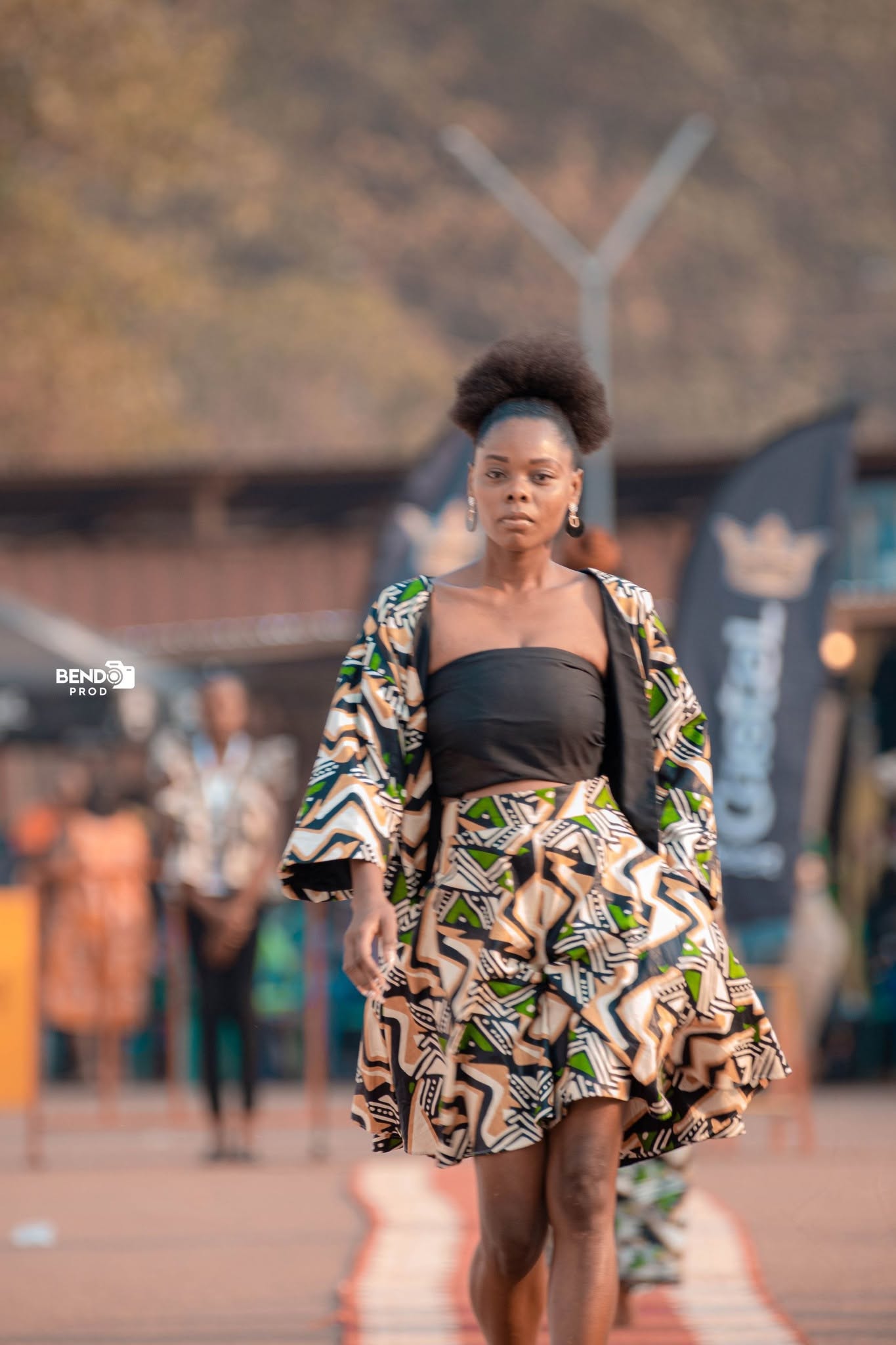
Bangui Fashion Week held its second edition from 16 to 22 December 2024. The first edition launched in 2022. Both were founded, organised, and directed by Milca Ketura Kimoto, a Bangui-based styliste-modéliste. The second edition brought in designers from other countries. Its stated mandate was to promote CAR arts and culture in international markets and contribute to national economic diversification. That is a fashion-industry argument, articulated with precision by a practitioner who built the platform to make it.
Bangui Fashion Week does not exist despite the CAR’s circumstances. It exists to make those circumstances beside the point. Milca Ketura Kimoto built it without waiting for anyone’s permission.
Milca Ketura Kimoto founded Bangui Fashion Week without waiting for permission or infrastructure in place. This is what building a fashion industry from conviction looks like.
What Bangui Fashion Week Actually Is
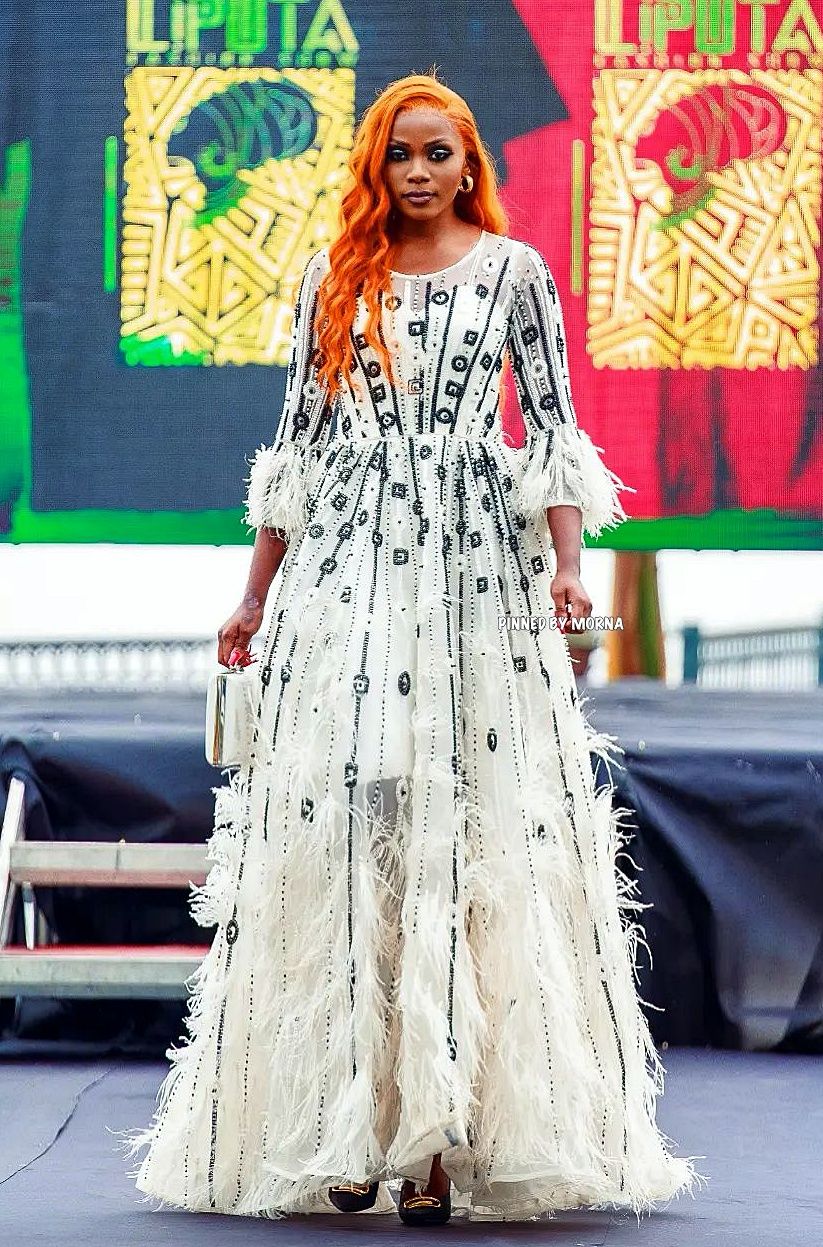
Bangui Fashion Week is a multi-day fashion industry event with a commercial mandate, an international dimension, and a founding designer at its head. It is not a community celebration. It is not a resilience showcase. It is not a symbol of what Central Africa might one day become. These are framings applied to fashion activity in countries that the international media has decided not to cover seriously, and they consistently misrepresent what is happening.
The second edition’s explicit aim, promoting CAR creative industries for international market access and economic diversification, is structurally identical to the mandate of Lagos Fashion Week, Dakar Fashion Week, and South African Fashion Week. Those events are reported, analysed, and positioned as evidence of a serious African fashion industry. Bangui Fashion Week makes the same argument with the same seriousness and receives none of the same coverage. The gap is an editorial decision, not a quality assessment.
The inclusion of international designers in the second edition is a structural signal, not a milestone. A fashion week that attracts designers from other countries has already established the credibility required to do so. That credibility existed before any international publication decided to attend.
In the Central African Republic, fashion is evolving progressively from simple dress into a space of creation, cultural transmission, and identity. CAR fashion is structuring itself around social media and digital tools as its primary infrastructure for development and market access. For context on how this mirrors patterns across the continent, UNESCO’s African Fashion Sector report documents that 90% of the sector comprises small and medium enterprises whose profits directly benefit local populations. Bangui Fashion Week is the flagship event of this structure. Kimoto is not building an aspiration. She is running an industry event.
ALSO READ
→ The Future of Fashion in Togo: Creativity and Cultural Preservation
→ The Future of Fashion in Liberia: Diaspora, Culture, and Innovation
→ Traditional Clothing in Mali: The Cultural Significance of Boubou and Bogolan
Milca Ketura Kimoto: Styliste, Modéliste, Founder
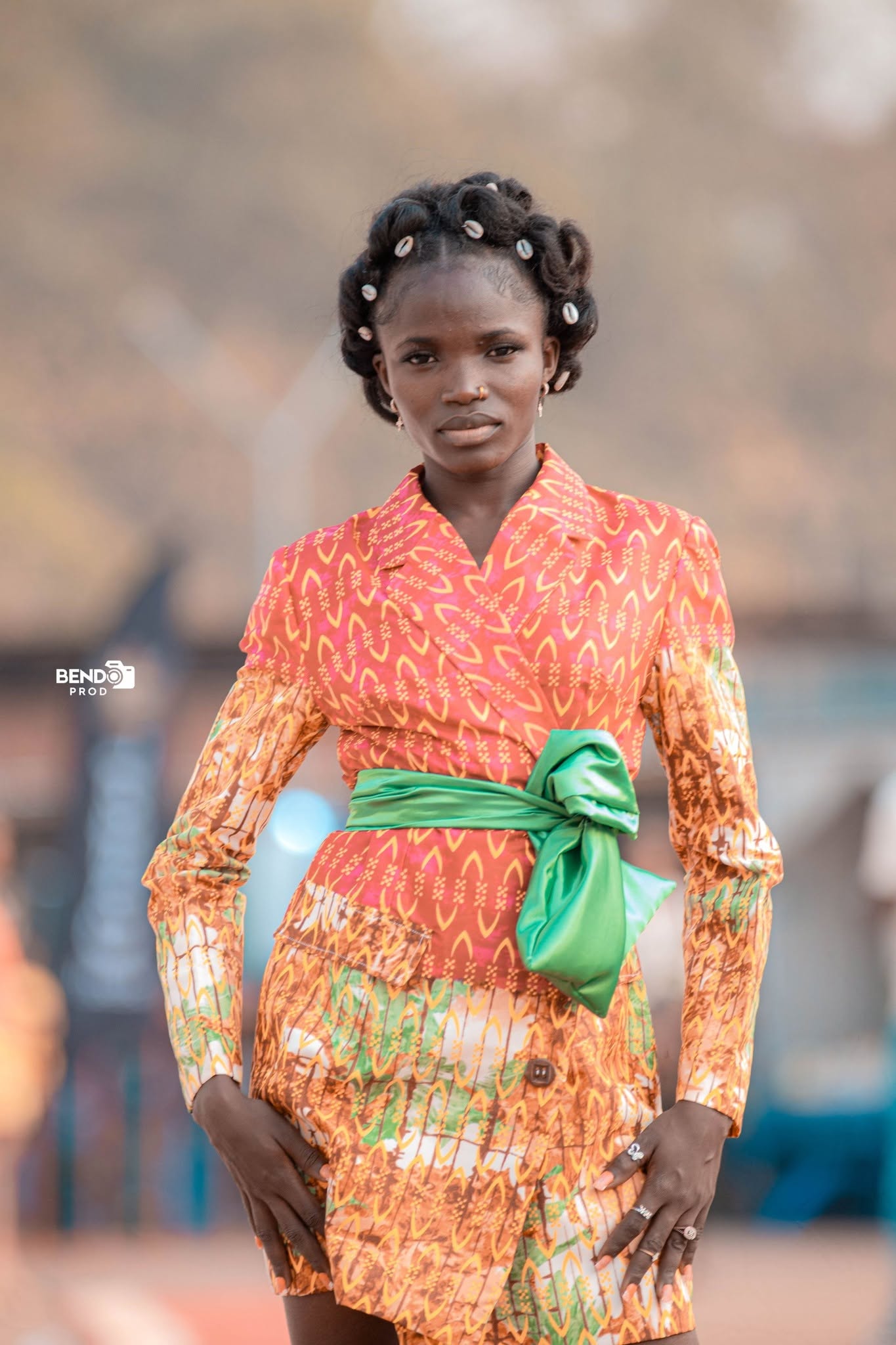
Kimoto holds the dual designation of styliste-modéliste, which means she designs and patterns. She is not a promoter who runs an event. She is a practitioner with a specific technical and creative skill set who also builds institutional infrastructure. That combination is standard in markets where the ecosystem around a design practice must be constructed by the practitioners who need it. Kimoto chose to do both.
In June 2023, she showcased her work at the ninth edition of the Liputa Fashion Show in Goma, Democratic Republic of the Congo. Oubangui Médias documented the original launch of Bangui Fashion Week in 2022 as Kimoto’s founding act: putting fashion on the map in Bangui. The Goma show brought together designers and artists from the DRC, Cameroon, the CAR, Senegal, Burundi, France, and the United States. She was not discovered at Liputa. She attended as a practitioner with an established regional presence.
The distinction matters: one is a story about potential, the other is a story about practice. Fashion media describes work like Kimoto’s as inspiring when it happens in countries outside the industry’s editorial attention. It does not use that word about Lagos Fashion Week. It uses the word strategic. The same vocabulary applies here.
Digital-First Infrastructure in a Low-Connectivity Market
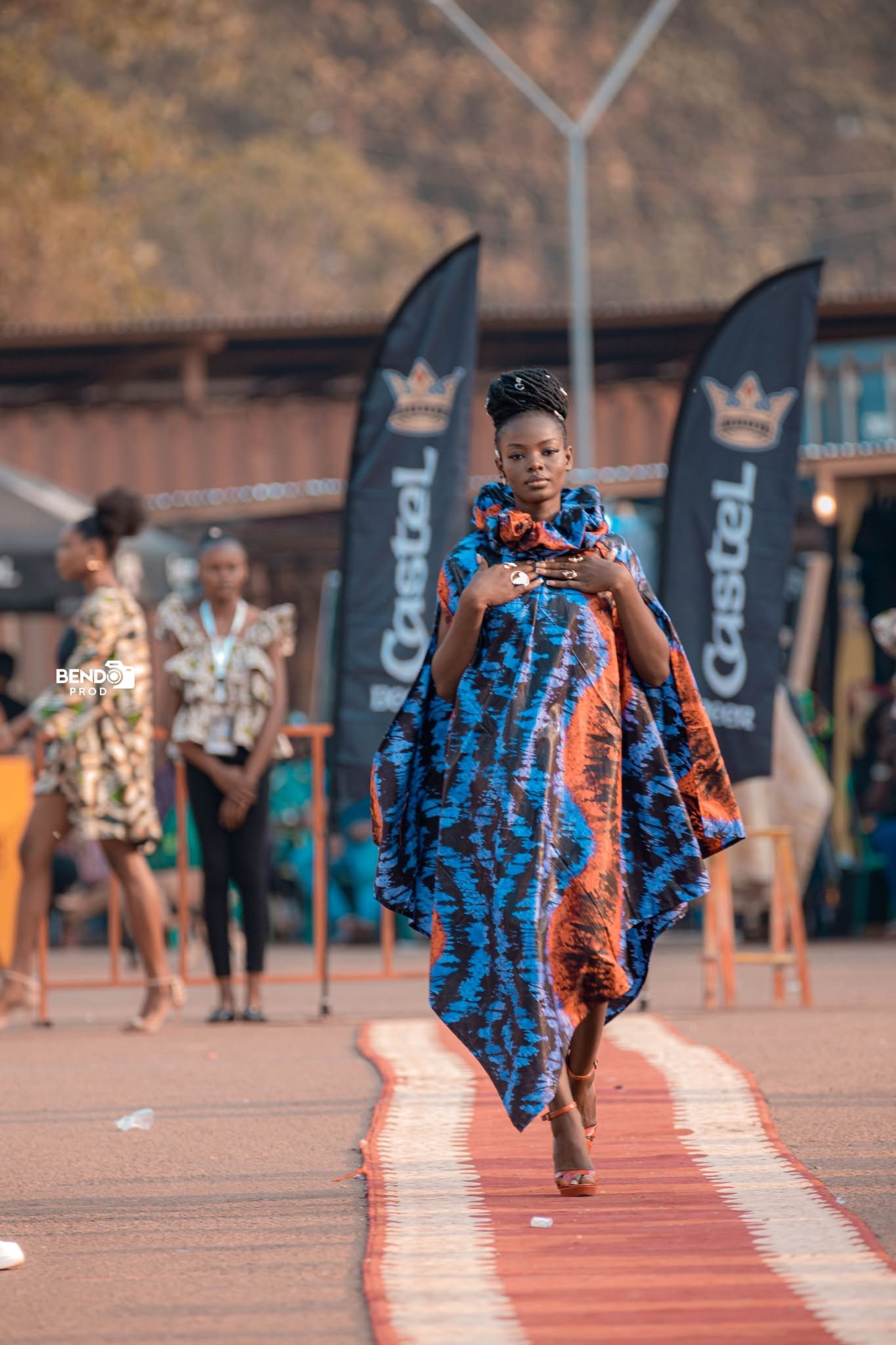
In 2025, 15% of the CAR’s 5.51 million people had internet access, yet over 800,000 connected users were active. The fashion sector uses social media as its primary tool for training and visibility. Bangui Fashion Week’s digital-first approach to marketing, documentation, and audience-building operates within this constraint, turning it into a design decision.
The African fashion industry’s shift toward digital-first presentation is now a stated strategic priority at the continent’s major fashion weeks. UNESCO’s data shows e-commerce penetration across Africa more than doubled between 2017 and 2021, from 13% to 28%. The Future of Fashion in Togo and other emerging West African markets reflect exactly this pattern: digital tools are the primary infrastructure, not a supplement to it. Bangui Fashion Week was already working this way before it became industry vocabulary.
Africa’s annual textile, clothing, and footwear exports total US$15.5 billion, according to UNESCO. For a closer look at how fashion infrastructure operates in comparable Central African markets, the Future of Fashion in Liberia offers direct context: small-market fashion industries across the region share the same structural constraints and the same digital-first adaptive logic. Bangui Fashion Week’s role is to build a domestic and regional platform that enables future market access. That infrastructure is what Kimoto has been constructing since 2022.
The runway in Bangui is not a symbol. It is a business platform. For fashion week coverage across Africa, the question the industry needs to answer is not whether Bangui deserves a fashion week. That question was answered in 2022. The question now is why the industry took this long to notice one already existed.
“Bangui Fashion Week does not exist despite the CAR’s circumstances. It exists to make those circumstances beside the point, and Milca Ketura Kimoto built it without waiting for anyone’s permission.”
Frequently Asked Questions
What is Bangui Fashion Week?
Bangui Fashion Week is a multi-day fashion industry event in Bangui, the capital of the Central African Republic. Founded and directed by styliste-modéliste Milca Ketura Kimoto, it launched its inaugural edition in 2022 and held its second in 2024, from 16 to 22 December. The event’s mandate is to promote CAR’s creative industries to expand international market access and support national economic development.
Who founded Bangui Fashion Week?
Milca Ketura Kimoto, a Bangui-based styliste-modéliste, is the founding CEO and director of Bangui Fashion Week. She is a practising designer and pattern-maker, as well as the event’s lead organiser. She has shown her work at multi-country fashion events, including the Liputa Fashion Show in Goma, DRC, in June 2023.
How many editions of Bangui Fashion Week have taken place?
Two confirmed editions: the inaugural edition in 2022 and the second edition from 16 to 22 December 2024. The second edition drew designers from other countries and had an explicit mandate to promote international markets and diversify the economy.
How does Bangui Fashion Week compare to Lagos or Dakar Fashion Week?
In terms of mandate and stated commercial objectives, the comparison is direct: all three position themselves as market-building events for their national fashion industries, with international visibility as a goal. Lagos Fashion Week, founded in 2011, has 14 years of international coverage. Bangui Fashion Week is in its second edition. The difference is timeline and media attention, not seriousness of purpose.
Is Bangui Fashion Week open to international participation?
Yes. The second edition in December 2024 included designers from other countries, confirming the event’s international participation dimension. For up-to-date information on submissions and participation, contact Bangui Fashion Week directly via their official channels at @bangui_fashion_week on Instagram.
Read more from our Industry section, where we report on the people building African fashion on their own terms.