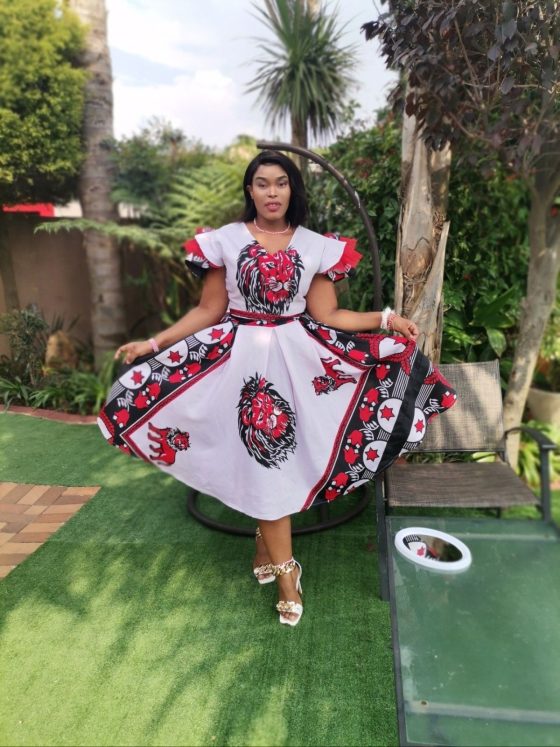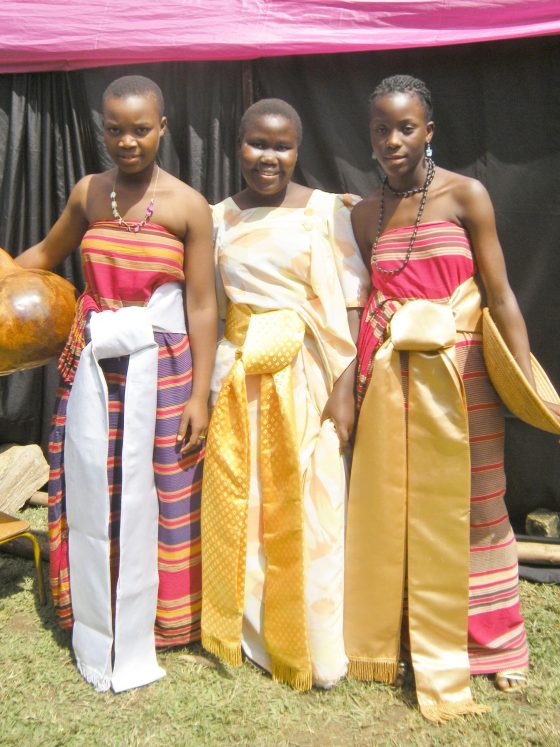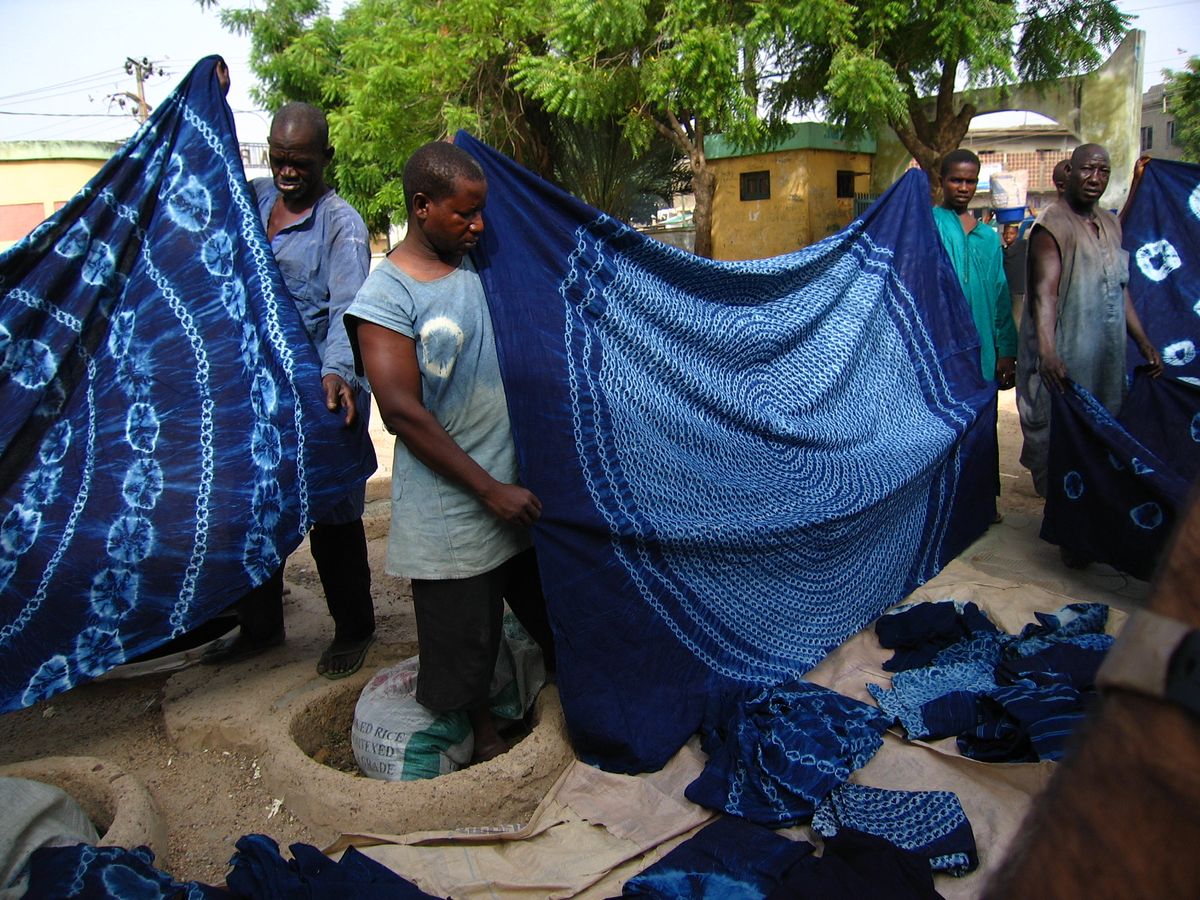
The tagelmust worn by Tuareg men in Niger is made from indigo fabrics that Niger has known for 500 years, measuring up to 8 metres of indigo-dyed cloth wrapped around the head and face, leaving only the eyes visible. When a Tuareg man receives his first tagelmust between the ages of 15 and 17 during initiation, he wears the veil for a week without removing it, not even while sleeping. This turban marks passage into adulthood, communicates clan identity through folds and decorations, and protects against the Sahara sun, sandstorms, and desert spirits called jinn.
Niger’s desert fashion survives through adaptation, not preservation. The Tuareg use blue tagelmust for weddings but wear other colours daily. Zarma women incorporate traditional embroidery into contemporary dresses. Indigo from Kofar Mata pits in Nigeria, 500 years old and still active, travels across borders to Tuareg traders trekking the Sahara dunes. Tuareg women maintain silver jewellery traditions signalling wealth, while Songhai communities preserve embroidery techniques for centuries without industrial intervention. The Tuareg span Niger, Mali, Algeria, and Libya, yet a tagelmust in Niger’s Air Mountains identifies its wearer as Kel Tagelmust, the people of the veil. Zarma and Songhai maintain distinct embroidery patterns and jewellery styles, distinguishing families and regions.
This article examines how Tuareg, Zarma, and Songhai use clothing to communicate maturity, status, and belonging. You will learn what k’sa garments are, how aleshu jewellery functions, and why the tagelmust conveys identity better than words. You will discover when Tuareg boys receive their veil, the ceremonial tagelmust length, the meanings of silver jewellery, and Zarma embroidery patterns. You will understand how Kofar Mata indigo reaches traders, how modern trends adapt traditions, and why Niger’s desert fashion remains potent because people still wear it in 2026.
Discover how indigo fabrics shaped the unique desert fashion of Niger, why the Tuareg became known as the Blue People of the Sahara, and what these traditions mean today.
The Tagelmust: How Indigo Veil Marks Tuareg Male Identity
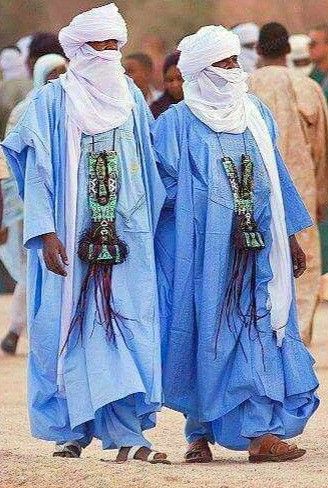
The Tuareg people call themselves Kel tagelmust, “the people of the veil.” This name reveals their identity structure. What you wear determines who you are, when you become an adult, and which clan commands your loyalty across the desert.
Who Receives the Tagelmust and When?
Every Tuareg male must wear the veil from puberty. The age of adulthood among the Tuareg is between 15 and 17 years. Every male reaching this age receives his first veil, accompanied by a silver amulet that doubles as jewellery and a mark of recognition. After the initiation ceremony, the male can now pray and attend the Koran school. The veiling ritual lasts one week continuously; the new adult does not remove the tagelmust while sleeping, eating, or interacting with family except immediate parents.
The veil is expected to be worn until it can no longer be used, after which it is replaced with identical care. Tuareg traditionally never remove the tagelmust except with the closest family members.
What Function Does the Tagelmust Serve?
Dark colours, including indigo blue, effectively block UV rays, helping prevent sunstroke and potential encounters with jinn (desert spirits believed to inhabit the Sahara). The dye, often done dry due to water scarcity, blends with the wearer’s skin, transforming many Tuareg into “blue men” in name and fact. The veil protects faces from the dusty sands of the harsh Sahara environment, where wind speeds reach 40–50 km/h during seasonal storms. During temperature extremes, the tagelmust regulates body heat: the layered cloth insulates against 45°C daytime desert heat while trapping warmth during 0°C night temperatures.
A similar functional adaptation appears in Ghanaian luxury fashion, where designer Aisha Ayensu’s Christie Brown brand incorporates traditional kente and wax prints into contemporary ready-to-wear, proving that heritage fabrics can serve modern purposes while maintaining their cultural meaning.
How Do Colour and Length Communicate Status?
The indigo blue colour transformed from sun protection to a symbol of the entire Tuareg people. Colour, folds, and decorations are specific to various clans. The Azjer clan wears darker indigo, the Uhalen uses lighter blue with white accents, and the Imushag prefer deep purple-blue tones. During celebration, the longer a tagelmust is, the more respectable the personality; an 8-metre veil signals high status, wealth, or ceremonial importance.
The tagelmust distinguishes between adults and young members of the same tribe and is only given when a tribe member reaches the accepted age of adulthood. A child wearing a tagelmust before age 15 would be seen as disrespectful, attempting adulthood without proper initiation.
What Does the Tagelmust Mean Today?
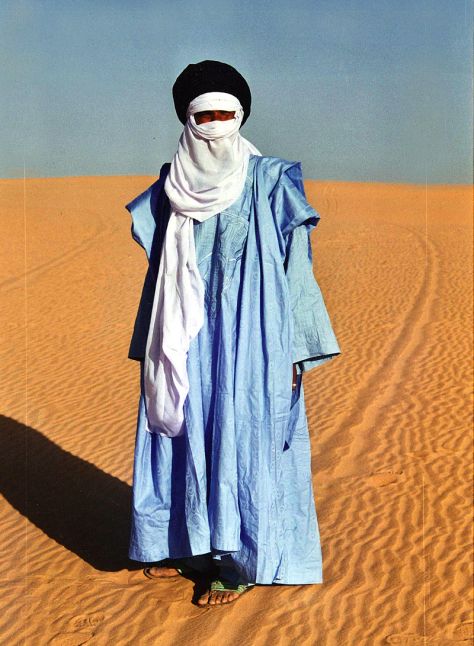
The tagelmust, as a constantly worn face veil, is a marker of adult male identity. The purple cotton of Kano, where Kofar Mata dye pits date back 500 years, was famous throughout Africa’s arid Sahel belt when the Nigerian emirate was the centre of trans-Saharan trade in salt and gold, rivalling Timbuktu’s riches.
Today, Tuareg men still purchase this Kano indigo, though some now use synthetic dyes for daily wear while reserving natural indigo for ceremonies. The tagelmust remains active in Niger’s political landscape: Tuareg rebels during the 1990s and 2010s conflicts wore tagelmust as an identity marker, making the veil a symbol of resistance.
Younger Tuareg men in Niger’s urban areas like Arlit and Niamey sometimes wear tagelmust less frequently, substituting simpler headwraps, but return to full veiling during ceremonies, family gatherings, and visits to desert communities. This adaptation proves the tagelmust’s durability: it survives not by refusing change, but by maintaining core functions while adjusting the frequency of use. This evolution mirrors what African luxury designers across the continent demonstrate: traditional clothing remains potent not because it is outdated, but because people still find reasons to wear it in 2026.
Zarma and Songhai Women’s Dress: Embroidery, Silver, and Social Status
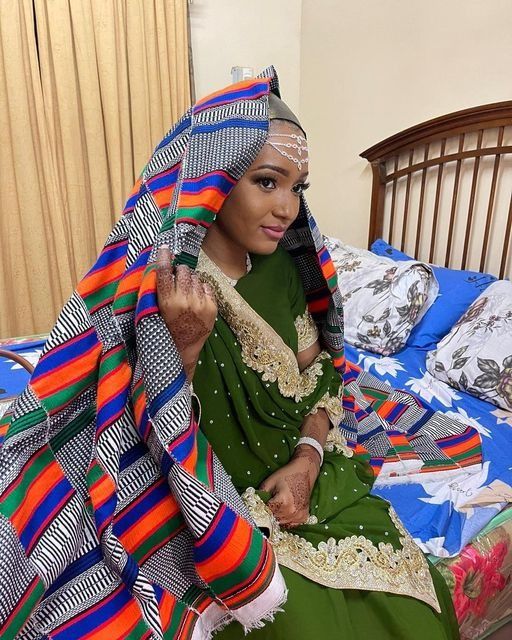
Niger’s ethnic landscape includes the Zarma (the second-largest group) and the Songhai, both concentrated along the Niger River. Their women’s dress demonstrates different identity markers than the Tuareg men’s veil. Instead of covering the face, Zarma and Songhai women use embroidery patterns and silver jewellery to communicate family lineage, regional origin, and economic standing.
The Zarma language, also known as Zarmagga, belongs to the Songhai language family and is spoken by over 2 million people across Niger, Nigeria, and Benin. This linguistic connection mirrors the shared textile traditions of the Zarma and Songhai communities, where embroidery techniques and jewellery styles are passed down through generations without industrial intervention.
What Specific Garments Do Zarma Women Wear?
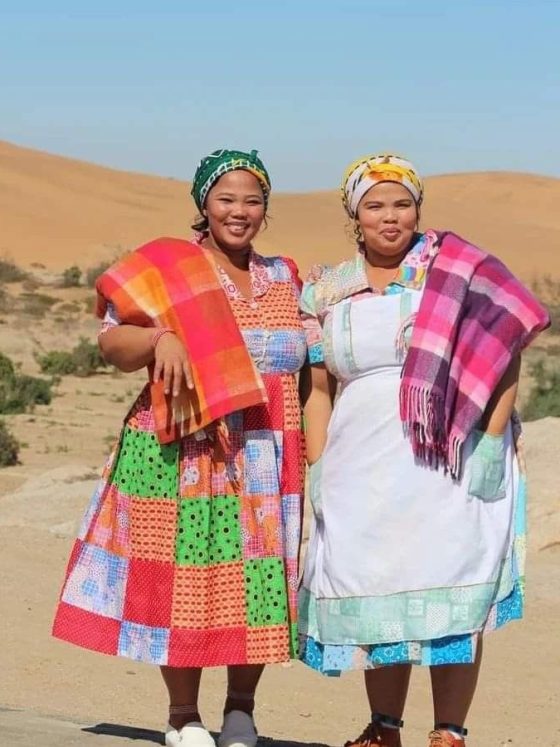
Zarma women wear brightly colored kaftans, long, flowing dresses with intricate embroidery. The tazerzait, a velvet cloak, is worn for special occasions like weddings and religious festivals. These garments move with music, family, market life, weddings, and cultural gatherings rather than standing alone.
Kaftans typically feature square or rectangular embroidery patterns along the neckline, sleeves, and hem. The embroidery uses contrasting colours: white thread on black fabric, gold on deep blue, or red on green. Each pattern type carries meaning: diamond shapes represent fertility, zigzag lines indicate water or the Niger River, and cross patterns signal protection.
How Does Silver Jewellery Communicate Status?
Tuareg women wear elaborate silver jewellery, including necklaces, bracelets, and earrings decorated with geometric patterns and symbols. Tuareg silverwork is highly prized, representing wealth, status, and protection. Heavy silver necklaces feature khamsa (hand of Fatima) or Agadez cross designs that represent protection and spirituality.
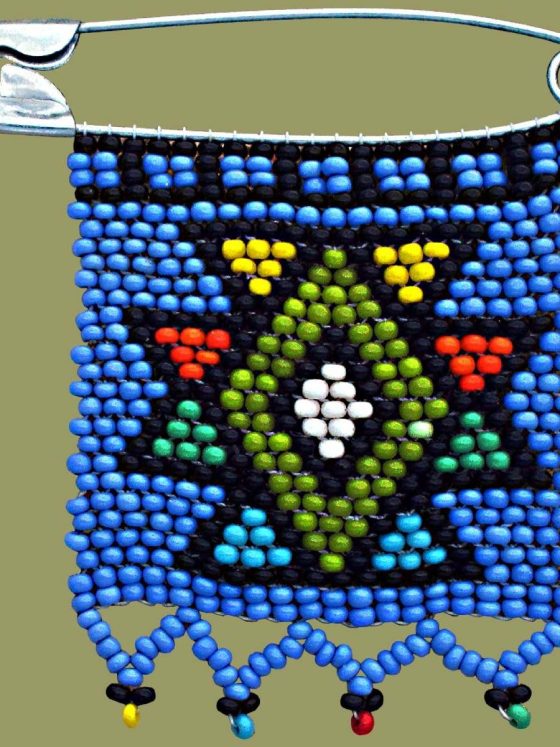
Zarma and Songhai women follow similar traditions. Ornamental silver brooches called fibulae (tizerzai), shaped like triangles or crosses, fasten cloaks and ward off evil. Anklets and bracelets include chunky silver cuffs. Decorated belts called akhnif complete the ensemble, jingling with movement.
In Iklan aesthetics from Niger, women dress in the finest clothing and jewellery, wearing shiny aleshu, large earrings, and layers of pectoral ornaments. The amount and weight of silver jewellery directly correlate with family wealth; a woman wearing 2 kilograms of silver necklaces signals her family’s economic power more effectively than verbal claims.
Similar jewellery traditions appear across West Africa. Studio 189, founded by Abrima Erwiah and Rosario Dorfman, upholds textile traditions while assisting artisan communities across Ghana and beyond. Their work reflects the same notion: cultural knowledge remains valuable because it fosters interpersonal relationships, not merely because it is aesthetically pleasing.
What Specific Jewellery Pieces Appear?
The most distinctive piece is the Agadez cross, originally from the Air Mountains region of Niger. Made of silver or gold, the cross features a central circle with four outward arms, each ending in a smaller circle. Tuareg silversmiths create these crosses using ancient techniques, hammering sheets of metal rather than casting in moulds.
Zarma women wear similar crosses but add elements: disk pendants called tadammet, crescent shapes representing lunar cycles, and coin necklaces, in which family members contribute actual currency to build the jewellery over decades.
Earrings range from small studs to heavy chandelier designs reaching the shoulders. The weight itself communicates commitment; women who wear 500-gram earrings demonstrate that they can afford the physical burden as well as the economic cost.
Anklets complete the ensemble. Tuareg women wear silver anklets with bell-shaped charms that chime when they move. Zarma women prefer flat bands with engraved patterns matching their kaftan embroidery.
Why Does Embroidery Matter Functionally?
Embroidery patterns communicate specific meanings within Zarma and Songhai communities. The craftsmanship demonstrates family skill, economic status, and cultural continuity. Like Tuareg tagelmust folds indicating clan, Zarma embroidery patterns reveal regional and family identity.
A woman from the Dosso region wears diamond-heavy embroidery, while women from Niamey prefer flowing curved lines. Married women add red thread to their embroidery, signalling their new status. Widows return to single-colour work without contrasting patterns.
The embroidery process itself takes weeks or months for a single kaftan. Women gather in groups called kurunfa, sharing techniques as they work. This social structure ensures embroidery knowledge passes from older to younger women, maintaining continuity across generations.
Modern designers adapt these traditions. Tongoro, the Senegalese fashion brand founded by Jeanne Amadou, understands that clothing carries cultural significance beyond aesthetics. Tongoro’s success comes from integrating traditional African silhouettes with contemporary ready-to-wear, making heritage accessible to younger generations who might otherwise abandon traditional dress.
What do Zarma and Songhai Dress Mean Today?
Zarma women continue wearing embroidered kaftans at weddings, cultural events, and religious celebrations. Younger generations combine traditional embroidery with contemporary dress styles, modern cuts with traditional patterns, or synthetic fabrics with hand-embroidered details.
The velvet tazerzait cloak is less commonly worn in daily life but remains essential for ceremonial occasions. Women preserve these cloaks in families, passing them from mother to daughter alongside silver jewellery.
In Niger’s urban centres, Zarma women adapt embroidery to smaller garments: handbags, scarves, and phone cases feature traditional patterns. This adaptation demonstrates the Zarma dress’s durability; it survives not by refusing change but by maintaining core techniques while adapting its applications.
Songhai communities maintain similar practices. The kwayi bèri garment, a wrapped robe with embroidered borders, appears at ceremonies and family gatherings. Songhai embroidery uses larger patterns than Zarma embroidery, with bold geometric shapes that represent the Niger River’s flow.
Zarma and Songhai women’s dress remains potent not because it is outdated, but because people still choose to wear it in 2026. The embroidery communicates family identity, the silver jewellery signals economic standing, and the garments connect women to generations of ancestors who wore similar patterns.
Indigo Dye from Kofar Mata: How Nigerian Textiles Cross Borders to Niger
The indigo fabric that Tuareg traders purchase originates from Kofar Mata dye pits in Kano, Nigeria, one of Africa’s oldest dye sites, dating back 500 years and still used today for dyeing indigo cloth. This ancient trade route connects Niger’s Sahara Desert to Nigeria’s southern textile centres, carrying not just fabric but cultural continuity across borders.
The Tuareg people, inhabitants of the Sahara, have for years travelled miles across the Sahara’s dunes to buy renowned indigo fabric. The journey takes them through Niger’s Air Mountains, across Mali’s desert corridors, and into Nigeria’s northern cities, where Kofar Mata pits remain active. This cross-border trade demonstrates how West African fashion systems operate beyond national boundaries, sustained by relationships between dyers, traders, and wearers.
What Is the Dyeing Process at Kofar Mata?
The material is repeatedly dipped into a natural dye derived from the Indigofera Tinctoria plant family to create vibrant, deep blue shades. Clothes are prepared and always dyed by women. Bright colour comes from imported indigo grains or locally grown indigo leaves, fermented and mixed with water softened with caustic soda to make dye. The cloth is dipped into a large pot of dye, then pulled out to allow oxidation, a process repeated to deepen the colour.
At Kofar Mata, the dye pits are concrete wells dug 3–4 metres deep, lined with clay to prevent leakage. Each pit holds 200–300 litres of dye solution. Women work in groups, managing multiple pits simultaneously. The process takes 3–5 days per cloth, with cloths dipped 8–12 times to achieve the deep indigo blue that Tuareg buyers seek.
After dyeing, clothes are hung on rooftops in Kano to dry in the intense sunlight. The sun oxidises the indigo, locking the colour into the fabric. This step is critical; without proper drying, the dye washes out during the first use.
Who Trades This Fabric and How?
Tuareg people have travelled miles over the Sahara’s dunes to buy renowned indigo fabric from Kano. Longstanding buyers help prop up the trade, with clients returning whose families have bought cloth for centuries, particularly the Tuareg, known as the “blue men of the desert.”
The trade operates through established networks. Tuareg traders meet Kano dyers during seasonal markets, usually held in March–April and September–October. Payment is made in silver, salt, or livestock, traditional currencies that remain valuable in Sahara economies. A single 8-metre tagelmust cloth costs 15,000–25,000 Nigerian naira, depending on dye quality and cloth thickness.
Transport happens via truck or motorcycle. Traders load cloth onto vehicles, covering it with leather to protect it from dust and sun. The journey from Kano to Niamey takes 2–3 days, crossing through difficult terrain where fuel stations are rare and road conditions deteriorate.
What Techniques Create Patterns Beyond Simple Indigo?
Beyond simple indigo dye, West Africa employs multiple techniques. Adire is an indigo-resist-dyed cloth made by Yoruba women in southwestern Nigeria; resist dyeing involves creating patterns by treating certain parts of the fabric to prevent dye absorption. Over 20 Adire patterns exist, each with a particular meaning. Traditionally, Adire fabrics are blue, containing different patterns within square boxes with double or triple lines.
Adire techniques include:
- Stitch resist: Threads tie fabric in specific patterns before dyeing
- Clay resist: Natural clay or starch paste applied to block dye absorption
- Fold resist: Cloth folded tightly before dipping, creating geometric patterns
These techniques appear in Niger, too. Zarma women incorporate Adire-inspired patterns into kaftan embroidery, using similar geometric designs but translating them from dye to thread. This shows how textile traditions cross not just borders but also boundaries of technique: indigo dyeing influences embroidery, and embroidery influences jewellery design.
A similar pattern-making appears in Nigerian fashion traditions. The centuries-old Kofar Mata dye pits in Kano State produce natural indigo-dyed cotton fabric for various products, hand-dyed by master artisans. This traditional process continues to support contemporary designers who reference historical techniques in modern pieces.
What Threatens This Trade Today?
Indigo cloth in Kofar Mata has lost much business due to changing trends and locals’ preference for modern designs and fabrics. The government in Nigeria allowed the importation of cheap textiles from Asia, saturating the local market and putting dyers out of business. Synthetic dyes from China and India offer cheaper alternatives to natural indigo, costing 60–70% less but producing inferior colour depth.
Younger generations in Kano increasingly work in technology, banking, and service industries rather than traditional dyeing. The knowledge required for Kofar Mata dyeing- understanding fermentation timing, oxidation rates, and clay resist techniques, takes decades to master. Few apprentices remain willing to learn this slow craft.
However, better communication channels maintain interest among international buyers, who can place orders without going to the market. Online platforms connect Kano dyers with customers in Europe, North America, and across Africa who seek authentic indigo cloth for fashion, art, and cultural preservation projects.
ALSO READ:
What Does Kofar Mata Indigo Mean for Niger’s Fashion System?
Tuareg men in Niger still purchase Kano indigo for ceremonial tagelmust, though for daily wear, they use synthetic alternatives. This split demonstrates adaptation: natural indigo remains essential for identity-marking occasions while synthetic dyes serve practical daily needs.
The 500-year continuity of Kofar Mata dyeing demonstrates that West African textile traditions endure through relationship maintenance, not just through technique preservation. Dyers know their customers’ families. Customers trust specific dyers’ work. This social network ensures trade continues even when economic pressures threaten.
Similar continuity appears across the continent. Christie Brown, led by visionary designer Aisha Ayensu, redefines Ghanaian luxury fashion with bold craftsmanship and African cultural depth. Ayensu’s work incorporates traditional techniques into contemporary ready-to-wear, ensuring heritage fabrics serve modern purposes while maintaining cultural meaning.
The indigo from Kofar Mata reaches Niger not just as fabric but as cultural memory. Each tagelmust wrapped around a Tuareg man’s head carries 500 years of dyeing history, cross-border trade relationships, and the knowledge that indigo blue protects against desert sun while signalling adult male identity.
This fabric journey mirrors what happens across West Africa’s fashion systems. Traditional textiles persist not because they resist change, but because communities find new methods to give tradition significance. The Kofar Mata pits remain active in 2026, not because Nigeria protects them as a historical artefact, but because Tuareg traders still need their cloth and dyers still sell it.
The Omiren Argument
Thesis:
Authenticity results from preserving meaning, not rejecting change. Traditional clothing remains culturally legitimate when it adapts to modern contexts while maintaining its core functions and symbolic power. Niger’s desert fashion proves that evolution strengthens rather than weakens cultural identity.
Context:
The fashion industry treats authenticity as the requirement that garments remain unchanged. Traditional clothing is discussed as a historical artefact, something to be protected in museums or displayed as heritage. This framework assumes that if a garment changes colour, material, or frequency of use, it loses cultural legitimacy. Museums catalogue tagelmust veils as static objects, while critics dismiss the adaptation of kaftans as “diluted” heritage.
Disruption:
Niger demonstrates the opposite. Tuareg men use blue tagelmust only for weddings, while wearing other colours daily. Zarma women incorporate traditional embroidery into contemporary dress styles with modern cuts. Kano indigo reaches traders who purchase it for ceremonial use, while daily wear uses synthetic alternatives. This is not dilution; this is adaptation that maintains core identity.
Cultural Insight:
Cultural identity endures through adaptability. Tuareg men still receive tagelmust at age 15–17 during initiation, maintaining the veil’s significance. Zarma women still wear embroidered kaftans at weddings, keeping garments meaningful. The 500-year Kofar Mata dyeing continues through relationship maintenance; dyers know customers’ families, and customers trust specific dyers. Adaptation preserves meaning while allowing change.
Conclusion:
Rejecting change does not create authenticity. Traditional clothing remains potent because individuals still find reasons to wear it in 2026. The better question is not whether traditional dress endures modernity, but whether cultural traditions evolve without losing significance. Perhaps the true question is why we believe it must be saved in the first place.
Frequently Asked Questions (FAQs):
- What is traditional clothing in Niger?
Traditional clothing includes the Tuareg tagelmust (indigo-dyed turban and face veil up to 8 metres long), k’sa garments (Tuareg robes), brightly colored kaftans with intricate embroidery worn by Zarma women, tazerzait velvet cloaks for special occasions, and silver jewellery including necklaces with khamsa or agadez cross designs, fibulae brooches shaped like triangles or crosses, chunky silver cuffs, and decorated belts called akhnif. The Songhai wear kwayi bèri garments. These appear at weddings, initiation ceremonies, religious events, and cultural celebrations among Niger’s diverse ethnic groups, including Tuareg, Zarma, Songhai, Fula, and Toubou.
- Why is the tagelmust important for Tuareg men in Niger?
The tagelmust marks passage into adulthood and is received between ages 15–17 during an initiation ceremony. It communicates clan identity through specific colour, folds, and decorations; the Azjer clan wears darker indigo, Uhalen uses lighter blue, and Imushag prefer purple-blue tones. The veil protects against the Sahara sun and sandstorms while warding off desert spirits (jinn). Indigo blue transformed from sun protection to a symbol of the entire Tuareg people, earning them the “blue men” designation as the dye blends with skin. During a celebration, a longer tagelmust indicates a more respectable personality. The veil distinguishes adults from young members and enables men to pray and attend Koran school after receiving it.
- Who are the Zarma and Songhai people of Niger?
The Zarma are Niger’s second-largest ethnic group with over 2 million speakers of the Zarma language, concentrated along the Niger River. The Songhai also inhabit the Niger River regions and share linguistic and textile traditions with Zarma communities. Both groups maintain distinct dress customs, including embroidered kaftans for women, velvet tazerzait cloaks for special occasions, and intricate silver jewellery. Zarma women wear brightly coloured, flowing dresses with embroidery patterns that communicate specific meanings: diamond shapes represent fertility, zigzag lines indicate the Niger River, and cross patterns signal protection. Like Tuareg tagelmust folds indicating clan, Zarma embroidery patterns reveal regional and family identity through craftsmanship, demonstrating family skill and economic status.
- Do people still wear traditional clothing in Niger?
Yes. Tuareg men continue to receive tagelmust veils at ages 15–17 during initiation ceremonies, wearing them until replacement is needed. Blue tagelmust is used for special occasions like weddings, while other colours appear daily. Younger Tuareg men in urban areas such as Arlit and Niamey sometimes wear simpler headwraps but revert to full 8-metre veiling during ceremonies. Zarma women wear traditional embroidered kaftans at weddings, cultural events, and religious celebrations, adapting the embroidery to contemporary dress styles, using modern cuts and synthetic fabrics. Traditional velvet tazerzait cloaks are less commonly worn in daily life but remain essential for ceremonial occasions. Indigo fabric from Kofar Mata dye pits in Nigeria, 500 years old, continues to reach Tuareg traders crossing the Sahara.
- How does clothing reflect identity in Niger?
Tuareg tagelmust conveys maturity, clan identity, and adult male status more effectively than words. Specific colour, folds, and decorations identify various clans; Azjer, Uhalen, and Imushag each have distinct patterns. Zarma embroidery patterns reveal regional and family identities; the Dosso region favours diamond-heavy embroidery, while Niamey prefers flowing, curved lines. Silver jewellery conveys wealth, status, and protection; the khamsa (hand of Fatima) and Agadez cross designs represent spirituality. Fibulae brooches shaped like triangles or crosses ward off evil. Aleshu, large earrings, and pectoral ornaments demonstrate social standing. Clothing moves with music, family, market life, and weddings rather than standing alone, embedding cultural memory into materials and craftsmanship. The amount and weight of silver jewellery directly correlate with family wealth; a woman wearing 2 kilograms of silver necklaces signals economic power more effectively than verbal claims.
EXPLORE MORE:
Omiren Styles covers African and diaspora fashion from a position of cultural authority rather than cultural commentary. Every article here is built on the premise that African fashion is already the foundation. Subscribe for the intelligence that starts from that premise.