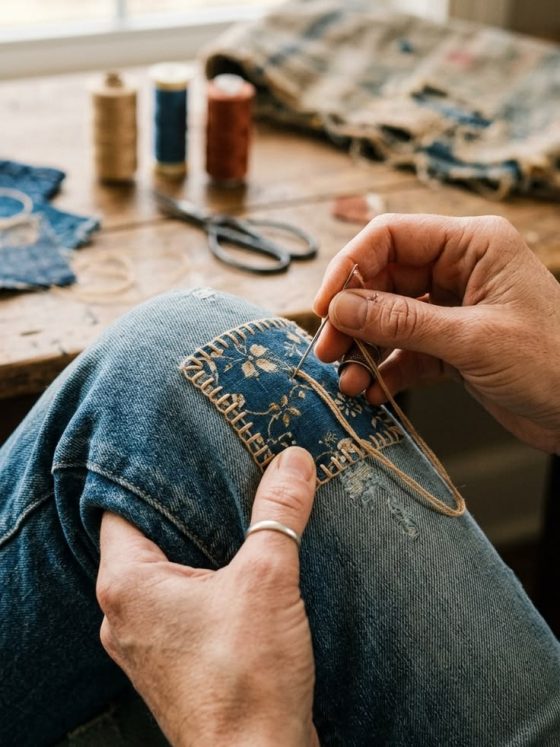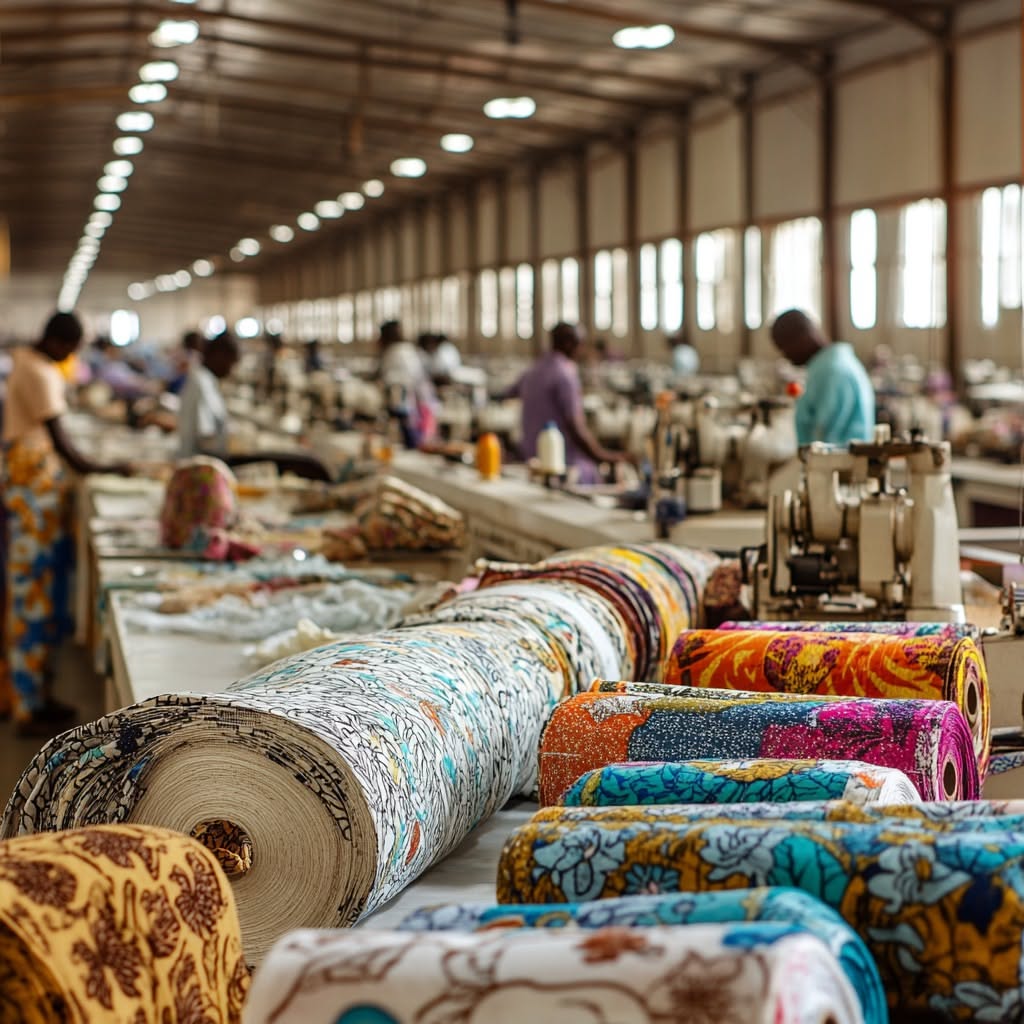
Because fabric production in Togo has historically served as a site of labour, identity, trade, ceremony, and artistic expression, Togolese textiles and craftsmanship hold a central place within the nation’s fashion culture. Weaving, dying, embroidery, tailoring, and fabric trading were all a part of daily economic and cultural life in Togolese communities long before modern fashion industries spread throughout West Africa.
This history is important because contemporary discussions about African fashion frequently highlight completed clothing while downplaying the infrastructures of craftsmanship that go into making it. Fabrics don’t just happen. Systems of artisan labour, inherited technical knowledge, market economies, and generational cultural interpretation all contribute to their emergence. Through regional exchange networks connecting Togo to Ghana, the Benin Republic, Burkina Faso, and broader West African commercial systems, the country’s textile traditions developed.
Togo’s various communities made unique contributions to these customs. The production of ceremonial cloth, indigo dyeing, southern weaving cultures, northern embroidery techniques, and tailoring economies all influenced the social and economic movement of fabrics across the nation. As a result, communities used textile craftsmanship to maintain cultural continuity while adapting to shifting political and economic conditions.
These foundations continue to play a major role in Togolese fashion today. Through luxury fashion, Afrocentric streetwear, and editorial styling targeted at younger African consumers, contemporary designers are increasingly reinterpreting woven cloths, ceremonial fabrics, embroidery techniques, and traditional tailoring structures. However, the craftsmanship itself is still rooted in labour systems established long before the global visibility of digital fashion culture.
Therefore, Togolese craftsmanship and textiles are more than just aesthetics. They demonstrate how artisan knowledge endures not just through preservation but also through reinvention.
Togolese textiles and craftsmanship continue shaping modern fashion through weaving, tailoring, dyeing, and cultural identity in Togo.
Weaving Traditions Built the Foundation of Togolese Fashion Culture
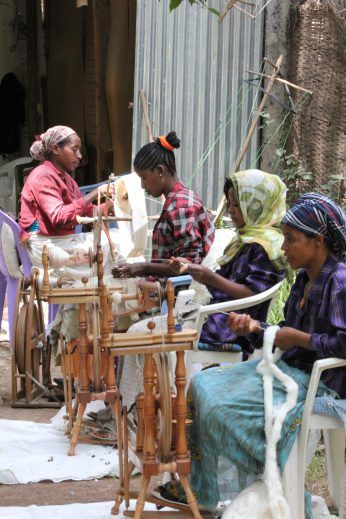
Through weaving systems that historically linked clothing production to social identity, ceremonial culture, and regional trade, Togolese textiles and craftsmanship evolved. Weaving served not only as manual labour but also as specialised cultural knowledge passed down through generations of artisan families and local craft networks across several communities.
In Togolese textile culture, narrow-strip weaving became particularly important. Artisans created long, woven bands and then joined them to form larger ceremonial garments worn at festivals, weddings, funerals, initiation ceremonies, and social events. These textiles were significant in part due to the technical know-how required to make them and in part to their association with cultural identity.
Togo’s weaving customs also mirrored broader regional influences that extended to neighbouring Ghana and the Benin Republic. Long before colonial borders established modern nation-states, textile exchange networks enabled weaving techniques, colour symbolism, embroidery styles, and clothing structures to cross national boundaries. Therefore, rather than being isolated, Togolese textile culture evolved through mobility and adaptation.
Examining the social functioning of ceremonial clothing highlights the connection between fabric and identity. Respectability, maturity, family ties, and community involvement were all established through clothing. By ensuring that clothing carried both visual and cultural significance during significant ceremonies, textile craftsmanship supported these systems.
Several West African fashion traditions exhibit the same relationship between identity and textile labour. As we examined royal and ceremonial fabrics throughout the Benin Republic, clothing served as a social language connected to authority and communal structure rather than just personal style.
Through modern fashion, Togolese designers are increasingly revisiting weaving traditions. Woven textile aesthetics are incorporated into structured silhouettes, editorial fashion, and contemporary Afrocentric tailoring, all of which target younger customers throughout the continent.
Therefore, maintaining relevance through reinterpretation is more important to the survival of Togolese textile craftsmanship than freezing tradition.
Markets, Tailors, and Fabric Traders Transformed Textile Culture Into Industry
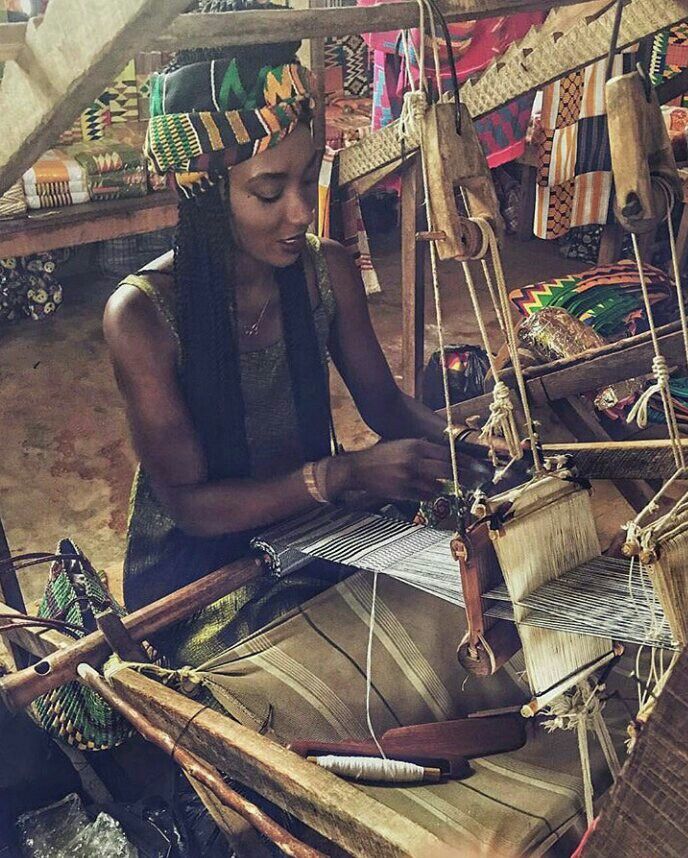
Through market systems that linked fabrics to daily economic life, Togolese textiles and craftsmanship grew beyond artisan production. In the past, Togo’s textile culture relied not only on weavers but also on traders, dyers, embroiderers, tailors, and customers, all of whom influenced how fabrics acquired both cultural and commercial value.
Lomé’s markets gained particular prominence in the local textile economies. Fabrics were traded through extensive networks that connected Togolese traders to suppliers in neighbouring countries and beyond. By influencing which textiles entered local circulation and how textile trends evolved socially, women traders played significant roles in these economies.
Later, imported wax prints had a profound impact on Togolese fashion culture, but their cultural significance stemmed from local reinterpretation rather than their foreign origin alone. Customers choose fabrics based on family preferences, ceremonies, symbolism, colour associations, and tailoring styles. Through use rather than manufacturing origin, imported textiles eventually became ingrained in Togolese culture.
The way textiles were used in contemporary Togolese fashion also became heavily influenced by tailoring culture. Expert tailors created fitted clothing, embroidered robes, structured dresses, and modern silhouettes from ceremonial fabrics and wax prints, appropriate for both formal occasions and urban fashion culture.
This development is similar to broader discussions of textile adaptation that we examined in our study of Liberian fabric traditions, in which imported materials were similarly incorporated into regional cultural systems through social interpretation, ceremony, and tailoring.
Sustainability discussions in Afrocentric fashion are increasingly intersecting with Togo’s textile craftsmanship. As alternatives to relying solely on fast fashion, modern African designers are giving greater consideration to handwoven production, artisan labour, and regional manufacturing systems.
While modernising tailoring systems for the fashion industry, brands like Nkwo and Lisa Folawiyo have contributed to broader continental discussions about conserving African textile craftsmanship.
Because craftsmanship continues to adapt to new commercial realities rather than vanishing under industrial production, Togolese textiles remain economically significant.
ALSO READ:
Modern Togolese Fashion Uses Craftsmanship as Cultural Strategy
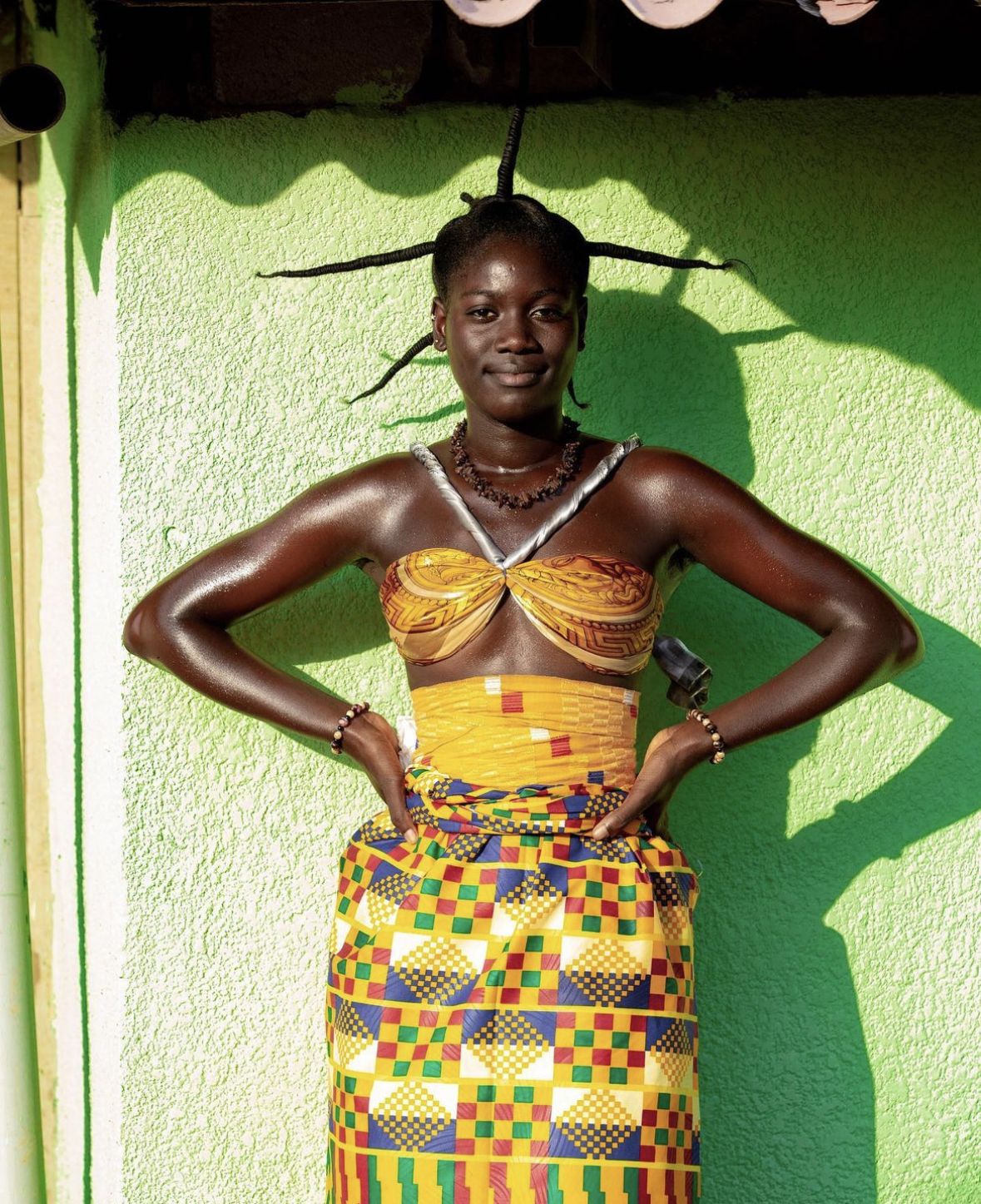
Because modern Togolese fashion increasingly views heritage as a design infrastructure rather than historical nostalgia, Togolese textiles and craftsmanship remain relevant today. To create contemporary African fashion rooted in cultural ownership, younger designers, stylists, photographers, and consumers are revisiting textile traditions rather than precisely replicating the past.
This change is evident in Lomé’s urban fashion culture. Younger customers often pair sneakers, structured tailoring, modern jewellery, and international streetwear aesthetics with woven textiles, embroidered clothing, traditional wrappers, and ceremonial fabrics. Therefore, rather than existing independently of modern style systems, traditional craftsmanship continues to function within them.
This evolution has become more visible thanks to social media. Through editorial photography, runway shows, music videos, and digital Afrocentric culture, Togolese creatives are increasingly showcasing locally inspired fashion to audiences throughout the African diaspora. In modern fashion branding, textile craftsmanship serves as both a visual strategy and a cultural identity.
Global fashion industries, however, continue to exploit African textile aesthetics without sufficiently acknowledging the labour systems and cultural histories that underlie them. In global fashion economies, fabrics become visual trends, but the communities, traders, and artisans who uphold those traditions are largely invisible.
This conflict is indicative of a broader problem in Afrocentric fashion discourse. In our examination of African botanical skincare customs, we found that while global industries frequently separated products from their original producers and contexts, they also benefited from African cultural knowledge.
By emphasising regional craftsmanship within modern luxury fashion itself, Togolese designers are increasingly defying that trend. African brands are repositioning craftsmanship as a modern design authority rather than heritage decoration, as seen by labels like Tongoro and Orange Culture.
Because Togolese textiles and craftsmanship remain living systems of labour, creativity, identity, and economic survival within contemporary African fashion, they continue to have a significant cultural impact.
The Omiren Argument
Togolese craftsmanship and textiles are frequently regarded as heritage aesthetics, but in reality, they are living labour systems that continue to influence contemporary African fashion economies.
African fabrics are often celebrated visually in international fashion discussions, but the infrastructure that supports them is often overlooked. The communities of weavers, traders, dyers, tailors, and artisans whose labour transformed fabrics into systems of identity and commerce across generations become disconnected from textile traditions.
In Togo, craftsmanship has never served as a means of passive cultural preservation. The production of textiles maintained regional trade networks and organised labour economies, strengthened ceremonial identity, and continually adjusted to shifting consumer demands. Even imported textiles did not become culturally Togolese until they were incorporated into local ceremonial, symbolic, and tailoring systems.
This distinction alters the way African craftsmanship is perceived in contemporary fashion. Traditional textiles are valuable for reasons other than their age. Their value stems from the fact that, despite global extraction and industrial fashion pressures, the knowledge systems, labour structures, and cultural meanings associated with them continue to exist.
Because Togolese communities continue to view fabric as cultural infrastructure rather than mere decoration, Togolese textiles and craftsmanship remain relevant today. Togo’s modern fashion thrives by converting craftsmanship into modern creative authority rather than by eschewing tradition.
Frequently Asked Questions (FAQs):
-
What are the traditional textiles used in Togo?
Traditional textiles used in Togo include handwoven ceremonial cloths, embroidered fabrics, indigo-dyed materials, wrappers, and wax-print textiles adapted to local fashion culture. These fabrics are commonly used during weddings, funerals, festivals, and cultural ceremonies.
-
Why is textile craftsmanship important in Togo?
Textile craftsmanship remains important in Togo because weaving, dyeing, tailoring, and fabric trading historically supported cultural identity, artisan labour economies, ceremonial traditions, and regional commerce across the country.
-
How does modern fashion use Togolese textiles?
Modern fashion in Togo incorporates traditional textiles into contemporary tailoring, Afrocentric streetwear, editorial fashion, luxury garments, and modern ceremonial wear. Designers increasingly reinterpret heritage fabrics through contemporary silhouettes and styling.
-
Did imported fabrics influence Togolese textile culture?
Imported wax-print fabrics significantly influenced Togolese textile culture through regional trade networks. However, Togolese consumers culturally transformed these materials by attaching local symbolism, ceremonies, and tailoring traditions to them over generations.
-
Are weaving traditions still active in Togo today?
Yes. Weaving traditions remain active in Togo through artisan workshops, local textile production, ceremonial clothing culture, and contemporary fashion design. Many younger creatives now reinterpret traditional weaving aesthetics in modern Afrocentric fashion.
EXPLORE MORE:
Omiren Styles covers Afrocentric fashion, textile heritage, African craftsmanship, and contemporary cultural industries through research-based editorial focused on history, identity, labour, and creative innovation.
Discover more research-driven analysis on Afrocentric fashion, textile heritage, craftsmanship, and African creative industries at Omiren Styles.