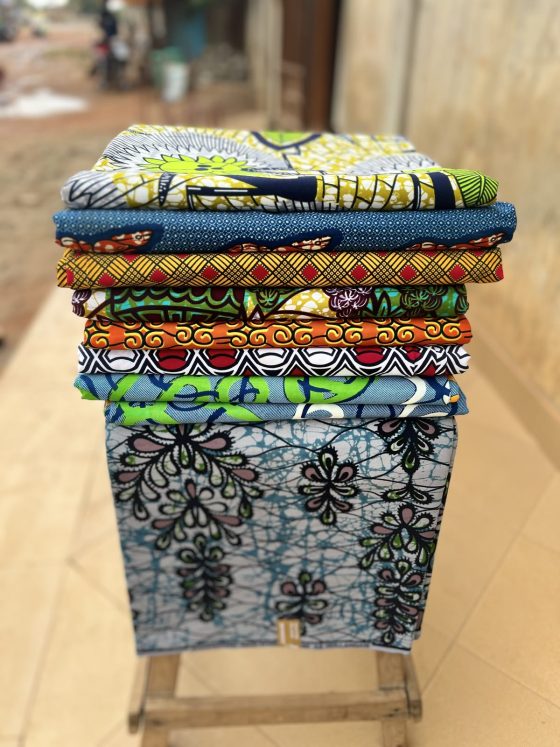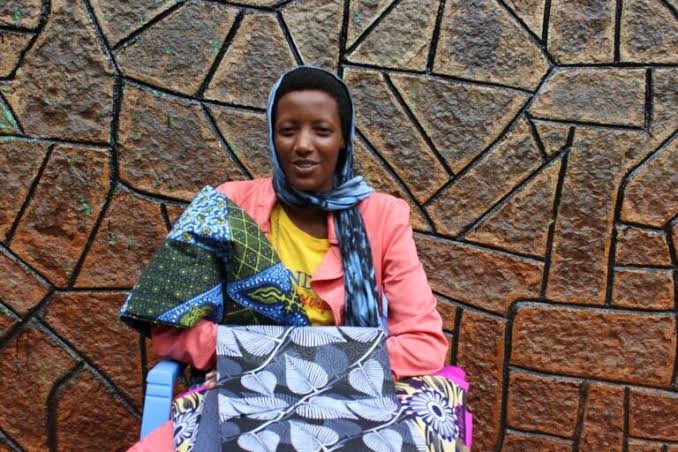
In the woven goods section of Kariakoo Market in Dar es Salaam, a trader pulls a bolt of kitenge from a stack and holds it to the light. The fabric is Tanzanian-manufactured, produced at the Urafiki Textile Mill, one of the oldest surviving state-established textile mills in East Africa. The price is competitive with Chinese-imported alternatives in the same market. The quality is verifiable on sight. The problem is that most of the bolts on the shelves around it come from outside Tanzania, and most of the fabric sold as kitenge across East Africa is imported rather than domestically produced. Tanzania has the manufacturing infrastructure. It has the EAC trade access. It has the market at its centre. The expansion gap is structural and lies between what the infrastructure supports and what the policy environment allows.
Tanzania has EAC trade access, garment manufacturing capacity, and Kariakoo at its centre. So why has it not built the fashion economy its infrastructure suggests?
What Tanzania Has
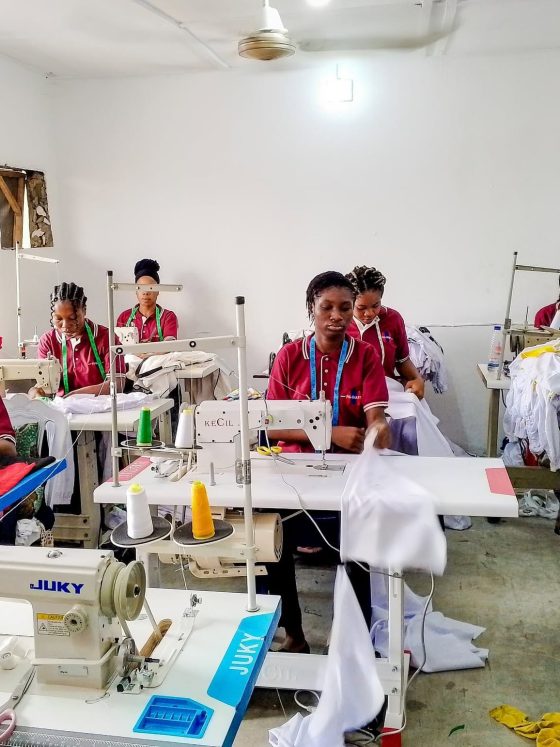
Tanzania’s textile and garment sector has more documented manufacturing infrastructure than most East African nations. The Urafiki Textile Mill in Dar es Salaam, established in 1968 as a joint venture between Tanzania and China, remains one of the few functional integrated textile mills in the East African Community, producing domestically sourced cotton fabric. The A to Z Textile Mills in Arusha, whose primary product line includes insecticide-treated bed nets produced at scale for the malaria prevention market, demonstrates that Tanzania-based manufacturing can operate internationally with institutional buyers. The Tanzanian government’s Tanzania Investment Centre identifies textiles and garments as a priority investment sector under the Tanzania Development Vision 2025 and the subsequent Five-Year Development Plans.
Tanzania’s cotton production base provides the raw material foundation that many competing East African nations lack. According to the Food and Agriculture Organisation of the United Nations, Tanzania is consistently one of sub-Saharan Africa’s largest cotton producers, with production concentrated in the lake zone regions of Mwanza, Simiyu, Tabora, and Shinyanga. A functioning cotton-growing base means that a domestic textile mill can, in principle, source locally rather than import raw material, which is the structural advantage that Kenya’s domestic textile sector lacks and that Ghana is actively trying to rebuild.
The East African Community Simplified Trade Regime (STR), which allows small-scale cross-border traders to import goods valued below a specified threshold without full customs documentation, is designed to facilitate the informal and semi-formal textile trade that characterises much of East Africa’s fabric economy. For Tanzanian textile manufacturers and designers, EAC membership, in principle, provides a market of over 300 million people for domestically produced fabrics and garments, with harmonised tariff structures that should make intra-regional trade cheaper than importing from outside the bloc. As the EAC Secretariat documents, the Common External Tariff applies to goods entering the EAC from outside the region, creating a protective structure for goods produced within it.
What the Simplified Trade Regime Actually Does
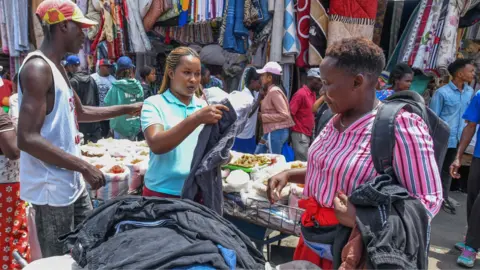
The EAC Simplified Trade Regime was established specifically to reduce the burden on small-scale cross-border traders, defined in EAC policy as individuals trading goods worth below $2,000 per consignment. The threshold was set to recognise that the majority of cross-border trade in the East African Community is informal or semi-formal rather than conducted by registered companies with full documentation capacity. For small-scale fabric traders moving kitenge, kanga, and secondhand clothing across the Tanzania-Kenya, Tanzania-Uganda, or Tanzania-Rwanda borders, the STR is designed to reduce the transaction costs, documentation requirements, and informal payment demands (commonly described as unofficial fees) that had historically made cross-border trade prohibitively expensive for small operators.
The World Bank’s assessment of the EAC Simplified Trade Regime documents both its achievements and its limitations. The STR has demonstrably increased the volume of formally documented small-scale cross-border trade, particularly among women traders who dominate much of the informal fabric and garment trade across the Tanzania-Kenya and Tanzania-Uganda borders. It has reduced documentation costs and, in some corridors, reduced the frequency of unofficial fee demands at border crossings. Its limitations are also documented: the $2,000 threshold is easily exceeded by a single consignment of quality fabric, meaning that traders who cross the STR threshold enter a full customs regime for which many lack the documentation capacity. Non-tariff barriers, including differing standards requirements, inconsistent enforcement, and infrastructure gaps at border posts, continue to add cost and time to cross-border trade that the tariff structure alone cannot resolve.
“The STR has increased documented small-scale cross-border trade, particularly among women traders who dominate much of the informal fabric trade across the Tanzania-Kenya and Tanzania-Uganda borders, while non-tariff barriers continue to add cost and time that tariff structures alone cannot resolve.” — World Bank EAC trade facilitation assessment.
Kariakoo and the Dar es Salaam Fabric Economy
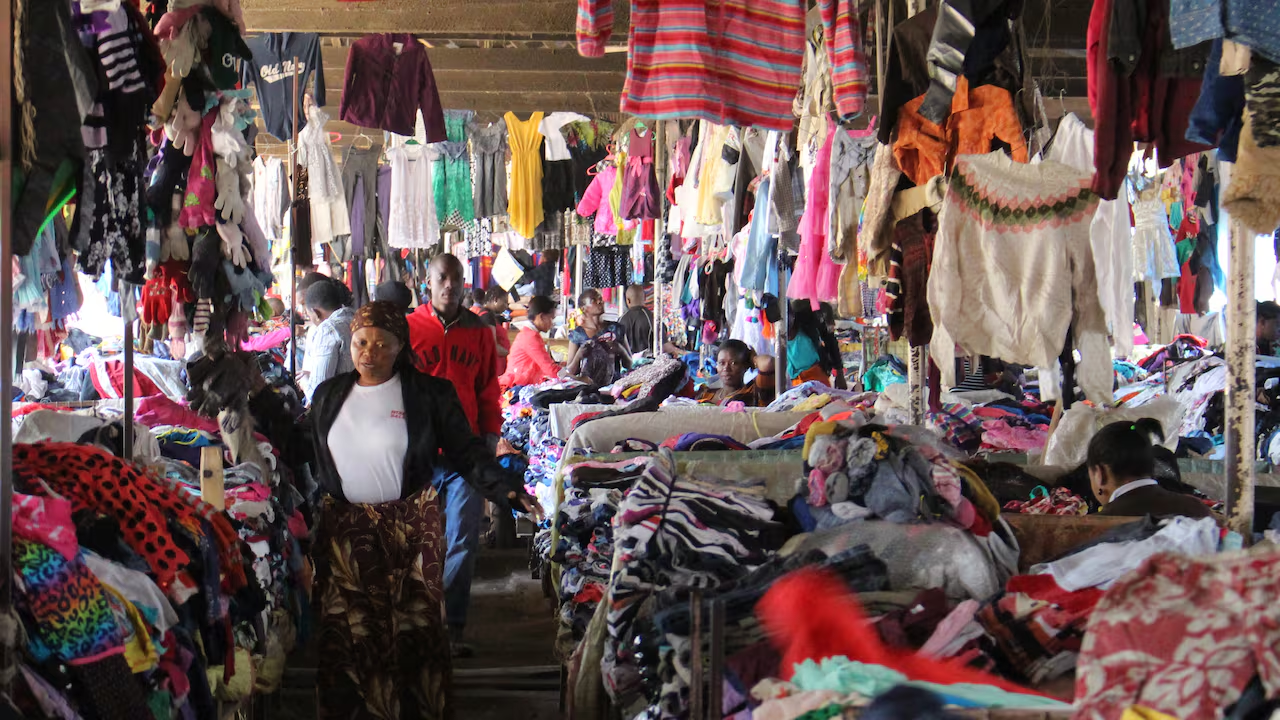
Kariakoo Market in Dar es Salaam is the commercial heart of Tanzania’s fabric economy and the largest wholesale textile market in East Africa. The market stocks kitenge, kanga, and kikoi across the full range of quality and price and serves as the primary sourcing location for tailors, designers, and retail traders across Tanzania and the wider East African region. As Omiren Styles has documented in its wholesale fabric sourcing guide, Kariakoo is one of the essential East African sourcing markets for professional fabric buyers, stocking both Tanzanian-manufactured and imported alternatives at competitive wholesale prices.
The competition between domestically produced Tanzanian fabric and Chinese-imported alternatives is visible on Kariakoo’s shelves and in its price structure. Chinese-manufactured kitenge imports have exerted consistent downward pressure on the price Tanzanian mills can charge for domestically produced fabric, mirroring the dynamic documented in Kenya’s domestic textile sector collapse and in the mitumba secondhand clothing trade’s displacement of formal garment retail. The Tanzania Revenue Authority‘s trade statistics confirm that textiles and garments remain among Tanzania’s largest import categories by value, a fact that runs directly counter to the sector’s nominal manufacturing capacity.
The Expansion Gap: What Is Stopping Tanzania
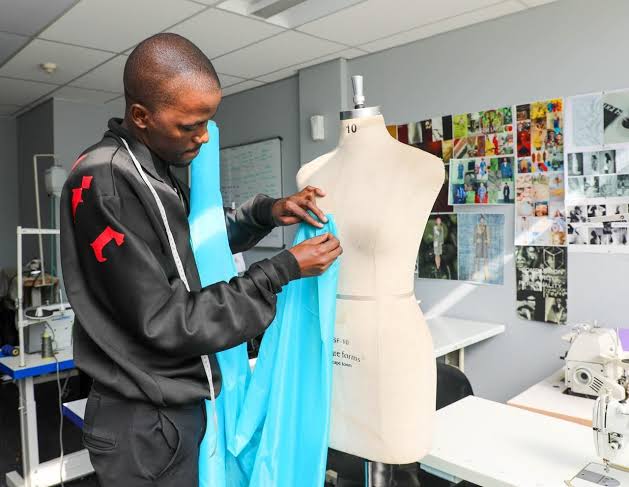
Tanzania’s expansion gap is not a manufacturing capacity problem. It is a policy environment problem compounded by infrastructure and investment gaps. The manufacturing capacity exists, as evidenced by Urafiki and the cotton production base. The trade access exists, as evidenced by EAC membership and the STR. The market exists, as evidenced by Kariakoo’s scale and the wider East African consumer base. What does not yet exist in sufficient depth is the combination of consistent industrial policy, targeted investment in the value chain between raw cotton and finished garment, and the kind of long-term institutional commitment that Kenya built through AGOA and that Togo has attracted through its Platform Industrielle d’Adama.
The Afreximbank, the Cairo-based Afrocentric trade finance institution, is actively funding textile and garment manufacturing projects across the continent, as documented by Business of Fashion in November 2025. Tanzania has access to this financing mechanism, but has attracted less documented Afreximbank investment in the fashion and textile sector than Kenya, Ethiopia, or Rwanda in the same period. The IFC’s investment in Kenya’s Royal Apparel EPZ, documented at US$15 million and creating 3,700 jobs in January 2025, represents exactly the kind of institutional investment that Tanzania’s textile sector has not yet attracted on a comparable scale.
Rwanda provides the most instructive comparison. Rwanda has no cotton production base, no legacy textile mills, and a much smaller domestic consumer market than Tanzania. Yet it has attracted more documented international fashion investment, built a more internationally visible fashion week calendar, and implemented the mitumba ban that Tanzania considered but did not follow through on, specifically because Rwanda was willing to absorb the short-term trade disruption to build long-term domestic manufacturing capacity. The comparison is not meant to suggest Tanzania should replicate Rwanda’s model. It is meant to identify what a decisive industrial policy commitment in the textile sector looks like from the outside, and what its absence looks like in Tanzania’s expansion gap.
Where the Opportunity Sits
The opportunity for Tanzania’s fashion economy is in the value chain between raw cotton and retail garments. Tanzania grows cotton. It has mills that can process it. It has a market at Kariakoo that can distribute the finished fabric and garments across the region. The gap is in the middle: ginning infrastructure, spinning and weaving capacity between the cotton field and the mill, finishing and dyeing capability that can produce fabric competitive with Chinese imports on quality rather than just on raw material origin, and the designer ecosystem that can convert finished fabric into branded fashion product rather than commodity textile.
The EAC Simplified Trade Regime gives Tanzanian manufacturers preferential access to a regional market of over 300 million people. The AfCFTA, when its apparel and textile provisions are fully operational, extends that access to a continental market. According to the African Development Bank, the AfCFTA is expected to increase intra-African textile trade by 33%. For Tanzania, which has invested in the missing middle of its value chain, that projection represents a substantial addressable market. For Tanzania, which has not made that investment, it represents a market that Kenya, Ethiopia, and Rwanda are better positioned to capture.
The Omiren Argument
Tanzania has the inputs for a serious fashion economy: cotton, manufacturing capacity, market infrastructure, EAC trade access, and Kariakoo at its centre. What it lacks is the industrial policy commitment to convert those inputs into a functioning value chain. The expansion gap is not a resource gap. It is a decision gap. The decisions required are not novel: Kenya made them through AGOA, Rwanda made them through the mitumba ban and direct investment attraction, and Togo made them through the Platform Industrielle d’Adama. Tanzania is watching those models from a position of better natural endowment than any of them. It grows more cotton than Kenya. It has more legacy manufacturing infrastructure than Rwanda. It has better port access than most landlocked EAC members. The inputs are present. The policy environment that would convert them into a fashion economy of continental significance is the missing piece.
As Omiren Styles has argued in its analysis of why Lagos and Nairobi are outgrowing other African fashion cities, the difference between a functioning fashion economy and a potential one is institutional compounding: the accumulation of policy decisions, investment relationships, and commercial outcomes over time. Tanzania has natural endowments. The institutional compounding has not started yet. When it does, the expansion gap will close faster than most comparable markets because the inputs are already in place. The question is not whether Tanzania can build a serious fashion economy. It is when the decision gets made.
Tanzania has the cotton, the mills, the market, and access to trade. The expansion gap is not a resource problem. It is a decision waiting to be made.
ALSO READ
- Kenya Mitumba Trade, AGOA Exports, and the Domestic Textile Gap
- Why Lome Should Be on Every African Fashion Investor’s Map
- African Fabric Markets and Textile Cooperatives: Wholesale Sourcing Guide for Designers
- Why Lagos and Nairobi Are Outgrowing Other African Fashion Cities: The Structural Reasons
Frequently Asked Questions
What is Tanzania’s role in the East African fashion trade?
Tanzania is a significant raw-material producer and transit economy in the East African fashion trade, but has not yet converted those advantages into a dominant position in manufactured garment exports. It is consistently one of sub-Saharan Africa’s largest cotton producers, according to the Food and Agriculture Organisation of the United Nations, with production concentrated in the lake zone regions. It hosts Kariakoo Market in Dar es Salaam, the largest wholesale textile market in East Africa. Its EAC membership gives it preferential trade access to a regional market of over 300 million people. What has not yet been built is the value chain linking cotton production to competitive garment exports.
What is the EAC Simplified Trade Regime, and how does it affect Tanzania’s fashion trade?
The EAC Simplified Trade Regime allows small-scale cross-border traders to import goods below a $2,000 per consignment threshold without full customs documentation. As the World Bank has documented, it has increased formal documentation of small-scale cross-border trade and reduced transaction costs for women traders who dominate much of the informal fabric trade. Its limitations include a threshold easily exceeded by quality fabric consignments, and non-tariff barriers at border posts that the tariff structure alone cannot resolve.
Why has Tanzania not developed its fashion economy despite having cotton and manufacturing infrastructure?
The expansion gap is a policy environment problem rather than a resource problem. Tanzania has a cotton production base, legacy textile mills including the Urafiki Textile Mill, Kariakoo Market as a distribution hub, and EAC trade access. What is missing is the industrial policy commitment to invest in the value chain between raw cotton and finished competitive garment: ginning infrastructure, spinning and weaving capacity, finishing and dyeing capability, and the designer ecosystem that converts fabric into a branded fashion product. Rwanda, with fewer natural endowments, has attracted more documented international fashion investment because it made decisive industrial policy commitments that Tanzania has not yet matched.
What is Kariakoo Market, and why does it matter?
Kariakoo Market in Dar es Salaam is the largest wholesale textile market in East Africa, stocking kitenge, kanga, and kikoi across the full range of quality and price. It is the primary sourcing location for tailors, designers, and retail traders across Tanzania and the wider East African region. The competition between domestically produced Tanzanian fabric and Chinese-imported alternatives is visible in Kariakoo’s price structure, with Chinese imports consistently undercutting domestic production on price despite the quality advantages that Tanzanian-manufactured fabric can demonstrate.
How does Tanzania’s fashion trade position compare with those of Kenya and Rwanda?
Kenya has built a stronger fashion export economy through AGOA access, with documented annual apparel exports to the United States of approximately $407 million, and through IFC institutional investment in its export processing zones. Rwanda, despite having no cotton production base and a smaller domestic market, has attracted more international fashion investment and implemented a more decisive mitumba ban specifically to protect the development of domestic manufacturing. Tanzania has better natural endowments than either: more cotton production than Kenya, more legacy manufacturing than Rwanda, and Kariakoo as a regional distribution hub. The gap lies in the industrial policy commitment needed to convert those endowments into a competitive fashion economy.