Algeria presents one of the most structurally interesting textile contradictions on the African continent. It is home to the Relizane Textile Complex, which the Algerian government describes as the largest single integrated textile manufacturing facility in Africa. It imports approximately 95% of its clothing, according to data published by the Algerian Ministry of Industry. It has ratified the African Continental Free Trade Area agreement. And it has maintained a foreign exchange rationing system that has historically made importing raw materials for domestic textile production significantly more expensive than importing finished garments from China. Understanding why all four of these things are simultaneously true is the entry point into one of North Africa’s most significant unrealised industrial opportunities.
Algeria has Africa’s largest single textile manufacturing complex and imports approximately 95% of its clothing. Inside the structural contradiction and what AfCFTA changes.
The Relizane Complex: What Algeria Built

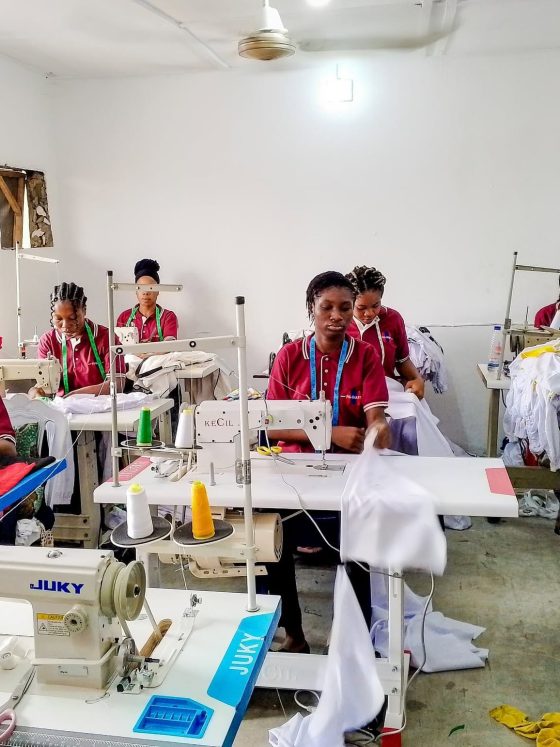
The Relizane Textile Complex, also rendered as the Complexe Textile de Relizane, was established as part of Algeria’s state-led industrial development programme and represents the country’s most significant single investment in domestic textile manufacturing capacity. The complex, located in the Relizane wilaya in northwestern Algeria, was designed as a vertically integrated facility capable of handling spinning, weaving, dyeing, and finishing under one industrial roof, the kind of integrated approach that reduces per-unit cost and makes competitive domestic production viable. The Algerian state-owned holding company Groupe Industriel TEXMACO operates the facility as part of a broader portfolio of industrial textile assets. Official government communication from the Ministry of Industry has described Relizane as the largest single textile complex in Africa. This claim refers to its integrated capacity rather than its output, since output has historically run significantly below the facility’s designed capacity.
The capacity-utilisation gap is the first structural problem. A large facility operating below designed capacity is not an asset. It is a fixed-cost burden that consumes public resources without generating commensurate output, employment, or export revenue. The reasons for underutilisation are documented: difficulty sourcing competitively priced raw cotton, which Algeria does not produce domestically on a large scale; foreign exchange constraints that make imported inputs expensive relative to finished garment imports; and a workforce training deficit that limits the technical skills available for high-productivity textile manufacturing operations.
“Algeria has the infrastructure for a textile industry. It does not yet have the conditions that allow that infrastructure to operate at its designed capacity. Those are different problems requiring different solutions.” — Algerian Industry Ministry textile sector assessment, 2024
The 95% Import Dependency: How It Happened
Algeria’s approximately 95% dependence on clothing imports is not the result of consumer preference for imported goods over domestic production. It is the structural outcome of four decades of industrial policy decisions that prioritised other sectors, most notably hydrocarbons, over investment in textile manufacturing. The country’s economy has been organised around oil and gas export revenue since independence, and the social contract built on that revenue, including subsidised food, fuel, and housing, has historically absorbed the fiscal space that might otherwise have funded competitive domestic industry. When global oil prices declined in 2014 and again in 2020, the pressure on Algeria’s import-dependent consumption model became acute. The clothing import bill, estimated at over $2 billion annually by the Algerian Centre for Studies and Analysis for the Population, Economy and Social Development, was identified as one of the most significant components of non-essential import expenditure.
The foreign exchange rationing system that Algeria introduced to manage declining hydrocarbon revenues has had a paradoxical effect on the domestic textile sector. By restricting access to foreign currency for raw-material imports, the system made domestic textile production more expensive at the input stage. In contrast, finished-garment imports, managed through a separate import licensing system, continued to enter the market. The result has been a competitive environment in which domestic manufacturers face higher input costs than their Chinese competitors, who source raw materials at global commodity prices and do not face the same foreign-exchange constraints. The Oxford Business Group’s Algeria country report has documented this dynamic across multiple years, noting that the foreign exchange system designed to protect the domestic industry has, in practice, created structural disadvantages for the manufacturing sector it was intended to support.
What the Domestic Textile Sector Actually Produces
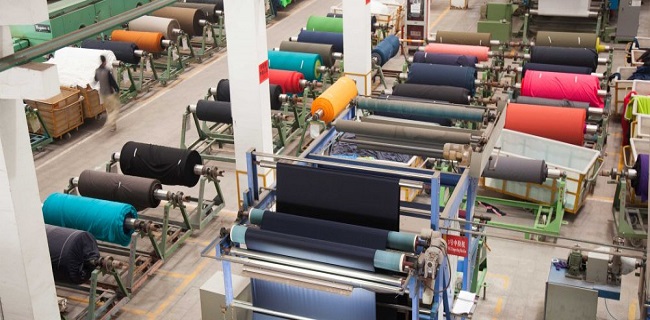
Algeria’s domestic textile production is not negligible, but it is concentrated in specific segments rather than distributed across the full apparel value chain. The country has documented capacity in denim production, technical textiles used in construction and automotive applications, and certain categories of work and protective clothing. The Algerian Textile and Clothing Employers’ Federation (FETATH) represents the formal domestic industry and has consistently advocated for import protection measures and foreign exchange access for raw materials as the two primary levers for sector development. The federation’s documented position is that Algerian manufacturers can compete on quality in specific product categories but cannot compete on price when input costs are inflated by foreign-exchange rationing and when competitor governments subsidise their manufacturing sectors.
The informal textile and tailoring sector is significantly larger than the formal manufacturing base and has historically served as the primary source of employment in clothing-related trades. Street markets in Algiers, Oran, Constantine, and other major cities distribute both imported and domestically produced garments through informal channels that are not fully captured in official trade statistics. The International Labour Organisation’s Algeria country profile estimates that informal employment accounts for a significant share of total employment in the clothing and textile trades, a pattern consistent with comparable markets across North and West Africa.
Algeria’s AfCFTA Position
Algeria ratified the African Continental Free Trade Area agreement, which came into force on 30 May 2019 and entered its operational phase in January 2021. Algeria’s ratification was completed in 2021, making it one of the later signatories among North African states. Morocco has not ratified the agreement. Tunisia ratified in 2020. Egypt ratified in 2018. Algeria’s participation means it has, in principle, access to a market of over 1.3 billion people with harmonised tariff structures under the AfCFTA framework. According to the AfCFTA Secretariat, the agreement is projected to increase intra-African trade by 52% by 2035 and, specifically, intra-African textile and garment trade by 33% when its apparel provisions are fully operational.
The gap between Algeria’s AfCFTA membership and its ability to use that membership is structural. The 95% import dependency means Algeria is currently a destination market for AfCFTA trade rather than a source of competitive exports. For Algeria to convert AfCFTA membership into an export opportunity, it needs to address the input cost disadvantage that makes domestic manufacturing uncompetitive, build out the raw material supply chain that Relizane requires to operate at designed capacity, and develop the designer and brand ecosystem that would give Algerian-produced garments a premium market positioning within the AfCFTA zone.
The most relevant AfCFTA comparison for Algeria is not Kenya or Ethiopia, whose export manufacturing sectors have been built on AGOA access and IFC investment, respectively, as Omiren Styles has documented in its analysis of these markets. It is Morocco, which, despite not ratifying the AfCFTA, has built the strongest North African textile manufacturing export capacity by developing a domestic cotton and synthetic fibre supply chain, investing in technical training, and positioning Moroccan-made garments within European retail supply chains as a nearshoring alternative to Asian production. Morocco’s model is available to Algeria as a documented template. The question is whether the policy environment can be restructured to support it.
The Investment Case and Its Conditions

For the Algerian textile sector to realise its AfCFTA potential, three structural conditions need to change. First, the foreign exchange rationing system needs to be reformed to provide domestic manufacturers with competitive access to raw materials on the same terms that finished garment importers access foreign exchange for their purchases. The current asymmetry makes domestic manufacturing structurally more expensive than importing, which is the opposite of what an industrial development policy should produce. Second, the Relizane Complex needs a capacity utilisation plan that addresses the workforce training gap and the raw material supply chain simultaneously, rather than treating each as a separate problem. The facility’s integrated design is its primary advantage: it can theoretically reduce per-unit cost at scale, but only if the inputs arrive at competitive prices and the workforce can operate the equipment at the designed throughput. Third, the domestic brand and design ecosystem needs institutional investment of the kind that Algeria’s Maisons de l’Artisanat et de la Tradition have historically provided for craft production but have yet to extend to contemporary fashion design and manufacturing.
The AfCFTA opportunity is real but time-limited. As Omiren Styles has documented in its analysis of pan-African fashion investment, the institutional capital flowing into African textile manufacturing is concentrating in markets that have already demonstrated investment readiness: Kenya through AGOA infrastructure, Ethiopia through industrial zone development, and Togo and Benin through specific platform investments documented in the Lomé and GDIZ analyses. Algeria has a larger domestic market than any of these, a significant manufacturing infrastructure asset in Relizane, and a geographic position that gives it road, sea, and rail access to both European and sub-Saharan African markets. The conditions for using those advantages are not yet in place. Building them before the AfCFTA opportunity concentrates further in the markets that have moved faster is the industrial policy task.
The Omiren Argument
Algeria’s textile sector contradiction, the largest integrated manufacturing complex in Africa, sitting in a market that imports approximately 95% of its clothing, is not an accident of industrial policy. It is the predictable outcome of a foreign exchange system that made domestic manufacturing inputs more expensive than finished garment imports, applied to a sector that requires competitive input costs to operate at designed capacity. The AfCFTA framework provides the trade architecture for a different outcome, but trade architecture alone does not build a textile industry. What builds a textile industry is a sequence of policy decisions: access to raw materials at competitive prices, workforce training at an industrial scale, infrastructure investment that keeps the manufacturing complex operational, and a brand and design ecosystem that gives domestically produced garments the market positioning to command a price premium over Chinese imports.
As Omiren Styles has documented in its analysis of the Ankara economy’s value chain, the structural problem of African textile sectors is not creative capacity or consumer demand. It is the policy environment that determines whether the value created by African textile production stays in Africa. Algeria has the infrastructure. It has the market size. It has the AfCFTA membership. The policy decisions that would convert those assets into a functioning textile export economy are the missing piece. When they are made, and there is increasing pressure within Algeria’s economic policy debate to do so sooner rather than later, Relizane will be the most significant single asset in North African textile manufacturing. Until they are made, it will remain the continent’s largest problem of underutilised capacity.
Algeria has built Africa’s largest textile complex. The policy environment that would allow it to run is the work that remains to be done.
ALSO READ
- Kenya Mitumba Trade, AGOA Exports, and the Domestic Textile Gap
- Why Lomé Should Be on Every African Fashion Investor’s Map
- Why No Serious Investor Has a Pan-African Fashion Portfolio: The Cost of Institutional Blindness
- The Ankara Economy: Who Is Actually Capturing the Value?
Frequently Asked Questions
What is the Relizane Textile Complex?
The Relizane Textile Complex, or Complexe Textile de Relizane, is an integrated textile manufacturing facility in the Relizane wilaya of northwestern Algeria, operated by the state holding company Groupe Industriel TEXMACO. The Algerian Ministry of Industry has described it as the largest single integrated textile complex in Africa. The facility was designed for vertically integrated production, including spinning, weaving, dyeing, and finishing. It has historically operated significantly below its designed capacity due to raw material supply constraints, foreign exchange rationing, and workforce training gaps.
Why does Algeria import approximately 95% of its clothing despite having manufacturing capacity?
The foreign exchange rationing system Algeria introduced to manage declining hydrocarbon revenues made importing raw materials for domestic production more expensive than importing finished garments. This asymmetry, combined with decades of industrial policy prioritisation of the hydrocarbons sector over textile manufacturing, produced a competitive environment in which domestic manufacturers face higher input costs than Chinese competitors. The result is a 95% import-dependency figure, as documented by the Algerian Ministry of Industry, despite the existence of the Relizane complex and a significant informal tailoring sector.
Has Algeria ratified the AfCFTA agreement?
Yes. Algeria ratified the African Continental Free Trade Area agreement in 2021, making it one of the last North African signatories. Morocco has not ratified. Tunisia ratified in 2020. Egypt ratified in 2018. Algeria’s ratification gives it, in principle, access to a market of over 1.3 billion people under AfCFTA’s harmonised tariff structures. According to the AfCFTA Secretariat, the agreement is projected to increase intra-African textile and garment trade by 33% when its apparel provisions are fully operational. Algeria’s current 95% import dependency means it is positioned as a destination market rather than an export source within the AfCFTA framework.
What would it take for Algeria to become a textile exporter under AfCFTA?
Three structural conditions need to change. The foreign exchange rationing system needs to be reformed to give domestic manufacturers competitive access to raw material inputs on the same terms that finished garment importers access foreign exchange. The Relizane Complex needs a capacity utilisation plan that addresses the workforce training gap and the raw material supply chain simultaneously. And the domestic brand and design ecosystem needs institutional investment that extends beyond craft production into contemporary fashion design and manufacturing. Morocco’s model, building a domestic supply chain and positioning domestically produced garments as a nearshoring alternative to Asian production within European retail supply chains, is the most directly applicable documented template.
How does Algeria’s textile situation compare to other African markets?
Algeria has a larger domestic market than Kenya, Ethiopia, or Togo, and a more significant single manufacturing asset in Relizane. However, all three of those markets have made the policy decisions that Algeria has not yet made: Kenya through AGOA-supported infrastructure and IFC investments in export processing zones; Ethiopia through industrial zone development; and Togo and Benin through specific platform investments. As Omiren Styles has documented, the institutional capital flowing into African textile manufacturing is concentrating in markets that have demonstrated investment readiness. Algeria has the assets to compete for that capital, but has not yet built the policy environment that makes those assets investment-ready.