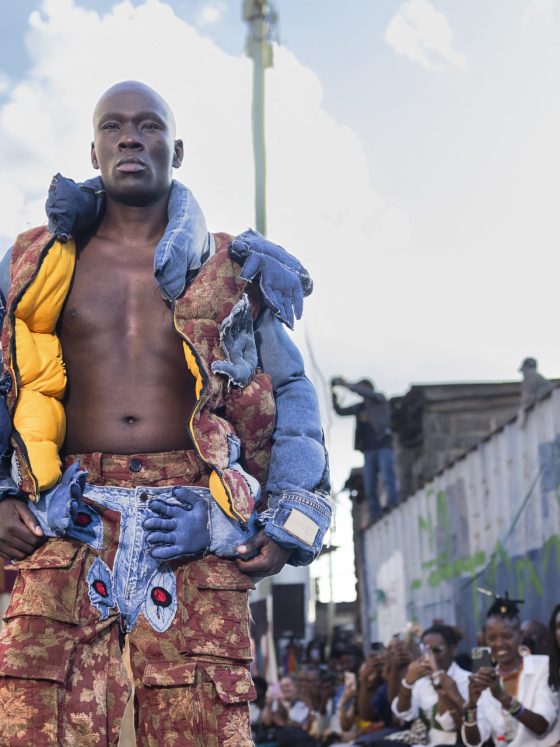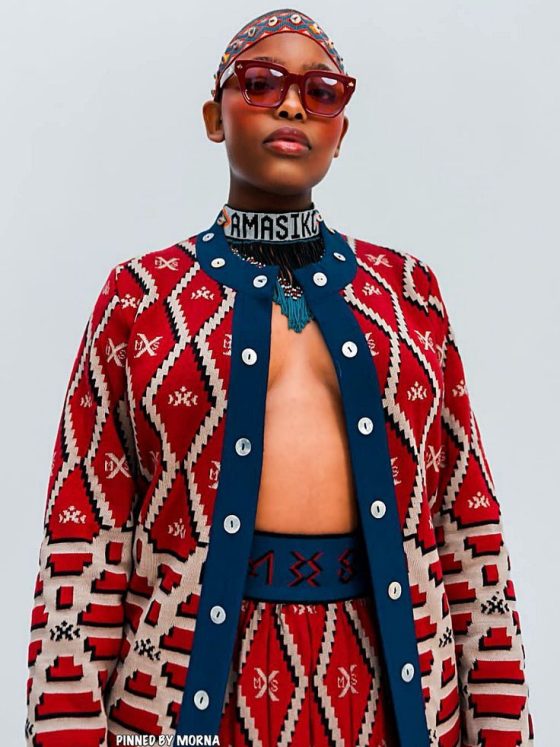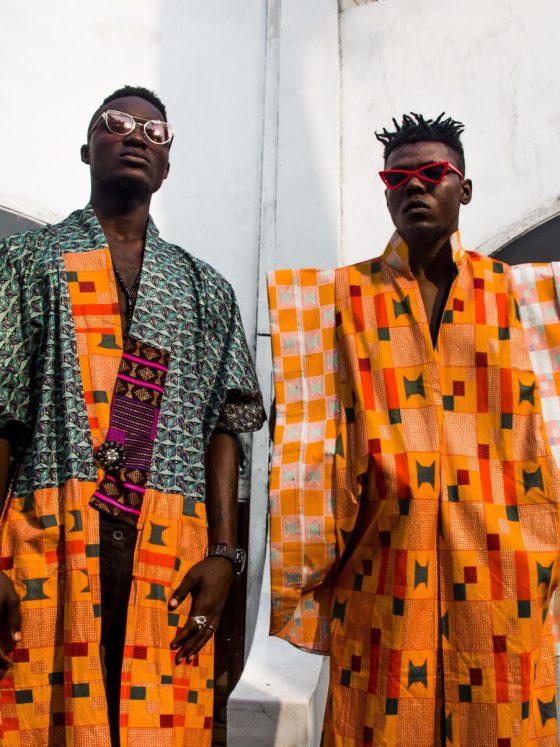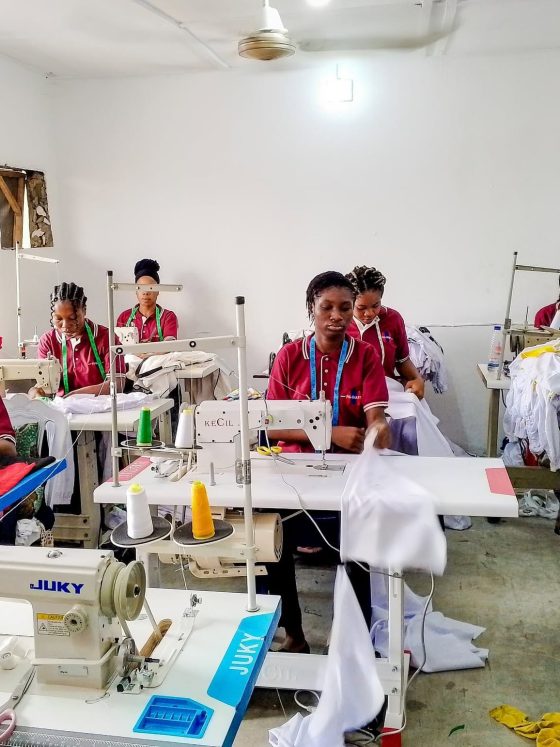
Shein brought in $38 billion in sales worldwide in 2024. It accounts for 18% of the global fast-fashion market, ahead of Inditex, the parent company of Zara. It ships to over 150 markets. It drops an estimated 6,000 new styles daily. And it is now inside the African market with a strategy that has already done measurable damage to South African retailers and is accelerating into Nigeria and Kenya. South Africa is the clearest warning signal of what that looks like in numbers.
This is not a story about cultural appropriation or the ethics of fast fashion; Omiren Styles has made its position on those questions clear elsewhere. This is a commercial analysis. Shein and Temu are growing in Africa at a pace that African fashion brands are not equipped to counter, and the industry has not begun a serious conversation about what a viable response looks like.
Shein and Temu are gaining serious ground across African markets. Here is what the data shows and why African brands have no commercial answer yet.
What the Numbers Actually Show
The South African data is the clearest picture available of what Shein and Temu do to a retail market once they gain entry. According to a 2025 Localisation Support Fund report, cited by Reuters, Shein and Temu combined held a 3.6 per cent share of South Africa’s clothing, textile, footwear and leather market in 2024, generating approximately 7.3 billion rand ($405 million) in sales. Shein entered the market in 2020. Temu arrived in 2024. Together, they now hold more market share than H&M, Zara, and Cotton On combined, and they reached that position in a fraction of the time it took those brands to do so.
Within the online market specifically, the numbers are sharper. Shein and Temu together commanded 37.1% of South Africa’s e-commerce clothing market in 2024. Shein alone accounts for 28% of all online women’s clothing sales in the country. The share prices of South African fashion retailers reflect the same pressure: Mr Price fell 25 per cent in 2025, The Foschini Group dropped 31%, and Truworths declined 46 per cent.
The pattern is not limited to South Africa. Temu launched in Nigeria in November 2024 and gained rapid traction through deep discounts, aggressive advertising, and a partnership with Verve to enable naira card payments, removing a structural barrier that had kept many Nigerian consumers off international platforms. Shein is using influencer-driven marketing to build awareness in urban centres across Kenya and Ghana. As Semafor reported in May 2025, neither retailer has established full physical operations on the continent. Yet, the commercial impact is already visible in how Africa’s largest digital retailer, Jumia, is repositioning its entire sourcing strategy to compete.
Shein and Temu captured 37.1 per cent of South Africa’s online clothing market in 2024. They did it in five years. H&M, Zara, and Cotton On took 13 years to reach a combined 3.4 per cent. The pace is not normal. The response cannot be business as usual.
Why the African Fashion Industry Has No Answer at This Price Point
The standard defence of African fashion brands against fast fashion competition rests on three claims: authenticity, craft, and cultural value. These are real differentiators. They are not, on their own, a commercial strategy at the price point where most African consumers actually shop.
Sagaci Research, in its 2025 multi-country consumer panel, found that African consumers report paying roughly 5,000 to 8,000 naira for a clothing item in Nigeria, with equivalent modest sums in other markets. The same research shows 65 per cent of African consumers prefer locally made clothing. That preference is real. It is also not converting to purchase at the price points where Shein is winning. Preference and commercial behaviour are two different things, and the African fashion industry has not closed the gap between them.
Shein’s model does not compete on quality. It competes on volume, price, speed, and the psychological mechanism of constant newness. It drops thousands of styles daily, uses affiliate links and creator discount codes to turn social media into a continuous sales channel, and trains its customers to expect deals at all times. African fashion brands produce small batches, price for craft, and move on seasonal or cultural cycles that have nothing to do with algorithmic trend cycles. These are not comparable systems. Trying to out-compete Shein on its own terms is not a strategy. It is a guarantee of failure.
The honest answer is that no African brand exists at a meaningful scale that offers a competitive product, reliable delivery, mobile-first purchasing, and consistent new arrivals at the price point where Shein is winning. The middle of the market is largely empty. That is not a cultural failure. It is a capital and infrastructure failure.
What Shein Is Doing With African Creators
The more commercially significant story is not Shein’s pricing. It is Shein’s creator strategy on the continent. Shein has partnered with prominent African influencers, including South African creators Mihlali Ndamase and Sphokuhle Ntshalintshali, to build brand familiarity among exactly the Gen Z audience that African fashion brands need for long-term growth. These partnerships are not cultural gestures. They are performance marketers with measurable conversion targets.
Temu uses TikTok micro-influencers to generate haul content, which creates social proof at low cost and high volume. The formula works in Africa for the same reason it works everywhere: content that looks like entertainment and functions like advertising, distributed by creators whose audiences trust them. African fashion brands have some presence in this space. Still, they do not match Shein and Temu in creator volume, commission structures, or the consistency of their content pipelines, partly because most have not built affiliate infrastructure or in-house creator management at all. The gap is not about willingness. It is about the operational build.
The result is that Shein is building habitual purchasing relationships with African Gen Z consumers. At the same time, African fashion brands are still primarily relying on editorial coverage, fashion week exposure, and word of mouth. Those channels build prestige. They do not build the repeat purchase frequency that Shein is acquiring through its creator engine.
ALSO READ
- Industrie Africa Is Gone. Now What?
- Why No Serious Investor Has an African Fashion Portfolio: The Cost of Institutional Blindness
- How African Women Are Redefining Power Dressing Through Cultural Fashion
- Why Culture Is the Foundation of Style in African and Global Fashion
The Actual Commercial Question Nobody Is Asking
The African fashion press has responded to the Shein and Temu story primarily through two frames: concern about the platforms’ ethics and reassurance that African brands compete on values Shein cannot replicate. Both frames are correct and irrelevant to the commercial question: at the price point where most African consumers actually shop, which African brand offers a competitive product, reliable delivery, mobile-first purchasing, and consistent new arrivals?
The honest answer is that no such brand exists at a meaningful scale. Smaller labels and Instagram-native shops are trying, but nothing with the reach, logistics, or brand salience to function as a real alternative. The African fashion brands that are genuinely competitive in design and craft are almost uniformly priced above the everyday consumer market. The brands that are accessible by price are not competing on the cultural differentiation that African fashion advocates cite as the industry’s advantage. The middle, where an African brand could credibly offer an alternative to Shein on both price and cultural identity, is largely empty.
Building that middle requires investment in manufacturing at volume, supply chain infrastructure, mobile commerce capability, and creator marketing budgets. It requires the kind of patient, long-term commercial thinking that the industry has not yet organised around. The structural reasons for that are covered in detail in Why No Serious Investor Has an African Fashion Portfolio. The short version: institutional capital has not built frameworks to assess African fashion as an investable category, and without that capital, the brands that could fill this gap cannot scale quickly enough to compete.
What a Genuine Response Looks Like
Not every African fashion brand needs to compete with Shein. Brands operating in the luxury and craft segment are not Shein’s primary targets, and the consumers they serve are not the consumers Shein is winning. The urgent question is about the mass market: the African consumer who wants to dress well, prefers African-made products in principle, but is being captured by Shein because the accessible, mobile-first, affordable alternative does not yet exist at scale.
Creator marketing infrastructure. African-owned brands operating in the accessible price segment need to develop the creator marketing infrastructure that Shein has built, using African creators to build habitual purchase relationships with African consumers, not just brand awareness. That means affiliate systems, consistent creator briefs, and performance tracking, not one-off campaign posts.
Shared logistics and mobile payments. The industry needs collective investment in last-mile logistics and mobile payment infrastructure that makes buying from an African brand as frictionless as buying from Shein. That collective investment can come through dedicated logistics ventures, partnerships with existing players like Jumia, or coalitions of brands sharing infrastructure rather than each building a siloed system. The goal is not to copy Shein. It is to remove the friction that currently makes Shein the easier choice.
Regulatory tools and capital. African governments and industry bodies need to use the regulatory tools already available. South Africa’s move to close the de minimis tax loophole that gave Shein and Temu a pricing advantage is the model; according to World Wide Worx research, it has moderated their growth and begun to level the competitive field. The point is not to ban these platforms or restrict consumer choice. It is to ensure that a structural tax asymmetry does not disadvantage African brands. Other markets should follow.
There is also a more uncomfortable question this piece has not explored: whether some African brands will partner with Shein or Temu rather than compete with them. That is a separate strategic and ethical argument, with real questions about who controls customer data, pricing, and the brand relationship. It deserves its own analysis, and Omiren will return to it.
None of this is simple. None of it is fast. But the alternative is watching Shein and Temu build the habitual purchasing relationships with the next generation of African consumers that African brands should be building now. Once those habits form, they are very difficult to break.
FREQUENTLY ASKED QUESTIONS
How much of the African fashion market do Shein and Temu currently control?
In South Africa, a 2025 Localisation Support Fund report, cited by Reuters, found that Shein and Temu held a combined 3.6 per cent share of the total clothing, textile, footwear, and leather market in 2024, generating approximately 7.3 billion rand ($405 million) in sales. Their combined share of the online clothing market reached 37.1 per cent, with Shein alone accounting for 28 per cent of all online women’s clothing sales. Both platforms are expanding into Nigeria and Kenya.
Why can’t African fashion brands simply compete with Shein on cultural authenticity?
Cultural authenticity is a genuine differentiator but not a commercial strategy at the price points where Shein is winning. Shein competes on volume, price, speed, and the mechanism of constant newness, using an ongoing performance-driven creator engine rather than one-off influencer posts. African craft-led brands produce small batches at higher price points and do not operate on algorithmic trend cycles. These are not comparable systems. The question is whether an accessible, African-owned alternative at the mass-market price point can be built.
What is Shein doing with African creators and influencers?
Shein treats creator marketing as an ongoing performance channel, with affiliate links, commission structures, and consistent creator briefs, rather than a one-off campaign. It has partnered with prominent African influencers, including South African creators Mihlali Ndamase and Sphokuhle Ntshalintshali, to reach Gen Z audiences. Temu uses TikTok micro-influencers to generate habitual haul content at scale. African fashion brands largely do not match this in terms of creator volume, infrastructure, or pipeline consistency.
Did South Africa take any regulatory action against Shein and Temu?
Yes. South Africa closed a de minimis tax loophole that had allowed low-value imports to enter duty-free, giving Shein and Temu a structural pricing advantage over local retailers. According to World Wide Worx research, this has moderated their growth and begun to narrow their pricing edge. The move is seen as a model for other African markets, as they consider how to level the playing field without restricting consumer choice or banning platforms outright.
What would a genuine African brand’s response to Shein look like?
A credible response requires three things: a creator marketing infrastructure built around affiliate systems and consistent creator management, rather than one-off campaigns; collective investment in last-mile logistics and mobile payments to reduce purchase friction through platforms like Jumia or shared brand coalitions; and regulatory measures that level the playing field for import duties. It also requires patient institutional capital willing to back African brands at the volume needed to compete in the mass market.
Could African brands partner with Shein or Temu rather than compete with them?
Some will try. The question of whether partnership with these platforms is a viable strategy for African brands, or whether it trades short-term distribution for long-term loss of data, pricing control, and brand equity, is a separate and important argument. Omiren will cover it in a dedicated Partnerships analysis. The short version: the terms of that relationship matter enormously, and the African fashion industry has not yet had that conversation seriously.
Omiren Styles covers the business of African fashion with precision and without apology. Subscribe for weekly retail intelligence, brand strategy analysis, and the industry reporting the African fashion press is not doing. African fashion and culture are not emerging. They are foundational.