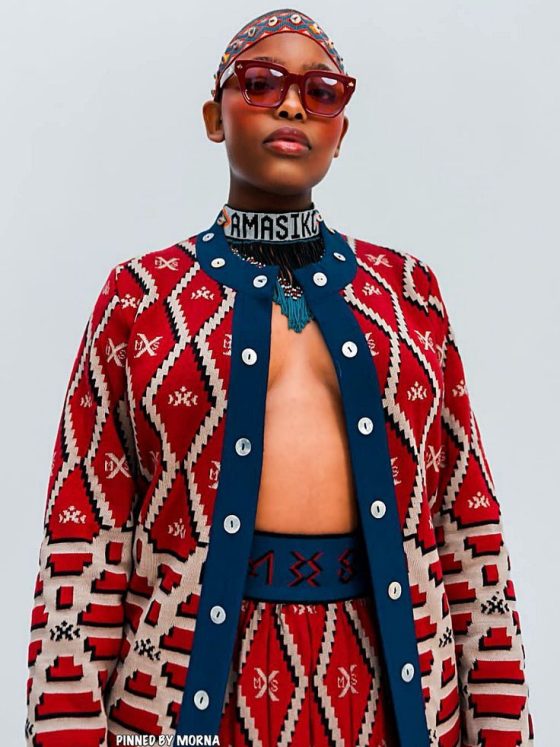
In November 2024, Laduma Ngxokolo of MaXhosa Africa told a technology summit in East London that “in the next few years people are not going to wear clothes. People are going to wear technology-functional clothing and therefore science is part of what we do to give customers clothes that have many functions beyond covering the body,” as reported by Times Live. By March 2026, Ngxokolo was in Paris showing the MaXhosa AW26 collection and announcing the opening of a second factory specialising in heavier knitwear, with outerwear on the radar. MaXhosa is a South African brand, not a West African one. But the trajectory it is describing, a knitwear brand investing in production infrastructure, using technology to extend what knit can do, and positioning that investment as both cultural argument and commercial strategy, is exactly the trajectory that the 3D-knit production model is designed to support. The question this article asks is what it would take for that trajectory to become available to West African ready-to-wear.
3D-knit whole-garment technology is reshaping production economics globally. The structural case for West African RTW adoption is strong. The confirmed adoption is not yet documented. These are both facts together.
What 3D-Knit Technology Actually Is

Three-dimensional knit technology, most fully developed under the WHOLEGARMENT trademark of Japanese manufacturer Shima Seiki, and the Knit and Wear system of German manufacturer Stoll (Karl Mayer Group), produces a complete garment in a single knitting operation on a computerised flat-bed machine, without the cutting and sewing steps that conventional garment construction requires. A traditional knitted jumper consists of several separate pieces, front body, back body, sleeves, that are knitted individually and then sewn together. A WHOLEGARMENT piece is knitted as one complete three-dimensional item directly from the machine. The result has no seams, consumes only the yarn required for that specific garment, and can be produced in one to a few hours per piece at machine speed.
The commercial consequences are significant. As Textile School’s September 2025 analysis of 3D knitting technology documents, 3D knitting eliminates cut loss and seam allowance waste, reducing material use by up to 30% compared with conventional cut-and-sew production. It enables on-demand production at unit level rather than batch production, meaning a brand can produce exactly what it has orders for rather than forecasting season volumes and absorbing unsold stock. It enables digital sampling through Shima Seiki’s SDS-ONE APEX system, reducing physical sampling costs and lead times. And it enables mass customisation at scale: garments can be made to individual measurements without the production complexity that bespoke tailoring requires.
“WHOLEGARMENT knitwear is produced in one entire piece, consuming only the amount of yarn required for that item, preventing wasted material such as cut loss and seam allowance.” — Shima Seiki WHOLEGARMENT documentation, 2025
Where It Has Already Been Adopted
Nike Flyknit and Adidas Primeknit are the most globally recognised applications of 3D-knit technology in fashion, both using the technique for performance footwear uppers that reduce weight and eliminate seam pressure points. In ready-to-wear, the Austrian brand AlphaTauri has been using Shima Seiki’s WHOLEGARMENT technology since its SS19 collection, producing seamless 3D-knit jumpers from merino and cashmere blends with up to 30% less fabric use than conventional production. The technology has also been adopted in medical textiles, automotive applications, and interior furnishings, areas where the seam-free construction and precision shaping of 3D knitting produce functional advantages that flat-panel construction cannot match.
Within Africa, the brand that has most publicly engaged with knit technology as a strategic and cultural platform is MaXhosa Africa, the South African luxury knitwear label founded in 2010 by Laduma Ngxokolo at Nelson Mandela University. As WWD’s review of MaXhosa’s AW26 Paris collection documents, the brand is building a second factory specialising in heavier knitwear, with outerwear on the radar. In contrast, its Spring 2026 collection at Paris Fashion Week received coverage from WWD describing knitwear that was “familiar but never repetitive, further developing geometric patterns that sample Xhosa heritage and other cultures across the African continent.” MaXhosa is not using publicly confirmed 3D whole-garment technology in the WHOLEGARMENT sense. What it demonstrates is an African luxury brand treating knitwear production infrastructure as a long-term strategic investment rather than a cost to be minimised.
West African Ready-to-Wear: The Current Production Landscape
West African ready-to-wear production in 2026 sits primarily at two ends of a spectrum with a significant gap in the middle. At one end is artisan and small-batch production: brands like IAMISIGO (founded by Bubu Ogisi, based between Lagos, Nairobi, and Accra), whose V&A Museum collection documentation confirms handwoven, multi-coloured wool dress production with yarn dyed in Kano State, Nigeria, working with small artisan communities across the continent to preserve indigenous textile traditions. At the other end is import-dependent fast fashion and mass-market garment retail, dominated by Chinese-manufactured fabric and globally produced ready-to-wear.
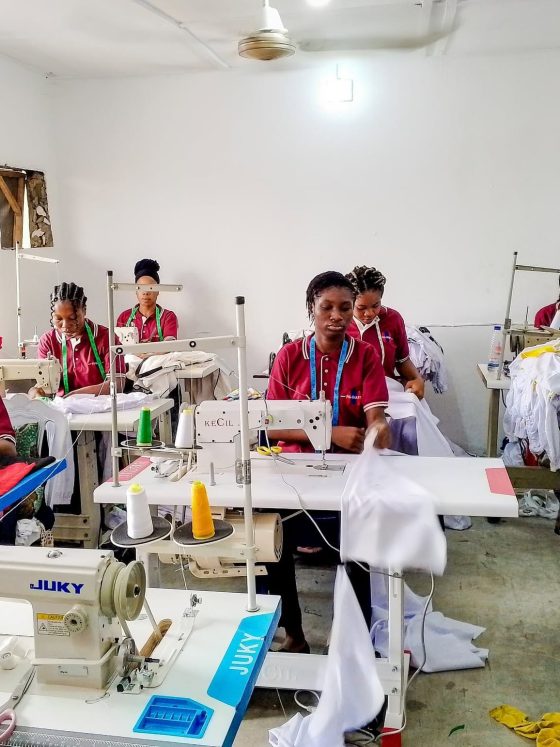
In the middle is the premium West African ready-to-wear sector, represented by brands showing at Lagos Fashion Week and Accra Fashion Week, which typically produces at small-batch scale using contract manufacturers, imported fabric, and conventional cut-and-sew construction. As Omiren Styles has documented in its analysis of the Lagos fashion economy, 68% of brands attending Lagos Fashion Week have secured financing or distribution deals, which is evidence of commercial seriousness. The production infrastructure behind those brands is less documented: how they manufacture, at what cost per unit, with what degree of control over the supply chain, and with what waste profile are questions that the fashion press does not routinely ask.
This production middle ground is where 3D-knit technology has the most direct relevance. A brand producing 200 to 500 units per style, in a category where handcraft quality is a differentiator but cost per unit is a commercial constraint, and where unsold stock is a real financial risk given currency volatility and import costs, has structural reasons to be interested in a production technology that reduces waste, enables on-demand manufacturing, and eliminates the sewing labour cost that cut-and-sew requires.
The Structural Case for Adoption
Three structural conditions make 3D-knit technology relevant to West African ready-to-wear specifically—first, currency risk. As Omiren Styles has documented in its analysis of concept store costs in Accra versus Lagos, the naira moved between NGN 700 and NGN 1,800 per dollar in the past 24 months, and the cedi depreciated approximately 50% against major currencies between 2022 and 2024. Brands importing fabric and producing in conventional cut-and-sew are exposed to currency risk at the raw material stage and at the production cost stage. A 3D-knit system that reduces material waste by up to 30% and enables on-demand production reduces both exposures: less raw material required per garment, and production triggered by confirmed orders rather than forecasted season volumes.
Second, the African fashion market’s projected growth trajectory. Nigeria’s apparel market is valued at $8.77 billion in 2025 and projected to reach $14.72 billion by 2034 at a compound annual growth rate of 5.91%, as Omiren Styles has documented in its analysis of why Lagos and Nairobi are outgrowing other African fashion cities. A market growing at that rate creates the demand base that justifies production infrastructure investment. Brands that invest in production technology now position themselves to capture a disproportionate share as the market expands.
Third, the design argument. West African knitwear traditions, including aso-oke from Yoruba communities, akwete from Igbo communities, and kente strip-cloth from Asante and Ewe communities, are all strip-loom productions that produce narrow textile sections combined into wider cloth. 3D-knit technology operates from a different technical principle but shares the conceptual logic of building a complete textile structure through the progressive construction of interlocking elements rather than cutting a flat textile into pattern pieces. For a designer trained in or inspired by West African textile traditions, 3D-knit is not a foreign technology. It is a different technical realisation of a familiar formal logic.
What Is Not Yet Confirmed

In the interest of the evidentiary standard this series maintains: no West African ready-to-wear brand is confirmed in available sourcing as currently using 3D whole-garment knitting technology in production. The brands most likely to be early adopters, given their technology orientation and production sophistication, include IAMISIGO (digital tool development for weaving traditions), the Lagos Fashion Week brands with documented international stockist relationships, and any brand with direct relationships to international knitwear manufacturers. But none of these constitutes confirmed adoption at the machine production level, and asserting adoption without that confirmation would misrepresent the current state of the market.
The Announce Digital Fashion exhibition in Lagos in November 2025, documented by Business Day Nigeria, demonstrates that Lagos’s fashion technology conversation is active and increasingly sophisticated. Digital fashion, virtual sampling, and metaverse presentation are all part of the Lagos fashion technology landscape. Physical 3D-knit production technology, requiring significant capital investment in machinery (Shima Seiki WHOLEGARMENT machines typically cost in the range of $100,000 to $300,000 per unit at international retail prices), is a different and more capital-intensive adoption decision. The gap between digital fashion ambition and physical production technology investment is real and reflects the capital access constraints documented across the African fashion sector.
The Omiren Argument
The title of this article states that 3D-knit technology is entering West African ready-to-wear. The honest version of that claim, given current evidence, is that the structural conditions for that entry are in place and the production logic is compelling. At the same time, the confirmed adoption has not yet been documented at the brand-and-machine level. That gap between structural readiness and confirmed adoption is itself an editorial argument: it identifies where the investment and the partnership need to go next. As Omiren Styles has argued in its analysis of African fashion investment, the distinction between funded and unfunded projects in African fashion is rarely about underlying business quality. It is about institutional compounding, the accumulation of policy decisions, investment relationships, and commercial outcomes over time. 3D-knit technology adoption in West African RTW requires a specific kind of institutional compounding: a brand with the commercial scale to justify machine investment, or a shared production facility model that allows multiple brands to access the technology without individual capital expenditure.
MaXhosa’s decision to open a second factory in South Africa is an example of the investment logic that makes sense at brand scale. The equivalent for Lagos or Accra might be a shared knit production facility serving multiple premium RTW brands, modelled on the shared EPZ manufacturing infrastructure that has worked in Kenya’s AGOA export sector. As Omiren Styles has documented in its analysis of Kenya’s textile manufacturing, the production infrastructure that individual brands cannot afford can sometimes be built at sector level with institutional support. The same logic applies here.
3D-knit technology is not waiting for West Africa. West Africa’s ready-to-wear sector has the design intelligence, the market growth, and the structural incentives to use it. The capital and the infrastructure partnership are the gap. Naming that gap is the beginning of closing it.
ALSO READ
- Why Lagos and Nairobi Are Outgrowing Other African Fashion Cities: The Structural Reasons
- The Lagos Fashion Week Effect: What a Decade of Runway Has Actually Done for Nigerian Designer Revenue
- The Ankara Economy: Who Is Actually Capturing the Value?
- What It Actually Costs to Open a Concept Store in Accra Versus Lagos
Frequently Asked Questions
What is 3D-knit technology?
3D-knit technology, most fully developed under the WHOLEGARMENT trademark of Shima Seiki and the Knit and Wear system of Stoll, produces a complete garment in a single computerised knitting operation without cutting and sewing. A conventional knitted garment consists of separately knitted pieces sewn together; a whole-garment piece is knitted as one complete three-dimensional item directly from the machine. The production advantages include up to 30% less material waste, seam-free construction, on-demand production capability, and digital sampling through virtual simulation. Applications range from Nike Flyknit footwear to luxury ready-to-wear from brands including AlphaTauri.
Which African brands are using 3D-knit technology?
MaXhosa Africa, the South African luxury knitwear brand founded by Laduma Ngxokolo, is the African fashion brand most publicly associated with knitwear technology ambition, having announced a second factory specialising in heavier knitwear in its AW26 Paris collection. MaXhosa is a South African brand, not a West African one. As of the publication date of this article, no West African ready-to-wear brand has been confirmed in available sourcing as using 3D whole-garment knitting technology in production. The article documents the structural case for adoption rather than claiming adoption that has not been confirmed.
Why is 3D-knit technology relevant to West African fashion specifically?
Three structural conditions make the technology relevant. Currency risk: brands importing fabric and producing in conventional cut-and-sew are exposed to raw material and production cost fluctuation from currency volatility; 3D-knit reduces material requirements by up to 30% and enables on-demand production, reducing both exposures. Market growth: Nigeria’s apparel market is projected to reach $14.72 billion by 2034, creating the demand base that justifies production infrastructure investment. Design alignment: West African knitwear traditions, including aso-oke, akwete, and kente strip-cloth, share the formal logic of building a complete textile through progressive construction of interlocking elements, which is also the operating logic of 3D-knit systems.
What is the capital barrier to 3D-knit adoption in West Africa?
Shima Seiki WHOLEGARMENT machines typically cost $100,000 to $300,000 per unit at international retail prices. This is beyond the individual capital of most West African premium ready-to-wear brands, which typically operate at small-batch scale. The most viable adoption model is likely a shared production facility serving multiple brands rather than individual brand machine ownership, similar to the shared export processing zone manufacturing infrastructure that has worked in Kenya’s AGOA export sector. Institutional support from fashion investment funds, development finance institutions, or government industrial policy would be required to build that shared infrastructure.
What is digital fashion and how does it relate to 3D-knit technology?
Digital fashion refers to fashion that exists in digital form, including virtual garments for avatars, digital-only collections presented in metaverse environments, and NFT-based fashion items. It is distinct from 3D-knit technology, which is a physical production process for real garments. The Announce Digital Fashion exhibition in Lagos in November 2025 demonstrated that Lagos’s fashion technology conversation actively includes digital fashion. The Shima Seiki SDS-ONE APEX design system connects the two domains: it uses 3D virtual sampling to simulate physical garments before production, bridging digital design and physical manufacture. But adopting digital fashion presentation and 3D-knit physical production are different decisions requiring different investment and infrastructure.