Fashion criticism did not originate in Paris. It did not begin with Suzy Menkes filing from the front row or Cathy Horyn dismantling a collection in three sentences. Communities have always evaluated dress, which has always held social consequences, communicated position, and been subject to collective aesthetic judgement that determined whether a person understood the codes or did not. The professionalisation of that judgement into fashion journalism is a recent development. The need for fashion criticism is ancient. And the question facing African fashion right now is not whether criticism is necessary. It is about whether the critical tradition being built will serve African designers and audiences on their own terms, rather than import a framework designed to serve someone else.
Fashion criticism is not negativity. It is the intellectual infrastructure that separates a fashion industry from a fashion economy. Here is what is at stake when African fashion operates without it.
The Difference Between Fashion Coverage and Fashion Criticism
Most fashion content operates as coverage. It documents what happened: who showed, what was worn, and which collection generated the most attention. This type of reporting is a necessary infrastructure. It creates the record. But it has a ceiling, and African fashion has been hitting that ceiling for a decade.
Fashion criticism goes further. It asks what the work is doing and whether it succeeds on its own terms. It places a collection within a cultural, historical, and commercial context that the designer may not have articulated but that the work contains regardless. When John Galliano presented his Margiela collections, critics did not simply describe the garments. They analysed the theatrical construction, the interrogation of anonymity and authorship, and the historical references that Galliano was activating inside a house defined by its refusal of spectacle. That analysis was not separate from the fashion. It was part of how the fashion became meaningful.
Similarly, when Demna reshaped Balenciaga, the critical response examined whether his focus on dystopian aesthetics and exaggerated silhouettes was a genuine reflection of contemporary cultural anxiety or a deliberate commercial provocation presented as intellectual. The debate did not weaken the brand. As Business of Fashion’s coverage of the Balenciaga era demonstrates, sustained critical engagement kept the house in a conversation that advertising alone could not have generated. Criticism, in this sense, is not a threat to a fashion house. It is part of how fashion houses build the kind of authority that outlasts seasonal cycles.
For African fashion, this distinction between coverage and criticism is not academic. It is the difference between a fashion industry that documents itself and one that understands itself. As Omiren has argued in its examination of who gets credit in fashion and the gap between influence and recognition, the global fashion system has consistently taken African aesthetic contributions without providing either critical engagement or commercial attribution. Coverage without criticism made that extraction easier.
How Fashion Criticism Shapes Designer Legacy
A designer’s work does not exist in isolation. It is interpreted through the language built around it, and critics are the primary architects of that language. They influence how collections are remembered, how designers are positioned, and how their work accumulates value, or fails to, over time. When Alexander McQueen was active, writers including Sarah Mower at Vogue and Suzy Menkes framed his work not as a theatrical spectacle but as a sustained confrontation with British class history, postcolonial identity, and the violence embedded in beauty. That critical framing ensured McQueen’s legacy was not reduced to the shows’ visual drama. It established him as a designer whose work required interpretation, and interpretation is what separates a brand from a body of work.
Without that level of critical engagement, the same collections would likely have been remembered only for their theatricality. The Rape of Scotland, Highland Rape, Dante: these shows contained arguments about British history and national mythology that were legible only because critics provided the vocabulary for reading them. The fashion did not explain itself. The criticism did. And the criticism is what made the fashion historic rather than merely spectacular.
African designers working at the same level of conceptual ambition have rarely received the same level of critical engagement from the global fashion press. The coverage has been there. The criticism has not. When African designers show at international fashion weeks, the global press tends to document their presence rather than engage with the intellectual content of their work. The result is visibility without legibility, which is a form of erasure that looks like support.
Why the Absence of Fashion Criticism in African Fashion Is Not Accidental

The absence of robust fashion criticism in African fashion spaces is not simply a developmental gap that will close as platforms mature. It is, in significant part, a structural inheritance. Colonial education systems across Africa did not teach students to treat African aesthetic traditions as worthy of intellectual analysis. The frameworks imported for analysing culture: literature, music, and visual art: all were European frameworks applied to European objects. African dress was documented as ethnographic material rather than engaged with as aesthetic production. That positioning did not end at independence. It persisted in curricula, in critical institutions, and in the self-perception of African cultural producers who were trained to see their own work through borrowed frameworks. As documented in the Journal of African Cultural Studies, the development of African-centred critical discourse across cultural disciplines has been an active and contested project for decades, not an automatic process.
The consequence for fashion specifically is that African designers have grown up in a critical environment that either applies Western fashion criteria to African work, asking whether it is sophisticated enough by Parisian standards, or avoids criticism entirely in favour of celebratory support. Neither serves the designer. The first misreads the work. The second flatters it without engaging it.
When critique is genuinely absent, three things happen simultaneously. Designers are not pushed to refine their ideas beyond surface appeal because no one with authority is asking what the ideas actually are. Audiences are not given the tools to read fashion beyond its visual surface. And the distinction between work that is merely competent and work that is genuinely significant becomes impossible to make publicly, which flattens the field in ways that serve mediocrity and disadvantage ambition.
Why African Fashion Platforms Avoid Criticism, and Why That Has to Change
In many African fashion media environments, criticism is avoided for understandable reasons, yet it is ultimately damaging. Reasons writers avoid critique to maintain relationships with designers whose access they depend on. Editors avoid negative engagement to protect the community-building function of their platforms. Publicists and PRs apply pressure that shapes coverage toward celebration. These dynamics exist in Western fashion media too, as The Guardian’s reporting on fashion industry PR influence has documented, but in markets where the designer community is smaller and more interdependent, the pressure to be supportive rather than analytical is proportionally greater.
The result is a critical environment where everything appears equally successful. Collections are released, covered, praised, and circulated on social media without ever being examined. The absence of a public critical distinction means that a collection representing a genuine breakthrough and one representing a competent execution of familiar ideas are presented at the same level, to the same audience, with the same language. This does not serve the breakthrough. It conceals it.
A fashion ecosystem that cannot publicly distinguish between levels of achievement cannot build the kind of critical authority that makes its judgements internationally legible. The Western fashion press pays attention to what has critical infrastructure behind it: editors, critics, and analytical publications, because critical infrastructure is evidence that a fashion culture takes itself seriously as a cultural project rather than a commercial one. African fashion will not be taken seriously on its own terms until it develops the critical tradition that demonstrates it takes its own terms seriously.
Also Read:
- Fashion Without Factories: Africa’s Original Bespoke Economy
- Who Gets Credit in Fashion: The Gap Between Influence and Recognition
- What Happens When African Fashion Is Celebrated Everywhere Except Africa
How Global Fashion Uses Criticism to Build Commercial Authority
In established fashion systems, criticism is not optional infrastructure. It is embedded in the industry’s commercial machinery. Publications such as Vogue and Business of Fashion do more than report on collections. They create the narrative frameworks within which collections are understood, valued, and remembered. When Hedi Slimane took over Celine and erased Phoebe Philo’s legacy in a single season, the critical response was immediate and divided. Some critics challenged his departure from the brand’s established aesthetic intelligence. Others defended his clarity of commercial vision. That debate did not weaken Celine’s market position. It amplified the brand’s presence in cultural conversation in ways that the advertising budget alone could not have achieved.
This is how critical engagement creates commercial value in fashion. Not by boosting sales directly, but by sustaining a brand’s presence in intellectual discourse long after the season has ended and the pieces are on the floor. A debated collection is a remembered collection. A collection that is praised only is forgotten at the same speed it is consumed. The difference between a fashion brand and a fashion legacy is the quality of the critical engagement it has generated over time.
African fashion brands operating at a global level need this critical infrastructure as urgently as they need distribution and investment. As Omiren has examined in its analysis of Africa’s original bespoke economy and what fashion without factories built, the creative and technical foundation of African fashion has always been present. The critical superstructure, the analytical language, that makes that foundation visible and legible to international audiences, remains the missing piece.
What Fashion Criticism Must Look Like for African and Diaspora Fashion
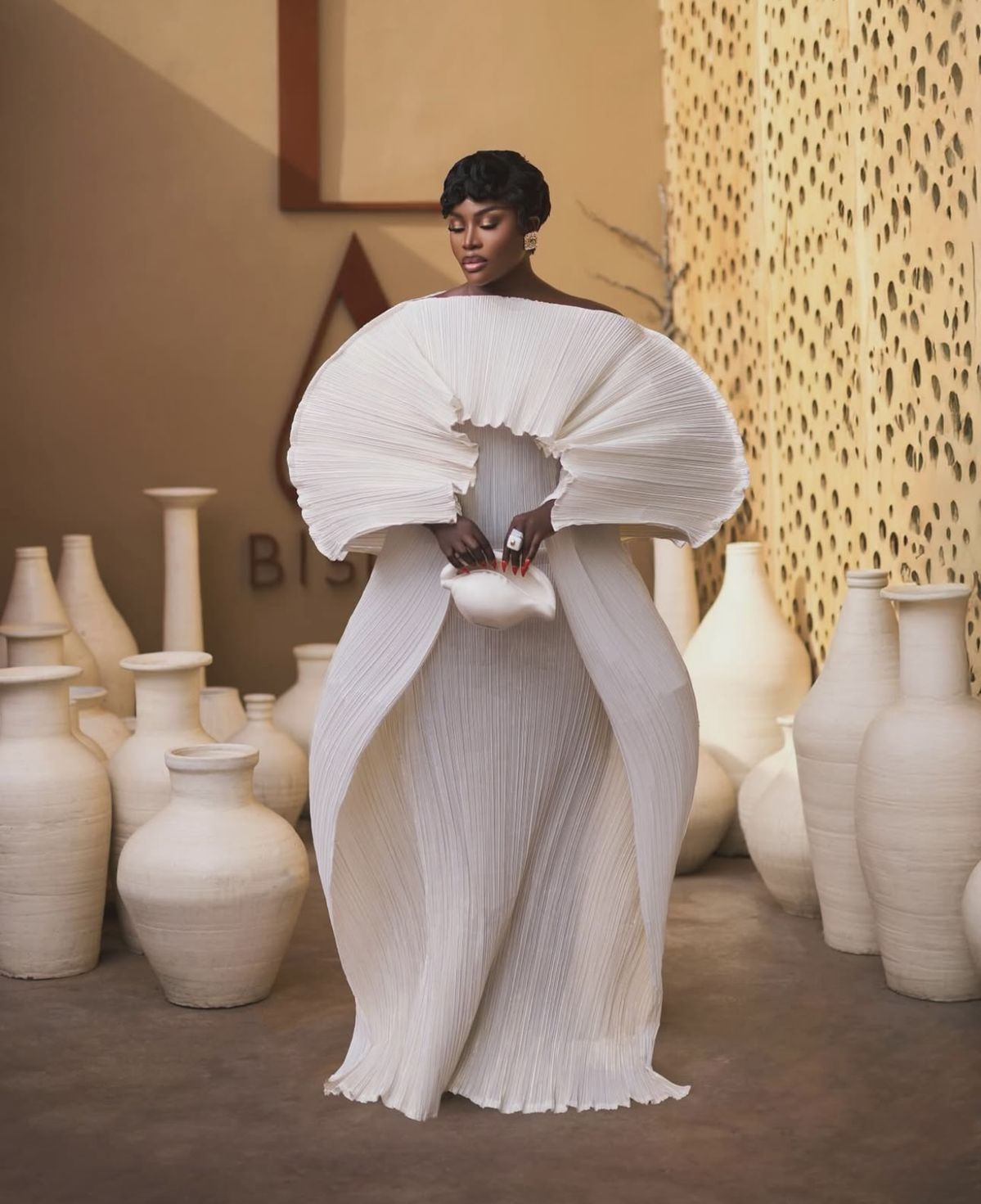
For platforms operating within African and diaspora fashion spaces, the role of criticism carries a specific responsibility that goes beyond evaluating whether a collection succeeded or failed. It requires building a critical language adequate to the work being produced. This means developing the vocabulary to read African textile knowledge as design intelligence rather than as cultural reference. It means treating Kente construction, Adire patterning, and Hausa embroidery tradition as systems of aesthetic thought that deserve the same analytical attention that Western fashion criticism gives to Savile Row tailoring or Parisian couture. It means that, as Omiren’s editorial standard establishes, Western frameworks should never be the default lens through which African work is evaluated.
This is not a lowering of critical standards. It is an insistence on appropriate ones. When a Nigerian designer builds a collection around the cosmological structure of Yoruba dress, specifically the relationship between cloth, ceremony, and the spiritual world, a critic who evaluates it against the criteria of Parisian minimalism is not criticising. They are misreading. The critical tradition African fashion needs is one that has done the cultural and historical work necessary to read African design on its own terms and that holds those terms to the highest possible standard of rigour and ambition. Publications, including Arise Magazine and platforms, including Omiren Styles, are building that tradition. The work is not to import criticism. It is to develop a criticism that African fashion actually needs.
To critique is to acknowledge that the work warrants intellectual engagement rather than mere visual appreciation. It is the highest form of respect a platform can offer a designer: the acknowledgement that their work is complex enough to require analysis, specific enough to require context, and significant enough to require a verdict. Celebration without analysis is not support. It is a gentle, well-intentioned form of dismissal.
Fashion criticism is not negativity. It is the intellectual infrastructure that separates a fashion industry from a fashion economy. A fashion economy produces, distributes, and sells. The fashion industry produces, distributes, and sells it; it also understands what the work means, where it comes from, why it matters, and what it demands of the people who engage with it. African fashion has an economy. The cities, the designers, the creative output, the textile traditions, the market. What is still being built, actively and with urgency, is the intellectual infrastructure: the critical tradition that makes the economy legible as an industry to the world that has spent decades consuming African aesthetic innovation without crediting its source.
The question for African fashion media is not whether to criticise. It is whether to develop a critical tradition that serves African designers and African audiences on their own terms, or to import a critical framework built alongside European luxury and apply it to work it was never designed to read. Those are entirely different projects, and the distinction determines whether African fashion criticism becomes a tool of self-understanding or a more sophisticated instrument of the same misreading it has always received from the outside. The critics who will matter for African fashion are those who have done the cultural work, who know the textile histories, who understand the design philosophies, and who are willing to hold African fashion to a standard as demanding as any in the world, because they know it is capable of meeting it.
Frequently Asked Questions
1. Why does fashion criticism matter for the African fashion industry?
Fashion criticism provides the intellectual infrastructure that makes a fashion industry legible to designers, audiences, and international markets. Without it, African fashion has visibility but lacks the analytical framework to convert that visibility into lasting cultural and commercial authority. As the Business of Fashion demonstrates through decades of critical engagement with global designers, sustained criticism is what separates a fashion brand from a fashion legacy.
2. What is the difference between fashion reporting and fashion criticism?
Fashion reporting documents what happened: who showed, what was worn, and which collections were presented. Fashion criticism evaluates what the work is doing, whether it succeeds on its own terms, and what it means within a broader cultural and historical context. Reporting creates the record. Criticism creates understanding. Both are necessary, but African fashion media has historically invested in the first at the expense of the second.
3. How do fashion critics influence how designers are remembered?
Critics build the language through which a designer’s work is understood over time. Alexander McQueen’s legacy as a conceptual designer engaging with British history and postcolonial identity was constructed substantially through critical framing by writers including Sarah Mower and Suzy Menkes. Without that framing, the same collections risk being remembered only for their visual spectacle. African designers working at equivalent levels of conceptual depth need the same quality of critical engagement and analysis that reads the work, not just the surface.
4. Why is fashion criticism less developed in African fashion media?
The absence is partly structural and partly historical. Colonial education systems did not train African students to treat African aesthetic traditions as worthy of intellectual analysis. Fashion media environments in which designer communities are small and interdependent create social pressure toward celebration rather than critique. And the absence of critical frameworks rooted in African aesthetic philosophy means that criticism, when it does occur, often defaults to Western criteria, misreading African work. Developing fashion criticism that serves African fashion on its own terms is an active project, one that platforms including Omiren Styles and Arise Magazine are building from the ground up.