Every week in Peckham, Brixton, and Hackney, members of the African diaspora are packing barrels. Clothes bought on UK high streets, secondhand garments sorted from charity shops and car boot sales, fabric purchased from Nigerian or Ghanaian market traders in east London, shoes, accessories, and occasionally new pieces from African designers discovered online: all of it packed and shipped, via freight forwarding services operating from back-street warehouses in Tottenham and Woolwich, to Lagos, Accra, Nairobi, and Kinshasa. This is not a hobby. It is commerce. It is a fashion economy that moves billions of dollars in goods annually between the African diaspora and the continent, and it operates almost entirely outside the frameworks, coverage, and investment attention of the mainstream fashion industry.
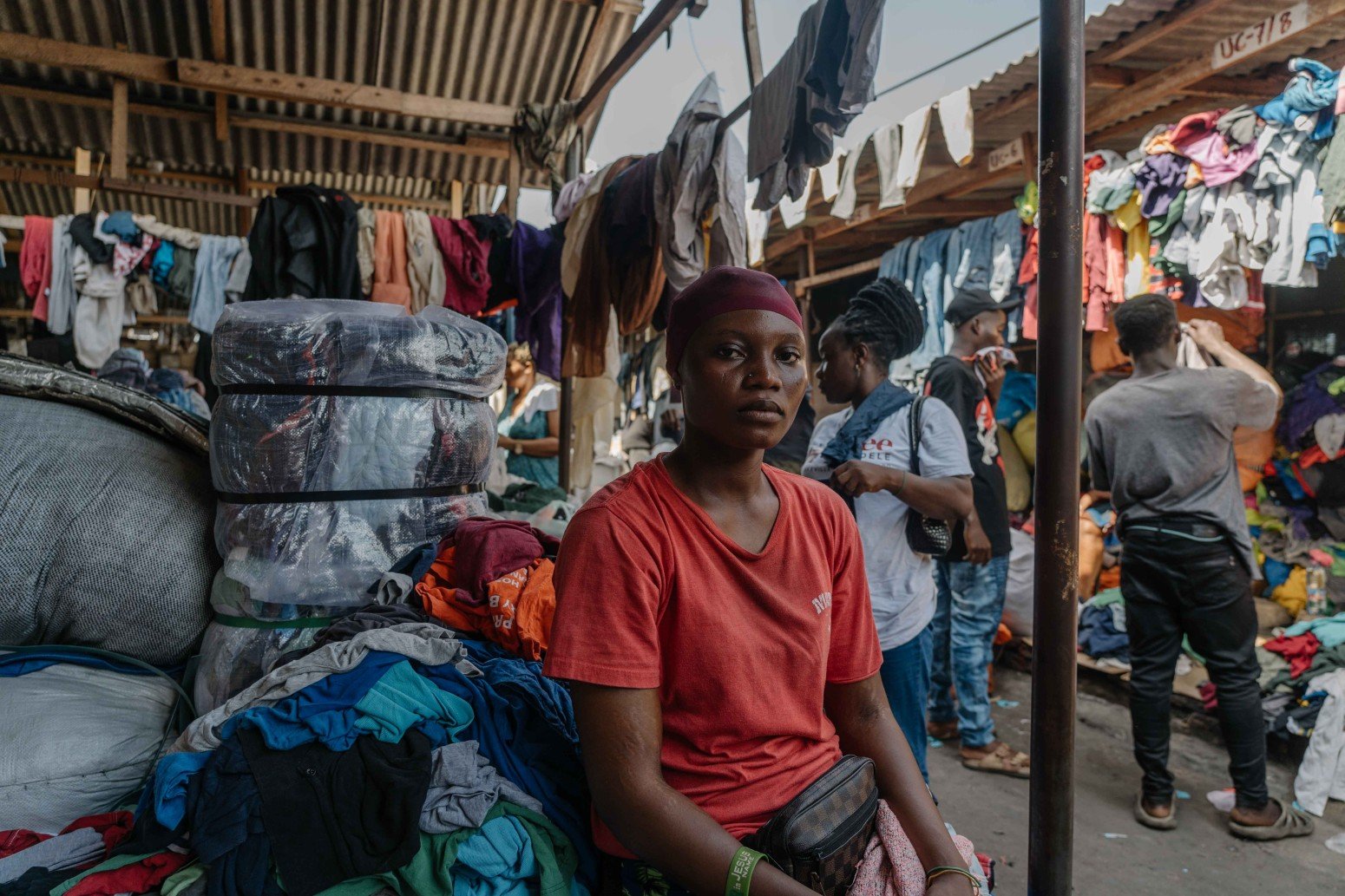
At the other end, in Accra’s Kantamanto market, one of West Africa’s largest secondhand clothing markets, traders sort through bales of imported garments arriving from the United Kingdom, the United States, Canada, and continental Europe. The OR Foundation, which documents the flow of garments through Kantamanto, has estimated that the market receives approximately 15 million items of clothing per week. A significant proportion of what arrives is unusable or unsaleable: too damaged, too culturally specific, too sized for Northern European bodies rather than West African ones. The traders who sort it bear the labour and waste costs of a global fast-fashion system that exports its disposal problem to West African markets. But the traders who find what is valuable, the vintage pieces, the quality basics, the branded items in good condition, are participating in a circular fashion economy that is generating real commercial activity.
Every week, African diaspora communities in London send clothes, gifts, and care packages to Lagos and Accra. Every week, Kantamanto traders in Accra sort through tonnes of secondhand garments from the UK and the US. This is a fashion economy worth billions. The industry calls it informal. The people running it call it work.
What the Circular Economy Actually Looks Like
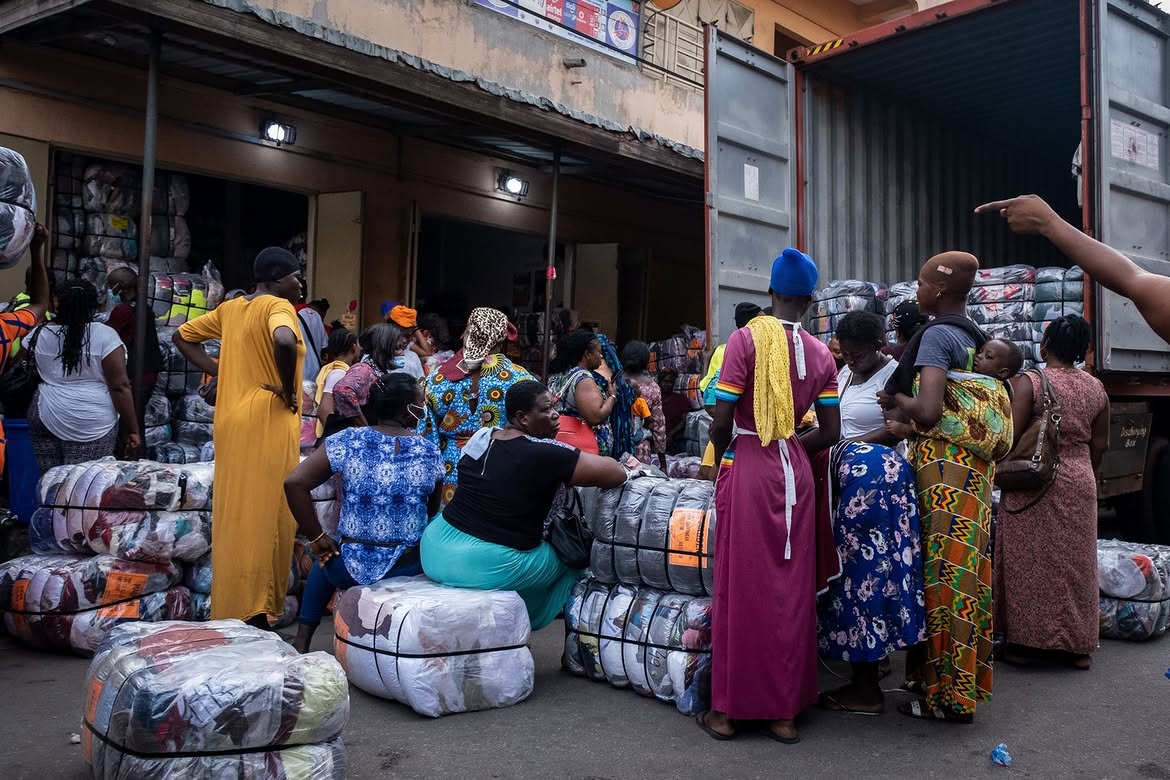
The circular fashion economy between the African diaspora and the continent operates through several overlapping channels. The first is the barrel economy: the freight forwarding services used by diaspora communities to send goods home. These services, documented by researchers at the University of the West Indies and by development economists studying Caribbean and African diaspora remittance patterns, constitute a significant component of economic infrastructure. The World Bank estimated in its 2023 Migration and Development Brief that Sub-Saharan Africa received approximately $54 billion in remittances in 2022. Fashion goods constitute a documented subset of that flow: clothes, shoes, and accessories sent home as part of care packages that serve simultaneously as an emotional connection and an economic transfer.
The second channel is the resale and re-export market. Vintage and secondhand garments purchased in the UK and US by diaspora traders are shipped to African markets, where they command premium prices precisely because of their foreign origin. A vintage Levi’s jacket purchased for three pounds in a UK charity shop can retail for the equivalent of thirty pounds in a market in Lagos or Accra. The arbitrage is not accidental. It reflects the documented brand premium that Western goods carry in African consumer markets, a premium that is itself a colonial inheritance, but one that diaspora traders are exploiting commercially rather than waiting for it to be resolved culturally.
The third channel is the digital-to-physical pipeline. African designers with diaspora audiences in London, New York, Toronto, and Paris are increasingly building fulfilment infrastructure that allows them to sell directly to those audiences while maintaining production in Lagos or Accra. Platforms including ANKA, House of Nala, and the diaspora-focused e-commerce operations built by individual brands represent the formal end of a much larger informal market in which WhatsApp groups, Instagram direct messages, and personal networks between diaspora communities and African traders handle significant commercial volume.
Kantamanto and the True Cost of the Circular Economy
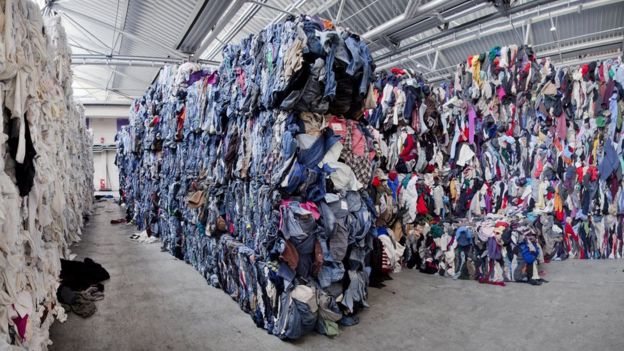
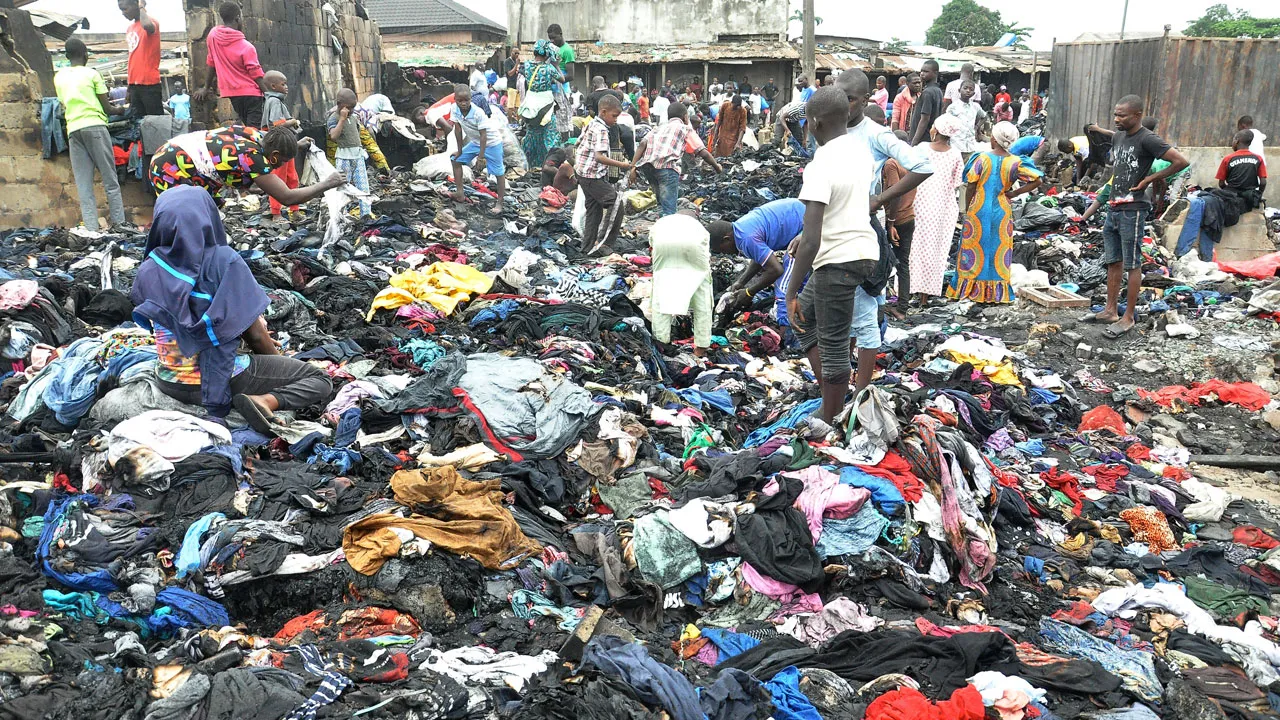
The Kantamanto market in Accra is one of the most thoroughly documented sites of the global secondhand clothing trade’s environmental and social consequences in West Africa. The OR Foundation’s 2023 research found that approximately 40% of the garments arriving at Kantamanto are immediately unsellable, generating waste that the traders must pay to dispose of, often illegally on beaches and in waterways because there is no adequate waste infrastructure to absorb the volume. The 15 million items arriving weekly are the physical consequence of a global fast-fashion system that produces more clothing than it can sell in Northern markets and exports the surplus to African markets.
The traders of Kantamanto are not passive recipients of this system. They are skilled commercial operators who have developed expertise in sorting, valuing, and reselling garments across a complex market with hundreds of traders, each specialising in specific categories and conditions. Their knowledge of global brand value, fabric quality, and condition assessment is sophisticated and practically useful. What they lack is structural support: investment in waste management infrastructure, access to formal credit. These regulatory frameworks would allow them to operate with business security rather than in a legal grey zone.
The circular economy narrative adopted by the global fashion industry, in which secondhand and resale are positioned as sustainable alternatives to new production, does not include Kantamanto within its frame. The Patagonia and Depop versions of circular fashion are Northern consumer stories. The Kantamanto version is a Southern labour-and-waste story. They are part of the same system. The industry discusses the first and ignores the second.
The industry calls it an informal market. The people running it call it work. The difference between those two descriptions lies between invisibility and accountability.
Why the Fashion Industry Is Not Talking About This
The mainstream fashion industry is not discussing the circular fashion economy across the African diaspora and the continent for structural rather than accidental reasons. The barrel economy operates outside formal retail channels and, therefore, outside the metrics the industry tracks. The Kantamanto market is not a fashion week. It does not produce content that the industry’s press infrastructure is organised to cover. The diaspora traders who built the WhatsApp networks and Instagram direct-message pipelines between London and Lagos did not apply for industry recognition. They built commercial infrastructure because they needed it.
The invisibility is not neutral. When the fashion industry describes the circular economy as a growth opportunity, it is referring to an opportunity it understands to exist within its own formal markets: resale platforms, brand take-back programmes, and rental services. The circular economy that already exists between African diaspora communities and African markets is generating comparable commercial activity without the industry’s participation, recognition, or investment. As Omiren Styles has documented in the analysis of why African consumers are teaching diaspora brands how to sell back to the continent, the commercial intelligence that operates in these informal markets is real, sophisticated, and largely invisible to an industry that measures only what its own infrastructure can track.
The Afrobeats economy provides the clearest documented parallel. The music, streaming, and cultural influence of Afrobeats have been extensively covered as a global phenomenon. The fashion economy that travels alongside it, the way Afrobeats visual culture shapes what diaspora communities buy and send home, the way Lagos street style is influenced by what diaspora members bring back on visits, the way Accra’s fashion market is responding to the same aesthetic signals as London’s African communities: this is documented in community knowledge and completely absent from the industry’s analytical frame.
What Formal Recognition Would Require
Formally recognising the circular fashion economy between the African diaspora and the continent would require the fashion industry to change several things simultaneously. It would require expanding the definition of the fashion economy beyond formal retail and brand-controlled channels. It would require investment in the infrastructure that makes diaspora-to-continent fashion trade viable on a larger scale: logistics, digital payment systems, quality assurance, and legal frameworks that would allow informal traders to operate with the same security as formal commercial actors. It would require the secondhand and resale sector to acknowledge that its sustainability narrative is incomplete without accounting for the waste exported to markets like Kantamanto.
It would also require acknowledgement that the communities building this circular economy, the barrel packers in Peckham, the vintage arbitrageurs between charity shops and African markets, the WhatsApp group administrators who are also de facto fashion distributors, and the Kantamanto traders sorting through the consequences of fast fashion overproduction, are performing economically significant labour that the industry has not compensated, credited, or even counted.
THE OMIREN ARGUMENT
The circular fashion economy between London, Lagos, and Accra is not informal because it lacks sophistication. It is informal because the fashion industry’s recognition infrastructure was never built to see it. The barrel economy, the Kantamanto trade, the diaspora e-commerce networks, and the Afrobeats visual culture pipeline between diaspora communities and African markets together constitute a fashion economy that is generating billions of dollars of commercial activity without a single runway show, a single editorial feature in a major fashion publication, or a single line in any industry sustainability report. The industry calls it informal. The people running it call it work. The difference between those two descriptions lies between invisibility and accountability.
Omiren Styles is naming it. The circular fashion economy between the African diaspora and the continent is one of the most significant economic stories in global fashion right now. It predates the fashion industry’s discovery of circularity by decades. It was built by communities that needed it before anyone offered it to them. Its participants have developed commercial expertise, logistical knowledge, and market intelligence that the formal fashion industry lacks and cannot replicate by simply entering the space with investment capital. The conversation about who owns the future of African fashion must include the people who have been building its present infrastructure without recognition. Until it does, the industry is discussing a version of African fashion that exists only in its own frame, while the real economy runs parallel and invisible.
ALSO READ
- African Consumers Are Teaching Diaspora Brands How to Sell Back to the Continent
- The Cost of Making Fashion in an African City Is a Political Number, Not Just an Economic One
- African Fashion Weeks Were Never Trying to Beat Paris. They Were Solving a Different Problem.
Frequently Asked Questions (FAQs)
What is the circular fashion economy between the African diaspora and the continent?
It is the flow of fashion goods, money, and aesthetic influence between African diaspora communities in London, New York, Toronto, Paris, and similar cities, and African markets in Lagos, Accra, Nairobi, Kinshasa, and elsewhere. It operates through several channels: the barrel economy, in which freight forwarding services ship clothes, shoes, and accessories from diaspora communities to family and traders on the continent; the resale and re-export market, in which vintage and secondhand garments bought in the UK and US are shipped to African markets where they command premium prices; and the digital-to-physical pipeline, in which African designers sell directly to diaspora audiences while maintaining production on the continent.
What is Kantamanto, and why does it matter to the global fashion economy?
Kantamanto is one of West Africa’s largest secondhand clothing markets, located in Accra, Ghana. Research by the OR Foundation has documented that it receives approximately 15 million items of clothing per week, imported from the United Kingdom, the United States, Canada, and continental Europe. Approximately 40% of those items are immediately unsellable, generating waste that traders must pay to dispose of, often in the absence of adequate waste infrastructure. Kantamanto matters to the global fashion economy because it is one of the most thoroughly documented sites of the waste-related consequences of fast-fashion overproduction. The Northern consumer circular economy narrative, which positions secondhand and resale as sustainable alternatives, is incomplete without accounting for what happens to the garments that cannot be resold.
How large is the remittance and diaspora goods economy between Africa and the UK?
The World Bank estimated in its 2023 Migration and Development Brief that Sub-Saharan Africa received approximately $54 billion in remittances in 2022. Fashion goods, including clothes, shoes, and accessories, sent in barrels and care packages, constitute a documented subset of that flow. The barrel economy, operated by freight-forwarding services in diaspora communities across London, is a significant economic infrastructure that moves fashion goods between the diaspora and the continent at a commercial scale, largely outside the metrics the mainstream fashion industry tracks.
Why is the fashion industry not discussing the diaspora-to-continent circular economy?
Because the barrel economy, the Kantamanto trade, and the diaspora WhatsApp and Instagram networks that function as informal fashion distribution channels operate outside formal retail channels and therefore outside the metrics the industry tracks. The fashion industry’s circular economy narrative is built around formal resale platforms, brand take-back programmes, and rental services. The circular economy that already exists between African diaspora communities and African markets is generating comparable commercial activity without the industry’s participation, recognition, or investment. The invisibility is structural, not accidental.
What is the connection between Afrobeats and the diaspora fashion economy?
Afrobeats visual culture, the styling of musicians, the aesthetics of music videos, and the red-carpet and street-style culture surrounding the industry shape what diaspora communities buy and send home, and what Lagos and Accra fashion markets respond to. The aesthetic signals circulate between diaspora communities in London and African markets in ways documented in community knowledge but largely absent from the fashion industry’s analytical framework. The Afrobeats economy has been extensively covered as a global cultural phenomenon. The fashion economy that travels alongside it has not.
What would it take for the fashion industry to recognise this economy formally?
Expanding the definition of the fashion economy beyond formal retail and brand-controlled channels; investment in the logistics, digital payment, and legal infrastructure that would allow informal diaspora-to-continent traders to operate with commercial security; acknowledgement in the sustainability narrative that the secondhand sector’s waste is exported to markets like Kantamanto; and credit to the communities who built this circular economy, including barrel packers in Peckham, vintage arbitrageurs, diaspora e-commerce network builders, and Kantamanto traders, for the economically significant labour they perform without industry compensation or recognition.