On 9 July 2024, a consignment of 80,000 children’s leggings left the Glo-Djigbé Industrial Zone (GDIZ) in Benin bound for KIABI, the French fashion retailer with 563 outlets across Europe, Africa, and the Middle East. The leggings were meticulously crafted children’s garments, made in Benin, from cotton grown in Beninese fields, processed at a Beninese industrial zone, and shipped to a European retail chain that distributes across three continents. It was the first shipment of finished garments to Europe in Benin’s history. It was also the first chapter of a collaboration that committed to producing two million pieces in 2024 and four million in 2025.
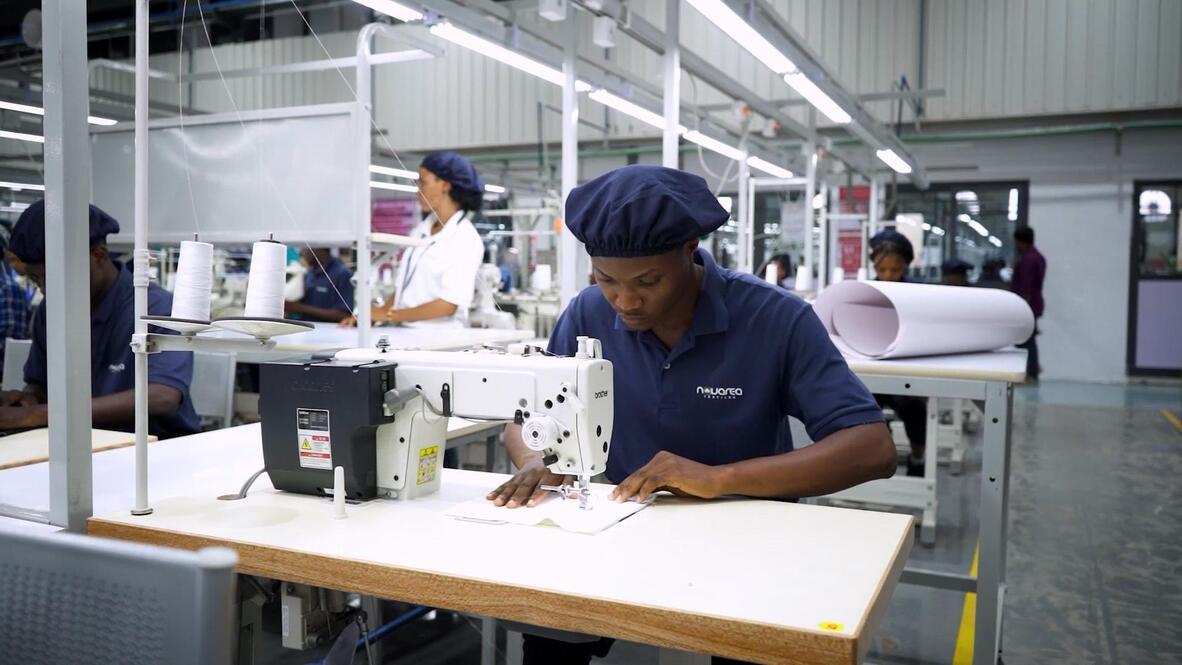
GDIZ is not a factory. It is a 1,640-hectare vertically integrated industrial zone, located 45 kilometres from Cotonou, that handles the complete textile value chain from ginning raw cotton to shipping finished garments. It processes approximately 40,000 tonnes of cotton annually and produces between seven and ten million garments per year. It currently hosts 36 investors and 20,000 workers with a stated target of 300,000 jobs by 2030. And it has launched Sùsù, a Made in Benin consumer fashion brand, through Benin Textile S.A., signalling that the zone’s ambition extends beyond industrial supply into brand identity.
The Omiren Argument: GDIZ is the supply chain infrastructure that Beninese fashion has always needed and never had. Whether it becomes the engine of a national fashion identity rather than simply a source of mass production for international brands depends on decisions that have not yet been fully made, by the government, by GDIZ, and by the designers who are building from within the same material the zone processes.
The Glo-Djigbé Industrial Zone is Benin’s $1.5bn bet on becoming Africa’s garment manufacturing hub. Here is what it is, what it has done, and what it still needs to do.
What GDIZ Is and How It Was Built
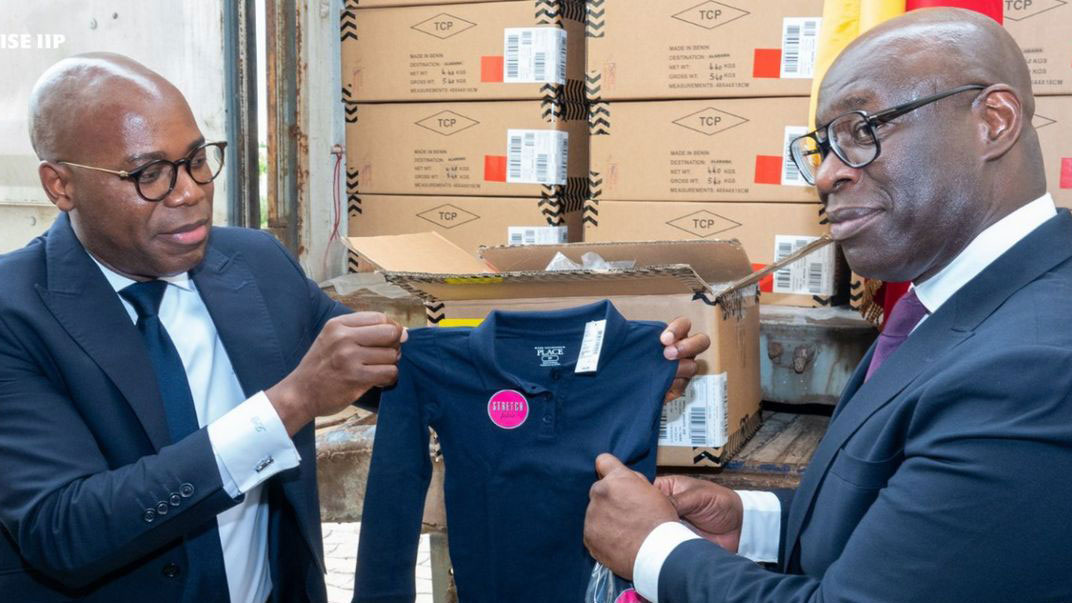
GDIZ is a public-private partnership between the Republic of Benin and ARISE Integrated Industrial Platforms (ARISE IIP), a company led by Indian entrepreneur Gagan Gupta. The zone was created on 5 February 2020 following the adoption of a Special Economic Zone law in 2017 and the signing of a partnership agreement with ARISE IIP in November 2019. It is managed by SIPI-Bénin SA (Société d’Investissement et de Promotion de l’Industrie), led by Managing Director Létondji Beheton. ARISE IIP has committed a total investment of $1.5 billion USD for the zone’s construction. The GDIZ website states a target of attracting at least $1.4 billion in the first phase, with the total reaching $1.5 billion across all phases.
The zone is being developed in three phases: Phase I covers 400 hectares; Phase II adds 600 hectares; Phase III completes the 1,640-hectare total with a further 640 hectares. It is designed to handle not only textiles but a full range of agricultural and industrial processing: cashew, soya, sesame, pineapple dehydration, ceramics, electric bikes, and pharmaceuticals are all part of the zone’s planned industrial portfolio. The textile park is its most advanced and most internationally visible component.
ARISE IIP describes the textile park as a vertically integrated industrial zone with end-to-end capabilities: processing ginned cotton into yarn, then yarn into fabric, then fabric through dyeing, and finally finished garments ready for export. This is the complete transformation of a raw agricultural commodity into a consumer product within a single geographic zone. The argument it makes is straightforward: Benin grows the cotton, Benin processes the cotton, Benin ships the finished garment. The value remains in Benin.
The KIABI Export and What It Proved
The July 2024 export to KIABI was significant not for its volume, which at 80,000 pieces is modest by international standards, but for what it demonstrated. The KIABI CEO of Sourcing, Penagos Juan, stated that the collaboration perfectly aligns with KIABI’s strategy of bringing production sites closer to its points of sale. KIABI is expanding its retail presence in Africa. A Beninese production base serves both its European supply chain and its growing African retail footprint simultaneously. This is the strategic logic that makes GDIZ attractive to international retailers beyond the cost argument: proximity to both manufacturing and retail markets in the same geographic region.
The scale of the commitment is significant. The KIABI contract aligned 2 million pieces for 2024 and 4 million for 2025, with the initial 80,000 being the proof-of-concept delivery. At the same time, contracts had already been signed with The Children’s Place and US Polo Assn. Three international retail brands committed to Made in Benin production within the first years of GDIZ’s textile operation represent a commercial validation that the zone’s industrial claims are credible to international buyers.
Létondji Beheton described the first KIABI export as “proof of our commitment to promoting the Beninese textile industry on the international stage.” The language of commitment is important. GDIZ is not presenting itself as having arrived. It is presenting itself as having demonstrated that arrival is possible. The 80,000 leggings are the evidence. The 4 million pieces for 2025 are the commitment. The 300,000 jobs by 2030 are the aspiration.
The Raw Cotton Export Ban and What It Changes
In May 2025, Benin announced a ban on raw cotton exports. Every tonne of cotton previously leaving Benin as an unprocessed agricultural commodity must now be processed domestically before it can leave the country. This is a structural policy decision with direct consequences for GDIZ: it guarantees the zone a domestic supply of raw material that cannot be diverted to foreign processing at lower cost. The Voice of Africa confirmed that the ban is part of a deliberate national industrial strategy aimed at forcing domestic value addition across the cotton supply chain.
Benin is Africa’s leading cotton producer, with 2024-2025 projections at 669,000 tonnes. At a processing rate of 40,000 tonnes annually, GDIZ currently handles approximately six per cent of Benin’s cotton production. The raw cotton ban creates policy pressure to expand that capacity. If the cotton cannot be left unprocessed and the domestic processing infrastructure can handle only a fraction of the annual crop, there is a direct financial incentive to build more processing capacity within the country.
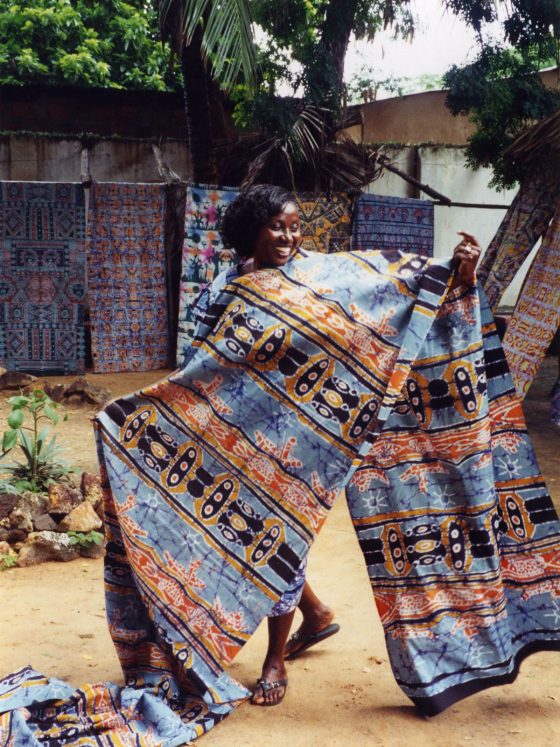
The ban also changes the strategic position of designers who work with Beninese cotton-based fabrics. LOAN-H’s kanvô production, FARE’s artisan relationships in Cotonou and Abomey, and the broader ecosystem of Beninese fabric-based design practice are all drawing on the same national agricultural base that GDIZ is now processing at an industrial scale. The policy decision to keep cotton processing in Benin is simultaneously an industrial policy and a fashion policy, whether or not it was framed as such.
Sùsù: The Made in Benin Brand
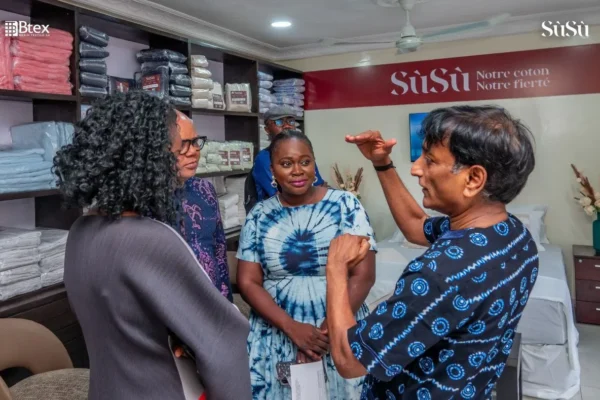
The launch of Sùsù by Benin Textile S.A. (Btex) through GDIZ is the most significant signal yet that the zone’s ambition extends beyond industrial supply. Sùsù is a Made in Benin consumer fashion brand, produced within the zone, carrying a Beninese brand identity alongside the industrial production capacity that enables it. The GDIZ website describes its launch as “a collective achievement”. The language is deliberate: Sùsù is not a designer label in the conventional sense. It is a national industrial brand whose ownership is distributed across the institutional partnership that produced it.
The distinction matters for how Beninese fashion is understood internationally. KIABI leggings, made in Benin, answer the question of whether Benin can meet international standards. Sùsù asks a different question: can Benin produce a brand that is internationally legible on its own terms, carrying Made in Benin not as a supply chain credential but as a cultural identity claim? That question is harder to answer, and its answer depends on factors that industrial capacity alone cannot provide: design intelligence, brand storytelling, and cultural authority.
This is exactly where GDIZ’s supply chain infrastructure and the designer ecosystem described across this series have the potential to connect. Sùsù is the zone’s own attempt to bridge that gap. Whether designers like Peter Toni-Basengula, Elvira Akplogan, or the FinAB generation will eventually be able to draw on GDIZ’s processing capacity for their own production is the open question that will determine whether Made in Benin becomes a fashion identity or remains a supply chain credential.
ALSO READ
- Cotton as Identity: How Benin’s White Gold Shaped Its Fashion Culture
- Benin Fashion Month: The Government-Backed Festival Quietly Reshaping West African Fashion
- Kanvô: Benin’s Royal Handwoven Fabric, Fully Explained
The African Quality Assurance Centre and the Standards Infrastructure
In November 2024, construction began on the African Quality Assurance Centre (AQAC) within GDIZ, a collaboration between Afreximbank and ARISE IIP. The AQAC will provide testing, inspection, and certification services for products manufactured within the zone, ensuring compliance with international standards across food, agricultural products, and textiles. Létondji Beheton described it as “a game-changer for Benin’s industrial ecosystem.
The AQAC is infrastructure for infrastructure: it is the testing and certification capacity that makes GDIZ’s products credible to international buyers who require third-party quality verification before placing orders. Without it, GDIZ’s claims about quality rest on self-certification. With it, GDIZ can offer internationally recognised credentials that reduce buyers’ risk perception who have not previously sourced from Benin.
For the Beninese fashion ecosystem, the AQAC matters because quality certification is one of the barriers separating artisan-scale production from the volumes international retail requires. A kanvô producer working with LOAN-H or FARE does not need AQAC certification to satisfy a diaspora buyer in London. A textile manufacturer supplying KIABI or The Children’s Place does. The AQAC is building the standards infrastructure that allows the zone’s industrial capacity to operate credibly at international retail scale.
The Gap Between the Zone and the Designers
The most important unanswered question about GDIZ and Beninese fashion is not whether the zone can supply international retailers. The July 2024 KIABI export answered that. The question is whether the industrial infrastructure GDIZ is building and the creative infrastructure that Benin’s designers are building will eventually converge into something that is both industrially credible and creatively authoritative: a Made in Benin fashion industry rather than simply a Made in Benin supply chain.
The current relationship between GDIZ and the Beninese designer community is limited but real. ACMB designers visited GDIZ during Benin Fashion Month’s seventh edition in July 2025, connecting the artisan sector directly to the industrial infrastructure. This was a deliberate programme decision by both ACMB and the ministry: putting the designers who showed at La Nuit de la Mode in the same physical space as the zone that processes their country’s cotton. The connection was made. What follows from it depends on whether the zone’s commercial strategy creates space for Beninese designers to access its production capacity, and at what minimum order quantities.
Industrial zones of GDIZ’s scale typically operate at minimum order quantities that are inaccessible to emerging designers. A brand producing 300 garments per quarter, as LOAN-H does, cannot use a facility designed for 4 million KIABI pieces per year as its production partner without specific provisions that make smaller runs viable. The gap between the zone’s industrial scale and the designer ecosystem’s artisan scale is not unbridgeable, but bridging it requires intentional policy choices that have not yet been publicly announced.
The launch of Sùsù is the first indication that GDIZ is thinking about this gap. If the zone’s own consumer brand can develop a design identity that is specifically Beninese, it will have demonstrated that industrial scale and cultural specificity are not mutually exclusive. And if it succeeds, it will make the argument that Made in Benin is not simply a supply chain credential but a creative position worth holding.
“GDIZ is the supply chain infrastructure that Beninese fashion has always needed and never had. Whether it becomes the engine of a national fashion identity rather than simply a source of mass production for international brands depends on decisions that have not yet been fully made, by the government, by GDIZ, and by the designers who are building from within the same material the zone processes.”
Frequently Asked Questions
What is GDIZ?
GDIZ (Glo-Djigbé Industrial Zone) is a 1,640-hectare vertically integrated industrial zone located 45 kilometres from Cotonou, Benin Republic. Created in February 2020 as a public-private partnership between the Republic of Benin and ARISE Integrated Industrial Platforms (ARISE IIP), it is managed by SIPI-Bénin SA under Managing Director Létondji Beheton. It handles the complete textile value chain, from ginning cotton to shipping finished garments, as well as cashew, soya, and other agricultural processing. Total investment: $1.5 billion. Target: 300,000 jobs by 2030.
What does GDIZ produce and who are its clients?
GDIZ’s textile park processes approximately 40,000 tonnes of cotton annually and produces between seven and ten million garments per year. It’s confirmed international clients include KIABI (France), for whom it exported its first 80,000 Made in Benin garments in July 2024, with a contracted order of 2 million pieces for 2024 and 4 million for 2025. Contracts have also been signed with The Children’s Place (TCP) and US Polo Assn. GDIZ has also launched Sùsù, a Made in Benin consumer fashion brand produced through Benin Textile S.A.
What is the raw cotton export ban, and how does it affect GDIZ?
In May 2025, Benin announced a ban on raw cotton exports, requiring all cotton to be processed domestically before it can leave the country. Benin is Africa’s leading cotton producer, with a projected output of 669,000 tonnes for the 2024-2025 season. GDIZ currently processes approximately 40,000 tonnes, or about six per cent of annual production. The ban creates policy pressure to expand domestic processing capacity and guarantees GDIZ a protected domestic raw material supply that cannot be diverted to lower-cost foreign processing.
What is the African Quality Assurance Centre (AQAC)?
The African Quality Assurance Centre (AQAC) is a testing, inspection, and certification facility under construction at GDIZ since November 2024, developed through a collaboration between Afreximbank and ARISE IIP. It will provide internationally recognised quality verification for products manufactured within the zone, including textiles and agricultural products. This infrastructure is essential for GDIZ to demonstrate compliance with international standards to buyers who require third-party certification before placing orders.
What is Sùsù?
Sùsù is a Made in Benin consumer fashion brand launched through Benin Textile S.A. (Btex) within GDIZ. GDIZ described its launch as ‘a collective achievement.’ Sùsù represents an attempt by the zone to develop a Beninese brand identity alongside its industrial production capacity, extending Made in Benin from a supply chain credential into a consumer-facing cultural claim.
How does GDIZ connect to Benin’s designer community?
The connection between GDIZ and Benin’s designer ecosystem is currently limited but developing. ACMB (Association des Créateurs de Mode du Bénin) designers visited GDIZ during Benin Fashion Month’s seventh edition in July 2025, connecting the artisan and designer sector directly to the industrial infrastructure. The gap between the zone’s industrial scale, which operates at millions of units, and the designer ecosystem’s artisan scale, which operates at hundreds of garments per quarter, remains significant. Whether GDIZ’s commercial strategy creates space for Beninese designers to access its production capacity is an open question with major implications for whether Made in Benin becomes a fashion identity or remains a supply chain credential.
Explore more from our Industry section, where Benin’s fashion infrastructure is reported with the precision the sector deserves.