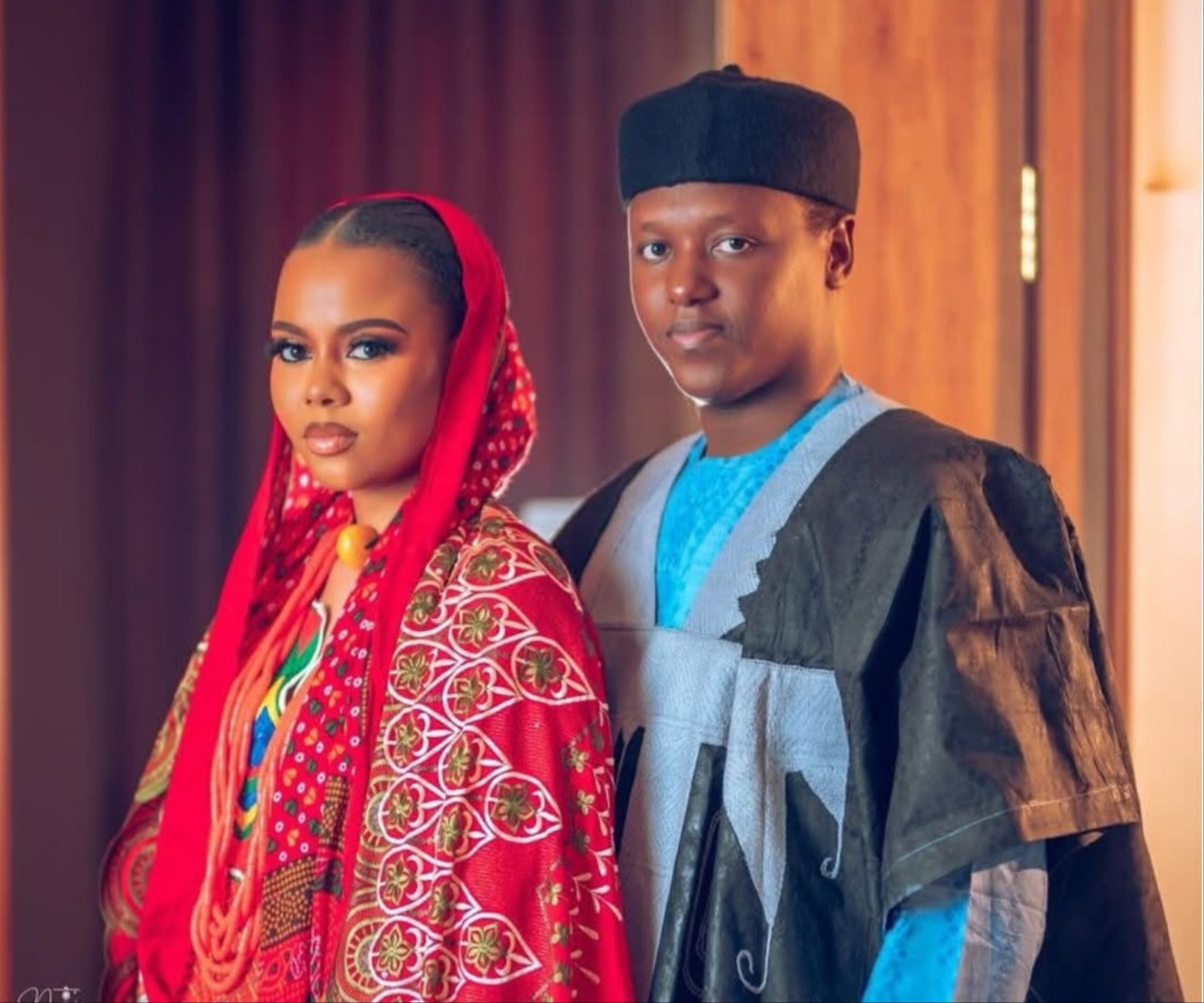
I still remember the first time I stepped through the narrow alleyway behind the old palace of Shehun Borno in Maiduguri, after Fajir prayer around 7:00 AM. The sky had not yet decided between blue and ash-grey, and the morning breeze carried a mixture of burning bakhoor, desert dust, and the earthy musk of hand-dyed fabrics.
An elderly weaver named Baba Bukar, his fingers stained permanently in deep indigo, was unrolling a bolt of (Danmbwra), the royal babbar riga in Kanuri, the legendary handwoven cloth once reserved for Borno’s noble families. The fabric shimmered like cool water under moonlight, though it felt surprisingly coarse against my palm. He looked at me and said in the Kanuri language,
“Ngamti Shehu Borno ti ɗebe ye, tar kyarima Kanem-Bornu ŋa zara…”
Every dress Shehun Borno wears carries the history of the noble Kanem-Borno.
That sentence became my entry point into a world where fashion was not vanity; it was dynasty, dignity, and diplomacy.
As a cultural journalist born in the North, I had seen Hausa, Fulani, and Nupe royal regalia many times. But the Kanuri nobility, with their sweeping robes, layered turbans, sand-toned palettes, and ancient Sahelian silhouettes, felt like stepping into a forgotten empire carved from sun, wind, and memory.
Discover the timeless elegance of Kanuri royal fashion, indigo robes, turbans, and centuries-old traditions from ancient Borno.
The Traditional Fashion of Borno’s Ancient Nobility
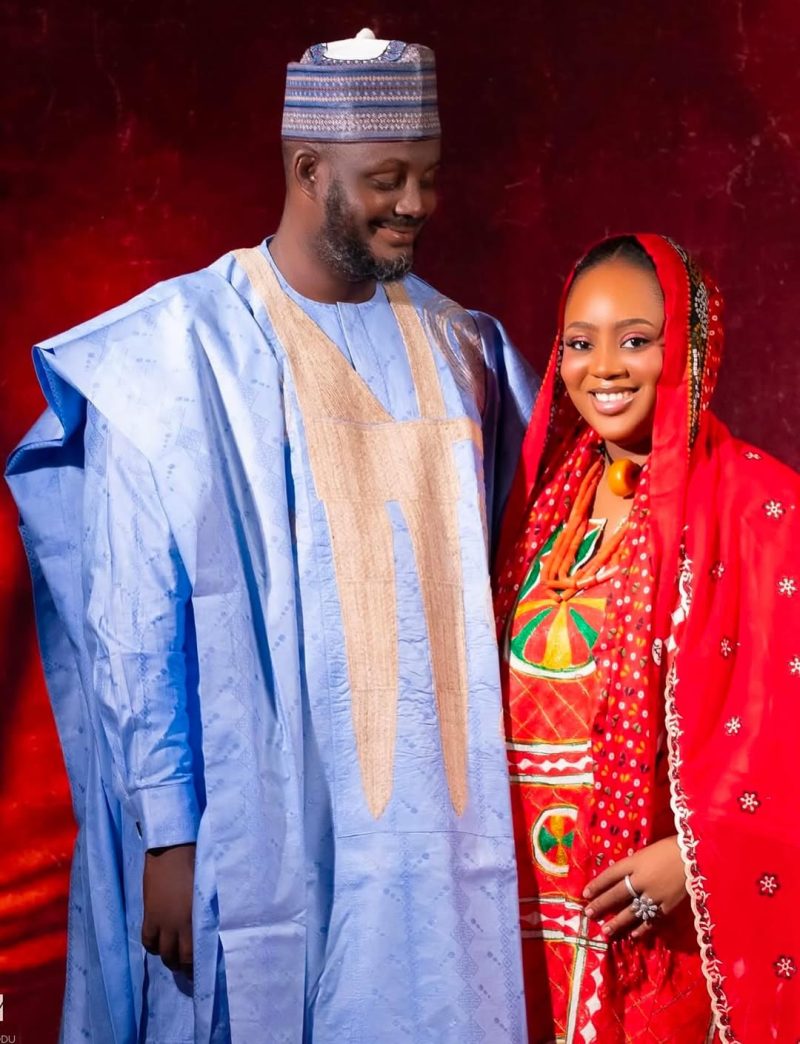
To understand Kanuri royal fashion, one must understand a civilisation that stood firm for over a thousand years, from the days of the Kanem-Bornu Empire to the courts of modern Maiduguri.
For this investigation, I spent time with tailors in Bulumkutu, palace historians inside the Shehu’s compound, and textile merchants from Monguno to Damaturu. What emerged is a living tapestry of identity, weaving together five key elements:
The Royal Fabrics: A Noble Dress That Carries a Story
Inside the palace courtyard, palace scribe Alhaji Modu explained the secret of Kanuri noble fabrics:
“Kanuri fashion is not loud. Its power is quiet, controlled, like the desert.”
Unlike the flamboyance seen in some northern courts, the Kanuri nobility favoured muted prestige.
- Deep indigo
- Off-white desert tones
- Subtle grey patterns symbolising age and authority
I watched a group of young tailors lay out robes meant for a minor district head. The fabric was heavy, almost resistant, woven tightly enough to survive harmattan winds. When the cloth caught sunlight, faint geometric patterns revealed themselves, patterns said to descend from pre-Islamic Sahelian weaving traditions.
The Grand Robe: “Kaftan Bornu” and the Majestic Silhouette
The Borno Kaftan, characterised by its flowing amplitude and sharply squared shoulders, is the pinnacle of Kanuri royal attire.
History keeper Mallam Bukar told me:
“A Kanuri lord walks like the wind cannot touch him. The robe creates that presence.”
Unlike the Hausa Babbar Riga, which is rounded and airy, the Bornu Kaftan has:
- A straighter drop
- Denser embroidery on the chest panel
- Longer side vents to allow desert airflow
- And a heavier lower weight, so it moves with gravitas
Elders say it was once designed intentionally to project the power of a man “who negotiates with sultans and desert kings.”
Turbans of Authority: The “Yar’tofa”, “Rawani”, and Courtly Wrapping Rituals
One morning in the Shehu’s compound, I watched a nobleman prepare for a traditional greeting visit to the Shehu of Borno. Two aides wrapped his turban, layer upon layers, with a rhythmic precision that felt almost sacred.
Kanuri turbans differ across status:
- Yar’tofa: A domed hat often worn under the main turban
- Lawani turban: longer wrap symbolising scholarship or political influence
- Court turban: used only for royal events, sometimes threaded with silver
An elder in the palace compound named Kaigama Kyari said:
“A man’s turban is his reputation. If it falls, so does his honour.”
To them, the turban is not just a dressing; it is a symbol, a symbol of royalty and nobility.
Embroidery Symbols: The Silent Language of Nobility
Kanuri embroidery, called “Lafiya,” is geometric and deeply symbolic. Each pattern carries meaning:
- Triangular motifs: warrior lineage
- Interlocking squares: dynastic stability
- Dotted rows: religious devotion
During one visit, a master embroiderer showed me a motif only used for royal princes. It looked simple – three intersecting lines, but he explained:
“These lines represent the three pillars of Bornu: courage, justice, and restraint.”
Jewellery & Accessories: Subtle Wealth, Nomadic Influence
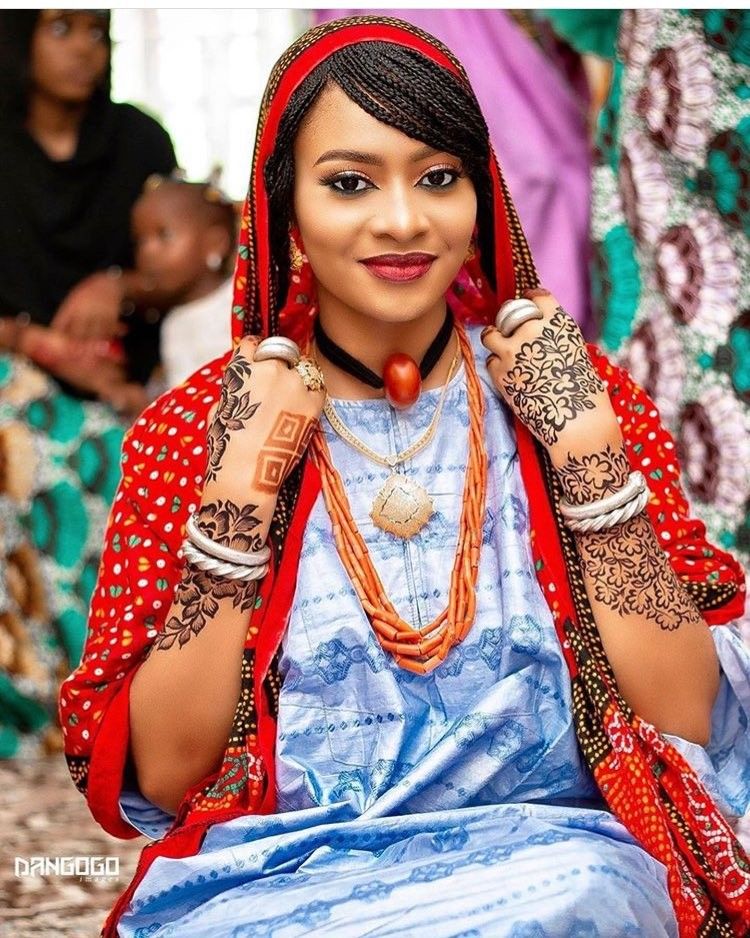
Kanuri nobility avoided the heavy gold pieces common in Hausa courts. Their accessories were influenced by Sahel nomadic traditions, which favoured lightweight, travel-friendly jewellery crafted for movement, identity, and desert life.
- Silver amulets
- Thin leather belts
- Prayer bead strands made from desert stones
- Camel-bone bracelets (rare, symbolic of endurance)
In the Monday Market of Maiduguri, trader Hajja Falmata told me:
“Our ancestors crossed deserts. Our jewellery remembers their footsteps.”
For the Kanuri people, every woman’s outfit is incomplete without jewellery.
As I left the palace that morning, the call to Dhuhr echoed over Maiduguri, mixing with the rustle of palm trees and the distant hum of market life. In my hand, I still carried a tiny scrap of indigo cloth Baba Bukar had given me, frayed at the edges but glowing in the sun.
It struck me then: Kanuri royal fashion is not merely clothing. It is a memory stitched into fabric, a desert empire refusing to fade.
And like the shifting dunes of the Sahara, its elegance endures not because it changes, but because it stays rooted in an identity older than history itself.
FAQs
1. Why are Kanuri royal outfits different from Hausa or Fulani regalia?
Kanuri culture evolved from a desert empire influenced by Berber, Sahelian, and trans-Saharan traditions. Their fashion reflects subtlety, discipline, and quiet authority, not the flamboyance of Hausa court dress.
2. Do nobles still wear the Borno kaftan today?
Yes. During palace events, Eid celebrations, and political gatherings, the Kaftan Bornu remains a marker of lineage and respect. I witnessed one worn during a coronation rehearsal; its presence alone commanded silence in the courtyard.
3. How old is the Kanuri textile tradition?
Some weaving techniques predate the 11th-century Kanem Empire, making them among the oldest continuous textile traditions in West Africa.
4. Can visitors observe turban-tying rituals?
If guests are invited to participate in palace ceremonies, they are welcome to observe. But always maintain distance and decorum. The ritual is regarded as spiritual and political.
5. What is the prominent symbolism behind Kanuri embroidery?
Strength, lineage, and moral restraint. Each motif reflects a virtue expected of nobility, especially patience and justice.