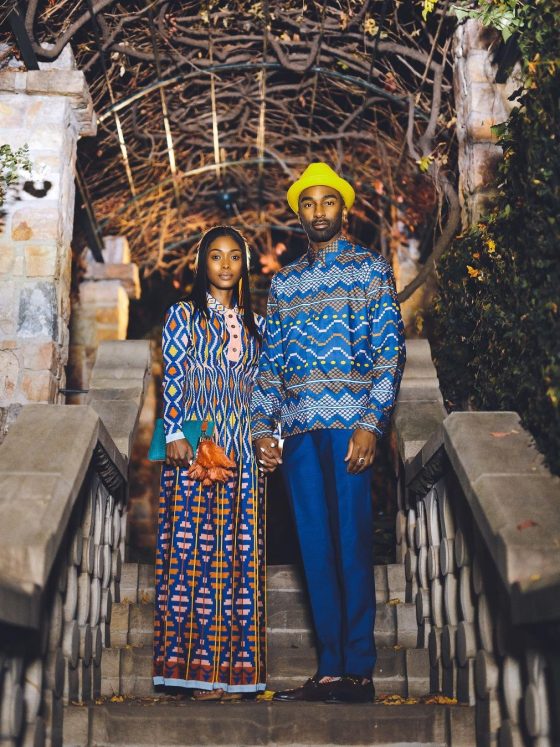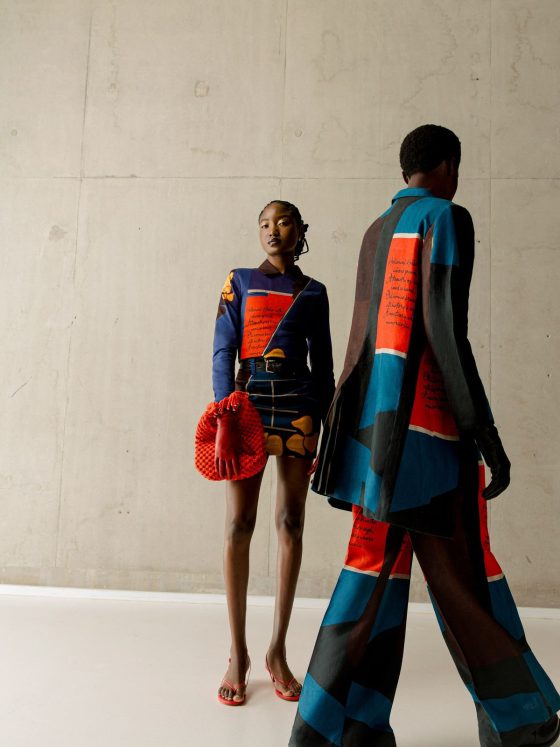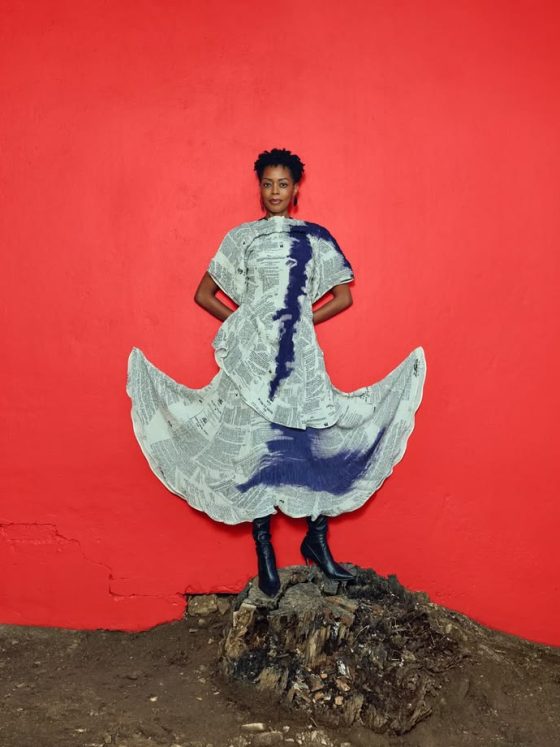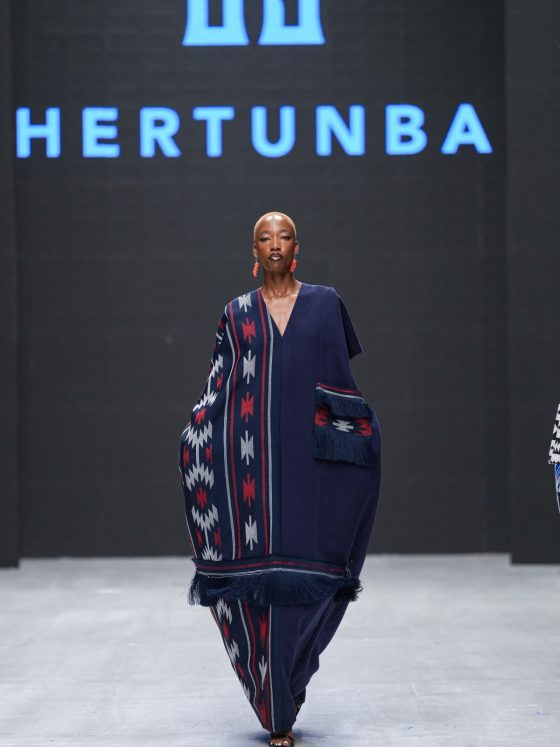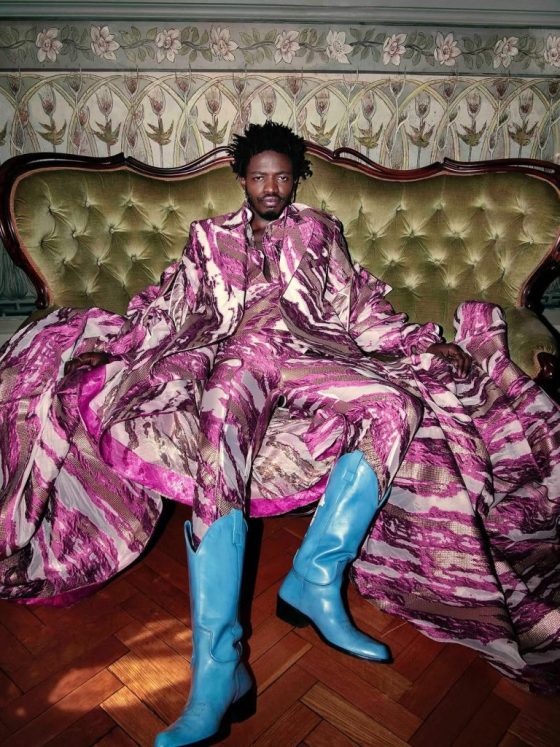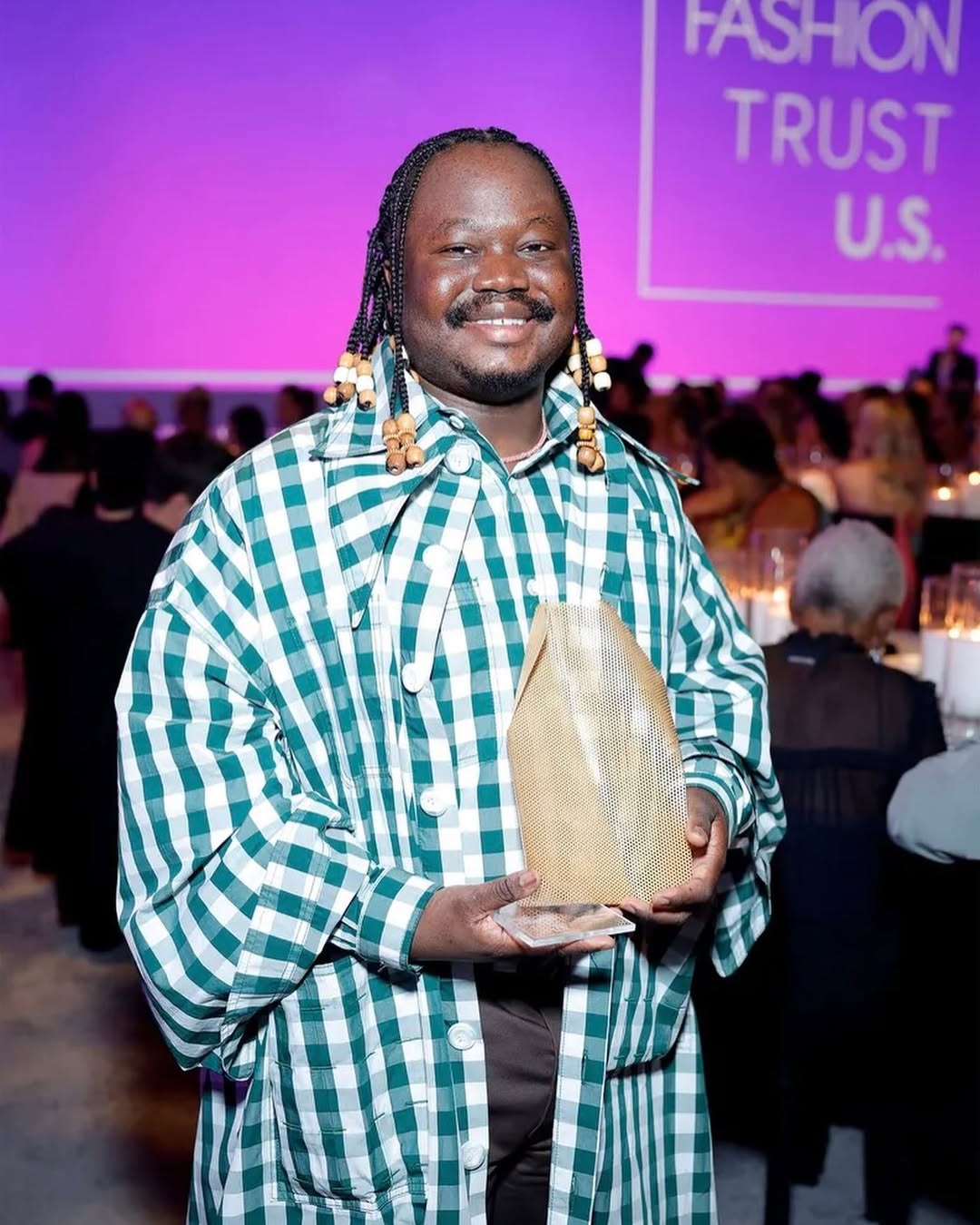
At New York Fashion Week in September 2025, Jacques Agbobly unveiled a collaboration with Nike that had been described in the lead-up as one of the most anticipated shows of the season. The collection drew from Togolese heritage. The Ghana Must Go bag, the woven polypropylene holdall that has carried the possessions of West African migrants across four continents, was reimagined as a trench coat. The show was in Brooklyn. The audience was global. The question the collection posed was the same one every African designer building a US market has to answer: how do you enter the most commercially demanding fashion market in the world without the cultural inheritance that makes your work distinct, only to become the thing the market reduces you to?
Agbobly, Busayo Olupona, and Kahindo Mateene have each answered that question with a business. Three designers, three African heritages, three distinct routes into the US market. None of them has a straightforward story. All of them have built something real.
Jacques Agbobly. Busayo Olupona. Kahindo Mateene. Three African designers are building serious US market positions from Brooklyn, New Jersey, and the Afropolitan consumer base that mainstream retail has ignored.
Jacques Agbobly: Togolese Heritage at the Centre of a Nike Collaboration
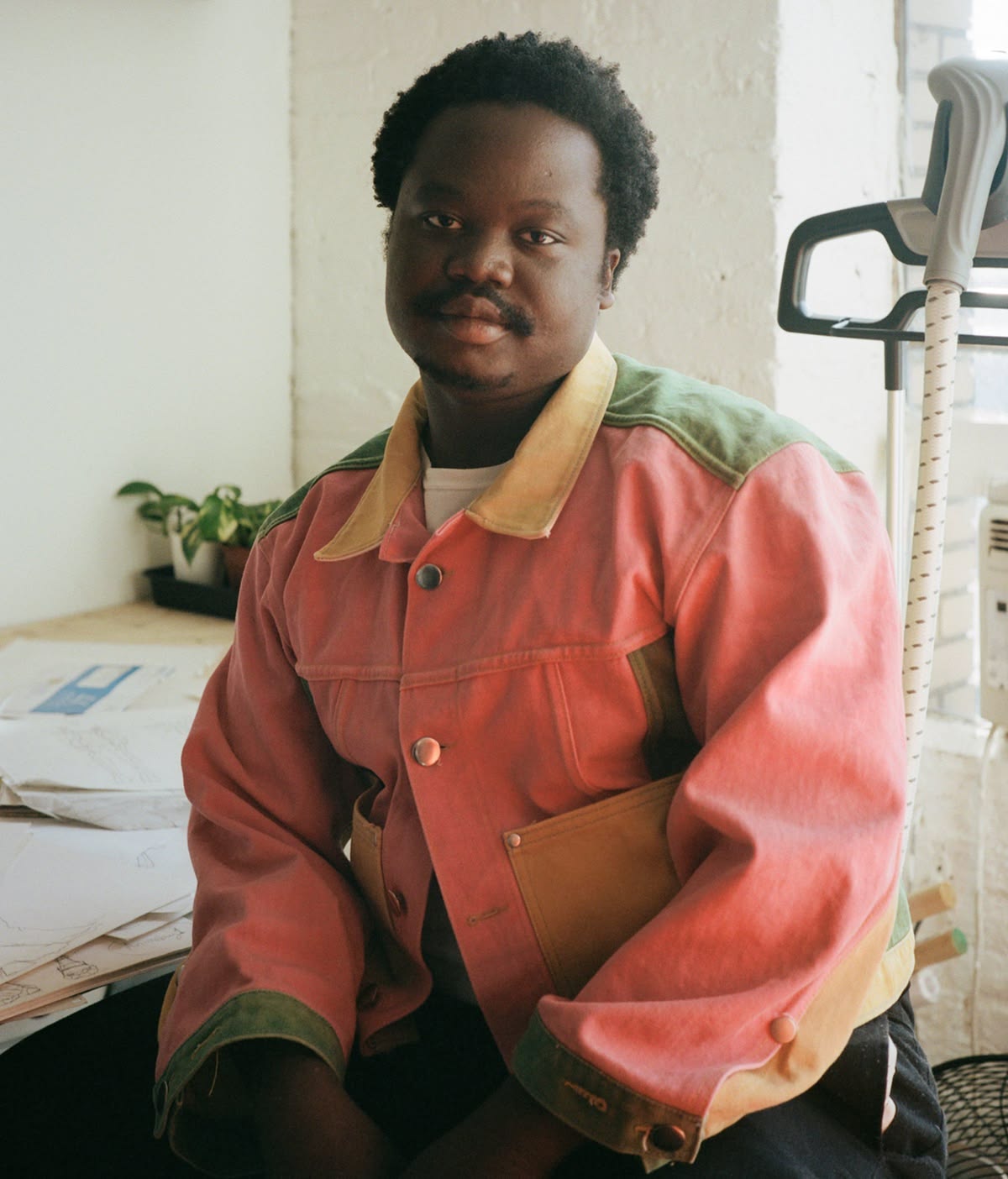
Jacques Agbobly was born in Togo. Their father sold secondhand clothing in Togolese markets — garments discarded in America and Europe, shipped to West Africa, where their overseas origin conferred social status. Agbobly moved to Chicago as a child, later studied in New York, and founded Agbobly in 2020. The brand officially launched in its current form in 2023. It is based in Brooklyn.
The brand’s design language is rooted in Togolese heritage — sculptural knitwear and ready-to-wear built around memory, storytelling, and the specific cultural intelligence of a designer who grew up between Togo and the American Midwest. In 2024, Agbobly became the first designer of Togolese heritage to be shortlisted for the LVMH Prize, reaching the semi-finalist stage. In 2025, their designs were featured in the Costume Institute’s Superfine: Tailoring Black Style exhibition at the Metropolitan Museum of Art. In 2026, they were awarded the Vilcek Prize for Creative Promise in Fashion and Design, which specifically recognised their work centring Afropolitan identity and diasporic memory. In 2023, they won the Fashion Trust US prize for inclusivity in fashion and received the WWD Honour award for One to Watch. In late 2025, a collaboration with G-Star dropped.
The Nike collaboration for SS26 was the moment that placed Agbobly in a different commercial register. The collection, titled Pentagames, was dedicated to Agbobly’s younger brother, who was lost to violence two years earlier, and drew on the innocence and weight of childhood games in Lomé. A collaboration with Nike is not an endorsement or a campaign. It is a co-production with one of the world’s most commercially powerful brands, staged at New York Fashion Week in front of the buyers and press who determine what the next season looks like. Agbobly entered that room with Togolese craft knowledge, a Ghana Must Go trench coat, and a collection built from the secondhand economy their father worked in. They did not adjust the cultural reference to make it legible. They made the cultural reference to the show.
The commercial logic of this approach connects directly to what Omiren Styles has documented about the African fashion brand strategy problem: the designers who build durable international positions are those who treat their cultural inheritance as the source of competitive advantage, not as context to be explained. Agbobly is not interesting to Nike because of their heritage. They are interesting because their design intelligence, built from that heritage, produces work that Nike cannot produce internally.
The US market does not have one door. It has a diaspora, a red carpet, a retail floor, and an NYFW schedule. The African designers who are building durable positions in America have found different combinations of all four. What they share is the decision not to use their heritage as a credential requiring explanation. They use it as the work itself.
Busayo Olupona: Adire Textile From Ile-Ife to Saks Fifth Avenue
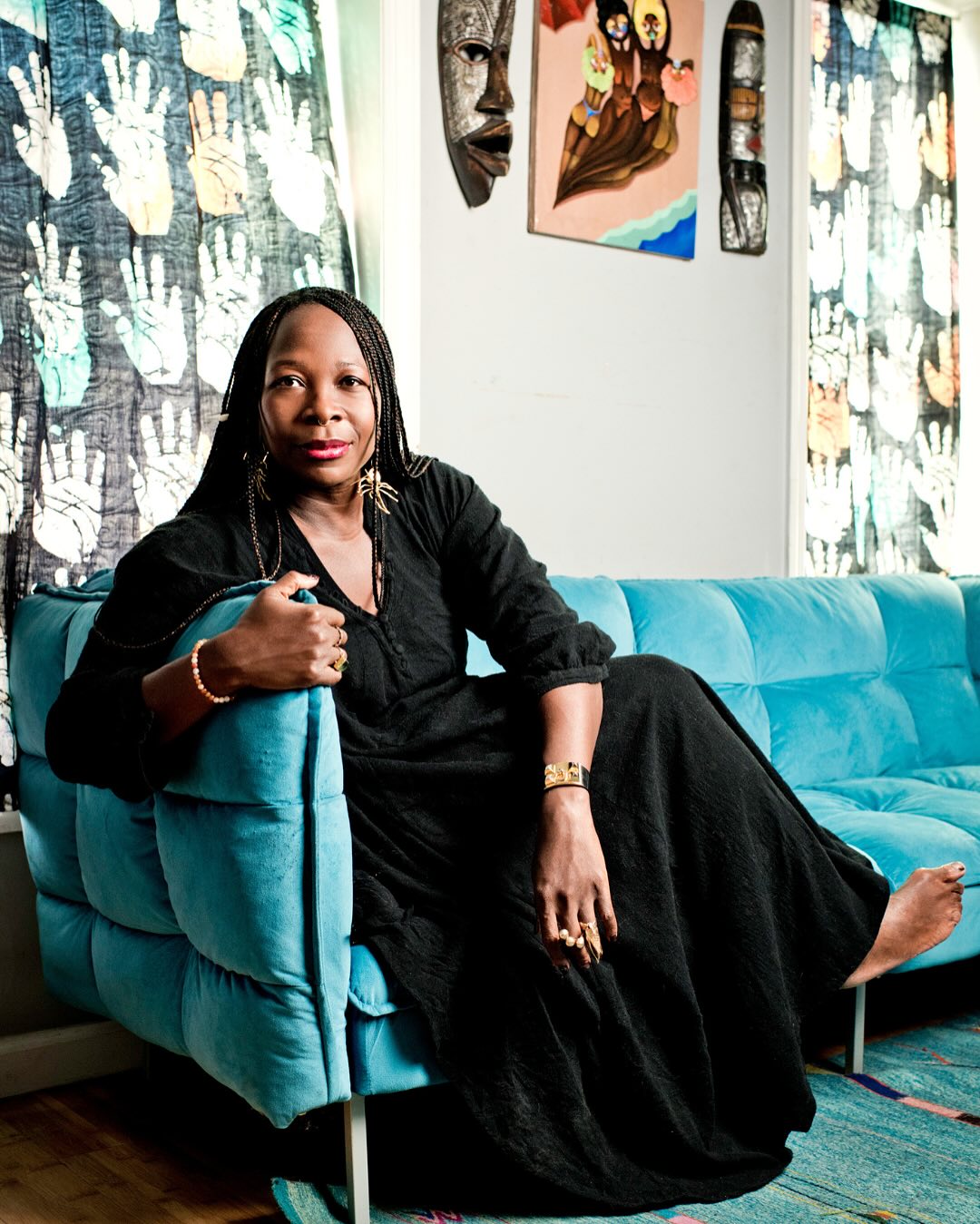
Busayo Olupona was born in the United States, moved to Nigeria as a toddler, and returned to California as a teenager. She attended UC Berkeley, then New York University School of Law. She practised law in New York and started Busayo NYC in 2011 alongside her legal career. The brand is built on a single technical foundation: Adire, the Yoruba resist-dyeing technique practised in Ile-Ife and across Yorubaland, used to produce the brand’s signature kaleidoscopic textiles. All production is in Nigeria.
The commercial trajectory of Busayo NYC is a precise illustration of how an African heritage brand builds US retail legitimacy without abandoning the production and cultural basis that make it distinct. Saks Fifth Avenue. Nordstrom. Shopbop. Madonna has worn the brand. Lupita Nyong’o has worn it. The Black in Fashion Council has included Busayo in its FW25 showroom at New York Fashion Week. Yale’s Schwarzman Centre invited Olupona to speak as part of its Innovations in Design Across the Diaspora series in 2024.
What Olupona built is not a Nigerian brand that found its way to US retail. It is a US brand whose entire design intelligence, material basis, and production chain run through Nigeria. She travels to Nigeria every year — sometimes twice — to produce the textiles and garments. She credits her Nigerian team directly for the brand’s success. The Adire technique is not a reference or an inspiration. It is the product. The market found it. The market did not ask her to change it.
KAHINDO: Designed in New York, Made in Africa, Sold at Nordstrom
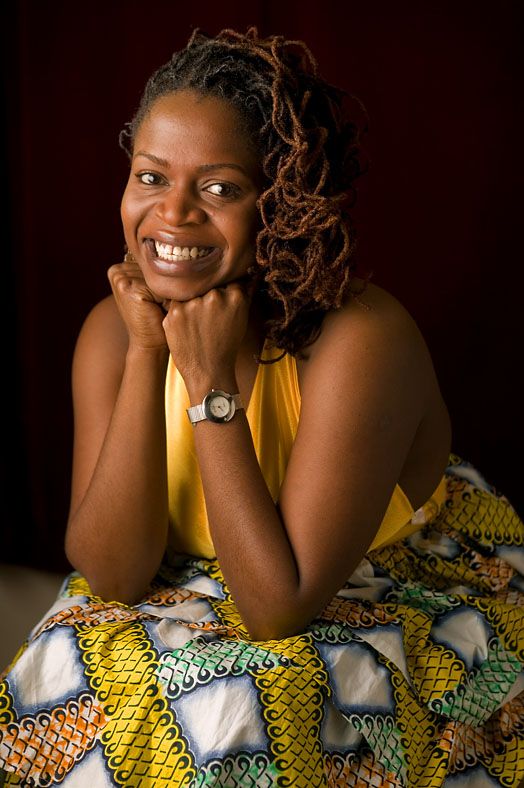
Kahindo Mateene was born in Uganda to Congolese parents and grew up across five African countries — Uganda, Kenya, Nigeria, Ethiopia, and Niger — before moving to the United States for college. She studied International Business and Economics, spent fifteen years in marketing, was let go from her job, and enrolled at the Fashion Design Institute of Chicago. She appeared on Project Runway Season 12. She relaunched her brand, KAHINDO, in 2017, based in New Jersey, with a model whose structure is its own commercial argument: designed in New York, handcrafted by female artisans in Kenya, sold at Nordstrom, Bloomingdale’s, and Anthropologie.
KAHINDO’s collections have been featured in Vogue, Elle, WWD, and the New York Times. Mateene received the Tory Burch Fellowship. The brand’s point of differentiation is precise: garments that carry Congolese colour intelligence and African artisan craft at a luxury price point, sold through the wholesale channels that American retail buyers understand, with a production model that creates documented economic opportunity for the women who make the clothes. The brand is beautiful, and it is a business case. The retail buyers who stock it at Nordstrom are not making a cultural gesture. They are making a commercial decision about a product that sells.
ALSO READ
- The African Fashion Economy: A $31 Billion Industry the World Still Undervalues
- Why No Serious Investor Has an African Fashion Portfolio: The Cost of Institutional Blindness
- Why Culture Is the Foundation of Style in African and Global Fashion
- The British-African Designers Rewriting London Fashion Week From the Inside
The Consumer the US Market Missed: Who the Afropolitan Buyer Is
The US market for African fashion is not built on celebrity endorsements alone. It is built on over 3 million foreign-born Africans in the United States, according to the US Census Bureau American Community Survey data, with the largest concentrations in New York, Houston, Atlanta, and Washington, DC. These communities have purchasing power, cultural fluency, and a specific demand for African fashion that the US mainstream retail infrastructure has historically been poorly equipped to meet. They are the consumer that Agbobly, Busayo, and KAHINDO are all, in different ways, serving. As Omiren Styles has documented in its analysis of the African economy, 55% of the African diaspora in the UK purchase at least one item of African-branded apparel annually, according to data from WifiTalents. The US diaspora figure is not systematically measured. Still, the commercial infrastructure that has developed around it — the pop-up stores, the NYFW showrooms, the Nordstrom in-store events — is evidence of a market that exists and is being reached.
Kenya’s Vivo Fashion opened its first US store in Atlanta in 2024, according to Semafor. South African knitwear brand MaXhosa ran a six-month New York pop-up in 2024 and plans to open a permanent retail base, as reported by Semafor. Afropolitan Cities, the culture and commerce platform connecting the African diaspora in the US, has built a network of over 100,000 professionals across nine American cities. The infrastructure is not aspirational. It is operational.
What these three designers have in common with Vivo’s Atlanta store and MaXhosa’s New York pop-up is not just cultural heritage. It is the decision to treat the Afropolitan consumer as the primary audience rather than as a secondary market. The mainstream US fashion industry has tended to regard African design as interesting when it reaches crossover celebrity endorsement. The designers building durable businesses are the ones who mapped the existing consumer and built their commercial models around it.
THE OMIREN ARGUMENT
Thesis: African designers are building durable US market positions by serving a consumer the mainstream fashion industry has consistently underestimated: the Afropolitan buyer, concentrated in New York, Atlanta, Houston, and DC, with purchasing power, cultural specificity, and a demand for African fashion that the US retail infrastructure has been slow to map.
Context: The inherited assumption in the US fashion industry is that African design is interesting as a crossover story — when a celebrity wears it, when a collaboration with a major brand amplifies it, when it achieves the kind of mainstream visibility that validates it to buyers who were not looking for it. Agbobly, Busayo, and KAHINDO have all achieved some form of crossover. But the foundation of each business is the diaspora consumer who was already buying before the celebrity endorsement arrived.
Disruption: The standard crossover model assumes that cultural heritage must be translated into a format legible to mainstream buyers before it can achieve commercial scale. All three designers challenge this. Agbobly brought a Ghana Must Go trench coat to a Nike collaboration at NYFW. Busayo built a Saks Fifth Avenue placement on Adire textiles produced in Nigeria. KAHINDO achieved Nordstrom, Bloomingdale’s, and Anthropologie on the back of Congolese colour intelligence and Kenyan artisan craft. None of them translated their heritage into something else. They offered it in its own terms and found buyers who recognised it.
Cultural Insight: The question African designers are always asked in the US market is how they plan to crossover into the mainstream. The more useful question is why the mainstream is not moving faster toward a diaspora consumer base of over 3 million with documented purchasing power and specific cultural demand. The crossover model positions the mainstream as the destination. The Afropolitan consumer model positions the diaspora as the market. The designers who have built the most durable US positions chose the second model.
Conclusion: The US market for African fashion is not a future story. Agbobly is showing at NYFW in collaboration with Nike. Busayo is in Saks. KAHINDO is in Nordstrom. The retail placements are real. The consumer is real. The growth trajectory is documented. What is missing is the analytical infrastructure that allows the US fashion industry to see the Afropolitan consumer as a primary market rather than a cultural footnote. That infrastructure is what Omiren Styles is building from the editorial side.
FREQUENTLY ASKED QUESTIONS
Who are the leading African designers in the US market?
Three of the most commercially significant African designers building US market positions are Jacques Agbobly (Brooklyn, Togo-born), Busayo Olupona of Busayo NYC (Brooklyn, Nigerian-American), and Kahindo Mateene of KAHINDO (New Jersey, Congolese-Ugandan heritage). Agbobly staged a Nike collaboration at New York Fashion Week SS26 and was the first designer of Togolese heritage shortlisted for the LVMH Prize in 2024. Busayo NYC is stocked at Saks Fifth Avenue, Nordstrom, and Shopbop, with all production in Nigeria using the Adire textile technique. KAHINDO is stocked at Nordstrom, Bloomingdale’s, and Anthropologie, designed in New York and handcrafted by female artisans in Kenya.
What is Afropolitan fashion?
Afropolitan fashion refers to the fashion identity and commercial market of the African diaspora in major global cities, particularly the over 3 million foreign-born Africans in the United States, according to the US Census Bureau American Community Survey data, who are concentrated in New York, Atlanta, Houston, and Washington, DC. According to Omiren Styles, the Afropolitan consumer represents a primary market for African fashion brands — one with documented purchasing power and specific cultural demand that the mainstream US fashion retail infrastructure has been slow to map. The term Afropolitan, drawn from Taiye Selasi’s essay on African cosmopolitan identity, describes people who combine African heritage with global urban experience and whose fashion choices reflect both inheritances.
Who is Jacques Agbobly?
Jacques Agbobly is a Brooklyn-based, Togo-born, non-binary fashion designer who founded the Agbobly brand in 2020, with an official launch in its current form in 2023. The brand builds sculptural knitwear and ready-to-wear from Togolese heritage and the personal history of a designer whose father sold secondhand clothing in Togolese markets. In 2024, Agbobly was the first designer of Togolese heritage to be shortlisted for the LVMH Prize. They won the Fashion Trust US prize for inclusivity in 2023 and received the WWD Honour award for One to Watch. In 2025, their designs were featured in the Metropolitan Museum of Art’s Superfine: Tailoring Black Style exhibition. In 2026, they received the Vilcek Prize for Creative Promise in Fashion and Design. In September 2025, Agbobly showed the Pentagames collection — a Nike collaboration at New York Fashion Week SS26 — dedicated to their younger brother, who was lost to violence, and drawing on childhood games in Lomé, Togo.
Where can I buy African designer clothes in New York?
Several African and Afrocentric fashion brands are stocked at major New York retailers. Busayo NYC, founded by Nigerian-American designer Busayo Olupona, is available at Saks Fifth Avenue and Nordstrom. KAHINDO, founded by Congolese-Ugandan designer Kahindo Mateene and produced in Kenya, is stocked at Nordstrom and Bloomingdale’s. Agbobly, founded by Jacques Agbobly, presents at New York Fashion Week and is available directly from the brand and through select wholesale partners. South African knitwear brand MaXhosa ran a six-month New York pop-up in 2024 and plans to open a permanent retail base.
How big is the African fashion market in the United States?
The US market for African fashion is not systematically measured, but the commercial infrastructure developing around it documents its scale. The US is home to over 3 million foreign-born Africans, according to the US Census Bureau’s American Community Survey data, with concentrations in New York, Atlanta, Houston, and Washington, D.C. Global African fashion exports are valued at $15.5 billion annually, according to a UNESCO report. According to WifiTalents’ aggregated industry data, 55% of the African diaspora in the UK purchase at least one item of African-branded apparel annually — a figure that, if applied to the US diaspora, indicates a substantial market. Commercial evidence includes Vivo Fashion’s first US store in Atlanta in 2024, MaXhosa’s six-month New York pop-up, and Afropolitan Cities’ network of over 100,000 African diaspora professionals across nine US cities.
Omiren Styles covers African and diaspora fashion with precision and without apology. Subscribe for market intelligence on the US African fashion scene and the designers building it.