Every July, the Kabye people of northern Togo gather in the Kara region, approximately 430 kilometres north of Lomé, for one of West Africa’s most physically demanding cultural events. Understanding Kabye fashion and dress culture in Togo begins here, in this arena, not in a fabric market. Young men between the ages of 15 and 20 have spent the preceding week in isolated huts, away from their families, undergoing a programme of tests that includes climbing three mountains as a pilgrimage and consuming dog meat, an animal whose qualities of endurance and courage the participants are required to embody. They then compete in a week-long wrestling tournament, village against village, canton against canton, with the Head of State traditionally attending the finals. The tournament is not a sport. It is a rite of passage. A young Kabye man does not become a full member of his community until he has gone through it.
What the wrestlers wear, or more precisely what they do not wear, is the dress statement of this ceremony. Their bodies are the primary textile: the musculature demonstrated in the arena, the physical capacity made visible to the community, the strength proven before the elders who will confirm the young man’s admission into adulthood. There is no kente here. There is no Dutch wax. There is the body, the arena, and the community watching.
The Kabye are Togo’s second-largest ethnic group and its most politically powerful. Their dress culture is centred on two initiation rites where the body itself becomes the primary garment.
The Omiren Argument:
The Kabye are Togo’s second-largest ethnic group, the community from which the country’s ruling family originates, and among the oldest settled peoples of northern Togo’s highlands. Their dress culture centres on two of the most precisely documented initiation rites in West Africa. In both, what is worn or what is deliberately absent is the argument. The Kabye understanding of dress is inseparable from the Kabye understanding of the body. What a person wears signals who they are in the social hierarchy, and that hierarchy is established through physical tests that no garment can substitute for.
Who the Kabye Are: The Northern Counterweight
The Kabye are the second-largest ethnic group in Togo after the Ewe, making up approximately one-quarter of the country’s population. They live in the north-central mountains and northern plains, with the Kara region as their heartland, and the village of Farende in Kara, described by Exploring Africa as the cradle of Kabye tradition. They also live across the border in northwestern Benin, where they are known as Lokpa or Lukpa. They speak Kabiye, a language of the Gur language family that has semi-official status in Togo alongside Ewe and French.
The Kabye are a patrilineal farming community who cultivate the harsh, dry, infertile lands of northern Togo, growing cotton, millet, and yams. Cotton cultivation is not incidental to their material culture: the Kabye grow the raw material for cloth on the same land where they conduct their initiation ceremonies. Their relationship to textiles begins at the agricultural level, in the field, before any weaving or garment-making takes place.
The Kabyes’ political significance in modern Togo cannot be separated from their cultural profile. The country’s long-ruling family, the Gnassingbés, are Kabye: the late President Gnassingbé Eyadéma ruled Togo from 1967 until he died in 2005, and his son, Faure Gnassingbé, has governed since. This political dominance has made the Kabye’s cultural practices, including Evala, visible at the national level in ways that a purely northern community’s traditions might not otherwise be. The Head of State’s traditional attendance at the Evala finals is a direct expression of that political-cultural relationship: the president of Togo attending the most important coming-of-age ceremony of his own ethnic community, in the city that is that community’s capital.
The Kabye are also documented as one of the oldest populations in Togo. Everyculture.com’s comprehensive ethnographic account of Togo notes that the population of the central mountains is perhaps the oldest in the country, with recent archaeological research dating the presence of the Tchamba, Bogou, and Bassar people as far back as the ninth century. The Kabye are specifically noted as possibly having come from Kete-Krachi in Ghana as recently as 250 years ago. They are older adults in a landscape that has been inhabited for even longer.
Evala: The Wrestling Rite and the Dress of Transition
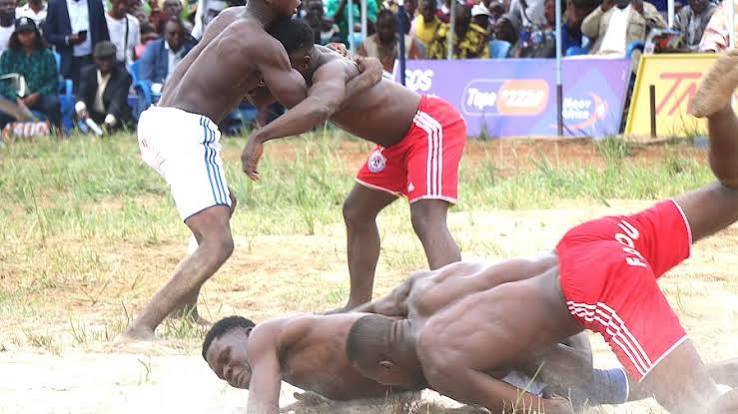
Evala is the central male initiation rite of Kabye society. The word translates loosely as “new men” (Kabiye efalu), the identity conferred by successful completion of the rite. As wrestler Agouto Toyi explained to Africanews: “It is to show that indeed the young person is ready to marry, to defend his family, his community.” Another participant, Valentin Sobo, described the stakes directly: “It’s a very important initiation ceremony for us. After this ceremony, we will be accepted as adults. It’s compulsory to go through this initiation.”
The process begins a week before the wrestling matches. Young men aged 15 to 20 are isolated in huts away from their families. They undergo a series of tests, including climbing three mountains as a pilgrimage and consuming dog meat, an animal chosen for what it symbolises: endurance, courage, and the capacity to endure hardship without breaking. These are not arbitrary requirements. They are structured programmes that prepare the body and the spirit for the public physical contest that follows.
The wrestling itself takes place in all the villages of the Kara region throughout the week, with competitions organised by neighbourhood, village, and canton. The wrestlers are adorned in traditional attire for the competition. The preparation before the match includes offerings to the ancestors by the elders of each family and the invocation of spirits to help and protect the competitor. The women prepare a traditional dish of yams and manioc to serve the wrestlers after the match. The ceremony is simultaneously religious, athletic, communal, and gastronomic.
A young man must fight for three consecutive years to complete the Evala initiation. He does not need to win every match. The requirement is participation, not victory. What is being tested is not merely physical strength but the capacity to enter the arena repeatedly, to face opponents and the possibility of defeat, and to continue. The community watching the Evala sees not just the outcome of each fight but the character of each fighter over three years of accumulated performance.
The Kondona rites complete the male initiation cycle. Every five years, all the men who have passed through Evala gather together in a ceremony that definitively marks their full membership in the adult community. The Kondona involves listening to the elders on hilltops and at festive gatherings in the villages. It is the confirmation ceremony that follows the initiation sequence, transforming the young men who completed Evala into fully recognised community members.
Akpema: The Female Initiation and the Dress of Recognition
Akpema is the parallel female initiation rite, held approximately one week after Evala. Where Evala prepares young men for adulthood through physical contest, Akpema prepares young women through a ceremony that publicly recognises the maturity of their bodies and their readiness for marriage and motherhood. As Petit Futé’s documentation of the ceremony describes, the girls, wearing only a belt of pearls, go to a sacred place where they must sit on a stone to certify their virginity. At the end of the initiation, all the women of the village gather and praise the female attributes in song.
The specific dress of the Akpema initiation is among the most precisely documented ceremonial dress practices in the available record. The girls begin the ceremony by shaving their heads. They are stripped of their everyday clothes. They walk in procession wearing only the bead belt. The tchikita, as these multicoloured beads around the hips are called in Kabye, is the sole garment of the ceremony: everything else, every item of everyday dress, is removed. The body is presented to the community in its most essential form, with only the ceremonial beads marking the specific meaning of this moment.
The AFP wire documentation cited in the WUNRN record captures the ceremony’s conclusion: at the end of the rites, the teenagers whose loincloths expose the tchikita multicoloured pearls dangling around their hips return home accompanied by friends to announce their new status to their families. The community elder, Bekemsi of Koumea, 450 kilometres north of Lomé, explained the purpose clearly: “Akpema is a time for traditional tests and virginity tests for the Kabye girls. All girls in our region old enough to be married must undergo this practical test.” After the sacred stone ceremony, the young women go to the market dressed in panties and a bra: a public declaration, in the everyday marketplace, that they have completed the initiation and entered adult status.
The Akpema dress sequence is a complete semiotic system. The removal of everyday clothes strips away the social identity of childhood and girlhood. The bead belt marks the body as sacred and ceremonial. The public procession makes the transition visible to the whole community. The return home in loincloths with the tchikita beads exposed announces the new status to the family. The market’s appearance in post-initiation dress signals completion to the broader social world of the town. Each step in the dress sequence is a step in the social transition. The garment and the ceremony are not parallel. They are the same thing.
The Kondona and the Accumulation of Ceremonial Identity
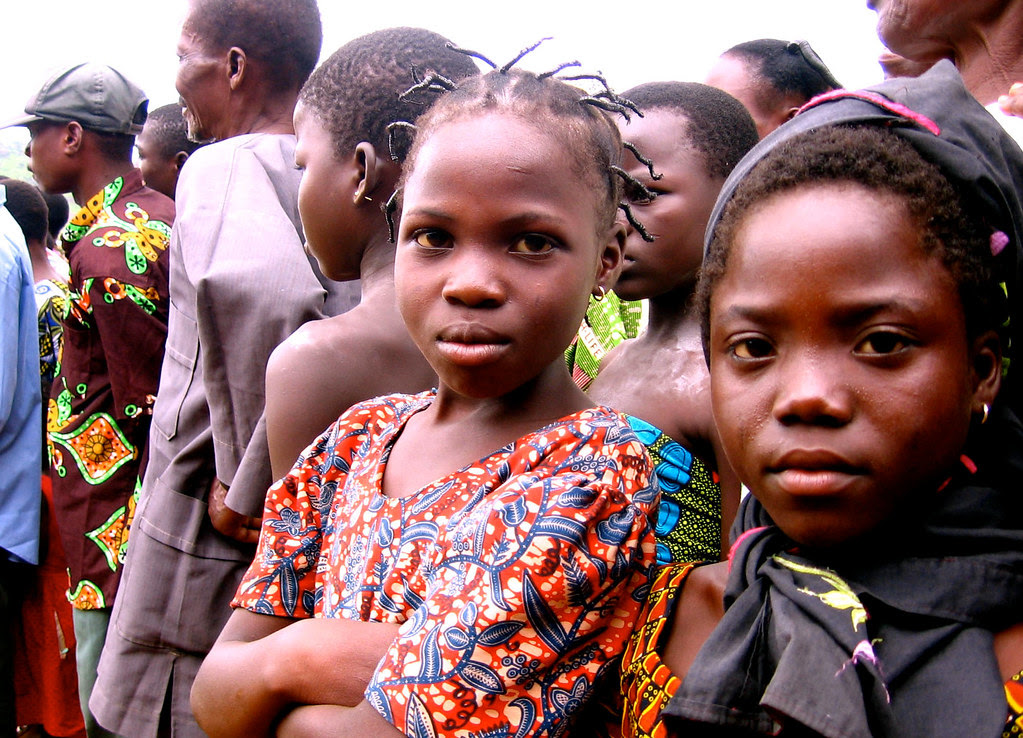
The Kondona rites, which gather all the men who completed Evala every five years, represent a different kind of dress occasion from the initiation ceremonies themselves. The Exploring Africa documentation describes the Kondona as characterised by two highlights: listening to the elders on the hills and enjoying festivities in the villages. The running ceremony, which requires men to demonstrate strength and endurance by dancing for as long as possible and running along the most difficult mountain paths between houses and to the chief’s residence, is centred in the village of Farende in the Kara region.
The Kondona is the ceremony in which Evala’s initiates are definitively recognised as full members of the adult community. This accumulation of initiation status is reflected in the Kabye understanding of dress: what a person wears is inseparable from their position in the community’s social hierarchy, and that hierarchy is established through participation in the ceremonial calendar. A man who has completed Evala and passed through the Kondona is dressed differently in the community’s eyes than a man who has not, regardless of what garments either is wearing.
ALSO READ
- Vodun Ceremonial Dress in Togo: The Theology You Wear
- Togolese Bridal Fashion: Kente, Pagne, and the Multi-Stage Social Contract
- What Do People Wear in Togo? A Complete Style Guide
Cotton, the Northern Highlands, and the Material Conditions of Kabye Dress
The Kabye grow cotton on the same highland terrain where they conduct their initiation ceremonies. This agricultural reality shapes the material conditions of Kabye dress in ways distinct from those of southern Togolese communities, whose textile culture is built around imported Dutch wax print and the Ewe kente tradition. The Kabye relationship to textiles begins at the level of raw material production, in fields that are also the landscape of their most significant cultural events.
The northern Togo climate and terrain produce different dress conditions from the south. The Kara region sits at an elevation of approximately 312 metres, with a drier, more variable climate than the coastal zone. The harmattan wind from the Sahara affects northern Togo seasonally in ways that the Gulf of Guinea coast does not experience. These environmental conditions have historically produced a dress culture built around cotton fabric that provides warmth during the harmattan season and breathability during the hot, dry months, distinct from the wax print and kente culture of Lomé and the southern communities.
The broader northern West African textile tradition includes handwoven cotton strip-cloth garments in the same geographic and cultural corridor as the Kabye. The Dogon of Mali, the Dagomba of northern Ghana, and the various peoples of Burkina Faso all produce and wear handwoven cotton cloth in forms that reflect the shared material culture of the West African savanna zone. The Kabye, as farming people who grow cotton in the northern Togolese highlands, are part of this same material ecology. What they wear day-to-day and what they celebrate in draws from a different textile tradition from the kente and wax print of the south: a northern cotton-based dress culture whose full documentation in the English-language fashion record remains to be written.
The Kabye in the National Fashion Conversation
The Kabyes’ political dominance of the Togolese state has not translated into proportionate visibility in the country’s fashion coverage. The narrative of Togolese fashion, such as it exists in international fashion editorial, centres almost entirely on the Ewe and Mina communities of the south: the Nana Benz and Nanettes of Lomé’s Grand Marché, the kente tradition of the Volta corridor, the Vodun dress culture of Aneho and Togoville. The Kabye appear in international coverage almost exclusively in the context of Evala, as a wrestling tournament rather than as a fashion tradition.
This is a representational gap that this series is beginning to address. The Evala and Akpema dress traditions documented in this article are as sophisticated, as socially precise, and as culturally specific as any of the textile traditions documented elsewhere in this series. The tchikita beads of the Akpema ceremony, the three-year performance of physical capability in the Evala arena, the ancestral invocations before each match, the women’s songs at the end of Akpema: all of these are fashion events in the fullest sense. There are occasions when the community’s understanding of who its members are and what stage of life they have reached is made visible through what is and is not worn.
The wider documentation of Kabye’s everyday dress culture, and of the full textile and material culture of northern Togo more broadly, is work that the current English-language record has not yet produced with sufficient depth or precision. This article is the beginning of that record for the Kabye. What follows will require the kind of sustained, specific, on-the-ground documentation that only Togolese journalists, researchers, and cultural practitioners can ultimately provide.
“The Kabye understanding of dress is inseparable from the Kabye understanding of the body: what a person wears signals who they are in the social hierarchy, and that hierarchy is established through physical tests that no garment can substitute for.”
Frequently Asked Questions
Who are the Kabye people of Togo?
The Kabye (also known as Kabiye, Kabre, or Cabrai) are the second-largest ethnic group in Togo after the Ewe, making up approximately one-quarter of the population. They live in the north-central mountains and northern plains of Togo, with the Kara region as their heartland. They are a patrilineal farming community that grows cotton, millet, and yams. They also live across the border in northwestern Benin, where they are known as Lokpa or Lukpa. The Kabye are politically significant in modern Togo: the country’s long-ruling Gnassingbé family are Kabye, and the community dominates the Togolese government and military.
What is Evala, and how does dress feature in it?
Evala is the central male initiation rite of Kabye society, held annually in July in the Kara region. Young men between 15 and 20 years old spend a week in isolation,n undergoing tests including climbing three mountains and consuming dog meat before competing in a week-long wrestling tournament. A young man must fight for three consecutive years to complete the initiation. The dress of the Evala ceremony foregrounds the body itself: the wrestler’s physical capacity, demonstrated in the arena before elders and community, is the primary statement. The Head of State traditionally attends the finals. Wrestlers are adorned in traditional attire, and the ceremony includes ancestral offerings, traditional music, and communal feasting. The Kondona rites, held every five years, complete the male initiation cycle.
What is Akpem, and what do the initiates wear?
Akpema is the female initiation rite of Kabye society, held approximately one week after Evala. Girls aged 16 to 20 undergo a ceremony that publicly marks their maturity and readiness for marriage. The ceremony begins with the shaving of their heads and the removal of everyday clothes. The initiates wear only a belt of pearls and walk in procession to a sacred place. The tchikitawith multicoloured beads around the hips is the sole ceremonial garment. After the ceremony, the young women return home with loincloths and tchikita beads exposed, then go to the market dressed to announce their new status to the broader community. At the end of the initiation, the women of the village gather to praise the female attributes in song.
What are tchikita beads?
Tchikita are the multicoloured beads worn around the hips by Kabye girls during the Akpema female initiation ceremony. They are the primary ceremonial garment of the Akpema rite, worn when all other clothing has been removed. After the ceremony, the tchikita beads remain visible in the loincloths worn by the young women on their return home, publicly signalling their completion of the initiation. The tchikita is a specific ceremonial adornment documented by AFP wire reporting from the Kabye communities of northern Togo.
How does Kabye dress differ from southern Togolese dress?
Kabye dress culture is rooted in a northern cotton-farming context, distinct from the kente and Dutch wax print traditions of southern Togo’s Ewe, Mina, and Guin communities. The Kabye grow cotton on the same highland terrain where they conduct their initiation ceremonies. Northern Togo’s climate is drier and affected by the harmattan wind in ways that the southern coastal zone is not, producing different material conditions for dress. The most precisely documented Kabye dress traditions are the ceremonial ones: Evala, Akpema, and the Kondona rites. The full documentation of everyday Kabye textile culture and, more broadly, northern Togo dress remains an area where the English-language fashion record requires further development.
When and where does Evala take place?
Evala takes place every July in the Kara region of northern Togo, approximately 430 kilometres north of Lomé. The wrestling competitions run for a week across all villages and cantons of the Kara region, organised by neighbourhood, village, and canton. The tournament is the most important summer cultural event in Togo and draws large crowds from across the country. The Head of State traditionally attends the finals. The village of Farende in the Kara region is described as the cradle of Kabye tradition and hosts some of the most significant events. Pya, in the president’s canton, is where the wrestling is considered most prestigious.
Explore more from our Culture section, where the full range of Togolese dress traditions is documented from the coast to the northern highlands.