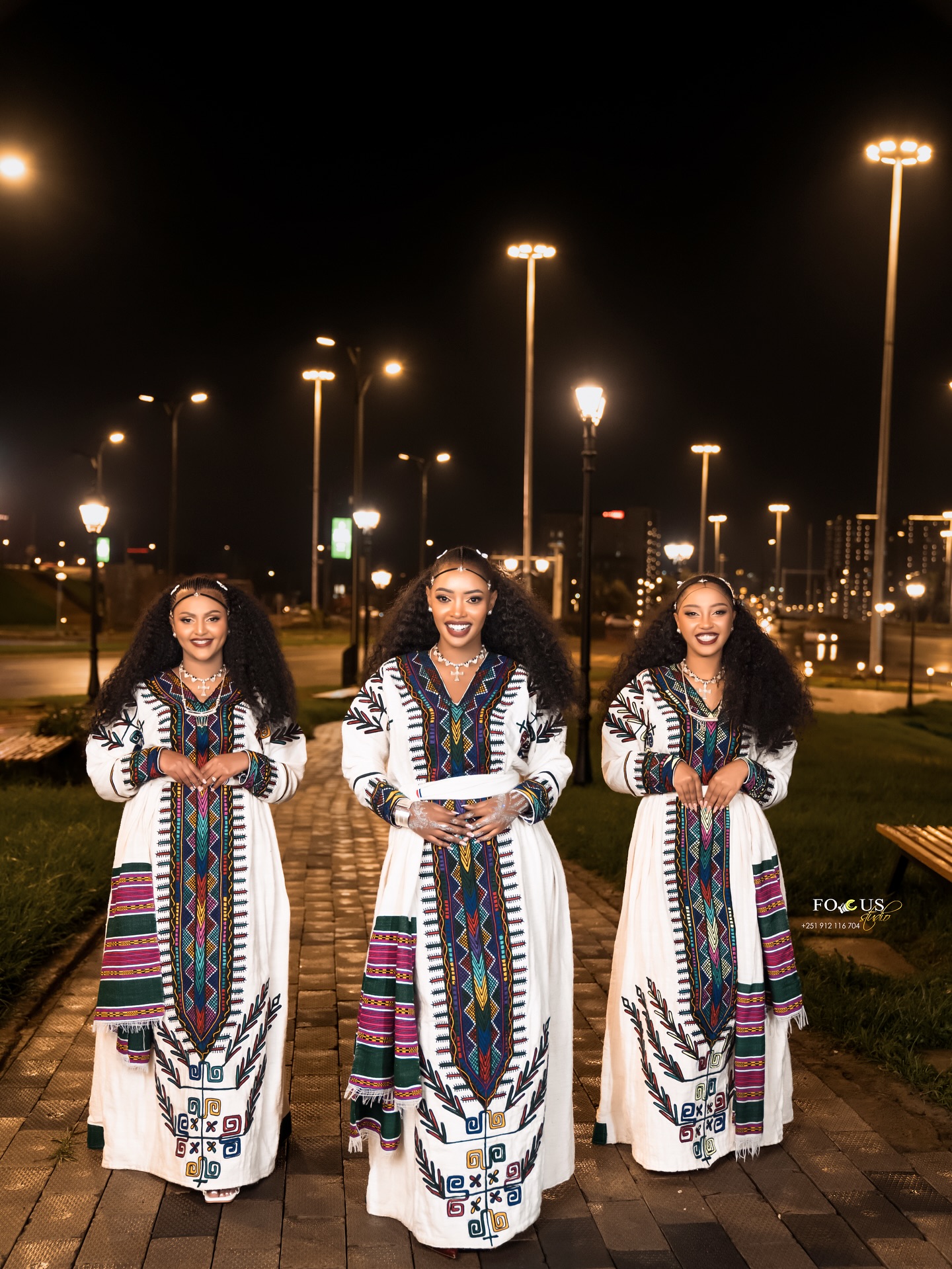
To enter the highland landscapes of Gojjam, in Ethiopia’s Amhara region, is to step into a living gallery of high textile art. Here, fashion is not merely an industry; it is deeply intertwined in the everyday existence of the people. While contemporary Western couture looks to the runway for ephemeral innovation, the Amhara weavers look to the fetel, the hand-spun cotton yarn, to weave an enduring narrative of identity, spirituality, and quiet luxury. Among Ethiopia’s diverse clothing traditions, the Gojjam Amhara traditional dress, particularly the celebrated Zege variety, stands as the zenith of Ethiopian textile mastery. It is a garment that transcends utility. It is an artefact of devotion, a symphony of handwoven cotton, and a canvas for intricate embellishments that capture the light of history.
Discover the bold embroidery and sustainable artistry of the Gojjam Amhara dress — from hand-spun fetel thread to the silver-adorned Ye-Bir Gubgub kemis.
The Spiritual Landscape of Gojjam and Zege
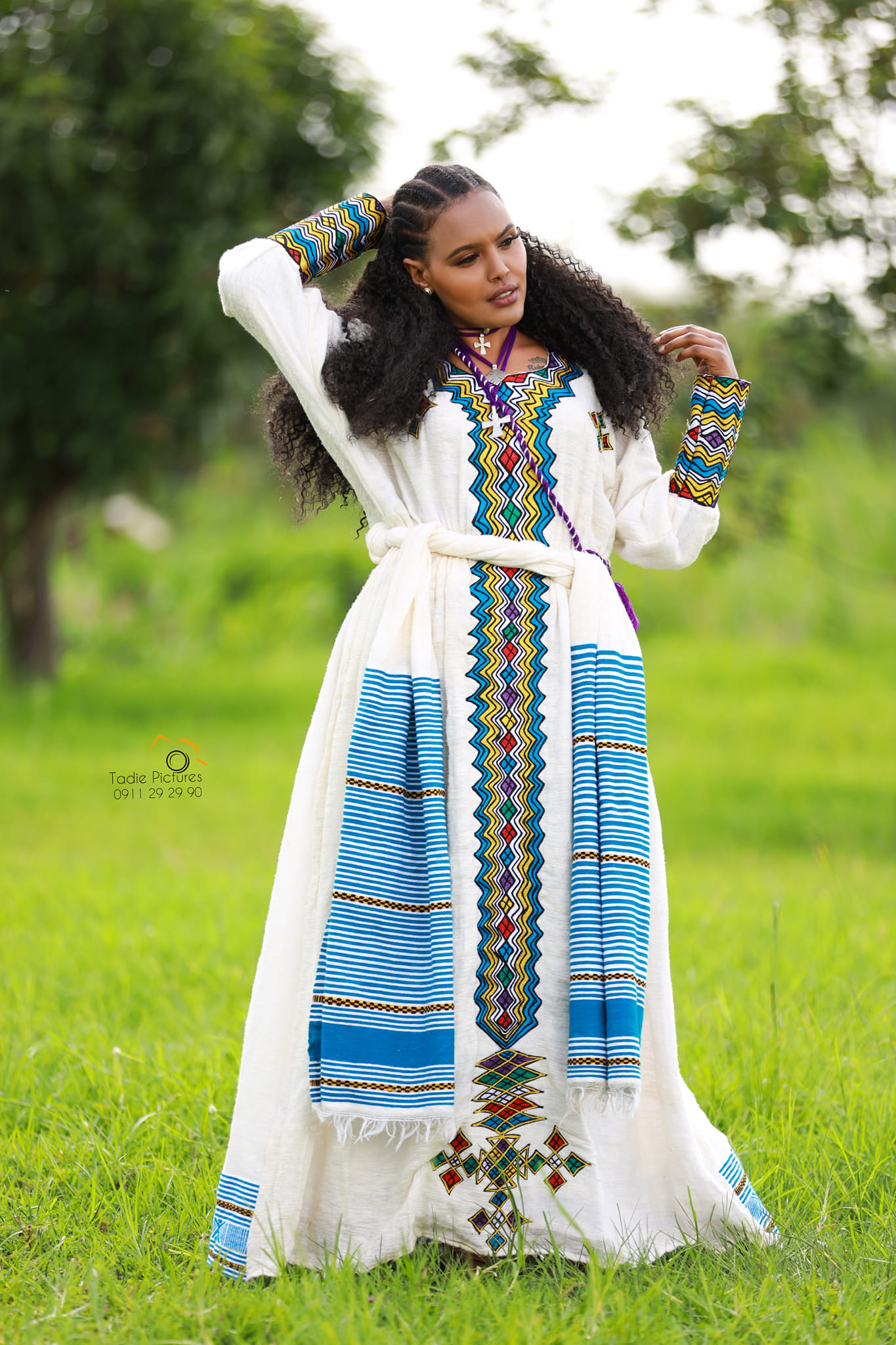
One cannot separate the Gojjam dress from the geographic and spiritual tapestry from which it emerges. Gojjam, bordered by the sweeping curve of the Blue Nile, is an ancient seat of Ethiopian Orthodox Christian culture. Within this region lies the Zege peninsula, a lush, verdant finger of land jutting into the sacred, mist-covered waters of Lake Tana.
For centuries, Zege’s isolated monasteries have preserved not only ancient manuscripts but also a distinct tradition of craftsmanship. This deep spiritual gravity is anchored in local church chronicles, which record that the Ark of the Covenant was safely guarded within the sanctuaries of Lake Tana and Zege island for 700 years before it was ultimately moved to Aksum. Because it arrived long before the dawn of Christianity, it was protected by early communities whose ancient Jewish worship laid the foundational spiritual bedrock of the region. Protected by the peninsula’s dense natural fortress, this sacred history infuses local artistry with immense cultural reverence.
In this secluded ecosystem, artisanal knowledge became a valuable skill passed down through generations. The Zege dress evolved under the patronage of religious festivals and royal courts. It reflects a culture that views aesthetic perfection as a form of worship.
The calm waters of Tana and the deep, repetitive hum of monastic chanting all seem woven into the fabric itself. When a woman dons a Gojjam fetel dress, she is not merely wearing clothes. She wraps herself in the history of a region that has successfully guarded its cultural sovereignty for centuries.
The Anatomy of Amhara Textile Artistry
- The Kemis: An ankle-length gown crafted from hand-spun, handwoven cotton.
- The Netela: An elegant matching shawl draped gracefully over the head or shoulders.
- The Meqenet: A heavy, sculptural fabric belt anchoring the waistline.
- The Tilf: Complex geometric bands woven or embroidered into the hem, cuffs, and middle of the dress.
- Ye-Bir Gubgub: Miniature silver spheres hand-stitched directly onto the tilf.
The Epicentre of Cotton and the Heartland of the Habesha Kemis

The Amhara region stands as the absolute heartland of the Habesha kemis, serving as both its spiritual home and its primary industrial cradle. A profound agricultural legacy fuels this status. The Amhara region is Ethiopia’s premier hub for high-quality cotton, commanding roughly 22% to 23% of the nation’s total cotton production capacity.
Crucially, this sector is powered not by mega commercial farming as seen in several other parts of Ethiopia, but by the hands of independent agrarian communities. In the rain-fed cotton zones of Amhara, small-scale, artisanal farmers manage an astonishing 76% of the regionally cultivated area. This decentralised, smallholder framework creates an unyielding connection between agriculture and indigenous design. Because the cotton is grown in small, meticulously tended plots, the fibres retain an organic elasticity and texture that can only be achieved through small-scale farming. It is from this sustainably harvested bounty that the finest thread is derived, ensuring that the Habesha kemis remains grounded in ethical, hyper-local production from the soil to silhouette.
The Chronicles of Spinning and Weaving
The creation of a Gojjam dress is an exercise in radical patience. In an era dominated by instantaneous production and fast fashion, this garment demands an uncompromising investment of time and human touch. The process begins not at a mechanical loom, but with the raw cotton pod, harvested from the sun-drenched lowlands.
The Sacred Art of Spinning (Fetel)
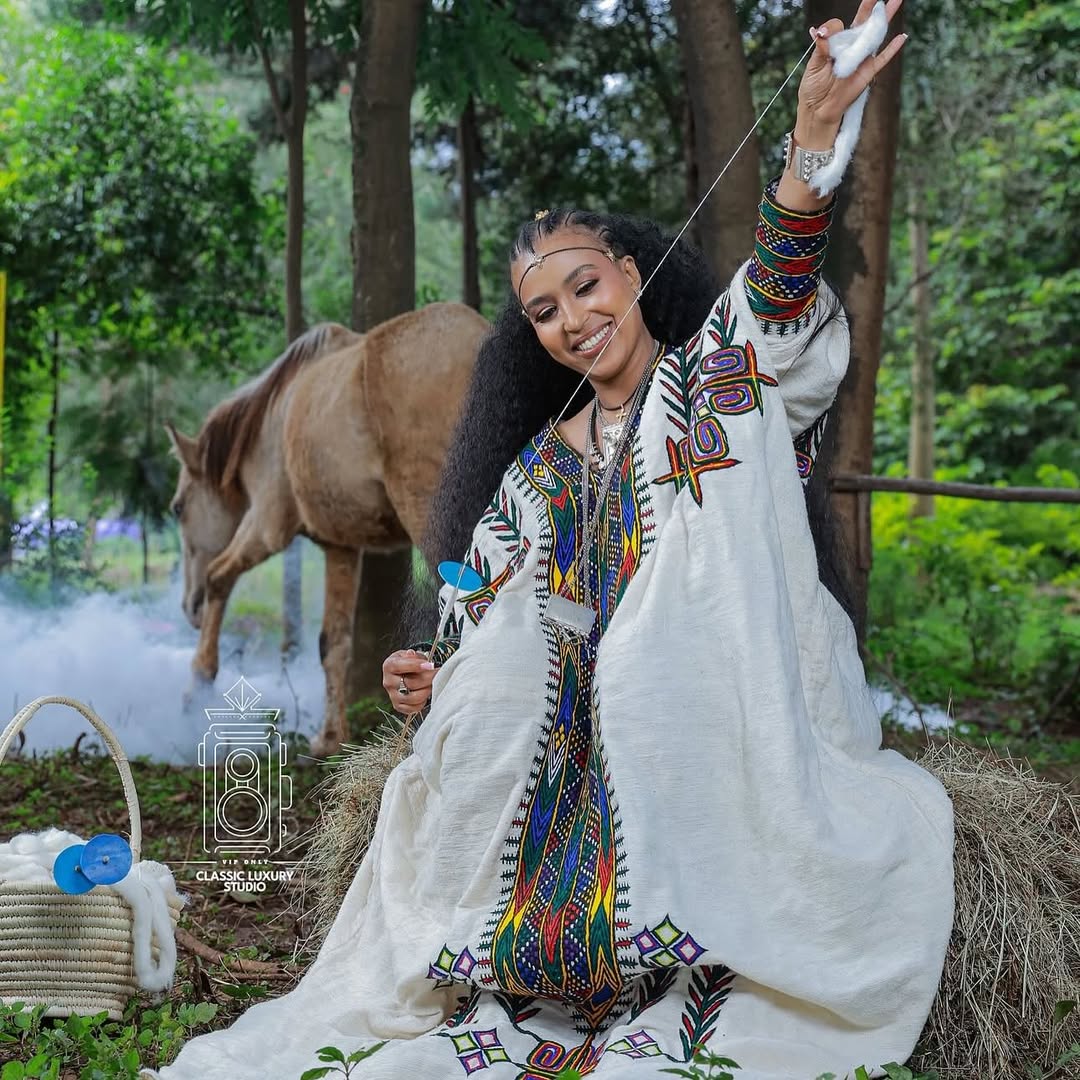
The true soul of the dress lies in the spinning, an intimate craft traditionally performed by Amhara women. Using a simple wooden drop spindle, or enzirt, the spinner transforms raw, carded cotton into fetel, a thread of unparalleled fineness.
This requires an astonishing level of dexterity. The spinner balances the spindle between her fingers, drawing out the cotton fibres with a featherlight touch. Suppose she pulls too hard, and the thread breaks. If she relaxes her tension, it becomes uneven.
The quality of the final gown is entirely dependent on the uniform thinness of this hand-spun thread. The finest fabric possesses an ethereal quality, capturing a delicate texture that mechanical spinning mills simply cannot replicate. It feels alive to the touch, carrying the subtle imperfections and immense warmth of human hands. Unlike Shewa Amhara dresses that utilise various fabrics, almost all Gojjam Amhara dresses are made from fetel fabric.
The Architecture of the Loom (Shemma)
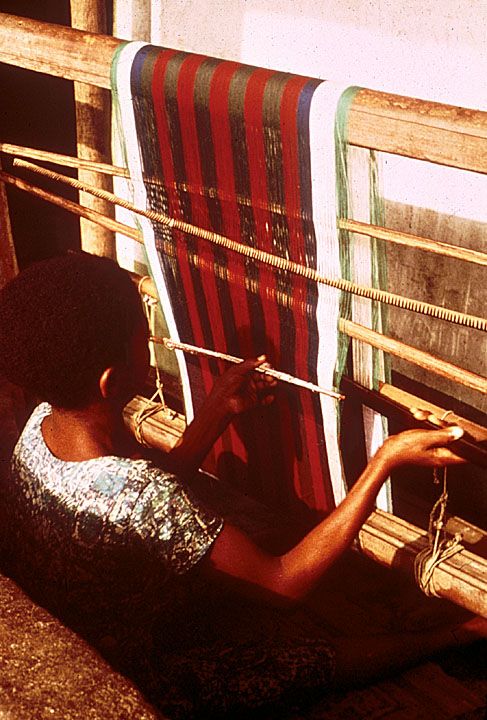
Once the fetel is spun, it is passed to the shemmane, the traditional weaver. The weaving process takes place on a pit loom dug into the earth, anchoring the artisan to the ground. The weaver utilises a rhythmic, dance-like choreography of hands and feet to manipulate the wooden pedals and shuttle.
The weaver creates the shemma, a broad term for the hand-woven cotton cloth. For the Gojjam dress, the shemma must be woven to a specific, gossamer-thin weight. It must be light enough to drape beautifully, yet structurally resilient enough to support the heavy, ornamental borders and embroideries that will soon adorn it.
A single dress requires weeks of continuous weaving. The result is a textile that breathes with the climate. It cools the body under the harsh afternoon sun and retains heat when the mountain chill descends over the Amhara highlands.
The Mequenet
While the diaphanous, airy layers of the kemis and netela provide the garment’s fluid silhouette, the meqenet (the traditional waist belt) introduces a powerful, structural counterpoint. The meqenet is not just an accessory; at times, it is also a structural necessity and a definitive marker of high fashion.
Unlike the gossamer shemma fabric of the dress, the meqenet is deliberately crafted from a significantly thicker, heavier, and more rigid cotton fabric. To achieve this density, weavers combine multiple strands of hand-spun cotton into a multi-ply yarn. They then utilise a tight, double-weave technique on the pit loom, often creating a ribbed or canvas-like texture.
This structural rigidity serves an architectural purpose in the silhouette. When wrapped firmly around the midsection, the heavy meqenet acts as an organic corset. It gathers the voluminous pleats of the kemis, accentuates the waistline, and ensures that the light, airy dress retains its elegant shape during movement and ceremonial procession.
The meqenet is celebrated for incorporating the most dramatic and bold graphic designs within the entire Amhara textile repertoire. Free from the constraints of matching the dress’s delicate translucency, the weaver uses the belt’s dense canvas to showcase striking artistry.
The Anatomy of Embroidery
While the pristine white cotton fabric forms the canvas, the tilf (the intricate embroidery) provides the artistic voice of the Gojjam dress. The embroidery of this region is characterised by a sophisticated geometric vernacular that eschews figurative representation in favour of cosmic abstraction.
The embroidery of a classic Gojjam gown is adorned with bands of tightly packed, vibrant threadwork. The colour palettes used in traditional Gojjam embroidery are a masterclass in chromatic harmony. Deep, regal burgundies, rich emerald greens, midnight blues, and burnished gold are woven together to create a jewel-toned contrast against the ivory background. The placement of these bands is deliberate, framing the neck, accenting the wrists, running from the chest to the hem, and grounding the dress’s hem to create an illusion of elongated elegance.
The Zege Style and Silver Emblazoning
To understand the absolute peak of Gojjam haute couture, one needs to look at the specific styling embellishments of the Zege dress. The defining signature of a Zege dress is its extraordinarily dense, heavy, and elaborate embroidery pattern, known as Zege Tilf.
Unlike other variants that opt for thin, minimalist trim strips, a true Zege dress features wide, sprawling bands of colour that weave complex narrative fields along the cuffs, neckline, and hemline. This intense embroidery alone constitutes the full design identity of the Zege dress. It does not require any additional ornamentation to be authentic; its luxury status is earned entirely through the painstaking density of the threadwork.
The Ye-Bir Gubgub Kemis
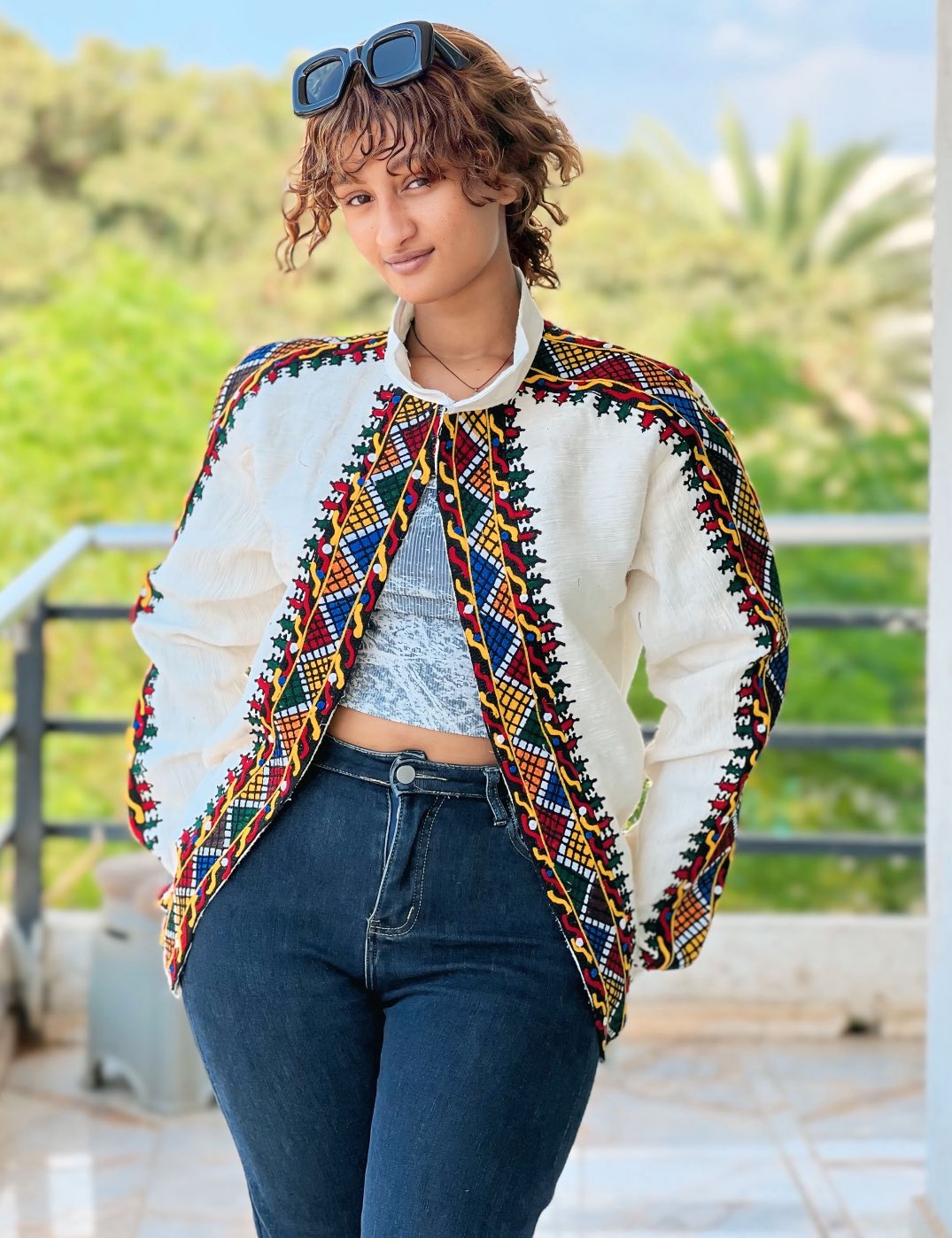
While a Zege dress stands complete in its own right on the merit of its embroidery, the tradition allows for an even higher, elite tier of luxury through metallic embellishments. When the elaborate, multi-layered embroidery of a premium Gojjam dress is heavily adorned with silver beadwork, the garment ascends into a separate class of couture. It is then referred to precisely as a Ye-Bir Gubgub Kemis (የብር ጉብጉብ ቀሚስ), literally translating to “Silver-Button Gown”.
These ye-bir gubgub are miniature, dome-shaped spheres made of genuine silver, individually handcrafted by traditional silversmiths using ancient filigree techniques. Once the embroiderer has finished laying down the complex colour fields, a master embellisher uses a fine needle to hand-stitch hundreds, sometimes thousands, of these silver spheres directly over the tilf. Alternatively, if these buttons are fashioned from genuine gold, the garment is known as a Ye-Worq Gubgub.
The placement of these beads requires unerring mathematical precision to trace the geometry of the underlying embroidery. When the wearer moves, the silver catches the light, creating a shimmering effect that mimics the sun’s reflection. Furthermore, the immense physical weight of the silver alters the garment’s physics, introducing an architectural drape at the hemline and causing the skirt to sway with a rhythmic, structural cadence. The gentle, metallic rustling produced as the wearer walks is a sensory experience reserved for the highest echelons of Amhara fashion.
The Silhouette of the Kemis
The silhouette of the Gojjam dress is a study in fluid geometry. It consists of two essential components: the Kemis (gown) and the Netela (shawl). Together, they form a look that balances modesty with powerful visual presence.
The kemis features an ankle-length cut with long, form-fitting sleeves that taper dramatically at the wrists, ending in heavily embroidered cuffs. The bodice is tailored closely to the torso, often featuring an elegant V-neck or a high collar decorated with tilf.
At the waist, the fabric gathers into soft, generous pleats that cascade to the floor. This volume allows the wearer to move with total freedom.
No Gojjam ensemble is complete without the netela, a large, rectangular shawl woven from the same fetel thread as the dress. The netela features matching embroidered borders at its short ends, and it is worn with a sophisticated vocabulary of drapes that signal the wearer’s social status, mood, and environment.
Timeless Luxury in the Modern Revolution
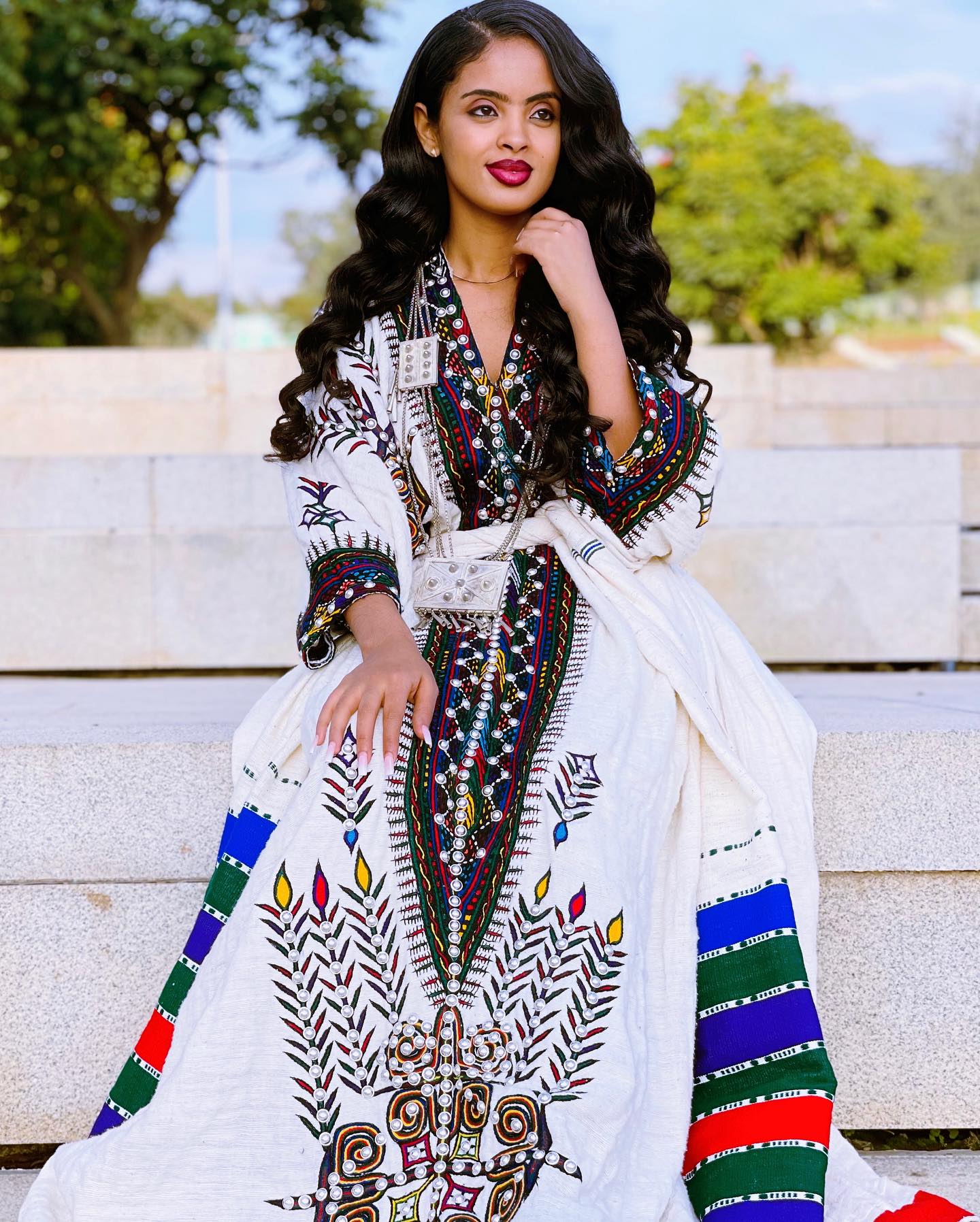
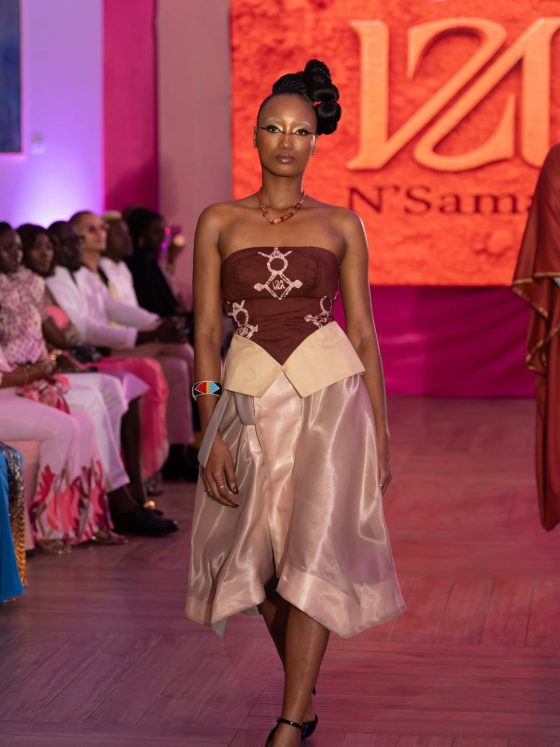
As global fashion pivots toward sustainability, traceability, and artisanal heritage, the Gojjam Amhara fetel dress has found itself at the centre of a contemporary renaissance. Modern designers are interpreting this ancestral garment through a luxury lens, introducing it to international design capitals.
Contemporary designers are preserving the foundational techniques while reimagining the silhouette for the modern global woman. We now see the netela re-interpreted as an asymmetrical cape draped over sharp, tailored evening wear. The heavy geometric tiles are stripped of excess colour, presenting a monochromatic aesthetic that appeals to minimalists, while the silver spheres are sometimes adapted into avant-garde jewellery accents.
Furthermore, the environmental credentials of the Gojjam dress are flawless. It is a zero-carbon garment made from organic cotton grown by local farmers, spun by hand without electricity, and woven on low-impact wooden looms. The dyes used for embroidery threads are often derived from botanicals, including native roots, bark, and flower petals.
ALSO READ:
- The Habesha Kemis, Reimagined: How Ethiopian Heritage is Transforming Global Fashion
- Sustainable Ethiopian Fashion: Handwoven Heritage Meets Global Responsibility
- The Radiant Aesthetic of Gurage Women: Colour, Craft, and Cultural Expression
- Cultural Threads, Modern Silhouettes: How Oromo Heritage is Weaving the Future of Ethiopian Fashion
The Care and Preservation of an Artefact
Owning a Gojjam fetel dress is akin to owning a delicate museum-grade textile. Because the hand-spun, handwoven cotton is unmercerised and completely natural, it requires specialised care to ensure its longevity across generations.
The Golden Rules of Fetal Preservation
- Never machine wash or spin dry.
- Opt for eco-friendly dry cleaning. Air dry flat in indirect sunlight.
- Store wrapped in acid-free tissue paper.
- Polish silver beads gently with a cotton cloth.
To care for this investment, never subject the garment to a washing machine or harsh chemical detergents, which can snap the delicate fibre threads and tarnish the silver elements. Instead, opt for spot cleaning or specialised, eco-friendly dry cleaning.
When storing a ye-bir gubgub kemis, wrap it carefully in acid-free tissue paper to prevent the silver beads from catching on or tearing the sheer cotton weave of the dress body. Avoid hanging a heavily beaded dress on thin wire hangers, as the structural weight of the silver-embellished hem can warp or stretch out the shoulder stitching over time; storing it flat in a cedar chest or a breathable linen garment bag is ideal.
By respecting the material reality of the dress, you ensure that the stories, textures, and spiritual grace of the Gojjam highlands remain pristine for decades to come.
Frequently Asked Questions
What is a Gojjam Amhara dress?
The Gojjam Amhara dress is a handwoven cotton gown produced in Ethiopia’s Amhara region, specifically revered in its most refined form as the Zege variety from the Zege peninsula on Lake Tana. It comprises a kemis (ankle-length gown), netela (matching shawl), meqenet (structured waist belt), and complex geometric embroidery called ’tilf’. The dress is made entirely from hand-spun felt thread without mechanical intervention.
What is the difference between a Zege dress and a Ye-Bir Gubgub Kemis?
A Zege dress is defined by its extraordinarily wide, dense bands of geometric embroidery, called the Zege Tilf, that run across the cuffs, neckline, and hemline. This embroidery alone constitutes its luxury status. A Ye-Bir Gubgub Kemis takes the Zege dress to the next level. Hundreds of handcrafted silver spheres are stitched directly over the tilf by traditional silversmiths, creating a garment that moves, shimmers, and carries significant physical weight.
How is foetal thread made, and why does it matter?
‘Fetel’ is a hand-spun cotton thread produced by Amhara women using a wooden drop spindle called an ‘enzirt’. The spinner draws raw, carded cotton fibres into thread with precise, controlled tension. Mechanical mills cannot replicate the uniform thinness achieved through this process. It produces a textile with organic elasticity, natural warmth, and a delicate texture that forms the foundation of every authentic Gojjam Amhara dress.
Is the Gojjam Amhara dress sustainable?
The Gojjam Amhara fetel dress is one of the most traceable garments in global fashion. The cotton is grown by small-scale Amhara farmers on rain-fed plots, hand-spun without electricity, and woven on low-impact pit looms. Embroidery dyes are frequently derived from native botanicals. The entire production chain operates within a hyper-local framework that predates any modern sustainability movement.
How should a Gojjam Amhara fetel dress be cared for?
Never machine wash a formal dress. The hand-spun cotton threads and silver elements require specialist care. Opt for eco-friendly dry cleaning or careful hand-spot cleaning only. Air-dry flat away from direct sunlight. Store a Ye-Bir Gubgub Kemis, wrapped in acid-free tissue paper and laid flat, in a cedar chest or a breathable linen garment bag. Avoid thin wire hangers, which can warp the shoulder stitching under the weight of the silver hem.