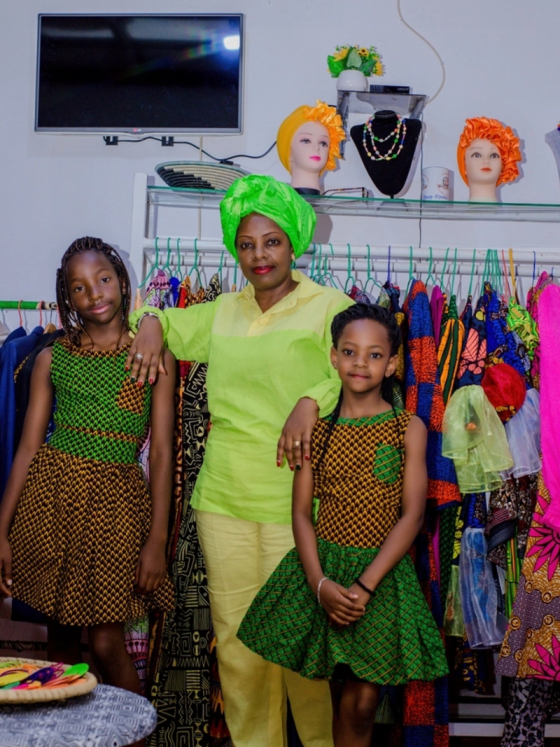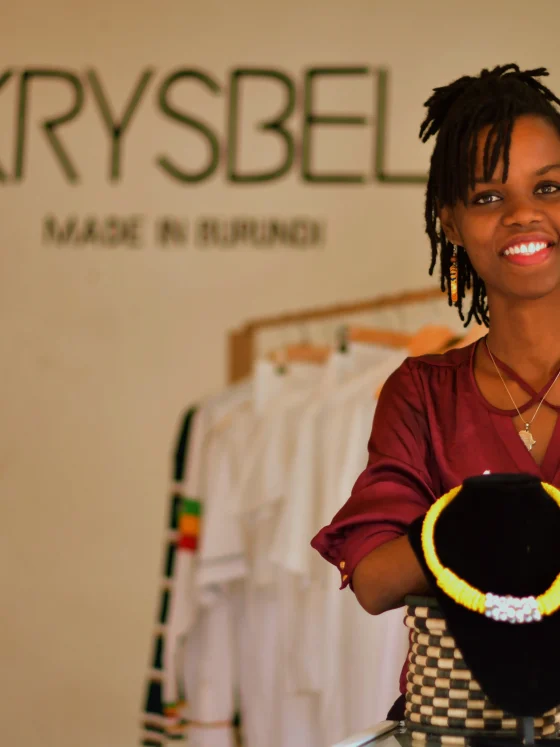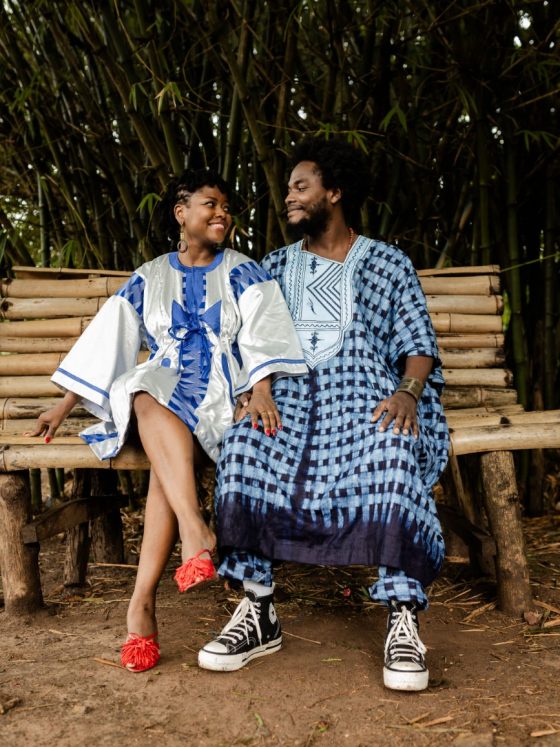
A strong fashion label is not built from trend reports. It is built from memory, method, and meaning. In African and diaspora fashion, the designers who last are often the ones who know exactly where their work comes from: an archive, a technique, or a family story that gives the label its centre of gravity.
That source material matters because it makes the work specific. A designer who knows what to return to does not have to keep chasing novelty. The clothes begin to carry a recognisable logic. The silhouette, the finish, the fabric choice, and the emotional tone all start to align. That is how identity is made.
How African and diaspora designers build label identity from personal archives, family histories, and inherited techniques, inside the creative process.
The archive as memory

An archive in fashion does not have to mean a formal collection stored in boxes and catalogues. For many African and diaspora designers, it is much more personal and much more alive. It may be a grandmother’s cloth, a parent’s tailoring tools, old family photographs, market textiles, ceremonial garments, or a memory of how clothes were worn in a particular household or community.
The important thing is not whether the archive is official. The important thing is whether it contains something the designer can work from with care and precision.
A designer who understands their archive is not simply borrowing from the past. They are reading what the past already knows. A wrapper cloth, a headwrap, a woven textile, or a repeated garment shape may hold clues about proportion, movement, status, or occasion. Those clues can become the basis for a contemporary label if the designer is willing to treat them as design intelligence rather than decoration.
This is why the archive matters so much. It gives the label a memory before the market ever sees the clothes.
What makes archive work especially powerful is that it can be formal or informal, visible or hidden. A family trunk, a stack of photographs, a tailor’s notebook, a market stall, or a textile archive in a museum can all become useful, depending on how the designer reads them. Some designers inherit these materials directly. Others build their own archive over time through collecting, observing, and documenting. In either case, the point is the same: the archive becomes a source of continuity.
That continuity matters because the fashion industry can be noisy. Trends change quickly. Visual references spread fast. In that environment, a designer with no anchoring material can easily drift into repetition without meaning. But a designer who knows their archive has something steadier to return to. The work gains depth because it is rooted in memory rather than reaction.
For designers and researchers alike, that material intelligence is visible in collections and archives beyond the studio. The Victoria and Albert Museum’s African textiles collection remains one of the strongest public references for understanding how cloth carries history, region, and design language across the continent.
Technique as signature
Some designers do not begin with objects. They begin with a method.
Technique is one of the clearest ways a label’s identity can take shape, as it gives form to the designer’s thinking. A recurring way of cutting fabric, handling structure, finishing seams, or balancing volume can become as distinctive as a logo. When the technique is disciplined and consistent, the work becomes recognisable even before anyone sees the name attached to it.
That does not mean every collection must look the same. It means the designer has a logic that guides the work across different pieces and seasons. One collection may be softer, another more structured, but the underlying hand remains visible. That is what makes the label feel coherent.
In African and diaspora fashion, technique often carries cultural knowledge as well as aesthetic value. A designer may be drawing on local tailoring traditions, hand-finishing methods, textile handling practices, or construction approaches learned through family, apprenticeship, or regional craft systems. When that knowledge is translated well, the result is not imitation. It is authorship.
A strong technique is not simply a skill set. It is a way of saying: this is how this label sees the body, the cloth, and the work.
Technique also separates a designer with range from a designer with identity. Range is useful, but range alone does not build memory. A label becomes easier to recognise when it returns to the same structural intelligence across seasons. That may mean the same way of draping a shoulder, the same treatment of volume, the same balance between softness and control, or the same instinct for how fabric should move around the body.
This is where many labels either become memorable or disappear into the crowd. The market can accept variety, but it rewards clarity. A designer who knows their technique can evolve without losing recognition. The work may shift, but the logic remains intact. That is the difference between competence and signature.
The broader visibility of designers working this way has also grown through institutions such as the British Fashion Council, which has increasingly documented African designers whose work is grounded in technical specificity rather than trend-led adaptation.
Family story as structure

The most personal source of label identity is often the family story. Handled well, it becomes one of the most powerful. A family story can carry memory, place, politics, trade, craft, and ritual all at once. What matters is not sentiment for its own sake, but the design language the story makes possible.
A designer may draw from a parent who was a tailor, a grandmother who dressed with precision, a family rooted in a trading town, or a household where particular textiles had social meaning. These details are not just a biography. They are designed materials. They tell the designer what the clothing should feel like, how it should move, and what values it should carry.
This is where many labels either deepen or weaken. If the family story is used only as emotional packaging, the work can feel thin after the first collection. But if the story is translated into structure, proportion, material choice, or silhouette, it becomes durable. The clothes can keep generating new ideas because the source is not a mood. It is a method.
That is why the best family-based labels do not simply tell us about the designer’s background. They show us how that background has been turned into a visual system.
The strongest family stories in fashion are rarely the most dramatic ones. They are often the ordinary details that turn out to be structurally rich: the way a mother folded cloth, the rhythm of a family tailoring business, the fabric that appeared at every major celebration, the dress code of a neighbourhood, the practical knowledge embedded in how garments were stored or mended. These are not decorative memories. They are design cues.
When a designer works from a family story in this way, the clothes gain a particular kind of authority. They feel like they belong somewhere. That is often what makes the label memorable. The work does not feel invented from nowhere. It feels discovered, translated, and refined.
The work of designers such as Christie Brown and Sindiso Khumalo shows how personal and regional inheritance can become a visual system rather than a sentimental reference point. Their labels do not simply point back to the origin. They convert origin into form.
Why coherence matters
A label becomes identifiable when its ideas are repeated with discipline. Not repeated in a lazy sense, but repeated as a refinement. The designer returns to the same source material, the same method, or the same family logic and pushes it further each time. The result is not sameness. It is recognition.
This is especially important in a market where many labels are encouraged to be broad, fast, and highly adaptive. That pressure can create work that is polished but indistinct. A designer may be able to make many things, but if the work has no centre, it becomes harder to remember.
Archive, technique, and family story solve that problem by giving the label a core. They help the designer make decisions. They tell the designer what to keep, what to change, and what the work should never become. That clarity is useful creatively, but it is also commercially important. Buyers, editors, and customers respond to labels that feel coherent because coherence builds trust.
This is why label identity should never be reduced to branding alone. Branding can sharpen the message, but it cannot create the source. A label may have a good logo, a polished campaign, and a clear tone of voice, but if the clothing itself does not carry a recognisable inner logic, the identity remains shallow.
The designers who build lasting labels are usually the ones who do the slower work first. They excavate what they already know. They identify the archive. They protect the technique. They translate the family story into form. Then they build outward from that fixed point. The label does not need to invent a centre. It already has one.
ALSO READ:
- Benin Textiles and Symbolism: The Meaning Behind the Fabrics
- The Legacy of the Modern Timepiece: Precision and Presence
- Mia Amor Mottley: The Prime Minister Who Wears the Caribbean on the World Stage
- Cornrows Were a Map: The African Intelligence Behind Diaspora Braiding
What to notice in the work

When a designer is building identity through archive, technique, or story, there are a few signs to notice:
- The same silhouette or construction logic appears across collections.
- Certain textiles, finishes, or materials return in evolved form.
- The work feels rooted without becoming literal or costume-like.
- The garments carry emotional weight without relying on sentiment.
- The label has a clear point of view, even when the designs change.
These are the signs that a designer has moved beyond surface inspiration. The work is no longer just attractive. It has structure.
Another useful sign is restraint. Designers with a clear identity often know what not to do. They do not over-explain the references. They do not overload the garment with meaning. They allow the source material to remain visible without forcing the reader or wearer to decode everything at once. That restraint is part of the confidence. It signals that the designer trusts the work to speak for itself.
Why identity outlasts branding
The fashion industry often treats identity as something created through branding. A name, a logo, a colour palette, a campaign, and a tone of voice are all important, but they are not enough on their own. If the clothing does not carry a deeper logic, the identity remains thin.
For African and diaspora designers, the strongest labels are usually built from something more grounded. A source that is already there. A set of inherited references. A way of making that belongs solely to the designer. When those elements are shaped carefully, they create a label that feels specific from the inside out.
That is the real work of identity. Not invention for its own sake, but excavation, translation, and return. The designer looks inward, finds a source that cannot be copied easily, and builds outward from there.
A label built this way does not need to shout. It only needs to be clear. And clarity, in fashion, lasts.
FAQs
What does archive mean in fashion design?
In fashion, an archive can mean family garments, photographs, textiles, tools, or other materials that carry memory and design references. It is source material the designer can return to.
How does technique shape a label identity?
Technique shapes identity by giving the designer a consistent method of construction, finishing, or silhouette. Over time, that method becomes recognisable.
Can a family story become a fashion brand identity?
Yes. When a family story is translated into design choices such as material, structure, or proportion, it can become the foundation of a strong label.
Why do African designers often draw on personal history?
Because personal history often contains culturally specific knowledge about cloth, dress, making, and the body. That knowledge gives the work depth and distinction.
What makes a designer’s work recognisable?
Recognition comes from repetition of a clear design logic. Recurring silhouettes, materials, construction methods, and emotional tone all help build that identity.
Is inspiration the same as identity?
No. Inspiration is where an idea may begin. Identity is what remains consistent across the work and gives the label its character.