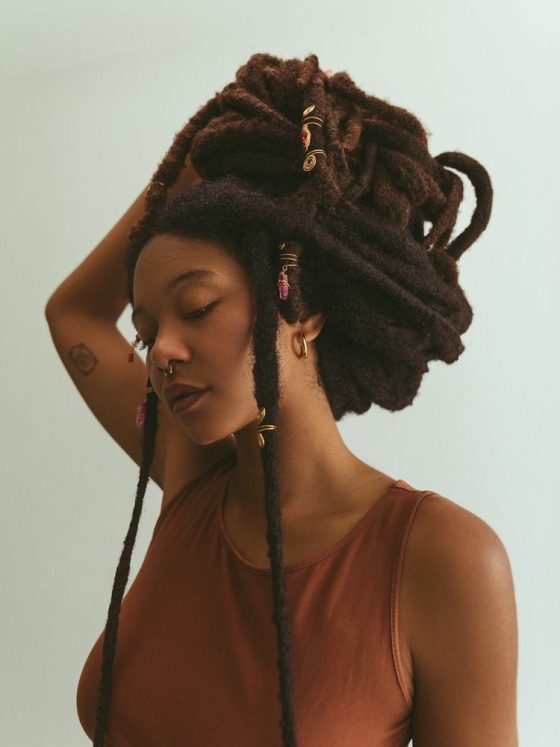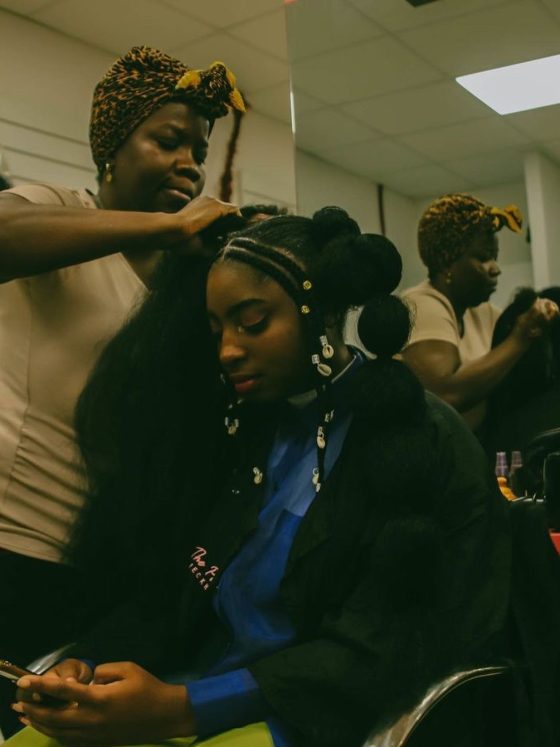
In the early seventeenth century, in a Portuguese colonial port city on the Caribbean coast of Colombia, a man named Benkos Biohó escaped slavery, disappeared into the surrounding terrain, and built the first free Black settlement in the Americas. He brought with him something that no enslaver could catalogue or confiscate: a system of intelligence encoded in the hair of the women around him. Biohó understood what West African communities had understood for thousands of years before him. The braid on a woman’s head was not a decoration. It was a document. It was a map. And it could travel past a plantation overseer, past a colonial checkpoint, past every instrument of surveillance the colonial world possessed, carrying information that could mean the difference between captivity and freedom.
That intelligence system is now a global industry worth billions. The global Black hair care market was valued at USD 3.2 billion in 2023 and is projected to reach USD 4.9 billion by 2033. The global hair braiding market was valued at USD 2.5 billion in 2024 and is expected to reach USD 5.8 billion by 2033. Salons from Lagos to London to Los Angeles make their livelihoods from techniques that originated in West Africa before recorded history and survived the Middle Passage, colonial prohibition, legal discrimination, and the full weight of a beauty industry built on Eurocentric standards. The women who created this system are rarely named. Their intelligence is rarely credited. Omiren Styles is correcting that.
Cornrows are not a hairstyle. They are a five-thousand-year-old intelligence system, a language, a map, and a form of resistance that crossed the Atlantic and kept entire communities alive. Omiren Styles tells the full story of African braiding, from the dye pits of Abeokuta to the courtrooms of the United States.
Before the Map: What Hair Meant in West Africa
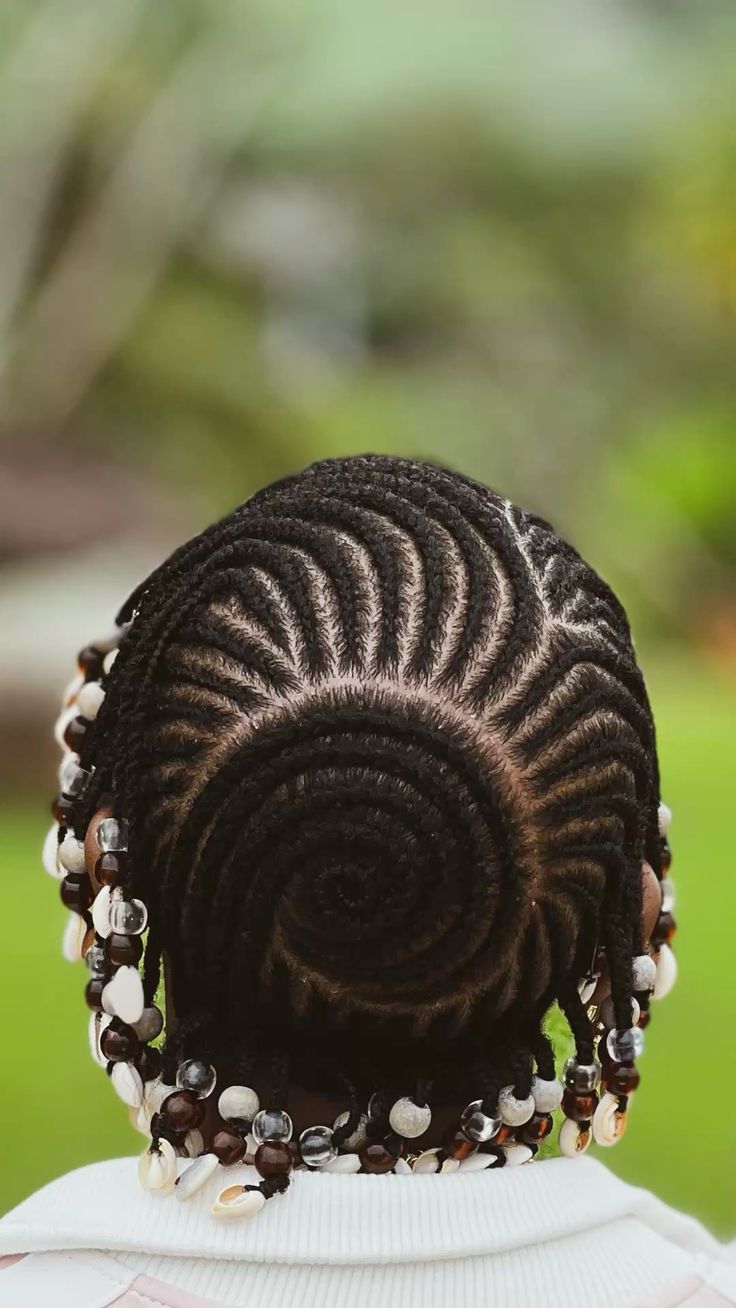
To understand what cornrows became in the diaspora, you have to understand what they were in Africa before enslavement changed everything. In West Africa, hair was never simply hair. It was a visual language in daily use, read by everyone in the community with the same fluency with which we read facial expressions today.
Depictions of women wearing their hair in cornrows have been found in Stone Age paintings on the Tassili Plateau in the Sahara, dating to as far back as 3000 BCE. That is five thousand years of documented continuity for a single hairstyle tradition. The practice of braiding dates back to at least 3500 BCE, as evidenced by ancient African carvings and sculptures. What those carvings show is not fashion. They show a communication system. Each region, each community, each tribe in Africa had its own distinct styles, and each style encoded specific information. Braiding patterns conveyed social status, age, tribal affiliation, marital status, religious identity, and occupation. A woman arriving at a market did not need to announce who she was, where she was from, or her position in her community. Her hair said it for her.
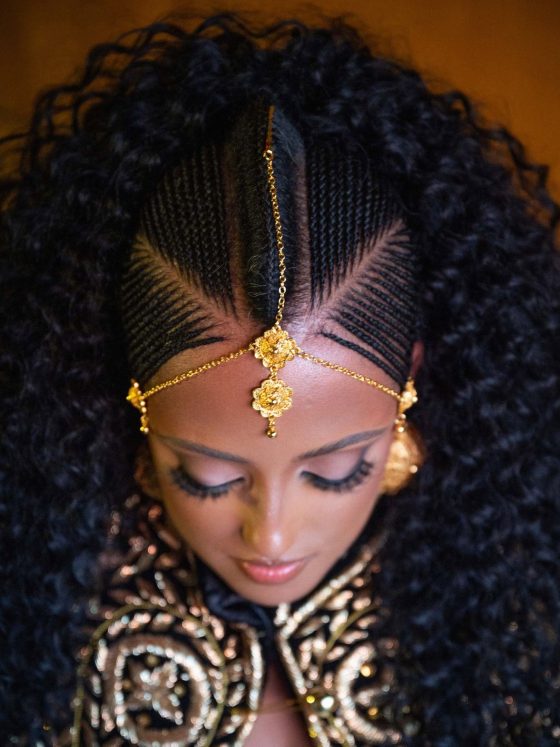
The Fulani people, whose population of 30 million spans West Africa and the Sahel, developed one of the most recognisable systems of this visual language. Fulani braids traditionally feature five long braids fashioned into loops, with a coiffure at the centre of the head, adorned with silver or gold coins, beads, and cowrie shells. Each element carries a specific meaning: the coins indicate wealth and family lineage, the cowrie shells signal spiritual protection, and the bead colours encode identity. This was not jewellery. It was a passport. In Ghana, each distinct manifestation of Ghana braids was known to identify one’s religion and social standing. In Nigeria’s Yoruba culture, hairstyles were crafted with deep spiritual significance and were performed by skilled braiders who held highly respected positions in their communities. The braider was not a hairdresser. She was a keeper of social records, an archivist of identity.
Among the Mende people of Sierra Leone, hair was understood as being connected to the spirit and the feminine divine. For Mende tribeswomen, hair was closely tied to femininity and beauty, kept under tight control and styled in intricate ways to communicate everything from sexual availability to spiritual alignment. In Angola, asking someone to braid your hair was asking them to be friends, a gesture of trust that went beyond any social transaction. Hair braiding was communal, familial, and sacred. Mothers passed techniques to daughters. Grandmothers passed patterns to granddaughters. The knowledge was oral, embodied, and intergenerational.
The Middle Passage Tried to Take the Hair
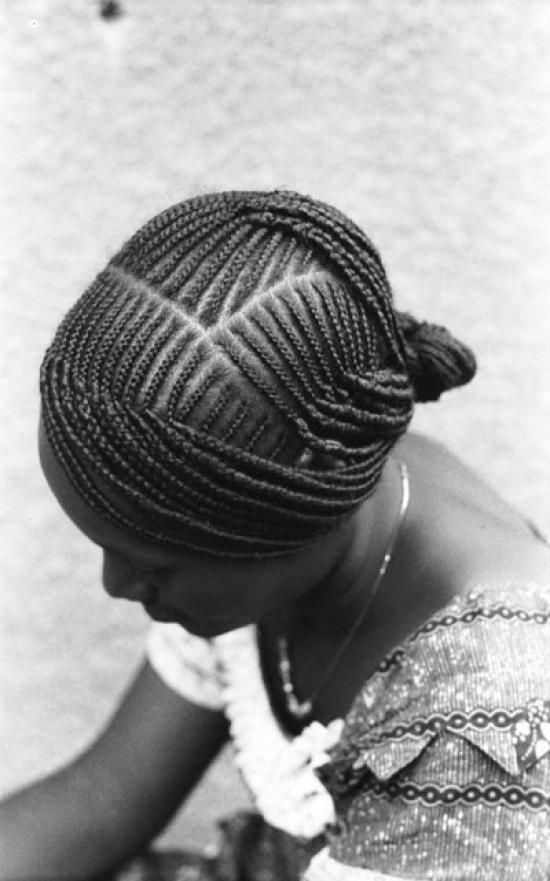
When the transatlantic slave trade began systematically stripping Africans of their identity in the sixteenth century, one of the first targets was their hair. Many enslaved Africans were forced to shave their heads before boarding slave ships, under the stated rationale of sanitation. The real purpose was cultural erasure. If the hair was gone, the language it carried was gone. If the identity markers were removed, the community’s visual cohesion was disrupted. Enslavers understood, intuitively if not explicitly, that the braid was a form of intelligence they could not read, and that intelligence they could not read was intelligence they could not control.
They were not entirely successful. Not all enslaved Africans would keep their hair cut. Instead, many would braid their hair tightly in cornrows to maintain a neat appearance and, in doing so, preserve both the technique and the communicative framework it carried. The cornrow survived the ocean crossing because it could be done with nothing but hands and hair, required no tools that could be confiscated, and could be read only by those who already knew the language. For enslaved communities unable to write, unable to speak languages their captors could not monitor, and unable to move freely between plantations, the braid became the most reliable form of secure communication available.
The Map in the Hair: Colombia and the Documented Resistance
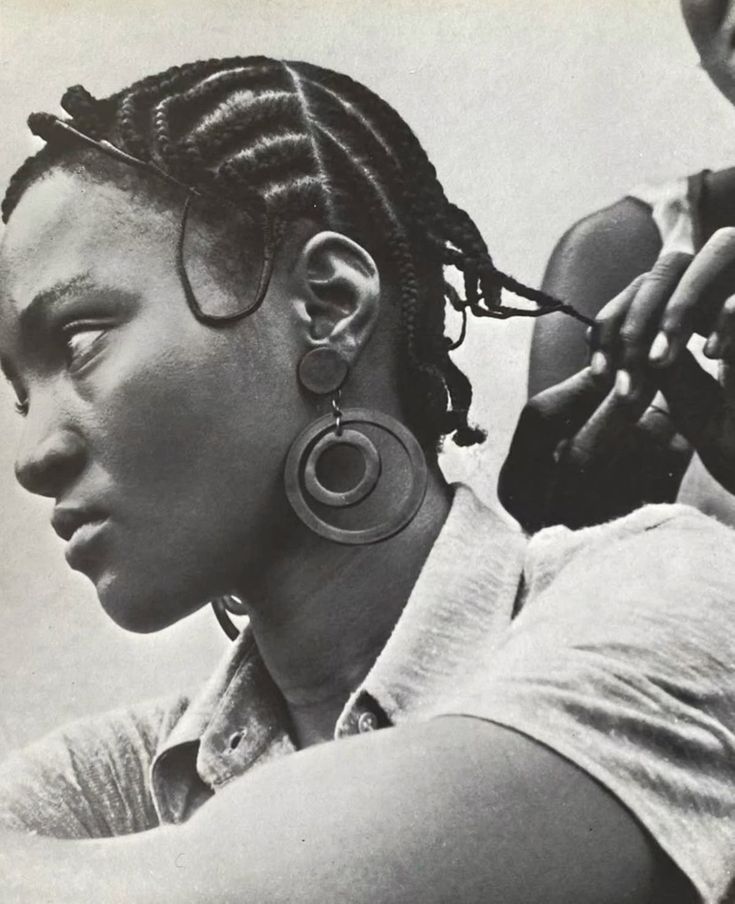
In Colombia, the story of cornrows as a form of resistance is the most thoroughly documented in the African diaspora. Benkos Biohó, after building San Basilio de Palenque, recognised that maintaining his community’s freedom required an intelligence network that the Spanish colonial authorities could not penetrate. He developed a system in which women braided messages and maps into their hair, using the geometry of the cornrow to encode directional information.
Ziomara Asprilla García, an Afro-Colombian woman who has documented these traditions, describes them in concrete terms. One style, called departes, had thick, tight braids braided closely to the scalp and tied into buns at the top. It was a signal: the wearer wanted to escape. Another style had curved braids, tightly braided against the head. The curves represented the roads that would be used during the escape. Gold and seeds were hidden in the braids as survival resources for the journey: gold to trade in free zones, seeds to plant crops once they reached freedom.
Seeds hidden in hair have been documented not only in Colombia but also across multiple maroon communities in South America. Professor Judith Carney of UCLA, in her research on the African origins of rice cultivation in the Americas, documents legends maintained by descendants of maroon communities in Suriname and Cayenne, claiming that rice was brought from Africa, hidden in the hair of enslaved women aboard slave ships. Whether literally accurate in every case or encoded in oral tradition, the principle is consistent: the hair of enslaved African women was used as a container for survival resources, a space the enslaver’s gaze could not easily penetrate.
Enslaved people were not permitted to be literate, so they had to pass information and relay messages through their hairstyles. The plantation owner understood the spoken languages around him. He did not understand the geometry of a braid. He saw a woman’s hairstyle. She was carrying a map.
The Number in the Plait: Further Systems of Encoding

Beyond directional maps, the cornrow was used to encode numerical information. The number of plaits worn could indicate how many roads a person had to walk, or signal a specific escape route. Routes to avoid, to prevent recapture by another enslaver, were also noted. The system was not random. It was structured, learnable, and transmissible through the same intergenerational teaching that had carried braiding knowledge across millennia in West Africa. A mother taught her daughter not just how to braid but what the braid meant. The knowledge and the resistance were passed down in the same gesture.
Academic research published in the International Journal of Social Sciences, examining evidence from Elmina Castle in Ghana and the Centre for National Culture in Kumasi, has documented the role of cornrows as a medium for communicating escape strategies during the transatlantic slave trade era. The research confirms that enslaved Africans used cornrow patterns to resemble maps, hide seeds and gold, and encode directional and numerical information about escape routes. Curved braids represented roads. Straight braids represented landmarks. The hair was a document that could walk past a guard.
What the Braid Became in the Twentieth Century

After emancipation, the political life of the African braid did not end. It changed form. In the United States, the natural hair movement of the 1960s reclaimed the Afro, the cornrow, and the braid as explicit symbols of Black political identity and resistance to white supremacy. Where colonial powers had once tried to make the shaved head a marker of servitude, the Black Power movement made natural hair a declaration of freedom. Braids, locs, and cornrows became political statements, worn deliberately in spaces where they had previously been banned or discouraged.
The late twentieth century brought a different kind of erasure: commercialisation without attribution. As braided hairstyles entered mainstream Western fashion culture, often credited to celebrity stylists, magazine features, and runway collections, the African origins of the techniques were systematically decoupled from the style itself. Bo Derek’s cornrows in the 1979 film 10 were presented in mainstream American media as an exotic beach style. Early communities of the Wolof, Mende, Mandingo, and Yoruba tribes had been conveying messages through certain braid styles since at least the early fifteenth century. The braid had a five-thousand-year history before a Hollywood film discovered it.
The Industry the Braid Built, and Who Controls It

Today, the braiding and natural hair industry is one of the fastest-growing segments of the global beauty market. The global hair braiding market was valued at USD 2.5 billion in 2024 and is expected to double to USD 5.8 billion by 2033. The global Black hair care market is projected to grow from USD 3.2 billion in 2023 to USD 4.9 billion by 2033. Black consumers in the United States spend USD 473 million annually on hair care, and Black women spend six times more on hair care than other ethnicities.
These numbers represent an enormous economic engine built on techniques that African women invented, refined, and transmitted across five thousand years. The returns of that engine flow overwhelmingly to corporations that did not originate the knowledge. L’Oréal, Unilever, and Procter & Gamble dominate the Black hair care market with product lines developed in response to consumer demand shaped by African cultural practices. Black-founded beauty startups raised only USD 16 million in 2024, down from USD 73 million in 2022, a decline of nearly eighty per cent, in a market that Black cultural knowledge built and that Black consumer spending sustains.
This is the commercial dimension of the same erasure that this series has traced through carnival costume, indigo dyeing, and traditional dress. The knowledge is African. The market is not.
Also Read
- Indigo: How West African Dyeing Became the Blueprint for Global Denim
- The African Origins of Carnival Costume: Feathers, Beads, and the Masquerade Tradition
- The Pollera, the Wob Dwiyet, and the Baiana: The African Women Who Dressed the Americas
- The Cloth That Crossed the Ocean: How African Fashion Tradition Lives in the Caribbean and Latin America
The CROWN Act and the Ongoing Fight
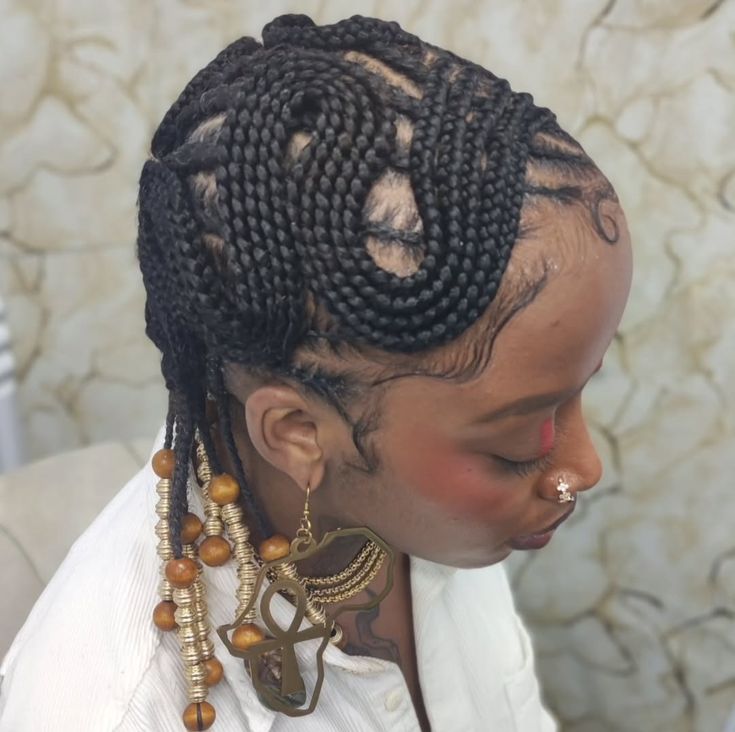
The most direct evidence that braiding remains a political act is the fact that it still requires legislation to protect it. The CROWN Act, which stands for Creating a Respectful and Open World for Natural Hair, was enacted in 2019 to protect against discrimination based on race-based hairstyles, including braids, cornrows, locs, twists, and Bantu knots, in workplaces and public schools. As of 2025, twenty-seven US states have passed the CROWN Act or similar legislation, but no equivalent federal law exists.
A Dove-commissioned CROWN research study found that Black women are 1.5 times more likely to be sent home from their workplace because of their hair. More than one-third of Black women under thirty-four believe they have been denied a job interview because of their hair. The US Armed Forces, as recently as 2018, had grooming policies that described natural and protective hairstyles worn by African American servicemembers as unkempt.
The braid that encoded escape routes from South American plantations in the seventeenth century is still used in the twenty-first century to send Black women home from offices. The political continuity is not metaphorical. It is structural.
The Omiren Argument
The fashion and beauty industry has built a multi-billion-dollar market on African braiding while consistently declining to name its source. Fulani braids appear on European runways labelled as ethnic inspiration. Box braids trend on social media without reference to their 3500 BCE origins in South Africa. Cornrows are filed under urban style without mention of the Yoruba, the Wolof, or the Saharan rock art that documented them five thousand years ago. Celebrity stylists are credited for styles that enslaved women died using as maps.
Vogue covers braids every season. It has published features on the natural hair movement. It has profiled stylists who work with braided styles on film sets and fashion shoots. It has not published the article that explains what a cornrow actually is: a five-thousand-year-old West African intelligence system that survived the Middle Passage, encoded maps to freedom in colonial South America, built the cultural foundation of a multi-billion dollar global industry, and is still, today, the subject of active legislation because the societies that profit from it still consider it too different, too African, too much itself to be welcomed on the same terms as a French blowout or an Italian lace trim.
Omiren Styles takes a different position. The cornrow is not an ethnic hairstyle. It is one of the oldest and most sophisticated communication and survival technologies in human history. It was built by African women, carried by African women, and used by African women to resist enslavement and preserve identity across an ocean. It belongs to the full story of African intelligence on the global stage. That story does not need to be recovered. It needs to be named.
The woman sitting at the base of a dye pit in Abeokuta. The woman is braiding her daughter’s hair in a family compound in Senegal. The woman was encoding a road map in a friend’s hair before she ran. They were doing the same thing. They were transmitting knowledge that no one could take from them, in a language no overseer could read, through a medium that had been in their hands for five thousand years. That is not a hairstyle. That is a civilisation.
Frequently Asked Questions
1. What is the documented evidence that cornrows were used as escape maps during slavery?
Academic research published in the International Journal of Social Sciences, drawing on evidence from Elmina Castle in Ghana, confirms that cornrow patterns were used to encode escape routes and hide survival resources during the transatlantic slave trade era. In Colombia, oral histories maintained by Afro-Colombian communities in San Basilio de Palenque, the first free Black settlement in the Americas, document specific, named braiding styles used to signal intent to escape and encode directional maps. The tradition is attributed to the intelligence network developed by Benkos Biohó in the early seventeenth century. Evidence of seeds hidden in braided hair for survival is also documented in maroon communities across Suriname and French Guyana.
2. How far back does African braiding tradition go, and what did it mean before the transatlantic slave trade?
Depictions of cornrows in the Tassili Plateau of the Sahara date to approximately 3000 BCE, making braiding one of the oldest documented hairstyle traditions in the world. Across West Africa, braiding patterns encoded social status, tribal affiliation, marital status, age, religion, and occupation. The Fulani braiding tradition used specific adornments of gold coins, silver, amber, and cowrie shells to communicate lineage and wealth. In Yoruba culture, skilled braiders held respected positions as communicators and archivists of community identity. Hair was understood as a visual language read by the entire community, and braiding was a skilled, intergenerational practice transmitted from mothers to daughters.
3. What is the CROWN Act, and why does it matter for African braiding tradition?
The CROWN Act, standing for Creating a Respectful and Open World for Natural Hair, was first enacted in California in 2019 and, as of 2025, has been passed by twenty-seven US states. It prohibits discrimination based on race-associated hairstyles, including cornrows, braids, locs, twists, and Bantu knots in workplaces and schools. Its necessity illustrates that African braiding tradition remains politically contested in the twenty-first century. Research shows that Black women are 1.5 times more likely to be sent home from work because of their hair, and that over a third of Black women under thirty-four believe they have been denied a job interview because of their hair. Legislation is required to protect a practice with five thousand years of history because the societies that commercially benefit from that history still penalise its cultural practitioners.
4. Who controls the global Black hair care market, and how does this relate to African cultural origins?
The global Black hair care market is projected to grow from USD 3.2 billion in 2023 to USD 4.9 billion by 2033, driven largely by African American consumer spending. However, the market is dominated by multinationals, including L’Oréal, Unilever, and Procter and Gamble, rather than Black-owned businesses. Black-founded beauty startups raised only USD 16 million in 2024, a fraction of the funding flowing into a market that African cultural knowledge created. This reflects the same structural pattern Omiren Styles identifies across the series: African cultural production generates enormous commercial value that returns overwhelmingly to those who did not originate it.