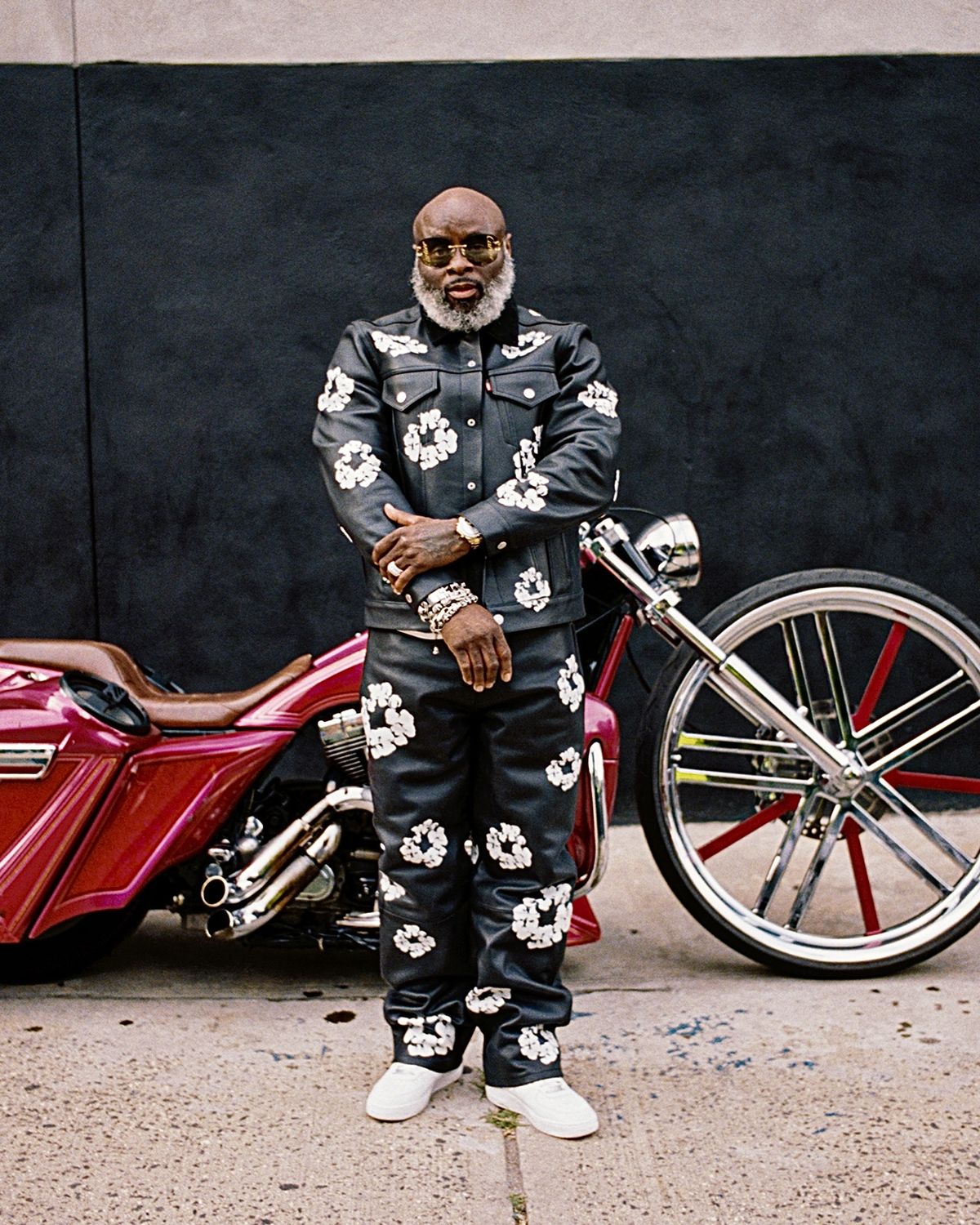
In the summer of 2019, Tremaine Emory dropped his inaugural Denim Tears collection on the 400th anniversary of the beginning of slavery in America. The collection consisted of hoodies, sweatshirts, and jeans bearing delicate floral cotton wreaths. He said he wanted people to feel the weight of the human condition and have empathy, compassion, and understanding for all cultures that have suffered the tyranny of slavery or any type of oppression throughout human history. The African fashion market is worth $ 31 billion. That figure includes Black American fashion’s contribution to global streetwear, including Denim Tears, which began on a specific date, with a specific historical reference, wearing its argument on the outside.
Denim Tears is not a streetwear brand that uses cultural references for marketing purposes. It is a historical argument that uses streetwear as its medium. The distinction matters commercially as much as it matters culturally. On StockX, sales of Denim Tears items grew 290% in 2024. In the first half of 2025, Denim Tears products sold for 31% above retail on average. The argument the brand is making is not niche. It is finding a market. The question worth asking is what that market is buying when it buys a pair of Denim Tears jeans with a cotton wreath on the leg.
Tremaine Emory launched Denim Tears in 2019 on the 400th anniversary of slavery. The cotton wreath on the jeans is not a design choice. It is a historical argument.
Denim Tears Tremaine Emory Cotton Wreath: What the Motif Is
The cotton wreath motif on Denim Tears garments was inspired by Emory’s visit to the Whitney Plantation in Louisiana, one of the only museums in the United States devoted exclusively to the history of slavery. As Shoppe Black’s documentation of Denim Tears confirms, Emory told GQ in 2023 that cotton is the fabric of our lives, but also of our history. The cotton boll, the plant whose picking constituted the primary forced labour of enslaved Black Americans across centuries of American history, becomes in Emory’s design system a wreath: a circle, a garland, the shape that in Western tradition marks both celebration and mourning. The ambiguity is deliberate. The wreath honours the suffering of enslaved people. It also marks their survival, creativity, and resilience.
The Metropolitan Museum of Art’s Costume Institute has documented the cotton wreath’s meaning with precision. As the Met Museum’s essay on fashioning an African American lexicon confirms, Emory sees the cotton wreath as a talisman for Black people and a call to return to what built this country. The Met entered Denim Tears garments into its permanent collection in 2022 as part of the In America: A Lexicon of Fashion exhibition. That is not a commercial validation. It is an institutional acknowledgement that what Emory is doing is not design. It is historiography in cloth.
Tremaine Emory grew up in Jamaica, Queens, near a large rock painted red, black, and green: the Pan-African and Black Power colours. The cotton wreath he placed on jeans in 2019 is the same argument as that rock, made in a different medium, at a different scale, entered into the permanent collection of the Metropolitan Museum of Art.
Why Denim and Why 2019
Emory’s choice of denim as his primary material is as deliberate as the cotton wreath. As Dazed’s documentation of the inaugural Denim Tears collection and the Levi’s collaboration confirms, denim is associated with hard labour and workwear. It is the fabric of the American working class, and the American working class in the South was built on enslaved Black labour. Emory reimagines denim as a canvas for cultural storytelling by using a material whose own history is inseparable from the history of Black American forced labour. The garment is already the argument before any motif is applied to it.
The choice of 2019 as the founding year and the inaugural collection date is equally specific. 2019 marked the 400th anniversary of 1619, the year the White Lion arrived in Virginia carrying the first enslaved Africans to reach American shores. Emory subsequently built the 1619 motif into Denim Tears’ design vocabulary as an explicit reference to that moment. The brand did not launch on a convenient date. It launched on the date that the argument required.
Emory grew up in Jamaica, Queens, near what he has described as the Liberty Rock: a large rock painted in the red, black, and green of the Pan-African and Black Power movements. That colourway is now fully embedded in Denim Tears’ visual narrative, appearing across the brand’s products. Emory connects his design practice directly to the community environment that formed him, and the Pan-African colourway that the UNIA’s Marcus Garvey selected in 1920, which appeared on the Liberty Rock outside Emory’s childhood neighbourhood, now appears on Denim Tears socks, jackets, and Chuck Taylor collaborations. The argument travels through the colourway. The colourway is the thread.
The Levi’s Collaboration: Scale and Confrontation
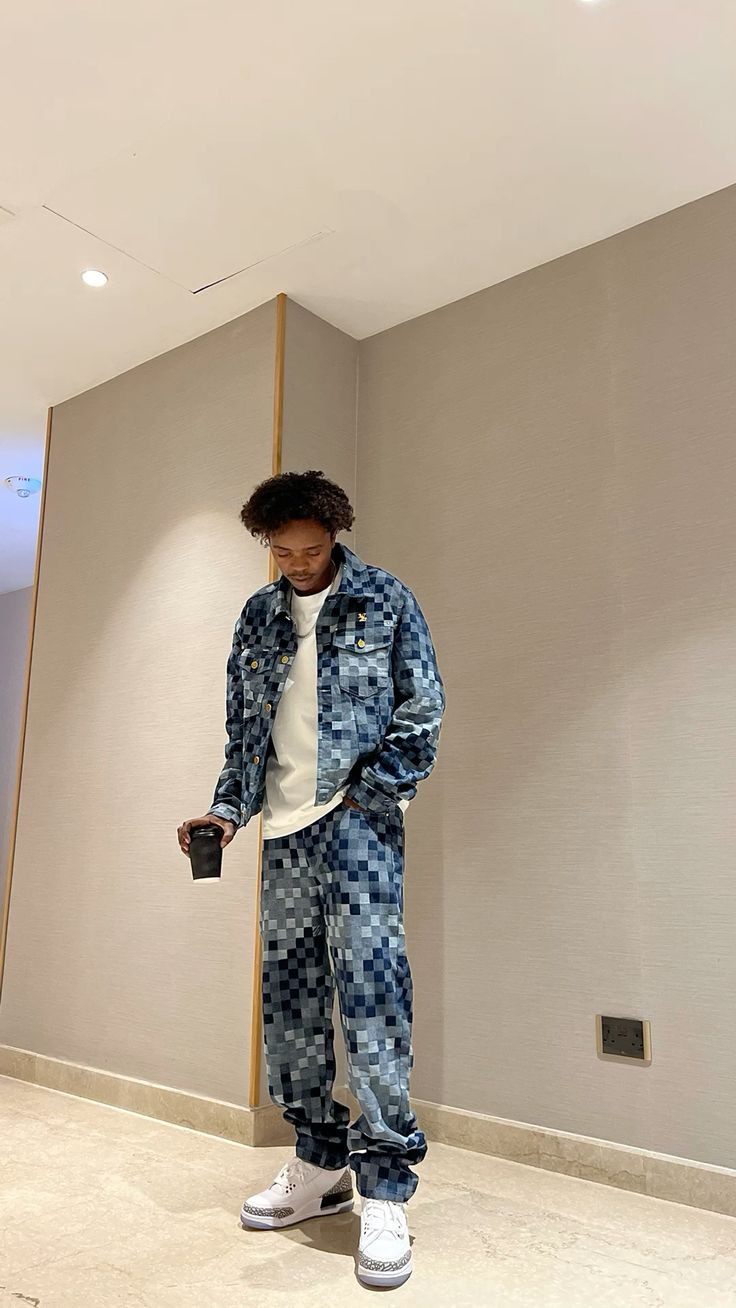
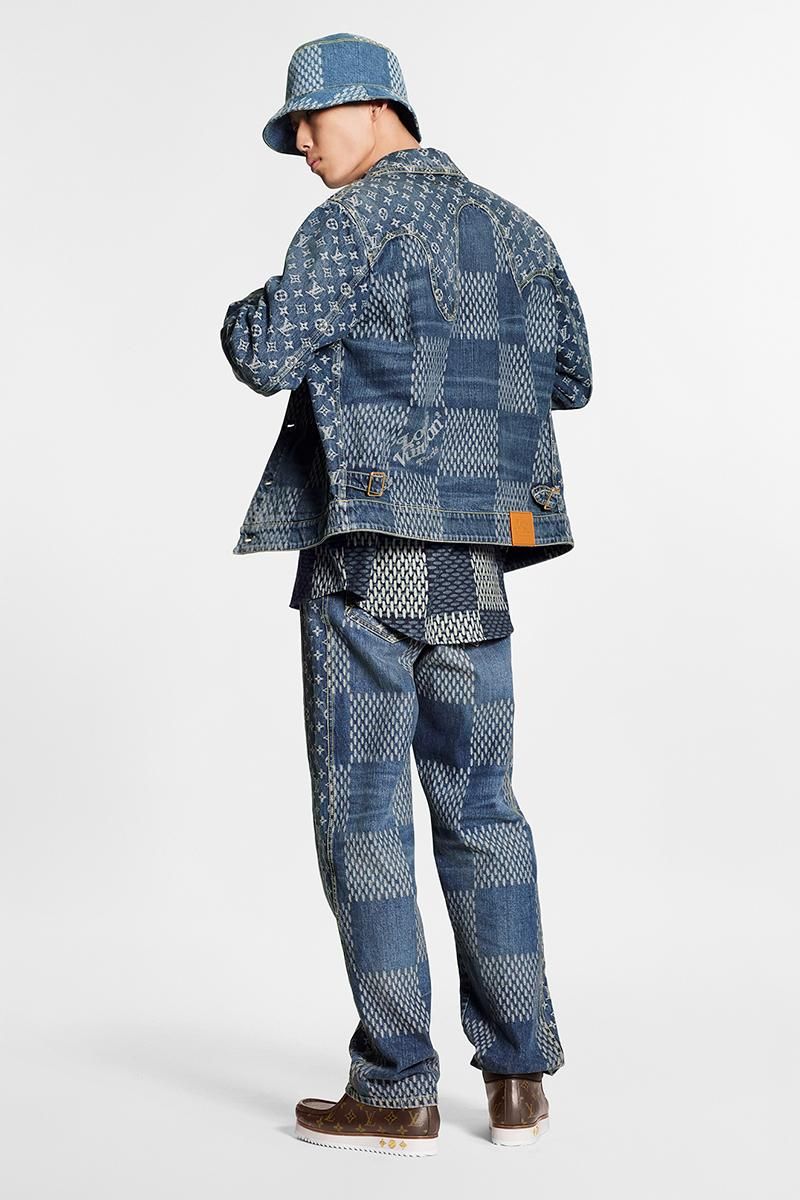
The 2020 Levi’s x Denim Tears capsule collection was the moment Denim Tears moved from a brand with an argument to a brand whose argument reached a global audience. The capsule included 501 jeans, a trucker jacket, a T-shirt, and a garment Emory called the Plantation Hat, all in vintage denim printed with cotton wreaths. The naming of the hat was not accidental or provocative in the cheap sense. It was precise: a garment made from denim, worn on the head, named for the location where the cotton that made the denim was produced under conditions of slavery. The object carried its history in its name as well as in its motif.
The promotional imagery was equally deliberate. A cotton wreath was placed atop a coffin. Models wore the Plantation Hats alongside the cotton wreath-printed garments. These were not fashion images in the conventional sense of aspirational consumption. They were documentary images: the argument being made visible, styled, and photographed for the record. The coffin and the wreath together made explicit what the garment by itself only implied: this is mourning as well as celebration. This is the history of what was lost as well as the survival of those who endured it.
Dior, the Met, and What Institutional Validation Actually Means
In December 2022, Emory co-designed a capsule with Dior Men’s artistic director Kim Jones, unveiled at Cairo’s Grand Egyptian Museum ahead of Dior’s pre-fall 2023 menswear show at the Pyramids of Giza. That collaboration placed Denim Tears’ historical argument inside one of the most prestigious contexts in the international luxury fashion system. Emory’s streetwear graphics meeting Jones’s luxury tailoring at the Grand Egyptian Museum in Cairo: the pairing of African diaspora design with a display of African civilisational history, which was the Denim Tears argument at its most geographically and institutionally explicit.
The Metropolitan Museum of Art’s inclusion of Denim Tears in its permanent collection is the other institutional marker. The Tyson Beckford Sweater, which reimagined a classic Ralph Lauren knit by replacing the American flag with artist David Hammons’ Untitled (African-American Flag) in the Pan-African colourway, entered the Met’s Costume Institute in 2022. The sweater is a precise design argument: it takes the most visible symbol of American national identity, the flag, and replaces it with the most visible symbol of Black American identity, the Pan-African colourway, on a garment that the most prestigious American fashion institution has now recognised as a permanent part of the American fashion record.
Denim Tears and the African Diaspora Fashion Argument

Denim Tears sits in a specific position within the larger argument about African diaspora fashion and who controls the narrative of Black cultural production. Global luxury systems frequently absorb resistance aesthetics once their political urgency softens. The dashiki appears on runways without acknowledging its origin as a corrective gesture against assimilation. Braided hairstyles appear on runways without acknowledging their policing in professional spaces. The aesthetic is extracted. The origin is diluted. Denim Tears is built specifically to resist that extraction: the origin is always named, the history is always specific, and the argument is always present on the surface of the garment.
The parallel with African denim practice is direct. Omiren Styles’ documentation of the African deconstructed denim movement confirms that Lagos Fashion Week SS26 produced denim work in which the construction logic, patch seams, visible joins, and deliberate juxtapositions were the aesthetic argument rather than decoration applied to a commercial form. Emory’s cotton wreath on denim operates on the same principle: a motif that is the argument rather than ornamentation. The difference between African denim and American denim as a fashion argument is in the specific history being encoded. The method is the same. The archive differs.
The Omiren Argument
Tremaine Emory founded Denim Tears in 2019 on the 400th anniversary of the beginning of slavery in America because the argument the brand makes required a specific date to be fully legible. The African fashion market is worth 31 billion dollars. Denim Tears’ contribution to that figure is built on a cotton wreath that the Metropolitan Museum of Art has entered into its permanent collection, that StockX customers are paying 31% above retail to own in 2025, and that Emory first placed on a pair of jeans at the Whitney Plantation because cotton is the fabric of our lives, but also of our history. The garment is the argument. The denim is already the argument before the wreath is applied. The 1619 motif is the argument. The Pan-African colourway that Emory grew up seeing painted on a rock in Queens is the argument. The Plantation Hat is the argument. The Dior capsule unveiled at the Grand Egyptian Museum is the argument. Emory describes himself as a storyteller first, designer second. The story he is telling is not metaphorical. It is the history of Black American survival, encoded in the fabric of the country that was built by the hands it enslaved. Omiren Styles documents Denim Tears here as what it is: the most sustained, historically grounded, and commercially proven argument being made by a single designer in contemporary Black American fashion. The cotton wreath is not decorative. It never was.
ALSO READ:
- How Cultural Resistance Shaped the World’s Most Powerful Style Movements
- African Deconstructed Denim: What Lagos, Accra, and Johannesburg Built From a Western Fabric
- Marcus Garvey’s UNIA Uniforms and the Politics of Black Power Dressing
- The Diaspora Fashion Paradox: Does Wearing Your Culture Make You Exotic?
Frequently Asked Questions
What is Denim Tears and who founded it?
Denim Tears is a New York-based fashion brand founded in 2019 by Tremaine Emory (born 1981, Atlanta, raised in Jamaica, Queens). Each collection tells a story about what Emory calls the African Diaspora, encoding Black American history into streetwear garments through deliberate motifs and material choices. The brand’s flagship store is called African Diaspora Goods and is located at 176 Spring Street in New York. Denim Tears generates approximately $10 million annually and sells above retail on secondary markets.
What does the cotton wreath on Denim Tears mean?
The cotton wreath is a dual symbol. Emory was inspired by a visit to the Whitney Plantation in Louisiana, one of the only museums in the United States devoted exclusively to the history of slavery. He described the wreath to the Met Museum as a talisman for Black people and a call to return to what built this country. The wreath honours the suffering of enslaved people whose forced labour produced the cotton that built the American economy, and simultaneously marks their survival, creativity, and resilience. The Metropolitan Museum of Art has entered Denim Tears garments into its permanent collection and described the wreath as a celebration that also mourns.
Why did Tremaine Emory launch Denim Tears in 2019?
Emory launched Denim Tears in the summer of 2019 to coincide with the 400th anniversary of 1619, the year the first enslaved Africans arrived in Virginia on the White Lion. The inaugural collection dropped as a deliberate act of historical marking. Emory subsequently incorporated the 1619 motif into Denim Tears’ design vocabulary as an explicit reference to that founding moment of African American history. He has said the brand is not about fashion for fashion’s sake; every collection begins with research including visits to historic plantation sites.
Is Denim Tears in the Metropolitan Museum of Art?
Yes. In 2022, Denim Tears garments entered the Metropolitan Museum of Art’s Costume Institute permanent collection as part of the In America: A Lexicon of Fashion exhibition. The Tyson Beckford Sweater, which reimagined a classic Ralph Lauren knit by replacing the American flag with artist David Hammons’ Untitled (African-American Flag) in the Pan-African red, black, and green colourway, is among the pieces included. The Met has documented Emory’s cotton wreath as a talisman for Black people and a historical argument about African American identity.
What is the Denim Tears Levi’s collaboration?
The 2020 Levi’s x Denim Tears capsule collection included 501 jeans, a trucker jacket, a T-shirt, and a garment Emory called the Plantation Hat, all in vintage denim printed with cotton wreaths. The promotional imagery placed a cotton wreath on a coffin and featured models in the Plantation Hat alongside the wreath-printed garments, making explicit the motif’s dual meaning as mourning and survival. The collaboration brought Denim Tears’ historical argument to a global denim audience and received widespread attention for its design approach and cultural commentary.
Explore More
Read the full Fashion > Designer Profiles section for Omiren Styles’ documentation of African and diaspora designers making historical arguments through fashion, from Lagos to New York.