Denim arrived in Africa the way most Western things arrived. Through trade, through imposition, through the slow drip of cultural dominance that made foreign goods feel aspirational and local things feel secondary. For decades, jeans in Lagos, Accra, or Johannesburg meant the same thing they meant everywhere else the West had exported its consumer culture: youth, modernity, informality, and a particular idea of freedom that came pre-packaged from California. A colonial-era working-class fabric, laundered through American pop culture, sold back to the world as a universal language.
What African designers have done with that fabric in the last decade, and what Lagos Fashion Week SS26 made impossible to ignore in October 2025, is something else entirely. Patchwork denim is assembled from post-consumer waste. Jeans are deconstructed and reconstructed as jigsaw puzzles of their former selves. Denim panels cut into kente-hybrid silhouettes. Structured blazer sets with sculptural denim proportions that have nothing to do with casual wear and everything to do with making a claim. The global deconstructed denim moment that dominated SS26 runways from Paris to New York did not begin in those cities. It began here. And the designers who built it were not following a trend. They were writing one.
Patchwork denim, reconstructed jeans, and denim-kente hybrids dominated Lagos Fashion Week SS26. This is not trend adoption. It is cultural rewriting. Here is the full argument.
Denim Was Never Neutral
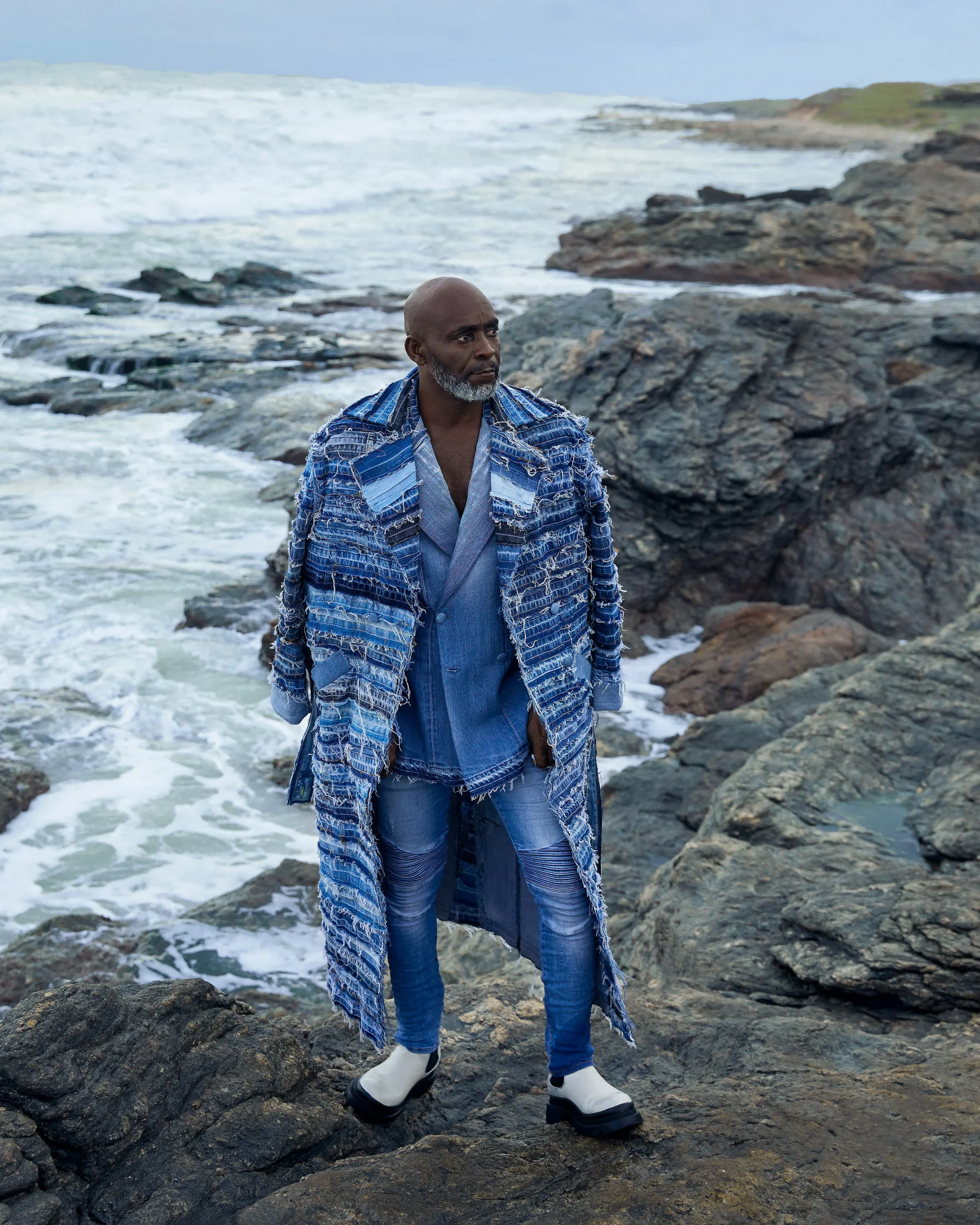
The history of denim in Africa is more complicated than its current cool status suggests. During colonial and post-colonial decades, imported Western garments, including jeans, were simultaneously markers of aspiration and agents of cultural displacement, goods that arrived as symbols of modernity in contexts where local textile traditions were being systematically devalued by the same economic forces importing the jeans. The tension between the two was never simply about fabric. It was about what fabric meant and who got to decide.
African youth did not resolve that tension by rejecting denim. They resolved it by refusing to let denim stay on the terms it arrived on. The act of taking a pair of Western jeans apart and rebuilding them with hand-stitched adire panels, or cutting denim into shapes borrowed from agbada, or layering denim with Akwete weaving, is not aesthetic experimentation for its own sake. It is a reauthorship. The fabric is taken, and what comes back out is something that could not have been made anywhere but here, by anyone but the people who grew up knowing both vocabularies intimately.
“They did not reject denim. They refused to let it stay on the terms it arrived on. That is the more radical move.”
What NKWO Built in Lagos
NKWO, the label founded by Nkwo Onwuka, is the clearest example of what sustainable denim reauthorship looks like at a luxury level. The brand’s practice is built on post-consumer textile waste: customers send in old jeans and cotton shirts, and NKWO transforms them into new pieces using handwoven fabrics and artisanal techniques. The Double Double Jeans, made from three contrasting pairs of deconstructed jeans, are the label’s most documented expression of this philosophy. Each piece is unique. None can be replicated. The scarcity is structural, embedded in the production method itself.
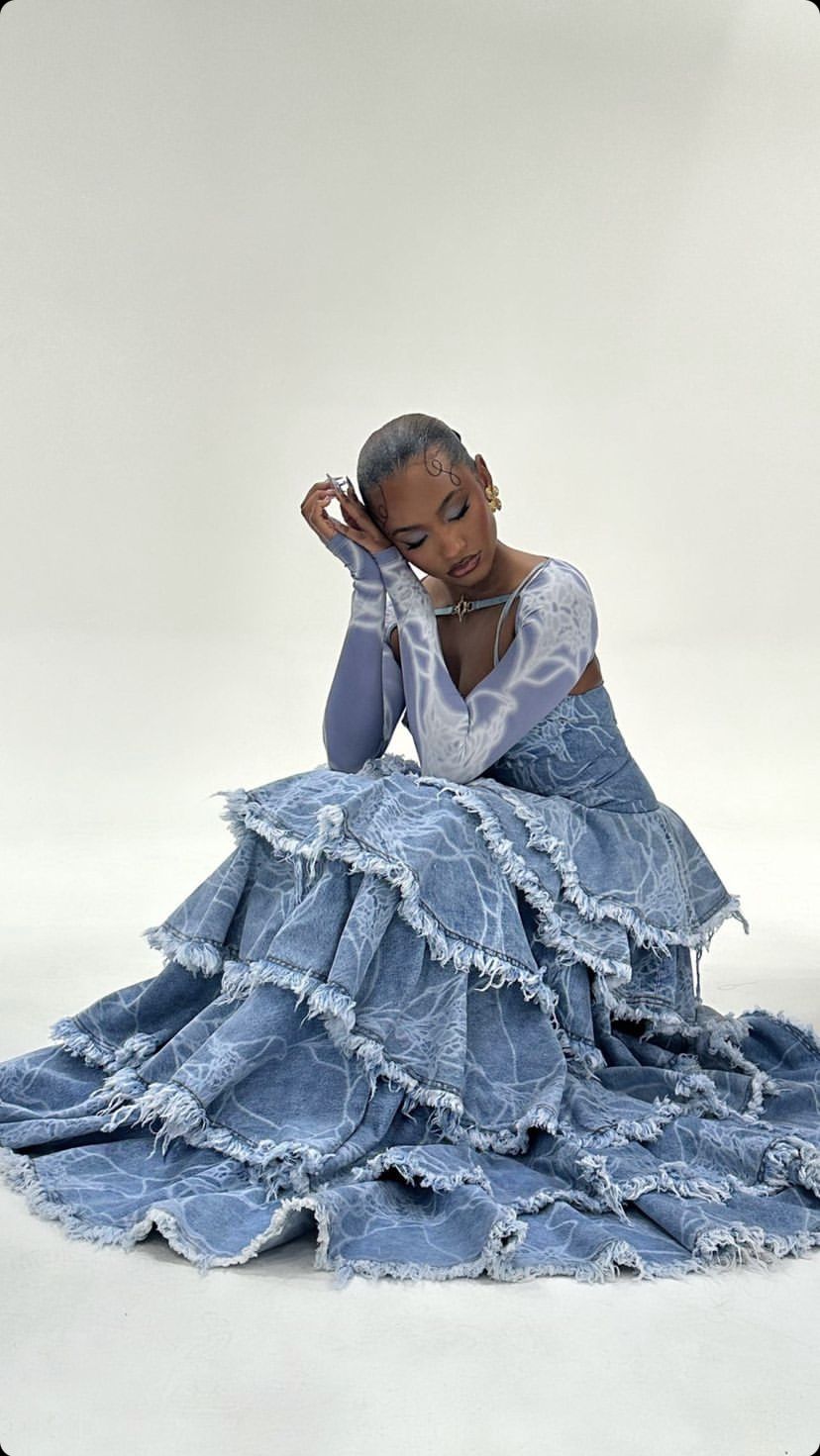
At Lagos Fashion Week SS26, NKWO brought this practice to the runway with structured denim blazers, ponchos, and dresses that wore the evidence of their making on their surface. Patch seams, visible joins, and the deliberate juxtaposition of different denim washes were not signs of incompletion. They were the design. Nkwo Onwuka has been doing this work long before global fashion decided that upcycled denim was a trend worth covering. As one Lagos Fashion Week preview noted, Lagos has been remixing and upcycling denim in markets long before it became a Western buzzword. NKWO made visible what had always existed.
Boyedoe and the Jigsaw Logic
David Boye-Doe, the Ghanaian designer behind Boyedoe, has an almost philosophical relationship with denim. Since graduating from Ghana’s Joyce Ababio College of Design in 2019 and showing his first collection, he has sent denim down the runway at every outing. Not because denim is commercially safe, but because he is genuinely interested in what the fabric can be pushed to do. His SS26 collection Paradise Regained explored colour, structure, and texture with a stated intention: to use denim in ways that produce sharp, almost sculptural silhouettes that have nothing to do with casual wear.
The jigsaw logic he introduced, jeans deconstructed down to their component panels. They reassembled in randomised configurations, which is one of the most formally inventive things done with denim at any fashion week in 2025. One of the cheekiest pieces he developed, a trompe-l’oeil illusion of multiple denim jeans layered on top of each other, rendered in a simple skirt, captures the playfulness underneath the technical rigour. Boye-Doe has said he enjoys having fun when designing. What Paradise Regained showed is that, at his level, fun involves a deep understanding of construction, pattern, and the specific weight and behaviour of denim fabric under structural pressure.
ESO: Deconstruction as Cultural Statement
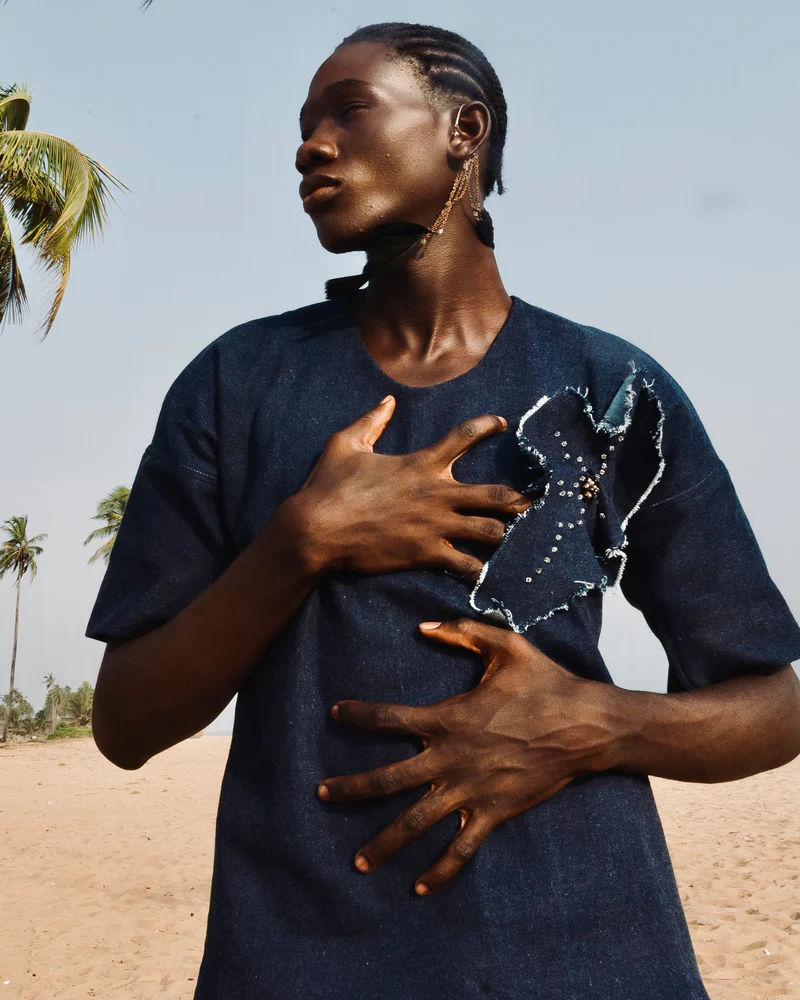
ESO, the Lagos label founded by Tunde Shoremkun, approaches deconstruction from an explicitly cultural position. Shoremkun’s own words are worth quoting directly: “Deconstruction is like peeling back layers of history and tradition to create something new. I love turning something familiar on its head to reveal a different perspective, especially with traditional garments, forms, and shapes.” That is not a designer talking about a fabric technique. It is a designer articulating a cultural methodology.
ESO’s Dead Pants series, which reverses ripped black denim to create new trousers, and its technique of bringing a white shirt’s sleeves to the front for a knotted effect, both literalise this methodology. Shoremkun works with adire, batik, and aso-oke alongside denim, commissioning artisans for patchwork and hand-beading techniques that add coral to trousers and cultural history to what would otherwise be a straightforward fabric manipulation. The result is work that sits between streetwear and cultural commentary, which is precisely where the most interesting fashion in Lagos tends to live.
Johannesburg: TSHEPO and the Luxury Denim Claim
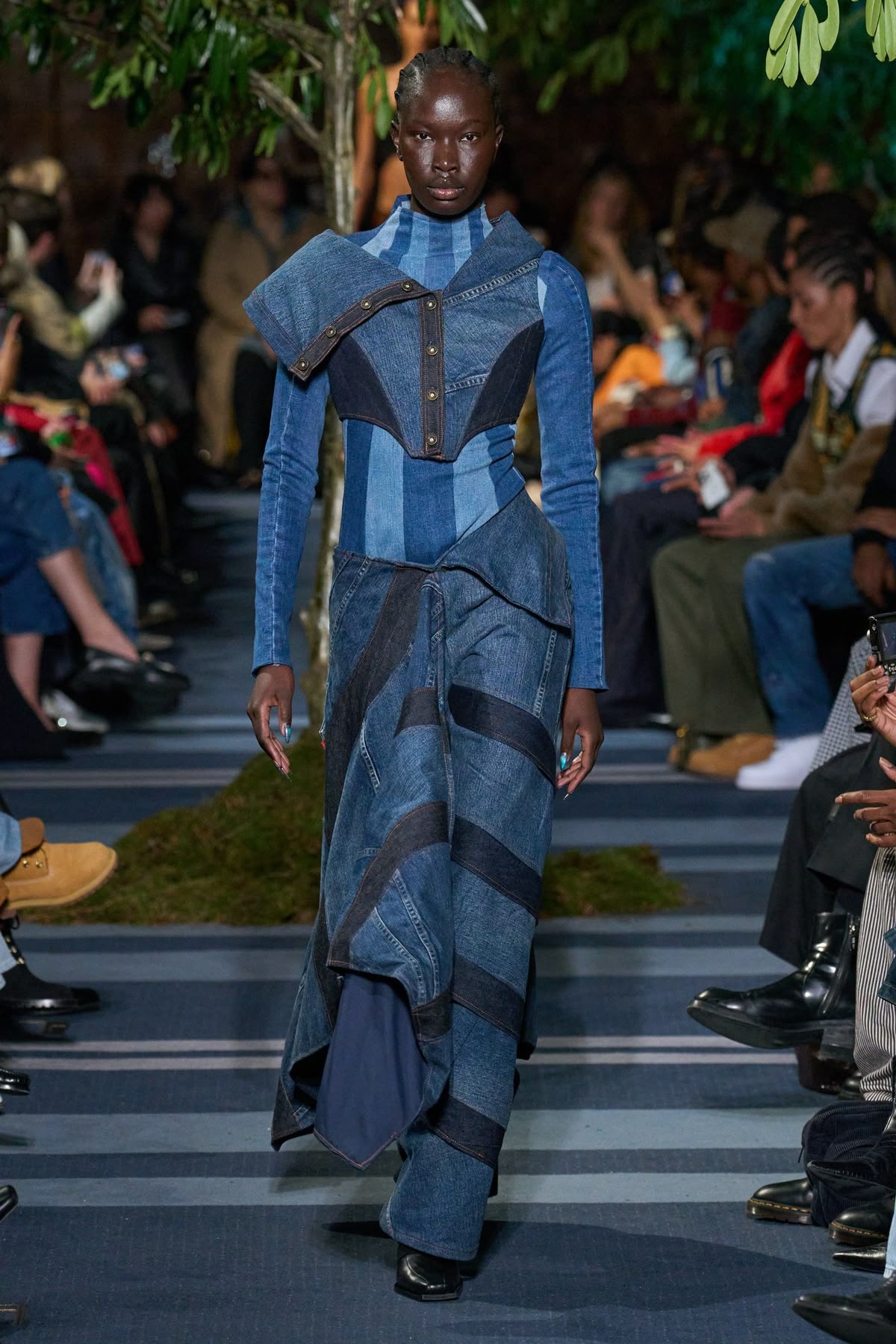
Johannesburg’s contribution to this conversation comes from a different direction. TSHEPO Jeans, founded by Tshepo Mohlala a decade ago, is not a deconstruction brand in the Lagos or Accra mode. It is a luxury denim label that makes its cultural argument through the quality and provenance of its materials rather than through the visual language of upcycling. The jeans are made with cotton from Zimbabwe and produced using sustainable dyeing techniques that minimise water use. Leftover denim is reused by design.
What TSHEPO represents in the broader African denim argument is the claim that African-made denim can occupy the luxury tier without referencing European or Japanese denim heritage as its primary credential. The brand’s success in the South African market, where its pieces command prices comparable to those of European premium denim labels, makes that claim commercially rather than rhetorically. AfrikanSwiss, the first Black-owned premium denim brand in South Africa, where Mohlala started his career, takes this further with pieces that embed tribal symbols and local cultural references directly into the denim’s construction. Both brands are making the same point from slightly different positions: that denim made in Johannesburg, from African cotton, by African designers, is luxury on its own terms.
The Kente-Denim Hybrid Is Its Own Language
Of all the forms African denim reauthorship has taken, the kente-denim hybrid is the one that most clearly illustrates what is happening culturally. At Lagos Fashion Week SS26, experimental use of kente and denim was specifically cited as a defining trend across multiple runway days. FIA’s denim drop-waist skirt with white contrast panels, Hertunba’s denim-detailed bodycon pieces, and the broader use of denim as a structural accent fabric within otherwise heritage textile collections all pointed in the same direction: denim is no longer a separate vocabulary from African textile tradition. It is being woven into that tradition on African designers’ own terms.
The kente-denim hybrid is particularly significant because of what kente represents in the current moment. Following Ghana’s Geographical Indication registration for Kente in September 2025, Kente now enjoys explicit legal protection as cultural heritage. A garment that combines GI-protected kente weaving with deconstructed denim is not just a creative choice. It is a statement about whose aesthetic systems are in dialogue, on what terms, and with what authority. The designers making these pieces understand exactly what they are doing. The fabric combination is the argument.
Paris Followed. Africa Led.
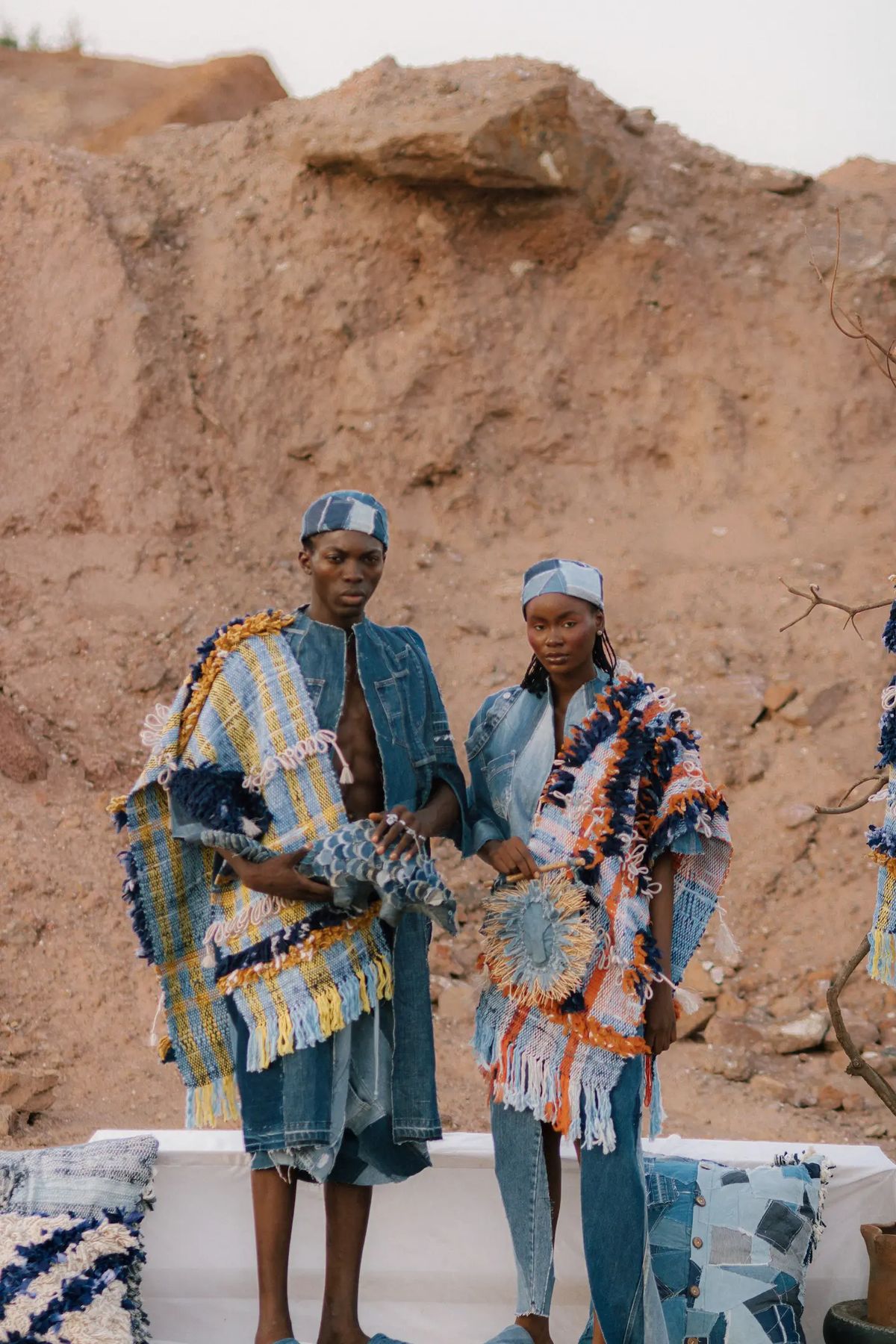
The SS26 season at European fashion weeks saw deconstructed denim treated as a major trend. Jonathan Anderson’s debut collection for Dior Spring/Summer 2026 included denim pieces. Marques’ Almeida produced a cropped corset top and cargo jeans in stonewashed denim with patchwork inserts and frayed edges. Phillip Lim offered denim patchwork jackets with white canvas inserts and bubble skirts fashioned from deconstructed jeans. These are significant pieces from significant designers. They are also arriving after the movement was already fully articulated in Lagos, Accra, and Johannesburg.
The fashion industry’s tendency to locate the origins of trends in European fashion weeks rather than in the cities where creative movements actually develop is a longstanding structural bias. African designers have been deconstructing, upcycling, and culturally reauthoring denim for years before the SS26 European runways made the global fashion press take notice. Nkwo Onwuka, David Boye-Doe, Tunde Shoremkun, and Tshepo Mohlala did not derive their approaches from European precedent. Their work preceded what European designers are now being credited for discovering. The record needs to reflect that.
Read Also:
- What Denim Owes Africa: The Indigo History Fashion Left Out
- How Japanese Denim Culture Teaches Us the Value of Patina
The Omiren argument
The global fashion press covered deconstructed denim as an SS26 trend when it appeared on European runways. Almost none of that coverage mentioned Lagos Fashion Week, which had documented the same movement with greater depth, greater cultural specificity, and greater design originality that same month. This is not a coincidence. It is the default operation of a trend-attribution system that assigns discovery to the cities with the most institutional press infrastructure and the longest history of being taken seriously as fashion capitals.
African designers are not asking to be included in that system as a favour. They are pointing out that the system is describing their work incorrectly. The deconstructed denim movement that dominated SS26 globally was shaped by designers in Lagos, Accra, and Johannesburg who had been doing this work before it became a trend, with cultural motivations that go far deeper than aesthetic novelty. When those motivations are understood, the work reads differently. It is not a trend. It is a rewrite. And it started here.
Frequently Asked Questions
- What is the African deconstructed denim movement?
The African deconstructed denim movement refers to a body of design practice across Lagos, Accra, and Johannesburg in which designers take denim, a fabric with Western colonial-era origins, and rebuild it using African cultural vocabularies, textile traditions, and craft techniques. At Lagos Fashion Week SS26 in October 2025, deconstructed and upcycled denim was identified as one of the defining trends of the season, with multiple designers presenting work that had been in development for years before global fashion weeks recognised the movement.
- Which designers are leading the African denim conversation?
NKWO, founded by Nkwo Onwuka in Lagos, is the most documented luxury upcycled denim practice on the continent, building pieces from post-consumer denim waste using handwoven fabric integration. Boyedoe, founded by David Boye-Doe after graduating from Ghana’s Joyce Ababio College of Design in 2019, has made denim reconstruction a signature practice across multiple collections. ESO, founded by Tunde Shoremkun in Lagos, approaches denim deconstruction as cultural commentary, integrating adire, batik, and aso-oke with deconstructed denim through artisan-made patchwork and hand-beading. In Johannesburg, TSHEPO Jeans, founded by Tshepo Mohlala, makes luxury denim from Zimbabwean cotton, and AfrikanSwiss, the first Black-owned premium denim brand in South Africa, embeds tribal symbols and cultural references into denim construction.
- How does kente feature in African denim design?
The kente-denim hybrid is one of the most culturally significant forms the African denim movement has taken. At Lagos Fashion Week SS26, experimental use of kente and denim was specifically cited across multiple runway days, with designers combining Ghana’s protected heritage textile with denim in structural and accent applications. The significance of this combination increased after Ghana secured Geographical Indication status for Kente in September 2025, making Kente a legally protected designation.
- Why did deconstructed denim dominate Lagos Fashion Week SS26?
Lagos Fashion Week SS26, which ran from October 29 to November 2, 2025, at the Federal Palace Hotel with over 60 designers from across Africa, saw deconstructed and upcycled denim emerge as one of its defining trends. Designers, including NKWO, Boyedoe, ESO, FIA, and Hertunba, all presented denim work that pushed the fabric beyond casual wear into sculptural, culturally layered territory. The movement reflects a longstanding practice among Lagos designers of remixing and upcycling denim, predating the recent Western fashion industry interest in the same techniques. It also reflects the influence of sustainability-focused design practices, with Lagos Fashion Week’s Green Access accelerator programme having supported circular fashion approaches across multiple editions.
- What makes TSHEPO different from other African denim brands?
TSHEPO Jeans, founded a decade ago in Johannesburg by Tshepo Mohlala, occupies a distinct position in the African denim landscape as a luxury denim label rather than an upcycling or deconstruction practice. The brand uses cotton sourced from Zimbabwe, sustainable low-water dyeing techniques, and reuses leftover denim in production. It has established luxury pricing in the South African market, with pieces priced comparably to European premium denim labels. TSHEPO’s cultural argument is made through provenance and quality rather than through visual deconstruction, asserting that African-made denim from African cotton is luxury on its own terms, without requiring reference to European or Japanese denim heritage as a credential.
- Did European designers draw from African denim work for SS26?
The SS26 season saw major European designers, including Jonathan Anderson for Dior, Marques’ Almeida, and Phillip Lim, present deconstructed and patchwork denim as central elements of their collections. These collections were widely covered as defining the SS26 denim trend. The same deconstructed denim movement had been fully documented at Lagos Fashion Week the same month, with a deeper body of work and more clearly articulated cultural motivations. Whether direct influence was involved is not the primary question. The primary question is attribution: the African designers who developed this movement over the years received a fraction of the coverage given to European designers presenting similar work in the same season.