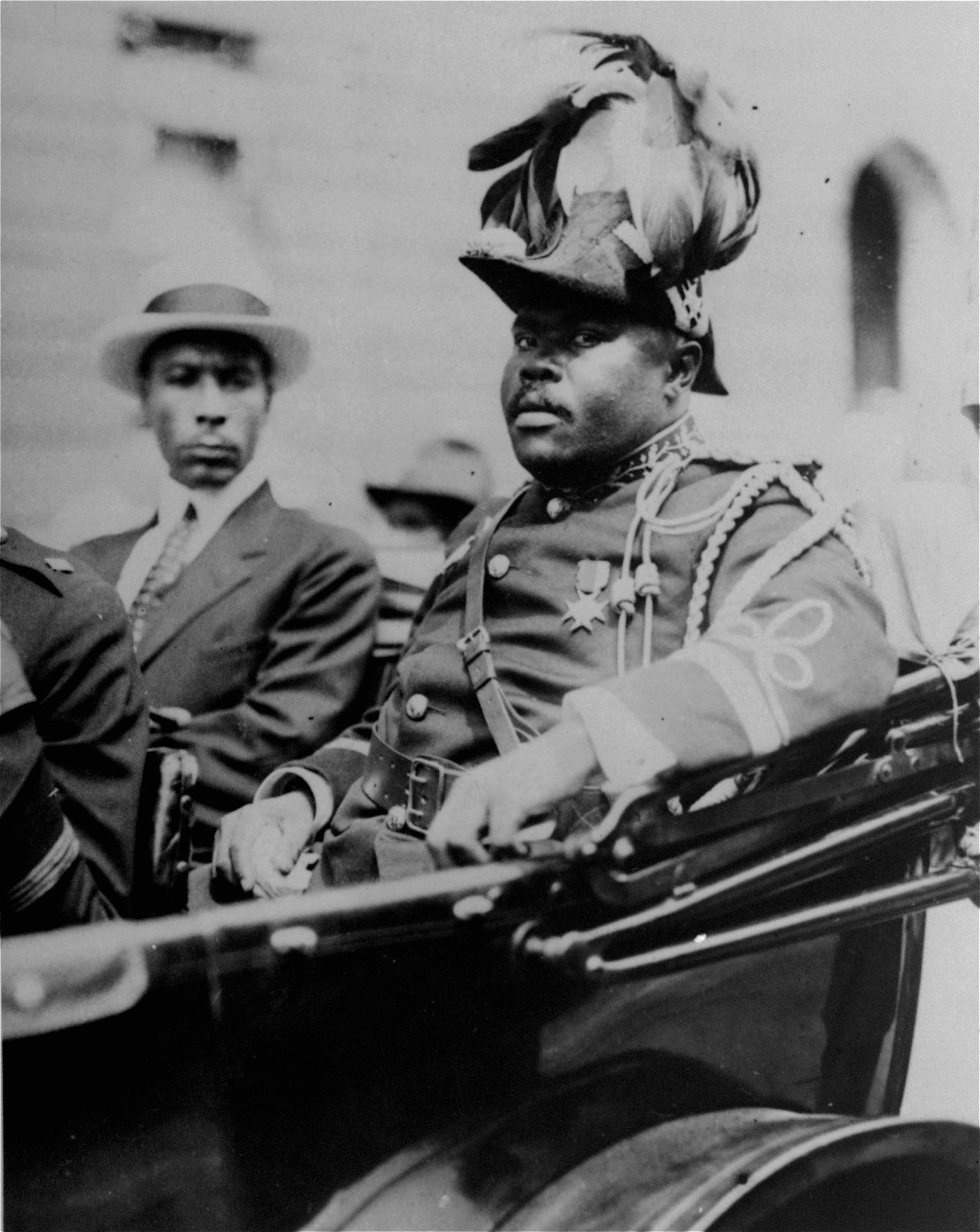
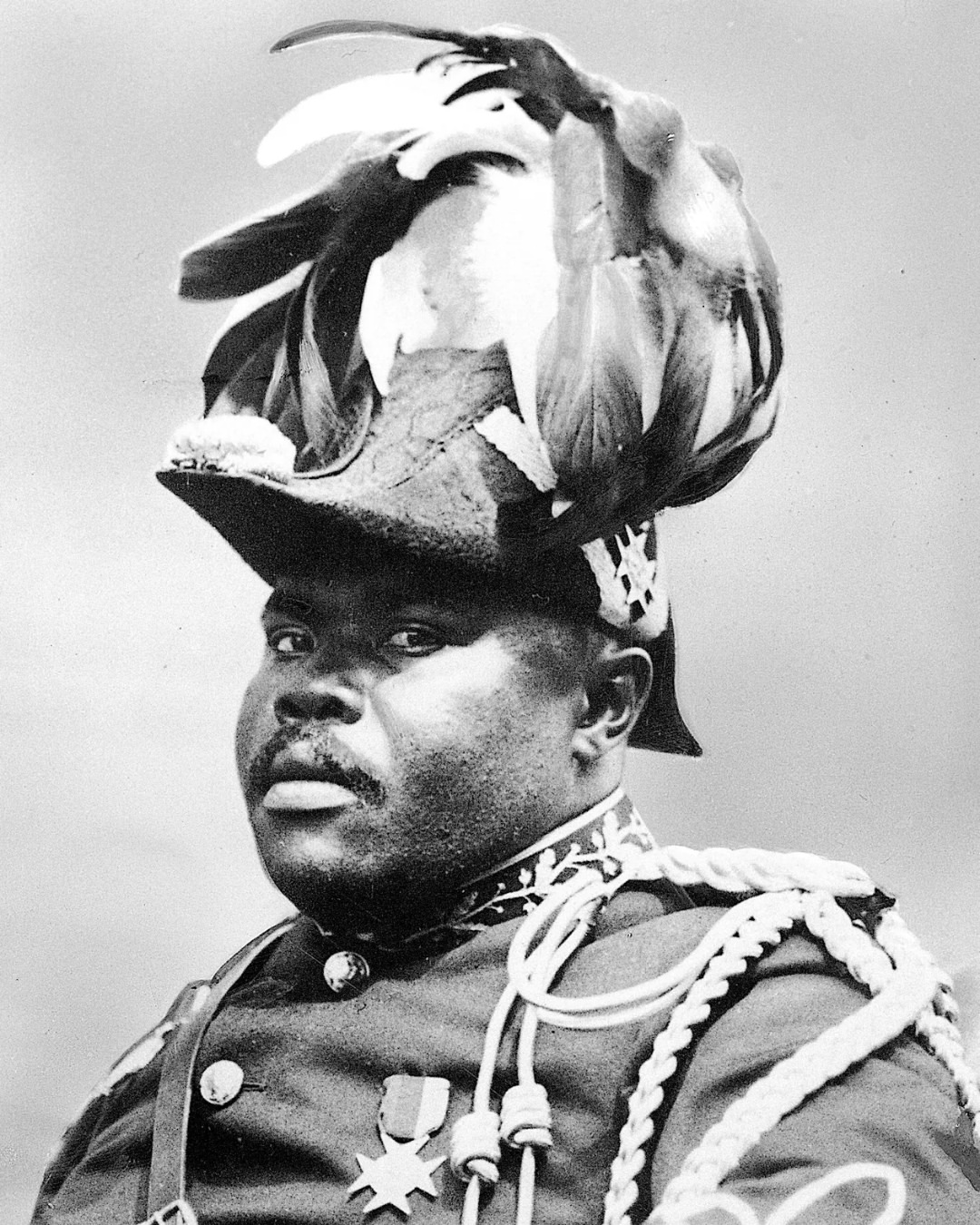
In the summer of 1920, 100,000 Black people marched down the streets of Harlem, New York. They marched in uniform. The African Legion wore military garb in red, black, and green. The Black Cross Nurses wore long white cowled robes. The Universal African Motor Corps wore military dress. The Universal African Royal Guard carried swords. Uniformed marching bands played ahead of them. And at the front, dressed in purple and gold with a plumed helmet and the Cross of African Redemption on his chest, marched Marcus Garvey, who had been elected provisional President of Africa by convention participants inside Madison Square Garden three days earlier.
The African fashion market is worth 31 billion dollars. The UNIA parade of 1920 was not a fashion event. But it was a fashion argument: the largest, most deliberate, and most politically consequential deployment of Black dress in American history to that point. In a society that equated proximity to European tailoring with respectability, dressing differently was not an aesthetic choice. It was a corrective gesture. Garvey took that gesture and multiplied it by 100,000 people, dressed identically, in colours no one had seen carried by a Black organisation on a Harlem street before.
Marcus Garvey dressed 100,000 Black people in uniform and marched them down Harlem streets. That was not spectacle. That was a political argument made in cloth.
Marcus Garvey UNIA Uniforms: The Political Logic of the Dress
Garvey understood something that fashion historians have been slow to articulate: that dress is governance infrastructure fully. As PBS American Experience’s documentation of the UNIA confirms, Garvey organised his group in a way that made those sentiments visible. He created an African Legion that dressed in military garb, uniformed marching bands, and other auxiliary groups. The sentiments being made visible were not abstract. They were specific: that Black people were organised, disciplined, self-governing, and capable of building the institutions, including military institutions, that sovereignty requires. The uniform was the argument made visible.
The African Legion uniform was in red, black, and green. Garvey selected those colours to represent an independent Africa. Red for the blood of the race, black for the people themselves, green for the land of Africa. Those colours now appear in the flags of Ghana, Kenya, Ethiopia, and numerous other African nations, a direct inheritance from Garvey’s dress system. When the UNIA marched in those colours in 1920, it was not marching under a historical flag. It was creating the flag that history would recognise.
Garvey himself wore purple and gold with a plumed helmet. In 1920, convention participants elected him provisional President of Africa, and he dressed in a military uniform replete with a plumed hat for the occasion. He was not roleplaying. He was making a constitutional claim in the only medium available to him at that moment. The American legal and political system would not recognise a Black state. The colonial powers controlling Africa would not recognise his election. But the uniform declared it anyway, in public, to 100,000 people lining the streets and to every newspaper photographer present. The dress was the declaration because the declaration had no other form it could take.
In 1920, Garvey was elected provisional President of Africa and dressed in a military uniform with a plumed hat. He was not roleplaying. He was making a constitutional claim in the only medium available to him: dress. The uniform was the declaration.
The African Legion: Military Dress as Capability Argument
The African Legion was an all-male paramilitary auxiliary whose members studied military discipline as well as the geography of Africa. Their uniform, military garb in the UNIA’s red, black, and green, served a specific argument: that Black men were capable of the discipline, coordination, and military bearing that Western racist ideology systematically denied them. Every photograph of the African Legion in formation in Harlem in 1922 or 1924 was a refutation of that ideology made without words.
This is the argument that dress makes more efficiently than any other medium in conditions of political suppression. The exotic is always behind; the unmarked is always ahead. The African Legion’s military uniform refused the exotic. It claimed the unmarked: the universal assumption of capability, discipline, and sovereignty that European military dress carried automatically but that Black dress was structurally denied. The Legion wore the form of that claim and marched it down 125th Street where white-owned businesses watched from the sidewalk.
The UNIA parades were designed to extend into white-owned Harlem precisely because the political argument required a witness. The 1920 parade went as far south as 125th Street. The 1922 and 1924 parades went as far south as 110th Street. This was not accidental routing. The parades were moving the argument into territory where it would be most confrontational, most legible to the power structures being challenged, and most visible to the press.
The Black Cross Nurses: White Robes and the Politics of Care
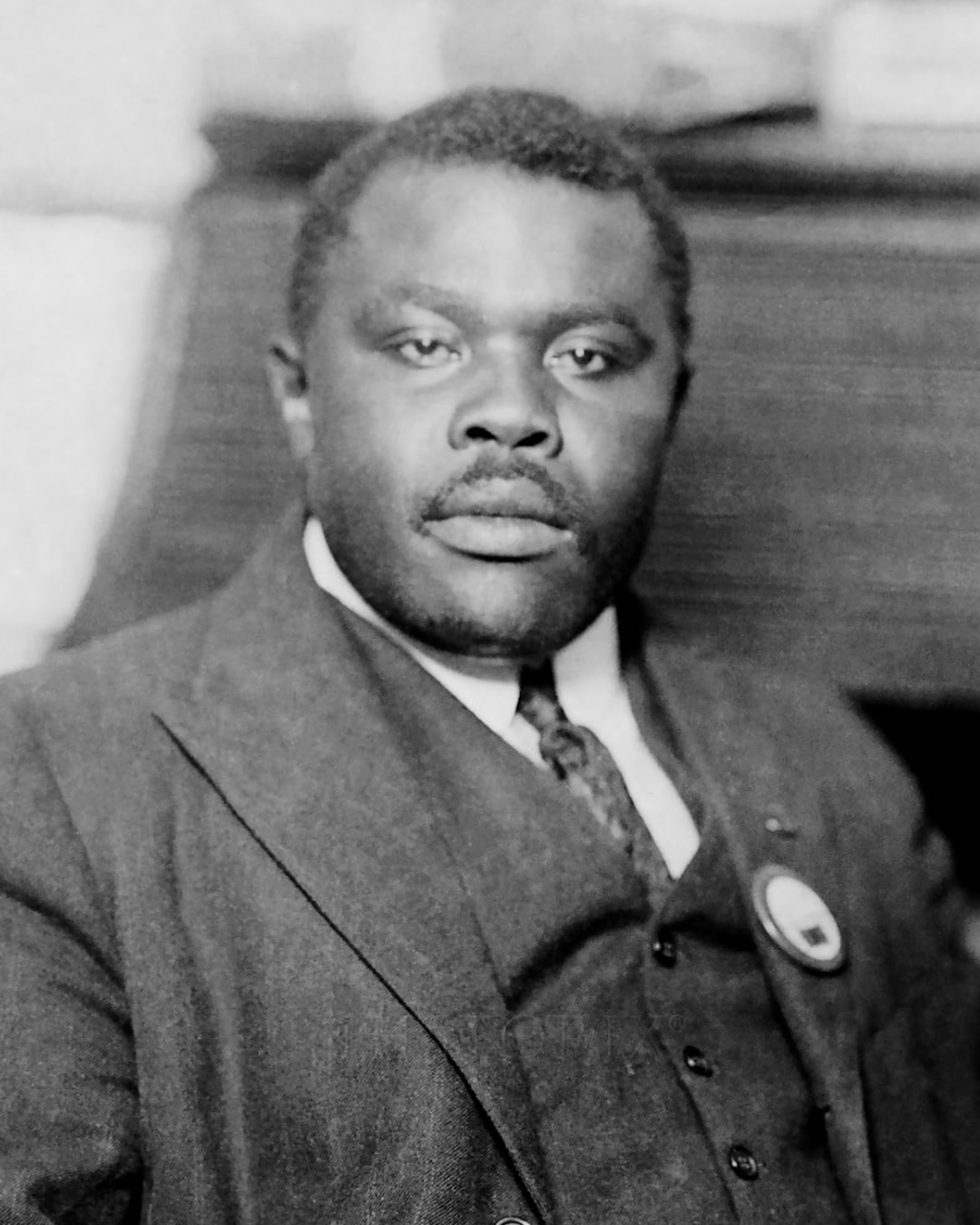
The Black Cross Nurses represented a different but equally precise political argument through dress. As the UNIA-ACL’s documentation of the 1920s conventions confirms, the parades featured the Black Cross Nurses in full ceremonial dress alongside the African Legion, Universal African Motor Corps, and Universal African Royal Guard. The Black Cross Nurses wore long white cowled robes or green nursing uniforms and made a striking appearance. The organisation was modelled after the Red Cross, whose white uniform signified medical authority, public health competence, and civilisational care. Black people in America in 1920 did not have access to the public health system on equal terms. The Black Cross Nurses dressed in the uniform of care and deployed into Black communities to perform the services that public health systems denied them.
The uniform declared capability at the same time it exercised it. Every Black Cross Nurse in white robes or green uniform in a Harlem parade was simultaneously a member of an institution whose dress asserted medical authority and a practitioner of the care that authority makes possible. The dress was not separate from the function. It was the announcement of the function before the function was performed, and the record of the function after it had been completed.
UNIA membership cost 35 cents plus a photograph. For that investment, a working-class Black person in Harlem in 1920 received a uniform, a title, and a sense of pride. That sentence understates what the uniform provided. It provided inclusion in a visual system that declared that the person wearing it was part of something organised, disciplined, and sovereign. In a social environment designed to communicate the opposite, the UNIA uniform was the most accessible form of counter-statement available to the people most subjected to the dominant message.
The Universal African Motor Corps: Women, Dress, and Command
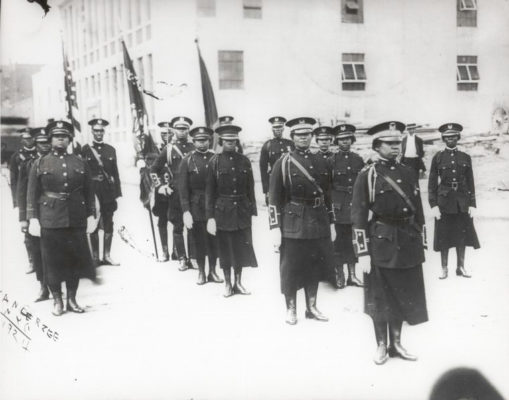
The Universal African Motor Corps was a female auxiliary trained in military discipline and automobile driving and repair. The head of the Motor Corps, given the title Brigadier General, was a woman. In 1920, women in America had only just been granted the right to vote. Black women faced the compounded exclusions of race and gender from both the formal political system and from the professional categories that military and technical dress signified. The Motor Corps uniform declared that Black women occupied command positions in an organised, self-governing institution. The title Brigadier General was not ceremonial. It was the UNIA’s direct assertion that Black women held military rank.
This dimension of UNIA dress has been consistently underanalysed. The academic literature on Garvey and the UNIA focuses, understandably, on Garvey himself. But the dress argument was not made by one man. It was made by thousands of people across multiple auxiliaries, each wearing a distinct uniform that declared a specific institutional role. As Omiren Styles’ documentation of African women who dressed the Americas confirms, the fashion industry profits from the aesthetic of African diaspora dress while refusing to credit the intellectual and cultural labour that produced it. The Motor Corps women in military dress in 1920s Harlem were producing a political and cultural argument whose intellectual labour deserves the same precision of acknowledgement.
The Parade as Governance Performance
The UNIA parades of the 1920s were not celebrations. They were governance performances: the UNIA demonstrating, in public, the institutional structures it had built and the discipline with which those structures operated. The banners were constitutive statements: ‘Africa for the Africans!’, ‘We Want a Black Civilisation ‘, ‘The Negro Won the War’, ‘Liberty or Death!’ The parade is an African form as much as it is a European one. The masquerade procession, the ceremonial march, the public performance of collective identity through dress and movement, are forms that enslaved Africans brought to the Americas and sustained across centuries of suppression. The UNIA parade was the most formally organised and politically explicit deployment of that tradition in Black American history.
After Garvey was deported in 1927, his photograph was carried at the front of subsequent parades in his place. The uniform was present, but its wearer was absent. That substitution is one of the most precise moments in the history of political dress: the argument the uniform had been making continued without the body that had made it, because the dress itself had become the argument. The uniform was the declaration. The declaration could outlast the declarant.
The Legacy in Contemporary Black Fashion Politics
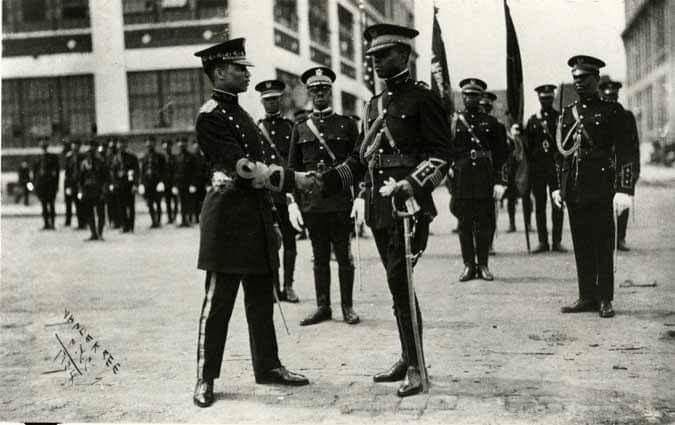
The UNIA uniform system did not end in the 1920s. Its logic runs directly through the dashiki movement of the 1960s, through the Black Panther Party’s black beret and leather jacket, through the kente-draped ceremonies of Black college graduation, through the deliberate Afrocentric dress of contemporary Ghanaian, Nigerian, and Caribbean political leaders. Each iteration is the same argument in different materials: Black dress as a declaration of capability, dignity, and sovereignty that the surrounding political system is structurally refusing to acknowledge.
Garvey’s red, black, and green appear in the flags of Ghana, Kenya, Ethiopia, and other African nations. They appear on the streets of Notting Hill Carnival, Brooklyn Labour Day Parade, and Toronto’s Caribana, carried by communities who may not know the UNIA origin of the combination but who are transmitting its argument nonetheless. The argument that dress makes is rarely lost when the garment is lost. It transmits through the wearing, through the community that adopts it, through the children who see it worn and understand what it means before they can name it.
The Omiren Argument
Marcus Garvey dressed 100,000 Black people in uniform. He marched them down the streets of Harlem in 1920 because the political argument he was making required a medium that could not be ignored, misquoted, or suppressed. The African fashion market is worth 31 billion dollars. The UNIA uniform system was the largest, most deliberately designed, and most politically explicit Black dress argument in twentieth-century history: the African Legion in red, black, and green declaring military capability; the Black Cross Nurses in white robes declaring medical competence and community care; the Universal African Motor Corps Brigadier General in military dress declaring that Black women held command; Marcus Garvey in purple and gold with a plumed helmet declaring himself provisional President of Africa to 100,000 witnesses on a Harlem street. None of these uniforms was costume. Each was a specific institutional declaration made in dress because the political system surrounding it would not provide another medium. The parades moved south into white-owned Harlem each year because the argument required a witness. The banners that accompanied the uniforms named what the dress was saying: Africa for the Africans. Liberty or Death. When Garvey was deported, and his photograph replaced him at the front of the parade, the argument continued without the body that had made it. That is what political dress at its most precise can do. It outlasts the person who wore it. Omiren Styles documents this as the argument in clothing that every subsequent Black political dress movement from the dashiki to the Black Panther uniform to the kente graduation stole has inherited.
ALSO READ:
- How Cultural Resistance Shaped the World’s Most Powerful Style Movements
- The Diaspora Fashion Paradox: Does Wearing Your Culture Make You Exotic?
- How Silhouettes Speak: A History Of Power In Black Women’s Fashion
- The African Men Who Dress to Be Remembered: Style, Power, and the Continent’s Forgotten Dandy Tradition
Frequently Asked Questions
What uniforms did the UNIA wear?
The UNIA operated several uniformed auxiliaries. The African Legion, an all-male paramilitary group, wore military garb in red, black, and green, the colours Garvey selected to represent independent Africa. The Black Cross Nurses wore long white cowled robes or green nursing uniforms. The Universal African Motor Corps, a female auxiliary, wore military dress. The Universal African Royal Guard wore slightly different uniforms and sometimes carried swords or rode horseback in parades. Marcus Garvey himself wore a purple and gold uniform with a plumed helmet and the Cross of African Redemption.
What do the UNIA colours red, black, and green mean?
Marcus Garvey selected red, black, and green as the colours of the UNIA flag and African Legion uniform to represent an independent Africa: red for the blood of the race, black for the people themselves, and green for the land of Africa. Numerous African nations subsequently adopted these colours in their flags, including Ghana, Kenya, and Ethiopia. The combination is now widely recognised as a symbol of African nationalism and Pan-African solidarity, a direct inheritance from Garvey’s deliberate design of the UNIA’s visual identity.
Why did Marcus Garvey wear a military uniform?
Garvey wore military dress to make a constitutional claim in the only medium available to him: dress. In 1920, he was elected provisional President of Africa by UNIA convention participants and dressed in a military uniform with a plumed hat for the occasion. The American legal system would not recognise a Black state, and colonial powers controlling Africa would not recognise his election. The uniform declared the claim publicly, to 100,000 witnesses in Harlem and to every press photographer present. The dress was the declaration because no other institutional form was available.
What were the Black Cross Nurses?
The Black Cross Nurses were a UNIA auxiliary modelled after the Red Cross. They wore long white cowled robes or green nursing uniforms and provided benevolent community work and public health services to Black neighbourhoods, specialising in infant health and home care. Some members had formal medical training; most received practical training in first aid and nutrition. Black people in America in 1920 were denied equal access to the public health system, and the Black Cross Nurses dressed in the uniform of medical authority and deployed into communities to perform the services that system refused to provide.
What was the political significance of the UNIA parades?
The UNIA parades of the 1920s were governance performances rather than celebrations: the organisation demonstrating in public the institutional structures it had built and the discipline with which those structures operated. They deliberately extended into white-owned Harlem to maximise the visibility of the political argument to power structures being challenged. Banners carried inscriptions including ‘Africa for the Africans!’, ‘The Negro Won the War’, and ‘Liberty or Death!’ After Garvey’s deportation in 1927, a large photograph of him led subsequent parades, demonstrating that the dress argument continued without the body that had made it.
Explore More
Read the full Culture > Heritage & Identity section for Omiren Styles‘ documentation of African and diaspora dress as political argument, from the Akan regalia system to the UNIA parades to the contemporary designers building on that inheritance.