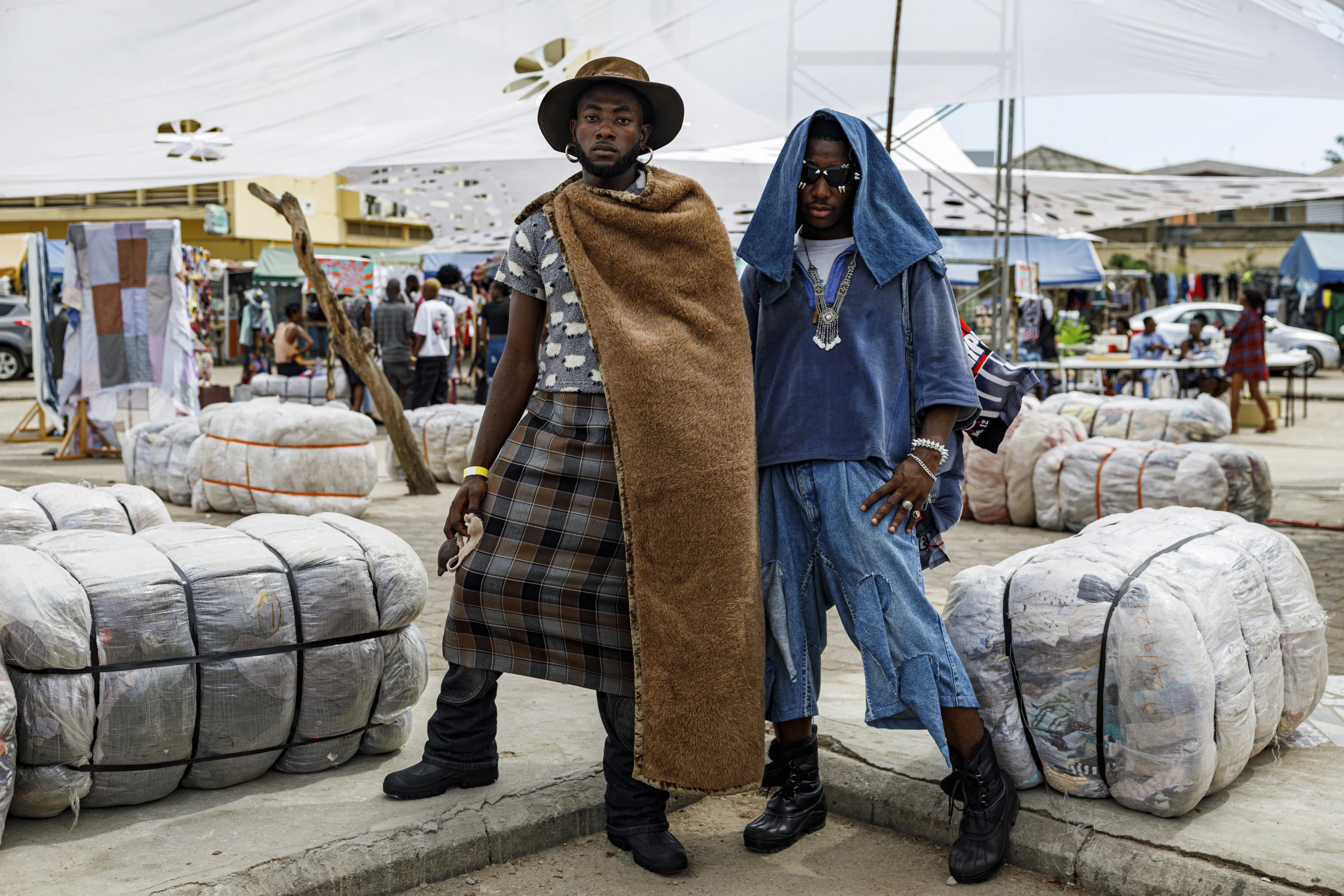
In January 2025, a fire swept through Kantamanto Market in Accra, Ghana, the world’s largest secondhand clothing market, destroying over 60% of its retail spaces in a single night. An estimated 10,000 people lost their primary source of income. Traders had no insurance. The structural reason they had no insurance is that the physical construction of Kantamanto- wooden stalls, narrow pathways, no fire hydrants, highly flammable stock- was treated by insurers not as an insurable risk but as a predictable outcome. The stalls could not be insured because the environment in which they were housed made a claim inevitable. The traders therefore bore the entire loss of the event that every structural feature of the market made certain would eventually happen.
The African fashion market is worth 31 billion dollars. The Kantamanto fire is the most documented and most devastating single instance of a structural problem that runs through the entire African independent fashion economy: when stock is lost, there is typically no insurance, no safety net, no credit facility to restock, and no mechanism to absorb the loss except the individual designer, maker, or trader who produced the work. As Anker Research Institute’s analysis of the Kantamanto fire and informal fashion economies confirms, the fire exposed the fragile, unprotected nature of informal economies in the Global South and the urgent need for stronger governance and social protection systems. That need predates the fire and extends well beyond Kantamanto.
When a Zara warehouse burns, the loss is a line item. When an African independent designer runs out of stock, it can end the business. Here is the structural reason why.
African Fashion Designer Stock Loss: The Structural Gap
The asymmetry in how stock loss is experienced across the fashion industry is one of the most consequential but least discussed structural inequalities in the sector. A major fashion conglomerate with a distribution warehouse fire absorbs the loss as shrinkage or business interruption: insured, managed, and reflected in an annual report as a percentage figure. An independent African designer whose stock is stolen from a market stall, lost at a consignment retailer, destroyed in transit, or never paid for by a wholesale buyer experiences the same category of event without any of the mechanisms that convert a catastrophic loss into a manageable cost.
The insurance gap is documented and specific. As The World’s reporting on the Kantamanto fire and its traders confirms, one trader stated simply that she has no insurance, and fears she may never be able to recover from her losses. An insurance consultant at Ghana’s National Insurance Commission explained that insurance is about accidental events, not things you are sure will happen. The sorts of structures at Kantamanto will always periodically lead to fires. So if the structural issues and hazards are not fixed, it will always be hard for insurers to provide coverage. The insurance system excludes the traders who most need it by defining their operating conditions as uninsurable.
A major fashion retailer describes stock loss as shrinkage and assigns it a percentage of annual revenue. An independent African designer describes the same event as the end of a season, the loss of six months of production capital, or the collapse of a business that cannot absorb the hit.
The Four Categories of Stock Loss
Stock loss for African independent designers and fashion market participants occurs across four distinct categories, each with different causes and different consequences.
Theft is the most visible category. At markets, pop-ups, and retail events, independent designers often display stock with minimal security infrastructure. The National Retail Federation has documented global retail theft patterns that have grown sharply: shoplifting incidents increased 19% from 2023 to 2024, building on 26% growth the previous year. A major retailer can deploy electronic tagging, security staff, and insurance to manage this exposure. An independent designer at a pop-up market cannot. A garment stolen from her rack is one she produced, lost without a recovery mechanism.
Consignment failure is the second category and arguably the most common for designers attempting to build retail relationships. Consignment arrangements place the designer’s stock at a retailer’s premises, with payment due only after the items sell. The arrangement means the designer bears the inventory risk while the retailer bears none. If stock is stolen, damaged, or lost at the retailer’s premises, the designer typically has no legal remedy unless a consignment contract has been signed, no insurance claim to make unless she has a specialist stock policy, and no control over the retailer’s security or storage conditions. The retailer’s loss is the designer’s loss, but the retailer may face no consequences.
Non-payment from wholesale buyers is the third category. An independent designer who receives a wholesale order, produces the garments, and delivers them to a buyer who then defaults on payment has lost the production capital, the materials, and the time invested in the order. Unlike larger suppliers with credit insurance and legal capacity to pursue debtors, the independent designer typically has neither. The legal cost of recovering a small wholesale debt may exceed the value of the debt. The defaulting buyer knows this and relies on it.
Fire, flood, and structural damage is the fourth category, and the Kantamanto case is its most dramatic recent expression. Market fires, workplace floods, and building collapses destroy stock representing months or years of production investment, typically with no insurance and no government compensation mechanism. The designer or trader absorbs the entire loss.
Why Insurance Fails Independent African Designers

The formal insurance market has not developed products that fit the operating conditions of independent African fashion businesses at the scale they need. As Speaking of Ethical Fashion’s analysis of the Kantamanto fire and the fashion industry’s systemic responsibilities confirms, the critical role of markets like Kantamanto in the informal economy cannot be overlooked. The loss exposes the injustice of communities that have shouldered the burden of the global fashion industry’s excess without adequate legal protection, labour rights, or financial safety nets. The designers and traders operating in African fashion markets occupy exactly this position.
The specific barriers to insurance access for independent African fashion businesses include the physical conditions of trading, which formal insurers classify as high risk or uninsurable; the informal nature of many trading relationships, which creates documentation gaps that insurance claims require; the premium cost of commercial stock insurance relative to the thin margins of independent design businesses; and the absence of tailored products from insurers who have historically designed their fashion industry offerings around the risk profiles of large retailers and established houses, not independent makers.
The credit insurance gap is equally significant. Large fashion businesses use credit insurance to protect against buyer default: when a wholesale customer fails to pay, the credit insurer covers the loss. This product exists for established businesses with formal credit ratings, payment history, and audited accounts. It does not exist in a usable form for an independent African designer placing her first or fifth wholesale order with a boutique that may itself be operating on thin margins. The risk management tools used by the formal fashion economy to manage commercial risk are structurally inaccessible to the independent African designer who needs them most.
The Compounding Effect
The most damaging aspect of stock loss for independent African designers is not the single event but the compounding effect of an event with no recovery mechanism. As Omiren Styles’ analysis of the Nigerian fabric market and the credit systems that keep it functioning confirms, the informal credit system that underpins African fashion supply chains operates through relationships and reputation rather than through formal financial infrastructure. A designer who loses stock loses not only the garments but also the capital tied up in their production, the ability to restock for the next season, the cash flow to pay suppliers and cover production costs, and, in some cases, the trust relationships with fabric suppliers that the informal credit system requires.
The compounding effect differentiates stock loss for an independent designer from stock loss for a large retailer at every level. The large retailer has insurance, retained earnings, credit facilities, and investor capital to absorb the loss and continue operating. The independent designer has none of these. The same event that is a line item in one business model is an existential crisis in another. The fashion industry treats these two outcomes as equivalent because its risk frameworks were designed for the business model with infrastructure, not for the one without it.
What Protection Would Actually Require
Addressing the stock-loss gap for African independent designers requires simultaneous changes at multiple levels. The first is product innovation from the insurance sector: group stock insurance products designed for market traders and independent designers, with premiums calibrated to the actual value at risk rather than to corporate-scale coverage requirements. The second is consignment contract standardisation: industry-standard consignment agreements that protect designers whose stock is held at third-party premises, with clear liability terms and dispute-resolution mechanisms accessible without expensive legal advice. As Omiren Styles’ analysis of the Lagos fashion market and its economic structure supporting small participants confirms, the fabric market’s informal credit system demonstrates that community-based financial mechanisms can serve participants whom formal institutions exclude. The same principle can apply to risk sharing.
Cooperative insurance models, in which groups of independent designers pool their stock insurance needs and negotiate collectively with insurers, represent one practical mechanism that has worked in other sectors. Trade associations with sufficient membership could offer group policies that give individual designers access to commercial stock coverage at premiums they can afford. The African fashion industry has the scale, the documented market value, and the international profile to negotiate for these products. What it has not yet done is organise the claim effectively enough to make the negotiation happen.
The Omiren Argument
When a fashion brand runs out of stock, who pays? In the global fashion industry, the answer depends entirely on which part of the industry is losing it. A major fashion conglomerate with a warehouse fire reports the loss as a business interruption and recovers it from its insurer. An independent African designer whose consignment stock is stolen from a boutique absorbs the loss in full, with no insurance, no credit facility to restock, and no legally accessible mechanism at the scale of the loss. The Kantamanto fire of January 2025 is the most documented instance of this structural inequality: 10,000 traders lost their primary income in a single night, with no insurance because the formal insurance market had deemed their operating conditions uninsurable. That is not an accident. It is the predictable outcome of a risk management system designed around the business models it finds easiest to serve.
The African fashion market is worth 31 billion dollars. The independent designers, market traders, and makers who produce a significant share of that value operate without the commercial protection that the sector’s scale should provide them. Stock loss, consignment failure, buyer default, and market disasters all impose their full cost on the individuals least equipped to absorb it. The solution requires insurance product innovation, consignment contract standardisation, cooperative risk-sharing models, and policy engagement that treats informal African fashion businesses as a legitimate sector with specific, solvable risk-management needs rather than an uninsurable edge case. Omiren Styles documents this gap here because naming it precisely is the first step toward addressing it.
Also Read:
- How Seyi Vodi Built a Luxury Tailoring Brand Before He Had a Shop
- The African Cities That Will Define Global Fashion by 2030
- How Naira Devaluation Is Reshaping Nigeria’s Fabric Markets
- Dakar Is Building Its Own Luxury Fashion System
Frequently Asked Questions
What happens when a small fashion brand loses stock?
For a small or independent fashion brand, stock loss typically means losing production capital with no means of recovery. Unlike large retailers who carry commercial stock insurance, have retained earnings to absorb losses, and can access credit facilities to restock, independent designers usually have no insurance coverage, no safety net, and no way to recover the cost of lost, stolen, or unpaid stock. The loss of a single wholesale order’s worth of garments can halt an independent designer’s ability to operate for a season.
Why do African fashion designers often have no insurance?
African independent fashion designers face several structural barriers to insurance access. Formal stock insurance products are designed for large retailers and established businesses, with premiums and documentation requirements that do not suit independent design businesses operating on a small scale. Many African fashion market traders operate in physical conditions- wooden market stalls and informal market settings- that formal insurers classify as high-risk or uninsurable. The absence of formal trading records, audited accounts, and credit histories creates the documentation gaps that insurance claims require. The result is a 31 billion-dollar market in which a significant share of participants lack commercial protection for their primary business asset.
What is the risk of consignment for independent designers?
Consignment arrangements require the designer to deliver stock to a retailer and receive payment only after the items sell. This places the full inventory risk on the designer while the retailer bears none. If stock is stolen, damaged, or lost at the retailer’s premises, the designer typically has no legal remedy without a formal consignment contract, no insurance claim without a specialist policy, and no control over the security and storage conditions at the retailer’s location. Buyer defaults on wholesale orders create the same asymmetry: the designer bears the production cost and the unpaid invoice, with legal recovery typically too expensive relative to the value of the debt to pursue.
How did the Kantamanto fire affect independent designers?
The Kantamanto Market fire of January 2025 destroyed over 60% of the world’s largest secondhand clothing market in Accra, Ghana, displacing an estimated 10,000 traders and eliminating their primary source of income overnight. Traders had no insurance: the physical construction of the market- wooden stalls, flammable stock, narrow pathways without fire hydrants- was classified by insurers as too high-risk to cover. The traders bore the entire loss. The fire is the most concentrated documented example of the structural insurance gap facing African fashion market participants.
What protections exist for African independent fashion brands?
Current formal protections for African independent fashion brands are minimal. Some independent designers carry basic business insurance, but commercial stock coverage tailored to the specific conditions of independent African fashion businesses is rarely available or affordable. Proposed solutions include cooperative stock insurance models in which groups of designers pool their risk and negotiate collectively with insurers; standardised consignment contracts with accessible dispute resolution mechanisms; and industry associations that organise collective negotiation for group coverage products. None of these is yet widely available across African fashion markets.
Explore More
Read the full Fashion > Industry section for Omiren Styles’ documentation of African fashion market economics, supply chain risk, and the structural conditions shaping how African independent designers build and sustain their businesses.