Fashion economies are not sustained by novelty alone. They are built through workshops, repeat customers, retail spaces, practical production knowledge, local trust and the ability to keep making clothes when attention moves elsewhere.
For more than two decades, Nadiaka has done all of those things in Lomé. Founded and directed by Togolese designer Nadia Karimu-Yessoufou, the label creates clothing and accessories, offers made-to-measure work and sells ready-to-wear from its Lomé base. In a global fashion system that still gives relatively little English-language attention to Togo, Nadiaka’s continued presence matters not simply as a success story, but as evidence of a fashion business that has endured, adapted and expanded its idea of what “Made in Togo” can mean.
Its story also complicates a familiar international narrative. African fashion is often introduced through newness: the emerging designer, the breakout collection, the sudden social-media discovery. But fashion economies are not built through novelty alone. Nadiaka belongs to a longer story, one that this series, Made in Lomé: The Designers Shaping Togolese Fashion, exists to tell.
The story of Togolese fashion is not only about emerging talent. It is also about endurance: the patient, often under-documented work of creating a label, keeping it visible, serving customers and making a local fashion identity feel possible over time.
Founded by Nadia Karimu-Yessoufou, Nadiaka is a Togolese fashion label in Lomé whose ready-to-wear, tailoring, and textile-led designs reflect two decades of Made in Togo fashion.
A Fashion Business Built in Lomé
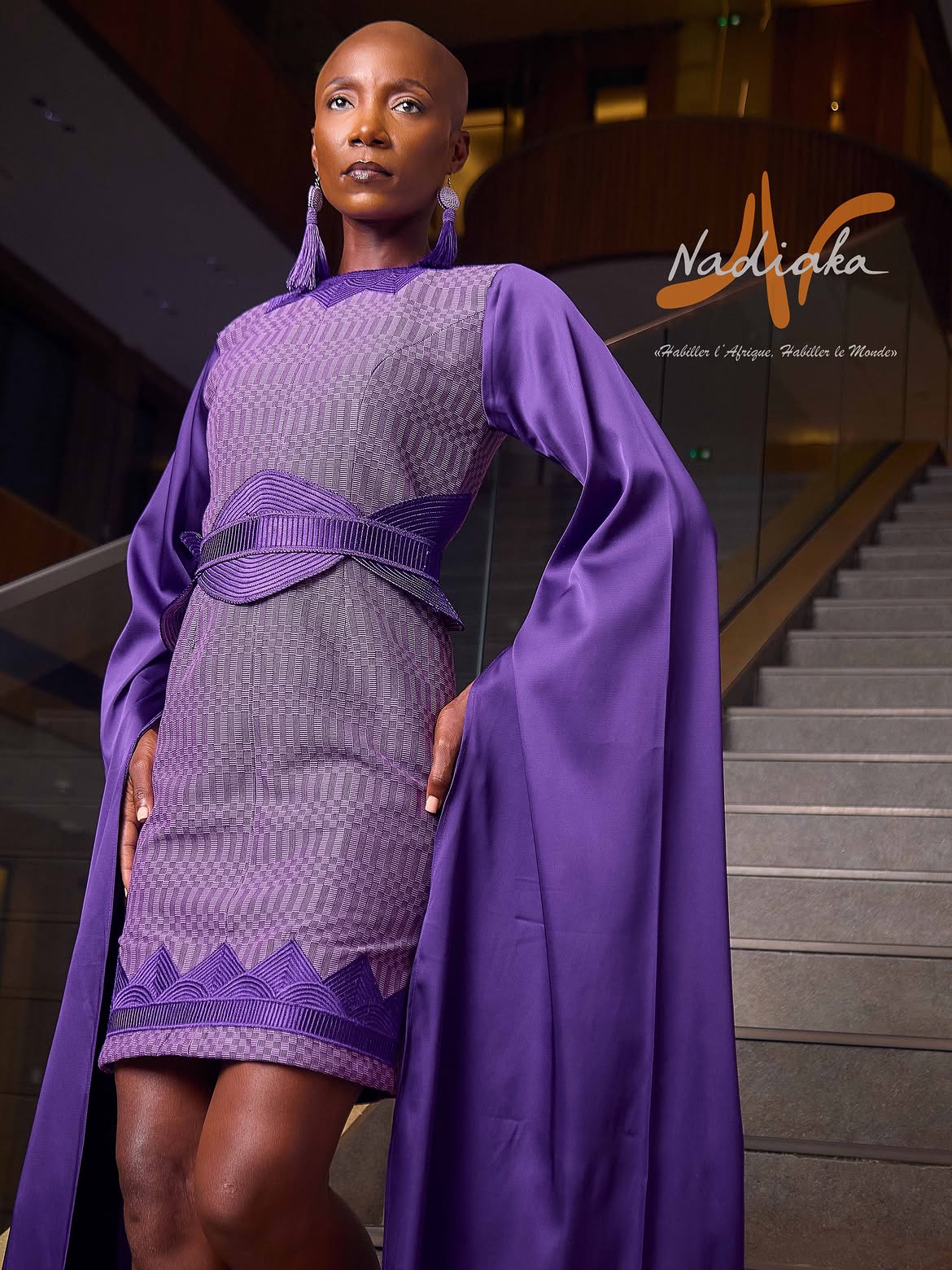
Nadia Karimu-Yessoufou did not begin her professional life in fashion. She trained in information technology and worked as a commercial officer at DHL International in Lomé before turning towards clothing design. The transition places Nadiaka within a wider tradition of African fashion entrepreneurship: independent businesses shaped as much by commercial discipline and customer knowledge as by creative instinct.
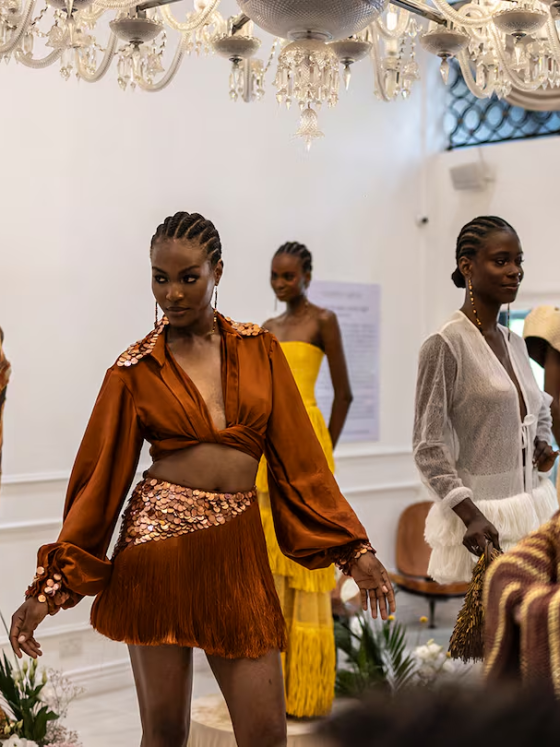
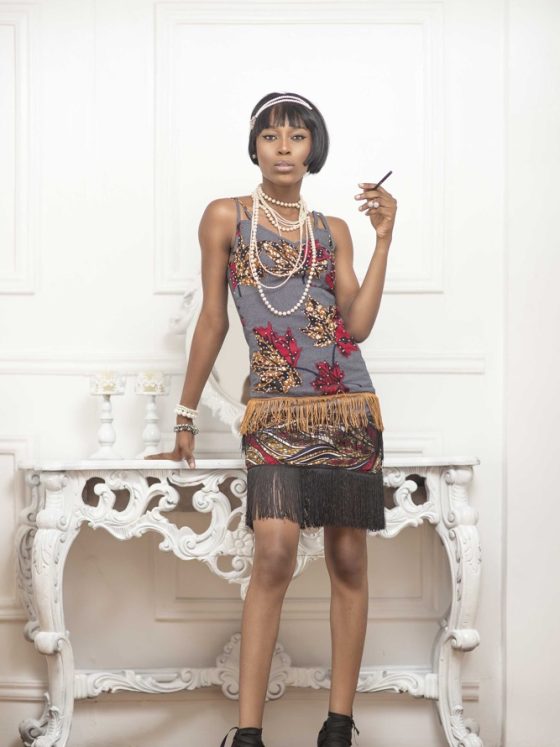
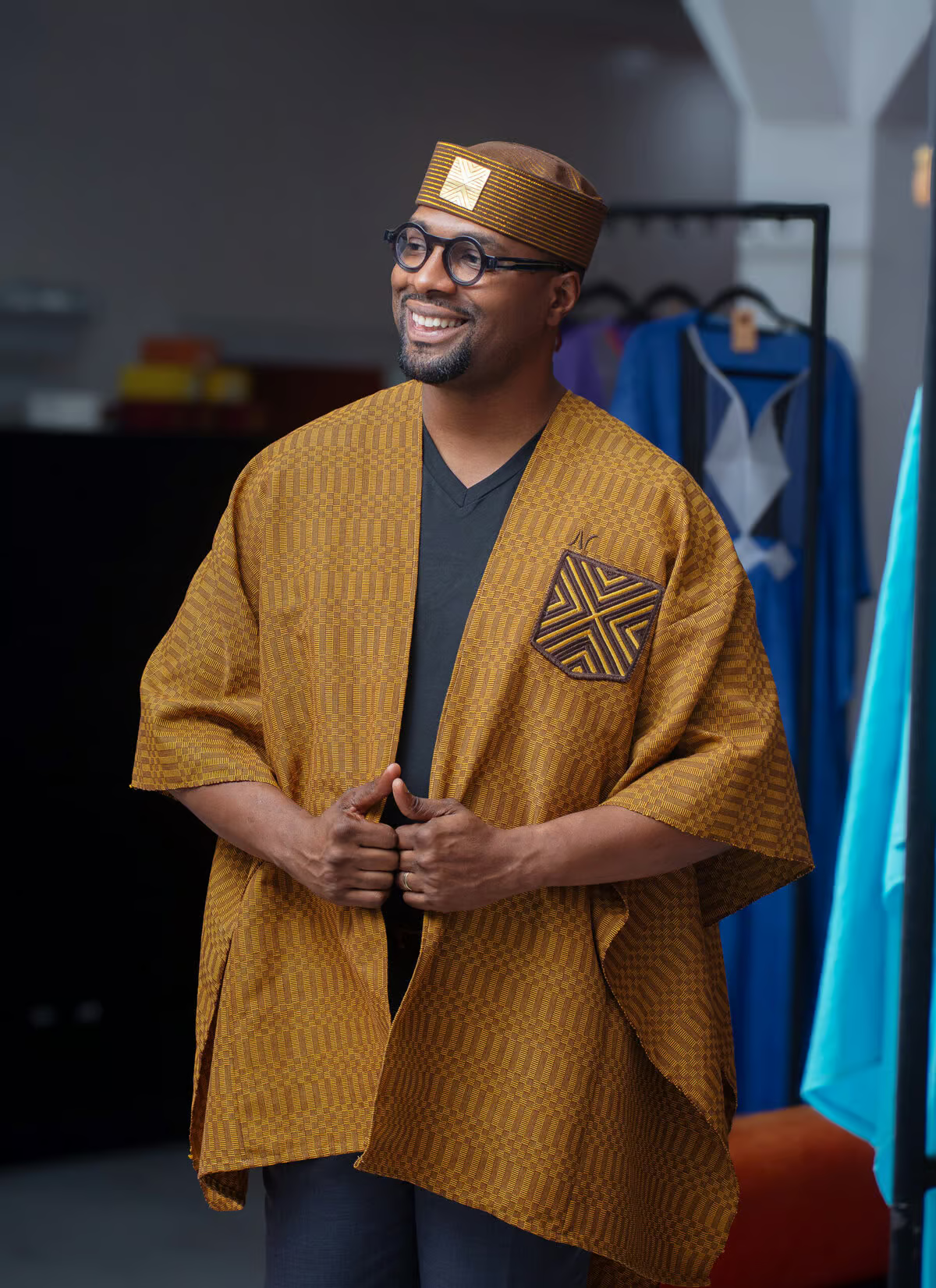
The brand has been active since 2003, a date Nadiaka itself uses when describing its place in Togolese fashion. It presents itself as a Togolese clothing and accessories label guided by an Afro-ethnic, chic and relaxed sensibility, with a clean design language. Its garments draw on a broad material vocabulary: printed and woven pagne, dyed cloth, batik, silk, linen, cotton and leather. Embroidery is one of the house’s recurring details, used to create recognisable surface treatments across different fabrics.
That combination of textiles and tailoring is central to the label’s identity. Nadiaka does not treat local or regional fabric merely as decoration attached to a Western garment formula. The cloth is part of the starting point: it determines colour, movement, texture and the cultural references a piece can carry.
The resulting work occupies a space between occasionwear, daywear, ready-to-wear and made-to-measure dressing. That flexibility is commercially important. Independent fashion labels in Lomé are often required to cater to a range of customer needs: formal events, professional wardrobes, ceremonies, gift-buying, personal commissions, and everyday clothing. A brand able to work across those needs is not simply designing a collection. It is building a relationship with a community.
What “Made in Togo” Looks Like
“Made in Togo” is often used as a label of origin, but Nadiaka’s history suggests it can be understood more broadly: as a position on manufacturing, cultural confidence and local consumption.
Togo First has described Karimu-Yessoufou as a standard-bearer for Made in Togo. The outlet reported that Nadiaka designs, makes and sells tailored garments and accessories, while also supplying products to national and international companies. That model matters because it connects fashion design to the practical infrastructure of an economy: workshops, clients, uniforms, corporate orders, retail and services.
For Nadiaka, local production is not positioned as a nostalgic retreat from modernity. It is a way of participating in it. The brand’s official language combines traditional and contemporary textiles with a streamlined, wearable design approach. Its work points to a form of fashion practice that sees no contradiction between cultural specificity and commercial ambition.
That distinction is important. Too often, international coverage approaches African design through a narrow expectation of visible “heritage,” as though a designer must continually prove authenticity through bold print, symbolism or a simplified story about tradition. Nadiaka’s practice is more useful to read as a negotiation. The label works with textile traditions and regional references while also serving customers who want clothes for the present tense: to wear at work, at celebrations, in city life and across borders.
Omiren Styles has established, in its analysis of the Dakar media gap and what Francophone West African fashion has been building without English-language coverage, that the discovery frame used by international fashion media for West African fashion cities consistently misrepresents how long and how seriously those cities have been producing. Nadiaka is a Lomé illustration of the same argument: the brand was not waiting for English-language attention to legitimise its practice. The practice predates the attention by two decades.
Twenty Years of Continuity
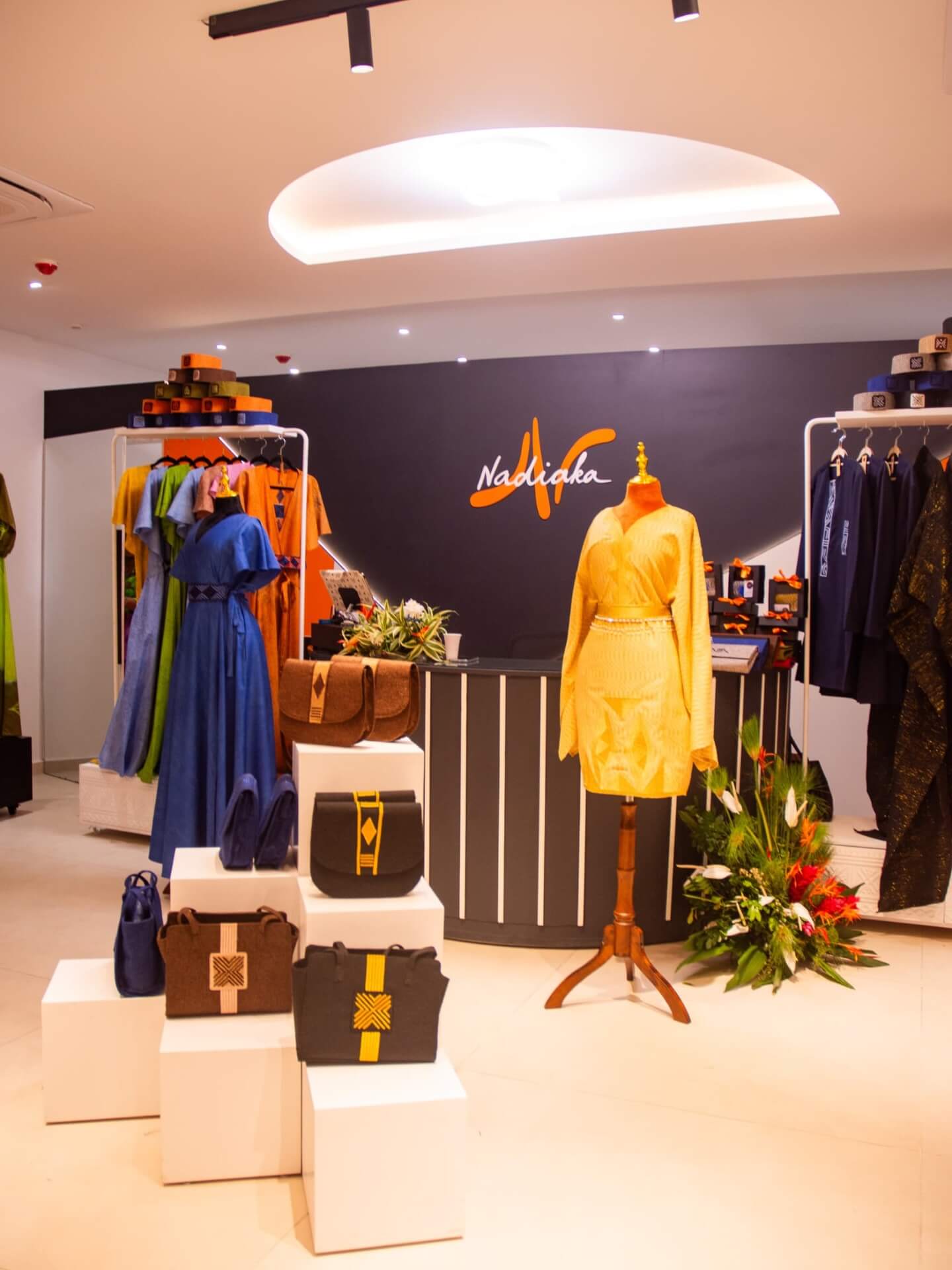
In December 2023, Karimu-Yessoufou marked 20 years of Nadiaka by opening a new boutique in Lomé. The occasion introduced a collection titled Fêfê, a Baoulé word associated with joy and gaiety. The collection placed Baoulé dyed and woven pagne at its centre, using it across garments that also incorporated lace, silk and Nadiaka’s characteristic embroidery.
The symbolism of the collection was telling. A Togolese label celebrating its anniversary through a textile reference associated with Côte d’Ivoire reflected a wider West African fashion conversation: one shaped by travel, fabric circulation, regional customers and shared visual languages. The pagne does not observe national borders in the hands of a West African designer, and the decision to name the collection with a Baoulé word was a statement about the regional scope of the brand’s cultural frame of reference.
The boutique itself also represented something more material than a milestone. Karimu-Yessoufou said the new space responded to the brand’s growth and the need for more room to present its range. The showroom carries clothing and accessories, while the brand has continued to emphasise both ready-to-wear and bespoke design.
For independent labels, a physical retail space is never a neutral detail. It is a point of encounter between designer and customer. It gives a brand a place to tell its story, test products, host fittings, build loyalty, and let clothing be experienced beyond the compressed visual language of social media. The fashion industry often measures relevance through runway access, celebrity placement or online numbers. Those metrics can be useful, but they miss another kind of achievement: remaining present in a city’s fashion life long enough to become part of its memory. Nadiaka’s two-decade trajectory is evidence of that deeper form of relevance.
Nadiaka’s claim to global relevance begins with a belief that Togolese fashion, material knowledge and workmanship already have value. The world does not need to be invited to discover Togo as though no fashion culture existed before outside attention arrived. It needs better ways to see what designers such as Nadiaka have been building in public, often with limited visibility in international media.
Fashion as Local Cultural Infrastructure
Karimu-Yessoufou’s work has not been limited to operating a label. Togo First reports that she has organised fashion and design events, including Reavision, Afrimania, and Nadiaka Africa, and has taken part in the Lomé Confinement Show during the early period of the COVID-19 pandemic. In places where fashion infrastructure is still developing, designers are often required to do more than design. They become producers, mentors, event organisers, advocates, retailers and public voices for local creative industries.
Nadiaka’s 15th-anniversary event, held in Lomé in 2018 under the title Splendeur: l’Afrique qui brille – or Splendour: Africa That Shines – was explicitly linked to promoting Made in Togo clothing and the local economy. Coverage at the time described an event centred on African cultural wealth in dress and framed the show as a call for greater awareness of locally made clothing among Togolese consumers.
This is one reason Nadiaka should be viewed as more than an individual fashion brand. Its founder’s career reflects the work of building a creative ecosystem: helping create occasions where designers, models, audiences, garments and ideas can meet. For Lomé, that work is especially meaningful. The city’s fashion culture is often overlooked by English-language media, despite the presence of designers, tailors, textile merchants, photographers, stylists, models and independent labels working across different scales. A brand such as Nadiaka makes that ecosystem easier to see because it has lasted long enough to connect several generations of fashion activity.
Omiren Styles has documented, in its analysis of African fashion weeks and the infrastructure they built faster than criticism, that the most durable fashion platforms are those that build commercial ecosystems rather than events. Karimu-Yessoufou’s decision to organise events alongside running her label reflects the same logic: a Lomé fashion ecosystem is built by the people who contribute to it repeatedly, not by those who arrive, photograph it, and leave.
ALSO READ
- Dakar Was Not Waiting to Be Discovered: Francophone West African Fashion and the English-Language Media Gap
- African Fashion Weeks Built Networks Faster Than Criticism
- Can Africa’s Repair Economies Become Formal Fashion Infrastructure?
- The Global South Made Fashion. It Just Never Got Credit.
Dressing Africa, Dressing the World
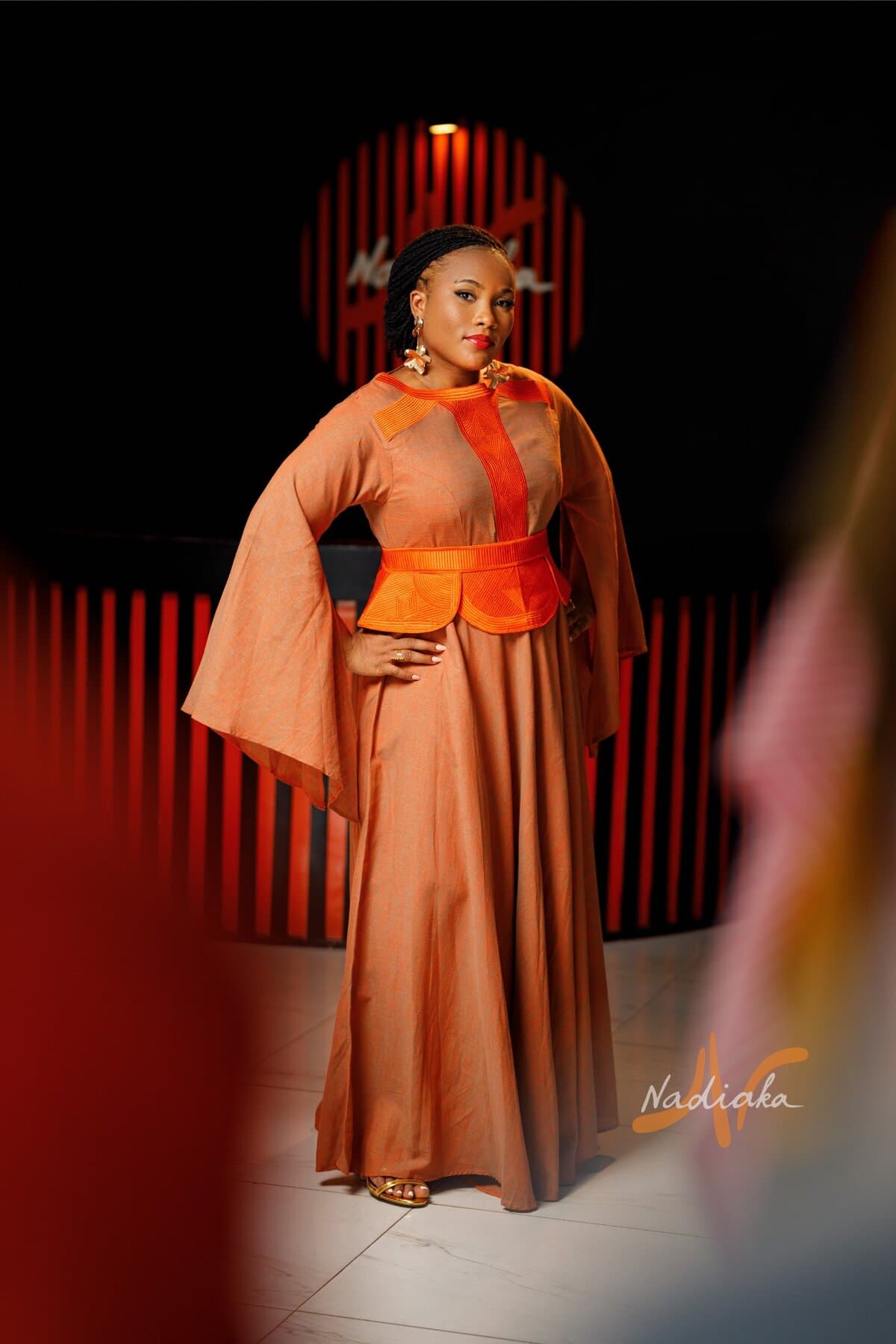
Nadiaka’s ambition has always extended beyond a single market. The brand’s current positioning, Habiller l’Afrique, habiller le monde, or Dressing Africa, dressing the world, signals an outward-facing vision. Its official site says the business offers clothing and accessories, custom work, online ready-to-wear, and a boutique and atelier in Lomé.
That ambition should not be mistaken for a desire to abandon the local in pursuit of international approval. The stronger reading is the opposite: Nadiaka’s claim to global relevance begins with a belief that Togolese fashion, material knowledge and workmanship already have value. The world does not need to be invited to discover Togo as though no fashion culture existed before outside attention arrived. It needs better ways to see what designers such as Nadiaka have been building in public, often with limited visibility in international media.
Two decades after its founding, Nadiaka remains a reminder that fashion legacies are not created only in Paris, Milan, London or Lagos. They are also made in ateliers, boutiques and fitting rooms in Lomé. For this series, it is an essential starting point: not only because of what the label has made, but because of how long it has kept making it.
EXPLORE MORE
Read the full Fashion and Designer Profiles sections at Omiren Styles for ongoing documentation of West African fashion labels, the Made in Lomé series, and the designers shaping Togolese fashion. Discover travel and heritage intelligence across Togo and West Africa at Rex Clarke Adventures. Visit Nadiaka directly at nadiaka.com.