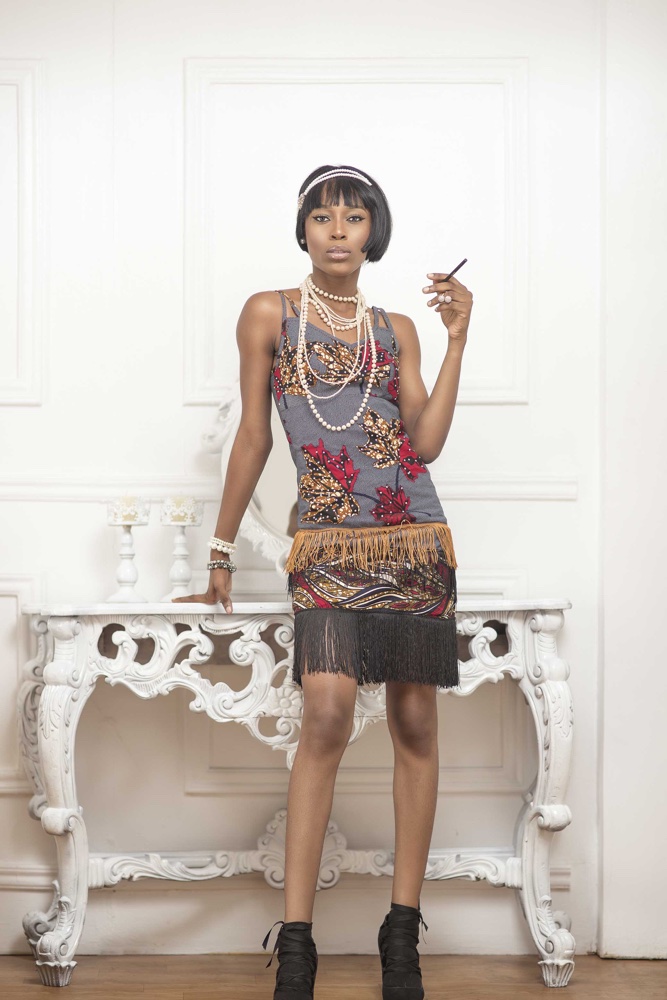
Grace Wales Bonner graduated from Central Saint Martins in 2014 with a distinction in womenswear. Her graduate collection was called Afrique. Her dissertation, titled Black on Black, received the Dean’s personal commendation. The sequence is revealing: before the collection had a commercial life, the research that produced it had already been recognised at the highest academic level the institution could offer. The school understood the collection and the scholarship as equally serious outputs of the same intellectual process.
Wales Bonner does not describe herself primarily as a designer. As the Lisson Gallery’s documentation of Wales Bonner’s practice confirms, while she sees herself primarily as a researcher, her expansive artistic practice also includes curation, filmmaking and publishing. This self-description is the most useful way to understand her practice, because it explains why each collection is a new inquiry rather than a refinement of the last, and why research does not precede design but constitutes it. The African fashion market is worth 31 billion dollars. The chain from archive to garment is the methodology.
Wales Bonner describes herself as a researcher first. Here is the chain from archive to garment that her collections have documented across a decade of practice.
The Foundation: Afrique and the CSM Dissertation
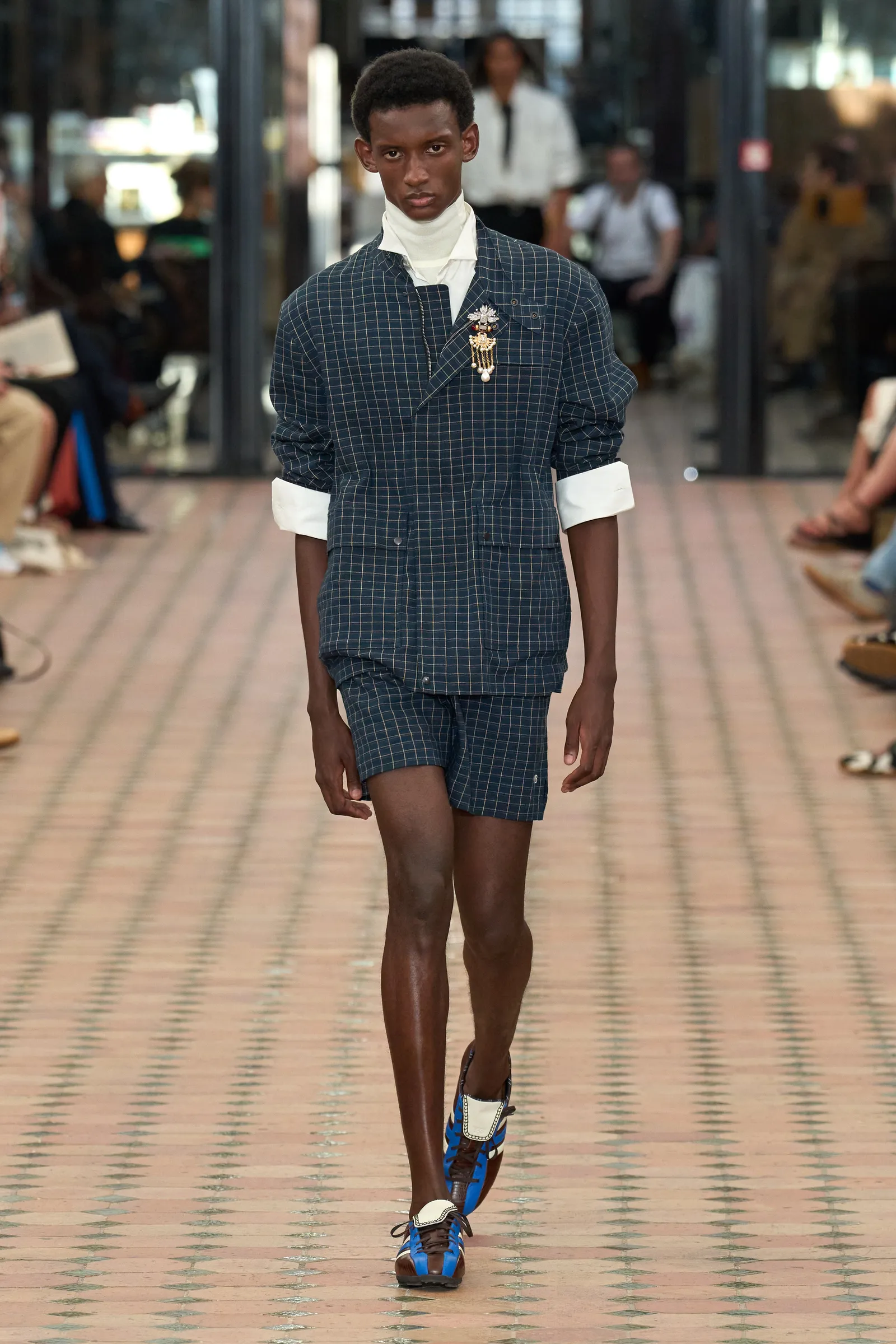
The Afrique collection, presented at CSM in 2014, won the L’Oréal Professionnel Talent Award and was described by the V&A as exploring Coco Chanel via Lagos. As the V&A’s Fashion in Motion documentation of Wales Bonner’s practice confirms, her SS15 graduate collection, Afrique, explored Coco Chanel through a Lagos lens and won the L’Oréal Professionnel Designer of the Year Award. The collection’s cited inspirations include painter Kerry James Marshall and filmmaker Melvin Van Peebles. Both are artists whose practice involves representing Black identity through a visual language that refuses to position Black subjects as marginal or exotic. Afrique set the research terms that every subsequent collection would extend: the enquiry into Black masculinity, Black luxury, Black visual culture, and the relationship between European fashion forms and their diasporic transformations.
The dissertation Black on Black, completed alongside the collection and commended by the CSM Dean, established that Wales Bonner’s academic practice was inseparable from her creative practice. A fashion dissertation that receives a Dean’s commendation is a document that the institution regards as a serious scholarly contribution, not a supporting document for a portfolio. The dissertation’s title, Black on Black, places the practice’s intellectual commitment at the centre of its own description: an investigation into Blackness conducted from within Blackness, with no mediating third-party lens required.
Wales Bonner does not describe herself primarily as a designer. She describes herself primarily as a researcher. That self-description is the most useful thing to understand about her practice, because it explains why each collection is a new inquiry rather than a refinement of the last one, and why research does not precede the design but constitutes it.
The Early Collections: Building the Archive
After Afrique, Wales Bonner’s first fashion week collection was Ebonics (AW2015), presented at Fashion East during London Collections: Men. The collection’s title alone announces the research agenda: Ebonics is the term for African American Vernacular English, and its use as the collection title is an intellectual claim that a specific vernacular community’s language is a legitimate design source. As SHOWstudio’s documentation of Wales Bonner’s practice confirms, her references are rooted in Black visual culture, and her designs explore cross-cultural hybridity and entangled notions of European and African luxury. Ebonics was received to critical acclaim and secured Wales Bonner an invitation to the V&A’s Fashion in Motion programme, making her one of the youngest designers to present there.
Malik (AW2016) and Spirituals (SS2016) extended the research into Black spirituality. Malik drew on Islamic prayer practices and Sufi aesthetics, exploring the devotional dimensions of Black Muslim tradition as a design source. Spirituals was described in the collection’s own documentation as a meditation on Black spirituality. This current flows from the ancient past and carries us away on a journey to a future way out beyond the galaxies.
The Spirituals collection notes cite a specific source text: Omniverse Sun Ra (2015) by Hartmut Geerken and Chris Trent. As the Wales Bonner official collection documentation for Spirituals confirms, the collection material includes classic tailoring sensualized and feminised with curves and cinched waists, in shimmering checked suiting. A dusky camel suede coat. Sports suiting with Swarovski crystal embroidery and cowrie shells. Rural elegance in brown velvet suits, floating silk shirting. Lime green crocheted floppy sun hats. The heat and escapism of performance, sweat crystals. The research source- Sun Ra’s cosmic philosophical system- is not a decorative reference. It shapes the collection’s conception of Black spiritual experience as something that transcends the conventional categories of the formal versus the casual, the earthly versus the cosmic.
The double presentation in 2016, Malik and Spirituals in the same year, secured Wales Bonner the year’s most significant young designer prize in Paris. But the prize is secondary to what the collections document: that two consecutive seasonal presentations could each build from a distinct research inquiry into Black spiritual and philosophical tradition and produce formally and aesthetically coherent garments from that inquiry. The methodology was proven to be replicable across contexts.
Spirituals II and the Sound System
Spirituals II (AW2017) demonstrated Wales Bonner’s capacity to shift her research source while maintaining the collection’s conceptual continuity. The presentation was held at the Royal Institute of British Architects in London. The centrepiece of the runway space was the original sound system from the Notting Hill Carnival: the actual physical equipment from one of the defining events of Black British cultural history, installed as architecture rather than as decoration.
The collection cited itinerant monks from the Middle Ages as a visual reference, alongside the street-preacher tradition, pointing to the intersection of spiritual practice and public space. Collaborators included Sampha (music composition), Elysia Crampton (spoken word), and Lynette Yiadom-Boakye (a commissioned poem). Each collaborator was chosen for their specific relationship to the collection’s research inquiry: Sampha’s practice in sound and emotion, Crampton’s work with Afrolatino diasporic identity, Yiadom-Boakye’s painting practice centred on Black figuration. The collaboration model was not celebrity placement. It was research conducted through creative community.
Blue Duets and the Harlem Renaissance Archive

Blue Duets (SS2018) is the most thoroughly documented of Wales Bonner’s research-led collection presentations because it included a 32-page distributed anthology that directly named its sources. As AnOther Magazine’s documentation of Wales Bonner’s book references for Blue Duets confirms, to accompany the show, held inside a Holborn church, Wales Bonner distributed an anthology including Hilton Als’ essay on Michael Jackson, Jean Baudrillard’s writing on hyper-reality, a poem by Alan Miller, and haunting vignettes from Harlem Renaissance writer Jean Toomer. Photography by Paul Mpagi Sepuya accompanied the texts.
The collection’s show notes also referenced Carl Van Vechten’s homoerotic photography, a key document of the Harlem Renaissance’s intellectual and artistic scene of 1920s Harlem. The Harlem Renaissance archive appears here not as a general cultural reference but as a precise research source: Van Vechten’s photography is a body of work that documented a particular community at a particular moment, and its appearance in the Blue Duets notes is the result of archival research rather than mood-board association. The collection’s presentation in a church reinforced the devotional and spiritual research thread that runs from Malik through Spirituals to Blue Duets.
The Institutional Exhibitions
Wales Bonner’s research practice has been recognised institutionally not only through fashion prizes but through two major museum collaborations that explicitly treat her work as an archival and curatorial practice rather than a design practice.
A Time for New Dreams (Serpentine Gallery, January 2019) was Wales Bonner’s first institutional art exhibition. The Serpentine is one of London’s most significant contemporary art institutions, and the exhibition situated her practice within the context of contemporary art rather than within fashion alone. The exhibition’s title is drawn from Ben Okri, the Nigerian writer whose poem appears as a closing blessing in the A Magazine issue Wales Bonner curated.
Artist’s Choice: Grace Wales Bonner, Spirit Movers (MoMA), placed her alongside a lineage of artists, including David Hammons, Trisha Donnelly, and Amy Sillman, as curators of MoMA’s permanent collection. As MoMA’s press release for the Spirit Movers exhibition confirms, the exhibition was organised around Black spirituality and Islamic practices and accompanied by an artist’s book titled Dream in the Rhythm: Visions of Sound and Spirit, assembled as an archive of soulful expression. The MoMA documentation describes Wales Bonner’s practice as an extraordinary commitment to archival research as both a form of spirituality and an aesthetic practice.
Between Critique and Hope
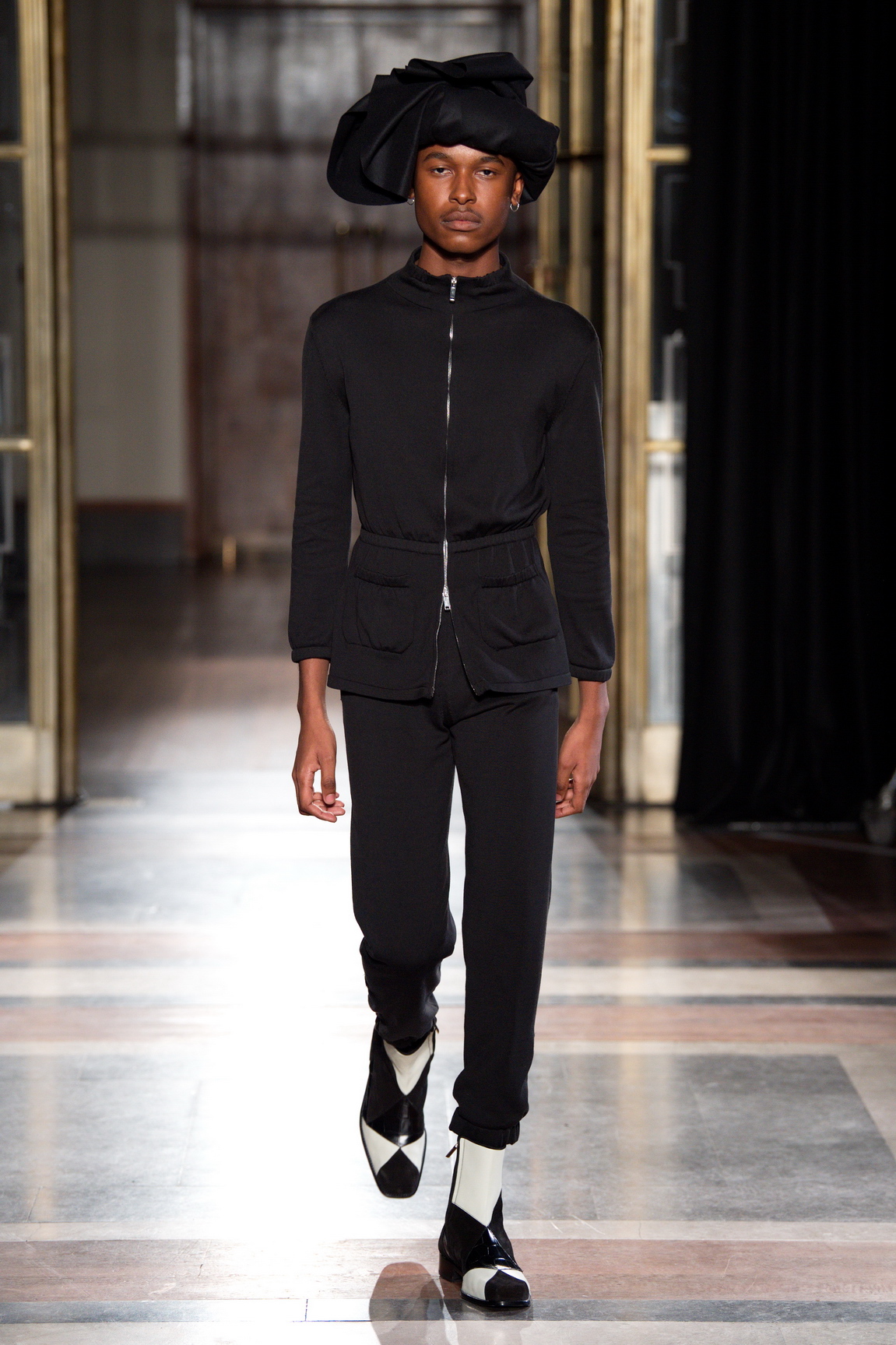
Between Critique and Hope is a four-year research project that Wales Bonner leads at the University of Applied Arts Vienna, where she is also Head of the Department of Fashion Design. The project is the most explicit articulation of the archival methodology that her collections have been demonstrating since Afrique. It attempts to use the polyrhythmicality of Afro-Atlantic musical and artistic forms as the organising principle for an alternative archival practice.
This is a precise and significant claim. Polyrhythm in Afro-Atlantic music is not a decorative technique. It is a different organising principle for time, for structure, and for the relationship between individual voices and collective form. Wales Bonner proposes that this organising principle can be applied to archival practice: that archives built on Afro-Atlantic cultural forms should be structured differently from European archival conventions, because the cultural forms they document have a different relationship to time, memory, and the organisation of knowledge. This is the intellectual claim that underlies the entire decade of collection research: that there is a Black Afro-Atlantic way of knowing and organising that is different from the European conventions that fashion institutions typically apply to cultural references.
What This Means for Hermès
The research practice documented across Afrique, Ebonics, Malik, Spirituals, Spirituals II, Blue Duets, and the institutional exhibitions at the Serpentine and MoMA is the practice that arrives at Hermès in January 2027. As Omiren Styles’ appointment analysis confirmed, Hermès cited her work across fashion, craft and culture as the basis for the appointment. The craft dimension of Hermès menswear- its specific textile relationships, its material standards, its production partnerships- is the institutional culture into which Wales Bonner’s archival research practice will now operate. The encounter is not between inspiration and luxury. It is between one research methodology and another.
What Wales Bonner’s practice demonstrates is that research-led design produces work that changes collection by collection because the inquiry changes. Sun Ra in Spirituals is not the same research territory as Jean Toomer in Blue Duets. Afro-Atlantic polyrhythm in Between Critique and Hope is not the same investigation as Black male sexuality in Black on Black. The methodology is consistent; the archive is always new. That is what Hermès has hired: not a designer who will apply a signature to the house’s existing aesthetic, but a researcher who will produce something from the encounter between her archival practice and the material culture of a 187-year-old French luxury institution.
The Omiren Argument
Grace Wales Bonner describes herself primarily as a researcher, and that self-description is the most important fact about her practice. The African fashion market is worth 31 billion dollars. Her career from Afrique (2014) through Spirituals (with Sun Ra as a documented source text), Blue Duets (with Jean Toomer, Hilton Als, and Carl Van Vechten as documented research), Spirituals II (with the Notting Hill Carnival sound system as an architectural research object), through the Serpentine Gallery, MoMA, the A Magazine curation, and Between Critique and Hope at the University of Applied Arts Vienna, is a decade of demonstrating that the claim Black culture is a serious design source is provable through the work itself. Every collection names its archive. Every presentation shows the chain from inquiry to garment. The research is not the backstory to the design. It is the design. At Hermès, the same methodology will encounter the same demands: to show the chain from inquiry to object, and to demonstrate that the archive Wales Bonner brings to the maison can produce something that neither party could have produced independently. January 2027 is where the decade-long research practice meets the institution that has invited it in. Omiren Styles will be watching that encounter with the same precision with which Wales Bonner has been building toward it.
Also Read:
- Black Luxury Entrepreneurs: Six Fashion Brands Worth Watching
- Diaspora Style Is Not Fashion’s Trend Reservoir
Frequently Asked Questions
What is Wales Bonner’s design methodology?
Wales Bonner describes herself primarily as a researcher rather than a designer. Her methodology begins with archival research into specific cultural territories, typically connected to Black, Afro-Atlantic, and diasporic histories, and produces garments as the output of that inquiry. Each collection names its sources: the Spirituals collection cites Sun Ra (Omniverse Sun Ra, Geerken/Trent 2015); Blue Duets cites Hilton Als, Jean Toomer, Jean Baudrillard, and Carl Van Vechten; Malik draws from Islamic prayer practices and Sufi aesthetics. The research is not background context for the design decisions. It is the design decision. Her four-year project Between Critique and Hope at the University of Applied Arts Vienna proposes using the polyrhythm of Afro-Atlantic musical forms as the organising principle for an alternative archival practice.
What archives does Wales Bonner use?
Wales Bonner’s documented archival sources include: Sun Ra’s cosmic philosophical system (Spirituals, 2016); Islamic prayer practices and Sufi devotional forms (Malik, 2016); the Harlem Renaissance archive, specifically Jean Toomer’s writing and Carl Van Vechten’s homoerotic photography (Blue Duets, 2018); Hilton Als’ criticism (Blue Duets, 2018); the Notting Hill Carnival sound system as a physical archive of Black British culture (Spirituals II, 2017); Jamaican dancehall tradition; the Kamoinge photographic group in Harlem; Ghanaian film photography archives; and the wider Afro-Atlantic musical and artistic archive that she proposes using as an organising principle for alternative archival practice in Between Critique and Hope.
What was Wales Bonner’s Afrique collection?
Afrique was Wales Bonner’s graduate collection at Central Saint Martins in 2014. Described by the V&A as exploring Coco Chanel via Lagos, it won the L’Oréal Professionnel Talent Award and was presented the following season as SS2015. Her CSM dissertation, Black on Black, completed alongside the collection, received the Dean’s personal commendation. The collection drew on Black visual culture and cited Kerry James Marshall and Melvin Van Peebles as inspirations, establishing the research framework that every subsequent collection would extend: an inquiry into Black masculinity, Black luxury, and the transformations of European fashion forms in African and diaspora contexts.
What does Wales Bonner research?
Wales Bonner’s documented research territories include: Black spirituality across African American, Caribbean, and Islamic traditions; the Harlem Renaissance and its visual, literary, and photographic archive; Afro-Atlantic musical forms including jazz, funk, and reggae; Black male sexuality and representation; the relationship between European luxury tailoring and African and diaspora dress culture; and the question of how Afro-Atlantic cultural forms organise time, memory, and knowledge differently from European archival conventions. Her practice extends across fashion, curation, filmmaking, and publishing, and has been institutionally recognised by the Serpentine Gallery, MoMA, the University of Applied Arts Vienna, and A Magazine.
What is Between Critique and Hope?
Between Critique and Hope is a four-year research project led by Wales Bonner at the University of Applied Arts Vienna, where she is Head of the Department of Fashion Design. The project attempts to use the polyrhythmicality of Afro-Atlantic musical and artistic forms as the organising principle for an alternative archival practice. Polyrhythm in Afro-Atlantic music is not a decorative technique but a different organising principle for time, structure, and the relationship between individual and collective voices. Wales Bonner proposes that this principle can restructure how archives of Afro-Atlantic cultural forms are built, organised, and accessed, producing an archival practice that is as culturally specific as the forms it documents.
Explore More
Read the full Fashion > Designer Profiles section for Omiren Styles’ documentation of designer research practices, the intellectual frameworks behind African and diaspora fashion, and the collections that demonstrate why research is design.
Discover travel and heritage intelligence across Africa at Rex Clarke Adventures.