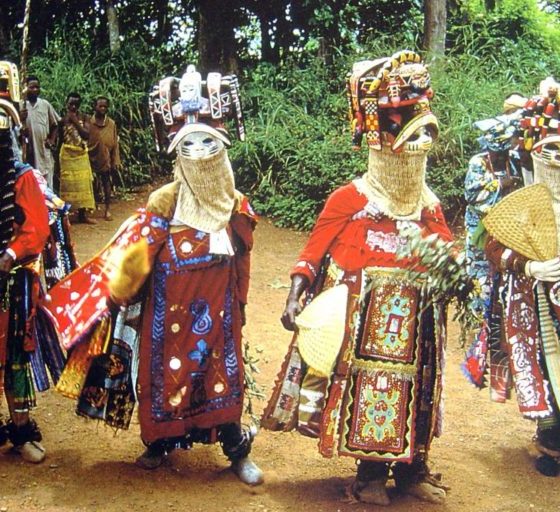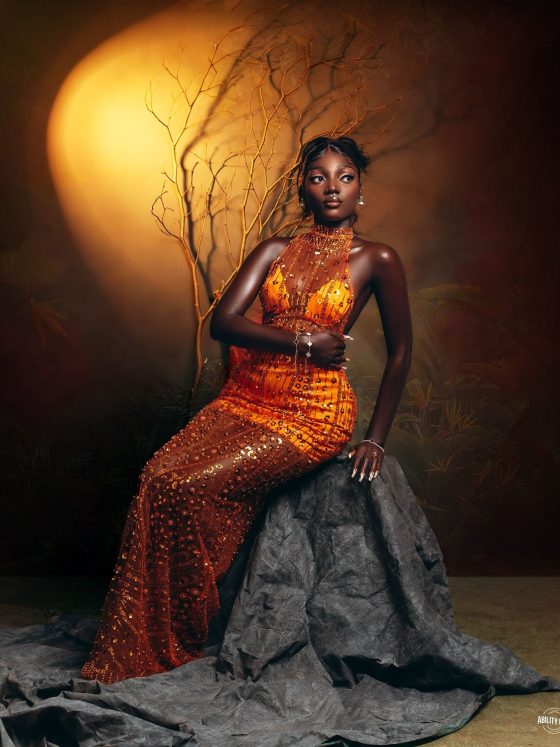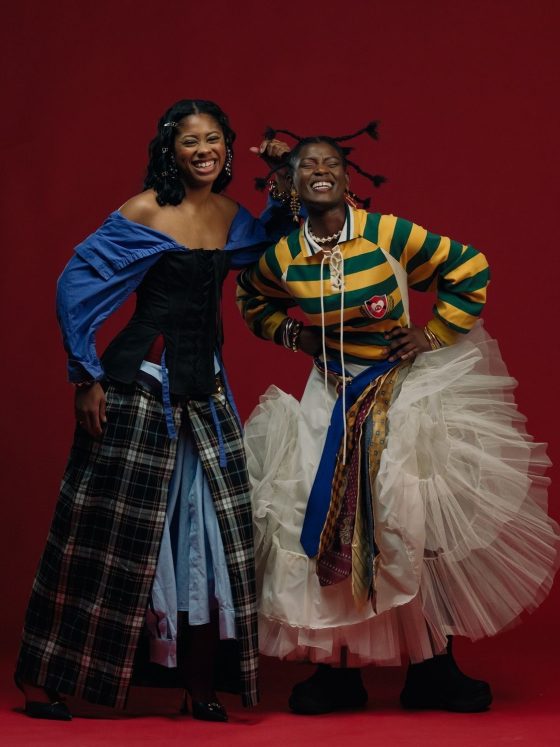
The question a Beninese bride answers with her outfit is not “what do I want to wear?” It is: “What does my family need to say?” The fabric she wears to her traditional ceremony is a public declaration of lineage. The adornments she carries encode her family’s history, social position, and ancestral connections. The blessings that must be spoken before the marriage is recognised are not formalities. They are the condition of the marriage itself. In the Benin Republic, a country of over 42 ethnic groups, each with distinct dress traditions, there is no single bridal aesthetic. There is a system of systems, and understanding it requires moving across the country’s ethnic geography rather than looking for a unified national look.
The fashion industry has produced extensive editorial content on bridal fashion in Nigeria, Ghana, and Senegal. Each of these countries has a well-documented bridal aesthetic that diaspora brides can access through editorial platforms, designer directories, and bridal stylists. Beninese bridal fashion has not received the same treatment. The result is that the English-language editorial record largely underserves diaspora Beninese brides planning traditional ceremonies.
The Omiren Argument: In Beninese bridal tradition, the bride does not select an outfit. She selects a statement about lineage, community, and the ancestors whose blessing the marriage requires. The fabric is the argument, and it must be legible to everyone present.
From Fon ancestral wrappers to Yoruba prostration rites and coral-beaded looks, Beninese bridal fashion is a study in fabric as cultural identity.
The Fon Tradition: Ancestral Presence at the Centre of the Ceremony

The Fon people are the dominant ethnic group of southern Benin, with historical roots in the Dahomey Kingdom centred on Abomey. In Fon wedding ceremonies, ancestral presence is not background context — it is the primary structural element. Ceremonial storytelling recounts the histories of both families. Blessings explicitly reference the ancestors, reinforcing the understanding that the marriage is not a transaction between two individuals but a continuation of family lineages that predate both parties. The ancestors are invoked not symbolically but practically: the marriage is understood to require their approval, and the ceremony is the mechanism through which that approval is sought.
The fabric worn at a Fon wedding reflects this ancestral orientation. Handwoven cloth in bold geometric patterns is central to the bridal presentation, representing dignity and prosperity. Kanvô, Benin’s royal handwoven textile introduced to the Dahomey court by King Agonglo in the 18th century, is widely used for weddings and special occasions across Benin. For Fon brides, wearing kanvô at a traditional ceremony is not a heritage gesture. It is a statement of connection to a specific royal and cultural history that the Dahomey Kingdom produced and that Fon communities continue to maintain.
The standard bridal garment across Beninese traditions is a form of the Bomba, a loose tunic shirt worn over trousers for men and a loincloth with a coordinated top for women, adapted according to the ethnic context and the occasion’s formality. At formal southern weddings, the Bomba is replaced or supplemented by wax-print pagnes with matching headscarves, which remain central to coastal and southern bridal ceremonies. The page is not chosen from a catalogue. It is selected with the occasion, the family, and the cultural communication in mind. The print, the colour combination, and the way the cloth is carried all contribute to the statement the bride is making in public.
The Yoruba Tradition: Prostration, Kola, and the Blessing Protocol
In the Yoruba-influenced communities of Porto-Novo and the Ketu region in southern Benin, the ceremonial structure of the wedding includes specific protocols visible in dress and in the physical performance of the ceremony. Prostration rites — in which the bride and groom prostrate themselves before elders as an act of respect and submission to family authority — are a central feature. Call-and-response blessings structure the ceremony’s progression. The bride and groom may receive cloth or a kola nut as symbolic gifts: the kola nut signifies hospitality, blessing, and the elder’s acceptance of the union.
The dress in Yoruba-influenced ceremonies reflects the tradition’s integration of prestige and community identity. The embroidered agbada, a full-length, flowing robe with elaborate hand- or machine-embroidery, is formal wear for Yoruba grooms across the region. More broadly, in Beninese weddings, grooms wear white or lace dashiki suits paired with bowler hats, a distinctly Beninese groom’s combination visible across southern wedding ceremonies regardless of ethnic affiliation. Brides wear layered aso-oke or wax pagne in combinations chosen to reflect their family’s standing. The gele, a structured headwrap tied in specific configurations, is both a fashion statement and a social signal. How it is tied communicates the formality of the occasion and the wearer’s understanding of ceremonial protocol. In Yoruba-influenced ceremonies in the Benin Republic, guests also coordinate their dress through shared fabric choices. This practice mirrors the Nigerian aso-ebi tradition: everyone present makes a collective visual statement that frames the couple within their community.
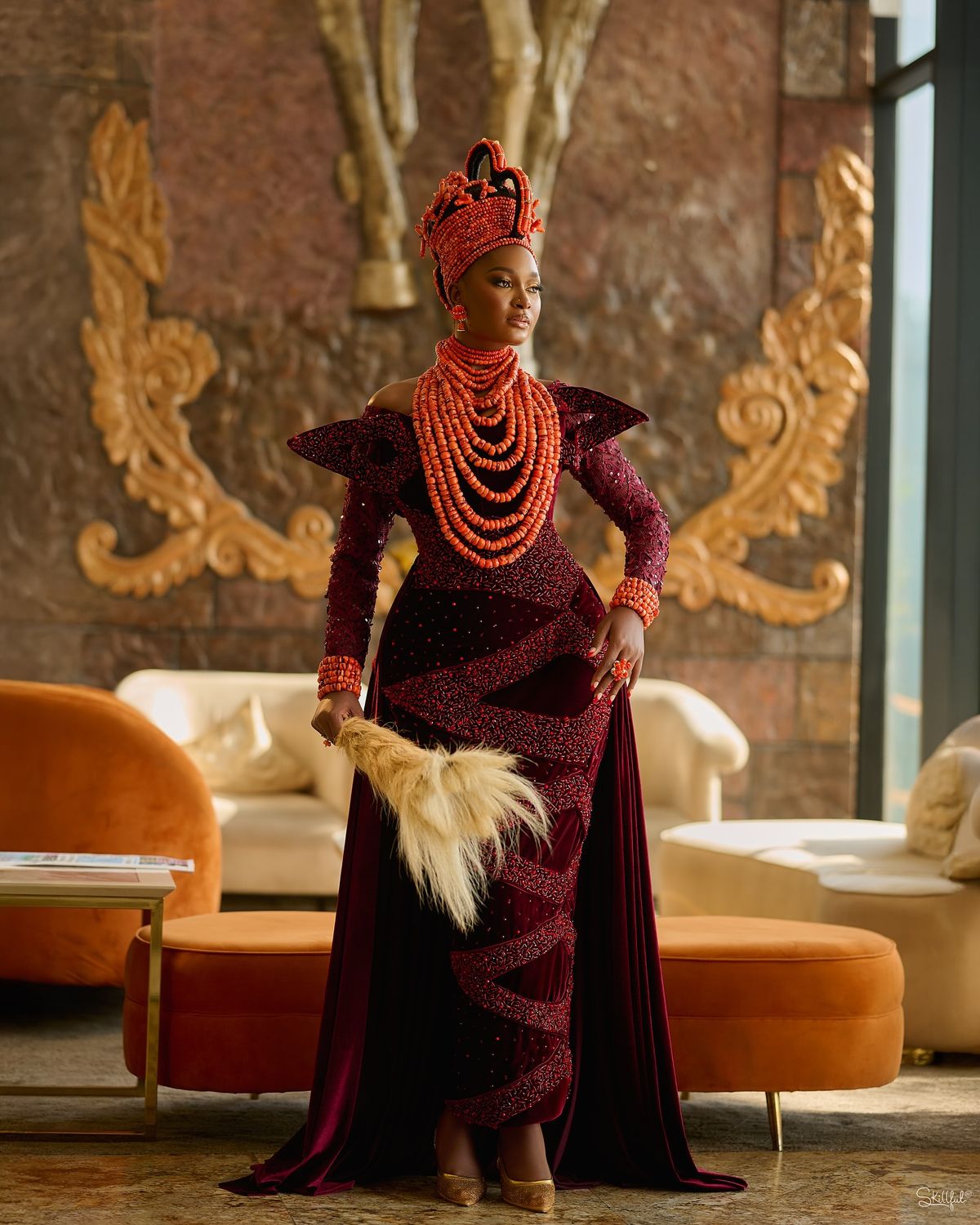
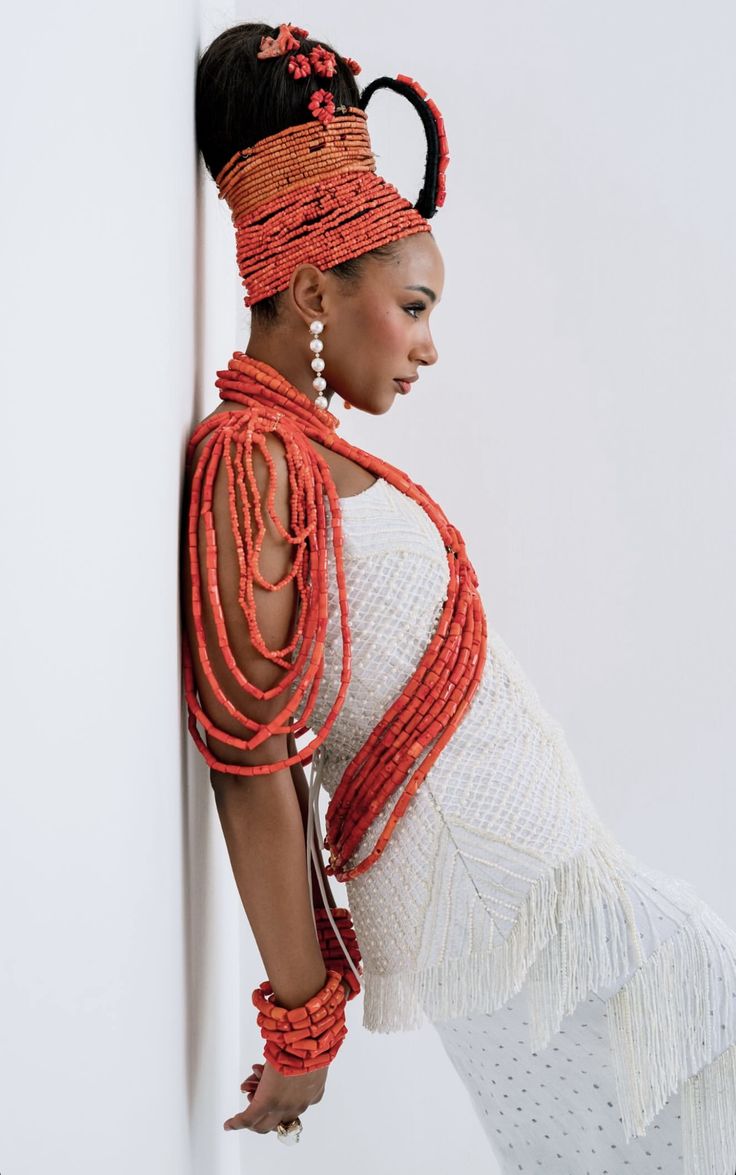
Coral beads hold particular significance in southern Beninese ceremonies, most prominently in families with Edo-heritage connections, but are worn more widely as a marker of nobility and ancestral authority. Worn in multiple strands on the neck, wrists, and hair, coral signals lineage status and the wearer’s connection to a specific ancestral line. Grooms wear coral caps or gold-embroidered garments in ceremonies where this tradition is observed. The presence of coral at a wedding is not a decorative choice. It is an ancestral claim that every person present can read.
The Goun Tradition: Drumming as Ceremonial Architecture
The Goun people, whose communities are concentrated around Lake Nokoué, including the lakeside village of Ganvié, bring a distinct ceremonial structure to wedding practices. Traditional drumming leads Goun wedding ceremonies, functioning as both entertainment and structural guide — the drumming sequences direct the ceremony’s progression and signal transitions between its phases. Families present gifts and blessings in time with the rhythmic structure the drummers provide.
The dress worn in Goun ceremonies follows the pagne-and-wrapper system common to southern Benin, with specific colour and print choices that convey the family’s intentions. The visual and sonic elements of the ceremony are not separate. The fabric the bride wears is part of the same communicative system as the drumming that structures the event. Both are instruments of social speech directed at the community as witnesses. Other southern ethnic groups, including the Adja and the Sahouè, maintain their own distinct ceremonial dress traditions. Though the specific visual vocabularies differ, the underlying principles are consistent across southern Benin: fabric selection is a form of social communication, the ceremony is a community event, and the dress is legible to everyone present.
The Bariba Tradition: Cotton, Loincloths, and the Bridal Exchange
In northern Benin, the Bariba people maintain a bridal textile tradition with direct roots in the region’s cotton cultivation history. The mother of the bride traditionally offered two loincloths to the newlyweds: one to decorate the bridal chamber, one for the husband. This custom became widespread in the 1950s and 1960s as a standardised element of the Bariba wedding exchange. The loincloth is not decorative in this context. It is a gift that encodes the mother’s role in the textile economy — women in Bariba communities historically cleaned, carded, spun, and supervised the dyeing of cotton thread, while men wove and cultivated. The loincloth presented at a wedding is the product of that gendered labour system, given to the new household as a foundation object.
Bariba men’s formal dress reflects the region’s distinct dress vocabulary. The Turu, an ankle-length sleeveless tunic made from ecru cotton, is worn for important occasions. The Tako — the northern name for kanvô, the handwoven fabric of the Baatonu people — is worn at luxury occasions and formal events, including weddings. Bariba men’s hats encode social status through their configuration; the type of hat worn at a wedding communicates the wearer’s position within the community’s social hierarchy.
The bride price, called the dot in Francophone Benin contexts, remains a prevalent tradition across northern Beninese communities. It is a formal payment by the groom’s family to the bride’s family that signifies respect for the bride’s family and strengthens the inter-family bond. It is not a transaction for the bride herself. The distinction matters for how the ceremony and its dress are understood: the wedding is a negotiation between families, and the gifts exchanged — including cloth, coral, kola nuts, and household goods — are the instruments of that negotiation.
ALSO READ
- Kanvô: Benin’s Royal Handwoven Fabric, Fully Explained
- Traditional Clothing in the Benin Republic
- Benin Textiles and Symbolism
The Symbolic Language of Bridal Adornment
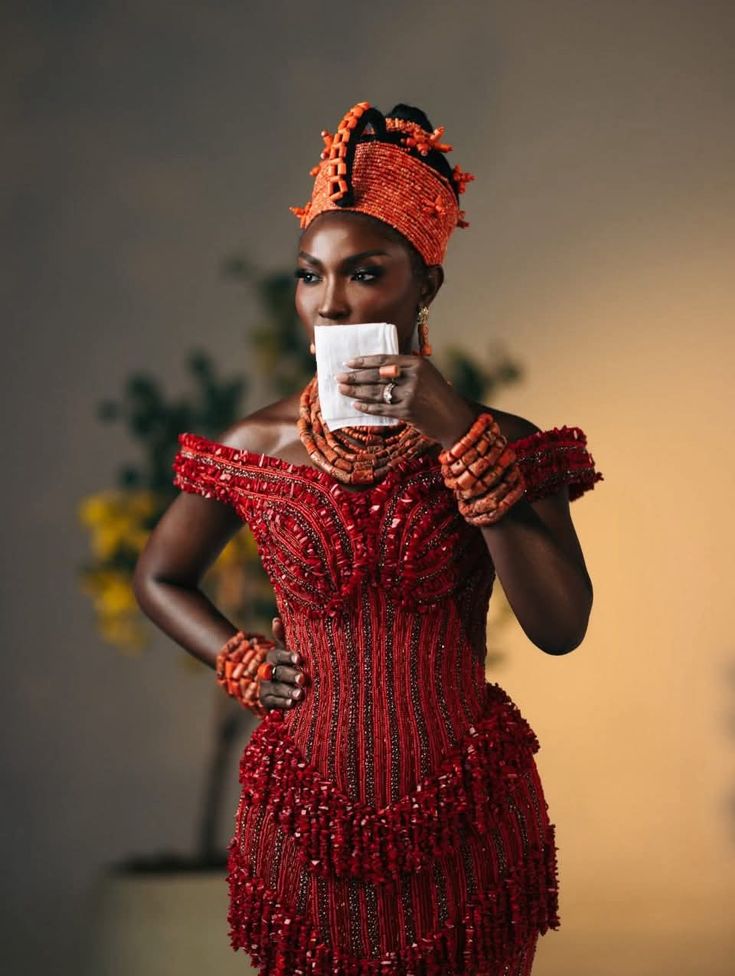
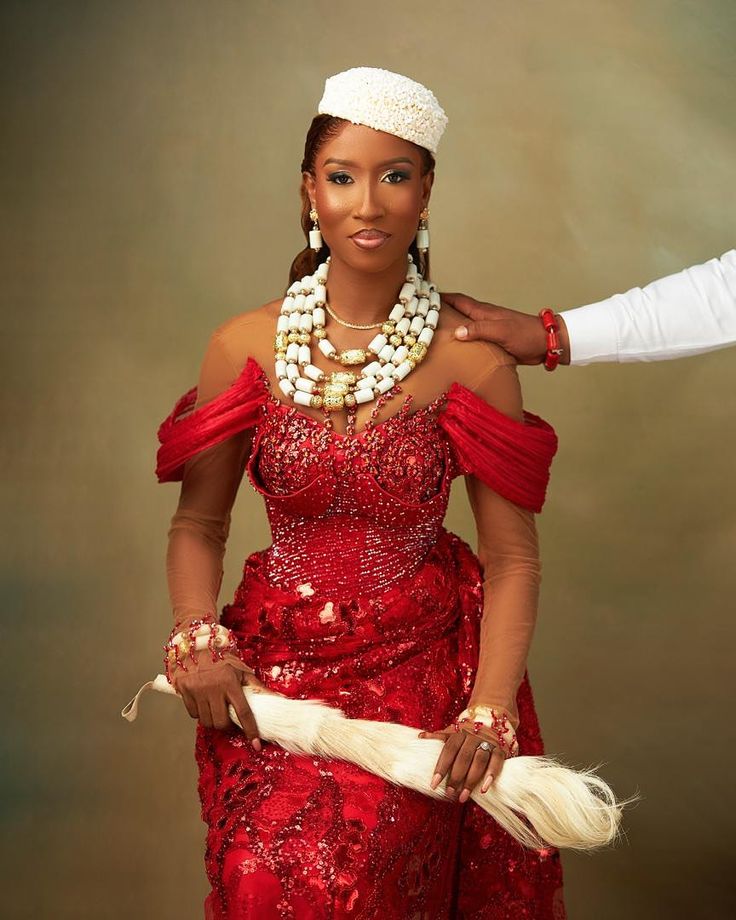
Across Beninese ethnic traditions, the adornments worn at a wedding carry a specific symbolic vocabulary. Gold and coral pieces are highly valued. Coral beads worn in multiple strands on the neck, wrists, and hair signal nobility and ancestral connection. Gold signals prosperity and the family’s capacity to provide. The combination of gold and coral at a wedding is a public statement about the family’s status that every attendee present can read.
Bridal hairstyles carry equivalent weight. Braided crowns, cornrows, and Fulani braids decorated with beads or rings are common. Muslim brides in northern Benin, including Bariba, Dendi, and Fulani communities, follow a distinct bridal dress protocol. Three-piece cloth arrangements are standard: one wrapper around the waist, one around the chest, and one covering the head. Veils and headscarves are common. Henna is applied to the hands and feet in geometric patterns that carry their own semantic content within the communities that practise them. The colour palette for Muslim bridal ceremonies in northern Benin leans toward white (purity), gold (prosperity), and rich jewel tones, with the specific choices guided by family tradition rather than individual preference. These are not styling decisions made for aesthetic effect. They are communications directed at the community, encoded in the visual language that the community shares.
In Vodun-practising communities, colour carries ceremonial significance that extends into bridal dress. White signifies spiritual purification; red conveys authority or sacrifice; indigo textiles convey ceremonial dignity and prestige. These colour associations influence clothing choices for ceremonies across the country’s south, including weddings. A bride or her family selecting specific colour combinations for the ceremony is making choices within a colour system that carries meaning, not simply choosing what looks beautiful.
The symbolic gifts exchanged at Beninese traditional weddings confirm the ceremony’s function as a social and ancestral transaction. Cloth represents dignity, prosperity, and cultural identity. Coral beads represent royalty and ancestral connection. Kola nuts represent hospitality and a blessing from the elders. Bibles and Qu’rans represent faith and the religious framing of the union. Household goods represent abundance and the material foundation of the new home. Each gift is a statement, and the wedding ceremony is the occasion on which the family makes all its statements simultaneously, in front of the community that will hold them accountable.
Contemporary Beninese Bridal Fashion: What Is Changing and What Is Not
Contemporary Beninese designers are producing fusion bridal collections that combine traditional cloth — including kanvô — with modern silhouettes and Western lace elements. This is not a departure from tradition. It is the latest iteration of a textile practice that has always incorporated new materials and new aesthetics when they served the ceremony’s communicative function. Wax-print pagne itself entered Beninese dress culture through colonial-era trade routes from Indonesia via Dutch and British textile manufacturers; Beninese communities culturally transformed it over generations into a distinctly West African material language. The same process is underway with Western lace and contemporary silhouettes: they are being absorbed into the ceremonial system and redefined by the cultural logic that system imposes.
What is not changing is the ceremonial requirement. A marriage in the Benin Republic is not recognised until elders from both sides have spoken blessings over the couple. This is not a formality that a civil ceremony or a church service can replace. It is the condition of marriage within the cultural framework that Beninese communities maintain. The dress worn at the ceremony serves this requirement. It must communicate the right things to the right people at the right moment. How the silhouette is cut is secondary. What the fabric says is primary.
Diaspora Beninese brides planning traditional or fusion ceremonies are increasingly commissioning kanvô-based bridal garments from designers, including Elvira Akplogan of LOAN-H, whose international client base spans more than 40 nationalities. Cotonou-based labels,s including Studio Imo and Ayanfe Clothing, are producing collections that blend traditional Beninese fabric aesthetics with contemporary tailoring for urban audiences, serving both local brides and diaspora clients seeking garments that hold cultural meaning without requiring purely ceremonial silhouettes. The demand exists. The designers exist. The editorial record connecting diaspora brides to these designers is still being built.
“In Beninese bridal tradition, the bride does not select an outfit. She selects a statement about lineage, community, and the ancestors whose blessing the marriage requires. The fabric is the argument, and it must be legible to everyone present.”
Frequently Asked Questions
What do Beninese brides wear at traditional weddings?
There is no single Beninese bridal look. Benin Republic has over 42 ethnic groups, each with distinct traditions. Fon brides in the south wear handwoven cloth, including kanvô in bold geometric patterns, with wax-print pagnes and matching headscarves. Yoruba-influenced brides wear layered aso-oke or wax pagne with structured gele headwraps. Bariba brides in the north exchange traditional cotton loincloths as part of the bridal gift ceremony. Muslim brides apply henna to their hands and feet and wear three-piece clothing. Across all traditions, gold and coral jewellery signal nobility, prosperity, and ancestral connection.
What is kanvô, and why is it used in Beninese weddings?
Kanvô is Benin Republic’s royal handwoven textile, woven from cotton, linen, and hemp, historically reserved for the Dahomey court. It was introduced to the kingdom by King Agonglo in the 18th century. It is widely used for weddings and formal occasions because it carries specific cultural weight: wearing kanvô at a ceremony is a statement of connection to Beninese material heritage and, for Fon communities, a reference to the Dahomey Kingdom’s royal history. Contemporary designers, including Elvira Akplogan of LOAN-H, produce kanvô-based bridal garments that combine traditional weaving with modern silhouettes.
What symbolic gifts are exchanged at Beninese traditional weddings?
Symbolic gifts exchanged at Beninese traditional weddings include cloth (representing dignity, prosperity, and cultural identity), coral beads (royalty and ancestral connection), kola nuts (hospitality and the blessing of elders), Bibles and Qu’rans (faith and religious framing), and household goods (abundance and the material foundation of the new home). In Bariba communities in northern Benin, the mother of the bride traditionally presents two cotton loincloths, one for the bridal chamber and one for the husband, reflecting the region’s cotton textile tradition.
What is the role of elders in a Beninese wedding?
In Beninese tradition, a marriage is not considered culturally recognised until elders from both families have spoken blessings over the couple. This is not a formality. It is the condition of marriage within the cultural framework that Beninese communities maintain. The elders’ role is to invoke ancestral approval, formally accept the union between the two family lineages, and communicate that acceptance to the community present. In Fon ceremonies, this involves ceremonial storytelling recounting both families’ histories. In Yoruba-influenced ceremonies, call-and-response blessings structure the progression of the event.
What do coral beads signify in Beninese bridal ceremonies?
Coral beads worn in multiple strands at the neck, wrists, and in the hair signify nobility and ancestral connection. They are particularly significant in ceremonies with Edo-heritage influence. Their presence at a wedding announces a specific lineage claim. Grooms wear coral caps in these ceremonies. Gold pieces are worn alongside coral to signal prosperity. The combination of gold and coral is a public statement about the family’s status that every attendee can read.
How is Beninese bridal fashion changing in the contemporary era?
Contemporary Beninese designers are producing fusion bridal collections that combine traditional cloths, including kanv and ôô, with modern silhouettes and Western lace elements. This is not a departure from tradition but a continuation of it: Beninese dress culture has always absorbed new materials and aesthetics when they serve the ceremony’s communicative function. Wax-print pagne itself entered West African dress through colonial-era trade and was culturally transformed over generations. What remains constant is the ceremonial requirement that dress communicates the right things to the right people, and that elders’ blessings are spoken before the marriage is recognised.
Explore more in our Culture section, where African ceremonial dress is documented as cultural intelligence rather than a decorative footnote.