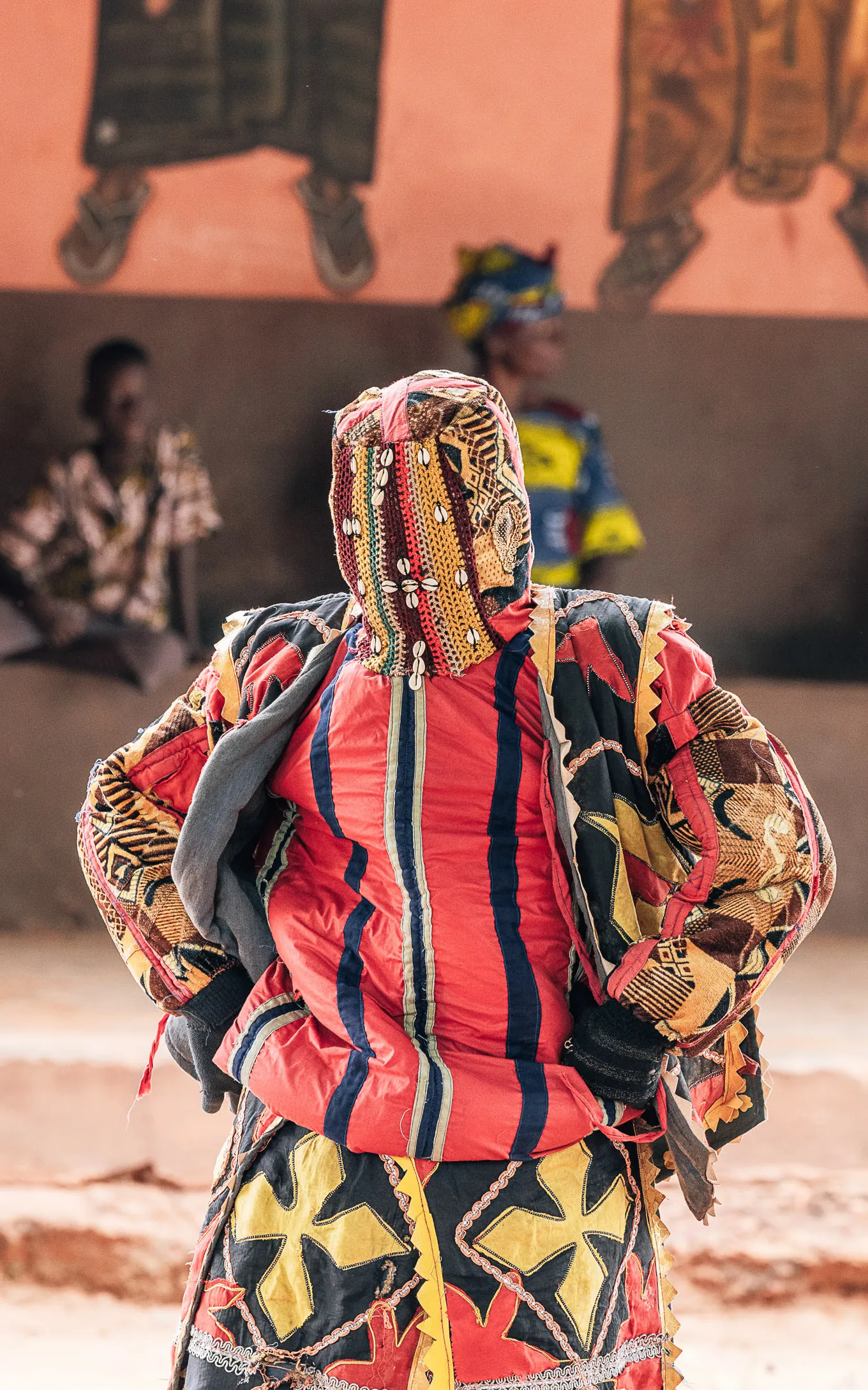
In the village of Glidji-Kpodji in southern Togo, the Guin people’s annual Epe-Ekpe festival opens with a ceremony that has been running continuously since 1663. Bare-chested men and women emerge from a dense forest, long multi-coloured beads hanging from their necks and arms, cloth wrappers fastened across their chests. A high priest carries a stone whose colour will determine the meaning of the year ahead. The stone is presented to the gathered community, and its colour is read. White with blue means good fortune. Red means danger. The ceremony is complete. The year has been defined. And every item of dress worn by every practitioner in that ceremony, the beads, the wrapper, the bare feet, the specific arrangement of cloth against skin, has been deliberate. None of it is decoration. It is a specification.
Vodun is practised across southern and central Togo by the Ewe, Kabye, Mina, and Guin peoples. The word itself comes from the Fon and Ewe languages and means spirit. It is a religion that emerged, according to practitioners and scholars, in the town of Tado on the Mono River in the late 16th century, in what is now the border region between Togo and Benin. It is neither a Haitian nor a diaspora tradition that found its way to West Africa. It is a West African tradition that the Atlantic slave trade carried across the ocean, where it merged with other practices to become Haitian Vodou, Brazilian Candomblé, and Louisiana Voodoo. The source is here. The rivers that fed those diaspora traditions run through Togo.
The Omiren Argument: Vodun ceremonial dress in Togo is not clothing. It is a precision instrument. Each item worn in a Vodun ceremony encodes a specific theological relationship between the wearer, the community, and the spirit world. When the possessing spirit arrives, the possessed person is dressed appropriately for that entity. The dress does not follow the ceremony. The dress is part of the mechanism through which the ceremony works.
In Togo, Vodun ceremonial dress is not a costume. It is theology. From the Ewe-Mina coast to the Tchamba slave spirits, this is the full account of what people wear when the divine arrives.
The Geographic and Spiritual Heart: Togoville, Aneho, and the Lake Togo Coast
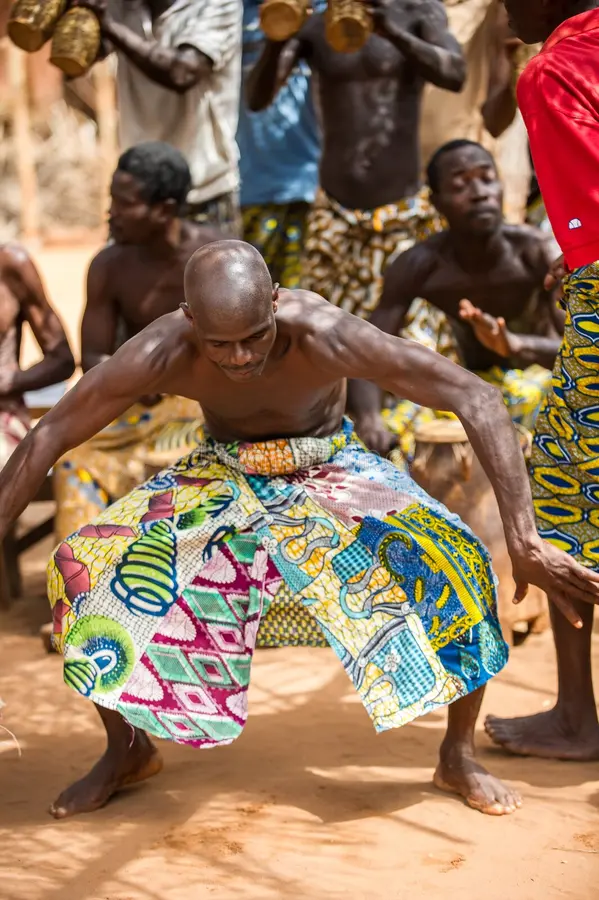
The most important Vodun communities in Togo are concentrated along the coast between Lomé and the Beninese border, specifically in the towns of Togoville, Aneho-Glidji, and Agbodrafo. These three towns sit at the intersection of Lake Togo, the Mono River, and the Atlantic Ocean. As documented by Kanaga Africa Tours, the area was historically settled by the ancient communities of the Mina, Guin, and Ewe peoples, who were also the primary interlocutors in commercial dealings with European merchants during the slave trade era. The spiritual density of these towns is inseparable from that history. The same communities that traded enslaved people to European ships became the communities whose religious practice incorporated the memory of those enslaved people into its ceremonial life.
Togoville is the most internationally recognised of the three. Its name entered history when King Mlapa III was coerced into signing a treaty with the German explorer Gustav Nachtigal in 1884, establishing German sovereignty over what became Togoland and ultimately giving the modern nation its name. The Togoville cathedral, built in 1910, became a site of Catholic-Vodun syncretism when the Virgin Mary was reported to have appeared there in 1973. Today, Kanaga documents that around the cathedral lie Vodun protective deities and fetishes, and that one of Togo’s most powerful Vodun priestesses operates in Togoville, receiving pilgrims who arrive barefoot and dressed in a single sarong, offerings prepared, seeking blessing and intercession.
Bare feet and a single sarong are not poverty or simplicity. They are the dress code for an encounter with the sacred. To arrive clothed in the garments of ordinary life would be to present yourself to the spiritual realm in the wrong register. The sarong signals that the visitor has stripped away the social identity their daily dress carries. They present themselves to the priestess and the deities as supplicants rather than as citizens, merchants, or professionals. The dress is the argument: I have come for something specific, and my body is prepared to receive it.
Priests, Priestesses, and the Dress of Spiritual Authority
Vodun’s priestly structure is documented in peer-reviewed fieldwork conducted across the Ewe communities of Togo and Ghana. The UCLA dissertation research on Vodun performance in Eweland identifies the main priestly categories: vodusi (initiates into a specific Vodun), hounoun (senior priests), and mamissi (ritual specialists). These practitioners are the most highly susceptible to possession, the most skilled in the artistic practices preferred by the spirits they host, and the performers whose dress is most scrutinised by the community.
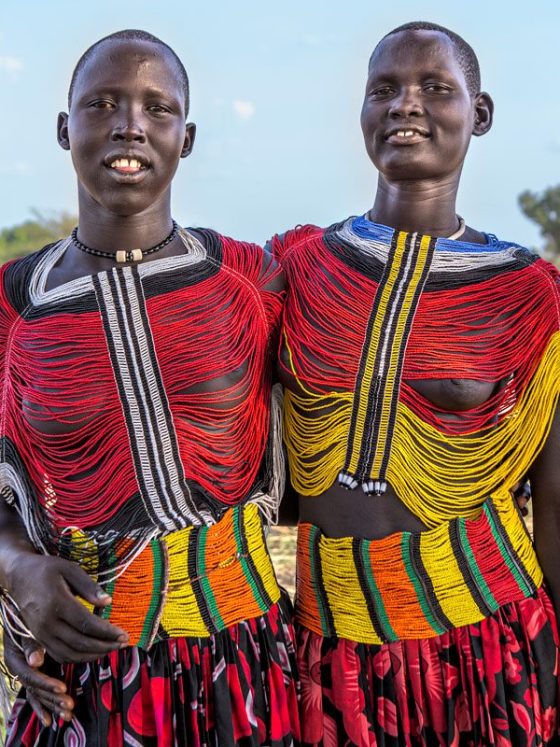
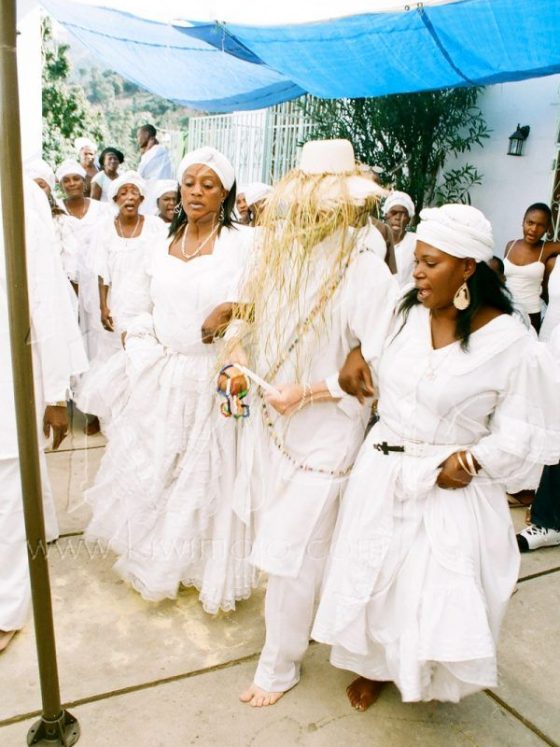
The distinction between priestly and devotee dress lies in elaboration and specificity. A devotee attending a ceremony wears what the ceremony requires: cloth wrappers, long beaded necklaces, and specific adornment arrangements that signal membership in the community of practitioners. A senior priest or priestess wears what their specific Vodun requires: the precise combination of cloth, beads, head coverings, and accessories that identifies them as the vehicle through which a particular spirit operates. The priest near Aneho documented by Planet Janet Travels, was wearing a white cap: white is the colour of purity, of ancestral clarity, of readiness to receive. The voodoo shrine figure beside him was draped in blue and yellow cloth: a colour language that communicates the identity and nature of the spirit housed within it.
When possession occurs during a ceremony, the preparation of the possessed person’s body is itself a ritual act. The UCLA fieldwork documents attendees pouring white powder, water, or alcohol over the person in a trance and changing them into appropriate clothing for the ritual to represent and please the possessing entity. This is not improvised. It is a known procedure: each spirit has specific preferences for how its human host should appear when it inhabits them, and those preferences are encoded in the community’s ceremonial knowledge. The dress does not express possession. It completes it.
The Tchamba Vodu: Wearing the Memory of Slavery
One of the most significant Togolese Vodun traditions, in terms of its ceremonial dress practices, is the Tchamba vodu, known as the Vodun of enslaved people. As peer-reviewed research published through ResearchGate by scholars Eric J. Montgomery and Christian N. Vannier confirms, Tchamba is widespread among the Ewe-Mina of Togo. The tradition venerates the spirits of enslaved people who were purchased through the domestic slave trade and brought to the Togolese coast, where they died and whose spirits subsequently entered the Vodun pantheon as powerful and sometimes dangerous presences.
The dress for the Tchamba ceremony is among the most precisely documented ceremonial dress practices in Togo’s Vodun tradition. The Academia.edu documentation by Montgomery and Vannier includes the specific dress of a Tchamba adept in a possession trance: a red fez and two long strings of white beads, called dzonu, worn around the neck. The red fez identifies the spirit as associated with the north, the region from which the enslaved people were brought. The white beads are a material of spiritual communication: dzonu beads appear throughout Vodun ceremonial practice as a sign of the sacred relationship between the wearer and the spirit world.
The Tchamba tradition is a form of memorial dress. When a Tchamba adept enters trance and is clothed in the red fez and dzonu beads, they are not representing a historical figure. They are becoming the temporary vessel of a spirit whose identity is tied to an experience of enslavement and transportation. The dress performs a reconciliation between the descendants of the people who bought enslaved persons from the north and the spirits of those enslaved persons themselves. As the ResearchGate research states, possession-trance, material accoutrements, and the singing of praises allow the living to link with their ancestral spirits. The red fez and white beads are those material accoutrements. They are how the connection becomes visible and how the reconciliation becomes real.
The Zangbeto: When the Garment Is the Entire Body
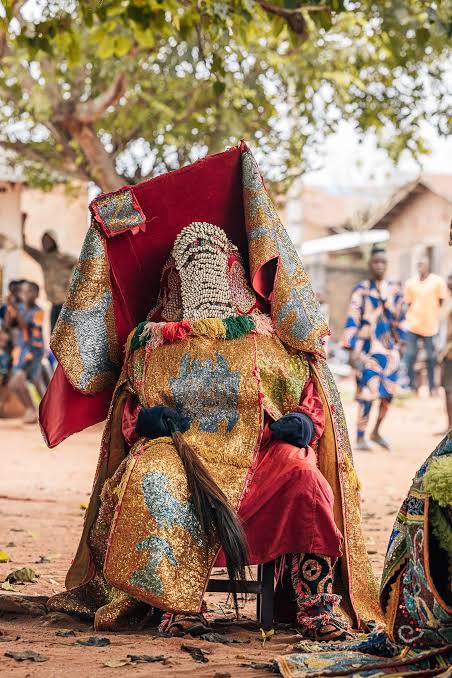
The Zangbeto is one of the most visually distinctive ceremonial presences in Togolese and Beninese Vodun. Al Jazeera’s documentation of Vodun festivals on the West African coast describes them as whirling dancers dressed as guardians of the night. The Zangbeto costume is a complete covering: an enormous mound of undulating raffia or straw strands that entirely conceals the human form, sometimes dyed in vivid colours. What moves through the ceremony is not a person in a costume. It is a fibre-shaped, spirit-animated guardian of the community’s order and safety.
The theological precision of the Zangbeto’s dress is that it makes the human body invisible. The person inside is not the point. The spirit inhabiting the structure is the point. The raffia covering is not a mask. It is a complete substitution: the human is replaced, for the duration of the ceremony, by the spiritual presence. This is the most complete version of the principle that runs through all Vodun ceremonial dress: the garment transforms the person who wears it into the appropriate vehicle for the spiritual encounter the ceremony requires. In Zangbeto’s case, the transformation is total. No part of the human remains visible.
The appearances of Zangbeto in Togolese ceremonies, including at Aneho’s festivals and national cultural events, are among the most photographed and documented aspects of Togolese Vodun practice. Their presence at the Porto-Novo Mask Festival in Benin in 2024, documented in this series’ coverage of Benin, confirms that the Zangbeto tradition extends along the entire Ewe-Mina-Guin coastal corridor. The practice in Togo is consistent with the broader tradition but is inflected by the ceremonial contexts and community histories of each location.
ALSO READ
- What Do People Wear in Togo? A Complete Style Guide
- Togolese Bridal Fashion: Ceremony, Fabric, and the Architecture of a Wedding
- Ewe Kente vs Ashanti Kente: What Makes Them Different
The Epe-Ekpe Festival: Collective Dress and the New Year Ceremony
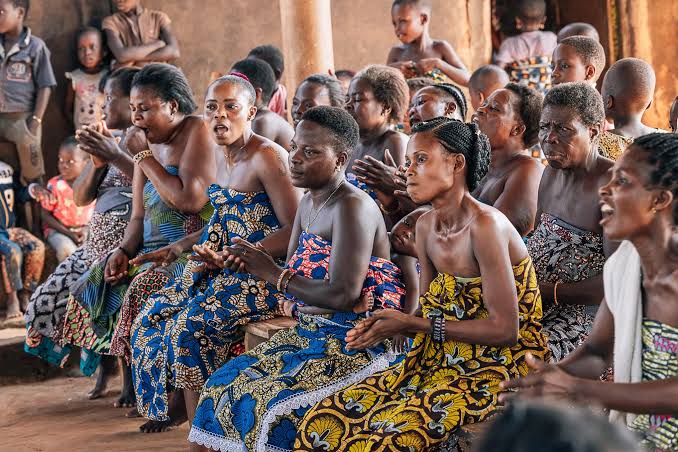
For the Guin people of Aneho, Togo’s second city, approximately 50 kilometres east of Lomé, the annual Epe-Ekpe or Ekpessosso festival in September is the most important ceremonial occasion of the year. The festival marks the start of the Guin new year. The central ceremony, the “taking of the sacred stone,” has been performed without interruption since 1663, when settlers from the former Gold Coast established it. The Gulf News documentation of the ceremony, based on direct observation at Glidji-Kpodji, provides the most detailed English-language account of what Epe-Ekpe ceremonial dress looks like in practice.
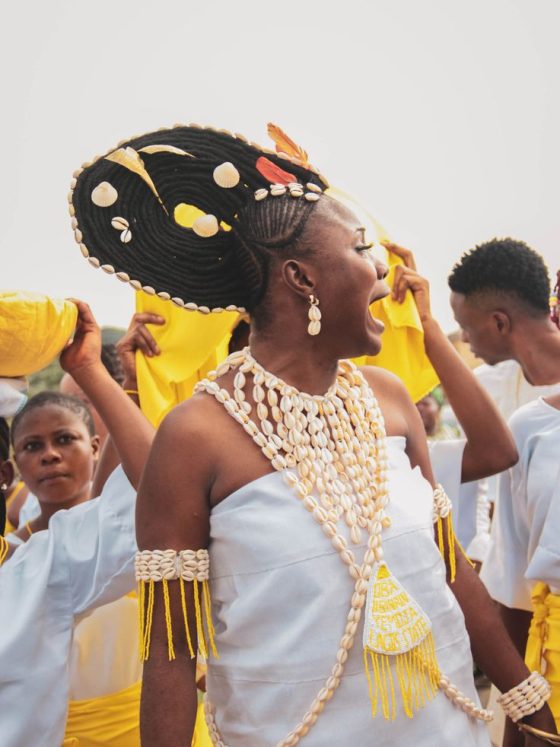
The high priest, identified as Nii Mantche, sits on a wooden stool outside the shrine building, bare-chested, with decorative beads around his neck. He holds the sacred stone with his eyes closed. The assembled practitioners wear cloth wrappers fastened at the chest, with long multi-coloured bead strings around their necks and arms. High priestesses face westward during the ceremony, raising their arms and calling in the Mina language: “Obe, abeba, obe abeba” — all the deities join us. The singing of “Helu-lo, helu-lo” — misfortune to bad spirits — fills the ceremony as female followers fall into a trance.
The Aneho December festival, the Black Divinities Festival, extends the ceremonial calendar further, with shows, concerts, and exhibitions running alongside a programme of propitiatory sacrifices and rituals in which possession trance and priestly intercession continue to operate. The Aneho coast is not a festival tourism circuit. It is a living spiritual geography where the Guin, Mina, and Ewe communities fulfil their religious obligations, govern their communities, and maintain relationships with the spirit world in accordance with calendars and protocols observed for centuries.
Syncretism and the Living Tradition
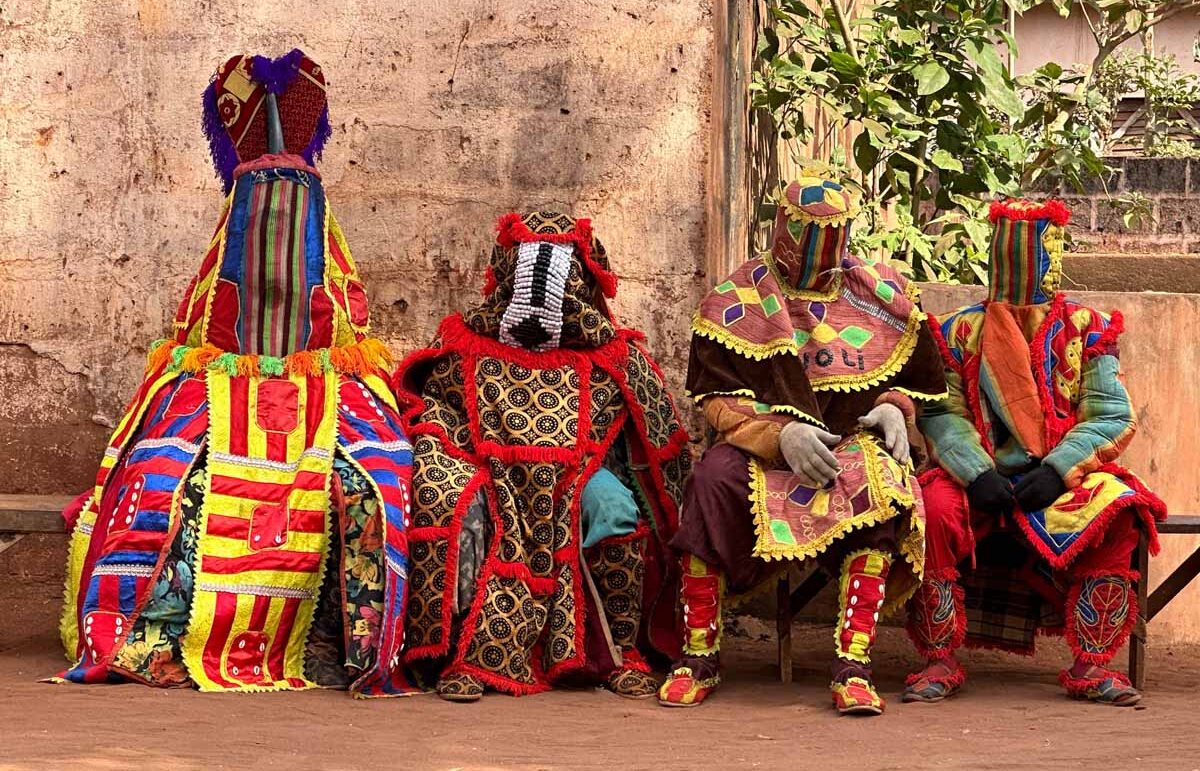
Togo’s Vodun tradition is not sealed against other influences. Kanaga Africa Tours’ documentation of Togoville notes that even those who identify as Christian in Togo continue to practice traditional religion in a syncretic manner, and that the Catholic cathedral in Togoville stands surrounded by Vodun protective deities and fetishes. The same community that venerates the site of a Marian apparition also maintains one of Togo’s most powerful Vodun priestesses within walking distance of the church. The ceremonial dress that flows between these two traditions is not confused. It is specific to each context. The devotee who arrives at the Vodun priestess in a sarong and bare feet is wearing the appropriate dress for that encounter. The same person attending Sunday mass will dress differently.
For fashion practitioners and researchers, this syncretism is important because it means that the material culture of Vodun dress circulates in daily Togolese life in ways that are not always legible as specifically Vodun. The multi-coloured beads worn during an Epe-Ekpe ceremony are the same as those worn by women with Vodun affiliations in their daily dress. The white cloth that signals spiritual receptivity in a ceremony is also present in the dress of mourning, of initiation, and of healing. The ceremonial and the everyday are not separated by the kind of distinct boundary that Western religious dress typically maintains.
This is why Vodun ceremonial dress matters to the broader project of documenting Togolese fashion: it is not a separate category from everyday dress. It is the theological infrastructure that gives everyday dress in Togo some of its most consistent visual codes. The beads, the wrappers, the bare feet at sacred encounters, the specific colours assigned to specific relationships with the spirit world: all of these are active in the daily material culture of the Togolese coastal communities for whom Vodun is not an ancestral practice but a living one.
“Vodun ceremonial dress in Togo is not clothing. It is a precision instrument. Each item encodes a specific theological relationship between the wearer, the community, and the spirit world. The dress does not follow the ceremony. The dress is part of the mechanism through which the ceremony works.”
Frequently Asked Questions
What is Vodun, and where did it originate in Togo?
Vodun is a religion practised in West Africa, primarily by the Ewe, Kabye, Mina, and Guin peoples of southern and central Togo, as well as in Benin, Ghana, and Nigeria. The word means spirit in the Fon and Ewe languages. It emerged in the late 16th century in the town of Tado on the Mono River, which separates Togo from Benin. It is estimated that between 30 and 50 million people practise Vodun worldwide. During the Atlantic slave trade, Vodun practitioners were among those enslaved and transported to the Americas, where the religion influenced the development of Haitian Vodou, Brazilian Candomblé, and Louisiana Voodoo. The origin of those diaspora traditions is in West Africa, specifically in Togo and Benin.
What do people wear at Vodun ceremonies in Togo?
Vodun ceremonial dress varies by role, by occasion, and by the specific spirit being honoured. At the Epe-Ekpe festival in Aneho, directly observed and documented by AFP, practitioners wear cloth wrappers fastened at the chest and long multi-coloured bead strings around their necks and arms. The high priest wears decorative beads around the neck and sits bare-chested. Pilgrims seeking a blessing at Togoville arrive barefoot in a single sarong. When possession occurs, the possessed person is changed into clothing appropriate for the specific spirit inhabiting them. Shrine figures are draped in cloths whose colours encode the nature of the spirit they house.
What is the Tchamba Vodu, and how does its dress work?
Tchamba Vodu is known as the enslaved person Vodun, a tradition widespread among the Ewe-Mina of Togo that venerates the spirits of enslaved people brought to the Togolese coast through the domestic slave trade. During Tchamba ceremonies, adepts enter possession trance and are dressed in specific items that identify the spirit inhabiting them: documented examples include a red fez, associated with the northern region from which enslaved people were transported, and two long strings of white dzonu beads around the neck. The dress is a form of memorial practice: it makes visible the connection between the living and the spirits of the enslaved people from whom they are descended.
What is the Epe-Ekpe festival, and when does it take place?
The Epe-Ekpe festival, also called Ekpessosso, is the annual New Year ceremony of the Epe people of Aneho, Togo’s second city, approximately 50 kilometres east of Lomé. It takes place in September and has been performed continuously since 1663, when settlers from the former Gold Coast established it. The central ceremony involves the release of a sacred stone from a forest shrine; its colour determines the meaning of the year ahead—white with blue signals good fortune; red signals danger. The festival draws pilgrims from Togo, Benin, Ghana, the Ivory Coast, and Nigeria, and has become an internationally known cultural event.
What are Zangbeto, and what do they wear?
Zangbeto are ceremonial presences that appear at Vodun festivals across southern Togo and Benin and are described as guardians of the night. Their costume is a complete covering of undulating raffia or straw strands that entirely conceals the human form, making the person inside invisible. The Zangbeto costume can reach enormous dimensions and moves dramatically during ceremonies. The theological purpose of the complete covering is to make the human body absent. What the community sees is not a person in a costume but a spiritual presence inhabiting a form of fibre and straw. The costume is not a representation of the spirit. It is its material form during the ceremony.
How does Vodun ceremonial dress connect to everyday fashion in Togo?
Vodun ceremonial dress and everyday dress in Togo’s coastal communities share a continuous material vocabulary rather than maintaining a strict separation. The multi-coloured beads worn during Epe-Ekpe ceremonies also appear in the daily dress of women with Vodun affiliations. White cloth, which signals spiritual receptivity in ceremony, also appears in contexts of mourning, initiation, and healing. The bare feet required at sacred encounters are the same signal of deference that appears in other formal greeting contexts. Togo’s syncretism, in which Christian identification and Vodun practice coexist, means that the material codes of Vodun dress circulate through daily Togolese life in ways that are not always explicitly marked as ceremonial.
Explore more from our Culture section, where Africa’s ceremonial dress traditions are documented as the theological and aesthetic systems they are.