The African fashion market is worth 31 billion dollars. Within that market, the ceremonial dress traditions that carry the most cultural precision are often the ones that receive the most reductive coverage: described as costume, as folklore, as heritage attire, as if the word traditional is sufficient to contain what is actually there. Zimbabwe’s Ndau men’s ceremonial dress, most clearly expressed in the Muchongoyo performance tradition, is one of these. The ensemble has a documented history, specific garment names, a choreographic logic that determines which element goes where, and a pattern of adaptation across generations that is neither loss nor dilution but the mechanism by which the tradition stays alive. This article documents what the dress is, what each element does, how it has changed, and why the community’s continued authority over the practice is what keeps it meaningful.
As Omiren Styles has documented in its broader analysis of Ndau ceremonial dress and rain-ritual symbolism, the Ndau operate a ceremonial dress system in which garments, materials, and adornments are designed not as decoration but as function, encoding spiritual and communal roles that are illegible to outside observers but precise to the communities that use them. The men’s Muchongoyo ensemble is part of that same system.
Learn about Ndau men’s ceremonial dress, its traditional materials, Muchongoyo attire, cultural meanings and how Ndau dress has changed over time.
What Muchongoyo Is and Where the Dress Comes From
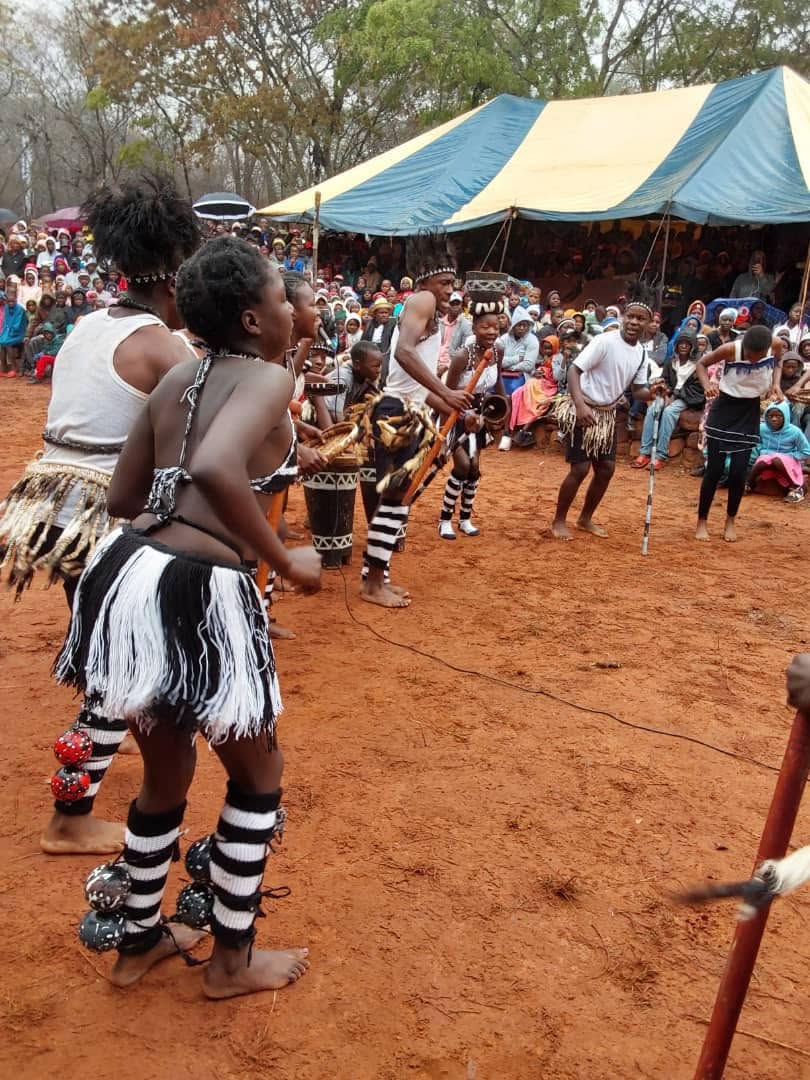
Muchongoyo is a Ndau dance tradition most closely associated with communities in Zimbabwe’s Chipinge and Chimanimani districts, with cultural connections extending into neighbouring Mozambique. The dance is documented as a Nguni war dance that was adopted and reshaped by the Ndau people of southeastern Zimbabwe. Its historical functions were practical: performed in preparation for battle, as a form of military training, and after victory as celebration. The physical vocabulary of the dance, its forceful stamping, high kicks, coordinated aggressive postures, and stick-and-shield choreography, reflects these origins directly. The dress was designed to amplify and survive those movements.
Over time, Muchongoyo moved out of its martial context into a wider ceremonial and social role. It is now performed at traditional weddings, chief installation ceremonies, harvest events, commemorations, and festivals including the Ndau Festival of the Arts. This shift did not make the dance less culturally charged. It extended the occasions at which Ndau communities deploy the dress as a statement of identity and continuity. As Whole Earth Education’s documentation of Zimbabwean traditional dance confirms, Muchongoyo remains specifically and distinctly Ndau, recognisable to those with knowledge of the tradition as something that belongs to a particular people and a particular place.=
The Muchongoyo ensemble was not assembled for visual effect. Each element was designed to function within the dance’s physical demands, producing sound, amplifying movement, and marking the wearer’s role in the performance.
The Muchongoyo Ensemble: What Each Element Does
The male Muchongoyo ensemble is documented with specific Ndau terminology for each component. Understanding the ensemble requires understanding that it is not assembled for visual effect but engineered to function within the dance’s physical demands.
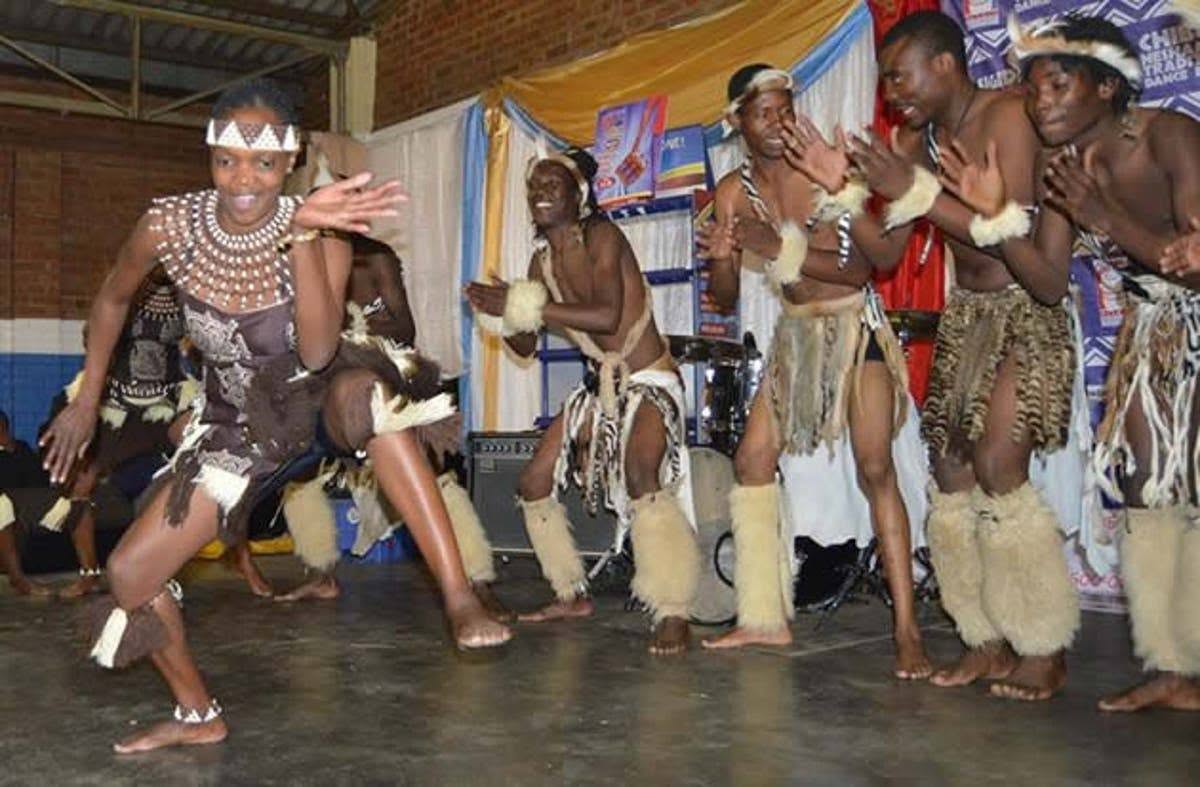
Mbikiza is a fluffy fibre or cloth skirt worn around the waist. In earlier periods, animal skins served this function. The mbikiza moves with the dancer’s body through the stamping and kicking choreography of Muchongoyo, providing visual extension to the legs and marking the lower body’s movements clearly for the audience.
Ngututu refers to the headwear, typically made with feathers or decorated with ornamental elements. Documentation of the Muchongoyo tradition records that the headgear adds vertical height to the dancer’s silhouette and reinforces the visual authority that the performance requires. In older documented forms, headdresses incorporated animal furs and other materials linked to martial identity.
Zvihlabvu and machoba are forms of arm and leg adornment. These function as both visual markers and sound instruments: worn at the ankles and wrists, they produce rhythm with the dancer’s movements, integrating the wearer’s body into the performance’s percussion. In earlier forms, these included shells, seeds, and animal materials chosen for their sound properties as much as their appearance.
Manyatera are the sandals worn on the feet. Their connection to the dance is direct: Muchongoyo’s forceful stamping requires footwear that supports the movement and connects it to the ground. The manyatera have been one of the most visibly adapted elements of the ensemble, moving from traditional materials toward forms that resemble contemporary footwear while retaining the name and the functional role.
Historical accounts also record the use of animal furs, sticks, spears, and shields, props that linked the performer’s appearance directly to Muchongoyo’s origins as a war dance. These remain part of the tradition’s visual memory even where contemporary performance uses adapted versions. As the Omiren Styles analysis of Ndau dress tradition confirms, the Ndau ceremonial dress system operates as a complete communication system in which each element carries meaning that is readable to the community present, not simply aesthetically pleasing to outside observers.
How the Dress Has Changed Over Time
The most significant changes in Ndau men’s ceremonial dress are in materials and construction rather than in the ensemble’s structure or logic. Garments that were once made from wild animal skins are now more commonly produced from cloth versions that retain the same silhouettes and functions. Sandals have been adapted toward contemporary materials. Vests and T-shirts have entered the ensemble in place of older upper-body garments. These substitutions are visible in documentary photography and fieldwork accounts across the past several decades.
The key question about these changes is not whether they happened but what they mean. The source document’s QC note addresses this directly: changes in material, footwear, or construction alter the appearance of the ensemble but do not automatically diminish its cultural function, provided the practice that gives the dress its meaning remains under community control. A cloth mbikiza performs the same choreographic function as a skin mbikiza. A modern manyatera supports the same stamping footwork. The ensemble remains recognisably Muchongoyo to those who know the dance.
This is consistent with Omiren Styles’s documentation of adaptation across southern African dress traditions. As the BaTonga beadwork documentation demonstrates, traditions that survive displacement, economic pressure, and material scarcity do so not by preserving every element unchanged but by maintaining the knowledge of what each element means and who is authorised to transmit that knowledge. The BaTonga transferred their bead patterns to grass baskets when beads became scarce. The pattern survived because the knowledge survived. The same logic applies to Ndau ceremonial dress: the ensemble adapts when it needs to, and what it needs to remain meaningful is community authority over the practice.
Why Ndau Men’s Ceremonial Dress Still Matters
Dress functions as one component of a wider Ndau identity system that includes language, music, dance, ritual, and body marking. Studies of Ndau communities establish that dress codes, dance forms including Muchongoyo, and body marks have historically worked together to signal belonging to the Ndau community, even across shifting borders and political pressures. That combination makes ceremonial dress part of cultural transmission in the most practical sense.
When younger Ndau men learn Muchongoyo, they learn how to assemble and wear the ensemble, what each accessory does in the performance, what occasions require this dress, and how the garments connect to Ndau history and social life. The dress is the curriculum made visible. Research on the Ndau Festival of the Arts found that participants understood Muchongoyo, alongside other Ndau cultural forms, as central to sustaining Ndau identity across generations. Bringing these practices into a contemporary festival setting creates space for them to be performed, transmitted, and debated, with dress at the centre of that process.
As the VaNambya traditional dress documentation shows, this pattern repeats across Zimbabwe’s minority communities: the communities that maintain their dress traditions do so not by treating them as museum objects but by keeping them in active use at the occasions that matter, allowing adaptation where adaptation is required, and maintaining community authority over what adaptation is and is not permitted. The question for Ndau men’s ceremonial dress is the same: not whether the sandals have changed, but whether the Ndau community still controls what it means to wear them.
The Omiren Argument
Ndau men’s ceremonial dress challenges a specific misreading that runs through most documentation of traditional African dress: the assumption that authenticity requires material fidelity. That a garment made from cloth rather than animal skin is less authentic than its predecessor. That a sandal adapted to contemporary materials has lost something the original had. That change is the enemy of tradition.
The Muchongoyo ensemble contradicts this at every level. It was designed to function within a specific performance, and its adaptations have tracked the performance’s changing context without abandoning either its choreographic function or its cultural meaning. The mbikiza still moves with the dancer. The manyatera still support the stamping. The ngututu still extends the dancer’s silhouette. What has changed is the material. What has not changed is the knowledge of what each element does and who is authorised to wear it.
The more important question, as the Omiren Argument has consistently held across its documentation of African ceremonial dress, is not whether today’s Muchongoyo costume looks exactly like the oldest recorded version, but whether Ndau communities still control how the tradition is practised, transmitted, and understood. When they do, small changes in sandals, vests, or fabrics are signs of a living heritage rather than a diminished one. When they do not, even a perfectly preserved ensemble is a museum object rather than a cultural practice. For the Ndau, the evidence of continued community authority is in the Festival of the Arts, in the ceremonial occasions where Muchongoyo continues to be performed, and in the transmission of the ensemble’s knowledge to younger dancers who understand not only how to wear it but what it means to wear it. That is what keeps the dress alive.
ALSO READ:
- Tswana Zimbabwe Traditional Dress: Leteisi and the Border Community Nobody Wrote About
- Zulu Love Letter Beadwork: The Language Fashion Has Been Selling Without Reading
- Nama Traditional Dress Namibia: The Victorian Adoption, the Genocide, and the Dress Nobody Photographs
- The Skirt That Sounds Like Celebration: Shangaan-Tsonga Dress and the Xibelani’s Unfinished Global Moment
Frequently Asked Questions
What is included in Ndau men’s ceremonial dress for Muchongoyo?
The Muchongoyo ensemble includes the mbikiza, a fluffy fibre or cloth skirt worn around the waist; ngututu, decorated headwear often incorporating feathers; zvihlabvu or machoba, arm and leg adornments that produce rhythm with the dancer’s movements; and manyatera, sandals worn on the feet. Historical accounts also document animal skins, sticks, shields, and spears as part of the ensemble in its older martial forms.
How has Ndau men’s ceremonial dress changed over time?
The principal changes have been in materials rather than structure. Cloth versions of the same garments have largely replaced animal skins. Sandals have been adapted toward contemporary materials while retaining the name manyatera and the same choreographic function. Vests and T-shirts have entered the ensemble in place of older upper-body garments. The ensemble’s core structure, its combination of skirt, headwear, arm and leg adornments, and sandals, has remained consistent across these material adaptations.
Where is Muchongoyo performed?
Muchongoyo is most closely associated with Ndau communities in Zimbabwe’s Chipinge and Chimanimani districts, with cultural connections extending into neighbouring Mozambique. It is performed at traditional weddings, chief installation ceremonies, harvest events, memorials, and cultural festivals including the Ndau Festival of the Arts. Its range of performance occasions has expanded significantly from its original martial context.
Is there a single ‘Ndau cloth’ used in all men’s ceremonial dress?
No. Ndau men’s ceremonial dress uses different materials depending on period, availability, and occasion, from animal skins to various cloth forms. What unites the ensemble is its role in the Muchongoyo performance and its function in expressing Ndau identity at specific ceremonial occasions, not a single uniform fabric or material.
Why does Ndau men’s ceremonial dress remain significant?
Ndau men’s ceremonial dress is one component of a wider Ndau identity system that includes language, music, dance, and body marking. When younger dancers learn Muchongoyo, they learn the ensemble as part of a broader transmission of Ndau cultural knowledge. The dress anchors that transmission in material practice rather than only in spoken instruction. Its significance lies not in the preservation of specific materials but in the continued community authority over who wears the dress, at which occasions, and what wearing it means.
Explore More
Read the full Men > Traditional and Heritage and Culture > Ceremony and Ritual sections for Omiren Styles’ documentation of African men’s ceremonial dress traditions, their performance contexts, and the community authority systems that keep them alive.