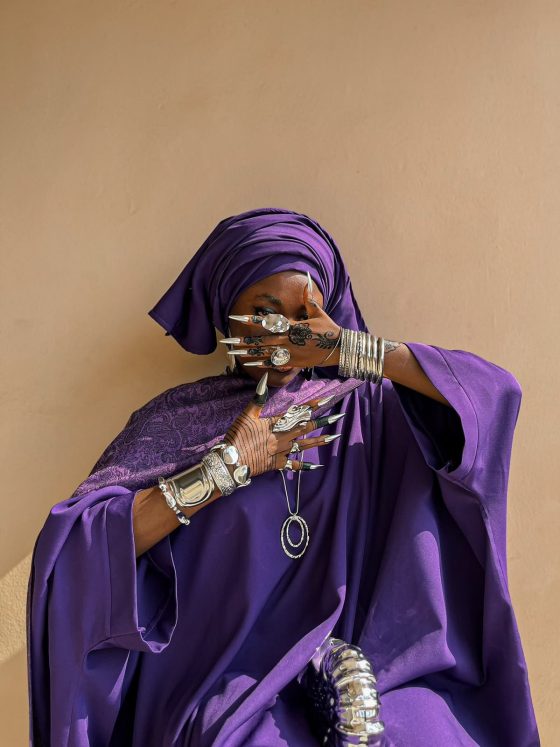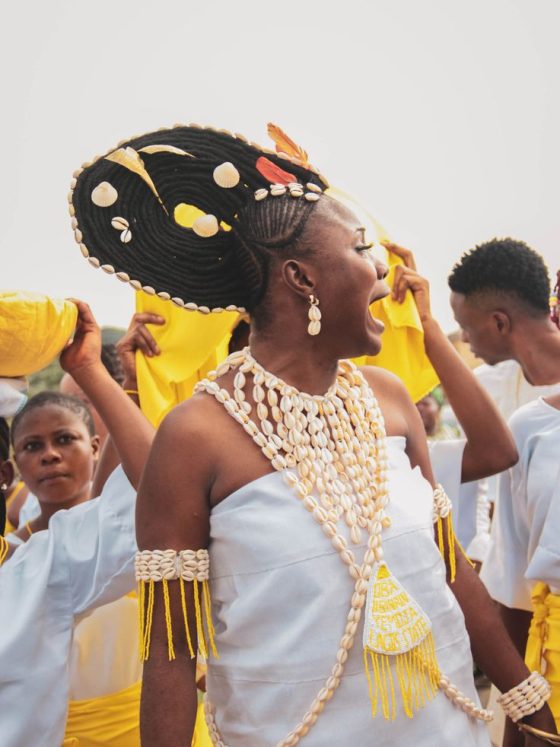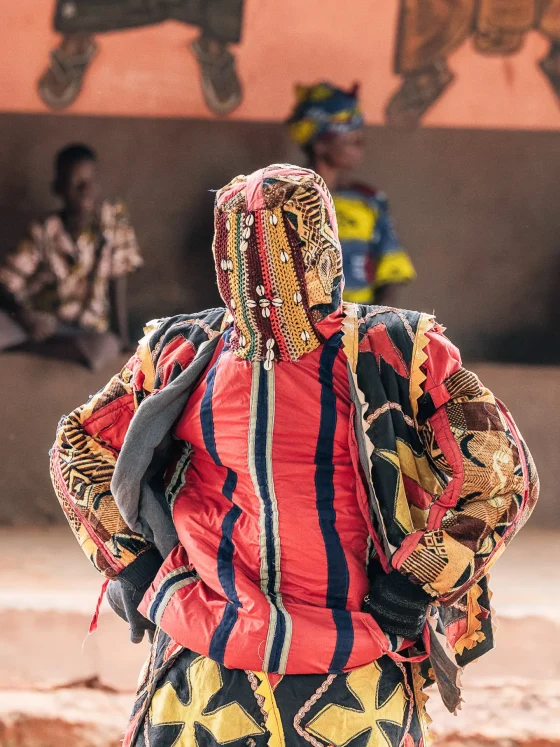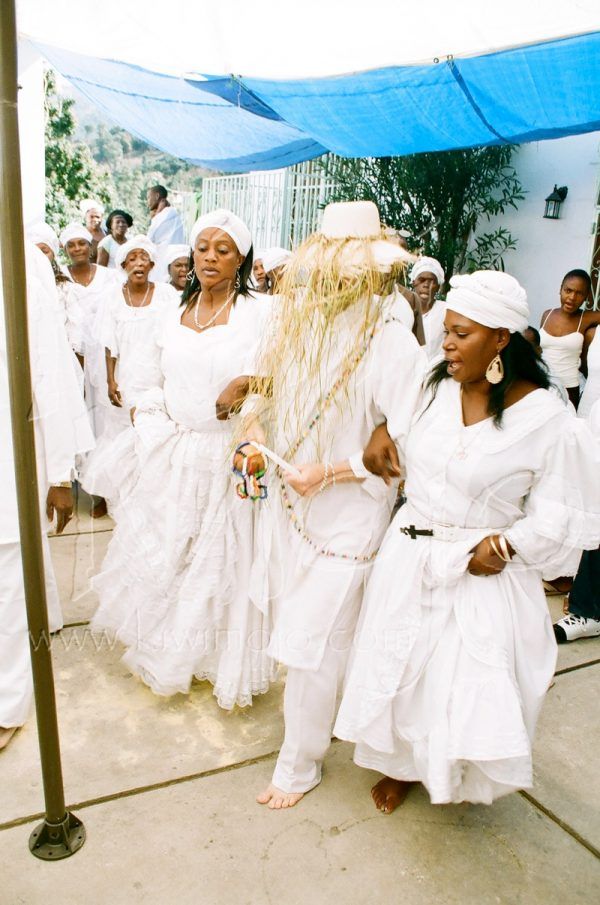
Haitian Vodou ceremonial dress is not a costume. It is a sacred vestment: clothing designed to identify, invoke, and protect the wearer while making spiritual presence visible. That distinction matters because Vodou is still routinely flattened into spectacle. Outsiders often see theatrical dress, exotic colour, or “voodoo” imagery. Practitioners see something else entirely: a ritual system where clothing helps the body enter relation with the lwa, the spirits at the centre of the religion.
To call Vodou dress costume is to misunderstand both the religion and the clothing. These garments are not decorative extras. They are part of how the ceremony works. As Omiren Styles has documented in its analysis of Rastafari dress codes as resistance, and in its analysis of colonial law targeting African dress and hair, the misreading of African and African diasporic sacred dress as costume or spectacle is not a new error. It is a structural one, built from the same assumption that African diasporic religious practices are exotic performance rather than living theology.
A detailed exploration of Haitian Vodou ceremonial dress, its spiritual meaning, colour symbolism, and why outsiders consistently misread sacred vestments as costumes.
What Vodou Dress Does
In Haitian Vodou, ceremonial clothing performs several functions at once. It identifies the wearer’s role, marks spiritual affiliation, offers protection, and helps create the conditions for possession. That makes the dress practical, not ornamental. Priests, priestesses, and initiates wear garments that align with the lwa they serve, and those garments help the community recognise who is present, what energy is being invoked, and what role each person holds in the ritual.
This is why the word “costume” fails. Costume suggests performance for an audience. Vodou ceremonial dress is for the spirits, the temple, and the community that knows how to read it. In many cases, the garments are blessed, consecrated, or prepared with specific rituals before they can be worn in ceremony. That preparation is part of what makes them effective as spiritual tools. Within a temple, what you wear signals your role: initiate, priest, drummer, guest. The clothing makes that visible without anyone having to ask. That clarity matters in rituals where multiple people are moving, dancing, singing, and sometimes being possessed at the same time.
Colour as Spiritual Code
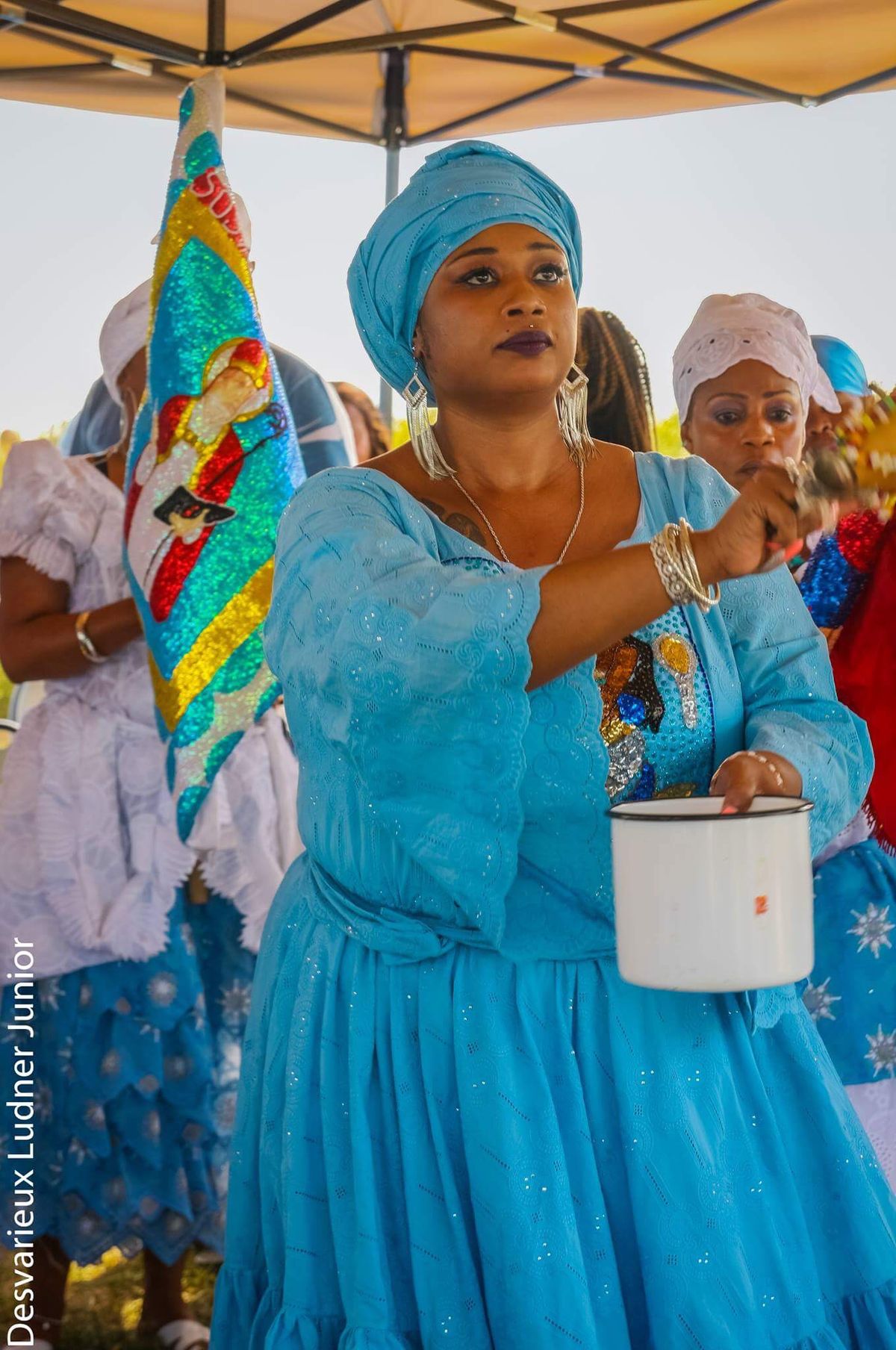
Colour is one of the most visible parts of Vodou dress, but it is also one of the most misread. White is often associated with purity and with Damballa, the serpent spirit linked to wisdom and calm. Red is frequently connected to Ogou, the warrior spirit and force of action. Blue can signal peace or lwa tied to water, including Lasirèn, the sea spirit.
These colours are not random decorative choices. They are part of a learned symbolic language that practitioners understand through initiation and practice. A white robe, a coloured headwrap, or a specific accessory can communicate rank, ritual role, or which spirit is being served. That is why the outsider’s eye gets it wrong. What looks like visual flair is actually coded spiritual information. The colour system is not fixed in a simple one-to-one way. Different temples and lineages have variations in how they interpret certain colours. Some lwa have multiple aspects, each with its own preference. Ogou can appear in different forms, some associated with red, others with different shades or combinations. That complexity is part of why outsiders get it wrong. They expect a simple code, but the system is living, adaptive, and lineage-specific.
The Meaning of Fabric and Garment
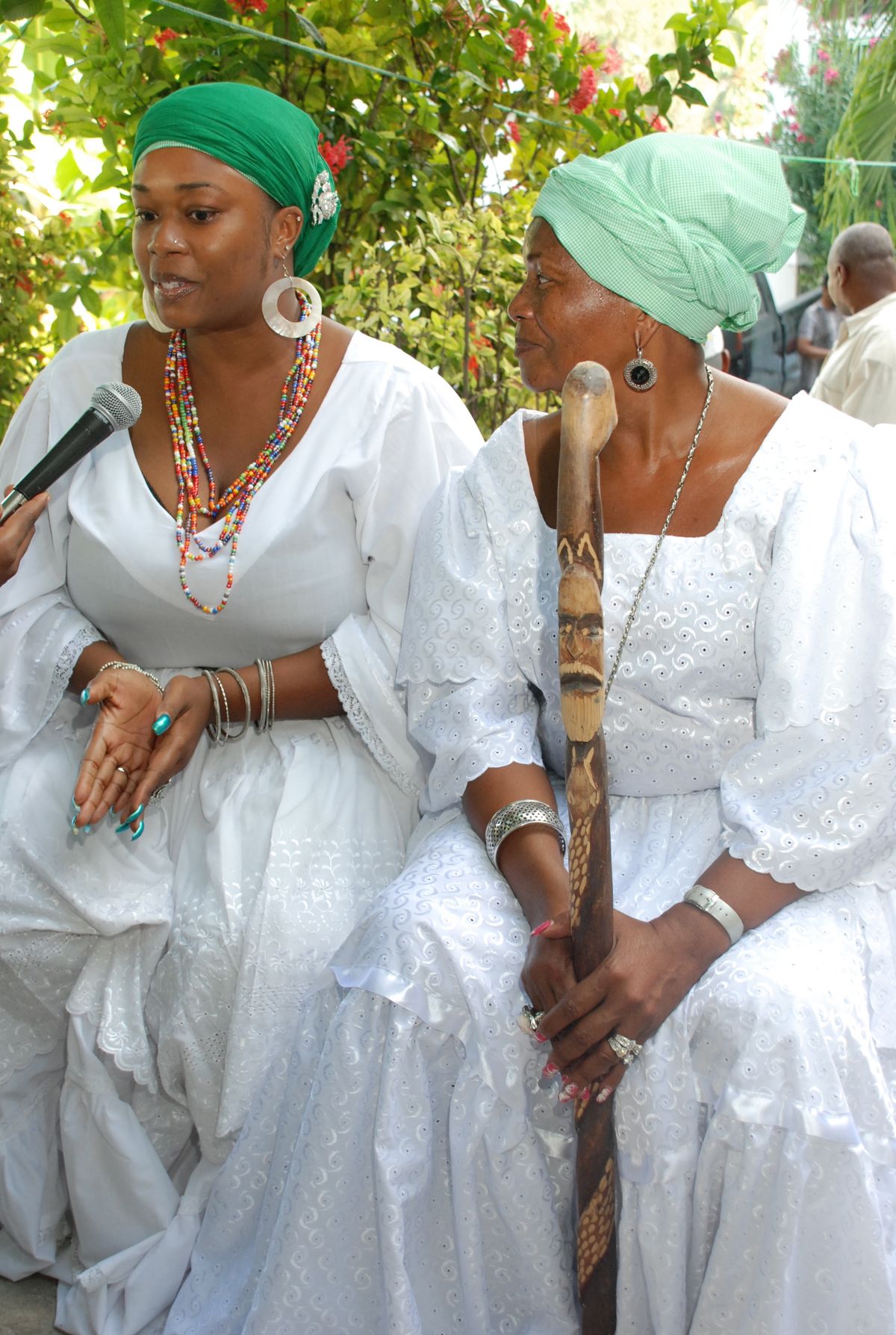
The material itself matters. Traditional Vodou garments are made to suit the demands of ceremony, movement, and spiritual presence. Some are simple and restrained; others are elaborate, layered, and intensely symbolic. Initiates usually wear all-white clothing during ceremonies, including traditional skirts, starched white blouses, and a white handkerchief on the head. Coloured satin headwraps that match the specific lwa being celebrated are added to announce which spirits are being served and what level of initiation the wearer has reached. This is where Vodou clothing starts to resemble other major sacred dress systems around the world. Like liturgical vestments in Christianity or ritual garments in Islam, Vodou dress is about preparedness, reverence, and alignment with sacred purpose. As Omiren Styles has argued in its analysis of how colonial law targeted African dress, the difference is not in function. It is in how outsiders perceive and value the clothing.
Why Outsiders Call It Costume
The costume label did not appear by accident. It comes from a long history of Western misrepresentation, colonial dismissal, and horror-film imagery that has turned Vodou into shorthand for superstition. Once a religion is treated as fake, its clothing is easy to ridicule. Sacred vestments become props. Ritual movement becomes theatre. Colour becomes exoticism. The visual language is stripped of its theological meaning and recoded as entertainment.
That misreading has consequences. It does not just distort fashion or aesthetics. It distorts the public understanding of Haitian religion, Haitian history, and Haitian cultural authority. When people see a Christian priest in ceremonial robes, they understand that the clothing is sacred. When they see a Vodou practitioner in ceremonial dress, they often see costume. That difference is not about the clothing itself. It is about the power dynamics that shape how different religions are valued. As Omiren Styles has documented in its analysis of the homecoming of African fashion in Black American style, African diasporic aesthetic traditions have been systematically read as derivative or decorative rather than as primary cultural authority. Vodou ceremonial dress is one of the clearest cases of that misclassification.
Dress and Possession
One of the most important roles of ceremonial dress is to support possession. In Vodou, possession is not a gimmick or a metaphor. It is a real ritual event in which the lwa enter and move through the body of a devotee. Dress helps prepare that body for the encounter. It signals readiness, protects the wearer, and gives the community visual cues about what is happening.
When possession occurs, the clothing becomes part of how the spirit is recognised and honoured. Different lwa have different aesthetic preferences: some prefer elaborate, colourful garments; others prefer simple white; some like specific accessories like swords, staffs, or scarves. The clothing helps the possessed person embody the spirit’s character in ways that are recognisable to the community. The concept of “spiritual vogue” captures this dynamic: through dress, touch, movement, and the process of being seen, Vodou ceremonial practice is interactive, multisensorial, and communicative for practitioners, spirits, and the wider community simultaneously. It is not about looking good for outsiders. It is about looking right for the spirits.
The Politics of Misreading
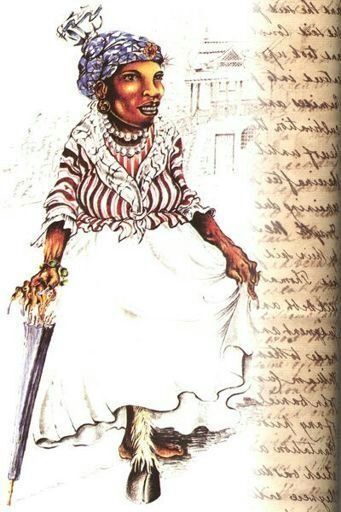
The misunderstanding is also political. Haitian Vodou emerged from the fusion of West African spiritual traditions, Indigenous Taíno practices, and Catholic influence, all shaped by the history of slavery and revolution in Haiti. That history makes Vodou a site of resistance, survival, and cultural memory. Vodou practitioners were key figures in the Haitian Revolution, and the religion has continued to function as a space of community organisation, spiritual protection, and cultural continuity. When outsiders reduce Vodou dress to costume, they are not simply making an aesthetic mistake. As Omiren Styles has argued in its analysis of how colonial law targeted African dress and hair, treating African and African diasporic sacred clothing as less than fully serious has consequences: for how communities are perceived, for how their spiritual practices are treated in law and media, and for how their cultural heritage is valued in global conversations about religion, fashion, and art.
In diasporic contexts, including in the United States, Vodou practitioners often face stigma, discrimination, and misunderstanding. Their clothing becomes another site where that stigma plays out. What is sacred to them is treated as spectacle by outsiders. That dynamic is not neutral. It reproduces colonial patterns of dismissal and exoticisation of African diasporic religious traditions. The politics of misreading also intersect with race, class, and colonialism. As Omiren Styles has documented in its analysis of diaspora fashion diplomacy in Britain, the dress codes of African and Caribbean diaspora communities are specific, internally logical, and culturally significant in ways that dominant culture has not consistently recognised. Vodou ceremonial dress is the most theological expression of that pattern.
Why the Distinction Matters
Calling Vodou dress costume is easy. Understanding it as sacred vestment requires more attention, more humility, and more respect for the religion’s internal logic. That internal logic is sophisticated. The dress serves ritual function, communicates spiritual meaning, and helps create the conditions under which the lwa are welcomed, recognised, and served. It is not theatrical in the trivial sense. It is theological in the deepest sense.
Fashion media should be especially careful here. It often celebrates spirituality when it feels familiar or marketable, but it still tends to exoticise African diasporic religions. Vodou dress deserves to be covered as religious dress, not as visual novelty, as Omiren Styles has argued in its analysis of African fashion authority. These traditions’ institutional recognition was never absent. Haitian Vodou ceremonial dress is not waiting to be explained. It is waiting to be respected. The clothing is not theatrical. It is theological. And until that shift happens, the misreading will continue to shape how Haitians and Haitian diaspora communities are perceived in the world.
Haitian Vodou ceremonial dress is sacred vestment, spiritual technology, and a coded language of colour, rank, and ritual presence. Stop calling it costume. Start treating it as what practitioners already know it to be: clothing that helps make the invisible visible.
ALSO READ
- Helmer Joseph and HANAYA: The Haitian-Canadian Designer Who Became FIMO 228’s Most Consistent International Voice
- The Future of Haitian Fashion: Craft Networks, Diaspora Investment, and Cultural Continuity
- Prajjé Oscar Jean Baptiste: Haitian Couture and the 1950s Redefined
- Daveed Baptiste: Diaspora, Denim, and the Haitian Body in Motion
Frequently Asked Questions
What is the purpose of Haitian Vodou ceremonial dress?
Haitian Vodou ceremonial dress identifies, invokes, and protects the practitioner while facilitating connection with the lwa. Each garment is designed to resonate with specific spirits, helping participants enter the right states for ritual work and facilitating possession. The clothing also communicates role within the ceremony (initiate, priest, drummer, guest) and offers spiritual protection during intense ritual engagement. The garments are often blessed or consecrated before use. The clothing is not extra. It is essential infrastructure for the ritual to work properly.
Why do outsiders consistently misread Vodou dress as costume?
Because Vodou has been historically demonised in Western media, treated as superstition, and reduced to horror movie tropes. Once a religion is not taken seriously as theology, its clothing is easy to ridicule: sacred vestments become props, ritual movement becomes theatre, colour becomes exoticism. That misreading is part of a longer history of how African diasporic religious practices have been treated as exotic performance rather than living theology. As Omiren Styles has documented, the framing of African and African diasporic sacred clothing as spectacle has concrete consequences for how communities are perceived, how their spiritual practices are treated legally, and how their cultural heritage is valued.
What do the colours in Vodou dress mean?
In Haitian Vodou, colours correspond to different lwa and carry coded spiritual meaning. White often relates to purity or Damballa, the serpent spirit. Red is frequently connected to Ogou, the warrior spirit. Blue can signal peace or water spirits such as Lasirèn. The colour system is not fixed in a simple one-to-one way: different temples and lineages have variations, and some lwa have multiple aspects, each with different colour preferences. The colours communicate spiritual information to the community about which spirits are being served and what energy is present. That is not decoration. It is communication.
How is Vodou dress similar to or different from religious vestments in other faiths?
Vodou dress operates with the same level of intentionality as liturgical vestments in Christianity, ritual garments in Islam, or ceremonial robes in other major world religions. The functional parallel is exact: it signals rank and role, offers spiritual protection, helps the wearer enter the right state for ritual, and facilitates divine presence. The difference is not in function. It is in how the clothing is perceived and valued by outsiders. When people see a Christian priest in ceremonial robes, they understand it as sacred. When they see a Vodou practitioner in ceremonial dress, they often see costume. That difference is about power and colonial history, not about the clothing itself.
Why does the distinction between sacred vestment and costume matter?
Because language shapes perception, calling Vodou dress costume dismisses a religious tradition central to Haitian identity and resistance. Vodou practitioners were key figures in the Haitian Revolution, and the religion continues to function as a space of community organisation, spiritual protection, and cultural continuity. Its ceremonial dress carries that history. Treating it as costume is a way of saying the religion itself is not serious. As Omiren Styles has argued, African diasporic traditions have always carried authority that the mainstream fashion press has been slow to recognise. Vodou ceremonial dress deserves the same respect as any other major religious tradition’s sacred garments.