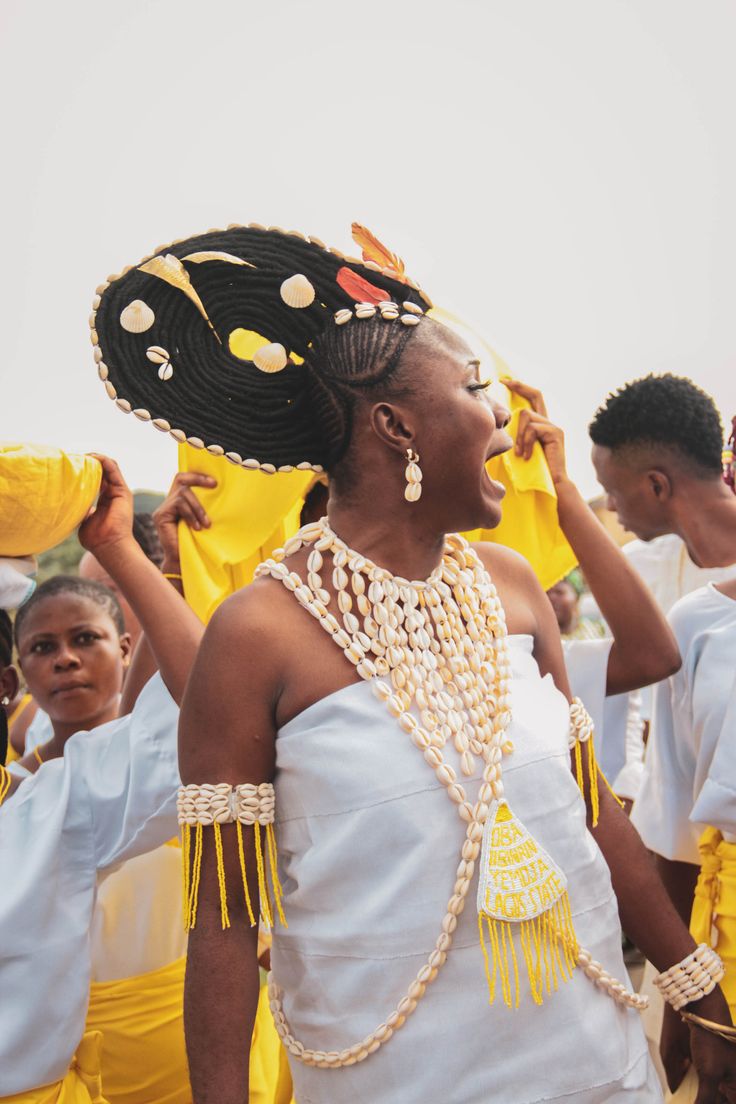
Every August, the Osun-Osogbo Sacred Grove on the banks of the Osun River in Osogbo, Osun State, hosts one of the most visually precise spiritual events in the African religious calendar. The annual Osun-Osogbo festival draws devotees, diaspora returnees, and visitors from across the world to a shrine that the United Nations Educational, Scientific and Cultural Organisation inscribed as a UNESCO World Heritage Site in 2005 as the last in a tradition of sacred groves associated with Yoruba deities. It is the only UNESCO World Heritage Site in Nigeria. What happens there is not a cultural performance for an external audience. It is an active religious ceremony, and the dress codes governing who wears what are not aesthetic decisions. They are theological ones.
At the Osun-Osogbo festival, dress is theology. Inside the yellow regalia of the Osun priestess, the arugba’s white costume, and what each garment communicates at Nigeria’s only UNESCO living shrine.
The Osun-Osogbo Sacred Grove and What Makes It Significant
The Osun-Osogbo Sacred Grove covers approximately 75 hectares of riverine forest on the outskirts of Osogbo, the capital of Osun State in south-western Nigeria. The grove contains shrines, sculptures, and artworks dedicated to Osun, the Yoruba deity of the river, fertility, love, and beauty. The UNESCO World Heritage inscription describes it as the last in a tradition of sacred groves associated with Yoruba deities, with the others having been destroyed during urban development across the region. The grove’s physical survival is partly attributed to the work of Austrian artist Susanne Wenger, who lived in Osogbo from 1950 until she died in 2009 and worked with local artists to restore and expand the grove’s sculptures from the 1960s onward. The Nigerian National Commission for Museums and Monuments manages the site.
The festival itself is the sacred grove’s most significant annual event: a multi-day ceremony that includes purification rites, the reenactment of the founding mythology of the relationship between Osogbo’s people and the river deity, and the climactic procession to the riverbank. The Ataoja of Osogbo, the city’s traditional ruler, plays a central role in the ceremony’s civic dimension. At the same time, the Yeye Osun, the chief priestess of Osun, leads the spiritual dimension. The distinction between these roles is important for understanding the dress codes, which differ between civic, spiritual, and devotee participants. As Omiren Styles has documented in its analysis of Yoruba spiritual fashion systems, Osun is identified by yellow and amber across Yoruba religious traditions and in the Afro-diasporic traditions that carried her worship to Cuba, Brazil, and Trinidad.
The Colour Code: Yellow as Theology
Yellow is not the colour of the Osun-Osogbo festival for aesthetic reasons. It is the colour of Osun. In the Yoruba orisha system, each deity is assigned a specific colour or combination of colours that governs the dress of devotees and priestesses in ceremony and in daily practice. Osun’s colours are yellow and amber, understood as the colours of the river’s light reflected off the water, of gold, of honey, and of the specific quality of abundance and beauty that the deity represents. As Omiren Styles has documented in their analysis of the Yoruba orisha colour system across the African diaspora, this colour assignment is not symbolic in the loose sense that a colour might be associated with a concept. It is theological: wearing yellow in Osun’s ceremony is a statement of devotion, alignment with the deity’s energy, and participation in a system of spiritual identification that has been practised continuously for centuries.
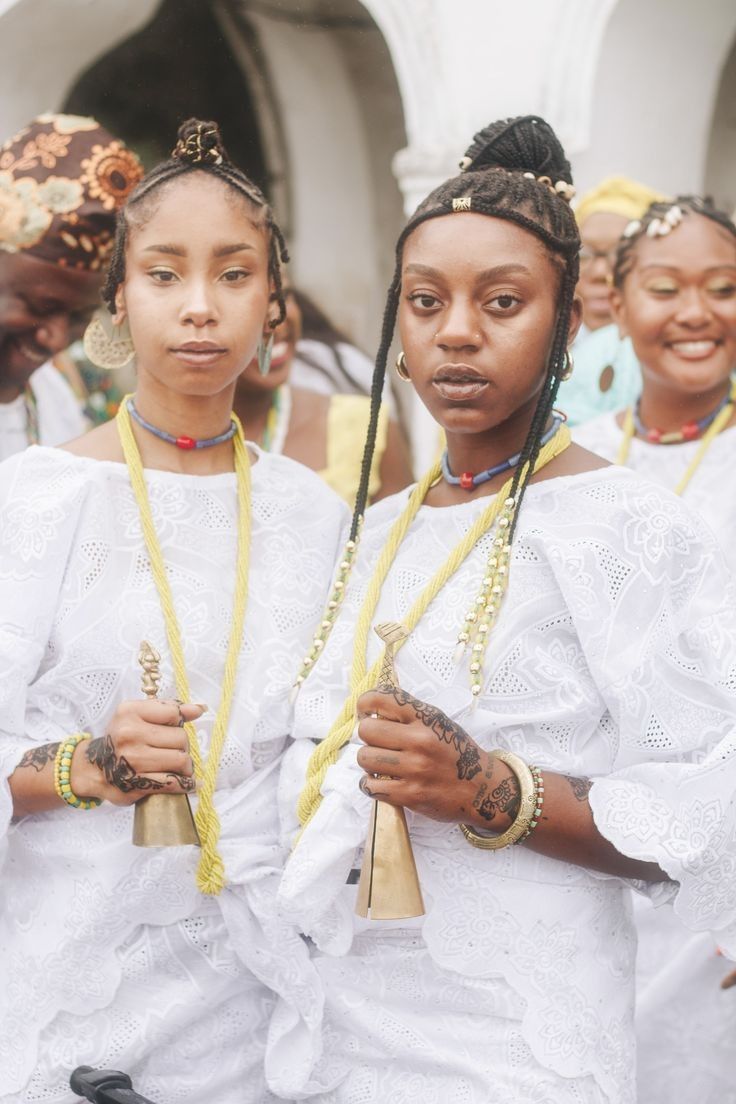
The Osun priestesses, the iyaosun or devotees of Osun who participate formally in the ceremony, dress in yellow and amber from head to foot. The typical costume includes a yellow or golden wrapper, an iro, tied around the waist and falling to the ankle; a yellow buba, the loose blouse worn over the wrapper; yellow beads, the ileke Osun, worn at the neck, wrist, and ankle; and a yellow headwrap or gele. The Ileke Osun are not decorative accessories. They are consecrated objects whose wearing marks the devotee’s initiated status and her relationship to the deity. In the Yoruba tradition as practised in Nigeria and carried through the diaspora, the ileke are received at initiation and are subject to specific spiritual protocols, including restrictions on when they can be removed, who can touch them, and how they must be cared for.
“The dress of an Osun priestess is not a costume she puts on for the festival. It is the material form of her spiritual identity, worn because she is who she is, not because of the occasion.” — Professor Diedre Badejo, Kenyan Wesleyan University, whose academic study “Osun Seegesi: The Elegant Deity of Wealth, Power, and Femininity” is the foundational scholarly work on Osun worship in Nigeria and the diaspora.
The Arugba: The Calabash Carrier and Her White Dress
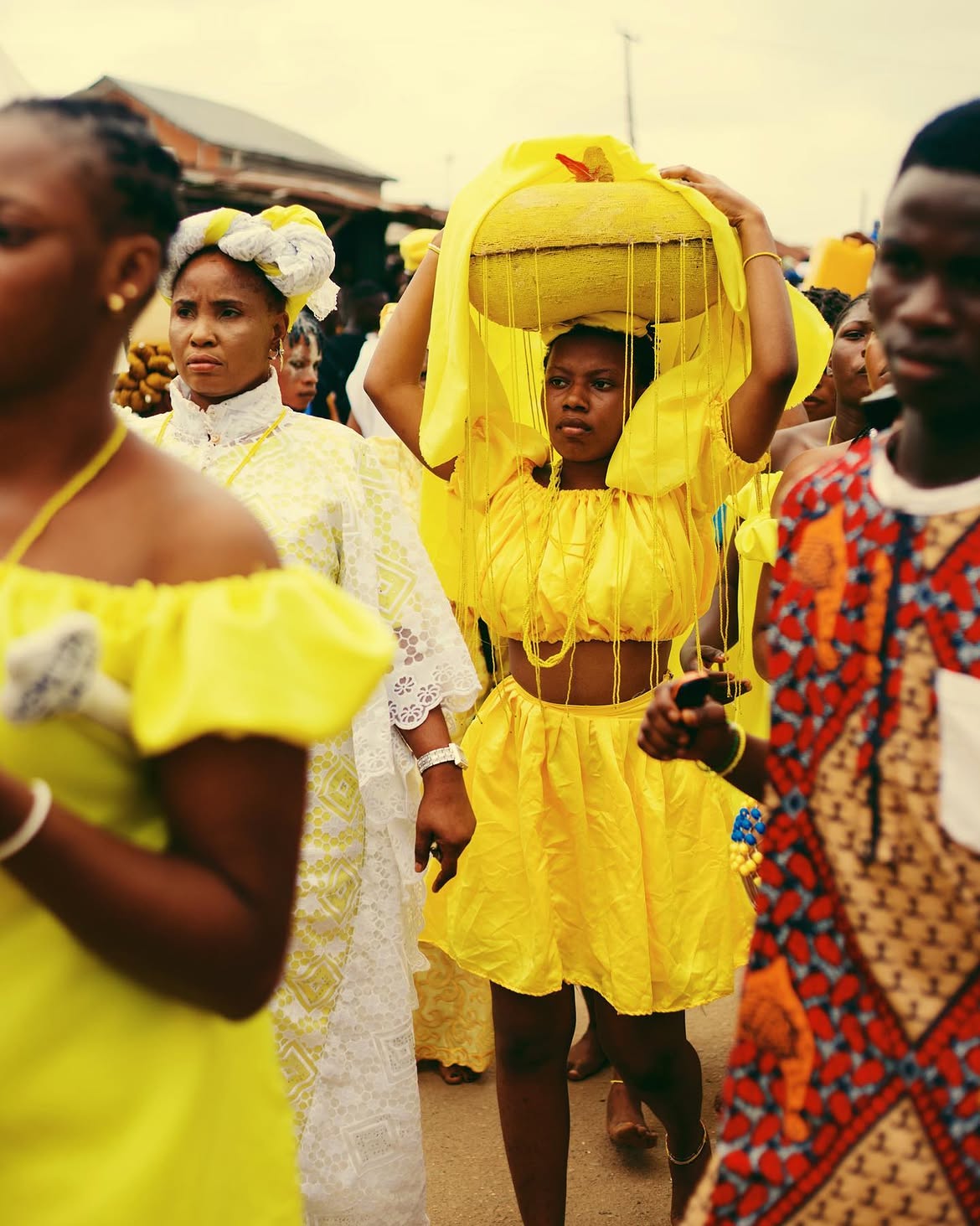
The most visually distinctive figure in the Osun-Osogbo procession is the arugba, the young woman chosen to carry the sacred calabash, an olupo, from the palace to the riverbank. The calabash contains the sacrificial offerings and ritual materials for the ceremony, and its safe arrival at the river is the ceremonial climax of the festival. The arugba’s selection is a major event in itself: she must be a virgin, chosen from among the young women of the Osun priestesshood families, and her selection is confirmed through divination. Her dress is explicitly distinct from the yellow of the Osun priestesses. The arugba wears white. The UNESCO documentation of the Osun-Osogbo festival confirms that the arugba’s white dress marks her role as a vessel of purity and sacred trust rather than as a devotee whose dress expresses initiated identity. She is carrying something. The dress communicates the nature of what she carries.
The arugba walks the procession route, approximately two kilometres from the palace to the riverbank, with the calabash balanced on her head and her eyes focused ahead. She must not drop it. She must not stumble. The crowd that lines the procession route understands the weight of what she is carrying, both physically and ceremonially. The Osun-Osogbo Sacred Grove UNESCO documentation records the arugba’s procession as one of the defining ceremonial elements of the festival, the moment around which the entire event is structured. Her white dress in the middle of a sea of yellow devotees is visually deliberate: it marks the threshold between devotion and function, between the people who worship and the person who serves.
Hierarchies of Dress Within the Ceremony
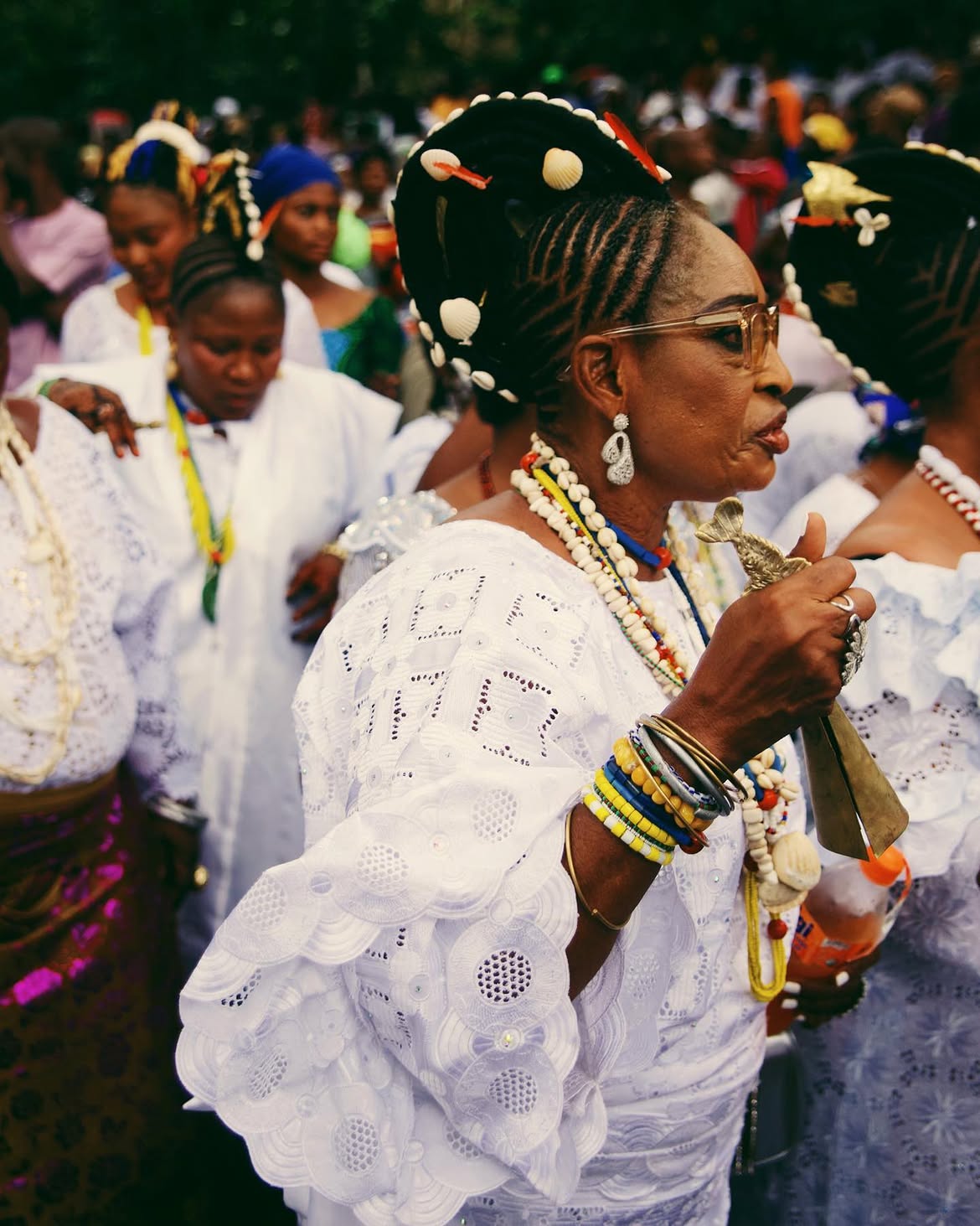
The Osun-Osogbo festival operates on a clearly defined hierarchy of dress that communicates each participant’s role, rank, and relationship to the deity. At the apex is the Yeye Osun, the chief priestess, whose regalia includes the most elaborate yellow dress, the most senior bead sets, and the specific regalia of her office, including a fan, an opeele, the divining chain associated with Ifa consultation, and, in some documented versions, a sword of office. The National Commission for Museums and Monuments’ documentation of the festival records that the Yeye Osun’s attire is prepared specifically for the ceremony and that its specific elements are governed by the protocols of the priestesshood rather than by individual choice.
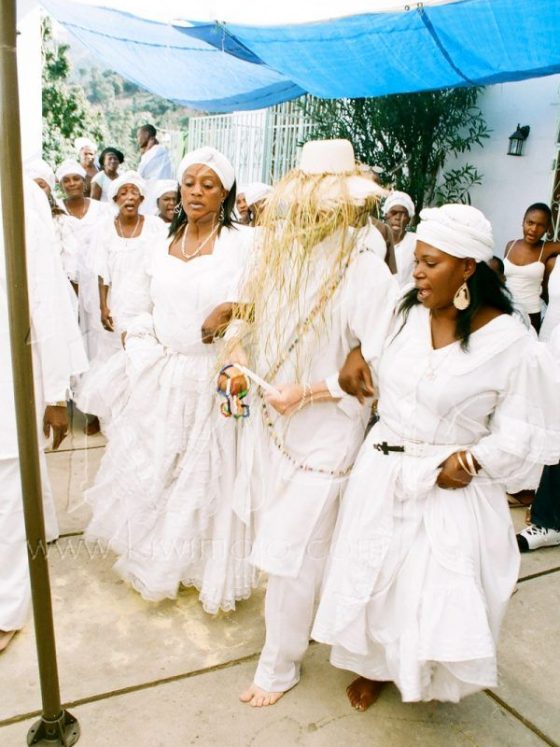
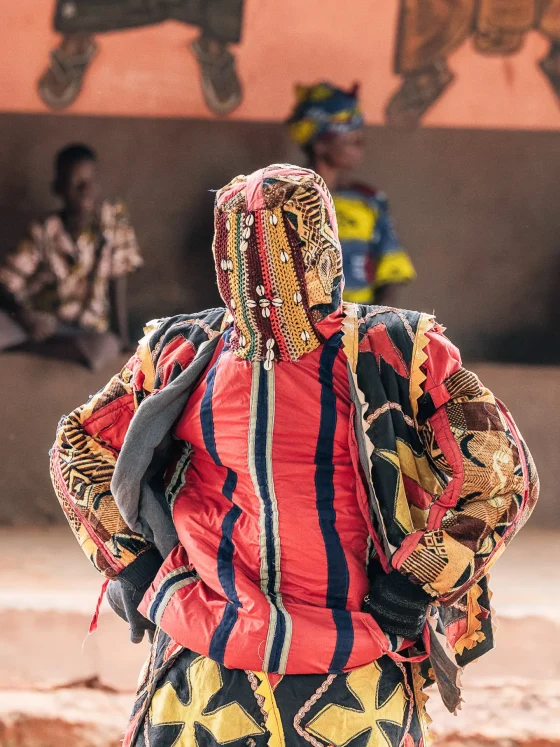
Below the Yeye Osun in the ceremonial hierarchy are the initiated priestesses, whose yellow dress marks their status but varies in elaborateness according to their rank and seniority within the priestesshood. Below them are the devotees, whose yellow dress signals their religious affiliation but not their initiation into the priestesshood. Below them are the general worshippers and festival attendees, who may wear yellow as a sign of respect and participation without any formal spiritual designation. And among all of these, the arugba in white moves through a different category entirely. This hierarchical dress structure is consistent with what Omiren Styles has documented in the Egungun masquerade’s layered access system, where the most sacred garments are restricted to those whose initiation confers the right to wear them.
The Diaspora Dimension
The Osun-Osogbo festival draws devotees from the Yoruba diaspora, whose communities in Cuba, Brazil, Trinidad, and the United States maintain active worship of Osun under the names Ochun (in Santería), Oxum (in Candomblé), and Oya or Oshun in other Afro-diasporic traditions. For diaspora devotees attending the festival in Osogbo, the yellow dress they wear in Nigeria is the same yellow dress worn in ceremonies in Havana, El Salvador, and New York. The colour-to-deity theology was carried across the Middle Passage intact and has been practised without interruption in the Americas for over three centuries. As Omiren Styles has documented in its analysis of Santeria, Candomble, and Vodou as fashion systems, the orisha colour system is among the most continuously practised dress codes in the African diaspora, surviving colonial suppression by encoding theological identity in visible material form that could be read by the initiated and dismissed as mere colour preference by the uninitiated.
For diaspora devotees, the Osun-Osogbo festival represents both a pilgrimage and a confirmation: the yellow they have been wearing in ceremony for years, the ileke they received at initiation in a Brazilian terreiro or a Cuban ile ocha, belong to the same tradition being enacted at the sacred grove. The dress is evidence of continuity. The river is the same, addressed by the same name, with the same colour.
What Fashion Editorial Gets Wrong
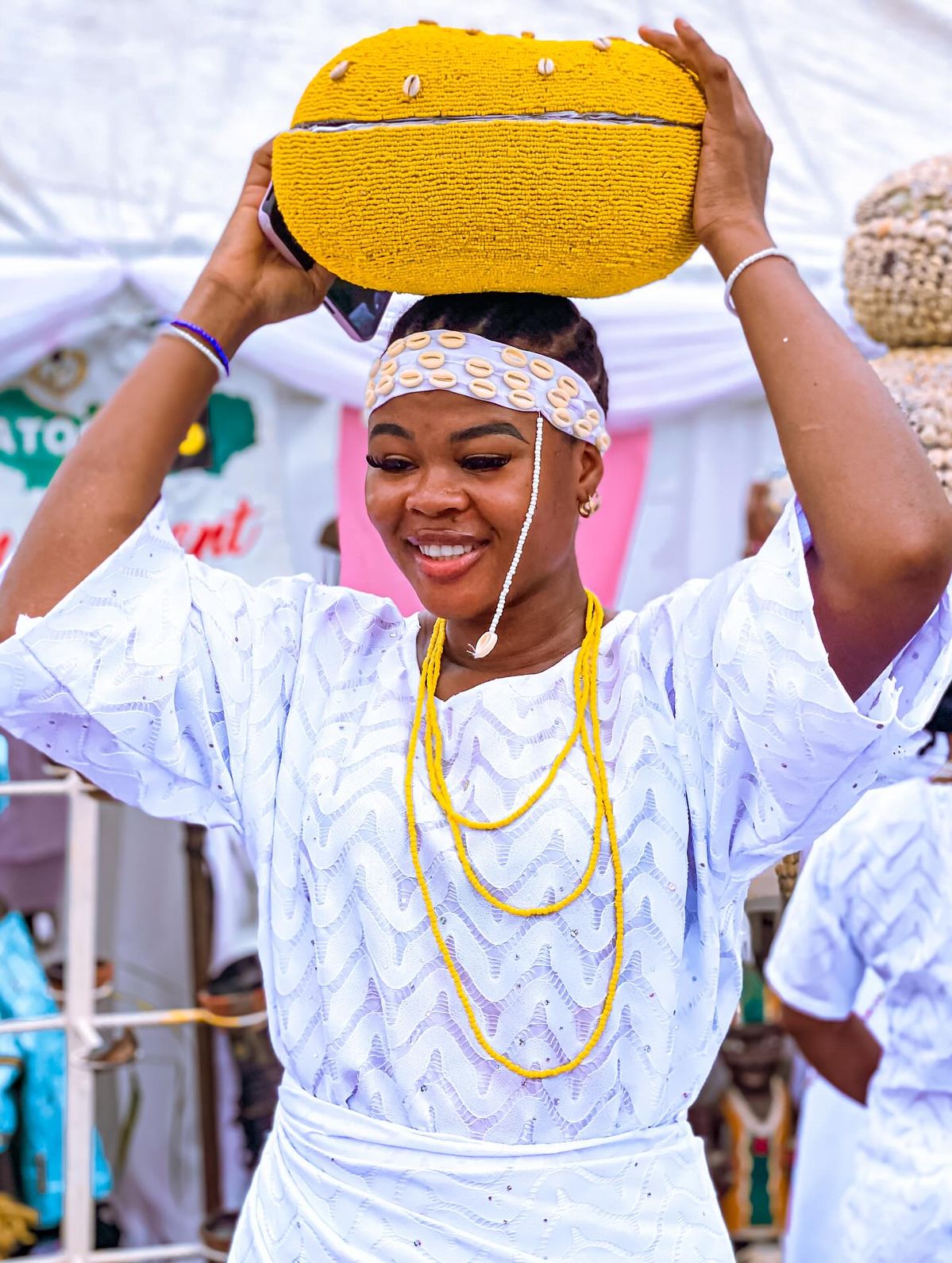
Nigerian and international media frequently cover the Osun-Osogbo festival in ways that describe the visual spectacle without engaging with the theological text. Coverage that describes the festival as a celebration of a river goddess, in which participants dress in yellow, misses the point of the dress. It is not a decoration for a ceremony. It is the ceremony’s primary language. When a priestess wears yellow, she is not marking participation in a cultural event. She is manifesting her initiated identity as a devotee of a specific deity whose attributes, powers, and claims on her life are encoded in the colour she wears. As Omiren Styles has documented in its analysis of the Egungun masquerade, the fundamental error in fashion editorial coverage of Yoruba spiritual practice is treating the garment as a costume worn for performance rather than as a theological statement worn because of who the wearer is.
The arugba’s white dress makes this clearest. It is not a bridal dress, not a purity costume in any Western sense, not a contrast to the yellow for visual effect. It is the dress appropriate for a person who has been given a specific spiritual function for a specific ceremony. The function determines the dress. Understanding the function requires knowing the theology. The fashion press, which covers the visual without reading the theological, consistently misses what makes the arugba’s white dress the most significant garment at the festival.
The Omiren Argument
The Osun-Osogbo Sacred Grove is Nigeria’s only UNESCO World Heritage Site. The festival held there every August is an active religious ceremony whose dress codes have been in continuous practice for centuries, carried through the Yoruba diaspora to three continents, and now reunited annually at the site of their origin. That reunion, of diaspora devotees in yellow ileke arriving at an Osogbo sacred grove where the same colour marks the same deity they have been worshipping in Havana, Salvador, and New York, is not a cultural tourism event. It is a theological event in which dress is the primary evidence of continuity. The yellow wrapper, the consecrated beads, the white dress of the arugba: these are not fashion choices. They are statements in a religious language that is older than the trade routes that carried it across the Atlantic.
A fashion editorial that covers the Osun-Osogbo festival as a visual spectacle without engaging with its theological structure is not covering the festival. It is covering its surface. The Omiren position is the same one applied to every spiritual fashion system documented on this platform: the dress cannot be understood without the theology, and the theology cannot be represented honestly by an editor who is only looking at the colour. As Omiren Styles has argued across its analysis of Yoruba spiritual dress, the most precisely codified fashion systems in the world are not on Paris runways. They are in the religious traditions of the African continent and its diaspora, where colour, fabric, and beadwork carry information that no trend report has ever been designed to read.
The yellow at Osun-Osogbo is not a festival colour. It is a theological declaration worn on the body of every person present who knows what it means.
ALSO READ
- Santeria, Candomble, and Vodou: When African Spirituality Became a Fashion System
- The Egungun Masquerade: What the Yoruba Ancestral Festival Tells Us About Fashion and the Spirit World
- Ojude Oba Festival 2026 in Ijebu-Ode: Yoruba Cultural Fashion and the Legacy of Oba Sikiru Adetona
- Top 5 Aso-Oke Styles for Yoruba Women in 2026
Frequently Asked Questions
What is the Osun-Osogbo festival?
The Osun-Osogbo festival is an annual religious ceremony held every August in Osogbo, Osun State, Nigeria, at the Osun-Osogbo Sacred Grove, which UNESCO inscribed as a World Heritage Site in 2005. It is the only UNESCO World Heritage Site in Nigeria. The festival honours Osun, the Yoruba deity of the river, fertility, love, and beauty, and includes purification rites, the reenactment of the founding mythology of Osogbo’s relationship with the river deity, and the climactic arugba procession from the palace to the river bank.
Why do Osun priestesses wear yellow?
Yellow is the colour of Osun in the Yoruba orisha system, understood as the colour of the river’s light reflected off the water, of gold, of honey, and of the specific quality of abundance and beauty that the deity represents. Wearing yellow in Osun’s ceremony is a theological statement, not an aesthetic one: it marks the devotee’s initiated status, her alignment with the deity, and her participation in a religious tradition whose colour-to-deity system has been in continuous practice for centuries and was carried intact through the African diaspora to Cuba, Brazil, Trinidad, and the United States.
Who is the arugba, and what does her white dress mean?
The arugba is the young woman chosen through divination to carry the sacred calabash containing the sacrificial offerings and ritual materials from the palace to the riverbank. She must be a virgin from an Osun priestess family. Her white dress distinguishes her from the yellow of the initiated devotees: it marks her specific ceremonial function as a vessel of purity and sacred trust rather than as a devotee expressing initiated identity. The white dress in the middle of a procession of yellow-clad worshippers is visually deliberate: it marks the threshold between devotion and function.
What is the Yeye Osun?
The Yeye Osun is the chief priestess of Osun, the senior spiritual authority of the Osun-Osogbo festival. Her regalia is the most elaborate of any participant: a yellow dress, the most senior ileke Osun bead sets, a fan, and, in some documented versions, a sword of office. The National Commission for Museums and Monuments documents that the Yeye Osun’s attire is prepared specifically for the ceremony and governed by the protocols of the priestesshood rather than by individual choice. She leads the spiritual dimension of the festival, while the Ataoja of Osogbo, the traditional ruler, leads its civic dimension.
How is the Osun-Osogbo festival connected to Afro-diasporic religious traditions?
The Yoruba deity Osun is worshipped across the African diaspora under the names Ochun in Santeria (Cuba), Oxum in Candomble (Brazil), and Oshun in other Afro-diasporic traditions. The yellow dress and the ileke Osun bead sets worn by her devotees in Osogbo are the same colour and the same consecrated bead system worn by initiated devotees in Havana, Salvador, and New York. The colour-to-deity theology was carried across the Middle Passage and has been practised without interruption for over three centuries. As Omiren Styles has documented, the orisha colour system is among the most continuously practised dress codes in the African diaspora. The Osun-Osogbo festival is the site where diaspora devotees can encounter the tradition at its geographic source.