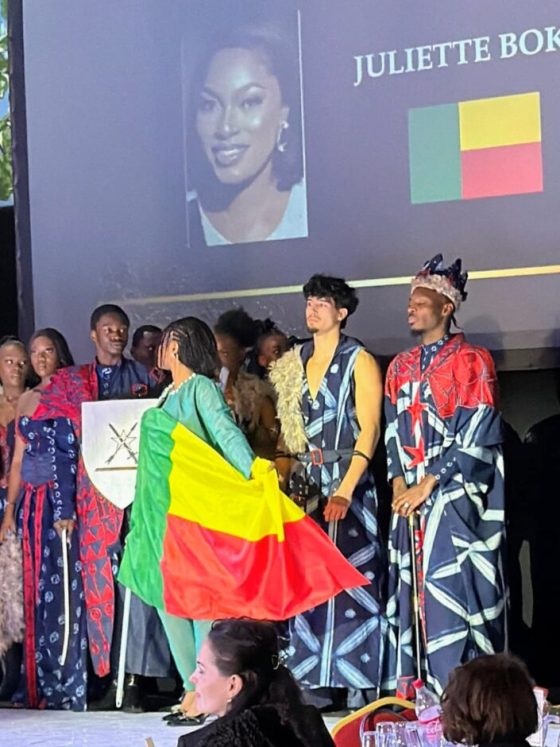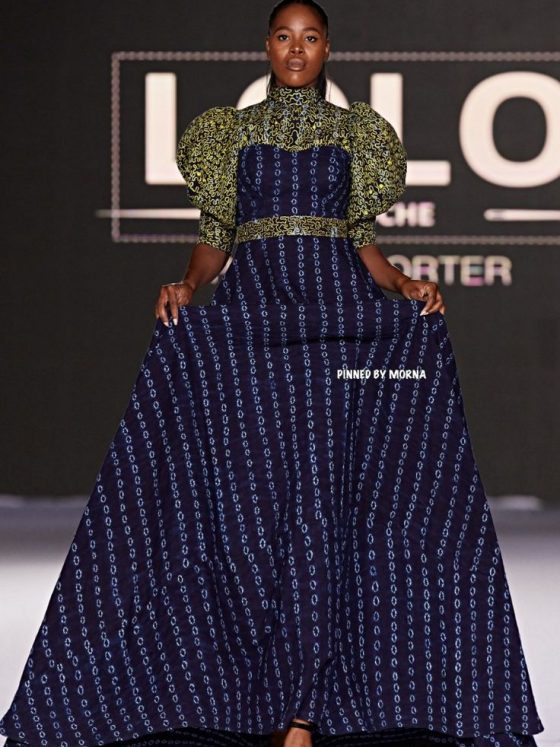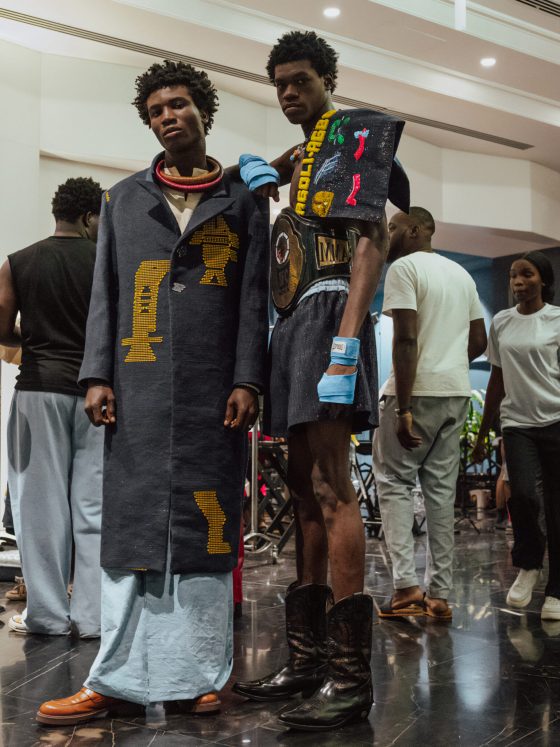

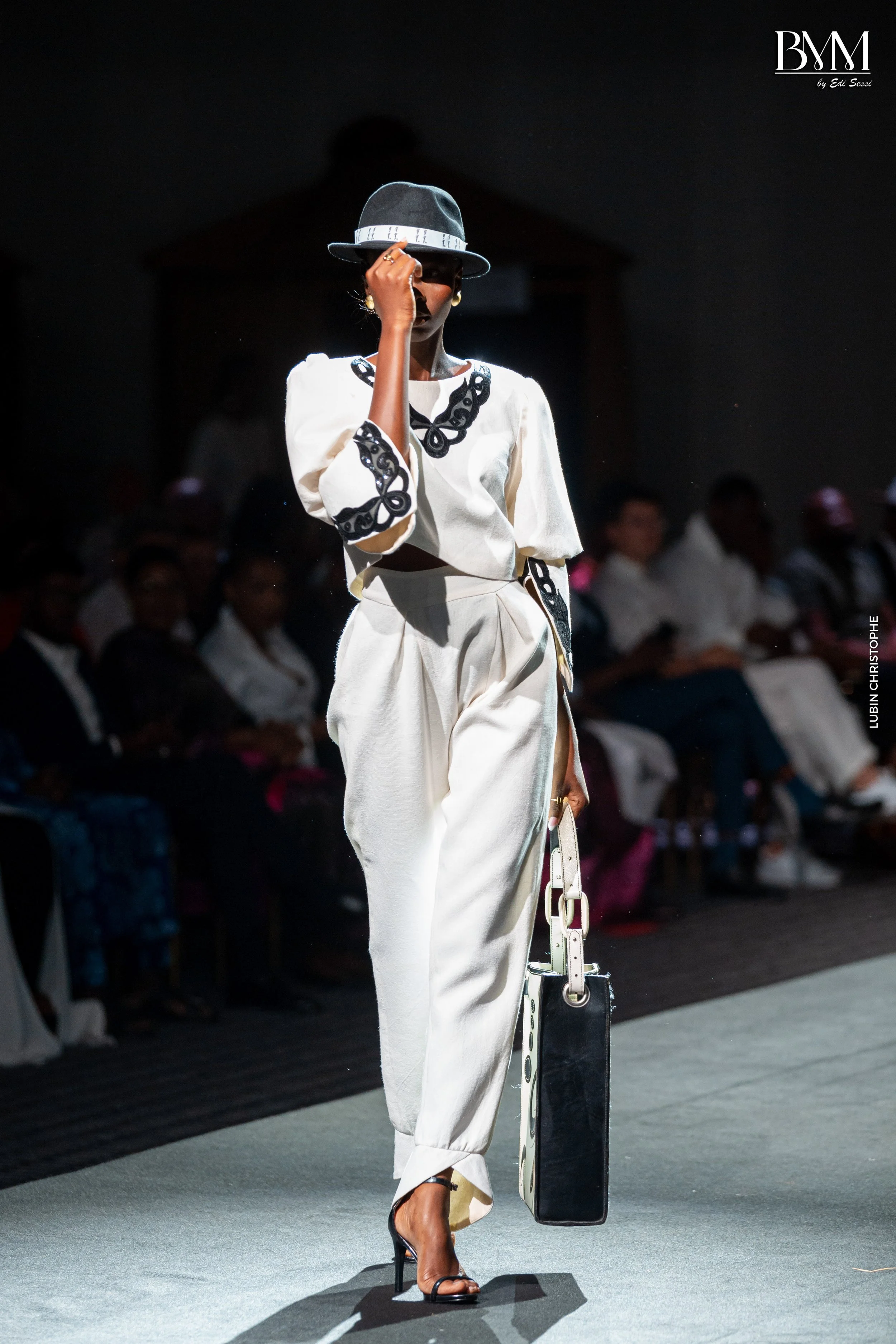
“Tweed Meets Kanvoh” names a meeting between textile vocabularies. Presented by Edi Sessi at the 13th Carrousel International de la Mode in Pointe-Noire, held from 4 to 7 June 2026, the collection brought Beninese woven cloth into contemporary tailoring. Stanley Kilonzo’s report on the event for Deeds Magazine singled out Maison Edi Sessi among the standouts, describing a collection that reimagined the cloth through contemporary tailoring and refined silhouettes.
The title places the material at the centre of the proposition. Kanvô is not simply a cultural reference attached to finished clothing, but a starting point for deciding what the clothing might become. That approach invites a more specific question than whether African cloth belongs in contemporary fashion: how does a designer develop a cloth’s possibilities through textile research, garment design and collaboration with makers?
Behind the house is Edith Bidossessi Daassounon, whose practice extends across woven fabrics, raffia and hand-dyed textiles. Edi Sessi’s answer to that question emerges across several projects, rather than through one material or collection alone, and each needs to be described on its own terms.
The commercial context gives the question weight. UNESCO’s 2023 report on the fashion sector in Africa valued clothing and footwear in sub-Saharan Africa at US$31 billion in 2020. Within that $31 billion African fashion market, Beninese fashion houses that develop their own materials hold something harder to copy than a print or a silhouette.
Explore Edi Sessi’s work with Beninese woven cloth, from Tweed Kanvoh textile research to collections linking material heritage and modern clothing.
A Practice Established in the 1990s
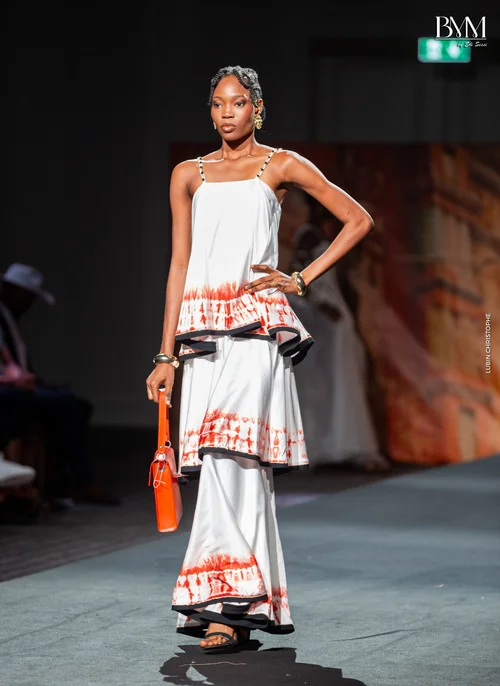
Edi Sessi is one of the longer-established names in contemporary Beninese fashion. Africa Fashion Week London’s 2026 digital profile of the designer dates the house to 1997 and describes it as one of Benin’s pioneering contemporary fashion houses, founded to reinterpret Beninese textile heritage through modern design. The same profile credits Daassounon with nearly three decades in the industry.
The London programme describes a practice that incorporates locally woven fabrics, raffia and hand-dyed textiles into ready-to-wear and couture collections, and notes that she was working this way before promoting “Made in Benin” became a national priority. That timing matters. It places the house’s material commitments well before the recent concentration of institutional attention on Beninese fashion.
Those material categories represent different kinds of work. A woven cloth, a dyed surface and a garment assembled from several materials do not offer the designer identical possibilities. Raffia, for instance, brings its own structural logic, which Omiren Styles has examined in its guide to Kuba cloth for designers: a woven fibre cloth whose patterns are built into its construction rather than printed on its surface.
Their importance lies in selection and application. Material identity supplies a starting point; it does not determine a finished silhouette. A fashion house must decide what to retain, what to combine and which uses suit a particular collection.
What Tweed Kanvoh Adds to the Story
The Africa Fashion Week London profile attributes Tweed Kanvoh to Daassounon’s creative research. It describes the textile as an innovative fabric inspired by traditional Beninese kanvô and reinterpreted through the aesthetic codes of tweed, and frames it as part of her work on preserving craftsmanship while developing new contemporary textiles.
That wording identifies a direction rather than a technical recipe. The reference to tweed concerns an aesthetic vocabulary; it should not automatically be translated into a claim about wool content or a particular weave. Tweed carries associations with texture, flecked colour and tailored outerwear, and those associations are what the name borrows.
The more substantial point is that the house’s research begins before the garment. Instead of treating textile selection as the acquisition of a fixed surface, the project proposes further development of the material itself. That creates a different relationship between inheritance and design: the cloth remains recognisable as a reference while becoming the subject of experimentation.
It also makes collaboration important. Textile development depends on knowledge of making as well as a designer’s intention. The programme credits Daassounon’s research, but a complete technical history would also need to identify the people responsible for sampling, weaving and finishing. Omiren Styles has argued, in its essay on what oral history reveals about cloth, that much of this knowledge survives through people rather than documents.
From Textile Research to a Collection
“Tweed Kanvoh” and “Tweed Meets Kanvoh” should not be treated as interchangeable names. The first identifies the textile development described in the London profile; the second is the collection title recorded in Deeds Magazine’s account of the Pointe-Noire event.
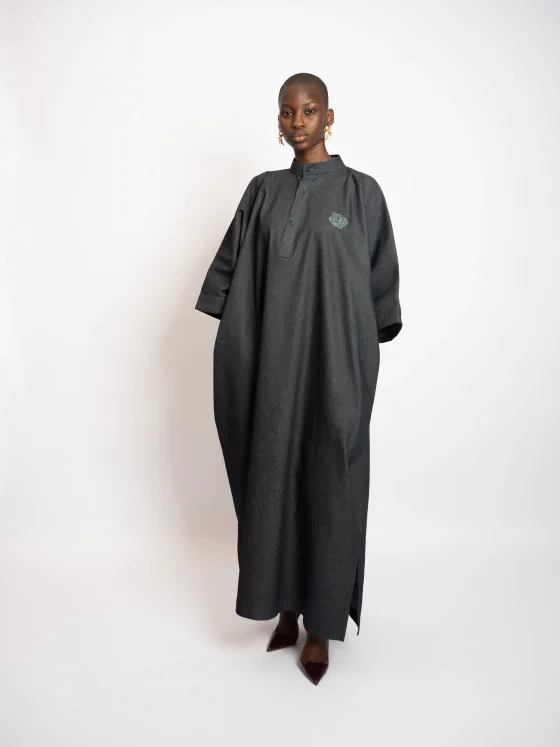
The 13th Carrousel International de la Mode, founded by Pascaline Kabré Turmel, ran under the theme “African Textiles: From Heritage to Global Value.” Africanews, in its June 2026 report on the event, described how thirteen editions have helped establish Pointe-Noire as a creative hub for craftsmanship and emerging talent. Deeds describes the Edi Sessi collection’s approach through contemporary tailoring and refined silhouettes; that account establishes its direction without providing a detailed look-by-look record.
Edi Sessi was not the only Beninese house working with kanvô at the event. Deeds also reports that OK Fashion, under creative director Oslo Nassi, showed a collection called “Jeunes Cadres” that combined kanvô with industrial bogolan. Placing the two side by side shows that the same cloth can lead to different propositions: one oriented towards tailored luxury, the other towards a mix of handwoven and industrial references. The bogolan connection has its own history, which Omiren Styles has traced in its profile of Awa Meité and Malian mud cloth.
The useful connection is between the two scales of Edi Sessi’s work. Textile research asks what the material can become; a collection tests how that proposition enters clothing. A fabric’s cultural associations remain relevant, but cut and proportion determine how a wearer encounters it.
This is where Edi Sessi’s material-led practice becomes most interesting. Its subject is not preservation through display alone. It is the movement from a textile reference towards an organised wardrobe.
What Tailoring Asks of a Handwoven Cloth
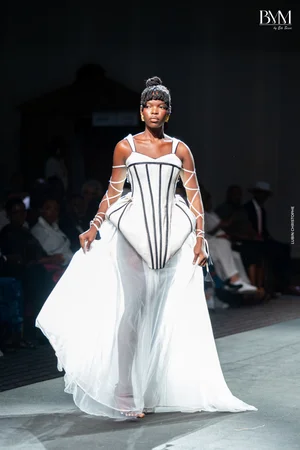
Tailoring is a demanding test for any handwoven textile. A jacket or a structured trouser depends on a cloth that holds its shape, accepts seams cleanly and behaves predictably when cut across panels. Handwoven strips bring texture and irregularity, which are part of their appeal, but they also bring variation from one length to the next.
A house that chooses tailoring as the vehicle for kanvô is therefore choosing a difficult route. It must decide how to join strips, where to place them on the body and how to finish edges that were never intended for a lapel or a waistband. Those decisions are where textile research and garment design meet in practice.
Naming the result after tweed suggests the direction Edi Sessi has taken. Tweed is itself a woven cloth with a long history in tailored outerwear, valued for its surface rather than its smoothness. By borrowing its codes, the house frames kanvô as a material equally suited to structured clothing, rather than to drapery or ceremonial wrapping alone. That is a claim about use as much as appearance.
Menswear Shows a Different Design Question
The house’s broader range is visible in “Roi d’Été,” presented at the first Lomé Men’s Fashion Week on 26 June 2021. Africa Fashion Code’s report on the collection, published in July 2021, describes an exclusively menswear collection designed for the summer holidays, with cheerful, bright tones, fluid and comfortable silhouettes and a minimalist approach.
The pieces it records include a relaxed suit in understated tones, wide trousers paired with loose tops, and made-to-measure shirt and trouser combinations cut from wax fabric. Here, the published emphasis was on ease and summer dressing, and the material was printed cotton rather than handwoven cloth.
The report also describes Edi Sessi as a luxury brand known for elegant, sophisticated made-to-measure clothing for the modern African woman, which had recently expanded into menswear. “Roi d’Été” therefore records development within the business, not simply another appearance on a runway.
As a comparison, it sharpens the woven-cloth story. Daassounon’s practice involves choosing between materials and clothing formats rather than applying kanvô indiscriminately to every project. The house’s identity cannot be reduced to one textile; material and silhouette respond to a particular wardrobe proposition.
Building Beyond the House
Daassounon’s work now extends beyond her own label. The Africa Fashion Week London profile records that she works with institutions, artisans and local manufacturers to professionalise Benin’s fashion industry, and that she mentors younger designers.
In 2025, according to the same profile, she founded Benin Mode Monde, a platform intended to promote Beninese fashion, strengthen collaboration within the industry and raise the international profile of emerging designers. That move extends the logic of her textile work: if a cloth can be developed rather than merely displayed, so can the network of people who make and sell it.
The relationship between the house and that wider network is worth watching. A designer who develops a new textile depends on weavers and finishers; a platform for emerging designers depends on the same supply of skills. Both projects rest on the people whose knowledge connects material to garment.
The Value of Naming the Work Precisely
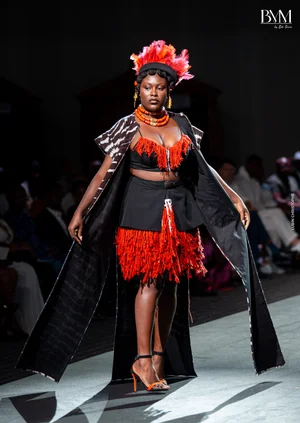
Edi Sessi’s projects become clearer when their differences remain visible. Tweed Kanvoh is described as textile research. “Tweed Meets Kanvoh” is a collection. “Roi d’Été” addresses menswear through a different range of materials. Benin Mode Monde is an industry platform, not a fashion line.
These distinctions resist the tendency to place every activity beneath a general claim about heritage and innovation. They allow the house to be examined through actual decisions rather than promotional categories.
They also give its place among Beninese fashion houses greater specificity. The contribution is not simply that Daassounon uses local cloth. It is that Beninese woven cloth remains a question within her practice, something to develop, combine and reconsider across different bodies of work.
The Omiren Argument
Edi Sessi’s strongest proposition is that woven cloth can remain an active design resource. Tweed Kanvoh places experimentation at the textile level; “Tweed Meets Kanvoh” carries that enquiry towards a collection.
The significance lies in the relationship between those stages. A useful account must attend to the material, the garment and the people whose skills connect them. That is more revealing than treating Beninese cloth as an unchanging inheritance that a designer merely brings into the present.
ALSO READ
- Akwete, Kuba Cloth, Barkcloth, and Kete: The Sacred Textiles the World Is Finally Discovering.
- Country Cloth: How Liberian Men Have Worn Power Since Before the Republic.
- The Omiren Index 2026: 10 African Ready-to-Wear Labels Building International Fashion Infrastructure.
- The African Cities That Will Define Global Fashion by 2030.
Frequently Asked Questions
Who founded Edi Sessi?
Beninese designer Edith Bidossessi Daassounon founded Edi Sessi, whose name also appears as Dassounon. Africa Fashion Week London’s 2026 profile dates the house to 1997 and credits her with nearly three decades in the industry, working with locally woven fabrics, raffia and hand-dyed textiles across ready-to-wear and couture collections.
What is Tweed Kanvoh?
Tweed Kanvoh is a textile developed through Daassounon’s creative research. It takes inspiration from kanvô, the traditional Beninese woven cloth, and reinterprets it through the aesthetic codes of tweed. Published descriptions present it as an aesthetic direction rather than a technical specification, so they should not be read as a claim about wool content or a particular weave.
What is “Tweed Meets Kanvoh”?
“Tweed Meets Kanvoh” is the Edi Sessi collection shown at the 13th Carrousel International de la Mode in Pointe-Noire, Republic of Congo, in June 2026. Deeds Magazine described it as reimagining the traditional woven cloth through contemporary tailoring and refined silhouettes. It is distinct from Tweed Kanvoh, which names the textile itself.
Does Edi Sessi make menswear?
Yes. Edi Sessi presented “Roi d’Été”, an exclusively menswear collection, at the first Lomé Men’s Fashion Week on 26 June 2021. It featured bright summer tones, fluid silhouettes, a relaxed suit, wide trousers with loose tops, and wax-print shirt-and-trouser combinations. The house had previously been known mainly for made-to-measure womenswear.