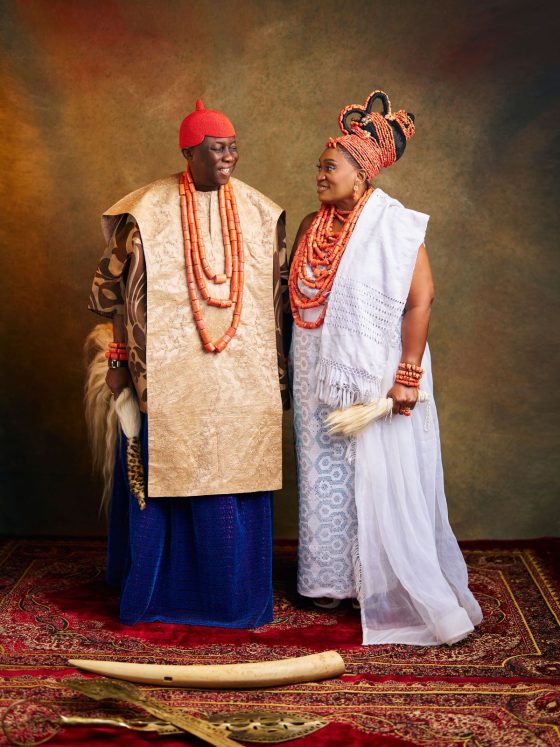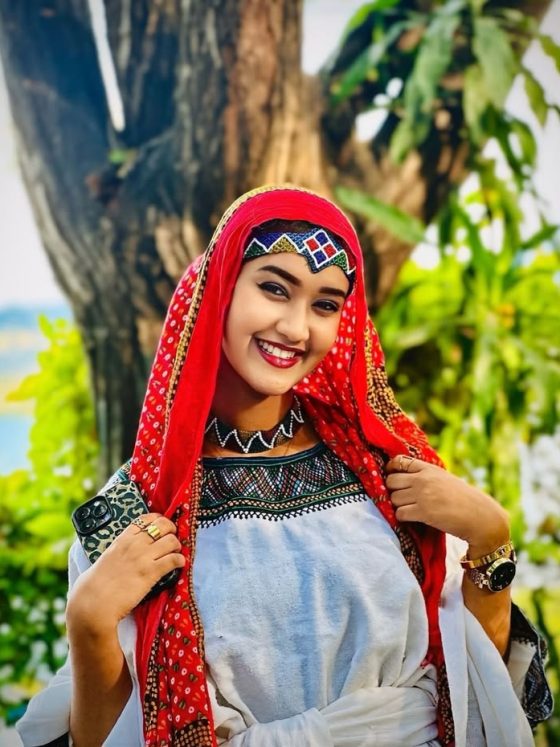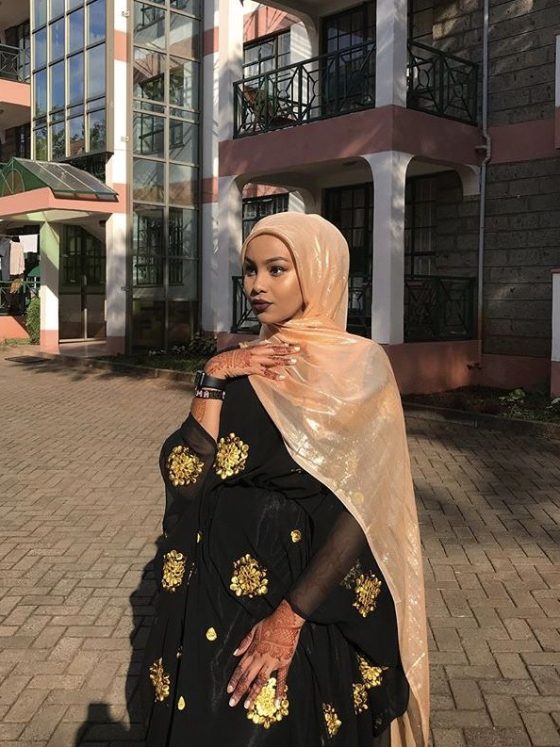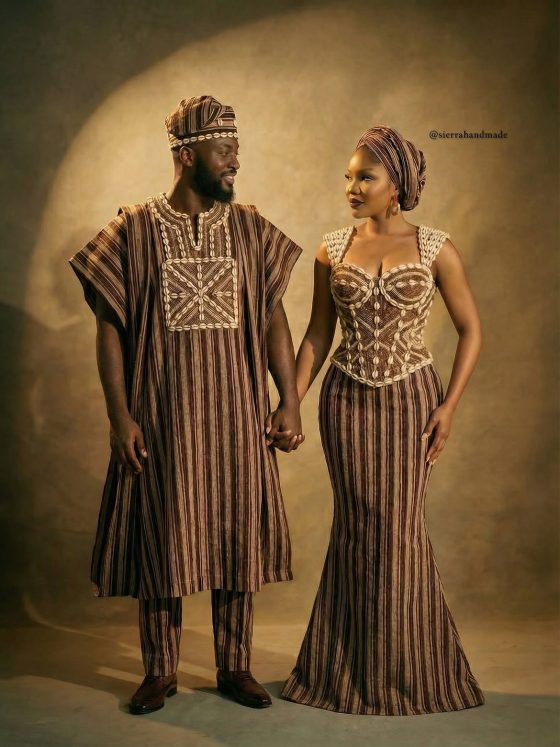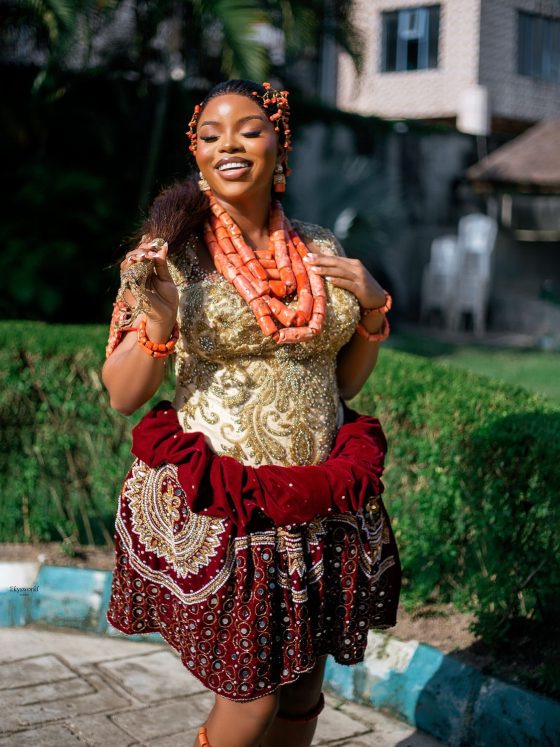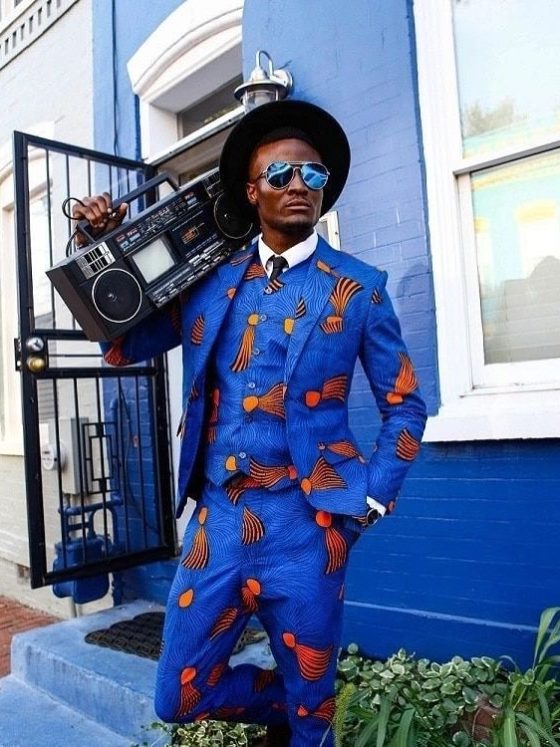
A garment can hold historical evidence. Its fibre may reveal trade routes. Its cut can show the influence of religion, urbanisation, or changing ideas of status. Repairs may reveal how long a garment was valued and by whom. A textile passed through a family across three generations may carry memories that do not appear in any museum catalogue or government record. That is not an unusual claim about African dress. It is the baseline condition of what dress does in any culture where cloth carries social weight.
But cloth does not interpret itself. As Omiren Styles’ documentation of African oral tradition as fashion’s structural parallel confirms, clothing is a medium of transmission. It stores information. It signals belonging. It defines hierarchy. It announces transitions from one life stage to the next. Both oral tradition and dress depend on repetition, and both require a community of interpreters to hold their meaning. Neither works as a solo archive. The African fashion market is worth 31 billion dollars. The knowledge that makes that archive readable is held by the makers, wearers, tailors, elders, and oral historians who keep the community’s dress memory alive.
West African dress holds material evidence of trade, migration, and status. But cloth cannot interpret itself. Here is who holds the knowledge to read it.
West African Dress as a Living Record: Who Holds the Knowledge
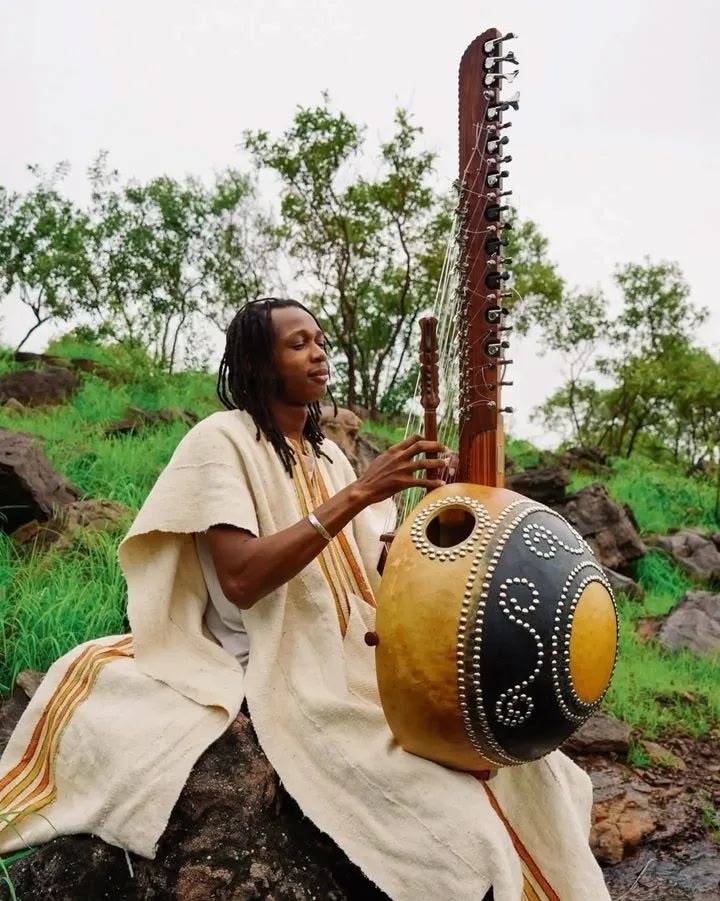
The most important correction to make at the outset is about terminology. The word griot is frequently used in English and French to describe West African oral historians, praise singers, genealogists, musicians, and custodians of family memory. It should not be treated as a single job title describing a single role across the entire region. Within Mandé-speaking traditions, jeli or jali refers to a hereditary cultural role associated with praise performance, historical narration, musical practice, and the preservation of genealogical knowledge across families and dynasties. In other West African communities, people who preserve memory, perform praise, teach history, or advise families do so through different titles, languages, and social systems.
Precision matters here because West African oral tradition is not one archive. It is a vast group of distinct knowledge systems. A Mandé jeli should not be presented as speaking automatically for Yoruba dress practice, Hausa court clothing, Akan textiles, Wolof ceremonial practice, or Fulani adornment. The knowledge that makes dress readable is locally specific. Generalisation across the region converts living, community-held knowledge into a convenient abstraction that serves the reader but misrepresents the source.
A museum may document raffia, silk, cotton, or indigo. It may estimate a date, assign a place of origin, and describe visible techniques. It cannot tell us who chose the cloth, who wore it, whether it was a gift, whether it marked grief or celebration, or why a particular design mattered to a family. That context often survives through people.
Cloth as Material Evidence
Textiles can reveal histories that written records overlook. West African cloth has long been connected to trade, political authority, religious life, urban fashion, family status, and personal self-presentation.
The historical weight of cloth in this region is documented and specific. Textiles were used as a form of currency in West Africa from the fourteenth century. The Alaafin’s wardrobe was an instrument of political power, and cloth was exchanged as a mark of relationship and rank between kingdoms. The oldest surviving textiles from sub-Saharan West Africa were discovered at the archaeological site of Kissi in northern Burkina Faso and date to the early first millennium AD. This material record predates European contact and requires no external validation to establish its historical significance.
A garment can show where its materials came from. Handwoven cotton, imported damask, dyed indigo, machine-made lace, and wax print all point to different commercial systems and historical moments. A tailored sleeve, embroidered neckline, or altered wrapper may show how wearers adapted older forms to new fabrics, new technologies, or new ideas about respectability. Repairs may reveal how long a garment was valued and at what cost it was cared for. Each element of a surviving garment is a potential data point for historical analysis. But material evidence has limits. A museum record may identify raffia, silk, cotton, or indigo. It cannot always tell us who chose the cloth, who wore it, whether it was a gift, or why a particular design mattered to a family. That context often survives through people.
The Distributed Archive
A garment’s history may be held by several people rather than by a single recognised historian. The weaver holds knowledge of the material: how the fibre was sourced, prepared, and worked. The dyer knows how colour was produced, which plants or minerals were used, and what the colour was meant to communicate in the context in which the cloth was made. The embroiderer holds knowledge of the labour in a motif and the traditions from which it derives. The tailor knows why a cut was adapted, what clients requested, and which silhouette conventions applied to a particular occasion. The wearer knows what the garment communicated at a specific event. An elder may know which family member owned it before and what that ownership meant.
Together, these forms of knowledge make an archive that no single institution can replicate. As Omiren Styles’ documentation of the African woman’s wardrobe as a fashion history archive confirms, the fashion archives that have shaped daily life across Africa are more often held in private hands than in public collections. A woman’s wardrobe accumulated across a lifetime carries material evidence of her social world: the fabrics she chose for ceremonies, the garments she inherited from her mother, the pieces she saved for occasions that defined her family’s life. Studio portraits, family photographs, and the garments themselves are all fashion documents. They record what people wore, how they wore it, and why the choices mattered.
This does not mean oral testimony is automatically more truthful than a written document. Memory can be selective, contested, and shaped by the present. But written archives are selective too. Colonial officials, missionaries, collectors, and museum catalogues often described dress from outside the communities that made and wore it. Oral history can therefore expand, challenge, and sometimes correct what institutional records leave incomplete. The question is not whether cloth or testimony is more authoritative. It is about whether both are allowed to speak, and whether the people who hold community knowledge are named, credited, and compensated for their contributions to the record.
Colour and Pattern as Contextual Knowledge
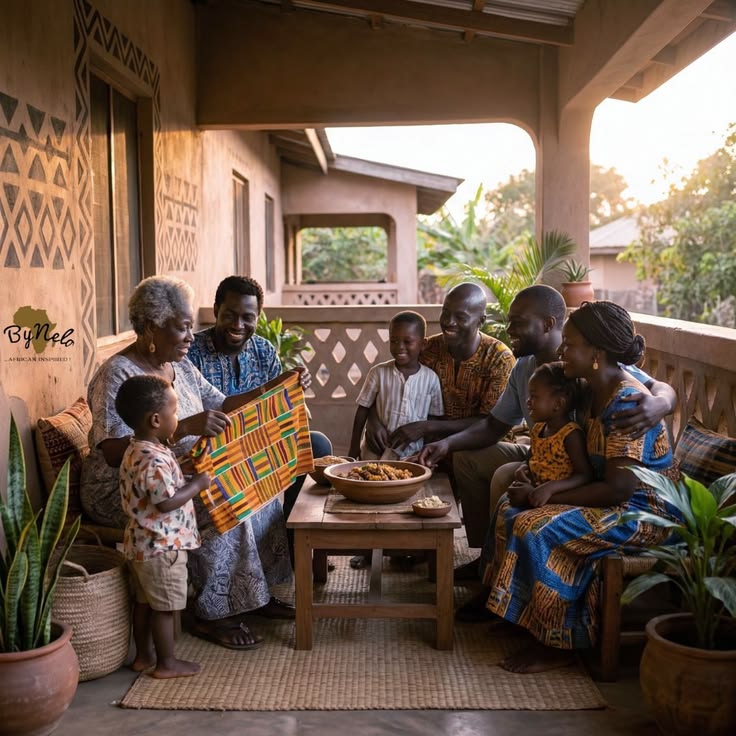
Fashion writing frequently asks for simple translations: what does white mean in West African dress, what does red mean, what does blue mean. The problem is that colour does not work as a universal West African codebook. A colour can carry different associations depending on the community, religious setting, political moment, family custom, garment type, and occasion. White may have spiritual significance in one context, be associated with mourning in another, and be selected for celebration in a third. Red may evoke power, danger, vitality, sacrifice, political affiliation, or a specific ritual association depending on where and how it is used.
The same contextual specificity applies to the most visually recognisable West African prestige garments. The grand boubou is worn at weddings, naming ceremonies, religious festivals, and during Friday prayers. Each context shapes the appropriate fabrics, colours, and embroidery. A wedding boubou is made from lavish bazin or brocade. Religious gatherings call for white or subdued tones as symbols of purity and humility. For elders, the boubou communicates authority and respect. The garment is the same type of object across these occasions. The reading changes entirely depending on who is wearing it, when, and for what purpose. That reading is not available from the garment alone.
Global fashion frequently reduces African textile design to a catalogue of fixed symbols because they are easy to market. It is rarely how living textile knowledge works. Responsible interpretation begins with a question: who says this cloth means that, and in what context? The answer is rarely universal, and it is almost always more interesting than the simplified version.
Specialist Knowledge: The Fulani Case
The Fulani dress tradition demonstrates how specialist knowledge can be distributed across specific roles that outsiders rarely recognise. The Leppi is the oldest and most culturally distinct Fulani textile, a handwoven strip cloth produced by specialist male weavers called CaNoowo who take between three and four weeks to complete a single Woodeere, the unit of four woven strips sold as a set. The Leppi is worn as a bride’s veil, a newborn’s blanket, and a widow’s head covering. It is among the most expensive garments a Fulani woman can own, and the knowledge required to produce it is held by a specific class of specialist weavers within the community.
This is the structure of West African textile knowledge at its most precise: the knowledge of what a garment means is inseparable from the knowledge of how it is made, who makes it, what specialist role the maker occupies, and what social occasions activate its meaning. A researcher who encounters a Leppi in a museum without access to CaNoowo weaving knowledge, Fulani family oral history, and the specific communities of women for whom the cloth is made is looking at an object whose most important information is not visible on its surface.
Tailors as Historical Agents
Tailors are often left out of heritage discussions because their work is assumed to be modern while weaving, dyeing, and embroidery are treated as traditional. That distinction does not hold. As Omiren Styles’ documentation of traditional clothing in the Benin Republic confirms, the Benin Republic’s traditional attire was largely dependent on a textile economy shaped by regional trade networks, weaving, dyeing, embroidery, and tailoring. Fabric production served as both a cultural practice and an economic infrastructure. Labour systems, artisan expertise, trade, and access to raw materials were all necessary for the production of ceremonial clothing. Tailors were not secondary figures in this system. They were agents who made social ideas visible on the body.
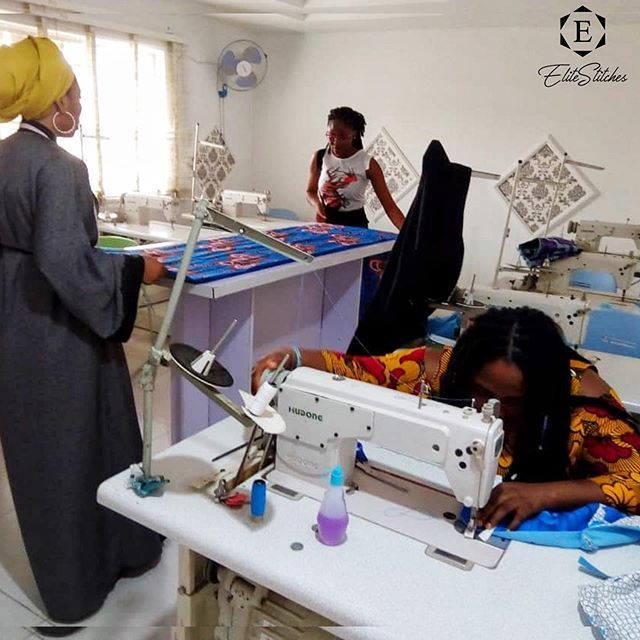
Research on twentieth-century West African tailoring reveals how tailors used sewing machines, tools, training, and workshop practices to build status and negotiate changing social conditions. A sewing machine does not erase cultural knowledge. It becomes part of a living craft system when tailors decide how to use it. A tailor may adapt an inherited silhouette to suit a new fabric. They may construct ceremonial clothing for a family event, teach an apprentice how to finish a neckline, or combine local cutting traditions with imported materials. These choices are not only technical. They make social ideas visible on the body, and they carry the community’s ongoing negotiation with its own dress conventions into each garment produced.
Museums Need Living Context
Museum collections have preserved many remarkable African textiles. The British Museum’s collection of Kuba-Shoowa cut-pile raffia textiles from the Democratic Republic of the Congo documents extraordinary technical skill: raffia weaving, joined panels, dyeing, embroidery, and cut-pile surface design that produces raised, velvet-like patterned surfaces. As the British Museum’s collection record for Kuba-Shoowa raffia cloth confirms, the geometric designs in these textiles are named and associated with prestige within the social systems that produced them. A museum label can document material, date, and collector. It cannot contain a textile’s full social life: who commissioned it, what occasion it was made for, who it was gifted to, and whether it should be displayed in a public institution or returned to a community that considers it ceremonially significant.
A community member may recognise a design relationship that the catalogue does not record. A maker may explain how the fabric behaves in the hand. A wearer may describe why the textile should not be used outside a particular setting. The strongest interpretation brings these records together. Museums should collaborate with makers, scholars, community historians, and cultural knowledge holders when cataloguing, displaying, and describing dress. The object in the vitrine is not the entire archive. The people who know its meaning are also the archive, and they deserve to be consulted, credited, and compensated as such.
The Omiren Argument
West African dress is a living record that cloth alone cannot read. The African fashion market is worth 31 billion dollars. The material evidence embedded in West African textiles- the fibre that reveals trade routes, the cut that documents urbanisation, the repair that shows how long a garment was valued, the pattern that carries a family’s status claim- is substantial and documented. But that evidence is only half the archive. The other half is held by the communities who made, wore, gifted, altered, and interpreted the garments. The jeli who holds genealogical knowledge. The CaNoowo weaver who holds the knowledge of the Leppi’s construction and significance. The tailor who adapted an inherited silhouette to a new fabric. The elder who remembers which family member owned the cloth and why. The wearer who knows what the garment communicated at the ceremony. None of this knowledge appears on a museum label. All of it is necessary to understand what West African dress means. Omiren Styles argues that fashion history’s responsibility is not to construct imagined oral authorities or to simplify community knowledge into a universal African dress codebook. It is to name the people who hold that knowledge, to create the conditions in which they can share it on their own terms, and to credit them when their knowledge enters any public record. Dress becomes a living archive only when the community that holds its meaning is part of the interpretation. Without that community, it is cloth and nothing more.
Also Read:
- The African Diaspora Wardrobe Does Not Choose Between Two Cultures. It Holds Both
- Awa Meité and Bogolanfini: Mud Cloth as a Living Archive
Frequently Asked Questions
What does oral history reveal about West African dress?
Oral history reveals the dimensions of West African dress that material evidence alone cannot document: who chose a cloth, who wore it and on what occasion, whether it was a gift, what social position it communicated, why a particular pattern or colour was selected, and whether a garment carries ceremonial restrictions. A museum record may document fibre, date, and technique. The knowledge of why those choices mattered is held by makers, wearers, tailors, family members, and oral historians who carry the community’s dress memory across generations.
Who holds knowledge about African textile meaning?
The meaning of African textiles is distributed among the people involved in a garment’s production and social life. The weaver holds material and technical knowledge. The dyer holds knowledge of colour production and its communicative intent. The embroiderer holds knowledge of motif traditions. The tailor holds knowledge of silhouette conventions and their adaptation. The wearer knows what the garment communicated at a specific event. An elder may hold family and genealogical knowledge. In some communities, specialist oral historians such as the Mandé jeli or jali hold knowledge that connects individual garments to longer family and political histories.
What is the jeli tradition in West Africa?
Within Mandé-speaking traditions of West Africa, the jeli or jali is a hereditary cultural role associated with praise performance, historical narration, musical practice, and the preservation of genealogical knowledge. The jeli is not a generic West African term applicable to all oral historians, praise singers, or genealogists across the region. Other West African communities have their own distinct roles, titles, and systems for preserving oral knowledge. Using jeli or griot as a generic umbrella for all West African oral tradition flattens distinct knowledge systems into a convenient Western category.
How can dress be used as historical evidence?
Dress can be used as historical evidence by analysing its material composition (which reveals trade routes and production systems), its construction techniques (which document the craft knowledge and tools available to makers), its form and silhouette (which show how ideas of status, respectability, religion, and occasion shaped the body’s presentation), and its condition (which reveals how a garment was valued and maintained). This material analysis is most powerful when combined with community oral knowledge that provides the social context for the choices the garment embodies.
What makes African clothing a living archive?
African clothing becomes a living archive when the community that holds its meaning is part of its interpretation. A garment preserved in a museum vitrine is an object without full context. The same garment interpreted alongside the knowledge of the maker who wove it, the tailor who shaped it, the elder who can name its previous owners, and the community oral historian who connects it to a longer social and political history is an archive. The textile and the people who know its meaning together constitute the record. Separated from those people, the garment is cloth. Connected to them, it is history.
Explore More
Read the full Culture > Heritage & Identity section for Omiren Styles’ documentation of West African textile traditions, oral history and dress, and the communities whose knowledge is the real archive of African fashion history.