The name came first: REIMMS. Restless Immigrants. Not a word drawn from any single language but a compressed biography, the condition of moving between worlds, carrying something from each, belonging completely to none. Petr Konyé chose it as the name of his brand because it described his position precisely. Lagos-based, globally oriented, drawing from Nigerian dress culture and from the international fashion language he had studied and absorbed, making something that could only have been produced at that intersection.
The African fashion market is worth 31 billion dollars. Within it, denim is one of the most contested creative territories. This Western-origin fabric has been absorbed, adapted, and transformed by African designers into something the fabric’s original context did not anticipate. As Omiren Styles’ documentation of the African deconstructed denim movement confirms, the global deconstructed denim moment that dominated SS26 runways from Paris to New York did not begin in those cities. What Petr Konyé is doing with REIMMS sits within that movement: not denim adopted from the West, but denim taken, dismantled, and rebuilt on Lagos terms.
Petr Konyé renamed his brand REIMMS (Restless Immigrants) and decided to build luxury denim entirely by hand in Lagos. Here is what that decision actually means.
REIMMS by Petr Konyé: The Brand and Its Argument
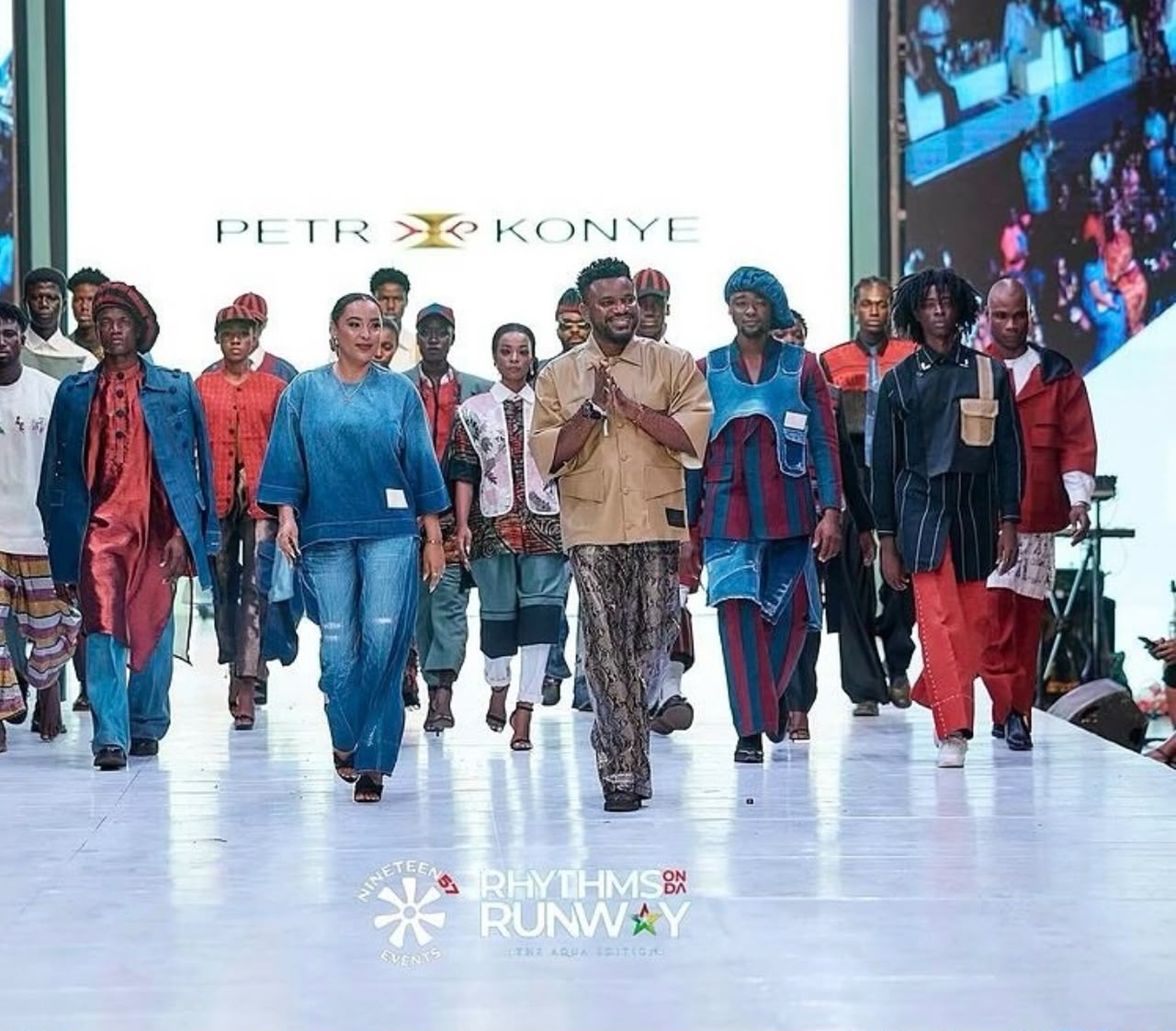
The brand launched initially as PETR KONYE before evolving into REIMMS by Petr Konyé, a renaming that signalled a sharpening of the creative identity rather than a change of direction. REIMMS (Restless Immigrants) names the creative position from which the brand operates: the designer who exists between cultures and uses that in-between position as a design advantage rather than a marketing liability. The Instagram presence at @petrkonye_brand documents the brand’s output in real time: bespoke distressed denim outfits, denim-on-denim compositions, and made-to-measure pieces that visibly bear the evidence of their construction. The caption on the bespoke distressed denim reel states the position plainly: proudly made in Lagos. That is the brand’s most fundamental argument.
Made in Lagos is not a concession or a limitation. It is the credential. REIMMS hand-makes its denim pieces using locally sourced fabric. The production is bespoke and made-to-measure, which means each garment is produced for a specific client’s body and commission rather than manufactured in advance for a hypothetical customer. This production model is the same model used by Savile Row, by Neapolitan tailoring houses, by every luxury fashion tradition that bases its claim to premium positioning on the irreducible specificity of handmade work. REIMMS is applying that logic to denim, in Lagos, with Nigerian craft as its foundation.
Denim arrived in Lagos as a Western import. Petr Konyé took it apart and rebuilt it by hand using locally sourced fabric, bespoke construction, and references drawn from Nigerian dress traditions. REIMMS is not a denim brand that happens to be in Lagos. It is a Lagos argument made in denim.
The Reconstruction Methodology
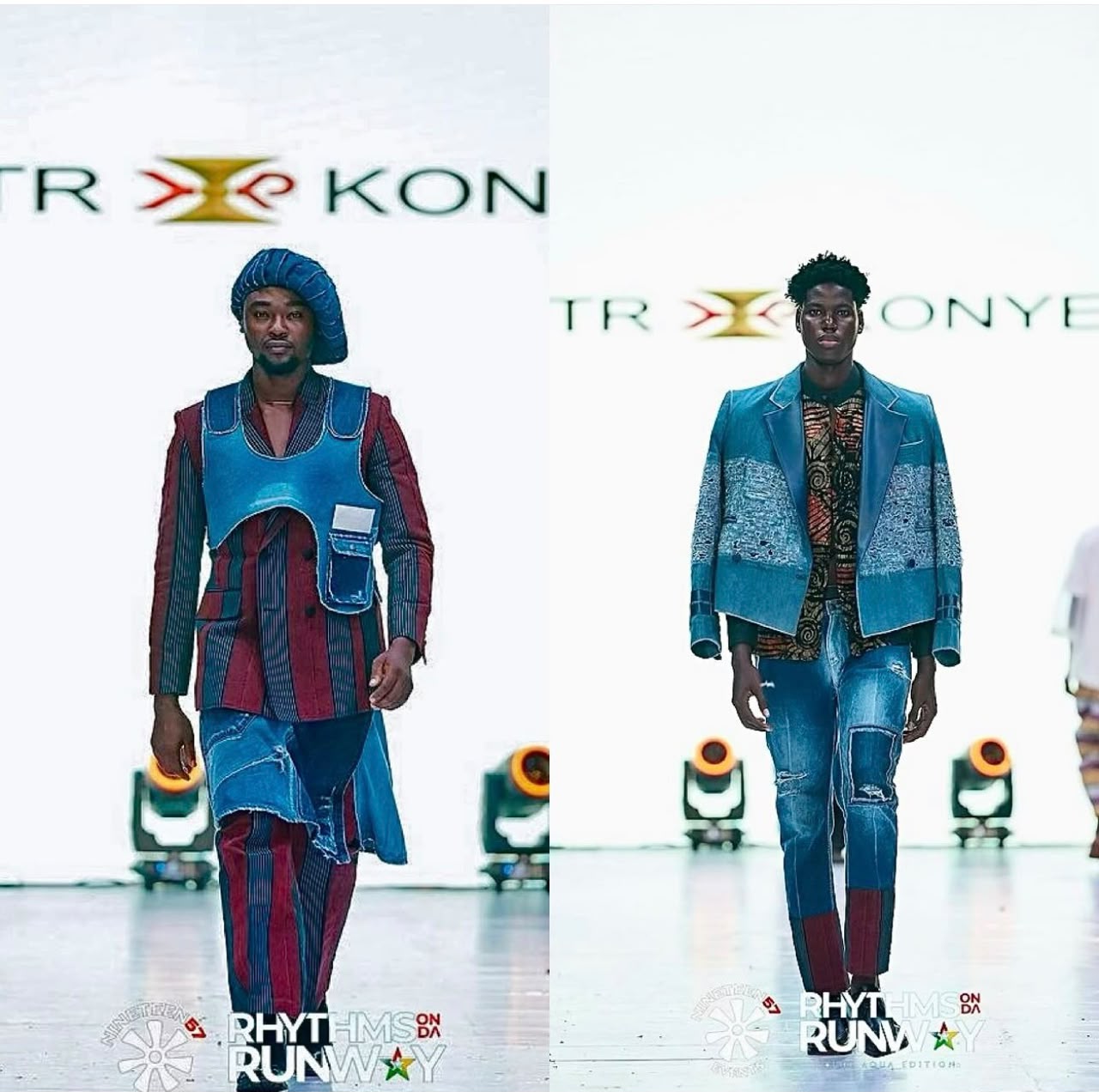
REIMMS works in reconstructed denim. This is the key technical distinction between the brand and any other Lagos-based denim operation. Reconstruction in this context is not simply distressing or washing a garment to create the appearance of age and wear. It is the dismantling of denim’s original construction logic and the rebuilding of the garment in a different configuration, with different proportions, seam placements, and structural arguments than the original form.
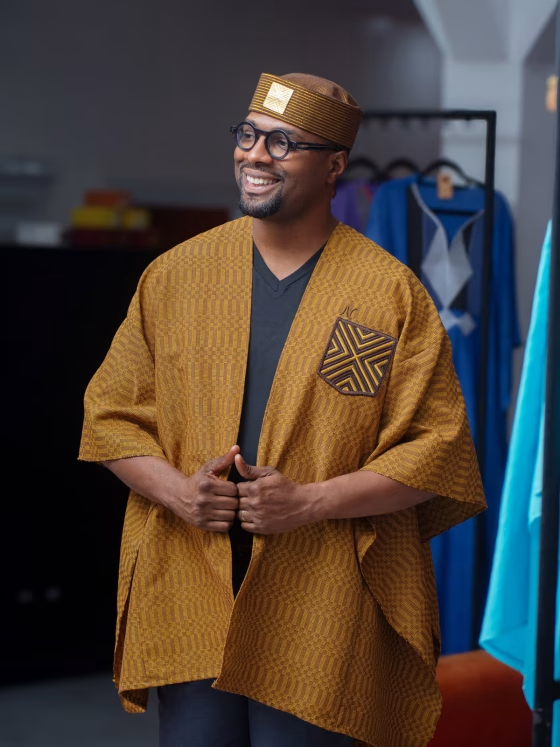
The dashiki-inspired denim reinterpretations are the clearest expression of this methodology. The dashiki is a West African garment with a specific construction grammar: its body proportions, neckline, and silhouette carry the design logic of Yoruba and wider West African formal menswear. Taking that grammar and rebuilding it in denim, a fabric whose construction grammar comes from workwear and Californian casual culture, is not a decorative choice. It is a collision of two distinct design systems at the level of pattern and cut. The result is a garment that neither system would have produced independently.
This is precisely the territory that the most interesting Lagos fashion is occupying. As Omiren Styles’ documentation of the agbada and boubou as design systems confirms, these garments simultaneously communicate formality, prosperity, authority, and occasion through silhouette, volume, and fabric. When a designer builds that silhouette in denim, they are not simply making the agbada casual. They are asking what happens when a garment designed to declare Nigerian social authority is built in the raw material of Western working-class culture. That is the productive tension that REIMMS’s dashiki-inspired work inhabits.
The Paris Moment
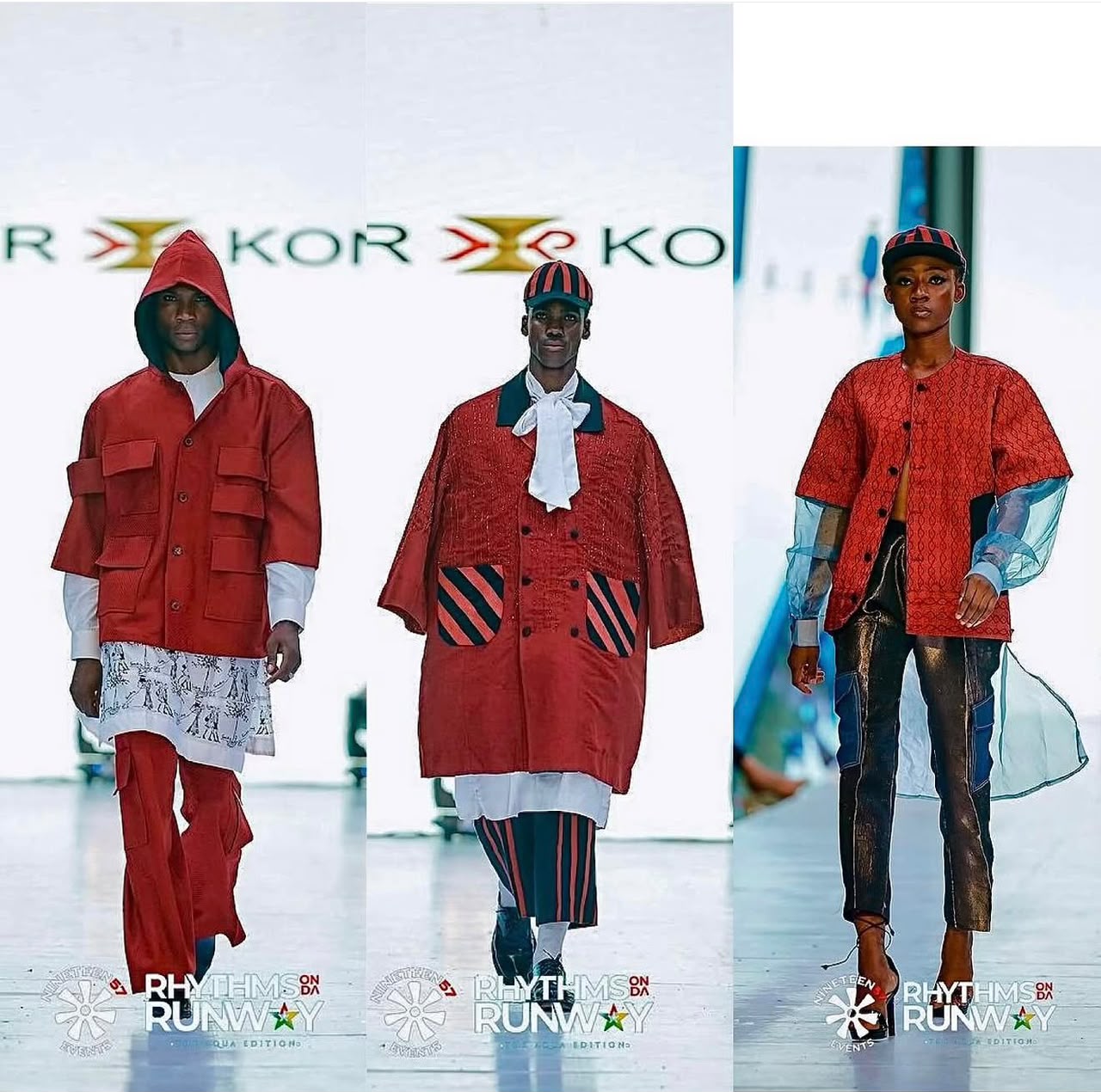
In 2023, REIMMS secured private presentation invitations at Paris Fashion Week. For an independent Lagos-based denim brand operating outside the formal fashion week calendar, a private presentation in Paris is a specific and deliberate statement: that the work is ready for the context, not waiting for the context to arrive in Lagos. Petr Konyé did not present on the official Paris Fashion Week schedule. He presented in the city, during the week, to an audience assembled for the purpose. That distinction matters because it reflects a founder’s understanding of how to build international visibility without institutional access.
The private presentation model is increasingly how Lagos designers are building European market presence. It does not require sponsorship, a scheduled position, or institutional endorsement for a formal fashion week slot. It requires the work, a venue, an invited audience, and a clear argument. REIMMS had all four. The Paris presentations in 2023 put the brand in the same city as the international fashion press and buyers during the most concentrated week of the global fashion calendar, without seeking permission from the institutions that control it.
What Bespoke Means in the REIMMS Context
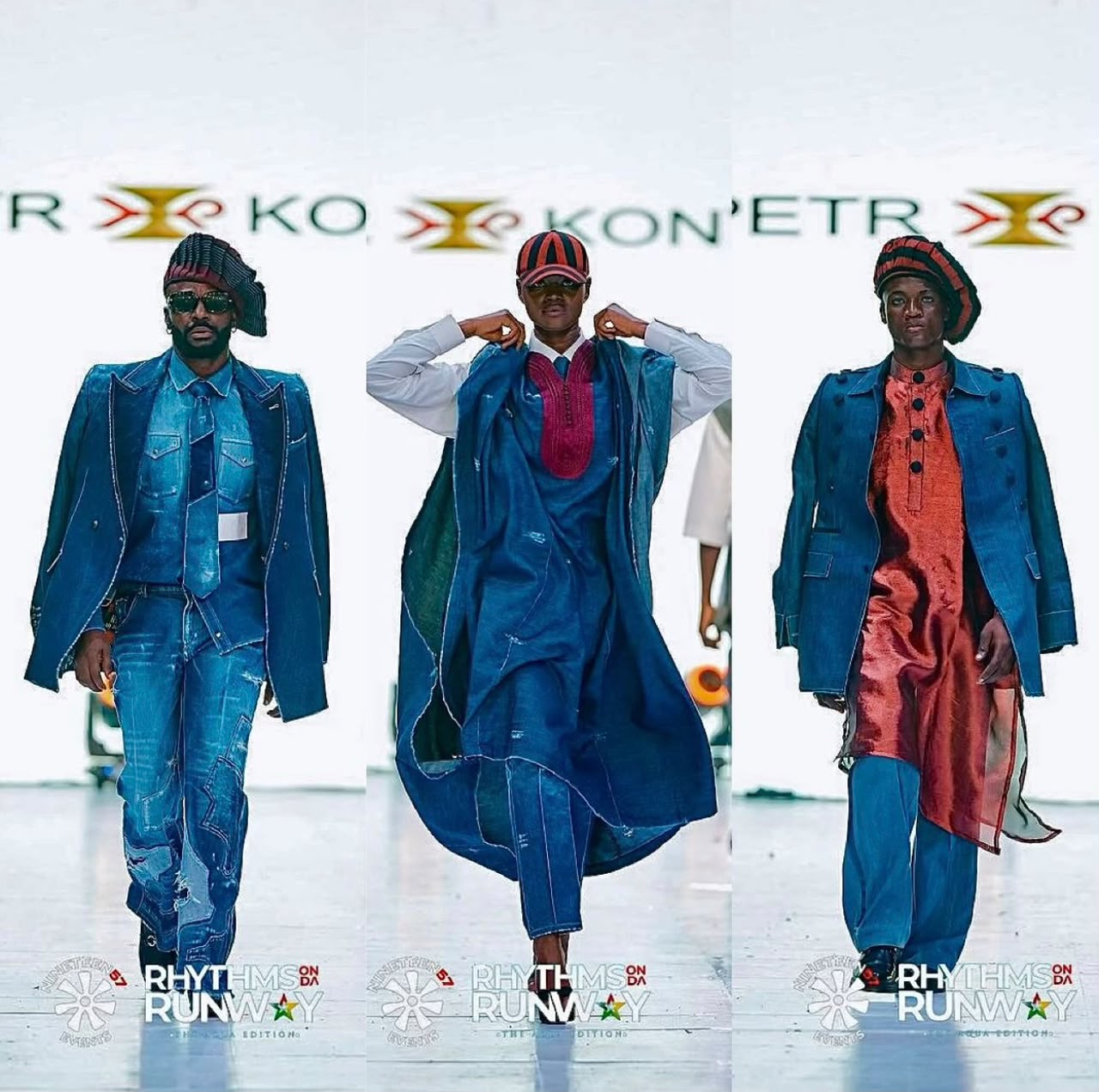
Bespoke is a word that global fashion uses loosely. In the REIMMS context, it carries its precise meaning: a garment made to a specific client’s measurements, for a specific commission, with specific design choices made for that client’s requirements. As Omiren Styles’ documentation of the Nigerian bespoke tailoring tradition confirms, the bespoke and custom clothing market in Nigeria is experiencing significant growth, driven by consumers seeking one-of-a-kind pieces that reflect personal style and cultural identity. REIMMS operates in that market with denim as its primary material, which is still relatively unusual in a bespoke context that more typically involves aso-oke, agbada fabric, and formal woven cloth.
The bespoke model has direct consequences for how the brand should be understood commercially. REIMMS does not produce collections in the conventional sense: a set of designs made in advance in a range of sizes and sold to whoever purchases them. It produces individual garments for individual clients. The scarcity is structural, embedded in the production methodology. Each piece is unique because each piece is made for a specific body and a specific brief. The luxury positioning is not primarily about price or about brand association. It is about the relationship between maker and client that the bespoke model requires.
The Locally Sourced Denim Argument

The commitment to locally sourced denim is the most commercially consequential and most frequently overlooked element of the REIMMS proposition. Lagos has fabric markets (Balogun, Tejuosho, and others) that supply designers across West Africa. As Omiren Styles’ Lagos fashion market report confirms, fabric is available at multiple tiers of the Lagos market, from wholesale imports to locally produced cloth. The decision to source denim locally rather than import from established denim mills in Italy, Japan, or Turkey is a deliberate positioning choice: it connects the brand’s production to the Lagos fabric economy, keeps its supply chain within the city, and asserts that Lagos-sourced material is adequate for luxury-level production.
That claim is not automatic. Premium denim production globally relies on specific mill traditions in Japan (selvedge denim), Italy (Cone, Candiani, Berto), and Turkey. Lagos fabric markets carry a different range of fabrics. The designer who commits to local sourcing is accepting a constraint and responding to it with craft rather than circumventing it by importing the material that would make production easier. The locally sourced denim of a REIMMS garment is not a compromise. It is a position.
REIMMS and the Larger Lagos Denim Conversation
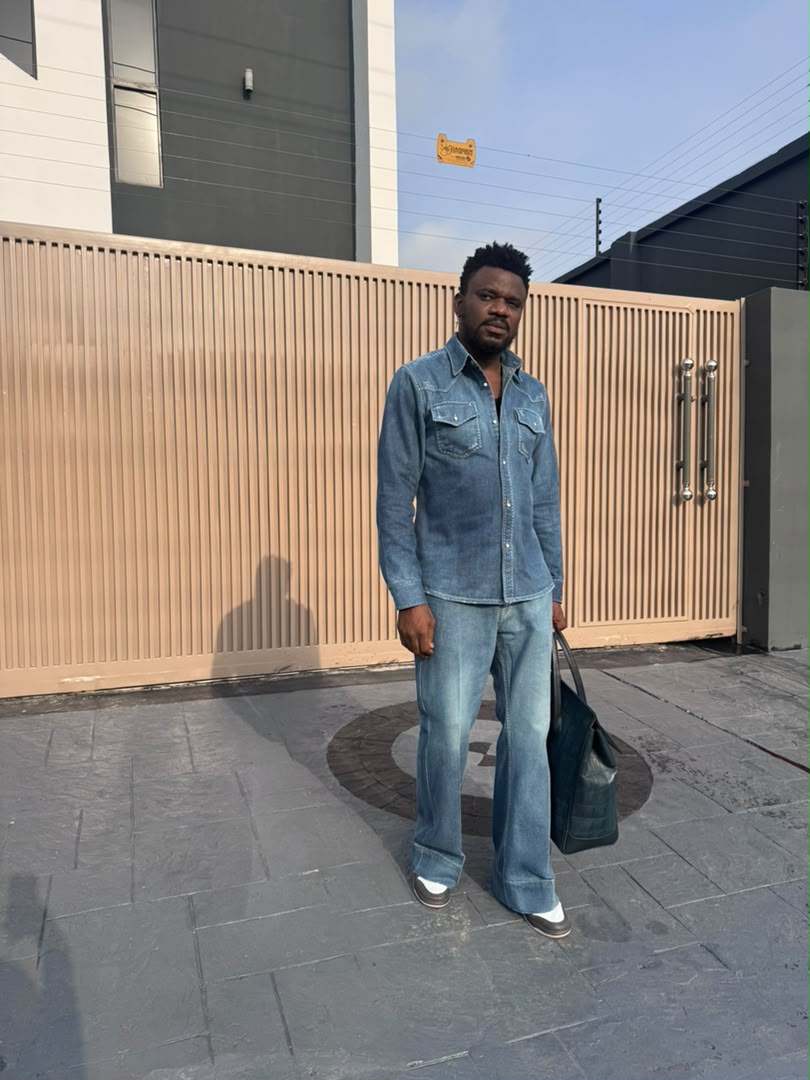
REIMMS does not exist in isolation. Lagos has produced a serious denim design conversation in the past several years. NKWO has built luxury upcycled denim from post-consumer waste. ESO has combined denim deconstruction with adire, batik, and aso-oke. FIA, Hertunba, and others showed denim-forward collections at Lagos Fashion Week SS26. As Omiren Styles’ analysis of why Dakar’s autonomous luxury fashion system is the model for African fashion city-building confirms, the cities that will define African fashion are those actively constructing infrastructure: platforms, production capacity, and market access mechanisms. Lagos has the denim design conversation. REIMMS is one of the clearest expressions of what it means to build within that conversation from a luxury bespoke position.
The combination of positions that REIMMS holds simultaneously is specific and hard to replicate from outside Lagos: Nigerian dress culture as a design reference (dashiki grammar, silhouette logic from West African formal menswear), denim as the construction material, bespoke production as the commercial model, local sourcing as the supply chain argument, and international presentation (Paris 2023) as the market development strategy. Each of those positions makes sense independently. Together they constitute a brand identity that could not have been assembled anywhere else.
The Omiren Argument
REIMMS by Petr Konyé is the proof that luxury denim does not need Italian mills, Japanese selvedge, or a European fashion capital’s endorsement to be luxury. The African fashion market is worth 31 billion dollars. Petr Konyé launched his brand in Lagos, sourced his denim from Lagos fabric markets, built every garment by hand for a specific client’s body, drew his design grammar from Nigerian dress traditions, showed in Paris in 2023 on his own terms, and named his brand after the condition of moving between worlds without fully belonging to any of them. REIMMS, Restless Immigrants, is a brand concept and a design philosophy simultaneously: restlessness is the creative engine, immigration is the knowledge base, and denim is the material through which both are expressed. The dashiki-inspired denim pieces are not a fusion experiment. They are the application of a specific Nigerian garment-construction grammar to a Western industrial fabric, with the deliberate intention of demonstrating that the Nigerian grammar can rewrite the fabric’s meaning. Omiren Styles documents REIMMS here as one of the most intellectually precise positions in contemporary Lagos fashion: a founder who understood what he was doing before he named the brand, and named it to make the argument explicit.
Also Read:
- How Seyi Vodi Built a Luxury Tailoring Brand Before He Had a Shop
- How Naira Devaluation Is Reshaping Nigeria’s Fabric Markets
- The African Cities That Will Define Global Fashion by 2030
- Nigeria’s Fabric Middlemen Are Not Just Markups. They Are Financing Fashion’s Supply Chain.
Frequently Asked Questions
What is the REIMMS fashion brand?
REIMMS is a Lagos-based luxury denim brand founded by Nigerian designer Petr Konyé. Originally launched as PETR KONYE, the brand evolved into REIMMS, an acronym for Restless Immigrants, reflecting the designer’s creative position at the intersection of Nigerian and global fashion cultures. The brand specialises in bespoke, made-to-measure, handmade reconstructed denim using locally sourced fabric. It is known for dashiki-inspired denim reinterpretations and other pieces that apply Nigerian dress construction grammar to Western denim fabric.
Who is Petr Konyé?
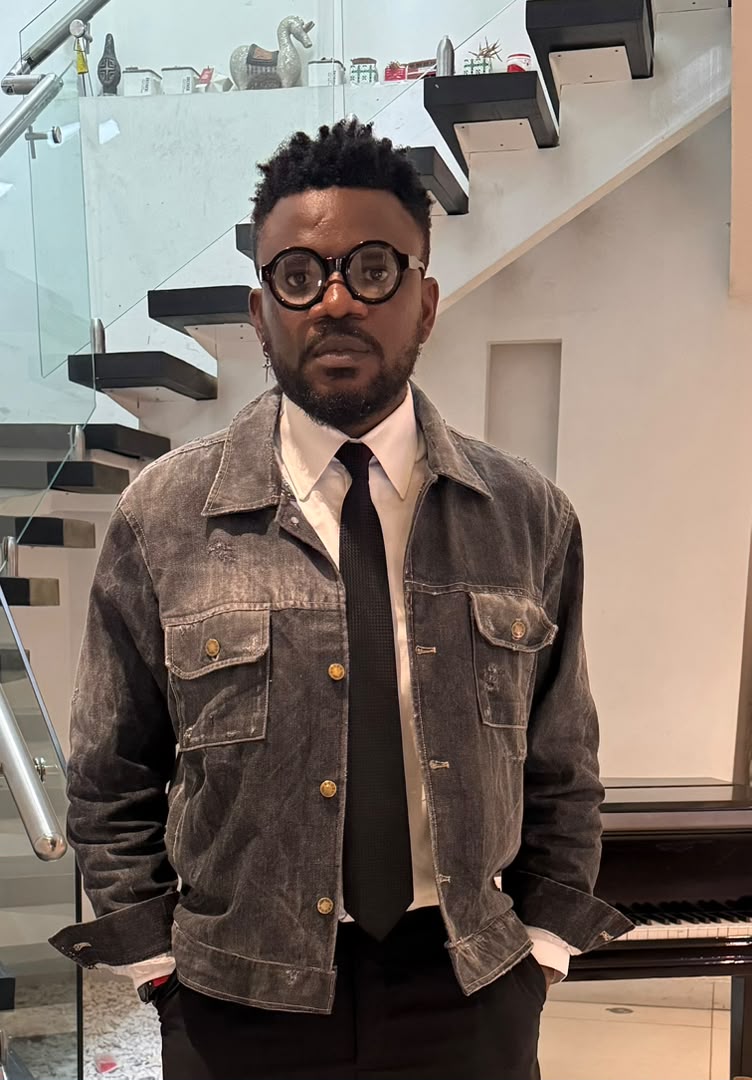
Petr Konyé is a Lagos-based Nigerian fashion designer and founder of REIMMS, a bespoke luxury denim brand. He launched his fashion practice under his own name before rebranding as REIMMS. He describes himself and his brand through the concept of Restless Immigrants, which describes the condition of existing between cultural worlds and using that position as a creative advantage. His work draws on Nigerian dress traditions, particularly the construction grammar of the dashiki and West African formal menswear, and applies it to handmade, reconstructed denim produced entirely in Lagos.
What does REIMMS mean?
REIMMS is an acronym for Restless Immigrants. The name describes the founder Petr Konyé’s creative and biographical position: a Lagos-based designer who draws from Nigerian dress culture and international fashion simultaneously, existing between those worlds and using the creative energy of that in-between position as the foundation for the brand’s design language. The name was chosen deliberately as both a brand identity and a philosophical statement about where the work comes from.
Where is REIMMS denim made?
REIMMS denim garments are handmade in Lagos, Nigeria, using locally sourced denim fabric. The brand operates a bespoke, made-to-measure production model, which means each garment is made for a specific client’s measurements and commission rather than manufactured in advance in standard sizes. The commitment to local sourcing is deliberate: it links the brand’s production to Lagos’s fabric economy. It argues that locally sourced Nigerian materials are adequate for luxury-level handmade denim production.
What makes REIMMS different from other denim brands?
REIMMS occupies a specific and unusual position in the denim landscape. It is the only Lagos-based brand that combines bespoke made-to-measure production, locally sourced denim, a reconstruction methodology, and references to Nigerian dress traditions (particularly dashiki construction grammar) into a single design practice. Unlike brands that use denim as a casual or streetwear fabric, REIMMS positions denim as a luxury material through the quality of its construction and the specificity of its bespoke production relationship. The brand has also secured access to a private Paris Fashion Week presentation, signalling international market ambition while maintaining Lagos as its production base and creative home.
Explore More
Read the full Fashion > Designer Profiles section at omirenstyles.com for Omiren Styles’ documentation of Nigerian fashion founders, Lagos denim designers, and the brands building luxury from the continent outward.
Discover travel and heritage intelligence across Africa at rexclarkeadventures.com.