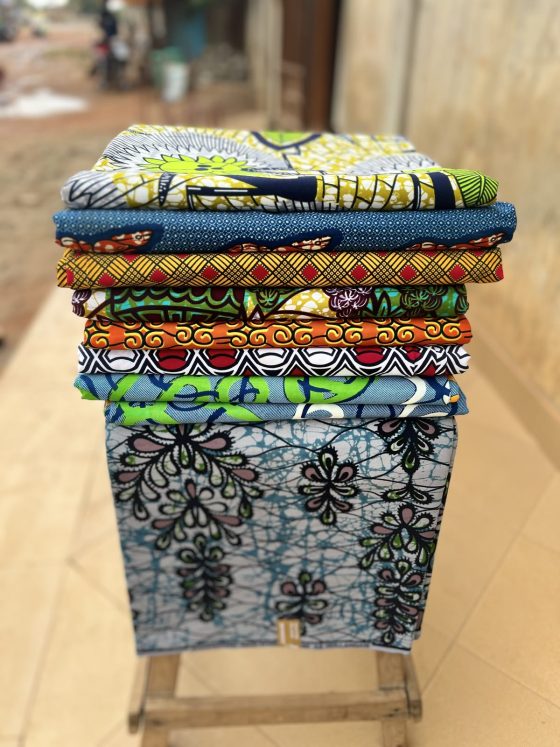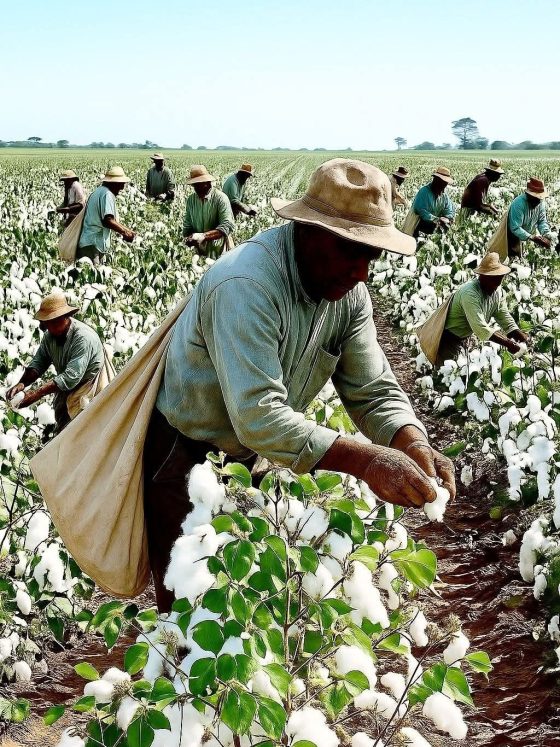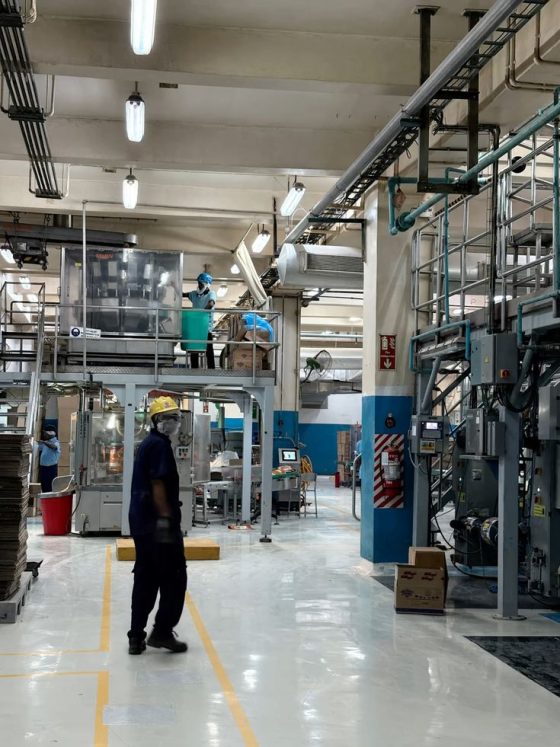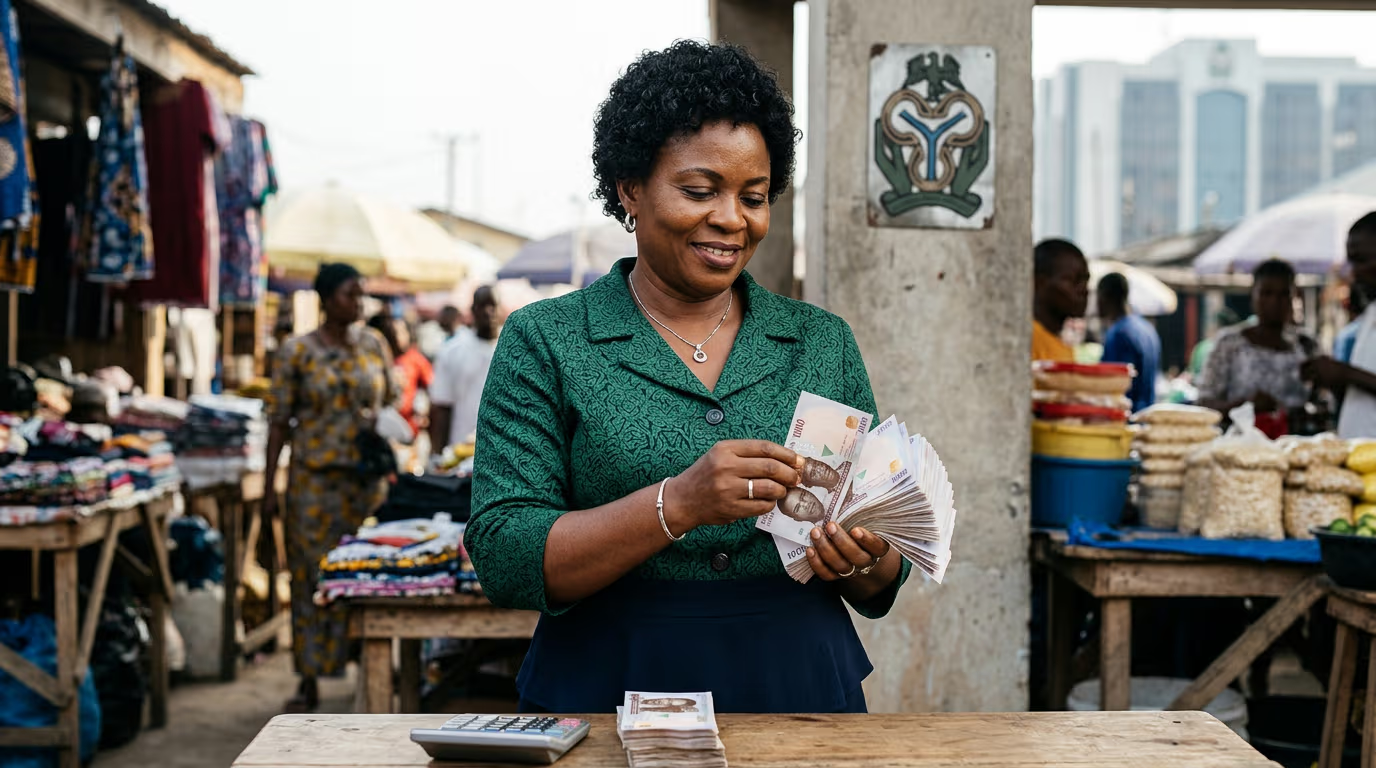
The African fashion market is worth $ 31 billion. Nigeria’s share of that figure is built on a fabric market that is structurally dependent on imports: Ankara prints manufactured in China, India, and the Netherlands; lace sourced from Austria and Switzerland; George fabric from India; brocade and damask from China. When the naira fell from approximately N400 per dollar to N1,700 per dollar between 2023 and late 2024, that structural dependency became immediately and painfully legible in every fabric stall across Balogun Market in Lagos, Onitsha Main Market in Anambra, and Kantin Kwari in Kano. As Omiren Styles’ Lagos Fashion Market Report 2026 confirms, exchange rate volatility, with the naira trading between NGN 700 and NGN 1,800 per dollar at various points, made imported clothing and fabrics substantially more expensive, with wholesalers reporting 20 to 30% cost increases that they passed directly to consumers.
That 20 to 30% figure understates the full picture for traders who bought stock before the steepest devaluation phases and are now replacing it at current rates. The reshaping happening across Nigeria’s fabric markets is not only a price story. It is a sourcing story, a demand story, and a production story. Each is moving in a different direction simultaneously, creating a market under structural pressure that is also, paradoxically, generating new opportunities for local production.
The naira fell from N400/$1 to N1,700/$1. Nigeria’s fabric markets absorbed that fall through price hikes, sourcing shifts, and a surge in local fabric demand.
Naira Devaluation and Nigeria’s Fabric Markets: The Import Dependency Problem
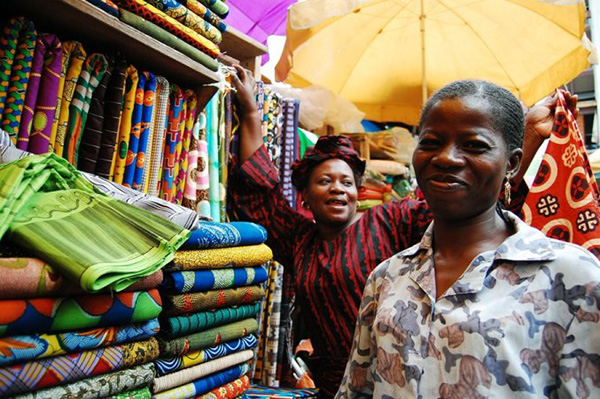
Nigeria’s clothing market is valued at approximately $6 billion. Local manufacturers capture less than 15% of it. As News Digest’s analysis of Nigeria’s textile dilemma confirms, Nigeria haemorrhages approximately $3 billion annually on imported clothing, with the iconic Ankara prints that dominate Nigerian wardrobes being predominantly manufactured in China, India, and the Netherlands. The majority of fabric retailers in commercial hubs like Balogun Market, Onitsha Main Market, and Abuja’s Wuse Market predominantly stock imported fabrics. Nigeria is estimated to lose a further $1.2 billion annually to smuggled fabric imports that evade official customs channels and undercut legitimate businesses.
This is the market structure that naira devaluation hit. A market in which the dominant product is priced in US dollars, the consumer’s purchasing power is in naira, and the gap between the two is now significantly wider than at any point in the previous decade. The arithmetic is straightforward. A bolt of imported lace that cost a Balogun trader N60,000 in 2022 at the rate of N400/$1 now costs the same trader N225,000 at N1,500/$1, a 275% increase in naira terms for the same physical product. The trader passes as much of that increase as the market will bear to the customer, and absorbs the rest as a margin compression that reduces their capacity to restock.
Nigeria loses approximately $3 billion annually on imported clothing and fabric, with the Ankara prints that dominate Nigerian wardrobes predominantly manufactured in China, India, and the Netherlands. The naira’s collapse made that dependency visible in every fabric stall across Balogun and Onitsha. The question is what happens next.
The Import Surge Paradox
Nigeria’s textile import bill tells a story that appears counterintuitive: rather than falling as local alternatives become price-competitive, imports have surged. As Business Day’s reporting on Nigeria’s textile sector confirms, Nigeria imported textiles and textile articles worth N814.3 billion in the first nine months of 2025, up from N552.3 billion in the same period of 2024: a 47% increase in naira terms. The textile sector’s real growth rate also contracted by 2.4% in the third quarter of 2025. A rising import bill alongside a shrinking domestic sector is the defining paradox of the naira devaluation’s effect on fabric markets.
The paradox resolves when the import bill is measured in dollar terms rather than naira terms. A 47% increase in the naira-denominated import bill at current exchange rates reflects a significantly smaller volume increase in real terms. The naira value of the same quantity of imported fabric rises automatically as the exchange rate weakens, even if the volume imported stays constant or falls slightly. What the data shows is not necessarily that Nigeria is importing more fabric. It shows that the fabric Nigeria is importing is costing more in naira, which is precisely the devaluation effect the market is navigating.
The sector’s 2.4% real contraction in Q3 2025 reflects a different dimension of the same pressure: local textile manufacturers, who must import machinery, raw cotton, and production inputs priced in foreign currency, are seeing their own cost base inflate as the naira weakens, while competing against smuggled imports that evade the customs duties that legitimate local producers pay. The local producer is caught between devaluation-inflated input costs and illegally imported competition that pays none of the costs the legitimate operator must absorb.
The Price Pass-Through in Balogun and Onitsha
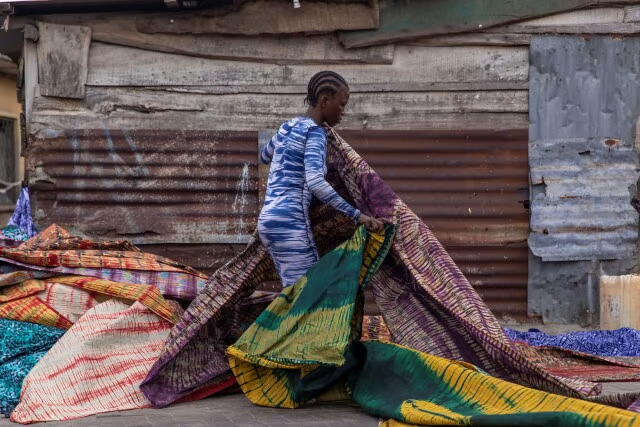
At the retail level, the price pass-through from naira devaluation is visible and documented across Nigeria’s major fabric markets. Ankara prints, which are the highest-volume fabric in Nigerian retail, have seen sustained price increases at Balogun Market on Lagos Island, Onitsha Main Market, and Ariaria Market in Aba. The Ankara rolls and yards that form the baseline of Nigeria’s aso-ebi culture, its ceremonial markets, and its daily tailoring economy have all become more expensive for traders to stock and more expensive for consumers to buy.
The lace and premium ceremonial fabric segment has absorbed the sharpest price increases. Omiren Styles’ Lagos Fashion Market Report 2026 confirms that imported alternatives at comparable naira price points have deteriorated in quality due to FX-driven cost cuts, as traders substitute lower-quality imported fabric to hold naira price points that the market will accept. French lace and Swiss lace, which command premium margins of 50% to 150% when sourced at competitive import costs, have seen those margins compress as import costs rise faster than consumer price tolerance. The trader who cannot pass the full cost increase absorbs a compressed margin; the trader who passes the full increase may lose customers to competitors stocking lower-quality substitutes.
Kantin Kwari Market in Kano, the largest textile market in Nigeria by volume and the primary sourcing hub for northern Nigerian fabric, faces a specific version of this pressure: northern Nigeria’s traditional cotton fabrics, including the materials for the Babban Riga and northern Nigerian dress culture, are partly locally produced but depend on imported dyes, finishing chemicals, and machinery that are all now more expensive in naira terms. The local production advantage that northern Nigerian weavers hold in cotton sourcing is partially offset by the imported input costs required for their finishing processes.
The Local Production Opportunity
The naira devaluation that has compressed margins on imported fabric is simultaneously creating an economic argument for local production that did not exist at previous exchange rates. When Ankara manufactured in China and imported into Nigeria costs the same or more in naira terms than Ankara manufactured locally, the price advantage that drove import dominance disappears. This structural shift is beginning to generate observable demand for locally produced alternatives.
Nigeria’s tailoring materials market was valued at USD 1.1 billion in 2024 with a projected CAGR of 9% through 2029. Within that market, the demand signal most clearly attributable to naira devaluation is the renewed consumer interest in locally produced and traditional textiles. Nigeria’s streetwear movement was one of the first to explore the digital space, ensuring that Nigerian culture is preserved and promoted while focusing on supporting local artisans and utilising local materials. The naira devaluation has given that cultural argument an economic argument to stand alongside it.
Adire, the Yoruba resist-dyed textile produced domestically from local cotton using natural or synthetic dyes, is among the clearest beneficiaries of the local production shift. Its production cost in naira terms is significantly less exposed to exchange rate fluctuation than an equivalent length of imported Ankara, because the primary input, the cotton cloth, is locally sourced and locally dyed. As imported Ankara becomes more expensive, Adire becomes more competitive on price while maintaining its cultural distinctiveness. This is the market dynamic that Nigerian textile policy has sought to create through import restrictions for decades and that naira devaluation has produced more effectively than any policy intervention.
How Nigerian Designers Are Responding
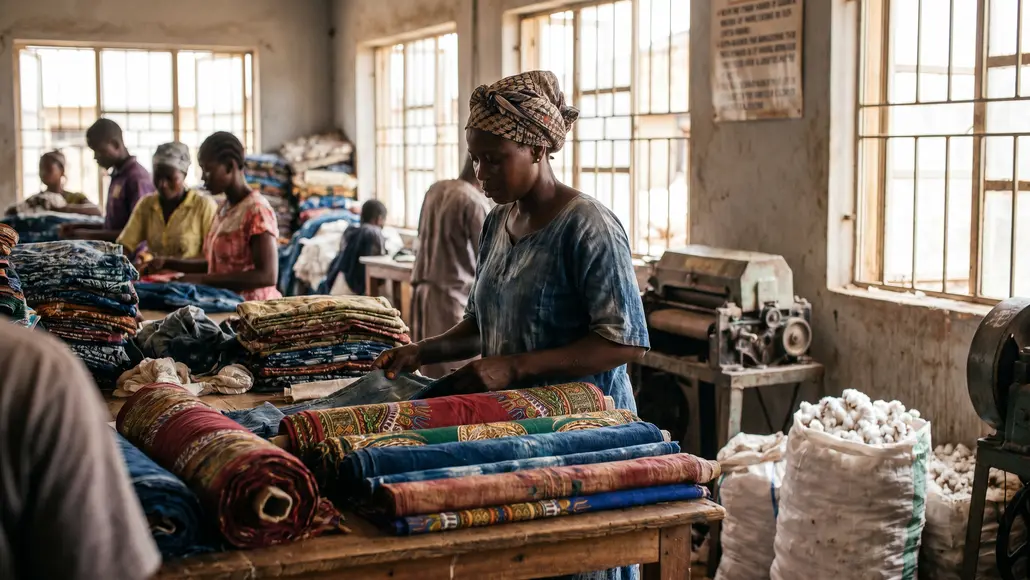
For Nigerian fashion designers, the naira devaluation creates a sourcing constraint that is also, for those who build from it rather than against it, a creative and commercial opportunity. Designers who have built their practices on imported lace, damask, and premium foreign fabrics face the sharpest pressure: their material costs have risen significantly in naira terms, while their consumer base, which is itself under purchasing power pressure, has limited capacity to absorb price increases of equivalent magnitude.
The designers most positioned to navigate the devaluation are those who have already embedded local sourcing in their practice. Artisans in Zaria, Kano, and Sokoto produce cotton textiles using local materials and narrow-strip weaving traditions that are significantly less exposed to import cost pressure than synthetic or imported fabric. A Northern Nigerian designer who sources from Kantin Kwari’s domestic weavers rather than from its imported fabric section faces a different and more manageable naira devaluation effect than a Lagos designer whose entire fabric inventory is priced in dollars.
Several Lagos-based designers have publicly shifted toward Adire, Aso-Oke, and other locally produced fabrics not only as cultural choices but as responses to the economic reality of importing fabric at current exchange rates. The trend toward ‘made in Nigeria with Nigerian fabric’ that Omiren Styles has documented as a cultural argument within Nigerian streetwear and artisanal fashion now has a commercial argument that reinforces it. Currency devaluation has, unexpectedly, made the culturally correct choice the economically rational one.
The Export Silver Lining
There is one dimension of the naira devaluation that benefits Nigeria’s textile sector rather than pressuring it: the export market. As Hallmark News’s reporting on textile export growth confirms, Nigeria’s textile export value grew to N36 billion in 2024, with the growth widely attributed to currency depreciation making Nigerian-produced textiles more price-competitive in international markets. A Nigerian fabric producer who sells in dollars or euros and converts revenue at the current rate receives significantly more naira per unit exported than at 2022 rates. This export competitiveness argument is the structural case for why Nigeria’s local textile production sector needs to grow: not only to reduce import dependency but to capture the export market opportunity that devaluation has created.
The challenge is that the export opportunity requires a level of production scale and quality consistency that Nigeria’s current local textile sector, which has been decimated by decades of import competition and inadequate industrial infrastructure, cannot yet fully deliver. The path from export opportunity to export revenue runs through investment in local production capacity that the sector has not yet received at the scale required. The naira devaluation has changed the economic case. It has not yet changed the production infrastructure.
The Omiren Argument
Naira devaluation is reshaping Nigeria’s fabric markets in three simultaneous directions: upward pressure on imported fabric prices, renewed demand for locally produced alternatives, and an emerging export competitiveness argument for Nigerian-made textiles. The African fashion market is worth $ 31 billion. Nigeria’s contribution to that figure is built on a fabric market that imports approximately $3 billion in clothing annually, with Ankara prints dominated by Chinese, Indian, and Dutch manufacturers, and an estimated $1.2 billion in smuggled fabric imports annually undermining legitimate traders. The naira’s fall from N400/$1 to N1,700/$1 made that dependency cost visible at the retail level in every fabric stall in Balogun and Onitsha. The 20 to 30% cost increases that wholesalers have passed to consumers are the most direct expression of what import dependency costs when the currency collapses. The 47% surge in the naira-denominated textile import bill in the first nine months of 2025 is the macro version of the same story. What Omiren Styles argues here is that the currency crisis has done what textile policy tried and failed to do for decades: it has made local production economically competitive with imported alternatives. The designers and producers who move first into that competitive space, building on Adire, Aso-Oke, and locally woven cotton while the import price disadvantage holds, are building market position that exchange rate recovery, if it comes, will not automatically erase. The opportunity window is open. The infrastructure question is whether Nigeria’s textile sector can move through it fast enough.
ALSO READ:
- Lagos Street Style and the Global Trend Cycle: Who Is Really Leading Whom?
- Nigeria’s Streetwear Revolution: Culture, Craft and Afrofuturism
- Woven Identities: How Northern Nigerian Fashion Blends Native and Modernity
- African Deconstructed Denim: What Lagos, Accra, and Johannesburg Built From a Western Fabric
Frequently Asked Questions
How has naira devaluation affected Nigeria’s fabric markets?
Naira devaluation has raised the naira cost of imported fabrics significantly, with wholesalers at Balogun, Onitsha, and other major markets reporting 20 to 30% cost increases that have been passed directly to consumers. A bolt of imported lace that cost a trader N60,000 in 2022 at N400/$1 now costs approximately N225,000 at N1,500/$1, a 275% increase in naira terms for the same physical product. Nigeria’s textile import bill grew 47% in naira terms in the first nine months of 2025, though the volume increase in dollar terms is smaller, reflecting the exchange rate effect rather than a pure volume surge.
Why are fabric prices rising in Nigeria?
Nigeria’s fabric market is structurally dependent on imports: Ankara prints manufactured primarily in China, India, and the Netherlands; lace from Austria and Switzerland; George fabric from India. These imports are priced in US dollars or euros. As the naira has weakened from approximately N400/$1 in 2022 to N1,500-1,700/$1 in 2024-2025, the naira cost of the same volume of imported fabric has risen proportionally. Smuggled fabrics, which represent an estimated $1.2 billion annually, further pressure legitimate traders who pay customs duties that the smuggled product does not.
Is local fabric production increasing in Nigeria?
Evidence suggests that demand for locally produced fabrics is increasing as a result of naira devaluation making imported alternatives more expensive. Adire, the Yoruba resist-dyed textile produced domestically, has seen renewed consumer and designer interest partly because its production cost is significantly less exposed to exchange rate fluctuation than imported Ankara. Nigeria’s tailoring materials market was valued at USD 1.1 billion in 2024 with a projected 9% CAGR through 2029, and growing demand for heritage textiles including Aso-Oke and Adire is documented within that growth.
How are Nigerian designers responding to naira devaluation?
Nigerian designers whose practices are built on imported lace, damask, and premium foreign fabrics face the sharpest material cost pressure. Designers who have already embedded local sourcing, including those working with Adire, Aso-Oke, and northern Nigerian woven textiles from Kantin Kwari and other domestic producers, face a more manageable devaluation effect. Several Lagos-based designers have publicly shifted toward locally produced fabrics as both a cultural and an economic response to the current exchange rate environment.
What is the export opportunity for Nigerian textiles following naira devaluation?
Nigeria’s textile export value grew to N36 billion in 2024, with growth attributed to naira depreciation making Nigerian-produced textiles more price-competitive in international markets. A Nigerian fabric producer who earns in foreign currency and converts at the current rate receives significantly more naira per unit exported than at 2022 rates. However, realising this export opportunity requires production scale and quality consistency that Nigeria’s local textile sector, weakened by decades of import competition and infrastructure deficits, cannot yet fully deliver at the required scale.
Explore More
Read the full Fashion > Industry section for Omiren Styles’ documentation of African fashion markets, Nigeria’s textile economy, and the commercial and cultural arguments shaping the continent’s fabric and production landscape.