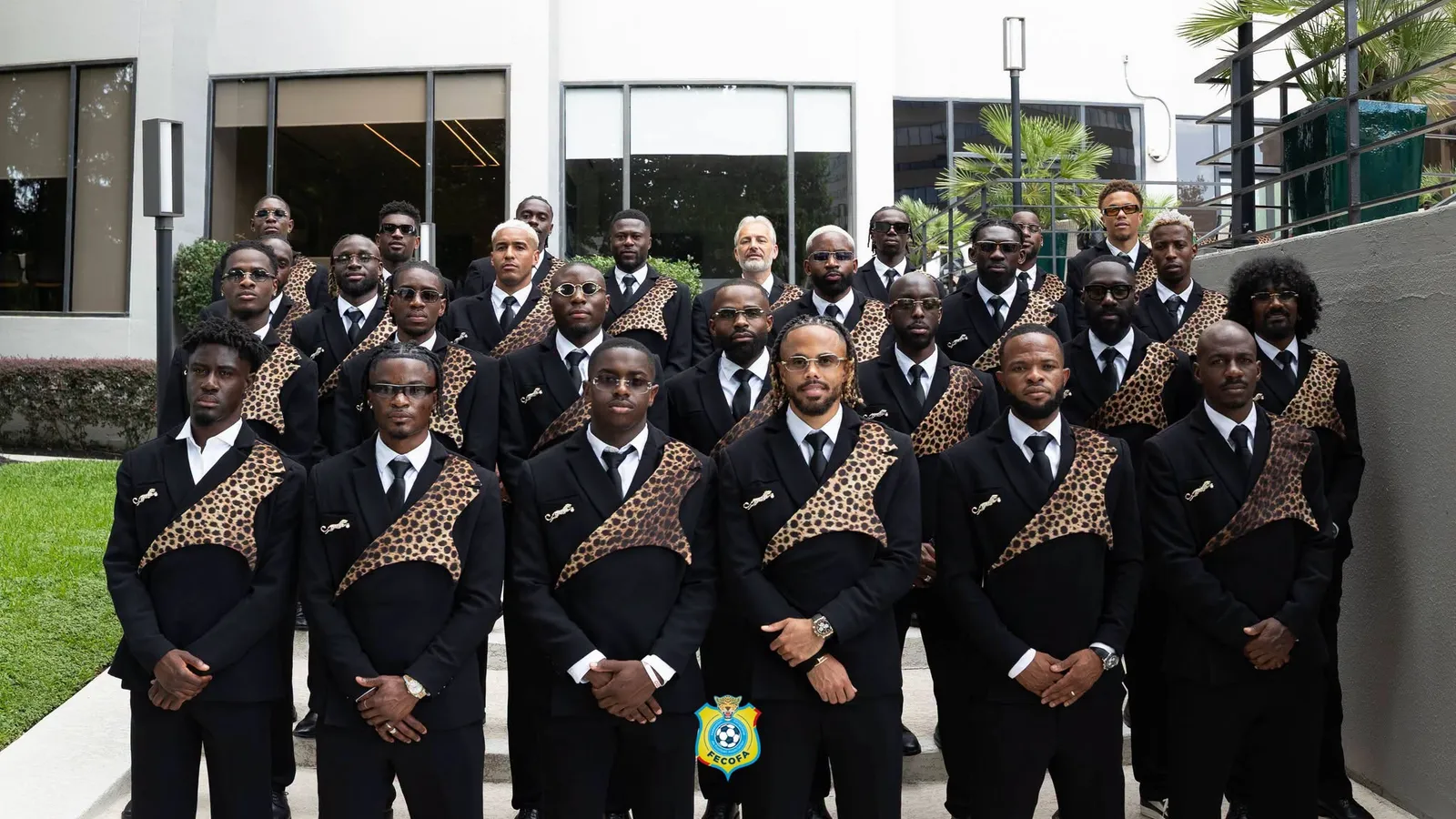
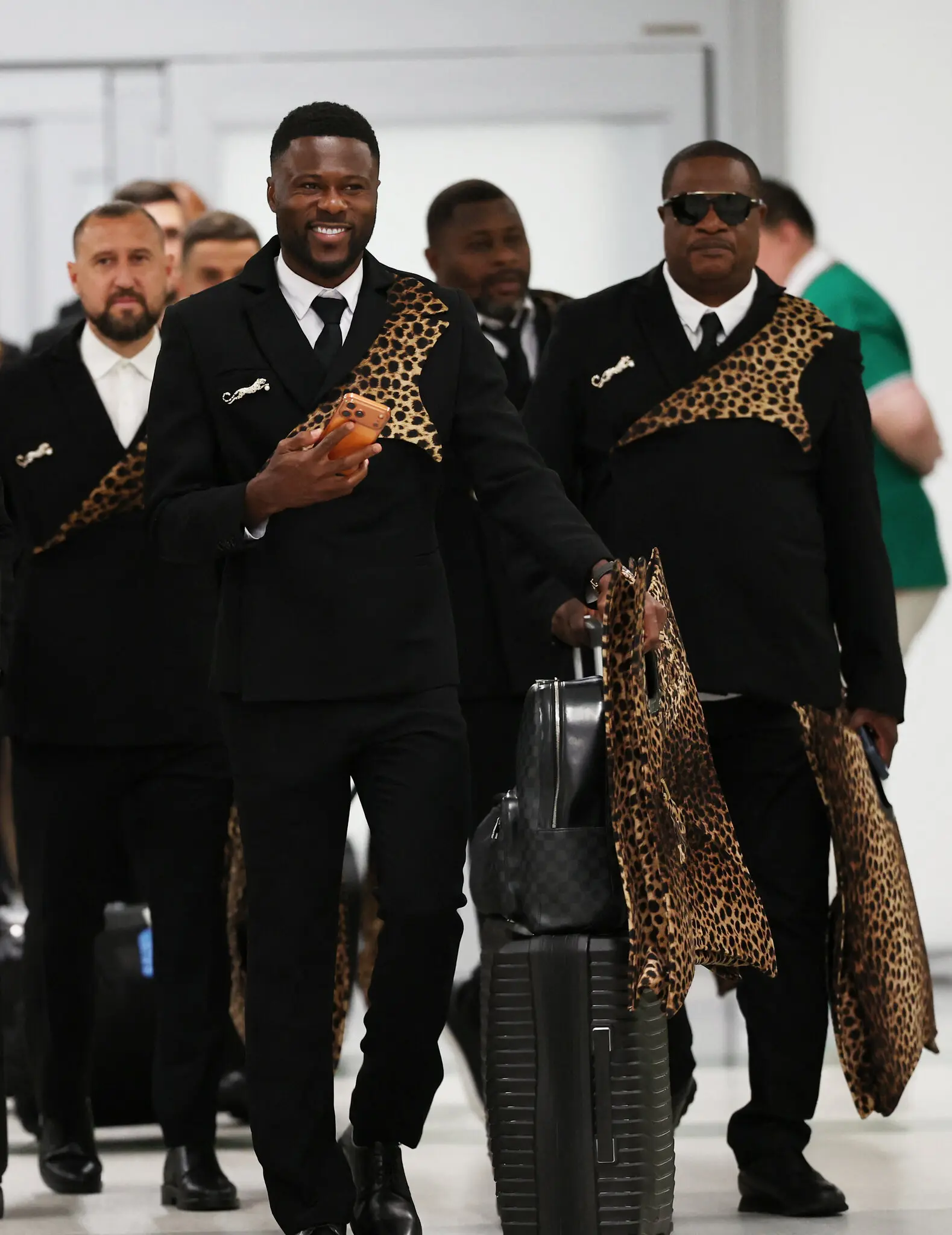
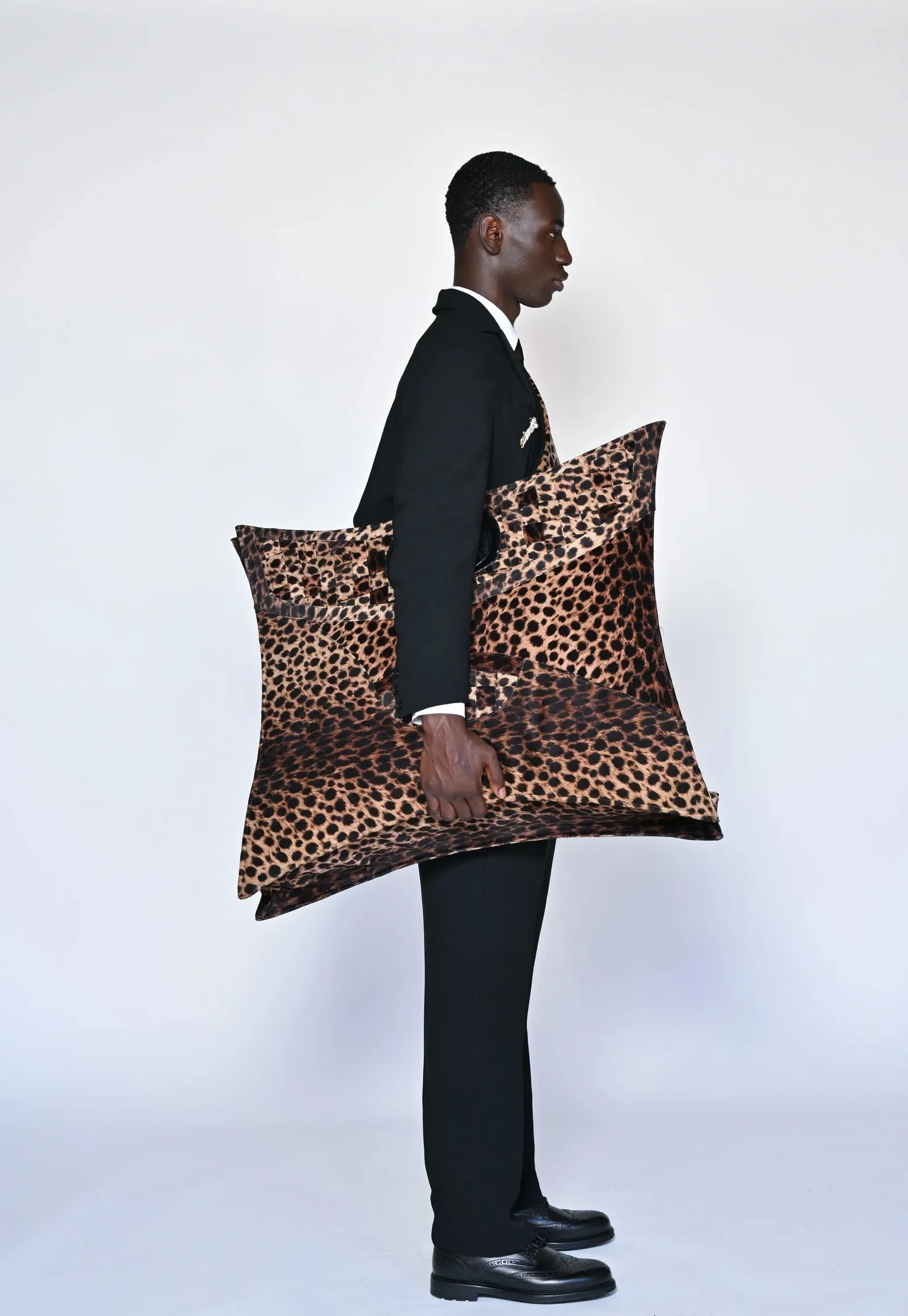
When the DR Congo national football team touched down at George Bush Intercontinental Airport in Houston on the eve of the 2026 FIFA World Cup, they were not wearing tracksuits. They were wearing black silk crepe suits with velvet leopard-print lapel collars, gold leopard brooches, elephant embroidery, and matching handcrafted travel bags. The airport became a runway. Social media did the rest.
The look went viral within hours. But the story behind it is not a social media story. It is a fashion story, a cultural story, and a story about what happens when a designer treats a national team’s arrival outfit as a serious brief rather than a branded obligation.
The man behind the look is Alvin Junior Mak, founder and Creative Director of the Paris-based fashion house JMAKxPARIS. He is Congolese-born, Paris-raised, and the designer who understood that dressing Les Léopards for their first World Cup appearance in fifty-two years required more than a sharp suit. It required a whole argument about who the DR Congo is, where it has been, and what it is bringing to the world’s largest sporting stage.
Alvin Junior Mak of JMAKxPARIS designed DR Congo’s viral World Cup arrival suits. Discover the designer, the La Sape connection, and why the look matters for African fashion.
Who Is Alvin Junior Mak?
Alvin Junior Mak was born in the Democratic Republic of the Congo and moved to Paris at age 11. He grew up between two worlds: the minimalist sophistication of French tailoring culture and the opulent, self-determined elegance of La Sape, the Congolese fashion subculture built on the principle that impeccable dress is an act of dignity rather than decoration. Both traditions shaped him.
As founder of JMAKxPARIS, he creates clothing that blends French construction rigour with Congolese visual language and Sapologie allure. What was supposed to be a cultural barrier, being simultaneously of Congo and of Paris, became the foundation of his design methodology. He describes his approach as combining the minimalist knowledge of French fashion with the vibrant creativity of his Congolese roots.
This was not his first time dressing the national team. Ahead of the 2025 Africa Cup of Nations, Mak was already developing a cleaner, more culturally specific visual identity for the squad. He was explicit about his dissatisfaction with previous choices. At the 2023 AFCON, the team wore Dutch wax fabric, a textile whose name derives from an industrial production process and whose cultural roots lie elsewhere. For Mak, that was a missed opportunity. DR Congo, he argued, has three cultural pillars: music, football, and fashion. The team’s dress should reflect all three.
The Design Brief: 1974, La Sape, and the Leopard
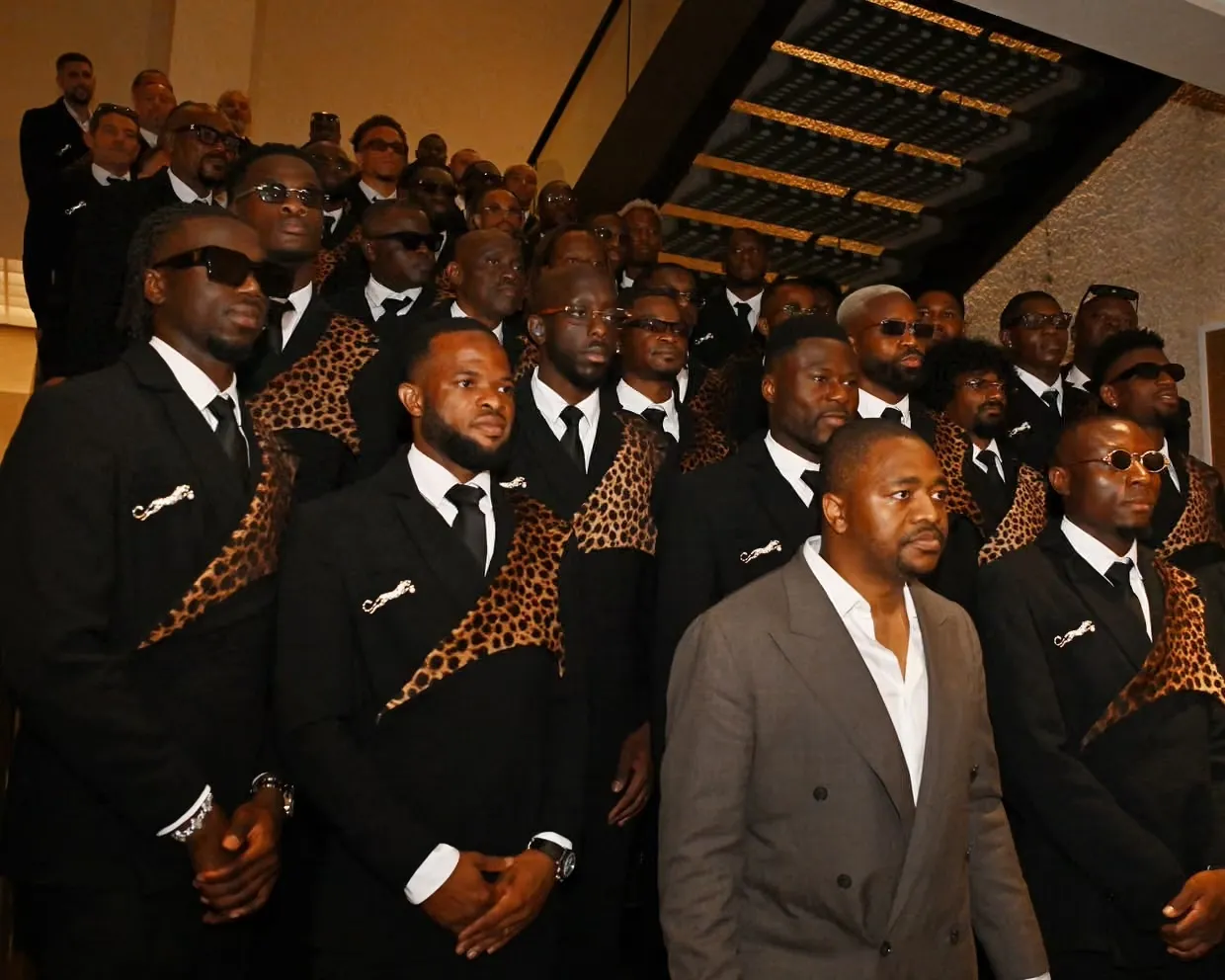
The 2026 World Cup collection drew from two precise reference points. The first was the 1974 squad, when DR Congo, then known as Zaire, became the first sub-Saharan African nation to qualify for the FIFA World Cup. In 1974, the team wore midnight blue suits. Mak took that idea of elegance and tailoring as his starting point, replacing midnight blue with black silk crepe while keeping the same commitment to structured formality. The commission itself carried institutional weight: before moving forward with the design, Mak had his concept and vision approved by DR Congo’s Sports Minister, Didier Budimbu, a detail that distinguishes this from a typical brand collaboration and positions it as a culturally sanctioned national statement. The 2026 team’s return after a fifty-two-year absence carried all of that history, and Mak built it directly into the garment. The second reference was La Sape itself. As Omiren Styles has documented in The Congo’s Sapeurs: What La Sape Tells the World About Elegance, Resistance, and African Identity, La Sape, the Société des Ambianceurs et des Personnes Élégantes, is not simply a fashion subculture. It is a century-old philosophy rooted in Brazzaville and Kinshasa that treats elegance as a form of political self-determination. Mak did not borrow La Sape for visual effect. He extended it, placing it on the bodies of twenty-three men representing a nation on the world’s largest sporting stage.
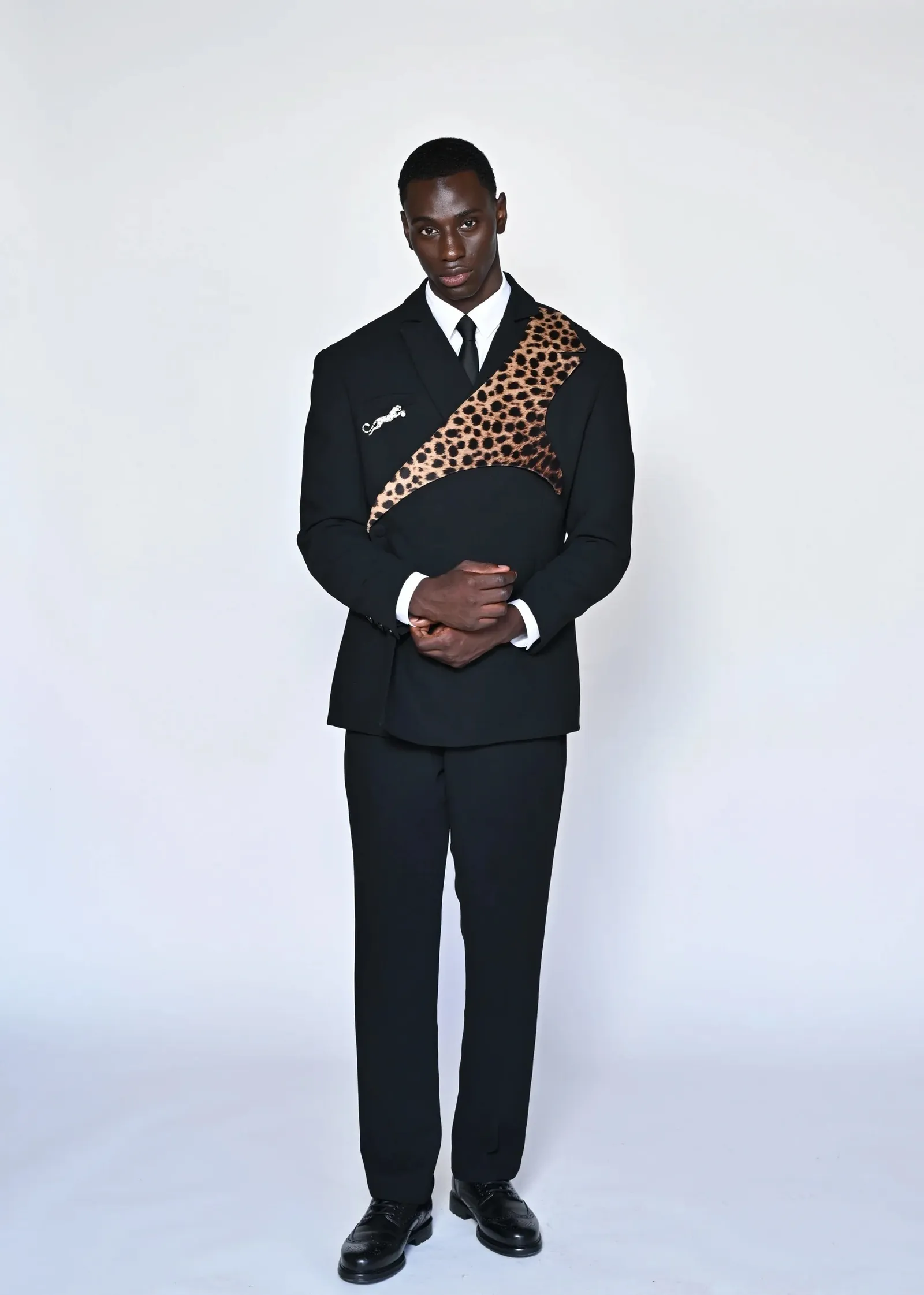
The specific material choices carry precision. Mak selected black silk crepe for the suits, a colour he associates with resilience, determination, and ambition. The velvet leopard-print lapel collar serves as both a visual focal point and a cultural declaration: the leopard is the team’s own nickname, Les Léopards, and it is also a historic symbol of sovereign power and strength on the national emblem of DR Congo. Mak described the choice as natural. The gold leopard brooches reinforce that identity. The elephant embroidery acknowledges the national emblem’s full visual language. The travel bag, named the Moniama, carries a star-shaped silhouette whose pointed geometry is, in Mak’s own words, reminiscent of a star. Constructed in velvet with braided texture and leopard-print detailing, it was designed as an integral part of the overall silhouette rather than an accessory added after the fact. The suit and the Moniama together form a single composed statement. That design decision is what sets the DR Congo’s arrival apart from every other World Cup team’s look that week: most squads wear suits and carry bags. Mak designed a unified visual argument.
Elegance is a way of wearing one’s history. A nation behind them. A dream ahead of them.
Why the Look Landed
The viral reach of the DR Congo arrival look is neither accidental nor simply a product of good social media timing. It landed because it was doing something the global sports-fashion conversation rarely sees: an African designer working from an explicitly African cultural brief, producing a garment that was legible to global audiences as both high fashion and deep heritage without any translation or compromise as Omiren Styles has traced in How Cultural Resistance Shaped the World’s Most Powerful Style Movements, La Sape’s original power came from taking European tailoring and outperforming it on its own terms, not by imitating the coloniser but by exceeding him. Mak’s World Cup collection operates in that same tradition. It takes the international sports arrival suit, a format dominated by European luxury brands, and replaces it with something that could only have come from Congo.
This is precisely the argument Omiren Styles made about Pathé’O and Nelson Mandela’s shirts: the image circulates, the designer does not circulate with it at the same speed or volume. The Kenyan parallel is also instructive. Joy Wanja of Kovu Couture designed Team Kenya’s opening-ceremony attire for the Paris 2024 Olympics, as documented in Omiren Styles’ Kenyan Menswear: Bespoke Tailoring, Olympic Kits, and the Designers Rewriting the Rules. The pattern is becoming visible: African national teams are increasingly choosing African designers for high-visibility international moments, and the designers are increasingly ready. What is lagging is the editorial record that properly names them.
ALSO READ
- The Congo’s Sapeurs: What La Sape Tells the World About Elegance, Resistance, and African Identity
- How Cultural Resistance Shaped the World’s Most Powerful Style Movements
- Kenyan Menswear: Bespoke Tailoring, Olympic Kits, and the Designers Rewriting the Rules
- Top African Menswear Collections Released in 2025
What JMAKxPARIS Represents
The DR Congo World Cup commission is a significant moment for JMAKxPARIS, but Alvin Junior Mak’s stated ambition extends well beyond a single viral look. He framed the commission in terms of what he wants the collection to communicate: that this is a generation that dares to dream big and believes in its country’s potential. That is not a styling brief. That is a cultural mission.
The fashion house itself represents a specific kind of African creative practice: Afrocentric in reference, Paris-trained in craft, and unwilling to choose between the two. Mak has explicitly said that his cultural displacement, growing up between Congo and France, gave him access to both traditions simultaneously rather than forcing him to abandon one for the other. That dual fluency is exactly what the World Cup collection made visible to a global audience that had not previously encountered his work.
THE OMIREN ARGUMENT
Alvin Junior Mak did not dress DR Congo’s national team for the 2026 World Cup. He gave them an argument to wear. The black silk crepe suits, velvet leopard-print collars, gold brooches, elephant embroidery, and matching travel bags that turned a Houston airport arrival into a global fashion moment are not simply a look. They are a structured cultural statement connecting La Sape’s century-old philosophy of elegance as resistance, the 1974 squad’s historic place as the first sub-Saharan African team at a World Cup, and the leopard as a Congolese symbol of sovereign power. Every detail carries that intent. Nothing in this collection is decoration.
What the viral reach of the look also reveals is a gap the fashion editorial record has not consistently closed: the distance between an image going global and a designer’s name going with it. Alvin Junior Mak’s commission earned coverage across international sports media. JMAKxPARIS earned mentions in some articles and not others. The pattern is the same one that kept Pathé’O’s name out of the frame when Mandela’s shirts circulated around the world. African designers producing work of genuine cultural weight on an international scale deserve the same editorial certainty that European designers receive as a default. The Omiren Styles record names Alvin Junior Mak. It names JMAKxPARIS. It does not treat authorship as optional.
FREQUENTLY ASKED QUESTIONS
Who designed DR Congo’s World Cup 2026 arrival suits?
The suits were designed by Alvin Junior Mak, founder and Creative Director of the Paris-based fashion house JMAKxPARIS. Mak is Congolese-born and Paris-raised and had previously worked with the national team ahead of the 2025 Africa Cup of Nations.
What is the cultural significance of DR Congo’s World Cup suits?
The suits reference three elements of Congolese identity: La Sape, the century-old Congolese fashion philosophy built on elegance as resistance and dignity; the 1974 Zaire World Cup squad, the first sub-Saharan African team to qualify for the tournament; and the leopard, the national symbol of sovereign power and the team’s own nickname, Les Léopards.
What materials did Alvin Junior Mak use for the DR Congo World Cup suits?
Mak selected black silk crepe for the suits, with velvet leopard-print lapel collars, gold leopard brooches, and elephant embroidery. The ensemble also included matching handcrafted travel bags designed to complement the complete silhouette rather than as a separate accessory.
What is La Sape, and why does it matter to this story?
La Sape, the Société des Ambianceurs et des Personnes Élégantes, is a fashion subculture rooted in Kinshasa and Brazzaville that treats impeccable dress as an act of dignity, resistance, and communal identity. Mak drew explicitly on this tradition in designing the World Cup collection, extending La Sape’s philosophy to the international stage of the FIFA World Cup.
Why was DR Congo’s 2026 World Cup appearance particularly significant?
The 2026 tournament was DR Congo’s first World Cup appearance since 1974, when the country competed as Zaire and became the first sub-Saharan African nation to qualify for the tournament. The fifty-two-year absence made the return a historically significant moment, which Mak built directly into the design brief.