The global fashion industry has spent the last decade calling African style ‘emerging.’ That word is doing quite a violence. What it actually means is: we are only now choosing to pay attention. And when we do pay attention, we intend to profit from it.
When Tems walked the 2025 Met Gala carpet in an Ozwald Boateng look, the internet called it African fashion’s arrival. It was not an arrival. It was a harvest. The cultural groundwork had been laid over decades by designers in Lagos, Accra, and Nairobi who were dressing African artists long before Paris noticed. What the Met Gala moment produced was not recognition for those designers. It was advertising revenue for Western media platforms, brand relevance for European luxury houses, and social capital for every outlet that ran the images first. African design did not make an appearance at the Met Gala. It was used by it. The designers who built the visual language that made the moment possible are still waiting to invoice for it.
The Afrobeats fashion economy is worth billions. African designers built the visual language. The money is going somewhere else. This is the argument.
The Omiren Argument:
The Afrobeats fashion economy is worth billions. African designers built the visual language, dressed the artists, and created the demand that powers it. The money is going somewhere else. Not by accident. By design. And the design has a name: a global fashion system built to extract value from African creativity while returning as little as possible to African practitioners. Naming that is not radical. It is accurate. What comes next depends on whether the industry is prepared to be honest about it.
The Numbers Tell One Story. The Money Tells Another.
Africa’s fashion industry is valued at approximately $31 billion in 2026. Afrobeats contributes an estimated $2 billion annually to the global music economy through streaming, publishing, touring, and brand partnerships alone. These are not small numbers. And yet, if you ask most African designers working at the intersection of fashion and music culture whether their revenue has grown in proportion to the cultural attention they receive, the answer is almost universally no. The problem is structural. It is not about individual designers failing to capitalise on their moment. It is about who controls the systems through which that capitalisation happens. Global luxury brands increased their references to African prints in their collections by 15 per cent between 2019 and 2024. That growth was not driven by philanthropy. It was driven by demand: specifically, the demand generated by African musicians, African audiences, and African cultural energy pushing into mainstream visibility. Afrobeats created the appetite. Western fashion houses absorbed the revenue. This is not a coincidence. It is the operating logic of a global fashion system that was never designed to route money back to its sources.
What “Influence” Actually Costs
There is a particular kind of language that surrounds African fashion in the Western press. Words like “influence,” “inspiration,” and “dialogue.”
These words do work. They acknowledge the cultural contribution while carefully avoiding the question of compensation. Influence is something you receive as a compliment. Inspiration is flattery. A dialogue suggests equality between parties who, in practice, operate at entirely different levels of institutional power.
When a Lagos-based designer’s silhouette appears in a Paris collection two seasons later – slightly modified, stripped of its original context, and sold at twenty times the price – that is not dialogue. That is extraction. And the current legal frameworks around fashion intellectual property offer almost no protection against it. UNESCO estimates that the global market for African fashion, properly protected by IP frameworks, could grow by 25 per cent. The gap between what the market generates now and what it could generate with proper attribution and legal recourse is not a technical problem waiting for a technical solution. The gap between what that market is generating now and what it could generate with proper attribution and legal recourse is not a technical problem waiting for a technical solution. It is a political choice. The fashion industry has repeatedly and systematically chosen not to close it.
Afrobeats Changed the Visibility. It Did Not Change the Architecture.
It is worth being precise about what Afrobeats has and has not done for African fashion.
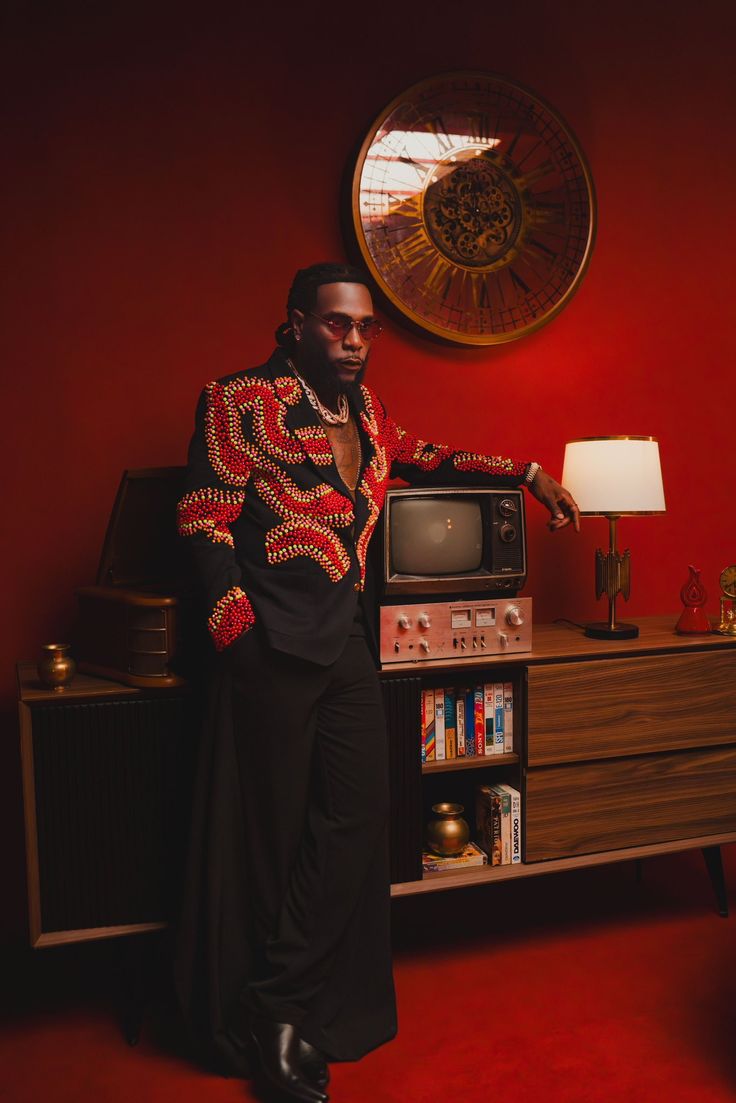
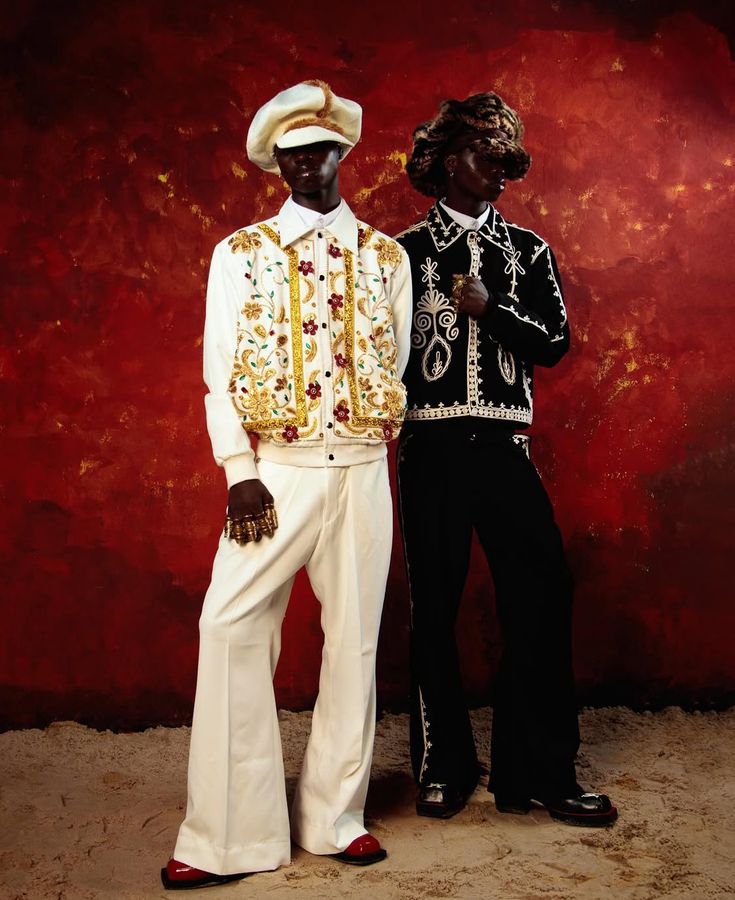
What it has done is extraordinary. It has built a distribution channel of genuinely global scale. When Burna Boy wears something, it reaches an audience that no fashion editorial can match. When Rema walks a runway – as he did for Diesel’s Fall/Winter 2026 show – it signals to an international industry that African cultural figures are no longer peripheral to global fashion. They are central to it. Asake at Jacquemus. Wizkid in Dior Men. These are not moments of inclusion. They are moments of arrival: the result of a decade of sustained cultural output that made the industry move toward African artists because the audience had already done so.
But here is what Afrobeats has not changed: the industry’s ownership structures that those artists are now walking into. The brands that benefit most from Afrobeats fashion visibility are not African brands. They are European luxury houses that have understood, faster than most African institutions, that proximity to African cultural energy is commercially valuable. They have moved quickly to secure that proximity. Sponsorships, campaign casting, runway invitations: these are not acts of cultural generosity. They are strategic acquisitions of relevance. Meanwhile, the African designers who built the visual language that made those artists recognisable in the first place – who have been dressing these musicians in Lagos, Accra, and Nairobi for years before Paris noticed – remain structurally excluded from the larger revenue flows their own creative work enabled.
The Platform Problem
Part of the answer lies in how African fashion reaches its audience. And right now, that answer is a problem.
Right now, the primary infrastructure for African fashion visibility is social media: Instagram, TikTok, and the algorithm-driven machinery of attention. This infrastructure is not neutral. It is owned by American technology companies that monetise African content without reinvesting in African creative ecosystems. An African fashion designer with two million followers on Instagram generates significant advertising revenue for Meta. They receive none of it directly. Their visibility is an asset on someone else’s balance sheet. The IFC estimates that Africa’s e-commerce market could grow by $14.5 billion between 2025 and 2030. Digital platforms are helping African artisans reach global markets. But reaching global markets through platforms that take a substantial cut of every transaction, rank content through opaque algorithms, and can suppress or amplify reach based on criteria unrelated to cultural quality – that is not the same as economic sovereignty. The Afrobeats artists now walking into Paris Fashion Week are doing so as individuals who have, through extraordinary talent and persistence, broken through a system not built for them. A system that requires individual genius to break through is not a system that is working. It is a system with occasional exceptions.
ALSO READ:
- Why African Fashion Brands Struggle to Scale: The Governance and Infrastructure Gap
- What Smaller Labels Need to Know Before Scaling a Collection
- Independent Luxury Fashion Designers: How Africa’s Independent Houses Compete
What a Fair Architecture Would Look Like
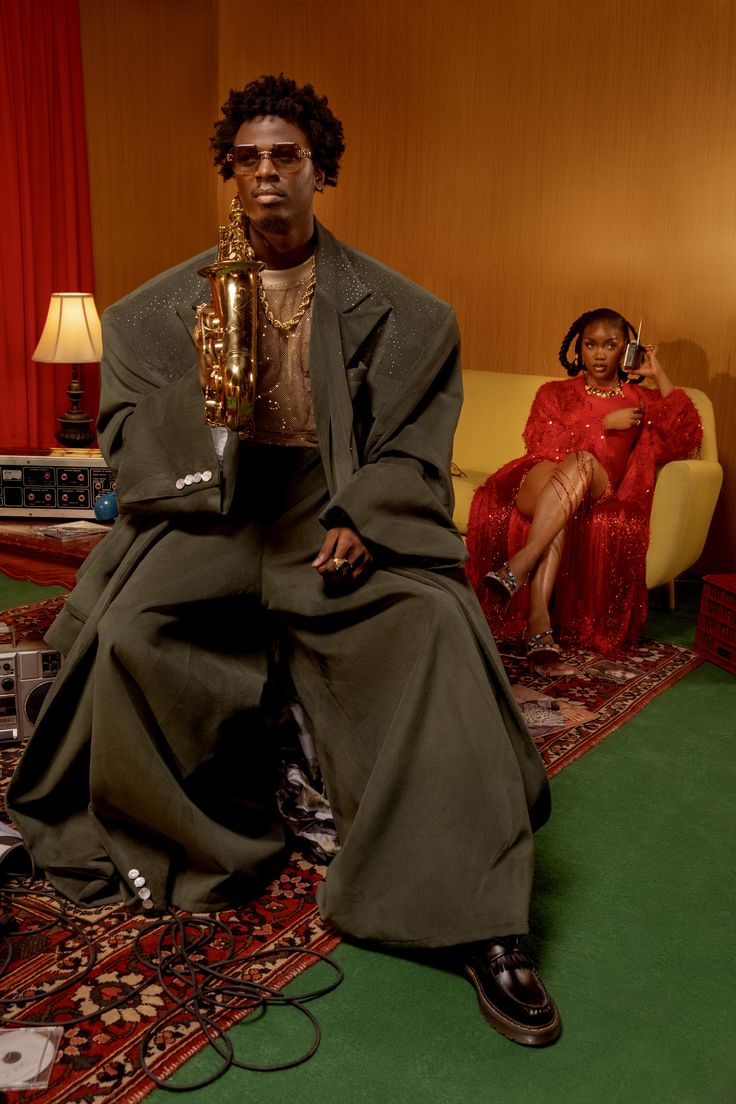
This is not an argument for protectionism or cultural isolation. African fashion has always been in conversation with the world. That conversation is one of its strengths. But conversation requires that both parties are sitting at the same table.
A fair architecture would begin with intellectual property frameworks that recognise traditional cultural expressions as protectable. Several African governments have begun this work. It needs to accelerate, and it needs international enforcement mechanisms with teeth.
It would continue with the African Continental Free Trade Area fulfilling its textile trade potential – predicted to increase intra-African trade by 33 per cent – so that the supply chain serving African designers is as robust as the one serving European ones. Right now, a designer in Abuja sourcing fabric, producing a collection, and shipping to a buyer in London is navigating logistics infrastructure that adds cost at every stage. Their European competitor is not. It would include media platforms – including this one – insisting on sourcing editorial images from African photographers, paying African writers to cover African fashion, and refusing to reproduce the pattern of African cultural knowledge being extracted for free and repackaged for a Western audience at a premium. And it would require the major fashion houses that have benefited most visibly from the Afrobeats moment to move beyond campaign casting into genuine investment: in African design schools, in African fashion weeks, in the infrastructure that produces the next generation of designers whose work they will eventually appropriate if that infrastructure is not there to protect it. The Afrobeats moment did not create this problem. It made the problem impossible to ignore. The luxury houses that have photographed Afrobeats artists, cast them in campaigns, and collected the commercial benefit of that proximity: they know exactly what they have been taking. The question is whether they will be required to give anything back, or whether the industry will continue producing think-pieces while the moment’s actual architects go underpaid.
Visibility Is Not Equity. Attention Is Not Ownership.
African designers are gaining international visibility. African fashion weeks are growing. African artists are on the biggest stages in the world. The direction of travel is undeniable.
But visibility is not equity. Attention is not ownership. A $31 billion industry in which the people whose culture generates the energy see a fraction of the returns is not a success story. It is a redistribution problem with a marketing budget. The Afrobeats fashion economy is real. It is large. It is growing. The designers who built its visual foundations – who were sewing, fitting, and dressing African artists in Lagos, Accra, Nairobi, and Dakar long before the world’s press arrived – deserve more than the moment’s reflection. They deserve their revenue. Building the architecture to make that possible is not a creative challenge. It is a political and commercial one. It starts with stopping the applause long enough to ask who is being paid. The answer to that question is where the real work begins.
“Visibility is not equity. Attention is not ownership. A $31 billion industry in which the people whose culture generates the energy see a fraction of the returns is not a success story. It is a redistribution problem with a marketing budget.”
Frequently Asked Questions
How big is the Afrobeats fashion economy?
Africa’s fashion industry is valued at approximately $31 billion in 2026. Afrobeats contributes an estimated $2 billion annually to the global music economy through streaming, publishing, touring, and brand partnerships. The intersection of these two industries, where Afrobeats artists drive demand for African fashion and African fashion provides the visual language of Afrobeats culture, represents one of the most commercially significant but structurally undervalued creative economies in the world. Global luxury brands increased their references to African prints by 15 per cent between 2019 and 2024, driven largely by the cultural demand generated by African musicians and audiences, without a proportional return to the African designers whose visual language was being referenced.
Why are African designers not profiting from the Afrobeats fashion moment?
The gap between African fashion’s cultural influence and its economic returns is structural rather than individual. African designers lack access to intellectual property frameworks, logistics infrastructure, digital platform ownership, and institutional capital needed to capture value from their creative output. When a Lagos-based designer’s silhouette appears in a Paris collection two seasons later, current fashion IP law offers minimal protection. When African designers build social media audiences, the advertising revenue accrues to the platform, not the designer. When Afrobeats artists create global demand for African aesthetics, the primary beneficiaries are European luxury houses with the institutional capacity to move quickly. These are systemic conditions, not individual failures.
What role does intellectual property protection play in African fashion?
Intellectual property protection is one of the most significant structural gaps in the African fashion economy. UNESCO estimates that the global market for African fashion could grow by 25 per cent with meaningful IP protection in place. Without it, traditional cultural expressions, original silhouettes, and design innovations created by African practitioners can be replicated by international brands without attribution or compensation. Several African governments have begun developing frameworks to protect traditional cultural expressions, but enforcement mechanisms remain limited, and international legal recourse is expensive and slow. The fashion industry’s repeated failure to address this gap is a political choice rather than a technical limitation.
What would a fair Afrobeats fashion economy look like?
A fair Afrobeats fashion economy would begin with IP frameworks that protect African traditional cultural expressions and original design innovation, backed by international enforcement. It would include the African Continental Free Trade Area, thereby fulfilling its textile trade potential and reducing the logistics cost disadvantage that African designers face relative to their European competitors. It would require digital platforms to develop revenue-sharing models that return value to African content creators. It would demand that major fashion houses move beyond campaign casting to genuine investment in African design schools and fashion weeks. And it would require media platforms, including editorial ones, to source African fashion coverage from African photographers and writers, ending the pattern of extracting African cultural knowledge for free and repackaging it for Western audiences at a premium.