International brands keep approaching Nigeria as if Ankara were the market, when in fact Ankara is only one part of a much larger and more complicated fashion economy. The mistake is not just aesthetic. It is structural: brands often mistake a cultural shorthand for a functioning production system, and Nigeria does not operate that way. That disconnect matters because Nigeria’s fashion market is large, active, and highly visible, but it is also fragmented, informal, and heavily import-dependent. If a brand wants to understand Nigeria properly, it has to separate symbol from supply chain, consumer demand from manufacturing capacity, and cultural recognition from commercial control. That is where most foreign strategies go wrong.
The conceptual spine of this analysis is a single sentence worth stating plainly before the evidence: international brands keep reading Nigeria as a cultural aesthetic first and a supply chain second, but in this market those two things do not line up cleanly. What follows is the documented case for why that is true, organised by the specific type of error rather than by the general observation that foreign brands misread the market.
Nigeria imports nearly 90% of the Ankara fabric global fashion associates with it, losing an estimated $3 billion a year in local value. That single fact explains why so many international brands misread the market.
Section One: The Symbol Brands See
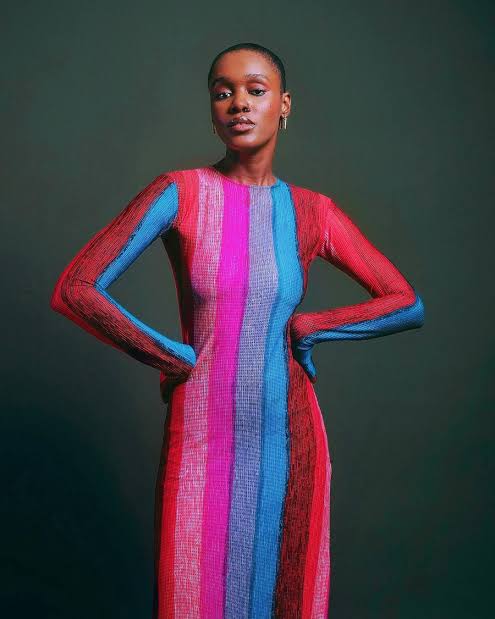
Here is the fact that undoes most of what international fashion brands think they understand about Nigeria. According to a 2025 industry report cited by The Guardian Nigeria, nearly 90% of Ankara print fabrics consumed in Nigeria are imported, primarily from China and India, costing the country an estimated $3 billion a year in lost value to foreign manufacturers. These are estimates from a named report, not settled universal facts, and should be treated as such. But the direction of the finding is consistent across available sourcing, and the magnitude is significant enough to constitute the central evidentiary challenge to any strategy built on “authentic Nigerian print.”
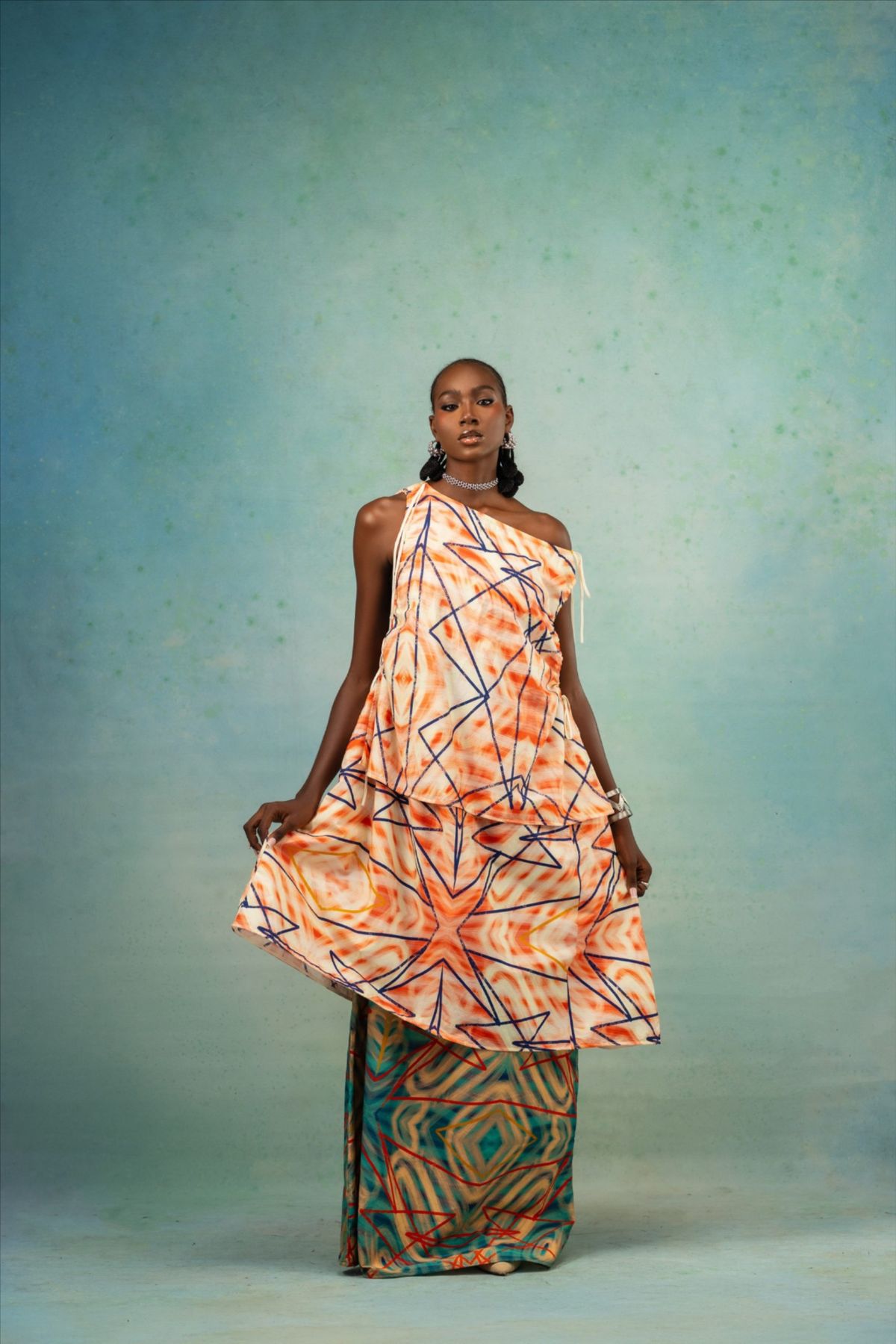
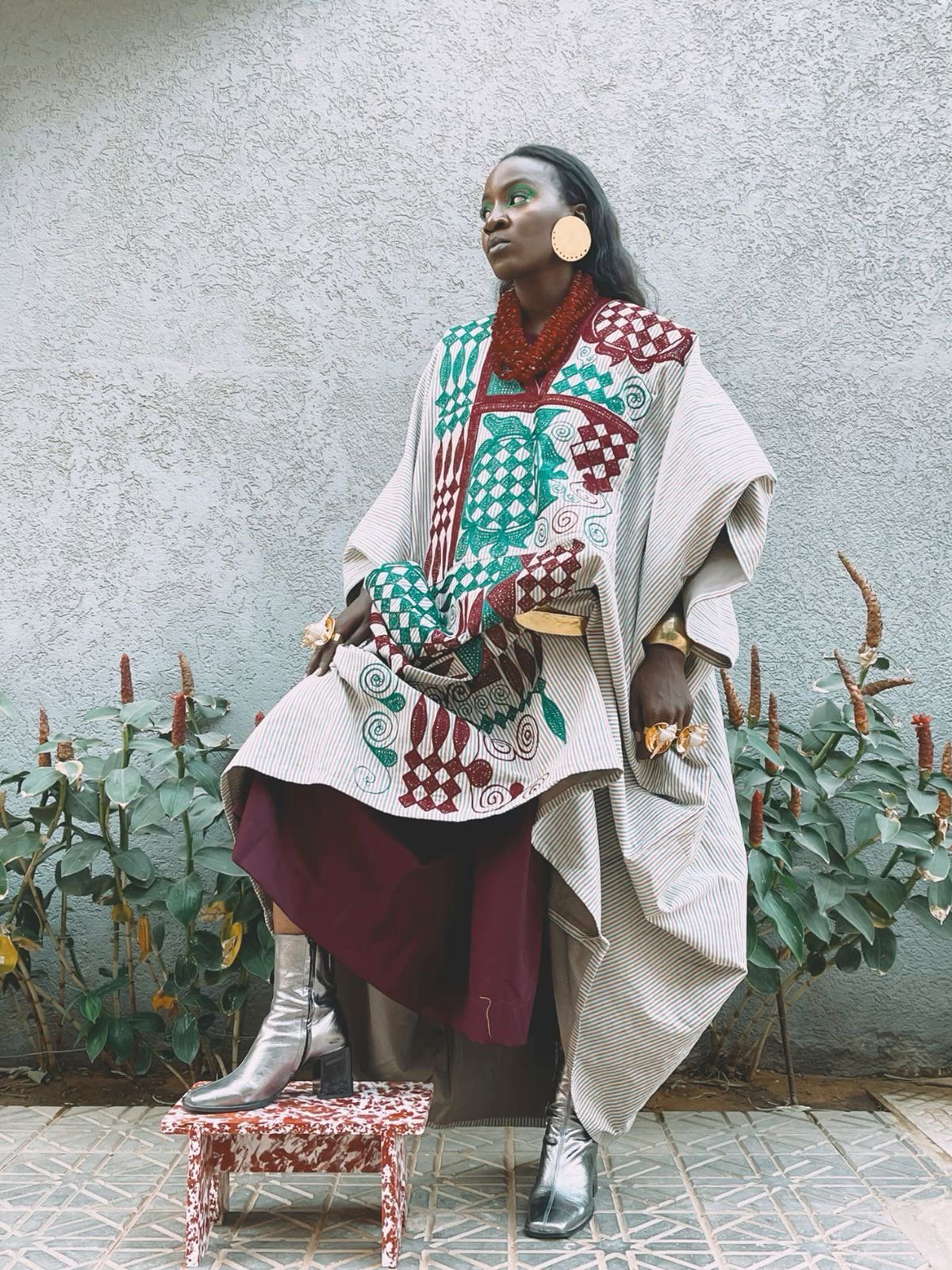
The cultural symbols that global fashion brands borrow as shorthand for Nigeria are real and carry documented meaning. Yoruba aso-oke, Igbo george, and Edo coral regalia each mark specific ethnic, historical, and ceremonial meaning distinct from one another. Ankara, the printed cotton fabric most associated internationally with Nigerian fashion, is a separate category again: its origin in Dutch-manufactured wax-resist printing adapted from Indonesian batik, subsequently traded into West Africa, means it was never narrowly Nigerian to begin with. As Omiren Styles has documented in its analysis of the Ankara economy, the fabric is a pan-West African tradition, not a narrowly Nigerian one. When an international brand builds a campaign around Ankara as the symbol of Nigerian identity, it is using a shorthand that is simultaneously culturally meaningful, economically contested, and, by volume, mostly imported. A brand can be entirely right about the cultural symbol and entirely wrong about the supply chain at the same time.
The distinction between appreciation and appropriation in this context is documented through two named, specific examples from Marie Claire Nigeria’s reporting. On one side: Beyoncé photographed in an Ankara suit made by a Nigerian designer, credited directly and publicly, tagged and named in the coverage. A documented case of a global figure engaging Nigerian fashion through direct commission and credit, with an actual economic transaction behind it. On the other hand: BBC Africa coverage of American teenagers wearing prom gowns closely resembling a specific Nigerian bridal silhouette, with no credited designer, no named source, and no clear commercial relationship to the Nigerian bridal-fashion tradition the silhouette draws from. The same visual language; two entirely different relationships to the culture and industry it came from. The choice a brand controls entirely is which pattern it follows.
“Nigeria imports nearly 90% of the Ankara fabric consumed domestically, costing the country an estimated $3 billion a year in lost value to foreign manufacturers, while local fashion brands account for less than 15% of Nigeria’s own clothing supply.” — 2025 industry report cited by The Guardian Nigeria
Section Two: The Market Brands Miss
Nigeria’s fashion market presents a genuinely disorienting set of numbers to anyone approaching it with assumptions built from conventional markets. Nigerian consumers spend somewhere between $2.5 billion and $6 billion on clothes annually, a real and substantial consumer demand. And yet the domestic fashion industry contributes only $129 million, or roughly 0.47%, to national GDP. Nigeria imports up to $6 billion in apparel and textiles each year, separate from an estimated additional $1.2 billion in smuggled goods, while formal exports remain under $100 million. A brand looking at Nigeria’s population size and consumer spending and concluding “huge market opportunity” is not wrong about the demand. It is wrong if it assumes that demand flows through anything resembling the retail and manufacturing infrastructure it operates within elsewhere.
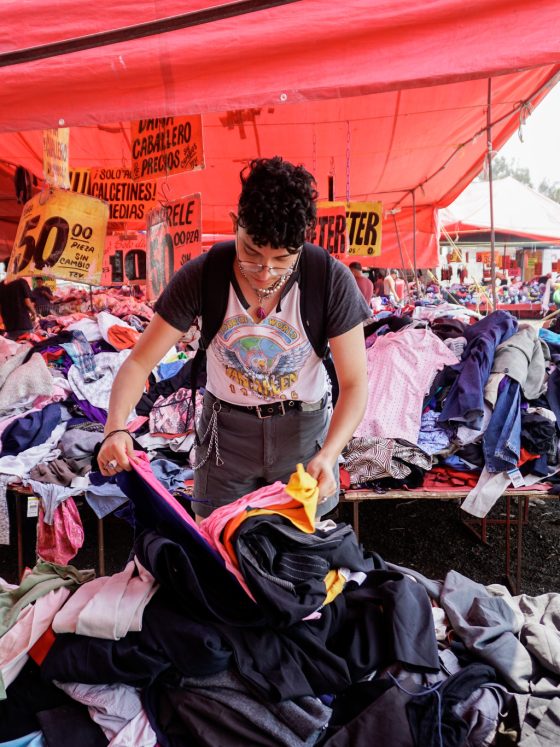
The retail error is specific and named. Informal markets, Balogun in Lagos, Onitsha in Anambra, Wuse in Abuja, account for roughly 60% of fashion retail activity in Nigeria, according to the same industry reporting. Less than 15% of Nigeria’s fashion market is served by structured capital from banks or government agencies. The overwhelming majority of Nigerian fashion brands are self-funded. At least 10,000 Nigerian fashion vendors operate directly on Instagram, powering a massive but almost entirely informal e-commerce economy that does not show up cleanly in the kind of market research a global brand’s strategy team typically commissions. As Omiren Styles has documented in its analysis of why Lagos and Nairobi are outgrowing other African fashion cities, Nigeria’s $8.77 billion apparel market, projected to reach $14.72 billion by 2034, is real. The channel structure through which that market operates is not what most foreign market entry strategies assume.
Section Three: The Production Assumption
A third, distinct category of brand misunderstanding concerns manufacturing capacity, and it is documented plainly by Nigerian industry analysts rather than requiring outside inference. Ekinken’s assessment of the Nigerian fashion market states the constraint directly: “Nigeria lacks the manufacturing infrastructure to support large-scale production. Most designers rely on small tailor workshops or imported fabrics due to the limited availability of high-quality local textiles. This affects scalability, consistency, and profit margins.” That is a specific warning any international brand attempting bulk sourcing, licensing, or manufacturing partnership in Nigeria needs to take literally rather than treating as a solvable formality. A market with genuine creative depth and a market with genuine mass-production capacity are not automatically the same market, and Nigeria’s fashion sector is currently much stronger in the first category than the second.
The positive counter-story belongs here too. Aba’s garment and leather clusters directly employ an estimated 25,000 people, with many more in supporting industries, a genuine if geographically concentrated manufacturing base that exists and functions. As Omiren Styles has documented in its analysis of African craft fashion, creative strength and industrial scale are not the same thing, and the Nigerian clusters that demonstrate real production capacity are the starting point for any serious manufacturing engagement rather than a substitute for strategic due diligence. A brand that knows to ask about Aba before building a sourcing strategy is already further ahead than one that assumes Lagos-based creative talent translates directly into Lagos-based mass manufacturing.
Add to this documented logistics challenges: unreliable delivery systems, limited structured retail outlets, and inconsistent sizing standards across the market. The operational assumptions a brand carries from manufacturing relationships in established East Asian production hubs do not transfer automatically. Recognising that is not a critique of Nigeria’s capacity; it is an accurate description of the current gap between creative industry strength and industrial production infrastructure.
Section Four: The IP Problem
Intellectual property risk in this market runs in both directions, and most foreign brand strategy addresses only one of them. The public-facing version is familiar: international brands lifting Nigerian design without credit. The internally documented version is that Nigerian designers face the identical vulnerability within their own market, and arguably more acutely. Ekinken’s analysis names this directly: “The lack of copyright enforcement is a pressing issue. Many designers face the frustration of having their ideas copied and mass-produced by tailors, other designers, or fashion retailers without credit or compensation.” Separate analysis from the African Fashion Development Initiative calls explicitly for “government-backed export programmes” to include “legal support for designers seeking international trademark registration and intellectual property enforcement” as a named, specific recommendation, meaning the industry’s own advocates consider this an unresolved, active problem requiring institutional intervention.
For a global brand, this cuts two ways worth naming separately. First: entering Nigeria’s design landscape without a clear framework for licensing or crediting original work steps into a market where the underlying protections a brand might assume exist- trademark enforcement, design registration, straightforward legal recourse- are documented as significantly weaker than in more established fashion markets. Second: a Nigerian designer partnering with an international brand faces the same weak enforcement environment when trying to protect their own contribution to that partnership. As Omiren Styles has documented in its analysis of African fashion brand investment, the brands that have built sustainable international relationships have done so by actively building stronger contractual and IP protection into partnerships than the local legal environment would otherwise guarantee, protecting both parties rather than relying on Nigerian legal enforcement to do the work.
Section Five: The Designers Who Did It Right
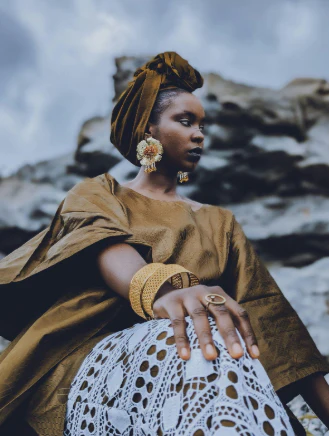
The corrective to all of this is demonstrated, repeatedly, by specific named Nigerian designers who built genuine international success without the market misreadings described above. Lisa Folawiyo’s 2005 transformation of Ankara, turning what one analysis calls “mere market staple material” into hand-beaded, bejewelled ready-to-wear under her label Jewel by Lisa, is the clearest single case study. Folawiyo did not wait for an international brand to discover Ankara and repackage it; she elevated the material herself, under her own name, retaining ownership of both the craft and the commercial upside. Folake Folarin-Coker’s Tiffany Amber became one of the first Nigerian fashion houses to show at New York Fashion Week, establishing a template that Kenneth Ize, Andrea Iyamah, Orange Culture, and Mowalola Ogunlesi followed on their own terms in the years since, each achieving international recognition while remaining, per Ekinken’s framing, “deeply rooted in their Nigerian identity” rather than adapting that identity to fit an external brand’s marketing needs.
The pattern across every one of these named success stories is the same, and it is the direct inverse of how most international brands approach the market: Nigerian ownership of the design, the narrative, and the commercial relationship from the start, rather than a global brand extracting an aesthetic and building the commercial relationship around itself. Nigeria’s Minister of Art, Culture, Tourism, and the Creative Economy, Hannatu Musawa, has made the underlying policy goal explicit: strengthening “domestic production capacities to reclaim Africa’s fashion narrative,” naming adire, kente, bogolan, and Ankara specifically as heritage requiring exactly this kind of local capacity-building. As Omiren Styles has documented in its analysis of African designers in America, the designers who build international traction do so by being specific: this fabric, this community, this design tradition, this commercial relationship. Nigerian ownership is not an ethical addition to a market-entry strategy. It is the market-entry strategy.
Section Six: What Getting Nigeria Right Actually Requires
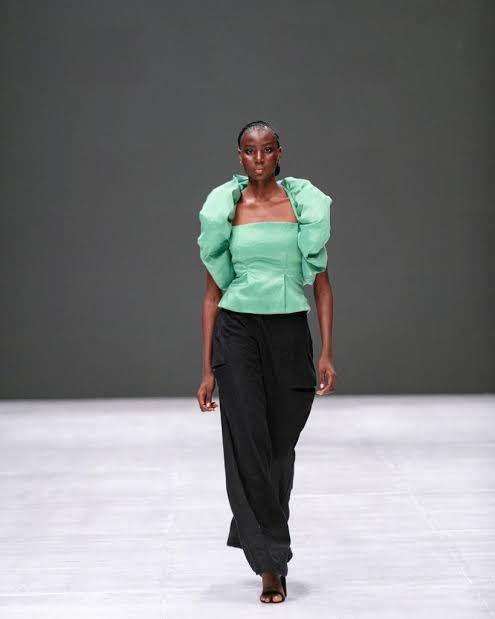
Read together, the evidence above points to a specific, non-obvious set of requirements for any brand serious about engaging Nigeria’s fashion market rather than merely extracting from it. Verify whether a given Nigerian textile or aesthetic is actually Nigerian-manufactured, given how much of what circulates under that label is imported from China and India, a genuinely surprising diligence step that most brands do not think to take. Treat manufacturing partnership discussions with realistic expectations about scale and consistency, informed by the specific infrastructure gaps Nigerian industry analysts have documented, rather than assuming capacity that is not there. Build stronger IP and crediting frameworks into any collaboration than Nigeria’s current enforcement environment would otherwise guarantee, protecting both the brand and the Nigerian designer or artisan involved. Follow the model Nigeria’s own most internationally successful designers already proved works: Nigerian ownership of the design and the commercial upside from the outset, not aesthetic extraction followed by an attempt to build relationship and credit after the fact.
None of this is exotic or unreasonable. It is the standard due diligence any brand would apply entering an unfamiliar manufacturing or licensing market. What is specific to Nigeria, and what keeps tripping brands that skip this step, is that the market’s most visible export, its textile aesthetic, is also its most misleading feature. The print the world associates most strongly with Nigerian identity is, for the most part, not made there at all. A brand that understands this is not working against Nigeria. It is working with the market as it actually is, not as global fashion’s shorthand version of it.
Nigeria is not hard to understand. It is easy to misunderstand if you begin with the wrong assumptions. The Ankara you are borrowing was made in China. The market you are entering is 60% informal. The designers who got there first own their work. Begin there.
ALSO READ
- Why Lagos and Nairobi Are Outgrowing Other African Fashion Cities: The Structural Reasons
- African Jewellery Brands That Go Global Do Not Get Lucky. They Get These Four Things First.
- The Ankara Economy: Who Is Actually Capturing the Value?
- African Fashion Designers in America: Who Is Building Something That Lasts?
Frequently Asked Questions
Is Ankara fabric actually made in Nigeria?
Mostly not, despite being globally associated with Nigerian fashion. According to a 2025 industry report cited by The Guardian Nigeria, roughly 90% of Ankara consumed in Nigeria is imported, primarily from China and India, costing the country an estimated $3 billion annually in lost value to foreign manufacturers. These are estimates from a named industry report rather than independently audited figures. Still, the direction is consistent across available sourcing and significant enough to constitute the central challenge to any strategy built on authentic Nigerian print.
How big is Nigeria’s fashion market compared to consumer spending?
There is a documented gap. Nigerian consumers spend an estimated $2.5 to $6 billion annually on clothes, but the domestic fashion industry contributes only about $129 million, roughly 0.47%, to national GDP. Nigeria imports up to $6 billion in apparel and textiles each year while formal exports remain under $100 million. The gap between consumer demand and domestic industry capture is the structural problem that most international brand strategies underestimate. As Omiren Styles has documented, Nigeria’s apparel market is real and growing. The channel structure through which that market operates is not what most foreign strategies assume.
What is the difference between cultural appreciation and appropriation in Nigerian fashion?
A documented contrast from Marie Claire Nigeria reporting: Beyoncé wearing an Ankara suit publicly credited to a named Nigerian designer, tagged and named in the coverage, is treated as appreciation with a real commercial relationship behind it. American teenagers wearing prom gowns closely resembling a specific Nigerian bridal silhouette, with no credited designer and no commercial connection, generated appropriation criticism in BBC Africa reporting. The same visual language; two entirely different relationships to the culture and industry it came from. The choice a brand controls is which pattern it follows.
Which Nigerian designers have succeeded internationally and what did they do differently?
Lisa Folawiyo (Jewel by Lisa), Folake Folarin-Coker (Tiffany Amber), Kenneth Ize, Andrea Iyamah, Orange Culture, and Mowalola Ogunlesi are documented as internationally successful Nigerian designers who retained ownership of their design narrative and commercial relationships from the outset. As Omiren Styles has documented in its analysis of African designers in America, the consistent pattern across successful designers who build international traction is specificity and ownership: this fabric, this community, this design tradition, this commercial relationship, from the start rather than after the fact.
What would a well-designed Nigeria market entry strategy actually require?
Four specific requirements, each documented in the piece. Verify whether a given Nigerian textile or aesthetic is actually Nigerian-manufactured, given documented import dependence. Build manufacturing partnerships with realistic expectations about scale and consistency, informed by the named infrastructure gaps Nigerian industry analysts have documented. Build stronger IP and crediting frameworks into any collaboration than Nigeria’s current enforcement environment would guarantee. Follow the ownership-first model that Nigeria’s most successful designers have proven works. As Omiren Styles has argued, the question of who captures value in a cultural textile economy is never settled by the price on the tag. It is settled by the structure of the commercial relationship built around it.