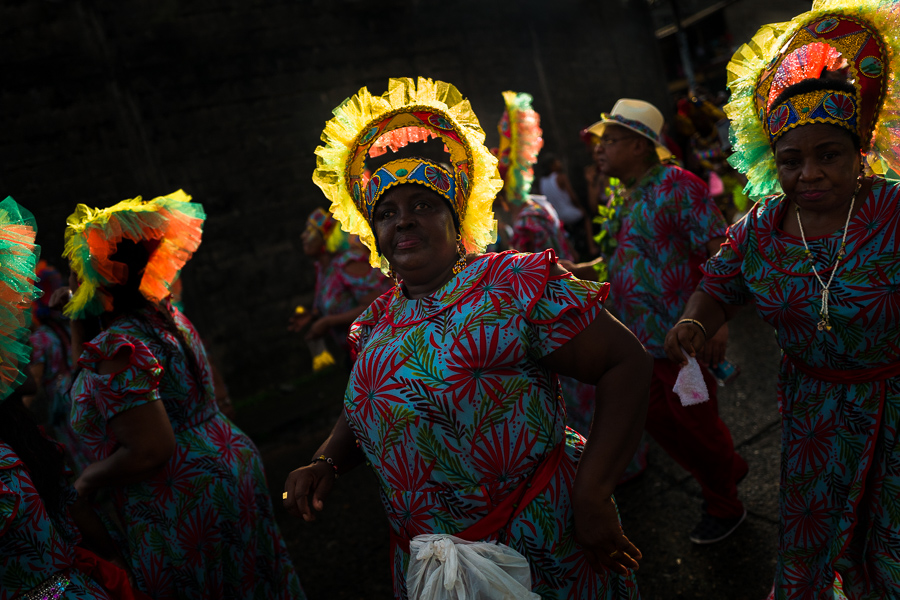
Every year from September 3 to October 5, the twelve Franciscan districts of Quibdo, the capital of the Choco department on Colombia’s Pacific coast, hold the Fiesta de San Pacho. The festival was inscribed by UNESCO as an Intangible Cultural Heritage of Humanity in 2012, described in the UNESCO inscription documentation as “the most important symbolic event in the life of the city of Quibdo” and one that “strengthens the identity of the Choco department and fosters social cohesion in the community.” Each district produces its own carnival group, with costumes, allegorical floats, and chirimia music. For twenty days, the city dresses itself in a way that the Colombian fashion industry has never once turned up to document.
The absence is not an accident. It is the same structural inattention that has characterised Colombia’s relationship with the Choco department for as long as the country has existed: treating the Pacific coast as a resource geography rather than a cultural one, and treating its Afro-descendant population as a social problem rather than a creative force.
Quibdo hosts a UNESCO-inscribed festival and is home to one of Colombia’s most distinctive Afro-descendant dress cultures. The Colombian fashion industry has never documented it. This piece begins that work.
Where Quibdo Sits
Quibdo is the capital of Choco, the only Colombian department with coastlines on both the Pacific and Atlantic Oceans. Its population is over 80% Afro-Colombian and indigenous, making it home to one of the highest concentrations of Afro-descendant people in any Colombian administrative unit. It is also, by every national poverty indicator, one of the most systematically neglected. In 2024, Choco recorded the highest poverty rate of any Colombian department, at 67.4%, and the highest extreme poverty rate, at 44.9%, according to DANE data cited in FEWS NET’s April 2026 Colombia Context Report. The national Afro-Colombian poverty rate stands at 42.6%, against a national average of 31.8%, according to Americas Quarterly’s April 2026 analysis of racial inequality in Colombia. Choco’s figures are significantly higher than even that already-elevated figure.
The connection between these two facts, the cultural richness and the material neglect, is not coincidental. The Colombian state’s historic failure to invest in Choco’s infrastructure, healthcare, education, and security is the same logic that has kept the Colombian fashion industry from turning its cameras toward a city that has been building one of the country’s most distinctive dress cultures for centuries. Both failures share the same root: the assumption that what happens in the Pacific matters less than what happens in the Andean interior or the Caribbean coast.
The San Pacho Festival and What People Wear
The Fiesta de San Pacho is not one event. It is a twenty-day sequence of events organised by twelve Franciscan districts, each of which produces its own carnival group with distinct costumes, floats, and performance traditions. The UNESCO documentation describes the festival as a celebration of “the community’s Afro-descendant Choco identity, embedded in popular-rooted religion,” beginning with a Catholic inaugural mass blended with traditional dances and chirimia music performed by the San Francisco of Assisi Band, followed by a parade of carnival groups featuring costumes, dances, and allegorical floats.
The costumes produced for San Pacho are made within the districts themselves by community members working together over the months leading up to the festival. The visual vocabulary is specific to each district and changes significantly from year to year as districts compete to produce the most memorable presentation. What persists across years and across districts is the aesthetic logic: saturated colour, layered fabric, constructed headpieces, and an integration of Afro-descendant visual tradition with Catholic iconography and Chocoan natural imagery. The river, the forest, and the specific fauna of the Colombian Pacific appear repeatedly in the costume vocabulary as an assertion that this landscape belongs to the people who dress it.
The chirimia that accompanies the festival is itself a documented dress code: the musicians who play the chirimia ensemble, typically consisting of two clarinets, two bombardinos, two cymbals, a bass drum, and a snare drum, wear coordinated dress that signals their district affiliation and their role within the festival’s social structure. The chirimia tradition is documented by Colombia’s Ministry of Culture as one of the defining musical and performative expressions of the Colombian Pacific, with its roots in a specific intersection of African, indigenous, and Spanish colonial musical traditions that cannot be reproduced elsewhere in the country.
“The Fiesta de San Pacho strengthens the identity of the Choco department and fosters social cohesion in the community, while promoting creativity and innovation through the revival and recovery of traditional knowledge and respect for nature.” — UNESCO Intangible Cultural Heritage inscription, 2012
Everyday Dress and the Pacific Visual Vocabulary
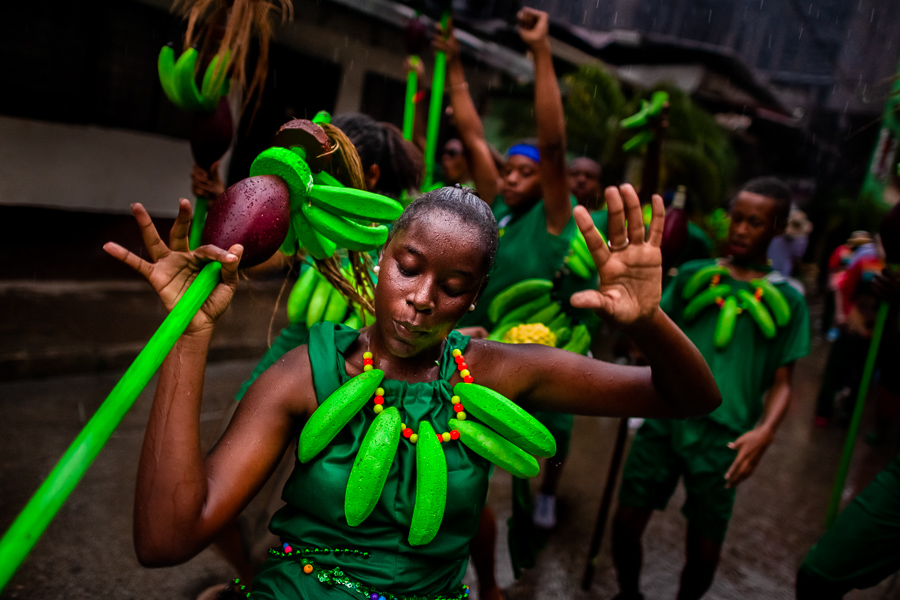
San Pacho is the most visible expression of Quibdo’s dress culture, but it is not the only one. Every day, dress in Quibdo and across the Choco department operates within a visual vocabulary shaped by the region’s specific material conditions, Afro-descendant community practices, and the specific relationship between the Pacific coast’s climate, geography, and the cultural traditions that enslaved Africans brought to this coastline and that their descendants have maintained and transformed across centuries.
The lightweight cotton fabrics suited to the Pacific coast’s exceptional humidity are worn in colour combinations and with a physical ease that distinguishes Chocoan dress from the more formal dress cultures of Bogota and Medellin. The hair traditions documented among Quibdo’s women, natural styles, elaborate braided constructions, and the specific headwraps worn at ceremonies and festivals, carry a visual intelligence whose African roots are traceable to the same West and Central African communities that produced the braiding traditions Omiren Styles has documented as one of the most important underdocumented fashion histories in the African diaspora. The Chocoan coastal communities did not lose these traditions. They maintained them under conditions of extraordinary material difficulty and produced a specific visual culture from them that the Colombian fashion industry has consistently failed to treat as fashion.
What the Fashion Industry Did Instead
The Colombian fashion industry’s relationship with the Pacific coast follows the same pattern documented by Omiren Styles across Colombian fashion more broadly: Bogota and Medellin receive the cameras and the investment; the Pacific remains a location occasionally visited for “inspiration” rather than a fashion origin that deserves documentation on its own terms. As Omiren Styles has documented in its analysis of Colombian traditional fashion, the international fashion press’s version of Colombia is a highly edited summary that centres the Andean interior and the Caribbean coast while leaving the Pacific almost entirely undocumented.
The designers who have done the work the fashion industry should have commissioned are, characteristically, those with personal stakes in the Pacific’s creative culture. Esteban Africa, founded by Esteban Sinisterra Paz from Santa Barbara Iscuande in Narino, carries the Colombian Pacific into his garments through kitenge patterns that map the Buenaventura coastline and embroideries that reproduce traditional Pacific women’s dress. The fashion industry’s response to his work, which dressed Francia Marquez at her Vice Presidential inauguration, was to cover the human-interest story of a young designer from a poor region making good rather than to examine the design language his work carries. The Pacific dress tradition that produces a garment worn at a state inauguration is not a background detail. It is the subject.
The Documentation Gap and What It Costs
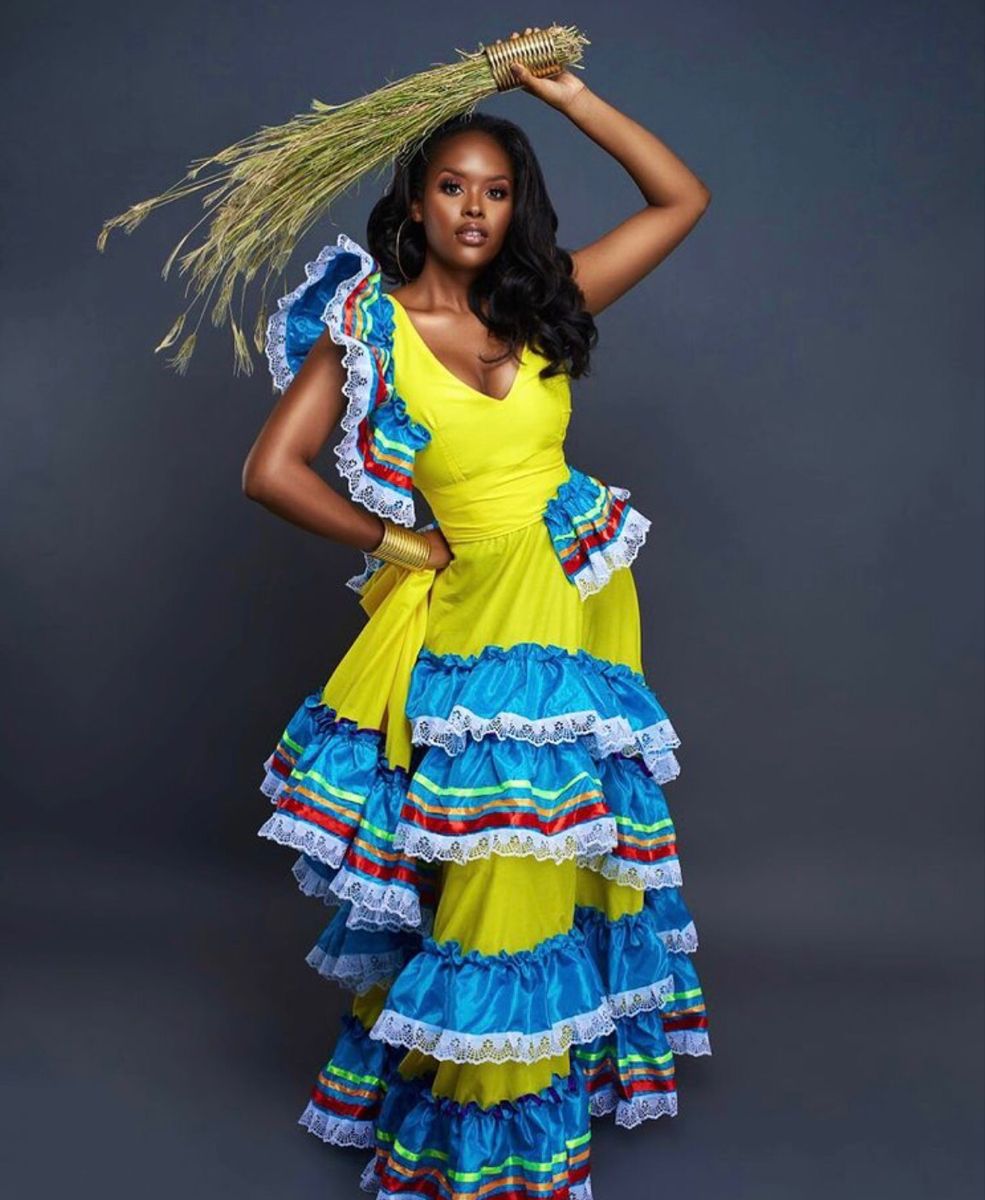
When a dress culture is not documented, several things happen simultaneously. The artisans who make the festival costumes, the sewists who reproduce traditional Pacific women’s dress, the hairdressers who maintain braiding traditions, and the musicians who coordinate chirimia ensemble dress receive no economic recognition for the cultural work they do beyond the immediate community context. The intellectual property embedded in their dress traditions has no formal protection. Designers who reference Pacific Afro-Colombian aesthetics without relationship to the communities do so without attribution, without compensation, and without contributing to the economic development of a department that has been systematically underfunded for the entirety of Colombia’s existence as a state.
The documentation gap is not neutral. It is part of the same system that produces Choco’s 67.4% poverty rate. A department whose cultural production is recognised by UNESCO but ignored by the national fashion industry is one whose economic potential from that production is being left unrealised. The San Pacho festival’s costume makers, the practitioners of Pacific dress traditions, the chirimia musicians whose coordinated dress is itself an unremarked fashion system: all of them are doing economically valuable cultural work in a context that declines to treat it as such. As Omiren Styles has argued in their analysis of what the fashion industry owes African craft traditions, when craft knowledge disappears, what disappears is not simply a technique. It is a system of meaning that the technique was the vehicle for.
The Omiren Argument
Quibdo has a UNESCO-inscribed festival whose costume tradition is built and rebuilt from scratch by community members every year. It has a specific everyday dress vocabulary shaped by African diaspora heritage, Pacific coast geography, and centuries of community practice under conditions of material difficulty. It has produced designers whose work is documented at state inaugurations. Colombian fashion media have covered none of this with the seriousness the tradition demands, and international fashion media have covered none of it at all. The absence is not a reflection of the tradition’s quality. It is a reflection of the press’s geography and the industry’s assumptions about which geographies generate fashion worth documenting.
This piece does not complete the documentation that Quibdo’s dress culture deserves. It begins. A full account of the San Pacho festival’s costume traditions requires fieldwork in Quibdo across the festival period. A full account of Pacific women’s everyday dress requires ethnographic engagement with the communities that have maintained those traditions. A full account of the chirimia ensemble’s dress vocabulary requires musical and cultural scholarship that this article cannot substitute for. This article establishes the claim that Quibdo’s dress culture exists, matters, and that the Colombian fashion industry’s failure to document it is a choice, not an oversight. As Omiren Styles has argued, African and Afrocentric fashion did not fail to develop because the conditions for development were absent. It failed to receive documentation because the people whose job it is to document fashion repeatedly decided that some geographies mattered more than others.
What Quibdo wears has never needed Colombian fashion’s attention to be worth wearing. It has needed Colombian fashion’s attention to receive the economic recognition its cultural authority deserves. That is a different claim, and it is one this industry still owes.
ALSO READ
- Colombian Traditional Fashion: What the Mola, the Pollera, and Cartagena’s Dress Culture Actually Are
- Esteban Africa: The Cali Designer Who Made the Colombian Pacific a Political Dress Code
- The African Roots of Caribbean and Latin American Dance: When the Drum Speaks, the Motherland Answers
- Cornrows Were a Map: The African Intelligence Behind Diaspora Braiding
Frequently Asked Questions
What is the Fiesta de San Pacho?
The Fiesta de San Pacho is the annual festival held in Quibdo, the capital of Colombia’s Choco department, from September 3 to October 5. It was inscribed by UNESCO as an Intangible Cultural Heritage of Humanity in 2012, described as the most important symbolic event in the life of the city and a celebration of the community’s Afro-descendant Chocoan identity embedded in popular-rooted religion. The twelve Franciscan districts of Quibdo each produce carnival groups with distinct costumes, allegorical floats, and chirimia music across the twenty-day festival. Costume production is a community process that takes place across the months before the festival, with district groups working collectively to produce new costumes each year.
Why has Quibdo’s dress culture not been documented by the Colombian fashion industry?
The Colombian fashion industry’s geographic focus has historically centred on Bogota and Medellin, with the Caribbean coast receiving secondary attention. The Pacific coast, and Choco specifically, has been treated as a resource geography rather than a cultural one, despite having one of the country’s most distinctive Afro-descendant dress traditions and a UNESCO-inscribed festival whose costume culture is built and rebuilt annually. As Omiren Styles has documented in its analysis of Colombian traditional fashion, the international fashion press’s version of Colombia is a highly edited summary that leaves the Pacific almost entirely undocumented. The absence reflects the industry’s assumptions about which geographies generate fashion worth documenting rather than the quality or significance of the tradition being ignored.
What is chirimia, and how does it relate to the San Pacho dress?
Chirimia is the traditional music of the Colombian Pacific, particularly associated with the San Pacho festival in Quibdo and with Afro-Colombian communities along the Pacific coast. The typical ensemble consists of two clarinets, two bombardinos, two cymbals, a bass drum, and a snare drum. Chirimia musicians perform in coordinated dress that signals their district affiliation and their role within the festival’s social structure, making the musicians’ clothing itself an unremarked fashion system whose visual vocabulary is specific to the Pacific coast tradition.
What is the poverty context of the Choco department?
Choco recorded the highest poverty rate of any Colombian department in 2024 at 67.4% and the highest extreme poverty rate at 44.9%, according to DANE data cited by FEWS NET’s April 2026 Colombia Context Report. Over 80% of the department’s population are Afro-Colombian and indigenous communities. The national Afro-Colombian poverty rate of 42.6%, itself significantly above the national average of 31.8%, is exceeded by Choco’s figures. The documentation gap in Quibdo’s dress culture is part of the same structural neglect that produces these poverty figures: a department whose cultural production has UNESCO recognition, but whose economic potential from that cultural production is not being developed.
How does Quibdo’s dress culture connect to African heritage?
The Choco department’s population is over 80% Afro-Colombian and indigenous, with its Afro-descendant communities descended from enslaved Africans brought to the Pacific coast region from the sixteenth century onward. The dress traditions documented at San Pacho, including the hairstyles and headwrap traditions of Pacific women, have direct connections to West and Central African aesthetic and community practices that the diaspora has maintained and transformed over centuries. As Omiren Styles has documented in its analysis of diaspora braiding traditions, the African visual intelligence embedded in diaspora hair and dress practices has survived into living community practice across Latin America and the Caribbean, including in Quibdo, where it has developed in conversation with Pacific coast geography, Catholic religious tradition, and the specific histories of the Chocoano community.