The African fashion market is worth 31 billion dollars. A significant portion of that figure flows through fabrics manufactured outside Africa and sold into African markets. In Côte d’Ivoire, the gap between what the country grows and what the country processes makes the structural problem visible: Côte d’Ivoire is one of West Africa’s leading cotton producers, yet only about 1% of its domestically produced cotton fibre is processed by its own textile industry. The rest is exported as raw fibre, adding value elsewhere, before finished fabrics are imported back into the very market the cotton came from.
Into that market, Ivorian handloom cooperatives are not competing on price. They cannot. According to USDA GAIN reporting on Cote d’Ivoire’s cotton and textile sector, the Netherlands, Benin, and China are among the country’s major woven fabric import sources: in 2023, Cote d’Ivoire imported approximately US$32 million worth of woven fabrics, with the Netherlands supplying US$13.7 million, Benin US$8.5 million, and China US$6.8 million. Industrial fabrics arrive cheaper, faster, and in larger quantities than any handloom cooperative can match. The cooperatives are competing on something else: craftsmanship, cultural specificity, and the particular authority that comes with cloth made by identifiable hands from identifiable communities.
Ivorian handloom cooperatives cannot match wax print imports on price. They do not need to. Here is what they compete on and why that position is stronger than it looks.
What Ivorian Handloom Cooperatives Are Competing With
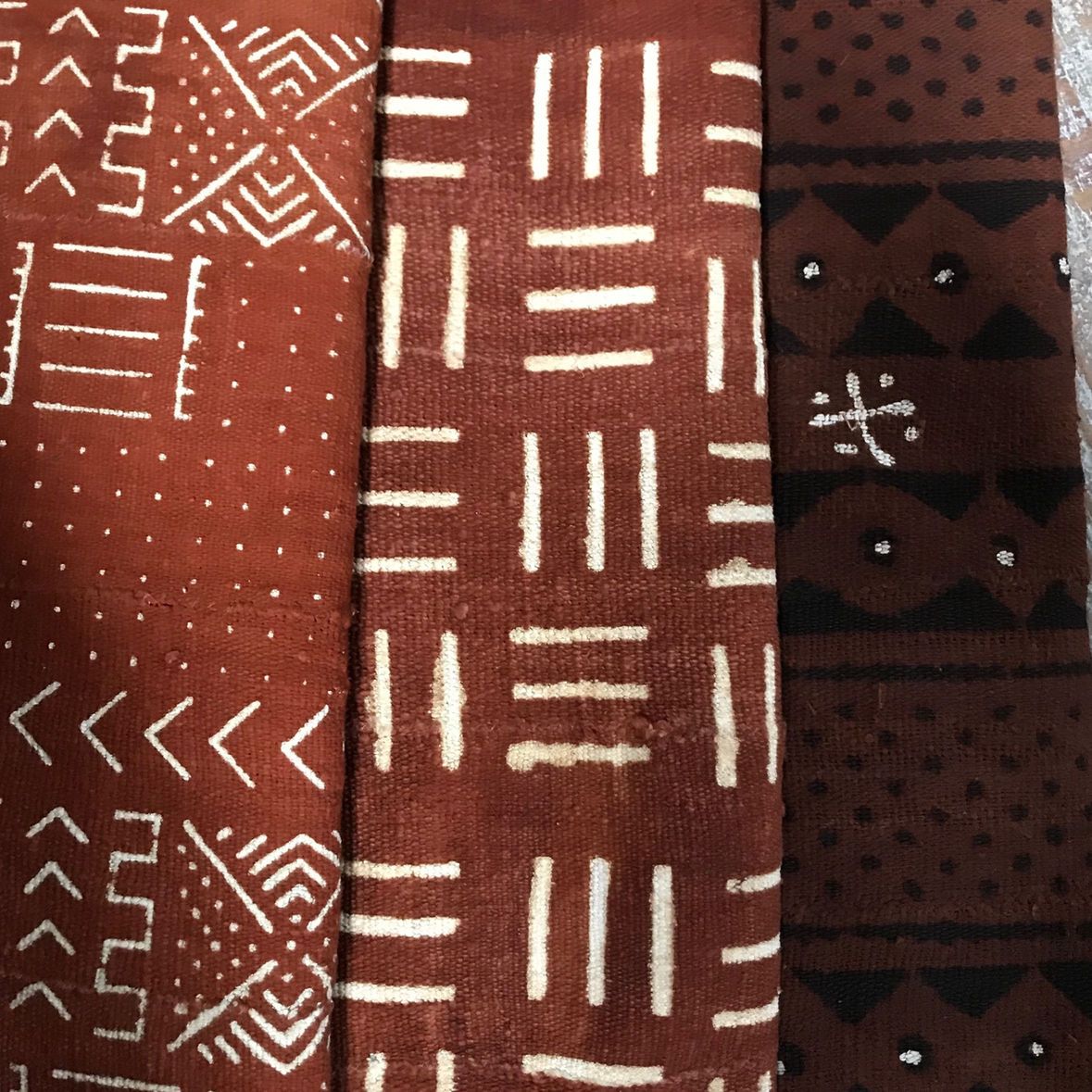
Wax prints are among the most visible fabrics in West African fashion, but their commercial dominance is built on industrial manufacturing rather than African origin. The wax print fabric associated with West African dress derives from Indonesian batik, was industrialised by Dutch manufacturers in the 19th century, and is now produced at scale by Dutch and Chinese manufacturers who compete on price and volume in West African retail markets. The West African women who built the market for these fabrics, assigning names and meanings to patterns and making wax print essential to ceremony and daily life across the region, hold no intellectual property in the fabrics they transformed.
In Côte d’Ivoire, Uniwax, established in 1968, is a domestic wax fabric manufacturer whose 100% cotton fabrics are sold as authentic Ivorian wax prints under the Wax Cote d’Ivoire identity. Uniwax represents a domestic industrial textile industry that coexists with both the import market and the handloom cooperative sector. The three occupy different price points and different cultural registers. Imported Dutch wax carries premium brand positioning. Chinese-made prints compete on low cost. Uniwax serves the domestic market with recognisable Ivorian identity. And the handloom cooperative sector sits above all of them in the cultural and ceremonial register, producing cloth that none of the industrial alternatives can replicate.
The Weaving Traditions Behind the Cooperatives
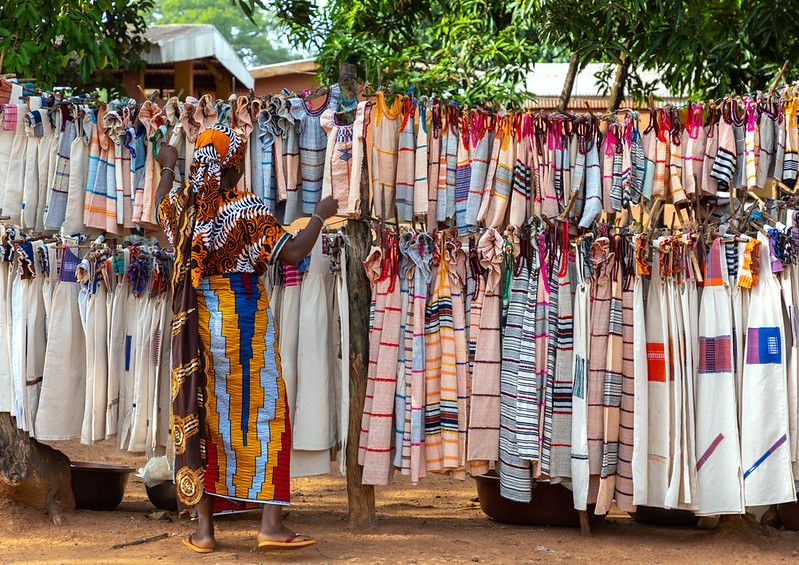
In 2023, UNESCO inscribed the traditional skills of loincloth weaving in Côte d’Ivoire onto its Representative List of Intangible Cultural Heritage of Humanity. As the UNESCO ICH inscription confirms, the weaving traditions of eight communities are recognised: the Gouro, Baoulé, Malinké, Sénoufo, Koulango, Nafana, Abron, and Dida. Each maintains distinct techniques, raw materials, and cultural meanings specific to its own social and ceremonial context. The fabrics woven by most of these communities are made from dyed cotton threads woven in narrow strips, approximately 12 centimetres wide, on handlooms designed by the weaver. The strips are then joined together to form larger cloths with different patterns. Among the Dida communities, the textile is made instead from raffia fibres attached to a wooden stake and woven crossways using a spoon.
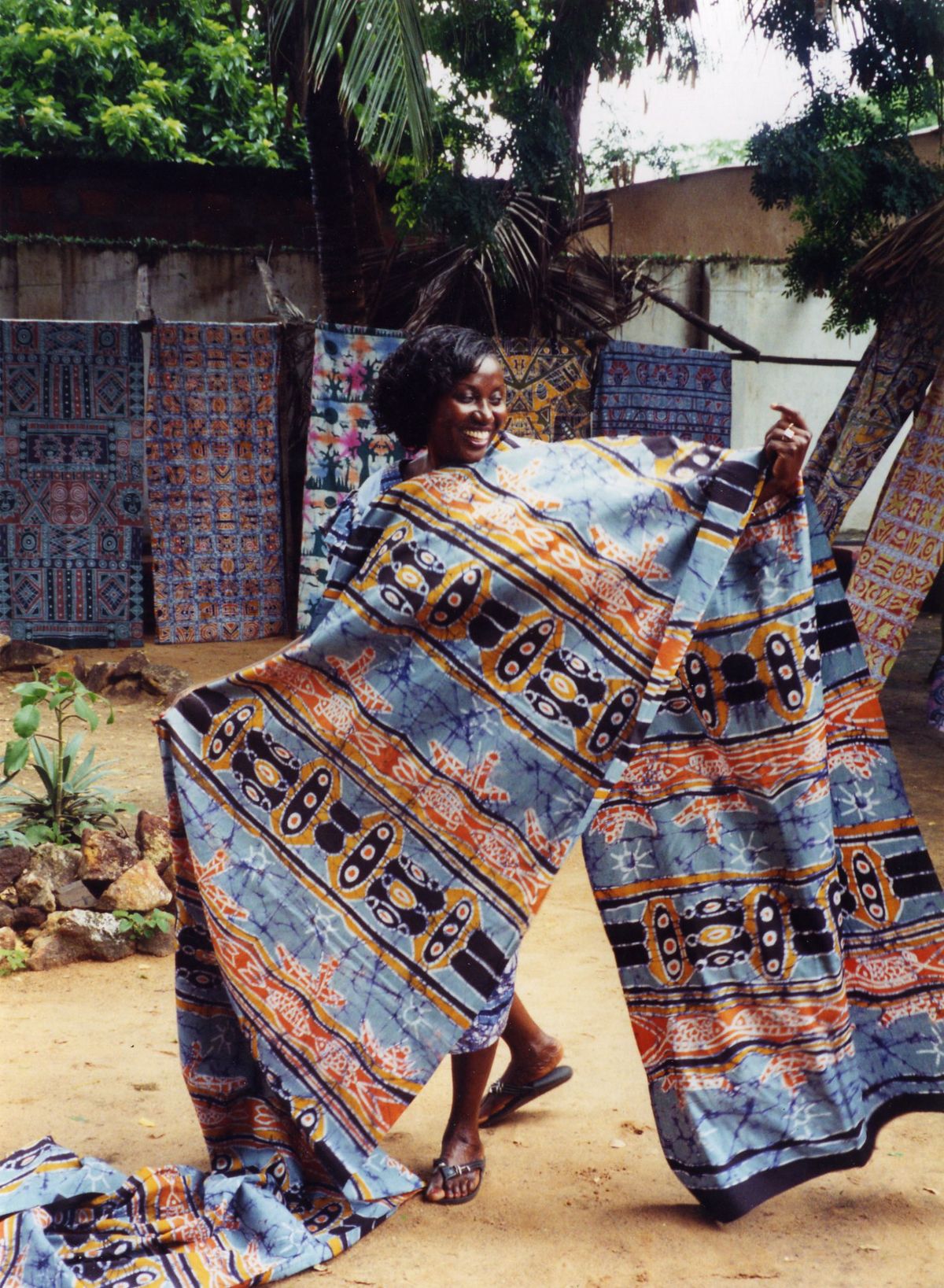
The cultural functions of these textiles are precise and non-interchangeable with industrial fabric. The Baoulé loincloth, inherited from the Ashanti weaving tradition and historically made from cotton thread woven into narrow strips on a home-made handloom, is worn during major ceremonies and important community moments. Sénoufo textiles are decorated with geometric lines and representational paintings of houses, masks, panther men, and mythological animals, painted directly onto raw cotton fabric. They carry cultural, political, and religious significance in ceremonies including the Boloyé sacred dance. Each community’s textile is a text in a specific language that only that community fully reads.
Each Ivorian weaving community produces cloth tied to its own social and ceremonial world. The Sénoufo textile carries the panther man in its pattern. The Baoulé cloth carries the Ashanti inheritance in its strip. No industrial wax print carries either.
How Cooperatives Compete Without Matching Scale
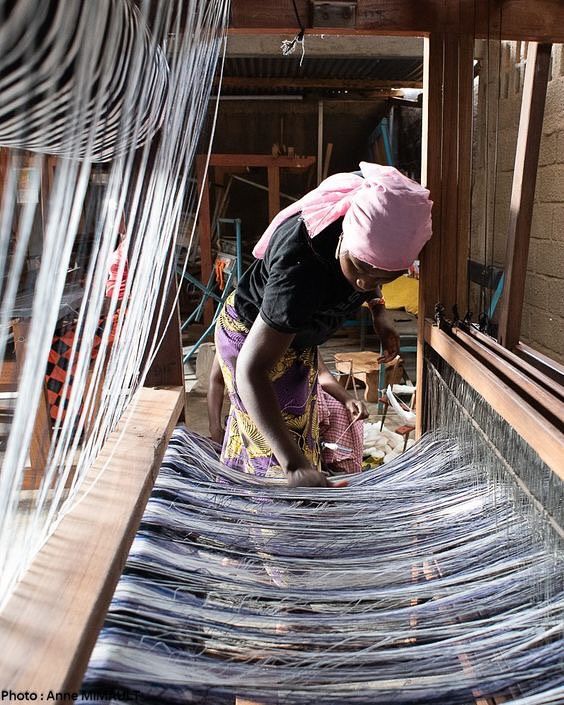
Handloom cooperatives in Côte d’Ivoire organise artisans collectively to share equipment, preserve technique, and improve market access. The production chain is deeply collaborative: in Sénoufo communities, women spin the cotton while men weave the strips and women embroider and sell the finished cloth. UNESCO notes that this gendered division of labour is itself part of the traditional knowledge being preserved. The cooperative structure formalises and sustains this knowledge transfer, creating a route to market for textile practices that would otherwise compete alone against industrial supply chains.
Their competitive position is built on a quality that industrial manufacturing cannot supply regardless of volume. Every handwoven textile carries evidence of specific labour, specific locality, and specific cultural authorship. Omiren Styles has documented how contemporary Ivorian designers in Abidjan are increasingly blending handwoven cotton from Côte d’Ivoire with wax prints, lace, and embroidery to create fresh silhouettes. That design practice creates demand for handwoven fabric at a level that sits above the commodity textile market: the handwoven cloth is not the cheapest option, but the most culturally specific one, and that specificity is the point.
The Structural Challenge: Cotton Wealth, Textile Poverty
The most significant structural challenge facing Ivorian handloom cooperatives is not the cooperatives themselves but the broader textile economy in which they operate. USDA reporting on Cote d’Ivoire’s cotton and products sector documents that only about 1% of domestically produced cotton fibre is processed by the local textile industry, while the vast majority of the country’s cotton is exported as raw fibre for manufacturing abroad. Cote d’Ivoire produces cotton and imports fabrics. The value addition that would sustain a larger domestic textile sector happens elsewhere.
Against that backdrop, handloom cooperatives are not the cause of the structural problem, but they are operating inside it. The 2023 woven fabric export figure of US$19.25 million to Guinea, Niger, Benin, Burkina Faso, and Togo demonstrates that Ivorian textiles do find regional markets. But the export figure declined 13% from 2022, indicating that regional demand is not expanding fast enough to compensate for import pressure at home. The cooperatives are competing in a market that is structurally tilted against domestic production at every level above the craft tier.
The Omiren State of the Market
| Record | Details |
| Sector | Handloom Textile Cooperatives |
| Country | Côte d’Ivoire |
| Main Products | Handwoven cotton textiles and traditional woven fabrics |
| Main Competition | Dutch wax prints, Chinese printed textiles, regional imports |
| Competitive Advantage | Craftsmanship, cultural heritage, artisan production |
| Key Challenge | Price competition from imported industrial fabrics |
| Future Opportunity | Ethical fashion, premium heritage textiles, regional exports |
The Omiren Argument
Ivorian handloom cooperatives are competing in a market where the structural deck is stacked against them at every level except the one that matters most: cultural authority. UNESCO’s 2023 inscription of eight Côte d’Ivoire weaving communities gives their textiles international legitimacy. The African fashion market is worth 31 billion dollars. The premium, traceable, artisan-made segment of that market is where handloom cooperatives can hold their ground and potentially expand. The problem is not the quality of the cloth. It is the 1% domestic cotton processing rate, the US$32 million import flow of woven fabrics, and the industrial supply chains that move faster and cheaper than any cooperative can match. The cooperatives are not failing. They are surviving a structural problem that no amount of craft excellence alone can solve. The argument Omiren Styles makes here is that cultural authority is a real market position, not a consolation. The Baoulé cloth that cannot be replicated in a Chinese factory is worth more to the right buyer than the import that undercuts it on price. The question is whether the infrastructure, the policy, and the editorial attention are in place to connect the right buyer to the right cloth.
Also Read
- Wax Prints and Beyond: Fabrics Defining Ivorian Fashion
- Who Actually Owns Ankara: The Legal and Cultural Argument the Fashion Industry Has Been Avoiding
- Cameroonian Toghu Menswear: The Authority Encoded in Velvet and Stitch
Frequently Asked Questions
How are handloom cooperatives in Cote d’Ivoire competing with wax print imports?
They compete through craftsmanship, cultural heritage, and the specific authority of handwoven cloth rather than on price or production scale. Every handwoven Ivorian textile carries evidence of specific labour, specific community, and specific ceremonial meaning that industrial wax prints cannot replicate. UNESCO’s 2023 inscription of eight Ivorian weaving traditions on its Representative List of Intangible Cultural Heritage of Humanity strengthens their cultural legitimacy in premium markets.
Which communities are recognised for traditional weaving in Côte d’Ivoire?
UNESCO’s 2023 inscription recognises eight communities: the Gouro, Baoulé, Malinké, Sénoufo, Koulango, Nafana, Abron, and Dida. Most produce cotton textiles woven in narrow strips approximately 12 centimetres wide on handlooms, then assembled into larger cloths. The Dida community uses raffia fibres rather than cotton. Each community’s techniques, raw materials, and designs are specific to its own social and ceremonial context.
What is the difference between handwoven Ivorian textiles and imported wax prints?
Handwoven Ivorian textiles are produced by artisans from specific ethnic communities using traditional handlooms and techniques, creating cloth tied to distinct cultural, ceremonial, and social contexts. Imported wax prints are industrially manufactured at scale by Dutch, Chinese, and other producers and sold commercially across West Africa. In 2023, Cote d’Ivoire imported approximately US$32 million of woven fabrics, with the Netherlands the largest source at US$13.7 million. The two product categories serve different functions and different markets.
Why does Cote d’Ivoire import so much woven fabric when it produces cotton?
Cote d’Ivoire is a significant cotton producer but processes only about 1% of its cotton fibre domestically into finished textiles. The vast majority of raw cotton is exported for manufacturing abroad, while finished fabrics are then imported back into the domestic market. This creates a structural gap in which the country produces the primary material for textile manufacturing but captures limited value from the finished textile economy.
What did UNESCO inscribe from Côte d’Ivoire in 2023?
In 2023, UNESCO inscribed the traditional skills of loincloth weaving in Côte d’Ivoire onto its Representative List of Intangible Cultural Heritage of Humanity (18th session). The inscription recognises eight communities and their distinct weaving techniques: Gouro, Baoulé, Malinké, Sénoufo, Koulango, Nafana, Abron, and Dida. The inscription acknowledges that these textiles serve as cultural symbols used for weddings, festivities, and funerary rites, and that the transmission of knowledge within and between communities is itself part of what is being protected.
Can Ivorian handwoven textiles grow internationally?
Yes, particularly in premium markets that value traceable production, artisan craft, UNESCO-recognised heritage, and culturally specific design rather than low-cost mass output. The Ethical Fashion Initiative has documented its work with Côte d’Ivoire as part of its West Africa artisan development programme. The global sustainable fashion market is a credible space for handwoven Ivorian textiles if the distribution infrastructure and editorial coverage connect the right markets to the right cloth.
Explore More
Read the full Fashion > Industry section for Omiren Styles‘ documentation of African textile markets, craft economies, and the structural arguments that determine which traditions survive and which ones the global fashion industry learns to name.