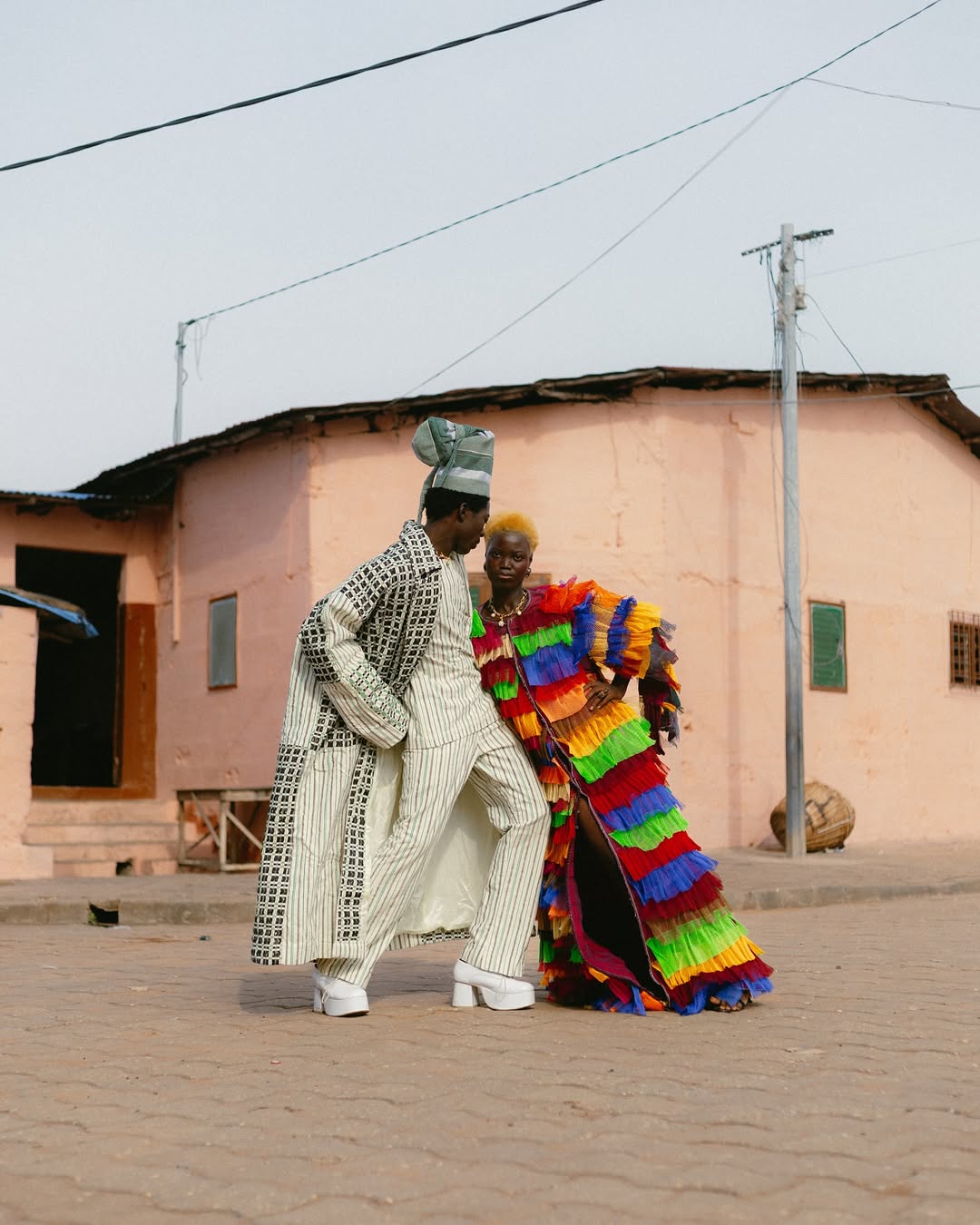
Porto-Novo is a city that wears its history. Not metaphorically. The architecture of the Oganla district, with its stuccoed facades, arched windows, and wide verandas, is the physical residue of the Aguda community: Africans who were enslaved and taken to Brazil, freed, and returned to the Bight of Benin coast in the 19th century carrying Brazilian baroque building styles, Catholic liturgical practices, and a specific approach to dress that was simultaneously a marker of their Atlantic experience and a strategy for social survival. The buildings are still there. Some have been standing for more than a century. Their facades are worn and crumbling from tropical rain and decades of neglect. They remain, as they always were, a costume the city wears.
Porto-Novo is the official capital of the Republic of Benin. It is also, despite that status, the quieter of the country’s two major cities. Cotonou is the economic capital, the seat of government, the port city where the zémidjans number in the tens of thousands and the nightlife starts at eleven. Porto-Novo is the administrative capital, administering from a position of relative stillness. Its population of approximately 285,000 moves at a different pace. Its fashion culture reflects that pace and the layered histories that produced it.
The Omiren Argument: Porto-Novo’s fashion story is not a story about what people wear. It is a story about what the city itself wears: three distinct dress traditions that collide in its streets, ceremonies, and architecture, each the residue of a different historical experience, with a different relationship to power, displacement, and identity.
Porto-Novo’s Afro-Brazilian architecture, Yoruba ceremonial dress, and Egungun masquerade make Benin’s capital a fashion story unlike anywhere else in Africa.
The Aguda: What Return Looks Like in Fabric and Stone
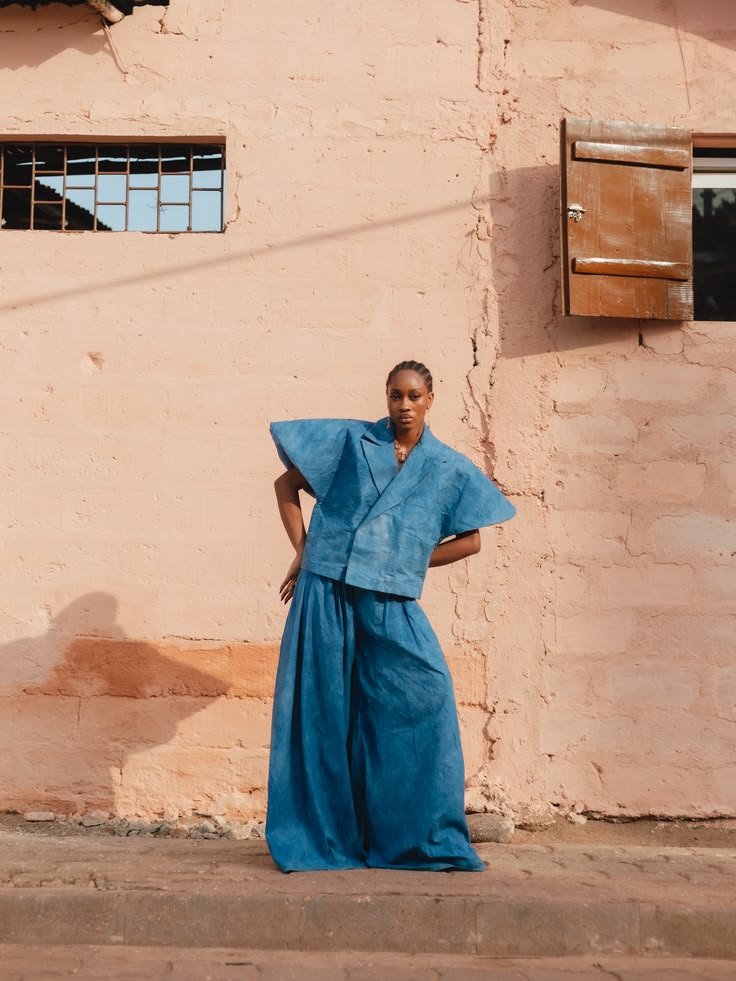
Throughout the 19th century, Africans who had been enslaved in Brazil and the Caribbean began returning to the Bight of Benin coast. The majority of those who returned from Brazil were from communities in Bahia, and a significant number resettled in Porto-Novo. They brought with them the architectural knowledge of Brazilian baroque construction, the liturgical practices of Afro-Brazilian Catholicism, and a community identity that was neither fully African nor fully Brazilian but specifically transatlantic. They called themselves Aguda.
The Aguda’s relationship with dress was not incidental to their social strategy. They faced rampant discrimination and hostility from native Porto-Novans who were suspicious of their Atlantic experience and the social claims that experience enabled them to make. The response was deliberate: the Aguda sought social distinction through education, architecture, and the performance of high culture. They wore bowler-like hats and long-sleeved shirts, distinguishing themselves visually from surrounding communities as a calculated social move. The clothing was the argument: we are not what you think we are, and our dress proves it.
That argument was built into the buildings as well as the garments. The Governors’ Palace in Porto-Novo — a cream-coloured structure of verandas and colonnades — was built and decorated by Aguda artisans. The Great Mosque of Porto-Novo, one of the city’s most distinctive architectural landmarks, was also built by Aguda artisans, evidence that their construction skills served the city’s multiple communities regardless of religious affiliation. The Aguda were not a single racial group. They were a transoceanic community united by a shared Atlantic experience, and their relationship to both Africa and Brazil produced an aesthetic legible in both directions.
Today, the most publicly visible performance of Aguda cultural identity in Porto-Novo is the bourian, an African version of the burrinha, a late 19th-century Bahian festival tradition. On the second Sunday of Epiphany, the Aguda community of Porto-Novo replicates Bahia’s Nosso Senhor do Bonfim feast. This is one of the few surviving public dress performances of Afro-Brazilian cultural identity in West Africa. The performers dress in the specific Aguda ceremonial fashion, carrying the Atlantic back to the shore it left.
The Yoruba Layer: Ceremonial Dress and the City’s Spiritual Geography
Porto-Novo sits within the Yoruba cultural zone of southern Benin. Its Yoruba heritage is embedded in its architecture, market practices, religious life, and ceremonial dress traditions. The Egungun masquerade, covered in detail in this series, is practised in Porto-Novo’s Yoruba communities as a living obligation rather than a preserved heritage. The Porto-Novo Mask Festival, launched in August 2024 to replace the Porto-Novo International Festival, usually held in January, made this ceremonial dress tradition public in a new way: three days of masked processions drawing participants from Benin, Togo, and Burkina Faso, with stilt-walkers on eight-metre poles and the rare Hounve mask appearing publicly for the first time in recent memory.
The festival’s main ceremonial figures are three. The Gonouko are towering masked figures specific to Porto-Novo, their scale and construction a local tradition. The Zangbeto are traditional Vodun guardians of the night, cloaked entirely in undulating raffia or straw strands, sometimes dyed in vivid colours, believed to be inhabited by nocturnal spirits that maintain order and ward off evil forces. The Egungun appear in their elaborate, layered fabric ensembles and helmet-masks, representing ancestral spirits that return among the living to dispense guidance, blessings, and social balance.
Each of these ceremonial costumes is a complete design system. The Zangbeto’s raffia cloak hides the human body entirely: what moves through the street is a shape of fibre, not a person, and that invisibility is the point. The Egungun’s layered fabrics accumulate across generations, carrying ancestral authority in every panel added by a new family member. The Gonouko’s towering construction is specific to this place: a Porto-Novian visual argument about the city’s own ceremonial identity within the broader Yoruba world.
The government promotes the Mask Festival as a cultural tourism asset. Mayor Charlemagne Yankoty stated that the event “puts Porto Novo in the spotlight.” Vodun dignitary Adanklounon Ado Setondji explained that the decision to display the rare Hounve mask publicly was deliberate: “Our parents knew how to hide the Hounve, but as we are in the mindset of promotion, we have to take the masks out and show them to the public.” This is a community making a considered decision about which of its ceremonial dress traditions it is willing to make visible beyond its own social boundaries, and on what terms.
The Pano da Costa: A Textile That Crossed the Atlantic Twice
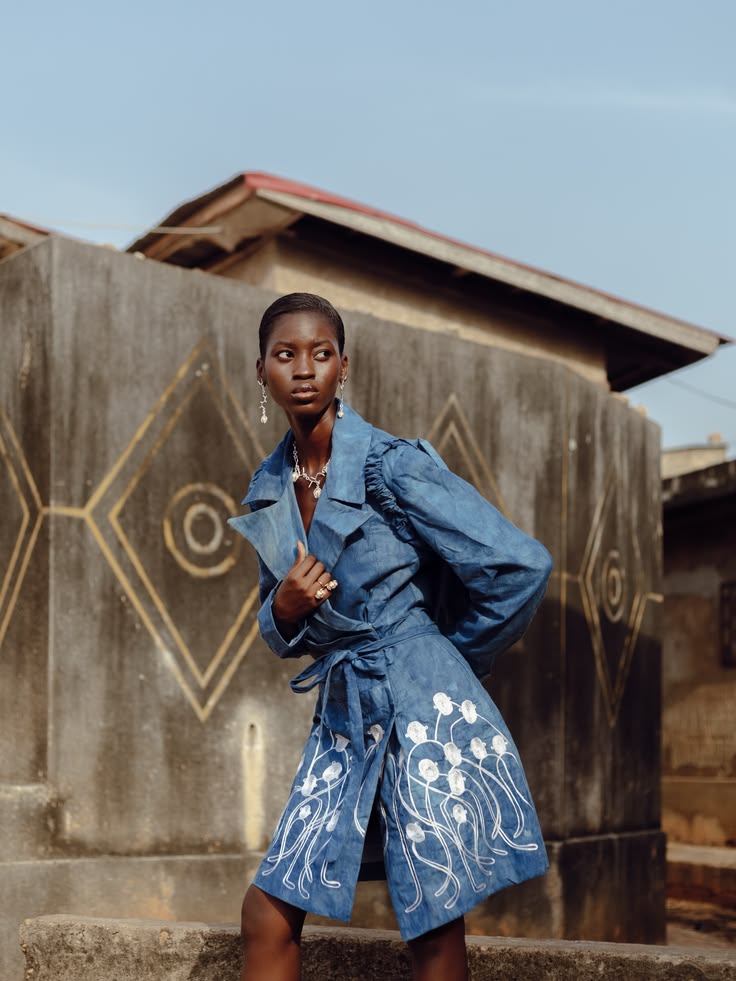
The pano da costa is a woven textile historically associated with the Bight of Benin coast, specifically with African women who traded across the Atlantic during the era of the slave trade. It was produced along the West African coast. It became a prestige textile in both West Africa and Afro-Brazilian candomblé communities, where it was worn in religious ceremonies by practitioners of Yoruba-derived religion. The Harvard ReVista has documented how the pano da costa was spread by African women who traded across the Atlantic and maintained commercial ties between the Bight of Benin coast and Brazilian communities for generations. It is a textile whose travel history mirrors the human travel history of the Aguda: crossing the Atlantic and returning changed.
In Porto-Novo, the pano da costa is part of a larger textile heritage that connects the city to its Atlantic past through cloth. The fabric that dressed Bahian candomblé ceremonies also dressed the women who traded between Porto-Novo and Brazil. The Aguda who returned wearing bowler hats and long-sleeved shirts were returning to a city that had been sending fabric across the ocean for generations. Porto-Novo’s textile culture was never contained within its own geography. It was always transatlantic.
This is not the standard way that textile heritage is described in African fashion editorial. Textiles are typically situated within ethnic traditions and geographic origins. Porto-Novo’s textile story is more complicated: it belongs to a community with no single geographic origin, whose identity was formed on both sides of the Atlantic, and whose dress practices reflect that dual belonging. The pano da costa, worn in a candomblé ceremony in Bahia and traded by a Porto-Novo merchant on the same day in the same year in the 18th century, is the most precise symbol of Porto-Novo’s fashion heritage.
Porto-No Mad and the Contemporary Fashion Event
Porto-Novo has its own fashion event alongside the ceremonial dress traditions that dominate its public cultural calendar. The Porto-No Mad festival, also called Étoiles de la Mode, is a fashion competition for Beninese couturiers and models held at the Centre Culturel OUADADA. The 2025 edition’s runway show took place on 16 January 2025. It is not a government-backed event on the scale of Benin Fashion Month in Cotonou. It is a city-specific fashion moment that gives Porto-Novo’s couturiers a runway platform and positions the city as a fashion geography in its own right rather than simply a satellite of Cotonou’s creative ecosystem.
The contrast with Cotonou is instructive. Cotonou’s fashion events are loud, commercial, international in aspiration, and backed by ministry resources. Porto-Novo’s fashion event is quieter, city-specific, and rooted in a cultural institution rather than a government agency. This is consistent with the two cities’ different identities: Cotonou builds for international visibility; Porto-Novo builds for local depth.
ALSO READ
- Cotonou After Dark: The Street Style No One Is Covering
- Egungun Masquerade Costume: When Fabric Becomes a Portal to the Ancestors
- What People Actually Wear in Benin: A Complete Style Guide
The Museums and What They Hold
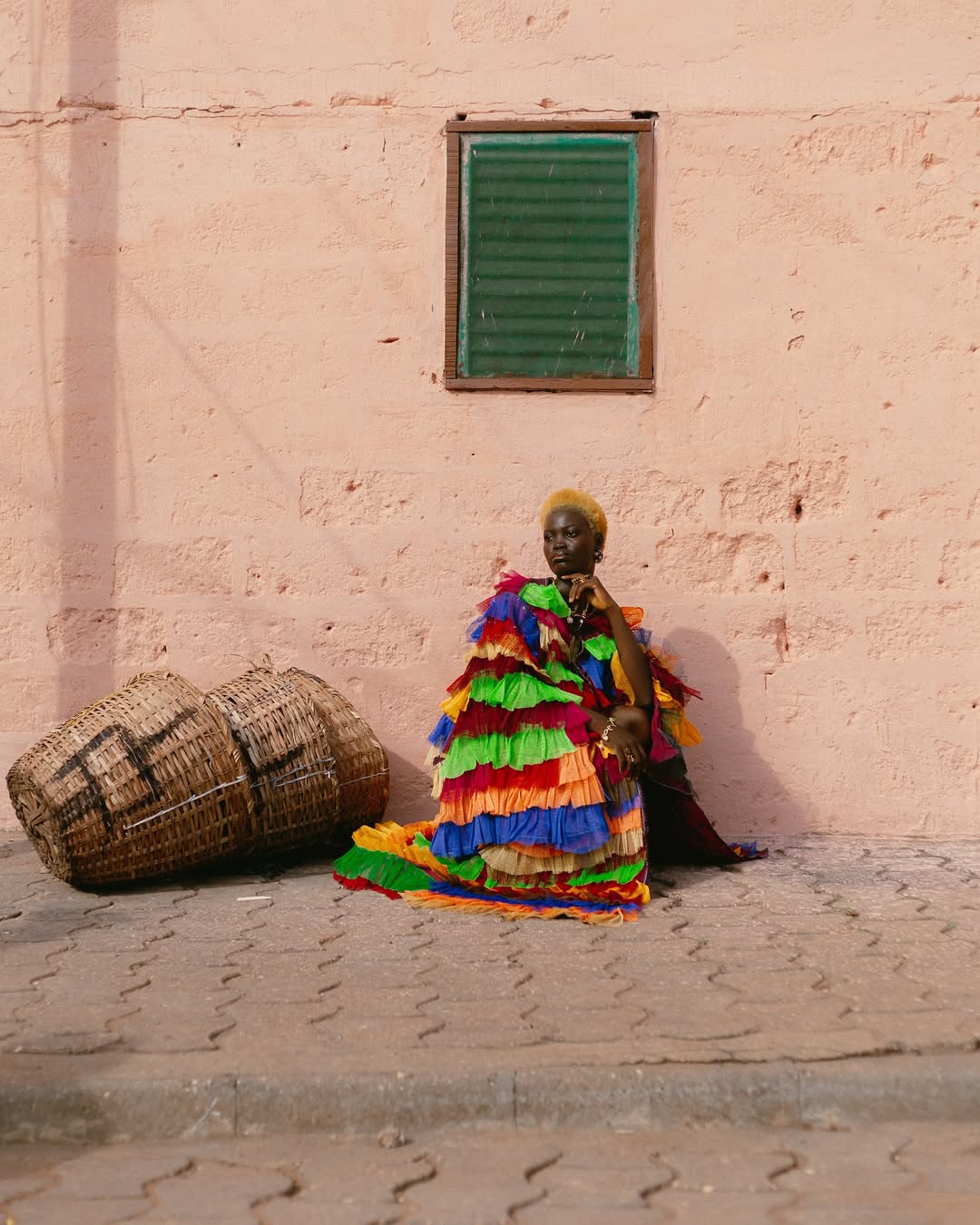
Porto-Novo’s relationship to its own dress history is partially documented in its museum institutions. The Musée da Silva, named for the Afro-Brazilian Da Silva family, houses exhibits on Afro-Brazilian heritage in Porto-Novo and is the centre of the Aguda community’s annual festival activities. The Musée Honmé, the former royal palace of King Toffa I, holds costumes, ceremonial objects, and documentation of the royal court’s material culture. The Ethnographic Museum holds masks, musical instruments, and ceremonial costumes from Porto-Novo’s multiple ethnic traditions.
Together, these three institutions hold the material record of Porto-Novo’s three dress traditions: the Aguda’s Atlantic heritage at the Musée da Silva, the Yoruba royal court’s ceremonial dress at the Musée Honmé, and the broader multi-ethnic ceremonial costume tradition at the Ethnographic Museum. A visitor who moves through all three museums in a single day is covering the full range of Porto-Novo’s fashion history without taking a single step onto a runway.
The material degradation of Porto-Novo’s Aguda buildings, documented in recent architectural studies as an urgent preservation concern, is also a fashion heritage concern. The buildings are not just architecture. They are the physical context in which the Aguda dress culture was produced and performed, and their decay is also the decay of a setting that cannot be fully understood without the buildings for which it was built. Porto-Novo’s fashion history is embedded in its walls as much as in its wardrobes.
Porto-Novo vs Cotonou: Two Cities, One Fashion Story
The relationship between Porto-Novo and Cotonou is not a competition. It is a division of labour that the two cities have worked out over decades. Cotonou handles commerce, nightlife, international logistics, and fashion events that require scale and resources. Porto-Novo handles the history, the ceremony, the cultural depth, and the quieter fashion intelligence that comes from a city that has been accumulating layers of dress meaning for more than three centuries.
A Beninese fashion story that only covers Cotonou misses half of the national dress culture that is most specific to Benin. The zémidjan and the Dantokpa wax-print market are West African features that appear, in different forms, across the region. The Aguda bowler hat, the pano da costa, the Gonouko mask procession, and the bourian ceremony are Porto-Novian. They exist nowhere else in exactly this form, because the specific history that produced them exists nowhere else in exactly this form. Porto-Novo is where Benin’s fashion story is most irreducibly itself.
“Porto-Novo’s fashion story is not a story about what people wear. It is a story about what the city itself wears: three distinct dress traditions that collide in its streets, its ceremonies, and its architecture, each one the residue of a different historical experience with a different relationship to power, displacement, and identity.”
Frequently Asked Questions
What makes Porto-Novo’s fashion culture distinct from Cotonou’s?
Porto-Novo’s fashion culture is defined by three historically layered dress traditions that do not exist together anywhere else. The Aguda, Africans who returned from Brazil in the 19th century, brought a specific dress practice built on bowler hats, long-sleeved shirts, and a visual strategy of social distinction. The Yoruba communities of Porto-Novo maintain living ceremonial dress traditions, including the Egungun masquerade and the Zangbeto. The pano da costa textile connects the city to its transatlantic commercial history. Cotonou’s fashion culture is louder, more commercially active, and more internationally connected. Porto-Novos is quieter, historically deeper, and more specifically Beninese.
Who were the Aguda, and why do they matter to Porto-Novo’s fashion history?
The Aguda were Africans enslaved in Brazil and the Caribbean who returned to the Bight of Benin coast during the 19th century. The majority of those returning from Brazil settled in Porto-Novo. They brought Brazilian baroque architectural styles and a specific approach to dress: bowler-like hats, long-sleeved shirts, and a visual performance of high culture as a strategy for social survival in communities that were often hostile to their return. Their buildings, including the Governors’ Palace and the Great Mosque of Porto-Novo, built by Aguda artisans, are still visible in the city. Their annual bourian ceremony, held on the second Sunday of Epiphany, is one of the few surviving public dress performances of Afro-Brazilian cultural identity in West Africa.
What is the Porto-Novo Mask Festival?
The Porto-Novo Mask Festival is an annual three-day event, launched in August 2024, to replace the Porto-Novo International Festival, previously held in January. The 2024 edition drew participants from Benin, Togo, and Burkina Faso. Its main ceremonial figures are the Gonouko (towering, masked figures specific to Porto-Novo), the Zangbeto (Vodun guardians of the night, cloaked in raffia), and the Egungun (Yoruba ancestral masqueraders in elaborate, layered fabric ensembles). The 2025 edition continued annually in August. The Beninese government promotes it as a cultural tourism asset.
What is the Pano da Costa, and how does it connect to Porto-Novo?
The pano da costa is a woven textile historically associated with the Bight of Benin coast and with African women who traded commercially across the Atlantic during the era of the slave trade. It became a prestige textile in both West Africa and Afro-Brazilian candomblé communities, where it is worn in religious ceremonies. Porto-Novo was a centre of this transatlantic textile trade: the same fabric that dressed Bahian candomblé ceremonies was traded by Porto-Novo merchants across the Atlantic. The pano da Costa is a textile whose travel history mirrors the Aguda’s human travel history.
What are Porto-Novo’s most important museums for understanding its dress culture?
Three museums hold Porto-Novo’s material dress history. The Musée da Silva documents Afro-Brazilian heritage and serves as the centre of the Aguda community’s festival activities. The Musée Honmé (the former royal palace of King Toffa I) holds costumes and ceremonial objects from the Yoruba royal court. The Ethnographic Museum holds masks, musical instruments, and ceremonial costumes from Porto-Novo’s multiple ethnic traditions. Together, they cover the three dress traditions that define the city: Aguda Atlantic heritage, Yoruba royal ceremonial dress, and the broader multi-ethnic ceremonial costume tradition.
What is the Porto-No Mad festival?
Porto-No Mad, also called Étoiles de la Mode, is a fashion competition for Beninese couturiers and models held at the Centre Culturel OUADADA in Porto-Novo. The 2025 edition runway show took place on 16 January 2025. It is a city-specific fashion event that gives Porto-Novo’s fashion practitioners a runway platform independent of Cotonou’s larger government-backed events.
Explore more from our Culture section, where African cities are documented as fashion geographies with specific, irreducible historical identities.