Chitenge is not a trend in Zambia. It is a social language. The printed cotton has been the default dress of celebration, community, and shared identity in Zambia for generations. When Zambian brides began incorporating it into their wedding styling, they were not making a fashion statement in the novelty sense. They were making a cultural one: that a wedding is serious enough to wear the fabric that marks every other serious occasion in Zambian life. That is the argument this piece is built around, and the kitchen party is where that argument becomes most visible.
As Omiren Styles has documented in its analysis of Zambian chitenge menswear, chitenge carries a specific history that distinguishes it from Ankara in important ways. For example, it is tied to local tailoring traditions, has a different relationship to regional production and import dependency, and communicates Zambian identity rather than a pan-West African aesthetic. In bridal contexts, that specificity matters most.
Chitenge is Zambia’s most socially legible fabric. Here is how it moves from everyday wear into bridal ceremony, reception, and kitchen party, and what makes each styling decision land.
What Chitenge Does in a Wedding
Chitenge appears at multiple points in a Zambian wedding: the ceremony, the reception, the bridal party, and most distinctively, the kitchen party. Each context makes different demands on how the fabric is handled. Understanding what chitenge does in each moment is more useful than a general argument for its place in bridal fashion.
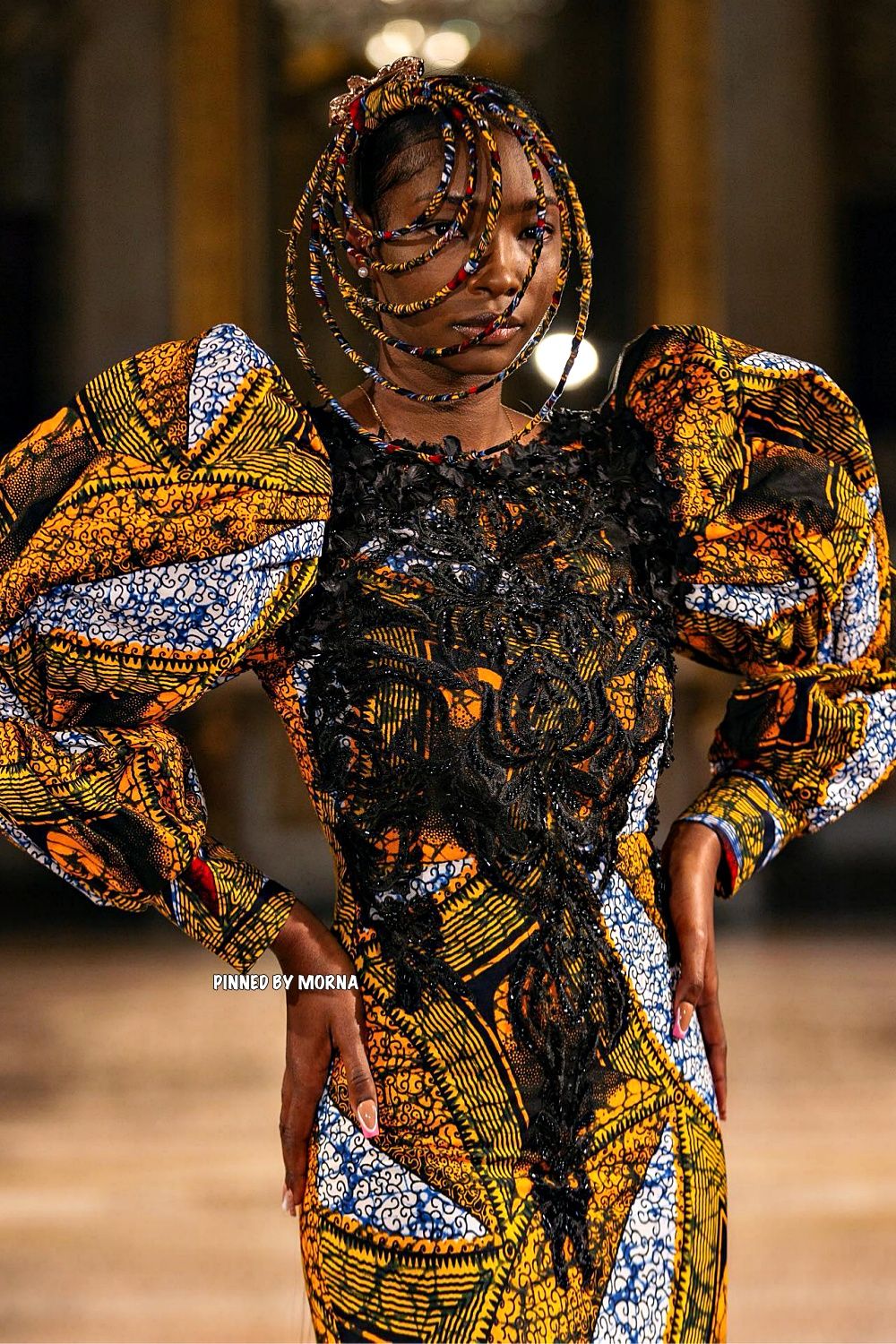
At the ceremony, chitenge most often appears as an accent: an overlay, a sash, a head wrap, or a matching element for the bridal party. This restraint is deliberate. The ceremony is where formal and often Western-influenced silhouettes dominate, and the chitenge element functions as a cultural marker within that context without overtaking the formal register.
The reception is where chitenge typically takes a fuller role. Brides who change between ceremony and reception use the occasion to introduce chitenge as a standalone fabric in a structured gown, a co-ordinated two-piece, or a fitted bodice with an extended skirt. The reception crowd is seated, and the formal ceremony is complete, which creates room for a bolder dress choice.
The Kitchen Party: Where Chitenge Becomes Most Itself
The kitchen party is the pre-wedding celebration specific to Zambian culture, typically held in the days before the wedding and attended primarily by women from both families. It is where the bride’s female community assembles to give her advice, gifts, and celebration before she moves into married life. As Omiren Styles has documented in its analysis of Setswana wedding dress as a ceremonial system, the most culturally specific bridal dress traditions in southern Africa are those embedded in the social ritual of preparation rather than the ceremony itself. The kitchen party is Zambia’s version of that.
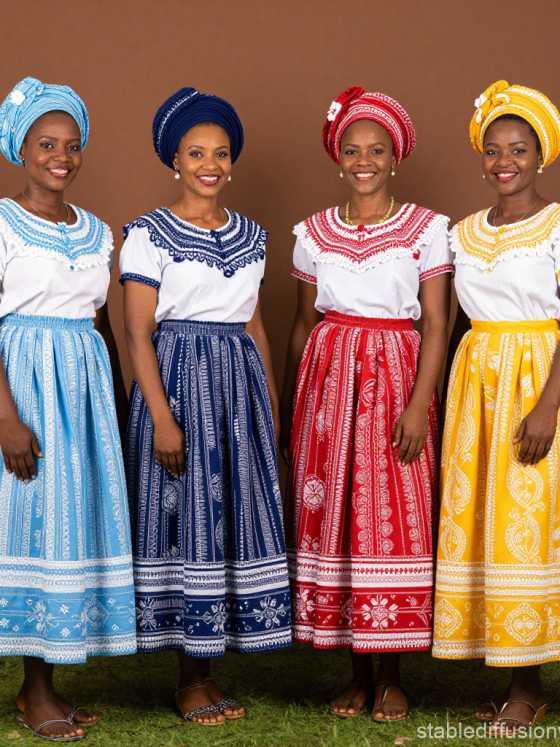
Chitenge is not optional at a kitchen party. It is the expected fabric for the bride and, in many families, for the attending women on both sides. The co-ordination of chitenge across the gathered women, matching or complementary prints between the bride’s party and the groom’s family representatives, creates the visual field of the celebration as much as any individual outfit does. The fabric is doing communal work: it declares that everyone in this room belongs to the occasion.
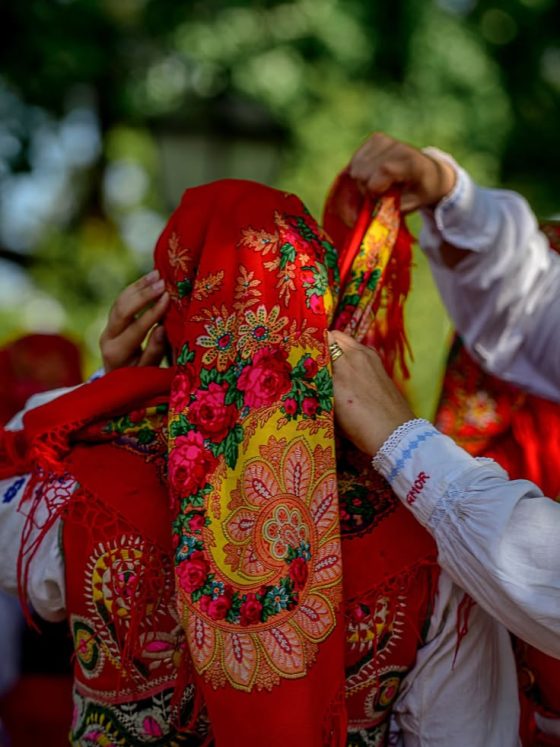
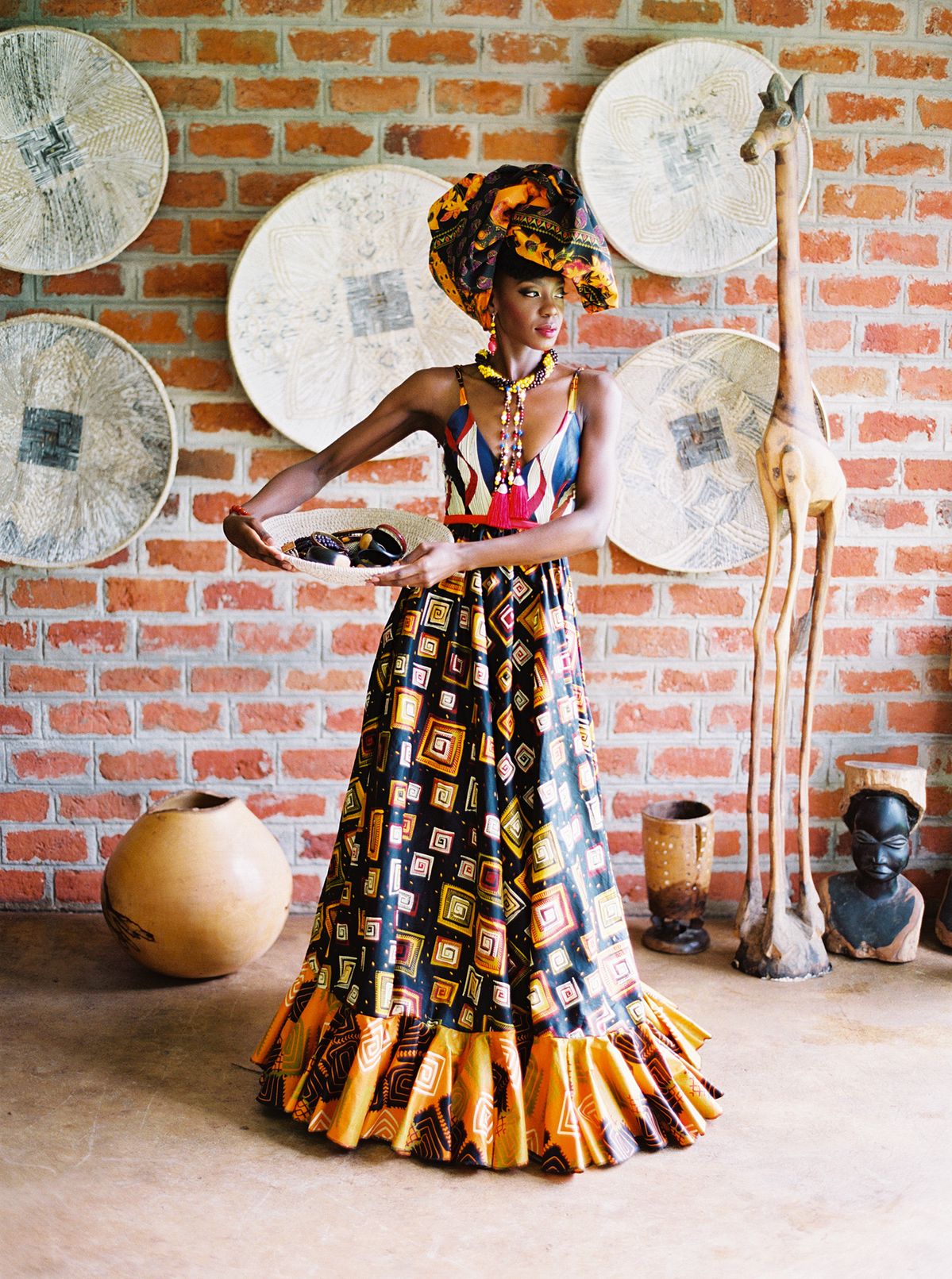
For the bride at her kitchen party, chitenge styling tends toward celebration. Bright prints, full skirts, wrapped styles that allow movement during what is an active, social occasion. The head wrap, matched in chitenge to the skirt, is the most photographed element. Getting the head wrap balance right, not too formal, not too casual, is the specific styling challenge of the kitchen party look, and experienced Zambian dressmakers have developed strong instincts for it.
Silhouette: What Chitenge Does Differently in Each Shape
Chitenge behaves differently from most bridal fabrics because its print is doing significant visual work before the silhouette makes any contribution. This means silhouette choices are not interchangeable: some shapes work with what chitenge is doing and some work against it.
The A-line is the most forgiving silhouette for chitenge in bridal contexts. The gradual flare from the waist allows the print to read across the full skirt without crowding, and the relatively restrained shape keeps the fabric as the focal point. For brides who want chitenge to carry the argument, the A-line is where that happens most cleanly.
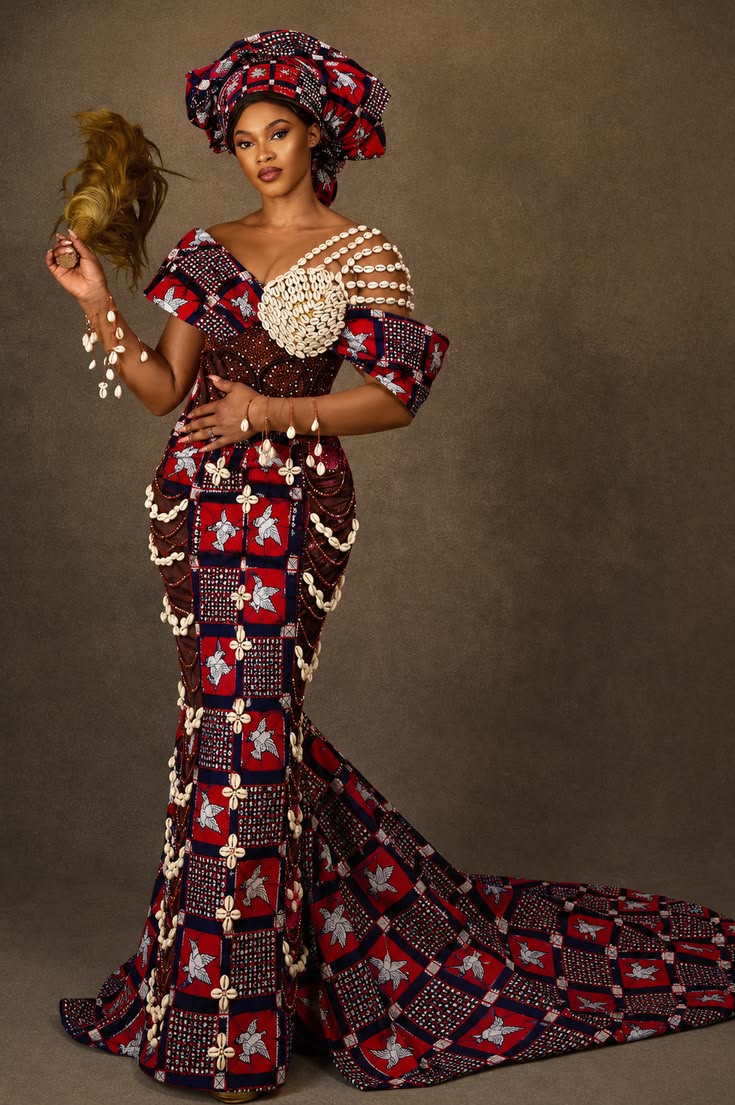
The mermaid silhouette makes a different demand. Because chitenge is relatively stiff compared to silk or chiffon, the fitted hip section requires careful fabric selection and construction: lighter-weight prints and skilled tailoring to ensure the skirt flares cleanly at the knee rather than pulling across the hip. When it works, the mermaid in chitenge is striking because the structure contrasts with the boldness of the print. When the construction is poor, the fabric fights the shape and neither wins.
The ball gown in chitenge is maximum commitment to the fabric. The volume requires enough yardage that the print becomes a repeating field rather than a single graphic. Print scale matters most here: a small geometric repeat reads well across a full ball gown skirt; a large figurative print can look disrupted when the scale is wrong relative to the fabric volume. As Omiren Styles has documented in its analysis of the Ankara print economy, print repeat and cut are always decisions made together, not separately. A ball gown in chitenge requires the dressmaker to make that decision deliberately.
Bridal Party and Diaspora
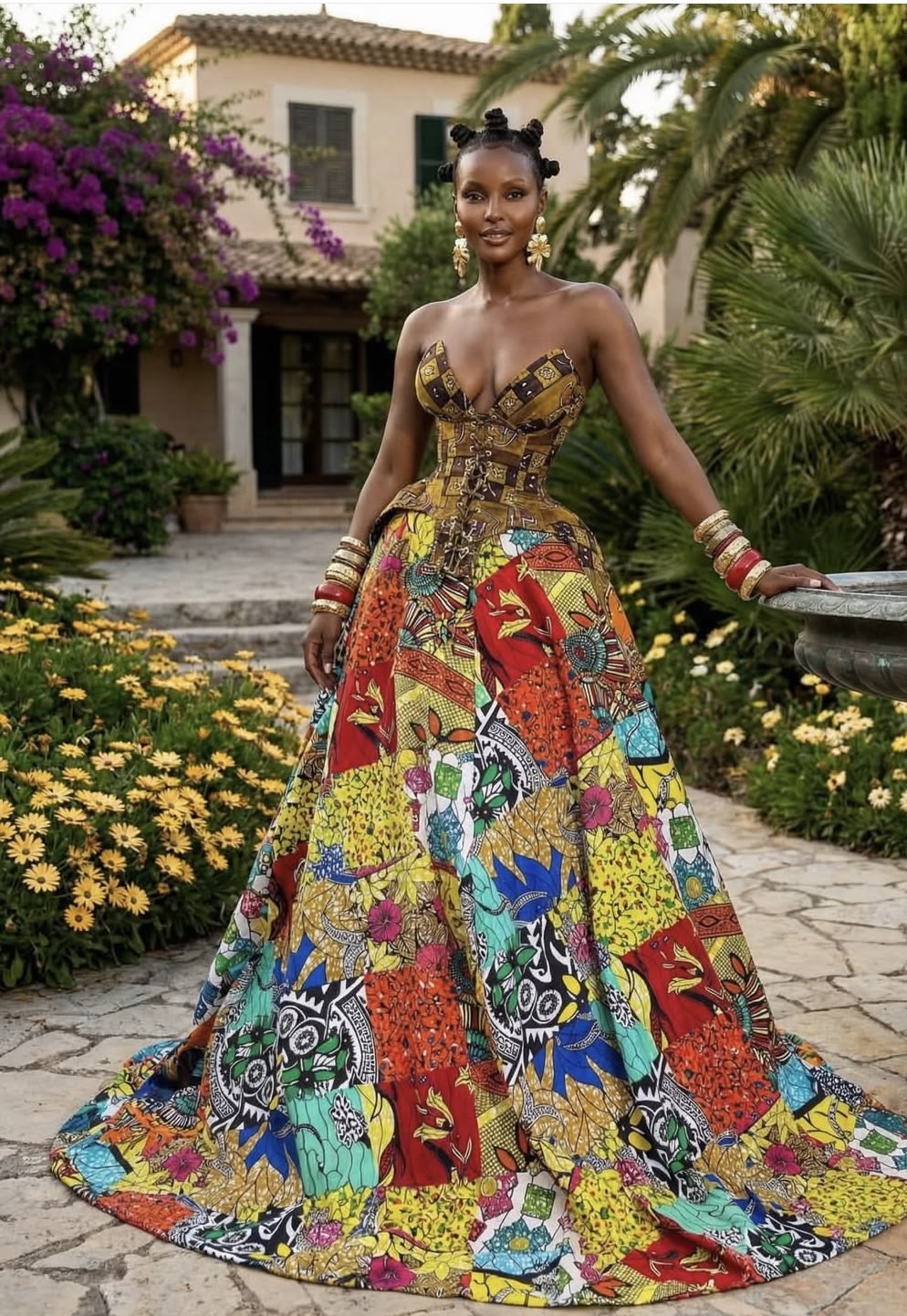
Coordinating a bridal party in chitenge involves print selection as a primary variable alongside colour and silhouette. The most effective approach is a unified colour palette across different prints rather than identical fabric: each person’s dress uses chitenge in the same colour family but not the same design, which creates cohesion without uniformity. This approach also accommodates the practical reality that identical yardage is not always available in market-sourced chitenge.
For Zambian diaspora weddings in the UK, North America, and elsewhere, chitenge styling carries additional weight because the fabric is making a deliberate statement about identity in a context where that identity is not ambient. As Omiren Styles has documented in its analysis of diaspora fashion diplomacy, the cultural practices that travel most durably in diaspora are those tied to the social calendar of the community. The styling choices that work best in diaspora contexts tend toward clarity: bold prints, well-constructed silhouettes, and head wrap styling that reads as intentional rather than incidental.
The Omiren Argument
Bridal fashion becomes more meaningful when it carries a visible cultural memory. A chitenge wedding dress is not powerful because of its silhouette or its print alone. It is powerful because the fabric arrives at the wedding already loaded with every other occasion at which it has been worn: the kitchen parties, the funerals, the celebrations, the communal gatherings where Zambian social life has been conducted in chitenge across generations. The bride who wears it is wearing all of that. As Omiren Styles has documented in its analysis of Setswana wedding dress, the garments that carry the deepest cultural authority in southern African wedding traditions are those whose significance is embedded in what the fabric has already done, not only in what it is being asked to do at the wedding.
The mainstream bridal fashion industry has recently discovered African print bridal wear as an editorial moment. That is fine, but it misses the point available from the inside. Chitenge in Zambia is not a trend to be adopted. It is a social language that already knows what it is doing. The brides who wear it most effectively are those who understand the fabric’s social weight and make their styling decisions in relation to that weight. As Omiren Styles has argued, African fashion has always been making arguments that the mainstream fashion industry was not yet equipped to receive. Chitenge bridal styling is one of those arguments, and it does not need external validation to be complete.
The fabric has already been at every celebration that mattered. The wedding is the occasion where that history is most deliberately worn.
ALSO READ
- Zambian Chitenge Menswear Has Its Own Tailoring History, Separate from Ankara
- Zambia’s Textile Industry: Cotton Export Gap, Local Production Deficit, and What the Mulungushi Reopening Changes
- Rastafari Dress Codes: How Jamaica’s Colours, Hair, and Cloth Refused Colonial Uniform
Frequently Asked Questions
What makes chitenge a distinctive bridal fabric in Zambia?
Chitenge is Zambia’s most socially loaded fabric: worn at celebrations, funerals, community gatherings, and daily life across generations. When a bride wears it, the fabric arrives at the wedding already carrying the memory of every other occasion at which it has appeared in Zambian social life. That accumulated cultural weight distinguishes chitenge from other bridal fabrics whose significance is primarily aesthetic. As Omiren Styles has documented, chitenge’s relationship to Zambian identity is specific in ways that distinguish it from the broader Ankara category.
What is a Zambian kitchen party and why is chitenge central to it?
The kitchen party is a pre-wedding celebration specific to Zambian culture, typically held in the days before the wedding and attended primarily by women from both families. Chitenge is the expected dress fabric for the bride and attending women, and the co-ordination of prints across the gathered group creates the visual field of the celebration. The fabric is doing communal work at the kitchen party: it declares that everyone present belongs to the occasion.
Which silhouette works best for a chitenge wedding dress?
Each silhouette makes a different demand on the fabric. The A-line is most forgiving and keeps the print as the focal point. The mermaid can be striking but requires careful construction because chitenge’s relative stiffness needs skilled tailoring to make the hip-to-flare transition work. The ball gown makes the boldest statement but requires careful print scale decisions: a small repeat reads well across a full skirt, while a large figurative print can look disrupted at that volume. The silhouette choice should be made in relation to what the fabric is doing, not as a separate decision.
How do Zambian diaspora brides use chitenge at weddings abroad?
For diaspora Zambian weddings, chitenge styling carries additional cultural weight because the fabric makes a deliberate statement about community identity in a context where that identity is not ambient. As Omiren Styles has documented in its analysis of diaspora fashion diplomacy, the cultural practices that travel most durably in diaspora are those tied to the social calendar of the community. The styling choices that work best in diaspora contexts tend toward clarity: bold prints, well-constructed silhouettes, and head wrap styling that reads as intentional.