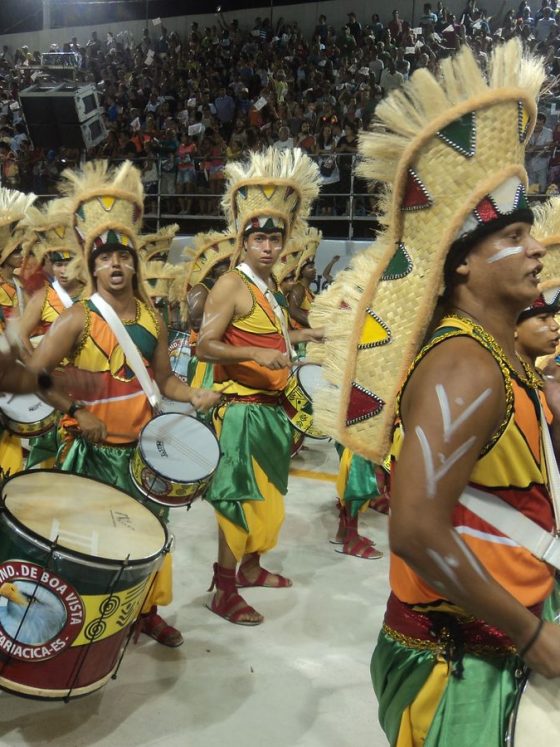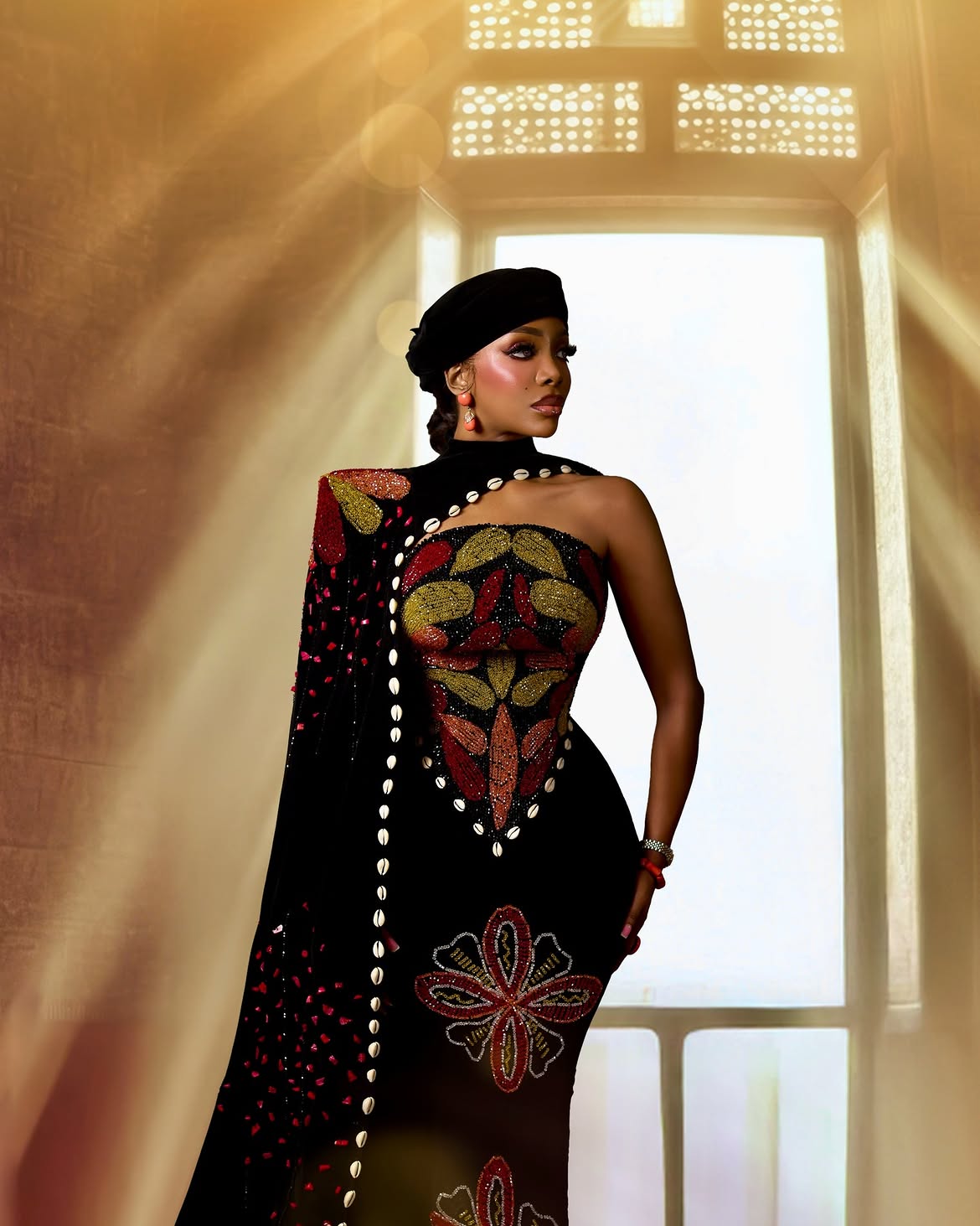
The African fashion market is worth 31 billion dollars. Within that market, few textiles carry the governance density of Cameroonian Toghu embroidery. Toghu is a distinctive embroidered textile from Cameroon’s Grassfields region, built on a dark velvet base and decorated with dense geometric and figurative motifs worked in bright contrasting thread. Circles, diamonds, spirals, stars, gongs, animals, and the plant of peace are applied in yellow, red, white, and green against black velvet to create compositions that are immediately recognisable, socially specific, and governed by rules that determine which motifs a wearer is entitled to display.
That governance system is now operating in a new context. Toghu embroidery is moving out of the ceremonial robe and into contemporary tailoring: fitted jackets, suits, dresses, jumpsuits, shirt dresses, and accessories. Designers including Liz Ngwane, Kibonen Nfi, and LaKelle are treating Toghu’s visual language as a design system that can inhabit new silhouettes without losing what makes it specific. The question this article examines is not whether Toghu can survive this move. It already has. The question is what modern tailoring does to the embroidery’s authority, and what obligation that authority places on the designers who work with it.
Cameroonian Toghu embroidery is entering modern tailoring without losing the governance, craft, and visual authority that makes it one of Africa’s most precise textile traditions.
What Cameroonian Toghu Embroidery Is
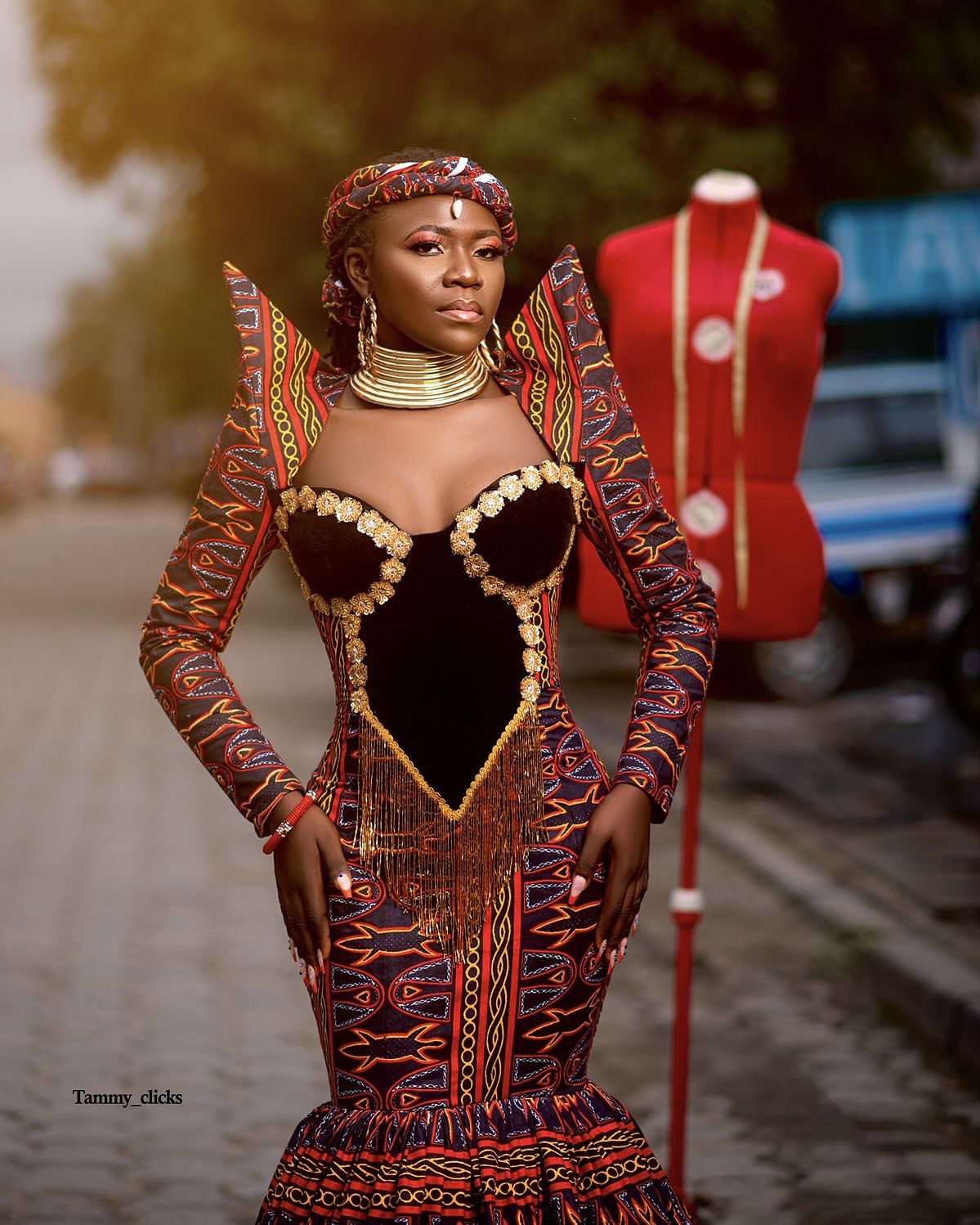
Toghu is a royal and ceremonial textile originating from three villages of the Mezam division in Northwest Cameroon: Bafut, Mankon, and Nkwen. As documented by the Commonwealth Fashion Council via Google Arts and Culture, the embroidery is historically associated with the Fon, the Grassfields traditional chief, and with nobles and dignitaries within the chieftaincy system. Historically reserved for royalty and important occasions, Toghu marked status, wealth, and ceremonial authority. It was not worn as general dress. It was worn as a declaration.
The motif vocabulary is governed rather than decorative. Research into Toghu motifs links specific designs to royalty, priesthood, social rank, wealth, and cultural memory within Grassfields communities. The Omiren Styles documentation of Cameroonian Toghu menswear confirms that in Bafut tradition, the Fon alone may wear lion and tiger motifs. Animal skin designs appear only on the Toghu of first-class nobles. The gong motif directly represents palace authority. These restrictions are not historical relics. They remain operative in communities where Toghu is still worn for ceremony.
The traditional material base is heavy black velvet, with embroidery in vivid thread applied first by chalking the motif outline and then stitching by hand or machine. The raised texture of the embroidery against the velvet creates visual authority that communicates across a room. Today, Toghu embroidery is produced on velvet alongside cotton, organza, crepe, and other fabrics, creating the material flexibility that modern tailoring requires.
Toghu embroidery does not gain authority from modern silhouettes. Modern silhouettes gain authority from Toghu. The embroidery is the point. The blazer is the new context.
How Toghu Embroidery Is Entering Modern Tailoring
The move into contemporary fashion is not simply about placing traditional Toghu panels on new garments. Designers are rethinking cut, fabric, and embroidery placement while retaining the visual elements that make Toghu recognisable as a specific cultural system rather than a generic African-adjacent textile.
Liz Ngwane blends Toghu with sheer fabrics and modern cuts, producing pieces that feel contemporary while clearly rooted in Grassfields embroidery. Africanews documents her use of Toghu to create fashionable garments for a younger audience without abandoning the embroidery’s visual identity. The Smithsonian records Kibonen Nfi’s aim to make the traditional garment more contemporary while preserving its craft value and working directly with Cameroonian artisans who produce the embroidery. LaKelle’s N’Zeteh “Origins” collection uses Toghu-associated embellishments alongside velvet, linen, cotton, and polyester, producing jumpsuits, trousers, dresses, and shirt dresses that show how Toghu motifs can live across garment types without being confined to the robe.
What these approaches share is a treatment of Toghu’s embroidery as a design language rather than as a single garment template. The motif stays. The silhouette changes. That is the distinction between adaptation and decoration: in true adaptation, the specific visual and cultural identity of the cloth remains legible regardless of the form it inhabits.
The Craft Behind Modern Toghu Tailoring
Modern Toghu tailoring depends on both skilled handwork and contemporary production equipment. A 2026 study of Toghu production in the Grassfields region notes that workshops use flat-bed sewing machines, overlock machines, and specialised embroidery tools to produce Toghu-inspired fashion and accessories more efficiently. These production methods exist alongside, not in place of, the handwork that gives Toghu its distinctive character.
Toghu’s dense embroidery still relies on skilled artisans who build chain stitches, open squares, half-cross stitches, and running stitches into patterns that give the fabric its characteristic texture and raised surface. The Commonwealth Fashion Council’s documentation confirms that the stitches are adapted to the velvet surface to create depth and movement that machine work alone cannot replicate. Kibonen Nfi has explicitly emphasised working with Cameroonian craftswomen who produce the embroidery, and her approach includes efforts to give their skilled work greater cultural and monetary recognition. The craft is not background to the contemporary garment. It is the garment’s claim to authority.
Moving Toghu into modern tailoring creates specific technical demands. A fitted jacket, tailored dress, or structured trouser requires careful cutting and joining so that the motifs support the garment’s shape rather than overwhelming it. This has led designers to use strategic placement of embroidery on cuffs, lapels, necklines, and panels, to mix Toghu with plainer fabrics to balance visual density, and to work with lighter base cloth for comfort while keeping the embroidery intact. The result is a wider product range: Toghu-embroidered jackets, suits, gowns, hats, slippers, and bags, all built from the same craft principles and carrying the same visual authority in a different form.
The Distinction Between Adaptation and Erasure
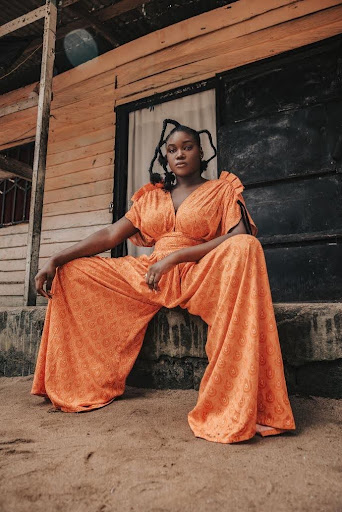
The most significant risk in Toghu’s move into modern tailoring is not that the embroidery will look wrong on a blazer. It is that the embroidery’s cultural coding will be treated as decorative rather than semantic. Toghu motifs are governed choices. They communicate wisdom, unity, social distinction, and cultural values, as confirmed by peer-reviewed research on Toghu motif selection. Printing a Toghu-like pattern onto a fabric without engaging with the embroidery’s governance system produces a garment that looks like Toghu from the outside and communicates nothing that Toghu communicates from the inside.
The distinction between authentic adaptation and erasure is visible in practice. A Toghu blazer produced by a designer working with Grassfields artisans, using the governed motif vocabulary, and retaining the embroidery technique carries the cultural authority of the textile into the new silhouette. A blazer with a Toghu-adjacent printed pattern carries the aesthetic without the governance. For wearers without specific knowledge of the tradition, the difference may not be visible. For the Grassfields communities whose governance system the motifs encode, it is exactly visible.
As Omiren Styles has documented in the broader analysis of how African textiles enter global fashion markets, the moment a heritage African textile gains commercial attention outside its originating community, the question of who controls the meaning and who benefits economically from that attention becomes urgent. Toghu’s move into modern tailoring is not an exception to this dynamic. It is a case study in how it plays out when the textile carries specific governance restrictions that are not visible to the market consuming it.
A New Silhouette Does Not Require a New Identity
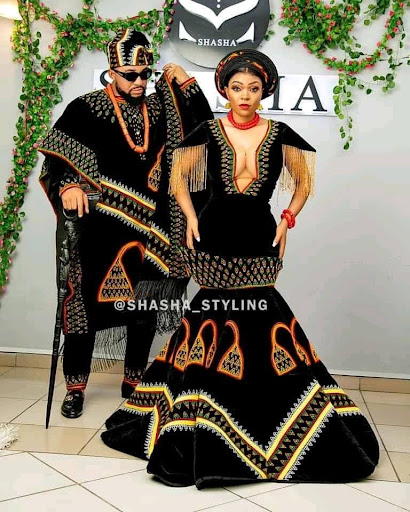
Contemporary Toghu does not need to reproduce the traditional robe to remain connected to its Grassfields origins. The embroidery on a modern jacket or tailored dress gives the textile a presence in offices, events, runways, and street contexts where the full ceremonial garment would not be expected, while retaining the visual identity that makes it legible as specifically Cameroonian rather than generically African.
This is already visible in the work of brands and designers explicitly committed to Toghu in contemporary clothing. The important principle, which the best of these designers embody, is that adaptation works when it is guided by knowledge of what is being adapted. A designer who knows that the gong motif announces palace authority, that the lion and tiger belong to the Fon alone, and that the plant of peace carries the symbol of unity across all Grassfields communities, adapts Toghu with the governance intact. A designer who sees Toghu as bold embroidery on dark velvet adapts it as aesthetics alone. The garments may look similar. They are doing different things.
Omiren Record
| Textile | Toghu (also Atoghu) |
| Origin | Bafut, Mankon, and Nkwen, Mezam division, Northwest Cameroon |
| Base material | Heavy black velvet; now also cotton, organza, crepe |
| Embroidery colours | Yellow, red, white, green on black base |
| Key motifs | Gong (palace authority), lion/tiger (Fon only), animal skin (first-class nobles), plant of peace (unity), moons, diamonds, stars |
| Key designers | Kibonen Nfi, Liz Ngwane, LaKelle (N’Zeteh “Origins”), Ngwisa, Bella’s Kreation |
| Modern applications | Jackets, suits, dresses, jumpsuits, shirt dresses, hats, slippers, bags |
| Craft methods | Chain stitch, open square, half-cross stitch, running stitch; hand and machine production |
| Key risk | Treating motifs as decorative rather than governed; printed imitation without artisan engagement |
| African market context | African fashion market valued at 31 billion dollars |
ALSO READ:
- Cameroonian Toghu Menswear: The Authority Encoded in Velvet and Stitch
- The Trench Coat Is Being Rewritten, and Africa Is Holding the Pen
- African Tailoring as Capital: How Local Ateliers Compete With Global Luxury Houses
The Omiren Argument
The African fashion market is worth 31 billion dollars. Within that market, Cameroonian Toghu embroidery is one of the most governed textile systems in circulation, and one of the most frequently misread. The misreading is consistent: Toghu is described as bold embroidery, as traditional craft, as heritage dress being modernised by contemporary designers. All of those descriptions are accurate about the surface and silent about what is underneath it. Underneath it is a complete governance system. The gong motif announces palace authority. The lion and the tiger are the Fon’s alone. The plant of peace carries the symbol of unity across all Grassfields communities. Every motif selection is a governed choice with a documented social consequence, confirmed by peer-reviewed academic research published in 2023. Modern tailoring provides a new context for this system. A Toghu jacket, a Toghu suit, a Toghu dress moves the embroidery into offices, events, and international runways where the ceremonial robe was not expected. That is a legitimate extension when it is done by designers working with Grassfields artisans, using the governed motif vocabulary, and keeping the craft that gives the embroidery its authority. When it is done by replacing hand embroidery with a printed pattern, or by treating the motifs as aesthetic elements rather than semantic ones, it produces a garment that looks like Toghu and communicates nothing that Toghu communicates. The distinction is the argument. Toghu embroidery does not gain authority from modern silhouettes. Modern silhouettes gain authority from Toghu. The embroidery is the point. The blazer is the new context.
Frequently Asked Questions
What is Cameroonian Toghu embroidery?
Toghu is a distinctive embroidered textile from Cameroon’s Grassfields region, built on a dark velvet base and decorated with dense geometric and figurative motifs. Historically reserved for the Fon, traditional chiefs, and for nobles and dignitaries within the Grassfields chieftaincy system, Toghu embroidery communicates social rank, ceremonial status, and cultural belonging through a governed motif vocabulary in which specific designs are restricted to specific ranks. Today, the embroidery appears on velvet alongside cotton, organza, and other fabrics, and is used in both traditional ceremonial garments and contemporary tailored clothing.
How is Toghu embroidery entering modern tailoring?
Designers are using Toghu embroidery in constructed garments including fitted jackets, suits, dresses, jumpsuits, shirt dresses, and accessories, moving the fabric from traditional wrapped and full-robe forms into stitched, body-specific silhouettes. Designers including Liz Ngwane, Kibonen Nfi, and LaKelle retain the Toghu embroidery’s visual language and motif vocabulary while changing the garment’s shape, fabric, and context. The embroidery is treated as a design language rather than as a single garment template, allowing it to inhabit new silhouettes without losing its cultural specificity.
Does modern tailoring erase Toghu’s cultural identity?
Not necessarily, but the distinction between adaptation and erasure is specific. Adaptation that retains the governed motif vocabulary, works with Grassfields artisans, and keeps the hand-embroidery technique intact carries Toghu’s cultural authority into the new silhouette. Replacing the hand-embroidered motifs with a printed pattern, or treating the motifs as purely decorative elements without engaging with their governance function, produces a garment that resembles Toghu aesthetically while being culturally different from it. The best contemporary Toghu tailoring is guided by knowledge of what is being adapted.
Who are the key designers working with Toghu embroidery?
Liz Ngwane has combined Toghu with sheer fabrics and modern cuts to make the embroidery accessible to younger audiences. Kibonen Nfi treats Toghu as a source of design inspiration and works directly with Cameroonian craftswomen who produce the embroidery, emphasising the importance of giving their skilled work greater cultural and monetary value. LaKelle’s N’Zeteh “Origins” collection uses Toghu-associated embellishments across a range of garment types including jumpsuits, trousers, dresses, and shirt dresses. Brands including Ngwisa and Bella’s Kreation explicitly combine traditional embroidery with modern jackets, gowns, and ready-to-wear sets.
What do Toghu motifs mean?
Toghu motifs are governed rather than decorative. The gong motif represents palace authority directly: the gong is the instrument sounded during traditional ceremonies, and by a change of rhythm announces war, ceremony, or community dance. The lion and tiger motifs are worn only by the Fon, the traditional chief. Animal skin designs appear only on the Toghu of first-class nobles. The plant of peace is the symbol of peace, love, and unity across all Grassfields communities. Peer-reviewed research published in 2023 confirmed that Toghu motif selections communicate wisdom, unity, social distinction, cultural values, and cross-cultural exchange.
What is the craft process behind Toghu embroidery?
Traditional Toghu embroidery involves chalking the motif outline onto the velvet base and then applying chain stitches, open squares, half-cross stitches, and running stitches by hand, building the motif up from the surface to create the raised texture that gives Toghu its characteristic appearance. Contemporary production in the Grassfields uses both hand embroidery and machine tools, with workshops employing flat-bed sewing machines, overlock machines, and specialised embroidery equipment alongside established craft methods. The skills are transmitted through apprenticeship within the Grassfields region.
Explore More
Read the full Fashion > Tailoring and Africa > Textiles and Craft sections for Omiren Styles’ documentation of African heritage textiles, their governance systems, and the arguments about cultural authority that their contemporary reinterpretation raises.