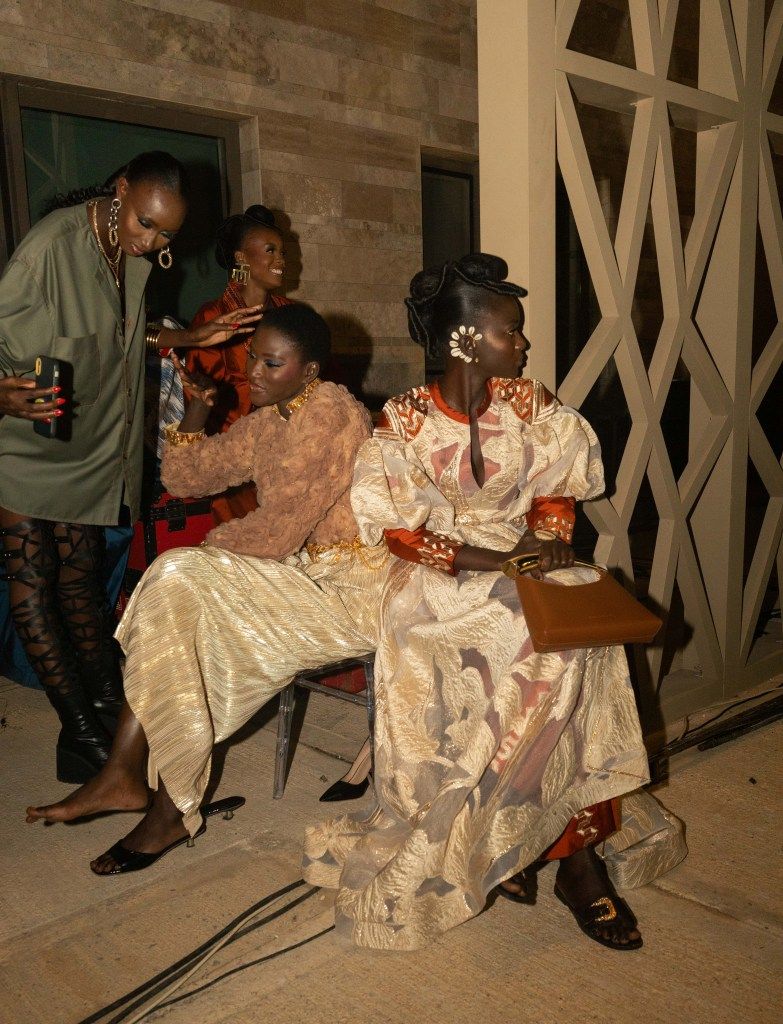
In 2022, Chanel staged its Métiers d’Art show on the island of Gorée in Dakar: the first time the French house had shown in an African country. International fashion media covered it as an important feat for the fashion industry, a recognition that Dakar had arrived. That framing missed the point. Chanel arrived in Dakar. Not the other way around. And Dakar had been building toward that moment for decades without waiting for Chanel to confirm its readiness.
The African fashion market is worth 31 billion dollars. Framing Dakar as an emerging luxury market to watch positions the city as something being observed from elsewhere. As The Folklore’s documentation of Dakar as Africa’s couture capital confirms, with brands such as Tongoro and Anima Iris, whose products are created by artisans in the city, Dakar is regarded as a hotbed of African couture craftsmanship. That observation is accurate. But it understates what is actually happening. Dakar is not a hotbed waiting to be discovered. It is a city actively constructing a luxury fashion infrastructure on its own terms, with its own designers, its own artisan supply chains, its own market logic, and its own institutional framework.
Dakar is not an emerging luxury market waiting to be discovered. It is actively building an autonomous fashion infrastructure on its own terms. Here is the evidence.
Dakar’s Luxury Fashion System: The Infrastructure Being Built
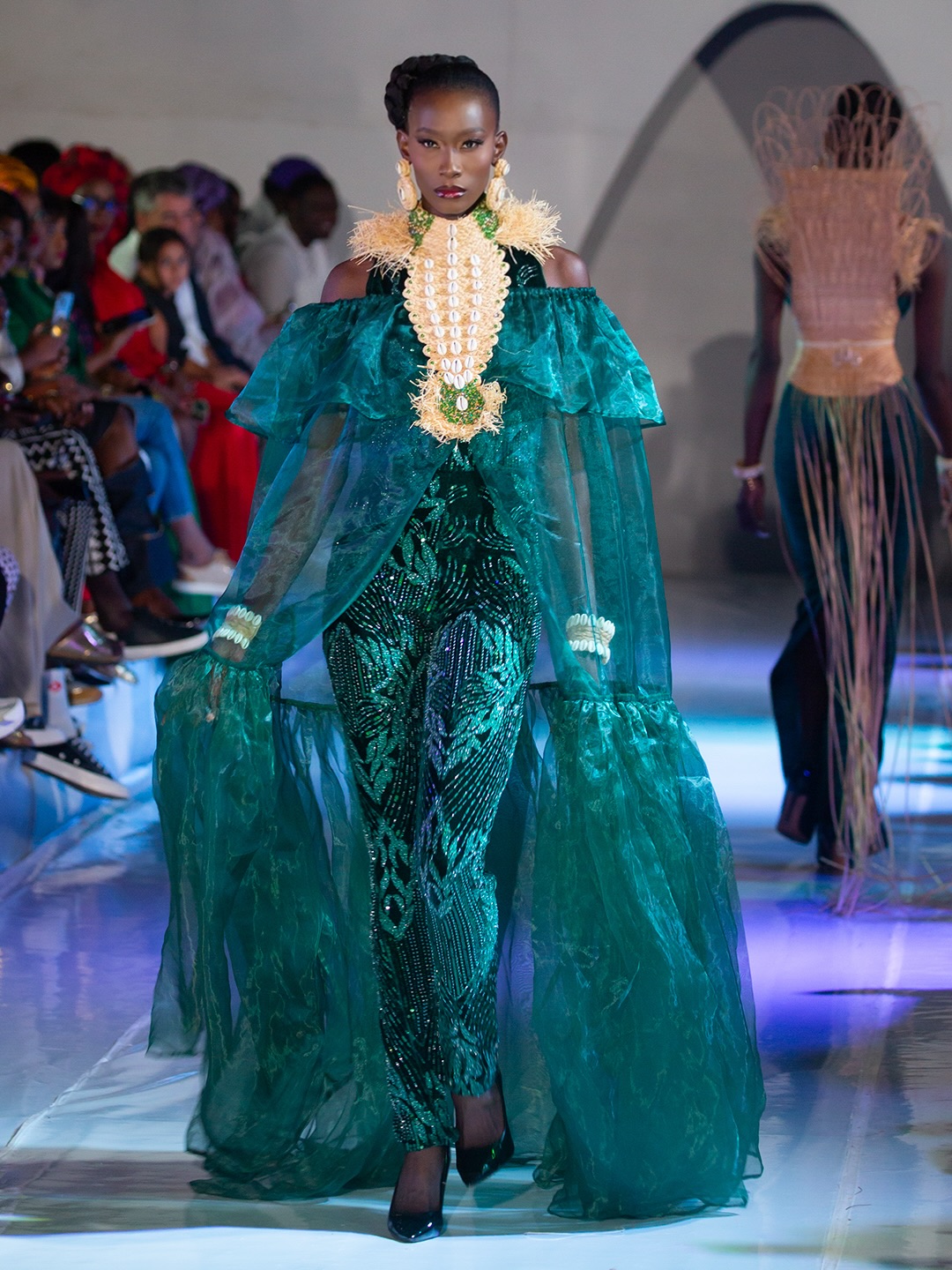
Dakar Fashion Week, founded in 2002 by Adama Paris (Adama Amanda Ndiaye), is the oldest and most established African fashion week platform and the clearest evidence of Dakar’s institutional ambition. As Africa Fashion Tour’s documentation of Dakar Fashion Week 2025 confirms, Adama Paris has built an ecosystem that ensures the narrative autonomy and economic sustainability of African fashion. Drawing on its ambition to control the entire value chain from event to distribution, with plans to build a manufacturing plant, Dakar Fashion Week is explicitly designed as an industrial project rather than a showcase. It provides grants to young designers. It mentors emerging brands. It creates the international buyer and media exposure that turns Dakar-based production into export-viable luxury.
This is the distinction that the emerging market framing consistently misses. An emerging market is a passive category: a place that international capital has identified as worth entering. A fashion system is an active construction: the deliberate building of production capacity, institutional infrastructure, brand ecosystem, and market access. Dakar has been building the second thing. The manufacturing plant that Dakar Fashion Week is planning is not a side note. It is the most commercially significant signal in recent African fashion industry history: a major African fashion platform attempting to control the manufacturing dimension of its value chain from within the continent.
The framing of Dakar as an emerging luxury market to watch positions the city as something being observed from elsewhere. The more accurate framing is that Dakar has been watching the global luxury industry for twenty years, learning from it, and building something different. The system it is building is its own.
The Brand Ecosystem: What Dakar Has Already Produced
The luxury fashion system Dakar is building has produced specific brands with specific arguments. Senegal has produced world-renowned labels including Tongoro (Sarah Diouf), Selly Raby Kane, DIARRABLU (Diarra Bousso), and Adama Paris, alongside the foundational figure of Oumou Sy, known as Senegal’s Queen of Couture. Each of these brands makes a distinct argument about what Senegalese luxury is and what it can do.
Tongoro’s argument is the most commercially precise. Sarah Diouf manufactures in Dakar and centres local production openly within her branding. The brand has been worn by Beyoncé, Alicia Keys, and Naomi Campbell, reaching global celebrity visibility through a made-in-Dakar model rather than through European manufacturing or licensing. This is luxury on African production terms: the cultural authority comes from the Dakar origin, not from proximity to Paris or Milan.
Selly Raby Kane, who launched her eponymous brand in 2012, makes a different argument: Afrofuturism and technological engagement as the basis for Senegalese luxury. Her work merges futuristic elements with traditional West African garment structures and sustainability principles, producing an aesthetic that is simultaneously globally fluent and specifically Dakar-rooted. The brand has attracted an international following because its visual language is too specific to be easily replicated or absorbed without credit.
DIARRABLU and its designer Diarra Bousso were present at both Dakar Fashion Week 2022 and the Chanel Métiers d’Art show that year, occupying both the African platform and the European luxury event in the same week. This is not deference to Paris. It is Dakar-based designers operating on multiple registers simultaneously, treating international luxury events as extensions of a practice that originates in Dakar rather than as the validation of one.
Aissa Dione and the Supply Chain Argument
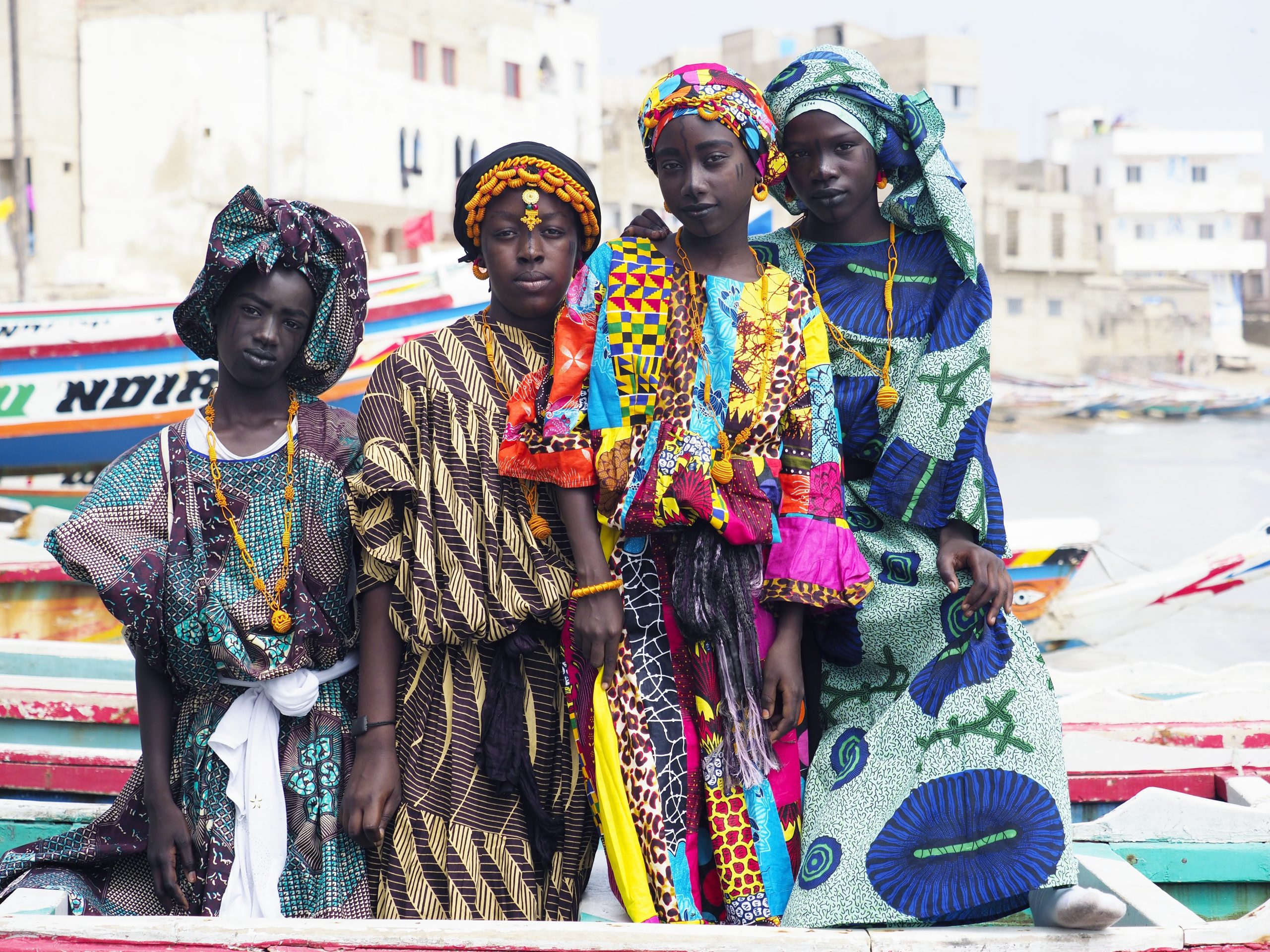
The most overlooked element of Dakar’s luxury fashion system is its textile supply chain, and the most important figure in that supply chain is Aissa Dione. Her eponymous fabric brand uses only cotton grown in West Africa, processed by local Senegalese workers, into textile patterns whose quality and specificity have attracted international luxury houses at the highest level. Hermès and Fendi have adopted Aissa Dione fabrics. The Japanese kimono brand Okujun has collaborated with her. These are not licensing deals that extract cultural references for Western use. They are supply chain relationships in which the creative and material authority remains with the Dakar-based producer.
The Aissa Dione model is the clearest proof that Dakar’s luxury fashion system has supply chain depth rather than only design surface. When Hermès sources fabric from a Senegalese producer who uses West African cotton and employs local workers, the creative and material value in that relationship is in Dakar. The French house is the buyer. The Senegalese producer controls the distinctive material that makes the purchase worth making. That is the supply chain position of a mature luxury system, not an emerging market.
Government as Institutional Actor
In July 2024, Senegalese President Bassirou Diomaye Faye appointed Sophie Nzinga Sy, whose fashion brand Sophie Zinga has been a fixture of Dakar’s designer ecosystem, as Director of the Agency for Handicraft Promotion and Development (APDA). This appointment is significant not as an individual career moment but as an institutional signal: the Senegalese government treating the fashion and craft industry as a domain serious enough to warrant experienced creative industry leadership at the agency head level.
Government involvement in the creative economy is a structural feature of mature luxury systems. France’s investment in its luxury sector through the Comité Colbert and related bodies, Italy’s artisan protection legislation, and Japan’s designation of traditional craft techniques as intangible cultural heritage all represent governments treating luxury as infrastructure worth protecting. The Senegalese government’s appointment of a fashion designer to lead the craft promotion agency is a version of the same logic. Dakar hosts Dakar Fashion Week, numerous designer ateliers, and a vibrant tailoring scene. The craft infrastructure that the APDA exists to promote is the material foundation of that scene.
Marché HLM and the Artisan Economy
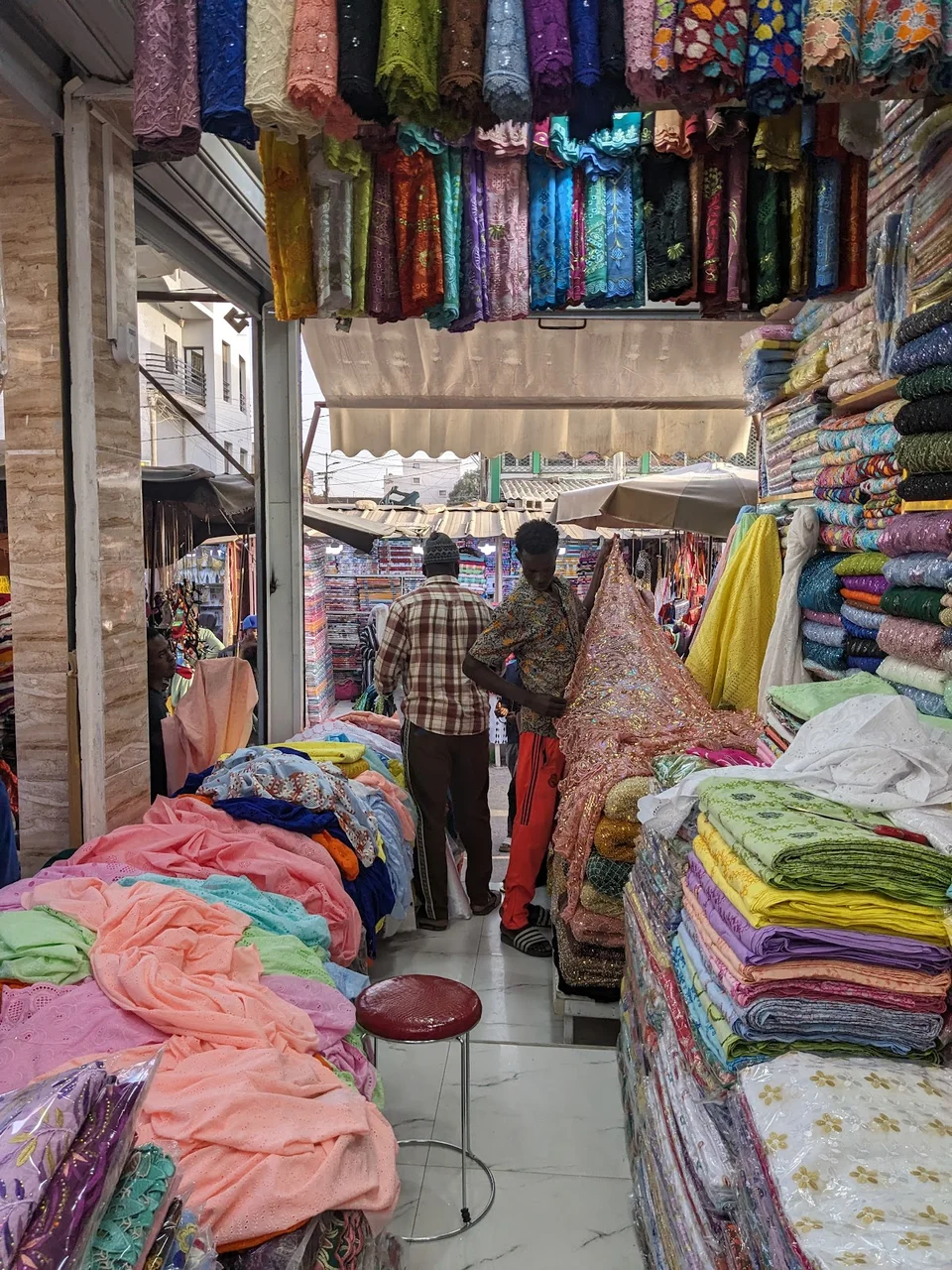
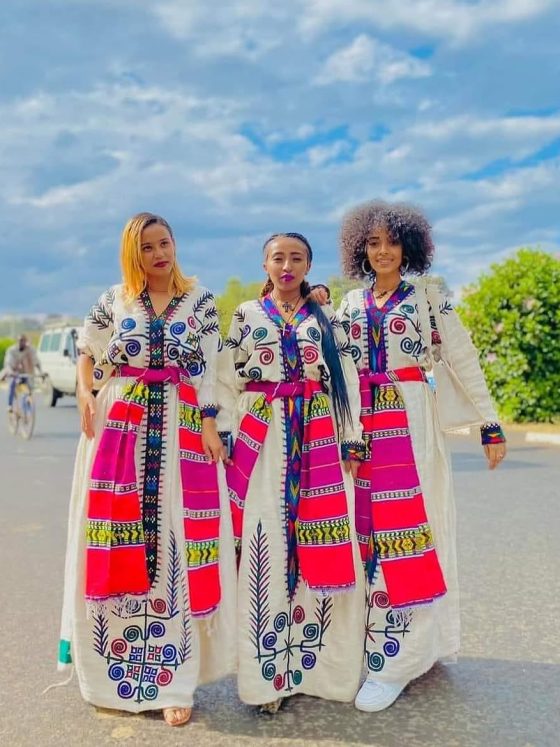
Dakar’s luxury fashion system is not only a story about its designer brands and its fashion week. It is also a story about Marché HLM, the city’s core clothing market, and the tailoring tradition that Dakar has sustained for generations. Senegalese youth incorporate grand boubou sleeves shortened into modern shirts, head wraps styled with hoodies, and embroidered fabrics combined with denim and sneakers. The street is the laboratory where Dakar’s luxury traditions are tested against contemporary life and adapted without losing their cultural foundation.
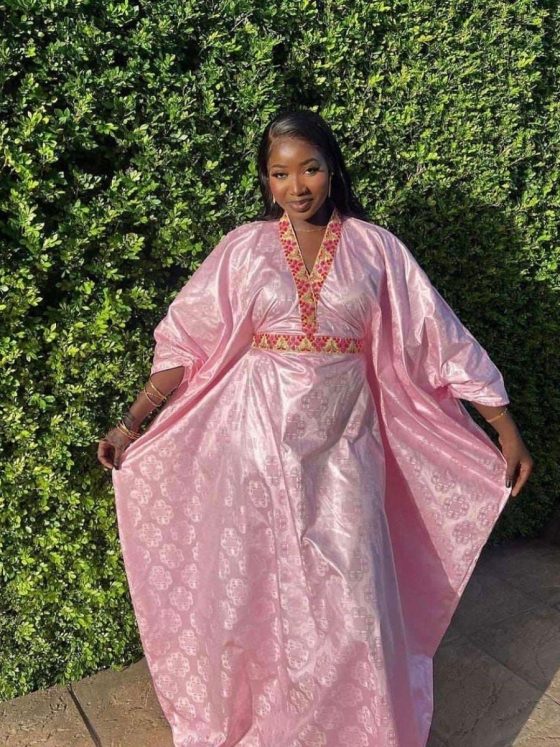
The bazin riche workshops, the tailoring studios that produce the grand boubou in tsamiya silk embroidery, and the Marché HLM traders who source and distribute fabric for the city’s ceremony and celebration culture: these are the artisan economy that underpins the designer brands. Tongoro manufactures in Dakar because those manufacturing skills exist in Dakar. Aissa Dione uses West African cotton because the knowledge for processing that cotton into high-quality fabric exists in the region. The designer brands are the visible face of a craft economy whose depth is the real competitive advantage.
What Dakar Is Not
Dakar is not building a European luxury system in West Africa. The distinction matters. European luxury is built on scarcity, heritage authentication through house history, and global distribution infrastructure that controls the narrative from a European centre. The cities that will lead African fashion are those building from cultural specificity outward rather than from European aspiration inward. Dakar is building from the boubou, from bazin riche, from Wolof jom, from the made-in-Dakar production model, from the artisan economy of Marché HLM, and from the institutional framework of a fashion week that has been running for over two decades. That is not European luxury. That is something Dakar owns.
Tommy Hilfiger, Levi’s, and Hugo Boss have expanded retail operations in Dakar. This is correctly read as recognition of Dakar’s consumer market, not as validation of Dakar’s creative authority. The two things are separate. Consumer market recognition from international brands confirms that Dakar’s middle class has sufficient purchasing power to justify retail investment. It does not determine what Dakar’s luxury system is or what it produces. The system Dakar is building is defined by Tongoro, Aissa Dione, Selly Raby Kane, and Dakar Fashion Week’s manufacturing plant ambition, not by Tommy Hilfiger’s retail footprint.
The Omiren Argument
Dakar is building its own luxury fashion system, and the evidence is no longer speculative. The African fashion market is worth $ 31 billion. Dakar’s contribution to that figure includes a fashion week platform that has operated for over two decades and is now planning to control its own manufacturing. This brand ecosystem includes Tongoro’s made-in-Dakar celebrity dressing, Aissa Dione’s supply relationship with Hermès and Fendi, Selly Raby Kane’s Afrofuturist design language, and DIARRABLU’s simultaneous presence at African fashion platforms and European luxury events. It includes the government appointment of a fashion designer to lead the craft promotion agency. It includes Marché HLM, the bazin riche workshops, and the tailoring tradition that makes production possible. None of this is emerging. All of it is operational. The Chanel show at Gorée in 2022 was not the beginning of Dakar’s luxury story. It was a European house recognising a system that Dakar had been building since before Dakar Fashion Week’s founding in 2002. Omiren Styles names that system clearly: it is Dakar’s, it is autonomous, and it is more developed than the emerging-market label has ever given it credit for.
ALSO READ:
- Top Senegalese Fashion Designers Influencing Global Style
- The Future of Senegal’s Fashion Industry
- The African Cities That Will Define Global Fashion by 2030
- Dakar Street Style: How Senegalese Youth Are Redefining African Fashion
Frequently Asked Questions
Is Dakar a luxury fashion city?
Yes, and more specifically, Dakar is actively building an autonomous luxury fashion infrastructure rather than simply aspiring to European luxury validation. The evidence includes Dakar Fashion Week, founded in 2002 and now operating with explicit plans for a manufacturing plant and full value chain control; brands including Tongoro (worn by Beyoncé, Alicia Keys, and Naomi Campbell while manufactured in Dakar), Aissa Dione (whose fabrics have been sourced by Hermès and Fendi), and Selly Raby Kane; and a craft economy including bazin riche workshops and the Marché HLM tailoring tradition that provides the artisan foundation for premium production.
What is Dakar Fashion Week?
Dakar Fashion Week was founded in 2002 by Adama Paris (Adama Amanda Ndiaye) as a platform to highlight African fashion talent. Over its more than two decades of operation, it has evolved into an explicitly industrial project: a self-determined ecosystem designed to control the entire fashion value chain from runway to retail distribution, with concrete plans for a dedicated manufacturing plant. It provides grants to young designers, creates international buyer and media exposure for Dakar-based production, and has hosted 20+ African designers per edition from Nigeria, Ghana, South Africa, Kenya, and across the continent.
What fashion brands come from Dakar?
The most internationally recognised Dakar-based luxury fashion brands include Tongoro (Sarah Diouf), known for made-in-Dakar production and celebrity dressing including Beyoncé and Naomi Campbell; Selly Raby Kane (founded 2012), known for Afrofuturist design merging West African tradition with technological elements; DIARRABLU (Diarra Bousso), a contemporary lifestyle brand showing internationally; Adama Paris (Adama Ndiaye), Dakar Fashion Week’s founder and a global advocate for African fashion; and Aissa Dione, a textile producer whose West African cotton fabrics have been adopted by Hermès and Fendi. Oumou Sy, known as Senegal’s Queen of Couture, is the foundational figure of the Dakar designer ecosystem.
What makes Dakar fashion different from European luxury?
Dakar fashion is built from cultural specificity outward rather than from European aspiration inward. Its luxury proposition is rooted in the Wolof concept of jom (dignity and composure expressed through dress), in the boubou and bazin riche tradition of the grand boubou, in the artisan craft economy of Marché HLM, and in the made-in-Dakar production model that brands like Tongoro treat as a competitive advantage rather than a compromise. European luxury is built on scarcity, house heritage, and distribution infrastructure managed from European centres. Dakar’s luxury is built on cultural authority, artisan depth, and a city whose creative economy has been developing independently for decades.
Why did Chanel show in Dakar?
Chanel staged its Métiers d’Art 2022 show on the island of Gorée in Dakar, making it the first time the French house had shown in an African country. International media framed the show as recognition of Dakar as an emerging luxury market. The more precise framing is that Chanel identified Dakar as a culturally significant location whose heritage (Gorée Island’s role in the transatlantic slave trade) provided the narrative depth that Métiers d’Art shows require. Dakar’s luxury system did not begin with the Chanel show. It had been building for more than two decades before Chanel’s arrival.
Explore More
Read the full Fashion > Industry section for Omiren Styles’ documentation of African fashion markets, city-by-city industry analysis, and the autonomous systems African fashion is building on its own terms.