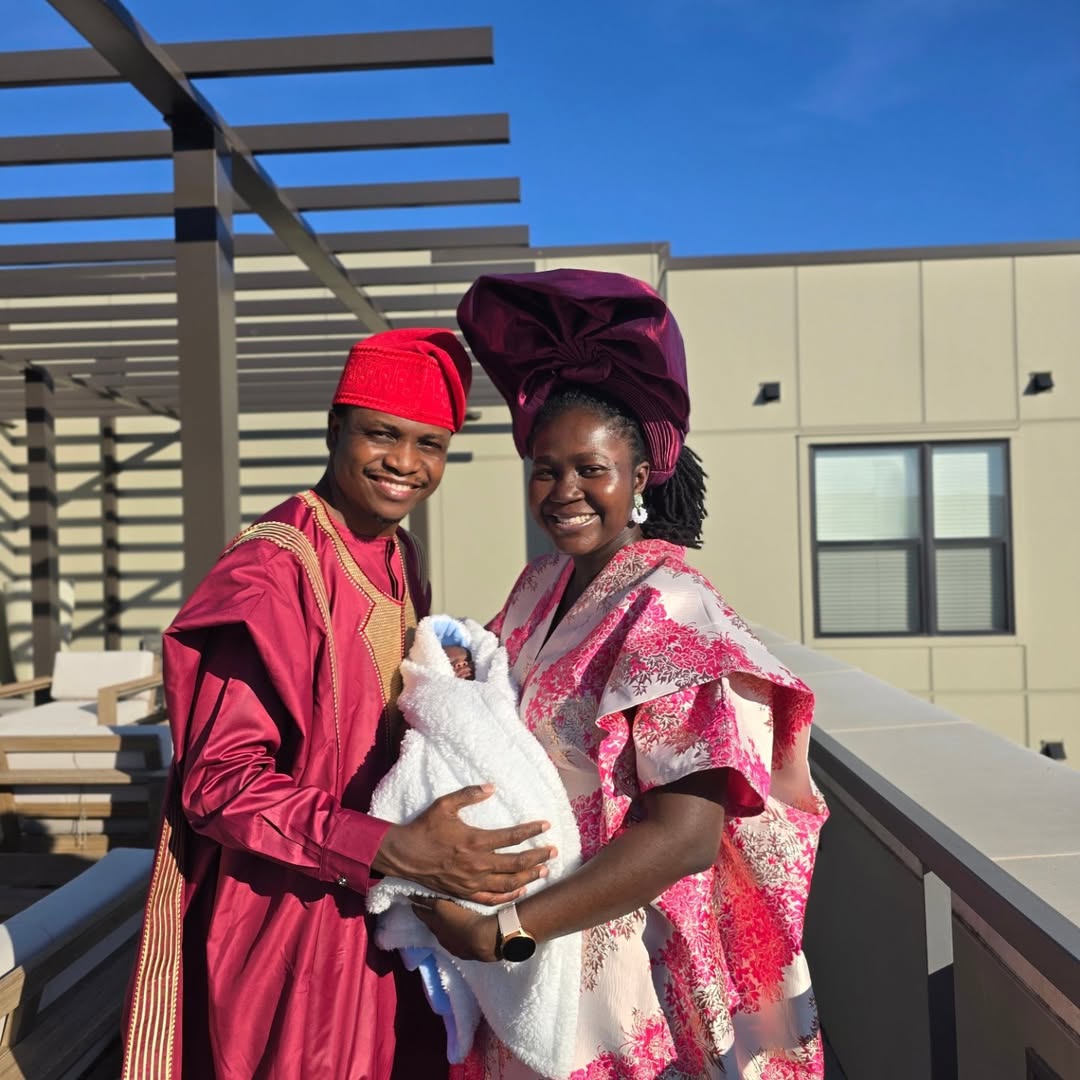
A Yoruba naming ceremony is not primarily about the name. The Isomoloruko, the ceremony on the seventh or eighth day after birth in which a Yoruba child is officially introduced to the world and given the names that will define their identity, is first about the gathering. The family selects a fabric weeks before the ceremony. They distribute it to relatives, friends, and community members according to the closeness of the relationship. On the day, every person who walks into that compound wearing the selected fabric is making a public declaration: I am here. I stand with this family. I claim a relationship with this child. The fabric is not decorative. It is a register of solidarity, drawn from the body of an ancient Yoruba practice that has governed how communities organise themselves at the moments that matter most for centuries. The fashion industry discovered aso-ebi. The Yoruba built it for entirely different reasons.
Aso-ebi translates literally as family cloth. Aso means cloth. Ebi means family group. The compound names both the material and its purpose in a single word: this cloth is what the family wears, making the family visible as a unit. When you enter a room wearing aso-ebi, you are not making a colour-coordination choice. You are announcing your position in a social map that the host family drew on fabric. The immediate family wears one fabric. The extended family wears another. The close friends and well-wishers wear a third. Each tier of the relationship has its own cloth. Everyone in the room can read the map. The gathering is legible.
The aso-ebi worn at a Yoruba naming ceremony is not part of the dress code. It is a social map. Every fabric tells the room who is who, what they owe the family, and who stands beside whom.
Aso-Ebi Naming Ceremony: The Protocol Behind the Fabric

The scholarly record on aso-ebi is clear about what the practice originally communicated. Economic historian Ayodele Olukoju traces its emergence as a distinct cultural phenomenon to 1920, during a post-World War I economic boom in Yorubaland, triggered by higher prices for palm oil products. But historian William Bascom traced the origin further back, to the Yoruba age-grade system in which members of the same age cohort wore uniform dress to mark their fraternal bonds. A November 2025 peer-reviewed paper published in African Identities traces the practice from its pre-colonial roots through its post-colonial metamorphosis, confirming that aso-ebi originated as a means of expressing fraternal bonds within communities before evolving into a broader national cultural practice. What began as the solidarity uniform of an age grade became the solidarity uniform of a family, and then of all Nigerian celebrations.
The naming ceremony is the occasion at which the aso-ebi’s original purpose, marking who belongs to what community structure, is most concentrated. A new child has arrived. The family needs to publicly and visibly establish who claims a relationship with that child and what kind of relationship it is. The aso-ebi is the mechanism. A designated family member, typically a sister, daughter, or close female relative, manages fabric selection and distribution in the weeks leading up to the ceremony. She is not an event coordinator in the fashion industry’s sense. She is the guardian of the social map. This person decides who receives which fabric and, therefore, who is assigned which position in the community’s declaration of support for the new arrival.
The Yoruba philosophy behind this practice is encoded in an adage that the academic literature on aso-ebi cites consistently: eniyan boni ara j’aso lo, which translates as human beings give you coverings more than clothing. The meaning is precise. As the peer-reviewed analysis in the RSIS International journal confirms, people around you in times of ceremonies are likened to covering your nakedness. Having people beside you in times of need or during your ceremony will give you joy, even if they did not bring a gift. The fabric is solid. The gathering is the gift. The aso-ebi makes that solidarity visible in a form that the whole community can witness and verify simultaneously.
What the Isomoloruko Ceremony Is Actually Doing
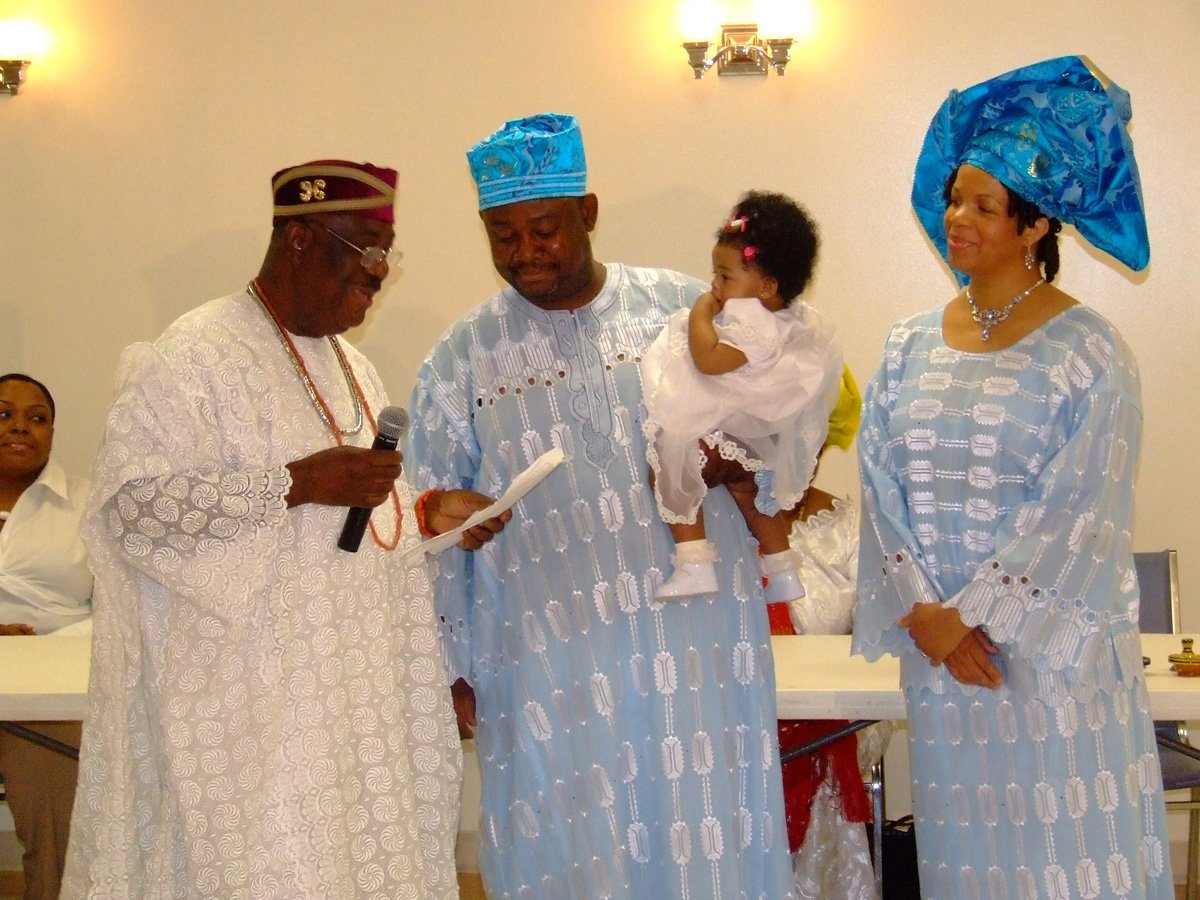
The Isomoloruko, the Yoruba naming ceremony, occurs on the seventh day after birth for girls and the eighth day for boys. However, contemporary practice often uses either the seventh or eighth day for both. The timing is not arbitrary. The Yoruba understanding is that a child’s spirit is not fully committed to the physical world in the first days after birth. The naming ceremony is the ritual that anchors the child in the community, gives the spirit a name and, therefore, a place, and formally introduces the new arrival to the ancestors and the living community simultaneously. The name given at the Isomoloruko is not a label. It is a spiritual contract.
The ceremony includes placing specific items on the baby’s lips, each of which carries theological significance. Water represents life. Honey represents the sweetness the family hopes will characterise the child’s path. Palm wine represents prosperity and the joys of living well. Kola nut represents long life and good fortune. Salt represents wisdom and the preservation of good character. Pepper represents the strength to face difficulty without breaking. Each substance placed on the child’s tongue is a prayer compressed into a material object, delivered through the body rather than through spoken word alone. The family gathers to witness the delivery of these prayers. The aso-ebi tells them which family is making them.
The names themselves encode the family’s theological position, recent history, and cultural inheritance. Yoruba names can record the circumstances of a birth: Àìná, given to a child born feet-first; Ìgè, given to a child born with the umbilical cord around the neck. They can encode the child’s relationship to the divine: names containing Oluwa, meaning God, or Orisa, indicating a specific deity. They can encode the family’s gratitude, aspiration, or acknowledgement of a difficult season. The name is not a personal identifier in the bureaucratic sense. It is a compressed narrative of who the child is, where they came from, and what the family understood about the moment of their arrival. The naming ceremony is the moment at which that narrative is delivered to the community. The aso-ebi is what the community wears to receive it.
The Yoruba have a saying: people around you give you coverings more than clothing. The aso-ebi is that saying, made visible. The fabric is solid. The gathering is the gift.
The Economics and the Tensions: What Aso-Ebi Has Become
The aso-ebi system, which began with Aso-Oke, the handwoven Yoruba fabric that is the tradition’s original material, expanded significantly from the mid-1960s onward, when imported lace and george entered Nigerian markets and became popular aso-ebi fabrics. The expansion of available materials accelerated the expansion of the practice itself. By the 2000s, Nollywood films and celebrity weddings had elevated aso-ebi to a national and then international phenomenon. Nigerian diaspora communities in London, Atlanta, Houston, and Toronto coordinate aso-ebi for naming ceremonies, weddings, and funerals. Wikipedia’s documentation of aso-ebi’s spread confirms that in Sierra Leone and Cameroon, the practice has been adopted as Ashobi, with many participants unaware of its Yoruba origins. The practice has spread faster than its etymology.
The commercialisation of aso-ebi has introduced tensions that the academic literature documents honestly. Some contemporary events offer regular and premium aso-ebi tiers, with the quality of fabric determining where a guest sits in the venue. The original protocol, in which fabric communicated relationship proximity rather than purchasing capacity, is partially inverted when a guest can buy their way into a closer fabric tier without the family relationship that tier was meant to signal. Some Nigerian churches have attempted to regulate or discourage aso-ebi practice on the grounds of financial pressure on guests who feel socially obligated to purchase the fabric. The criticism that aso-ebi promotes extravagance and financial strain appears in the academic literature alongside the evidence of its enduring cultural significance.
These tensions are not a sign that the tradition is breaking down. They are evidence of a living practice negotiating the conditions of contemporary life. The age-grade uniform that became a family uniform that became a national cultural phenomenon is now a diaspora phenomenon and a commercial market segment simultaneously. The aso-ebi industry supports tailors, fabric vendors, makeup artists, and photographers across Nigeria and the diaspora. The coordination of aso-ebi for a major naming ceremony or wedding in Lagos can involve dozens of fabric suppliers, hundreds of metres of cloth, and the labour of tailors working for weeks. The original practice of marking community solidarity in fabric has given rise to one of Nigeria’s most commercially significant creative economies.
Also Read:
- The Significance of White in African Mourning: Why the Continent’s Grief Dress Is Not What the West Assumes
- The Egungun Masquerade: What the Yoruba Ancestral Festival Tells Us About Fashion and the Spirit World
- AMVCA 12 Cultural Night: When Nigerian Stars Dressed With Memory
- The Aso-Oke Weaver Crisis: What Happens When the Artisans Who Make Nigeria’s Most Important Cloth Can No Longer Afford to Weave It
What the World Has Still Not Properly Understood About Aso-Ebi
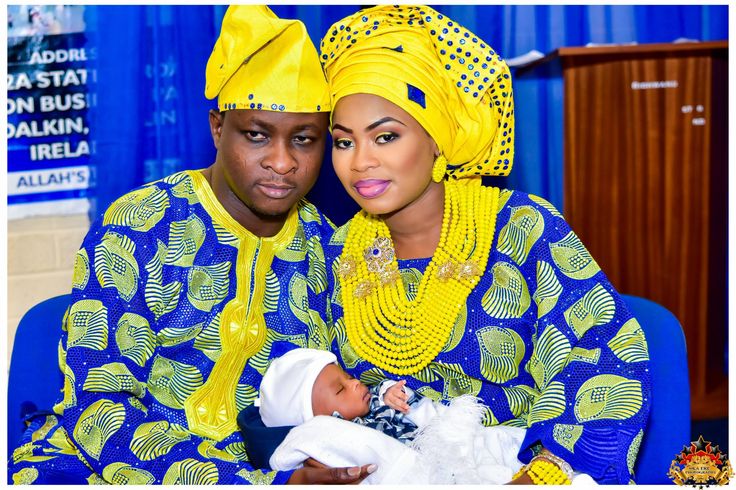
The international fashion industry’s engagement with aso-ebi has been primarily aesthetic: the coordinated colour spectacle of Nigerian celebrations photographed for glossy publications, the striking visual unity of a room in which everyone is wearing the same fabric in different styles. What that engagement misses is the governance function. Aso-ebi is not primarily about how the gathering looks. It is about who shows up and how the showing up is recorded. When a family member in the diaspora receives a WhatsApp message with the aso-ebi fabric details for a naming ceremony in Lagos, orders the fabric, has it made up, and wears it to the livestreamed ceremony, they are not making a fashion statement. They are executing a social obligation that the community will notice and register. The fabric is the attendance record.
The naming ceremony is the moment when this governance function is most concentrated, as it is when the newest member of the community is introduced to the social structure that will support them. As the Springer Nature peer-reviewed analysis confirms, aso-ebi is the practice whereby family members, friends and well-wishers support the celebrant through buying uniform clothes worn during celebrations. The support is not metaphorical. It is material. The fabric purchased contributes to the celebration’s costs. The presence signalled is a commitment to the child’s community network. The aso-ebi at a naming ceremony is the community constituting itself around the newest arrival, in the most visible and legible form the Yoruba tradition has developed for doing so.
The Omiren Argument
Aso-ebi is a social governance system built in fabric, and the naming ceremony is its most structurally significant deployment. At the Isomoloruko, the Yoruba family uses the fabric to constitute the community that will support the new child: to make visible who is present, to establish the tiers of relationship, to create a public record of solidarity that everyone in the room can witness and verify. The fashion industry’s discovery of aso-ebi as a spectacular visual phenomenon has produced excellent photography and significant commercial activity. What it has not produced is an adequate engagement with what the fabric is actually doing. The aso-ebi is not worn for the camera. It is worn by the child being introduced to the community that will shape their life. That is a purpose the fashion editorial system has consistently under-read.
Omiren Styles covers aso-ebi as what it is: one of the most sophisticated social communication systems in West African dress culture, built on a specific Yoruba philosophy of mutual obligation, refined across the colonial and post-colonial periods, and now operating across six continents wherever Nigerian communities gather for the ceremonies that matter most. The naming ceremony is where the practice is oldest and most precise in its meaning. The fabric is solid. The gathering is the gift. The aso-ebi is the Yoruba community declaring itself into existence around the newest arrival, in the clearest language it has developed for saying: we are here, we stand together, and this child is ours.
Frequently Asked Questions
What is the Yoruba naming ceremony, and when does it take place?
The Isomoloruko is the Yoruba naming ceremony, the formal occasion on which a newborn child is officially introduced to the world and given the names that will define their identity. Traditionally, girls were named on the seventh day after birth and boys on the eighth day. Contemporary practice often uses either the seventh or eighth day for both. The ceremony is understood in Yoruba theology as the ritual that anchors the child’s spirit in the physical world and formally introduces the new arrival to both the ancestors and the living community. The name given is not merely a label but a spiritual contract encoding the family’s theological position, recent history, and cultural inheritance.
What does aso-ebi mean, and what is its origin?
Aso-ebi is a Yoruba term meaning family cloth. Aso means clot,h and ebi means family group. The practice involves family members, friends, and well-wishers wearing the same fabric to ceremonies as a declaration of solidarity and relationship with the hosting family. Historian William Bascom traced the origin to the Yoruba age-grade system, in which members of the same age cohort wore uniform dress to mark fraternal bonds. Economic historian Ayodele Olukoju notes that aso-ebi gained wider cultural prominence as a named phenomenon in 1920 during a post-World War I economic boom in Yorubaland. The original fabric for aso-ebi was Aso-Oke, the handwoven Yoruba cloth, before imported lace and george became popular from the mid-1960s.
How does aso-ebi communicate social relationships at a naming ceremony?
The aso-ebi system uses different fabrics, colours, or quality tiers to communicate different degrees of relationship proximity to the hosting family. Immediate family may wear one fabric, extended family another, close friends a third, and specific community groups, such as church members or professional colleagues, their own fabric within the colour system the family establishes. A designated family member, often a sister, daughter, or wife of the celebrant, manages the selection and distribution of fabric. The system makes the community’s structure legible to everyone in the room simultaneously, creating a visible map of who stands in what relationship to the family and to the new child.
What is the philosophical basis of the aso-ebi tradition?
The aso-ebi tradition is built on a specific Yoruba philosophy of mutual obligation encoded in the adage eniyan boni ara j’aso lo, which translates as human beings give you coverings more than clothing. The adage means that the people who gather around you at significant moments offer a form of protection and support that goes beyond what clothing itself can provide. The aso-ebi materialises this philosophy: the fabric is solidarity made visible, and the gathering of people wearing it is the community declaring its commitment to the family being celebrated. The gift is not the fabric. The gift is the showing up. The aso-ebi is the record of the showing up.
How has aso-ebi spread beyond the Yoruba community?
Aso-ebi has spread from its Yoruba origins to become a national Nigerian cultural practice adopted across Igbo, Hausa, Edo, and other ethnic communities. Among the Igbo, it is known as Akwa-Otu. It has been adopted in Sierra Leone and Cameroon, where it is called Ashobi, often with participants unaware of its Yoruba origins. Nigerian diaspora communities in London, Atlanta, Houston, Toronto, and across the United States and Europe coordinate aso-ebi for naming ceremonies, weddings, and funerals. Nollywood films and celebrity weddings from the 2000s accelerated its international visibility. The practice now supports a significant commercial ecosystem of tailors, fabric vendors, makeup artists, and event coordinators across Nigeria and the diaspora.
Explore More
Read the full Culture > Ceremony & Ritual section for Omiren Styles’ documentation of the ceremony dress systems, social communication protocols, and community governance traditions that African cultures have been building and maintaining for centuries.