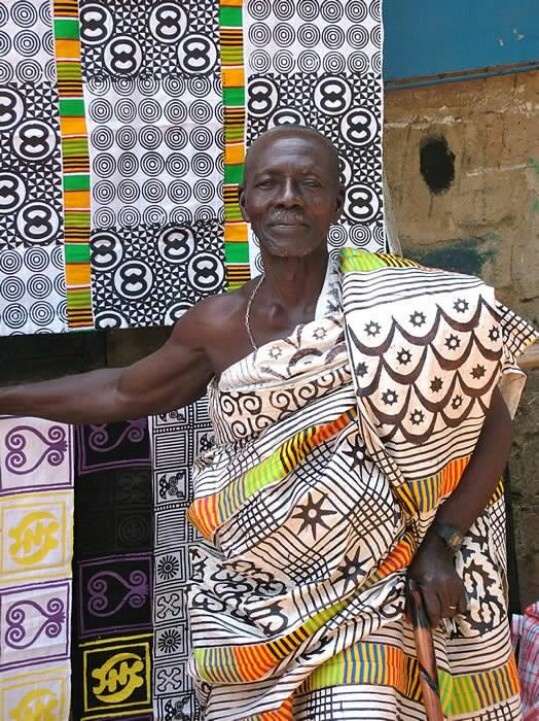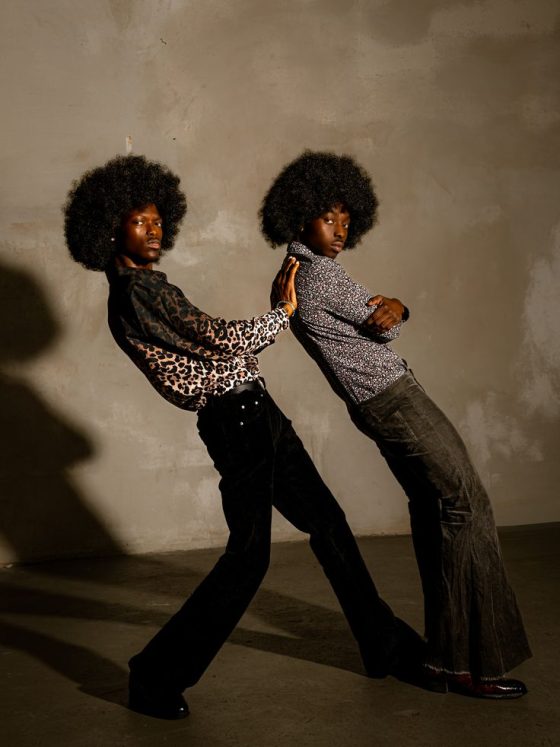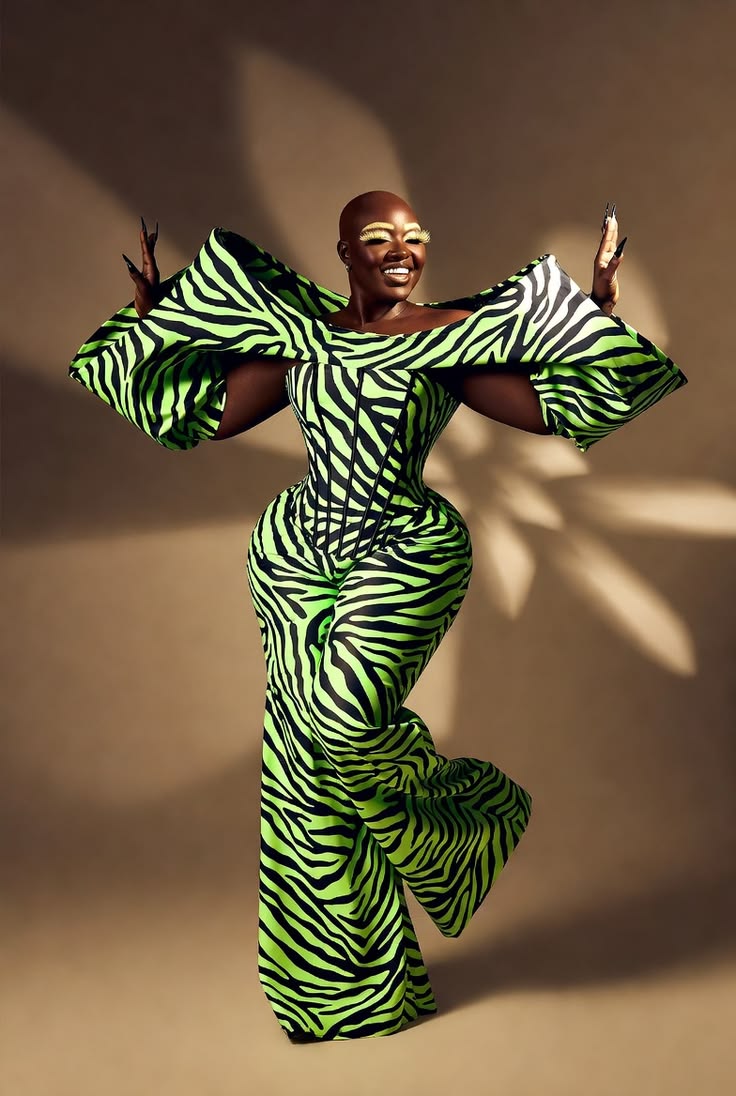
There is a fabric so deeply embedded in West African identity that a continent has built ceremonies, markets, political movements, and an entire visual culture around it. Mothers wrap their newborns in it. Presidents wear it to inaugurations. Women name their children after their parents. When Congo gained independence in the early 1960s, the new government decreed that citizens must wear it as proof of their Africanness. It is, by any reasonable measure, one of the most culturally significant fabrics in the world.
It was designed in the Netherlands. It was built to sell in Indonesia. The Indonesians rejected it. And it ended up in West Africa through the machinery of Dutch colonial trade, where it was claimed, transformed, and made into something that could not be mistaken for anything but African. That journey is one of the most fascinating stories in fashion history and one of the most unresolved. The fabric the world calls African print, Ankara, Dutch wax, or pagne is not simply African. But it is not simply Dutch either. What it actually is sits at the intersection of three continents, two colonisations, and one hundred and fifty years of women making something extraordinary from someone else’s failed commercial venture.
The fabric globally marketed as African print was designed in the Netherlands, rejected in Indonesia, and claimed by West African women who built an entire cultural language from it. The ownership question has never been answered.
It Started as a Copy of a Copy
Batik is a Javanese textile tradition dating back centuries, involving the careful application of hot wax to cloth to resist dye and create intricate patterns. It is a painstaking, skilled, deeply cultural practice in which the cloth carries ceremonial meaning and social information in its designs. In the mid-nineteenth century, Dutch colonial merchants in the Dutch East Indies saw a commercial opportunity. They attempted to mechanise batik production using copper roller printing technology and a waxy resin process. The goal was to produce a cheaper, faster version of something Indonesian artisans spent weeks making by hand and sell it back to the Indonesian market.
It did not work. The Indonesian market rejected the machine-made imitation immediately. The cloth had a distinctive crackle effect, with small veins of pigment leaking through the wax resist, which handmade batik did not have. More fundamentally, the Indonesians knew what real batik felt like, smelled like, and meant, and the Dutch substitute was none of those things. The Dutch East Indies went so far as to ban the sale of Dutch imitation batik in the nineteenth century. Pieter Fentener van Vlissingen, whose textile printing company in Helmond would later become Vlisco, had a product with nowhere to go. Then Dutch trading vessels began to stop at West African ports along their colonial shipping routes, and everything changed.
The Belanda Hitam Connection
The speed with which Dutch imitation batik was accepted in West Africa has puzzled historians, and one of the most compelling explanations involves a group of men known as the Belanda Hitam, meaning Black Dutchmen. Between 1831 and 1872, the Dutch colonial army recruited West African soldiers from the Gold Coast, present-day Ghana, to serve in the Royal Netherlands East Indies Army during the Dutch colonisation of Indonesia. Thousands of these men spent years in Java, where batik was everyday life. When their service ended, many retired to Elmina in modern Ghana, bringing with them a familiarity with batik cloth that no other West African community shared.
The theory, supported by multiple textile historians, is that the Belanda Hitam provided the earliest market for Dutch imitation batik in West Africa, with their familiarity with the fabric creating an initial demand that Dutch and Scottish traders quickly recognised and began supplying. By the 1880s, Dutch and Scottish trading vessels were regularly landing the cloth at West African ports. The success was immediate and decisive. What had failed commercially in one colonial context found its market in another. The same colonial infrastructure that had extracted the soldiers and the trade routes provided the distribution network that turned a rejected product into a continent’s signature fabric.
West African Women Rewrote the Fabric
The transformation of Dutch imitation batik into what we now understand as African print is not a passive story of adoption. It is an active story of cultural reauthorship, driven almost entirely by West African women. From the earliest years of the trade, women in West and Central Africa began naming the fabrics, assigning meanings to their patterns, and using them as a social communication system in ways unrelated to the Dutch designers who created the prints.
A fabric featuring open bird cages with two birds flying out became known as Si tu sors, je sors, meaning “You leave, I leave,” a statement directed at unfaithful husbands. Another pattern, named after a Togolese businesswoman, communicated exclusivity through its controlled distribution. The alphabet pattern, created in 1920, was worn by women who had attended colonial schools and could read and was a declaration of literacy and education. The Awoulaba pattern, popular in the 1980s, celebrated women with generous curves. None of these meanings came from Vlisco. They were given to the fabric by the communities that wore it, building a language from a cloth that arrived without one.
The Mama Benz and the Market Power
African women also built the commercial architecture of the Dutch wax trade in West Africa. The Mama Benz of Togo and Benin are the most documented example: a class of wealthy female cloth merchants who controlled the distribution of Dutch wax prints across their regions, negotiating exclusive rights to specific patterns from Vlisco, naming the fabrics, and building personal fortunes large enough to earn them the nickname Mama Benz, referring to the Mercedes-Benz cars they could afford to buy. Nana Benz is the term used in Togo, where these women wielded economic and social power that was genuinely extraordinary in the context of colonial and post-colonial West Africa.
These women were not simply retailers. They were cultural arbiters, deciding which patterns reached which markets, which fabrics carried which meanings, and which designs became associated with specific communities, occasions, or social statuses. Vlisco’s own documentation acknowledges that some patterns were named after the Nana Benz, who held exclusive rights to sell them. The Santana Wax Hollandais pattern, for instance, was named after Madame Santa Anna Nelly, one of the Nana Ben, to whom Vlisco granted exclusive selling rights. The Dutch company designed the cloth. An African woman named it, controlled its distribution, and became wealthy from it. Who owns that fabric is not a simple question.
Vlisco’s Business Model Is the Problem
Vlisco was founded in 1846, rebranded in 1927, and has dominated the West African wax print market for over 150 years. Its headquarters and primary production facility remain in Helmond, the Netherlands. Its 27-step production process, involving both machine and hand techniques that take two weeks to complete, is a closely guarded trade secret. Since 1963, every genuine Vlisco fabric has been stamped with “Guaranteed Dutch Wax Vlisco” on the selvedge, a branding decision made, ironically, to protect a company whose very origin was the imitation and industrialisation of someone else’s traditional craft.
The Vlisco Group today owns four brands: Vlisco, produced in the Netherlands; and Woodin, Uniwax, and GTP (Ghana Textiles Printing Company), produced in Ghana and Côte d’Ivoire. The African-produced brands were established partly in response to the doubling of import duties in several West African countries in the mid-1960s. The company employs around 2,700 people, approximately 900 in the Netherlands and 1,800 in Africa. The profits, the brand ownership, the intellectual property of the designs, and the company headquarters remain in Europe. The cultural identity the fabric carries is West African. That structural separation is the Vlisco problem in its clearest form.
China, Copies, and the Current Market
Vlisco’s position as the prestige end of the wax print market is now under sustained pressure from Chinese manufacturers who have been producing increasingly high-quality imitations of Dutch wax at significantly lower prices. The same dynamic that Vlisco itself created, a cheaper machine-made copy displacing a more expensive artisanal original, has returned to the market with Vlisco now in the position of the original being undercut. The irony is structural and complete.
For West African consumers, the Chinese prints present a practical reality: the same visual vocabulary at a fraction of the price. For West African designers and cultural commentators, the Chinese entry into the market raises the same questions the Dutch presence has always raised, but louder. If the fabric is culturally African because of what African women have done with it over 150 years, then who is entitled to produce it, profit from it, and define what counts as authentic? Vlisco’s Guaranteed Dutch Wax stamp was always a commercial authenticity claim, not a cultural one. The Chinese manufacturers are simply making the same commercial calculation that Vlisco made in the 1850s. The West African women who shaped the cultural meaning of this fabric have never held intellectual property rights. They have only ever held the culture.
Yinka Shonibare and What Art Said First
The most sustained engagement with the ownership question in visual culture came not from the fashion industry but from British-Nigerian artist Yinka Shonibare MBE, who has spent decades using Dutch wax print fabric to dress headless Victorian mannequins in baroque gowns and elaborate historical costumes. The work is a direct commentary on the entanglement of African identity with European colonial commerce, using the fabric’s own contradictory history as its medium. Shonibare’s statement on the matter is as precise as any legal argument: a picture of a pipe isn’t necessarily a pipe. An image of African fabric isn’t necessarily authentic and wholly African.
The Philadelphia Museum of Art’s exhibition Vlisco: African Fashion on a Global Stage, part of its Creative Africa programming, took up the same question institutionally, documenting Vlisco’s colonial origins while demonstrating the fabric’s deep integration into African fashion culture. The exhibition does not resolve the contradiction. It does not pretend there is an easy resolution. What it does is make the contradiction visible, which is more than the fashion industry’s standard practice of selling the fabric as African print without any acknowledgement of the Dutch company whose name is literally stamped on every genuine piece.
The Ownership Question the Industry Ignores
The global fashion industry’s use of Ankara and African print as aesthetic references and marketing terms has accelerated significantly since the mid-2010s. International brands have produced Ankara-print collections, Ankara-inspired capsules, and Ankara-adjacent runway moments without engaging with the fabric’s actual history or the economic structures through which it is produced and distributed. The cultural weight that West African women built into this fabric over 150 years is freely borrowed. The royalty flow runs to Helmond.
African textile manufacturers, including DaViva in Nigeria, Sotiba Simpafric in Senegal, Akosombo Textiles Limited in Ghana, and the African-produced Vlisco subsidiaries, exist and produce quality cloth. The structural problem is not that African production is impossible. It is the energy infrastructure deficits across West African manufacturing centres that make it difficult to compete at scale with European and Chinese producers. Until that changes, the economics of the trade will continue to route the bulk of its value away from the continent whose identity the fabric carries. The ownership question is not just cultural. It is economic, infrastructural, and political. And the fashion industry’s silence on it is a choice.
READ ALSO:
- The Ankara Economy: How a Fabric Became a Continent’s Most Exported Fashion Statement
- The Ankara Abroad: How West African Print Became a Global Style Language
The Omiren Argument
The fashion industry has a comfortable answer to the Ankara ownership question: West African women claimed this fabric and made it their own, and cultural ownership is what matters. That answer is true and convenient because it allows the industry to celebrate African cultural creativity without addressing the economic architecture that continues to extract value from it. Vlisco has profited from West African cultural identity for over 150 years.
The women who named the patterns, built the distribution networks, and made the fabric mean something are not shareholders. The Nana Benz of Togo built personal fortunes, yes, but the intellectual property of the designs, the production technology, and the brand equity remained in the Netherlands. What the industry calls African print is a fabric whose cultural meaning is entirely African and whose economic infrastructure is almost entirely not. Until those two facts can sit together in the same sentence – in brand marketing, in fashion press, and in the terms under which the fabric is sold – the ownership question is not answered. It is avoided. This article does not avoid it.
Frequently Asked Questions
- What is Ankara fabric, and where does it actually come from?
Ankara, also known as African wax print or Dutch wax print, is a machine-printed wax-resist cotton textile. Its origins lie in Dutch attempts in the mid-nineteenth century to reproduce Indonesian batik cloth mechanically. When the Indonesian market rejected the imitation, Dutch and Scottish trading vessels began introducing the fabric to West African ports in the 1880s, where it found immediate commercial success. The term ‘Ankara’ is believed to derive from a Hausa bastardisation of ‘Accra’, the Ghanaian capital that served as a major hub for the fabric trade. The fabric itself has no African origin: it is an industrial imitation of an Indonesian tradition, produced in the Netherlands and introduced to West Africa through colonial trade routes.
- Who is Vlisco, and why are they significant?
Vlisco is a Dutch textile company founded in 1846 in Helmond, Netherlands, by Pieter Fentener van Vlissingen. It is the dominant producer of authentic Dutch wax print fabric for the West African market and has held that position for over 150 years. The company rebranded as Vlisco in 1927 and, since 1963, has stamped every genuine piece with “Guaranteed Dutch Wax Vlisco” to distinguish its products from imitations. Vlisco’s production process involves 27 steps, takes two weeks, and remains a closely guarded trade secret. The Vlisco Group today owns four brands: Vlisco, produced in Helmond; and Woodin, Uniwax, and GTP, produced in Ghana and Côte d’Ivoire. The company employs approximately 900 people in the Netherlands and 1,800 in Africa.
- Why did the Indonesians reject Dutch wax prints?
When Dutch manufacturers introduced their machine-made imitation batik to the Indonesian market in the mid-nineteenth century, the Indonesian population rejected it for several reasons. The machine-produced cloth had a distinctive crackle effect, caused by pigment leaking through the wax resist, that authentic handmade batik did not have. More fundamentally, real batik in Java was not simply cloth: it was a ceremonial, culturally significant textile whose value was inseparable from the knowledge, skill, and time invested in making it by hand. A mechanical substitute, however visually similar, carried none of that meaning. The Dutch East Indies colonial administration went so far as to ban the sale of Dutch imitation batik to protect the Indonesian textile market.
- What are Mama Benz and Nana Benz?
The Mama Benz, called Nana Benz in Togo, were a class of wealthy female cloth merchants in West and Central Africa who controlled the distribution of Dutch wax prints in their regions from roughly the mid-twentieth century onwards. They negotiated exclusive rights with Vlisco to sell specific fabric patterns in their territories, named the fabrics, and built personal fortunes significant enough to afford Mercedes-Benz vehicles, which gave them their name. The Nana Benz of Togo were particularly well-documented, wielding economic and social power that was remarkable in the context of post-colonial West Africa. These women were not simply retailers: they were cultural arbiters who determined which patterns reached which markets and which fabrics became associated with specific communities and occasions.
- How have West African women transformed the meaning of Ankara?
West African women have systematically assigned cultural meanings to Ankara patterns unrelated to their Dutch designers, building a social communication system in which specific prints convey specific messages. Fabrics have been named after women who held exclusive selling rights, community events, social conditions, political moments, and proverbs in local languages. Patterns communicate marital status, educational background, religious affiliation, and social commentary. The fabric named Si tu sors, je sors, meaning “You leave, I leave,” was a statement about marital expectations expressed through fabric choice. This layer of meaning was entirely constructed by African women and communities over 150 years, and it is what gives the fabric its cultural weight in West African life.