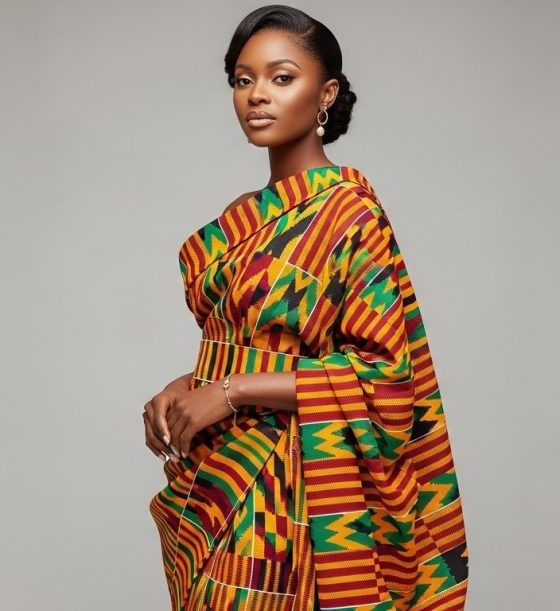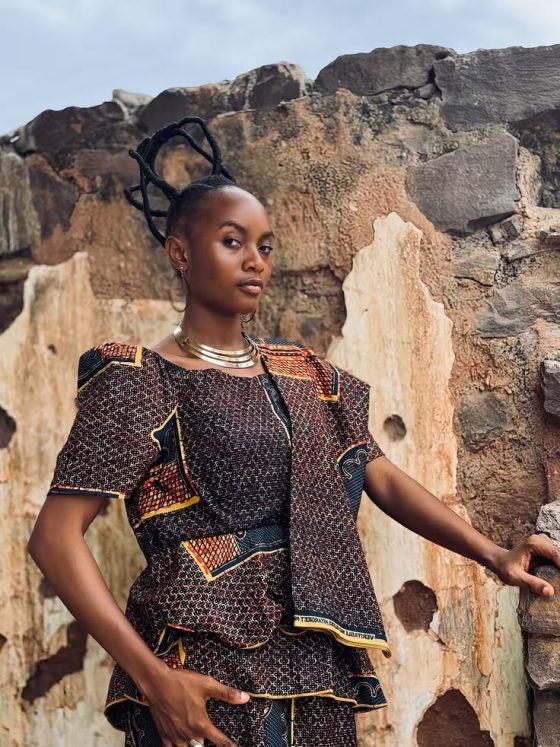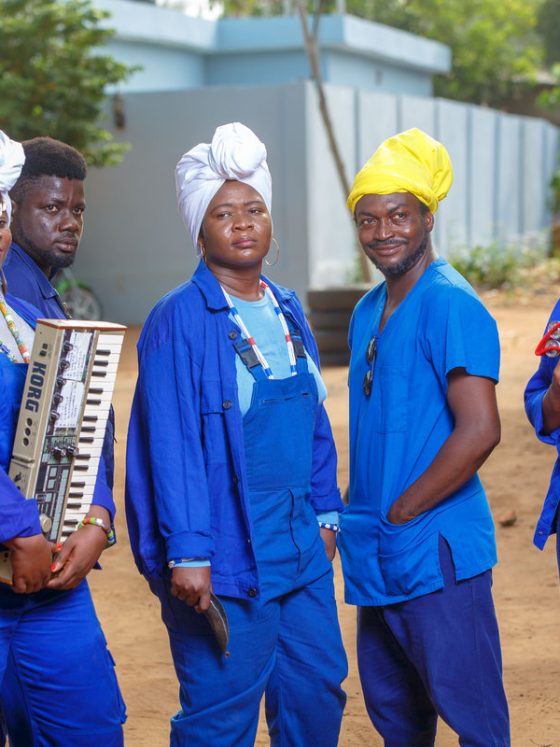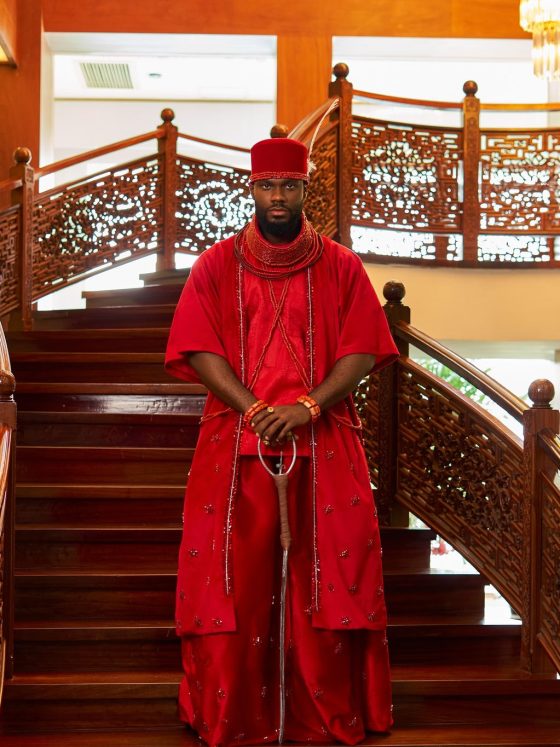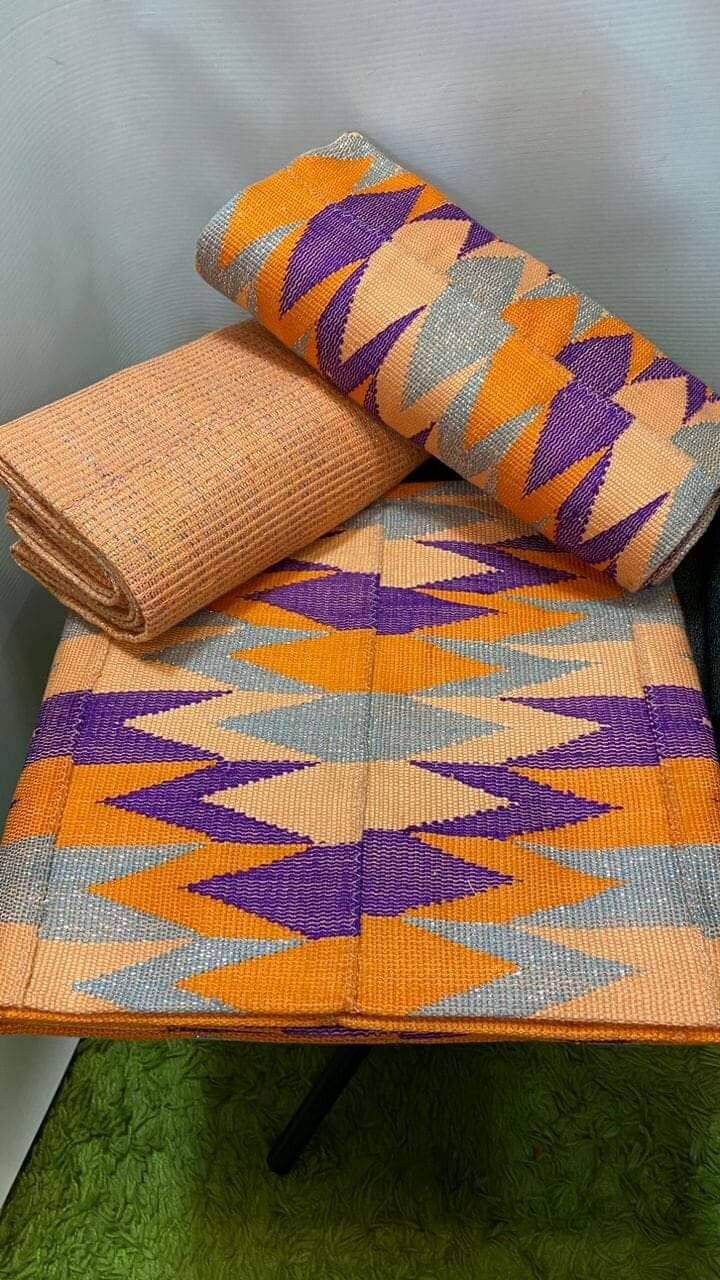
The comparison to kente is a useful door. Both are handwoven West African textiles with royal associations, both are being reintroduced to contemporary fashion by a new generation of designers, and both carry cultural weight that printed fabrics cannot replicate. But walk through that door, and the comparison ends. Kente originates from the Ashanti and Ewe peoples of Ghana, is woven primarily from silk and cotton on a strip loom, and carries a codified system of geometric symbolism understood by a democratic community of wearers. Kanvô originates from the Dahomey Kingdom, is woven from cotton, linen, and hemp, and was worn exclusively by kings for most of its history.
They are not the same textile. They are not the same story. The kente comparison is a search term. This article is about what lies behind it.
Kanvô is Benin Republic’s signature handwoven cloth. The word means “woven cloth” or “woven loincloth” in Fon, the language of the Dahomey Kingdom’s dominant ethnic group. In northern Benin, among the Baatonu people, it is called Tako. It is woven from threads of cotton, linen, or hemp, produced by two distinct ethnic communities in two distinct geographic traditions, and it carries the weight of a civilisation that understood cloth as a form of political speech. In October each year, it features in Tu consommes local, Benin’s government-backed Consume Local campaign, positioned alongside other nationally produced goods as a matter of economic identity.
The Omiren Argument: kanvô is not Benin’s answer to kente. It is Benin’s own question, a textile with its own royal history, its own material logic, and its own contemporary designers, and the kente comparison is useful only as a door into a story that kente cannot contain.
Kanvô is Benin’s signature handwoven cloth, once reserved for Dahomey kings, now being reclaimed by a new generation of designers. Here is its full story.
How a King Brought a Weaver Home from War

The southern origin story of kanvô is the one that most Beninese designers invoke. According to documented tradition, it was introduced to the Dahomey Kingdom by King Agonglo at the end of the 18th century. During a conquest into Yoruba territory, Agonglo encountered a young weaver whose skill was so extraordinary that the king brought him back to Abomey as his personal tailor. The craft took root. King Ghezo later consolidated it, establishing large families of weavers throughout the kingdom. King Behanzin, the last independent ruler of Dahomey before French colonisation, wore kanvô on great occasions.
This is not mythologised heritage. It is a documented craft lineage, and it matters for how kanvô is understood today. The fabric did not emerge from a village tradition accessible to all. It emerged from a royal court with specific political intentions. Wearing kanvô was not a fashion choice in the contemporary sense. It was a declaration of rank.
The northern origin story is separate and distinct. In Benin’s north, the Gurma people of Burkina Faso are credited with introducing the weaving tradition to the Baatonu people. This is why northern kanvô, called Tako, resembles Burkina Faso’s Faso Dan Fani more closely than it resembles the southern Fon tradition. Two ethnic groups, two regional lineages, one name across the country. The fabric is not one thing. It is a family of related practices with a shared material base and a shared royal association.
What Kanvô Is Made of and Why It Matters
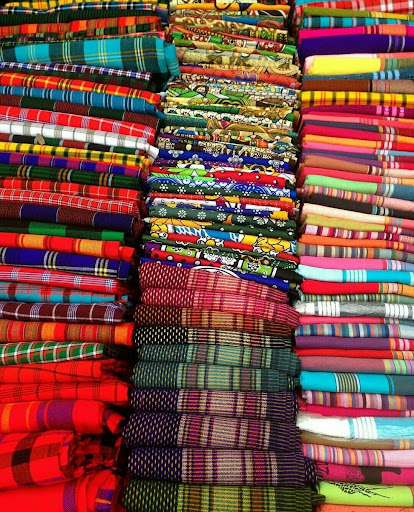
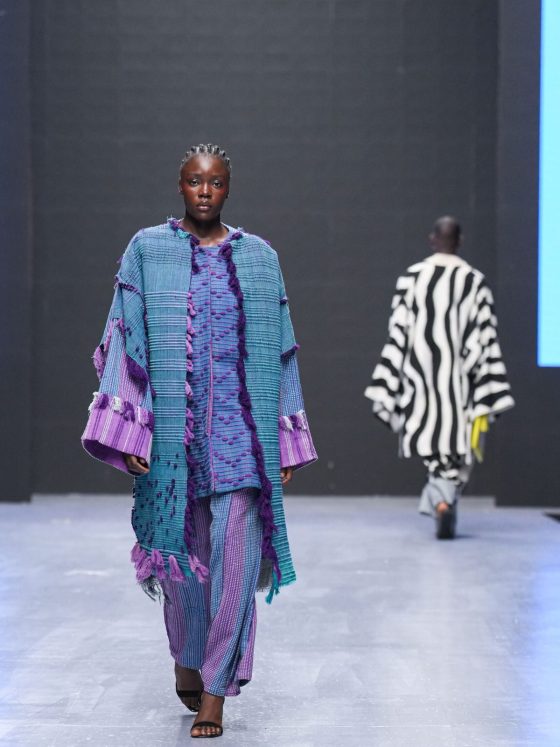
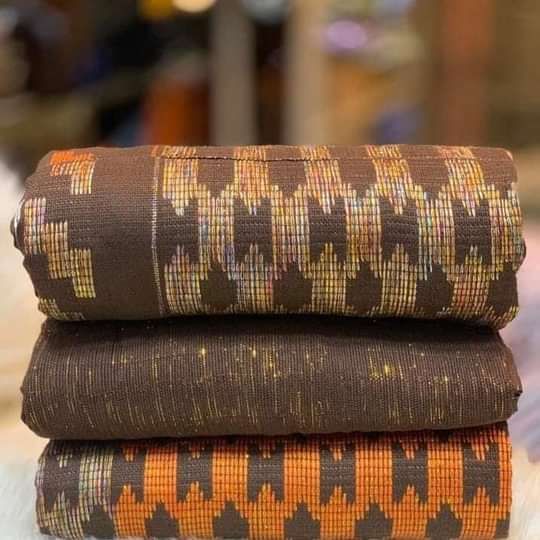
Kente is associated primarily with silk. The finest kente pieces use bright, commercially produced silk threads that catch light and produce the sheen that has made the fabric internationally recognisable. Kanvô uses cotton, linen, and hemp. These are materials grown in the ground, hand-processed, and woven slowly. In its original form, kanvô is heavy. It sits on the body with authority rather than movement. Contemporary designers have worked to change this by mixing kanvô with silk and other lighter materials to make it more wearable with modern silhouettes. Still, the material base remains rooted in Benin’s own agricultural production.
This is not a minor distinction. Cotton is Benin’s primary export crop. The country is Africa’s largest seed cotton producer and ranks among the top ten globally. The fact that kanvô is woven from cotton, linen, and hemp means that Benin’s most prestigious traditional textile is made from the same raw materials that the country’s economy depends on. When the Beninese government talks about vertically integrating its cotton production into a domestic garment industry through the Glo-Djigbé Industrial Zone (GDIZ), kanvô is not incidental to that argument. It is the proof of concept: a textile that did exactly that for centuries before GDIZ was built.
The Beninese government formally labelled kanvô in 2020, giving it official cultural recognition. That label is not merely symbolic. It signals that the state understands kanvô as a national asset requiring protection and promotion, not as a local craft curiosity.
The Near-Disappearance and What Brought It Back
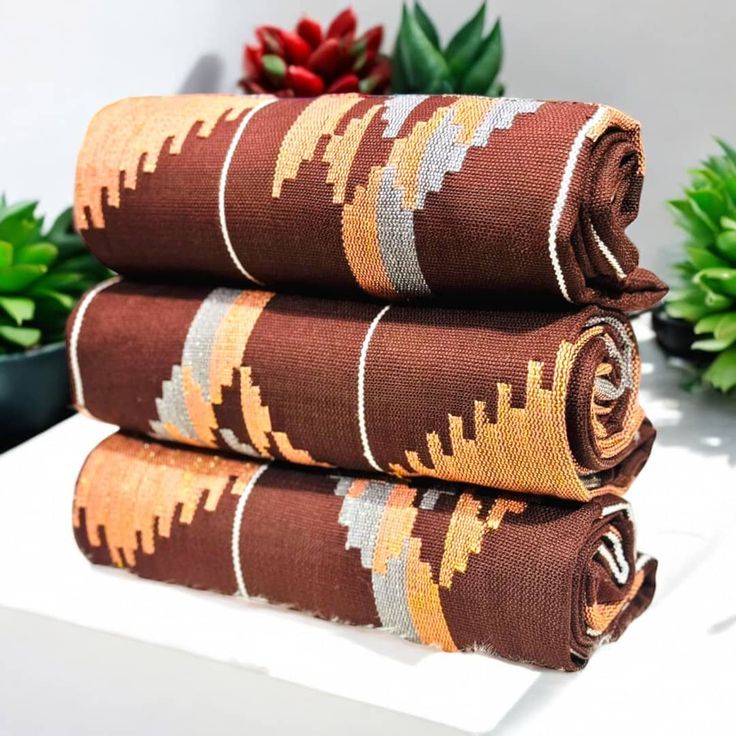
Kanvô came close to losing its relevance. The fabric is labour-intensive and expensive to produce. Each piece requires skilled weavers, significant time, and specific knowledge that has not always been passed down through generations. As imported fabrics became cheaper and more accessible through the 20th century, kanvô’s market contracted. It became associated with older generations and formal ceremonies. Younger Beninese consumers moved toward printed wax and imported textiles. The weavers who remained active dwindled. By the time contemporary designers began to pay attention, the tradition’s survival was genuinely in question.
What brought it back is not nostalgia. It is a commercial intention combined with design intelligence. Elvira Akplogan founded LOAN-H in Cotonou in 2014 and adopted kanvô as the brand’s signature material in 2017. She established her own 100% Beninese production unit in 2019, working with a network of weavers to produce at least 54 rolls of 25 metres per collection and 300 handmade garments per quarter. Within two years of launch,
LOAN-H had registered clients from more than 40 nationalities. That is not a heritage project. That is an international fashion business built on a fabric that the industry had overlooked.
Akplogan’s stated ambition is precise: she wants Benin to have its own label for kanvô, comparable to how France protects champagne or Scotland protects tartan. “My great wish,” she has said, “is for Benin to have its own real label because it is useless to have cotton at home but to go and take extras elsewhere.” FIPAT, the Festival International du Pagne Tissé, is one institutional response to that gap, a government-backed effort to build an international label specifically for kanvô.
The Designers Who Are Using It Now
Akplogan is not alone. Lolo Andoche, one of Benin’s most established designers with three decades of practice, has opened a dedicated kanvô boutique in Cotonou. His work with the fabric spans ceremonial commissions and contemporary ready-to-wear. Mondoukpè’s Collection Ola, featuring kanvô dresses, was described by the regional press as a significant commercial success. At Benin Fashion Month 2025, the seventh edition held in Cotonou under the theme Roots and Future, kanvô appeared across multiple collections at the closing show La Nuit de la Mode, placed on an international stage alongside sustainable streetwear brands and diaspora designers.
FARE, one of Benin’s most internationally noticed emerging brands, uses fabrics woven by artisans directly linked to the lineages of King Agonglo’s original weavers in Abomey. This is not an aesthetic reference to history. It is a production relationship with the same weaving community that produced kanvô for the Dahomey court. As Peter Toni-Basengula of FARE described it, the fabrics at the heart of his Tailoring Ring capsule collection, presented at Benin Fashion Month 2025, featured symbolic beads, reassembled pagnes, and fabrics woven in Abomey by artisans from those royal lineages.
Isabelle Egin, winner of the jury prize at the fourth edition of the Benin International Arts Festival (BAIA) in February 2026, made her entire winning collection, titled Ecological Splendour, from local woven kanvô fabric. Egin is a political science student. Her explicit intention was to use fashion as a collision between craft, identity, and political power. A fabric with royal origins and governmental labelling, placed in the hands of a political science student who is thinking about what cloth communicates: this is not a heritage revival. It is kanvô doing exactly what it has always done.
ALSO READ
- Egungun Masquerade Costume: When Fabric Becomes a Portal to the Ancestors
- Traditional Clothing in the Benin Republic
- The Language of Adinkra: When Cloth Becomes Scripture
Kanvô and the Government-Backed Renaissance
The Beninese state has aligned itself with kanvô in ways that go beyond the 2020 label. In October, kanvô features in Tu consommes local, the national Consume Local campaign organised by the Ministry of Commerce, promoting Beninese-made goods across all sectors. The GDIZ, Benin’s Glo-Djigbé Industrial Zone, is building the cotton-to-garment pipeline that processes around 40,000 tonnes of cotton annually and produces 7 to 10 million garments per year for European brands including KIABI and The Children’s Place. The ambition is for kanvô’s handicraft tradition and the industrial zone to reinforce one another rather than compete.
ACMB, the Association des Créateurs de Mode du Bénin, has consistently advocated for Made in Benin clothing and participated in a formal plaidoyer to the National Assembly in 2020, specifically calling for the complete industrialisation of Beninese cotton so that finished garments could be purely Beninese. Kanvô is the most distinctly Beninese textile available for that argument. When ACMB designers visited GDIZ during the 2025 Fashion Month, the implicit conversation was about how the handicraft tradition and the industrial zone can work together.
The Xinhua English Africa desk ran a photo essay on kanvô in November 2024, describing it as a handwoven fabric with a long history and its integration into modern design. That a major international news agency chose to document kanvô in English is evidence of the fabric’s growing international profile. The editorial gap in English-language fashion media will not remain open for long.
How Kanvô Differs from Kente: A Precise Account
Since the comparison will be made by every reader who arrives through that door, it is worth closing it properly.
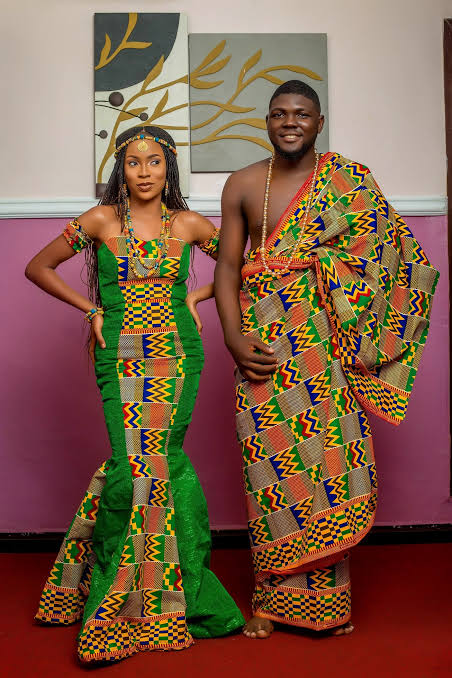
Kente originates from Ghana and is produced by the Ashanti and Ewe peoples. It is woven on a horizontal strip loom from predominantly silk and cotton threads. Its geometric patterns carry codified symbolic meanings that vary by colour and configuration. It is worn across a broad community of wearers for formal occasions, ceremonies, and contemporary fashion. It has been adopted internationally as a broad symbol of African identity.
Kanvô originates from the Dahomey Kingdom in present-day Benin Republic and is produced by the Fon people in the south and the Baatonu in the north. It is woven from cotton, linen, and hemp. Its royal origin means it carries associations of specific political authority rather than broad ethnic identity. Its northern variant, Tako, resembles Faso Dan Fani from Burkina Faso more than it resembles kente. It has not yet achieved the international symbolic currency of kente, which is both a measure of its underexposure and an indication of what is still possible.
The comparison serves a purpose in search. As an editorial frame, it reaches its limit at the door.
“Kanvô is not Benin’s answer to kente. It is Benin’s own question, a textile with its own royal history, its own material logic, and its own contemporary designers.”
Frequently Asked Questions
What is kanvô fabric?
Kanvô is the traditional handwoven textile of the Republic of Benin. The word means “woven cloth” in Fon, the language of the Dahomey Kingdom. It is woven from cotton, linen, and hemp by two distinct ethnic groups: the Fon in southern Benin and the Baatonu in the north, where it is called Tako. It was introduced to the Dahomey court by King Agonglo at the end of the 18th century and was historically reserved for royalty. The Beninese government officially labelled it in 2020.
How does kanvô differ from kente?
Kente originates from Ghana and is produced by the Ashanti and Ewe peoples primarily from silk and cotton on a strip loom, featuring codified geometric symbolism. Kanvô originates from the Dahomey Kingdom and is woven from cotton, linen, and hemp by Fon and Baatonu weavers. The two textiles have separate origin histories, different material bases, and distinct cultural functions. The northern kanvô variant, Tako, resembles Burkina Faso’s Faso Dan Fani more closely than it resembles kente.
Who introduced kanvô to Benin?
According to documented tradition, King Agonglo of the Dahomey Kingdom introduced kanvô at the end of the 18th century after encountering a skilled young weaver during a conquest into Yoruba territory and bringing him back to Abomey. King Ghezo later expanded the tradition by establishing weaving families throughout the kingdom. King Behanzin wore kanvô on formal occasions.
Which designers work with kanvô today?
Elvira Akplogan of LOAN-H is the most internationally known contemporary kanvô designer, with clients from more than 40 nationalities and a 100% Beninese production unit established in 2019. Lolo Andoche operates a kanvô boutique in Cotonou. FARE uses fabrics woven by artisans from the lineage of King Agonglo’s weavers in Abomey. Isabelle Egin won the BAIA 2026 jury prize for a collection made entirely from kanvô. Mondoukpè’s kanvô collections have been commercially successful.
Where can I buy kanvô fabric or clothing?
LOAN-H sells kanvô garments through its e-shop at loan-h.com and on the Afrikrea marketplace. Lolo Andoche operates a boutique in Cotonou. During Benin Fashion Month in July each year, multiple kanvô-focused designers present and sell through expo-ventes and boutiques éphémères across Cotonou. Visiting Abomey’s markets will also bring you into contact with weavers selling fabric directly.
What did the Beninese government do to protect kanvô?
The government officially labelled kanvô in 2020, giving it formal cultural recognition. It features in the Ministry of Commerce’s annual Tu consommes local campaign. The government-backed FIPAT (Festival International du Pagne Tissé) is working toward an international label for kanvô as a specifically Beninese textile. The seventh edition of Benin Fashion Month (2025) featured kanvô prominently alongside discussions about structuring the national textile sector.
Explore more from our African Style series, where African textiles are always the subject, never the backdrop.